Sunday, November 02, 2025

The World Community Recognizes The Moroccan Identity Of The Sahara – Analysis


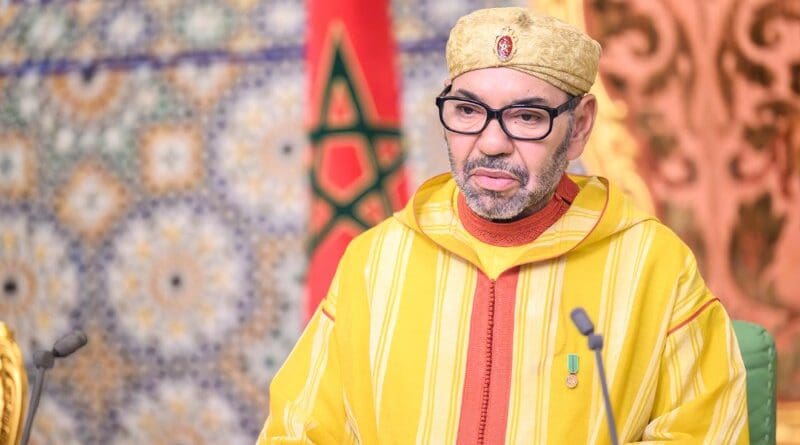
His Majesty King Mohammed VI of Morocco reacts to the Security Council resolution and extends a hand to the Algerian President

November 2, 2025
By Dr. Mohamed Chtatou


“By the grace of the Lord and with His help, after fifty years of sacrifices, we are opening a new and victorious chapter in the process of consecrating the Moroccan identity of the Sahara, intended to definitively close the case of this artificial conflict through a consensual solution based on the Autonomy Initiative.” — Address by His Majesty King Mohammed VI on October 31, 2025


Introduction

For several decades, the question of the Moroccan Sahara has been one of the major issues in the foreign policy of the Kingdom of Morocco, as well as a matter of stability and national identity. It is part of a historical and legal framework that goes beyond the simple logic of territorial claims: it touches the very heart of national sovereignty, territorial unity, and the collective memory of Morocco. From the moment of independence in 1956, the Kingdom affirmed its desire to reintegrate the southern territories, which had remained under Spanish rule since the late 19th century.

This claim was always based on the continuity of the Makhzen’s political and religious authority over the Saharan tribes, attested to by acts of allegiance (bay’a) and official historical documents. The advisory opinion of the International Court of Justice (ICJ) of October 16, 1975, confirmed the existence of ties of allegiance between the Sultan of Morocco and the tribes of Western Sahara, rejecting the terra nullius thesis (ICJ, 1975). This opinion was one of the cornerstones of the Green March, a symbol of Moroccan pacifism and popular support for a just national cause. Since then, Moroccan diplomacy has consistently combined historical legitimacy, political realism, and international commitment, resulting in increasing recognition of Moroccan sovereignty over the Sahara.

Today, through the explicit recognition of several world powers and the opening of more than 30 consulates in Laayoune and Dakhla, the Moroccan identity of the Sahara has become an irreversible geopolitical reality. This article aims to analyze the foundations and manifestations of this recognition along three lines:

– (I) the historical and identity-based foundations of Moroccan sovereignty,

– (II) the diplomatic strategy that has led to international consolidation, and


– (III) the growing recognition of the Moroccan identity of the Sahara in the economic, political, and cultural spheres.
I. The Historical and Identity-Based Foundations of the Moroccan Identity of the Sahara
1. The Historical Continuity of Moroccan Authority

The political identity of the Moroccan Sahara is deeply rooted in the historical structure of the Kingdom. Since the Almoravid, Almohad, and Saadian dynasties, the Saharan territories have constituted a natural extension of Morocco. The caravan routes linking Sijilmassa, Smara, and Timbuktu bear witness to this long-standing integration. According to historians, the Saharan region was never a political vacuum, but rather an area of ​​spiritual and economic exchange under the protection of the Makhzen.

The bonds of allegiance (bay’a) were the legal and symbolic foundation of this unity: Saharan tribes swore oaths of loyalty to the Sultan in exchange for the Makhzen’s religious and political protection. The ICJ recognized these bonds as “legal relations of allegiance between the Sultan of Morocco and certain tribes living in the territory of Western Sahara” (ICJ, 1975, §162). This recognition, while not conferring exclusive sovereignty before decolonization, invalidated the thesis of a legal vacuum upon which Spanish colonization was based.

Moroccan documents, such as an 1886 dahir appointing a representative of the Sultan in the Smara region, or letters addressed to tribal chiefs, confirm Morocco’s administrative presence in the Sahara. These archives demonstrate that the Makhzen’s authority extended well beyond the borders of the Souss region, reaching the southern Atlantic shores.
2. The Cultural and Religious Foundations of National Unity

Beyond historical evidence, the Moroccan identity of the Sahara is also expressed in the religious and cultural coherence that unites the north and south of the Kingdom. The Saharan tribes belong to the same Maliki school of law, share the same Hassaniya Arabic language, and the same loyalty to the Commander of the Faithful (Amîr al-Mu’minin). The 2011 Moroccan Constitution, in its Article 41, enshrines the monarchy as the guarantor of the faith and religious unity of the country. This spiritual dimension is essential, because it links the temporal authority of the sovereign to the religious legitimacy shared across the Sahara.

Historians remind us that Morocco has always been a multicultural state where linguistic diversity (Arabic, Amazigh, Hassaniya) coexists under a unified political system. Article 5 of the 2011 Constitution stipulates:

“Arabic remains the official language of the State.

The State works to protect and develop the Arabic language, as well as to promote its use.

Similarly, Amazigh constitutes an official language of the State, as a common heritage of all Moroccans without exception.

An organic law defines the process for implementing the official status of this language, as well as the modalities for its integration into education and priority areas of public life, in order to enable it to eventually fulfill its function as an official language.

The State works to preserve Hassaniya, as an integral part of the unified Moroccan cultural identity, as well as to protect the cultural expressions and dialects spoken in Morocco.” Similarly, it ensures the coherence of national linguistic and cultural policy and the learning and mastery of the most widely used foreign languages ​​in the world, as tools for communication, integration, and interaction with the knowledge society, and for openness to different cultures and contemporary civilizations.

A National Council for Moroccan Languages ​​and Culture is established, tasked in particular with the protection and development of the Arabic and Amazigh languages ​​and the various Moroccan cultural expressions, which constitute an authentic heritage and a source of contemporary inspiration. It brings together all the institutions concerned in these areas. An organic law defines its responsibilities, composition, and operating procedures.’’

This constitutional recognition reinforces the place of the Sahara in Moroccan identity: Hassani culture is not peripheral; it is constitutive of the nation.
II. From the Green March to Morocco’s Proactive Diplomacy
1. The Green March: A Founding Moment in Regained Sovereignty

On November 6, 1975, King Hassan II launched the Green March, bringing together 350,000 volunteers who marched peacefully toward the Sahara to demand the return of the Southern Provinces. This historic moment symbolized the convergence of historical legitimacy and popular mobilization. The King affirmed that there was no other objective than to recover our territories, peacefully, without violence, with faith in God and in the justice of our cause (Hassan II, 1975).

Shortly thereafter, the Madrid Agreement (November 14, 1975) ended Spanish colonial administration. Spain transferred the administration of the territory to Morocco and Mauritania, in accordance with the right to self-determination and territorial integrity (UN, 1975). Contrary to a colonial vision, Morocco chose the path of pacifism and legal legitimacy, supported by the ICJ advisory opinion.

The Green March thus embodied an act of national faith, rooted in a diplomacy of non-violence and the rule of law. It marked the shift from a historical claim to a symbolic and legal reconquest of the territory.
2. The Autonomy Proposal: A Diplomacy of Realism

Faced with the impasse in negotiations under the auspices of the UN, Morocco proposed a broad autonomy initiative in 2007. This plan grants the Saharan provinces significant local executive, legislative, and judicial powers under Moroccan sovereignty. The UN, in its resolution 1754 (2007), described this proposal as “serious and credible.”

This approach illustrates Moroccan pragmatism: rather than maintaining the status quo or engaging in confrontation, it seeks to reconcile national sovereignty with internal self-determination. The proposed autonomy “transforms a regional conflict into an opportunity for democratic and decentralized governance.”

Furthermore, the 2011 Constitution reinforces this approach by enshrining advanced regionalization (Title IX, “Regions and Territorial Communities”), granting regions, including those in the South, a role in development planning. Thus, Morocco has integrated the principles of subsidiarity and local political participation into its internal legal framework.
3. Royal Diplomacy and the African Roots

Since King Mohammed VI ascended the throne, Moroccan diplomacy has reoriented itself towards Africa, resting on three pillars: development, cooperation, and historical legitimacy. Morocco’s return to the African Union (2017) marked a major diplomatic victory: it transformed the Western Sahara issue from a source of division into a lever for integration.

Today, more than 30 African, Arab, and Latin American countries have opened consulates in Dakhla and Laayoune—an explicit diplomatic recognition. This dynamic reflects a tacit recognition of Moroccan sovereignty by states that value stability and economic cooperation.
III. Growing International Recognition: From Diplomacy to Geoeconomics
1. Support from Major Powers

On December 3, 2020, US President Donald Trump issued an official proclamation recognizing Morocco’s sovereignty over the Sahara (U.S. Proclamation, 2020). This decision, confirmed by the subsequent administration, marks a major geopolitical milestone: a permanent member of the Security Council endorses Morocco’s position.

Other powers have followed suit:

• In March 2022, Spain described Morocco’s autonomy proposal as “the most serious, realistic, and credible basis” for resolving the conflict.

• Germany, the United Arab Emirates, Senegal, Jordan, and Qatar have expressed their clear support for Morocco’s sovereignty.

This support reflects a strategic convergence between regional stability, the fight against terrorism, and Morocco’s diplomacy of moderation.
2. The Sahara, an Engine of Development and African Integration

The Moroccan Sahara is today a hub for integrated development. The Southern Provinces Development Program (2015–2030), with a budget of 77 billion dirhams, aims to transform the region into an African economic hub (CESE, 2021). The Atlantic port of Dakhla, the Tarfaya wind farms, and the trade corridors to Mauritania and Senegal embody this vision of a Morocco firmly rooted in its African environment.

This policy is part of the New Development Model (NDM), which considers the Sahara as a lever for national and continental growth. The Moroccan identity of the Sahara is now expressed in economic dynamism as much as in political legitimacy.
3. Cultural and Institutional Recognition

Moroccan unity has also been strengthened by the institutional recognition of Saharan cultures. Article 5 of the 2011 Constitution recognizes the Hassani language and culture as an integral part of the national heritage. The royal address of November 6, 2021, reaffirms this dimension:

“The Moroccan identity of the Sahara is a truth as immutable as the Atlas Mountains and as clear as the desert sun” (H.M. the King Mohammed VI, 2021).

The educational institutions of Laayoune and Dakhla, as well as the programs of IRCAM, play a central role in preserving Hassani heritage.
Conclusion

The Moroccan identity of the Sahara is now an undeniable historical, legal, and political truth. The historical foundations of Moroccan sovereignty—bay’a (oath of allegiance), administrative presence, and cultural unity—have been consolidated by decades of diplomatic action based on law, pragmatism, and cooperation. Morocco has succeeded in transforming a decolonization issue into a project of national and continental integration, linking the Sahara to its major development initiatives. International recognition, illustrated by the opening of consulates and the support of major powers, confirms a geopolitical reality that is now irreversible. In a regional context marked by instability, Morocco offers a vision based on stability, legitimacy, and shared prosperity.

As H.M. King Mohammed VI stated: “The Sahara is Moroccan, and Morocco will remain in its Sahara until the end of time” (Royal Address, November 6, 2022).

The Moroccan Sahara is therefore no longer merely a territorial issue: it has become a symbol of national unity, a driver of regional development, and a key to the Kingdom’s African projection.

You can follow Professor Mohamed Chtatou on X: @Ayurinu
Appendices:ROYAL DECREE OF HIS MAJESTY ABDELAZIZ BEN EL HASSAN

“Praise be to God alone! May God bless our lord Muhammad and his family! (Seal of His Majesty Abdelaziz Ben el Hassan, God is his protector and master.) To our esteemed servant, Caid Harmmadi Ech-Chbani. May God guide you! And to you, divine greetings and mercy!” After this preamble, We have charged Our servants: Caid Brahim Ben M’barek Ech-Chtouki Et-Tecni and Caid Mohamed Ben el Bellal Boussaïdi, with the care of the coasts of Our fortunate subjects from Tarfaya to Ras Bogador, and with protecting them from anything that might be created there by land and sea. We inform you so that you may be vigilant. Greetings! ‘’

The 1st of Muharram 1319 (corresponding to April 20, 1901).

Cf. https://mjcc.gov.ma/wp-content/uploads/2024/02/40.pdf TEXT OF A LETTER FROM MA EL AININ

(Here is the text of a reply addressed by Ma el Aïnin – may God perpetuate his life! – to Sultan Moulay Abdelaziz.)

“Praise be to God alone!” May God bless our master Muhammad, his family, and his companions! In the shadow of God over the universe, to the soul of the Muslims’ actions, and to the Commander of the Faithful. May God strengthen your reign and grant you the same victory as that given to the best of divine emissaries! And to you be the greetings and mercy of God, for as long as the cosmos, its movements, and its rests, endure! It has come to the attention of the Commander of the Faithful that our son, sent to the Ouled Dlim, has now returned. He has brought us the good news so desired by Your Majesty, namely, the severing of all relations with the Christians, where—by divine power and will!—no repercussions remain, and there is no harm, indeed, by divine will, there will be no harm except what you decide in the correct manner and the sound path. Among other things, he wrote to us this: “We inform you that the instructions you gave to your son El Wali concerning the Christians, and in particular the Spaniards, will be carried out according to your wishes, after we have resolved to establish relations with them involving receiving their weapons and ceding this territory to them. We have definitively abandoned this plan, to your satisfaction, and we will never carry it out, especially after your disapproval and objection. Friendly greetings! As for the French, they said they had little dealings with them. They say they have not engaged in any discussions with them concerning a sale, a purchase, territory, or anything else. It is hoped that everyone will act only according to your will and approval. We pray to God that He will receive you only with what you fully desire, with a long life full of good health and a happy end. Greetings with our affection!’’

2 Ramadan 1321 (corresponding to November 22, 1903).

Cf. https://mjcc.gov.ma/wp-content/uploads/2024/02/40.pdfDAHIR OF H.M. ABDELAZIZ BEN EL HASSAN

“Praise be to God alone! May God bless our lord and master Muhammad, his family, and his companions! (Seal of H.M. Abdelaziz Ben el Hassan Ben Muhammad.) To our esteemed servants, to the people of El Mouissat and the Ait Mohamed Lahssen, and to half of Yaggout, of the Tekna tribe. May God guide you! And to you, divine greetings and mercy! After this preamble, we have entrusted your administration to your brother, our esteemed servant, the caid Muhammad al-Amin Ben Ali al-Tekni al-Hassani, and have charged him with taking care of your affairs. For this, we command you to listen to and obey what we have invested him with the power to recommend and prohibit within the scope of our Sharifian service. May God grant you mutual happiness and guide you to what pleases Him! Greetings!’’

21 Rajab 1314 (corresponding to December 25, 1896).

Cf. https://mjcc.gov.ma/wp-content/uploads/2024/02/40.pdfDAHIR OF H.M. ABDELAZIZ BEN EL HASSAN

“Praise be to God alone! May God bless our lord Muhammad and his family! (Seal of H.M. Abdelaziz Ben el Hassan Ben Muhammad, may God be his protector.) To our esteemed servants Ouled Moussa, Laabobat, and Ouled Ali of the Tidrarin of the Sahara. May God guide you! And to you, divine greetings and mercy! After this preamble, we have entrusted your administration to our esteemed servant, the caid Muhammad el Amine Ben Ali At-Tecni, and have charged him with taking care of your affairs. Therefore, we command you to listen to and obey what we have entrusted to you with the power to recommend and prohibit within the sphere of our Sharifian service. May God grant you mutual happiness and guide you to what pleases Him! Peace be upon you!’’

The 3rd of Ramadan, the year 1316 (corresponding to January 15, 1899).

Cf. https://mjcc.gov.ma/wp-content/uploads/2024/02/40.pdf DAHIR OF H.M. ABDELAZIZ BEN EL HASSAN

“Praise be to God alone! May God bless our master Muhammad, his family, and his companions!” (Seal of His Majesty Abdelaziz Ben el Hassan.) To our esteemed servants, the Chtouka and their allies, the Mejjat, the Fouigat, one-third of the Ait Lahssen, one-third of the Zergat and their allies among the Toubalt, as well as their allies from the Meir, of the Tekna tribe, may God guide you! And to you, greetings and divine mercy! After this preamble, We have entrusted your administration to your brother, our esteemed servant, the caïd Brahim Ben M’Barek Ech-Chtouki, and charged him with taking care of your affairs. Therefore, we command you to listen to and obey what We have invested him with the power to recommend and prohibit within the scope of our Sharifian service. May God grant you mutual happiness and guide you all to what pleases Him. Peace!’’

20 Kaada 1313 (corresponding to May 3, 1896).

Cf. https://mjcc.gov.ma/wp-content/uploads/2024/02/40.pdfDAHIR OF H.M. ABDELAZIZ BEN EL HASSAN

“Praise be to God alone! May God bless our lord and master Muhammad and his family! (Seal of H.M. Abdelaziz Ben el Hassan Ben Muhammad, of whom God is the protector and master.) To Our esteemed servants (members of the Mnassir tribe [of the Azerguiyine confederation]). May God guide you on the right path! And to you, divine greetings and mercy! After this preamble, We have entrusted your administration to your brother, Our esteemed servant, the caid Brahim Ben M’Barek Ech-Chtouki Er-Rouifi, and have charged him with taking care of your affairs and all your comings and goings. Therefore, we command you to adhere to its recommendations and prohibitions within the scope of our Sharifian service. May God grant you mutual happiness! Greetings!’’

23 Rabi’ al-Awwal 1317 (corresponding to August 1, 1899).

Cf. https://mjcc.gov.ma/wp-content/uploads/2024/02/40.pdf

Sultan Moulay ABDELHAFID (Reign 21 August 1908 – 13 August)DAHIR OF H.M. ABDELHAFID BEN EL HASSAN

‘’Praise be to God alone! May God bless our master Muhammad and his family! (Seal of H.M. Abdelhafid Ben el Hassan.) To our esteemed servants, all the tribes of the Ait Hasine and the Ait Ikkou, Ouled Tidrarin, Yaggout, Mouissat, who are Ait Lahssen, tribes of Tekna Oued Noun. May God guide you! And to you, divine greetings and mercy! After this preamble, We have entrusted your administration to our esteemed servant, Caid Mohamed el Amine, and charged him with taking care of your affairs. We command you to listen to him, obey him, and adhere to his recommendations and prohibitions in all that we have invested him with our service and our Sharifian orders. May God grant you mutual happiness and guide you all towards what pleases Him! Peace!’’

Sha’ban 1325 (corresponding to September 10, 1907).

Cf. https://mjcc.gov.ma/wp-content/uploads/2024/02/40.pdfDAHIR OF H.M. ABDELHAFID BEN EL HASSAN

‘’Praise be to God alone! May God bless our lord and master Mohamed and his family! (Seal of H.M. Abdelhafid Ben el Hassan.) To our esteemed servants, Ait Moussa ou Ali, Yaggout, Ouled Driss, Rguibat, and Ouled Tidrarin. May God guide you (on the right path)! And to you, greetings and mercy. And to you be greetings and mercy from God, the Most High! After this preamble, We have entrusted your administration to Our esteemed servant, the Caid Brahim el Khail Ben el Habib Ben Birouk el Ouadnouni, and charged him with taking care of your affairs. Therefore, We command you to listen to and obey the recommendations and prohibitions We have entrusted to him within the scope of Our Sharifian service. May God grant you mutual happiness! And guide you all to what pleases Him! Peace!’’

14 Rabi’ al-Thani 1327 (corresponding to May 5, 1909).

Cf. https://mjcc.gov.ma/wp-content/uploads/2024/02/40.pdf


Dr. Mohamed Chtatou

Dr. Mohamed Chtatou is a Professor of education science at the university in Rabat. He is currently a political analyst with Moroccan, Gulf, French, Italian and British media on politics and culture in the Middle East, Islam and Islamism as well as terrorism. He is, also, a specialist on political Islam in the MENA region with interest in the roots of terrorism and religious extremism.

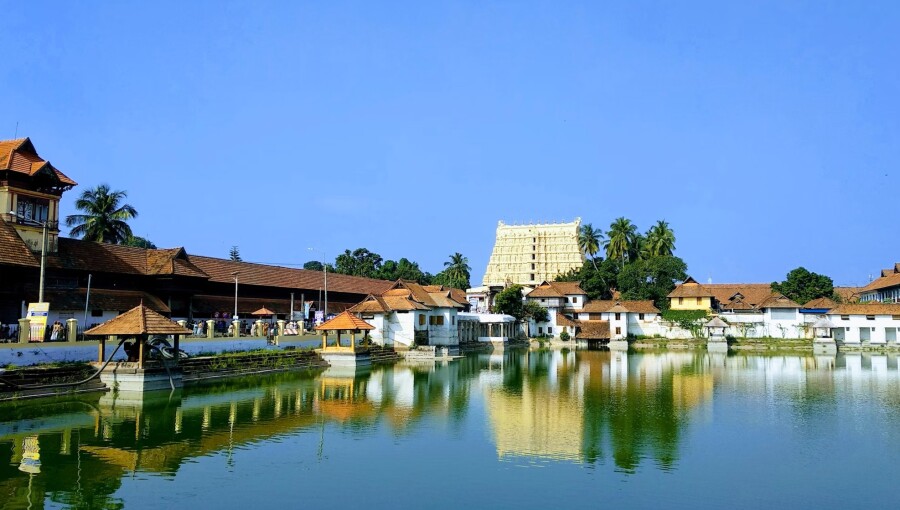
Kerala becomes India’s first state to declare freedom from extreme poverty

THANK THE COMMUNIST PARTY OF INDIA
Kerala becomes India’s first state to declare freedom from extreme poverty
Thiruvananthapuram in Kerala / Vishnu Prasad - Unsplash
By bno - Mumbai Office November 3, 2025

At a special session of the Kerala Assembly convened on November 1 to mark Kerala Piravi, Chief Minister Pinarayi Vijayan announced that the southern state had eradicated extreme poverty, making it the first in India to make such a declaration, The Hindu reported.

Vijayan described the moment as the dawn of a new era for Kerala, attributing the achievement to a sustained four-year effort under the Extreme Poverty Alleviation Project (EPEP). The initiative, launched at the first Cabinet meeting of the current Left Democratic Front (LDF) government in 2021, was aimed at identifying and supporting the most vulnerable families across the state.

The Chief Minister detailed that within two months of launching the scheme, data collection began at the grassroots level through a participatory approach involving local representatives, Kudumbashree workers, volunteers, and government officials. From this process, 1,03,099 individuals from 64,006 families were identified as living in extreme poverty based on indicators such as access to food, health, housing, and income.

Under the programme’s first phase, the government prioritised restoring basic rights and access. More than 21,000 people were provided with essential documents such as ration cards and Aadhaar cards, while 20,648 families were assured regular food supplies through Kudumbashree. Health interventions included improved access to medicines, vaccinations, palliative care, and organ transplants, The Hindu added.

Housing and land support were extended through the LIFE Mission to 4,677 families, with an additional 2,713 receiving both land and homes. Employment support reached 35,041 families through the Mahatma Gandhi National Rural Employment Guarantee Scheme (MGNREGS), while livelihood initiatives benefited over 4,000 households. The government also introduced targeted support for children — including scholarships, educational travel benefits, and special care schemes for over 5,500 children — and relocated 428 single-member households to safe shelters.

Vijayan underscored that the achievement builds on Kerala’s long history of social reform and public intervention in health, education, and land redistribution. He cited the progress made since the 1970s, when global and national studies described Kerala as a state struggling with high poverty and birth rates. Continuous policy innovation, mass participation, and welfare-oriented governance, he said, transformed these challenges into opportunities for inclusive development.

He further linked the latest milestone to Kerala’s broader progress on the United Nations Sustainable Development Index, arguing that the eradication of extreme poverty reflected the success of collective social investments and equitable policy design. The government has so far spent over INR10bn ($110mn) on implementing the EPEP, with plans to conduct regular monitoring to ensure that none of the rehabilitated families relapse into poverty.

Vijayan said the initiative reaffirms Kerala’s role as a model for welfare-led development and could serve as a template for other Indian states seeking to eliminate extreme poverty through community-driven planning and state accountability.

Yet Another US Pivot To Asia: What We Learnt From Trump’s Recent Asian Tour – Analysis


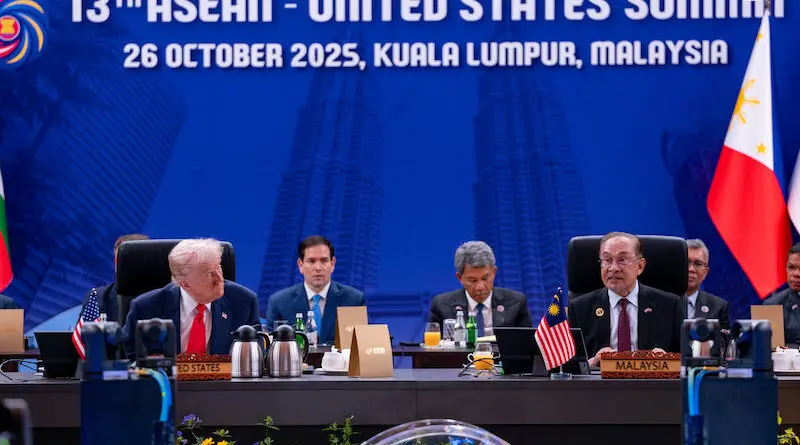
US President Donald Trump with Malaysia's Prime Minister Anwar Ibrahim. Photo Credit: @anwaribrahim, X


November 2, 2025 
By Murray Hunter


Just as former president Barak Obama made his Asian pivot, a cornerstone of US foreign policy back in 2009, Trump’s pivot was met with turbulence as well. Obama met a very muted welcome in Cambodia after ecstatic welcomes in Thailand and Myanmar. Although Trump started his trip by dancing, he found that his charisma doesn’t work with the Chinese and North Korean leadership like it did in Kuala Lumpur, Japan and Korea – highlighting major strategic problems.

While the US government has been in complete shutdown for a number of weeks and unlikely to be resolved quickly, US president Donald Trump made a three stop Asian tour. There were two important items on the agenda, a meeting with China’s President Xi Jinping and to preside over a Thai-Cambodia peace agreement.

Dancing his way in Kuala Lumpur

Trump’s first stop was Kuala Lumpur where the annual ASEAN Summit was going on and the Thai-Cambodian peace agreement was to be signed in front of him. A nervous Malaysian prime minister Anwar Ibrahim greeted president Trump on the tarmac at KLIA. Anwar had been a very outspoken supporter of Hamas and the Palestinians and there were high local expectations he would confront Trump, especially when Israel is breaching the ceasefire agreement.

However, Trump’s arrival became very jovial when he walked up to the traditional Malaysian dancers greeting him and danced along with them. Prime minister Anwar very uncomfortably joined Trump in dancing. Trump then invited Anwar to accompany him on the 60 km drive to Kuala Lumpur in the presidential limousine known as the beast, where they had a private one-to-one discussion.

Trump signed a controversial trade deal with Malaysia. Although, it looks more like this document was created as an agreement very hastily to please both Trump and Anwar. The Thailand-Cambodia peace agreement was the real highlight of the day, where Thai prime minister Anutin Charnvirakul came down to Kuala Lumpur to sign and quickly returned to Bangkok due to ceremonies related to the recent passing away of the Queen Mother Sirikit. Anutin was heard to say this was the first step in a road to peace with Cambodia. Over the last few days, both sides have been making an effort to ease the tensions and follow the terms.

Trump also signed a number of other agreements with other ASEAN leaders. These included reciprocal trade agreements with Cambodia, Thailand and Vietnam. These agreements highlighted Trump’s intent to deal bilaterally with ASEAN nations, rather than as a block. Trump also signed the Artemis Accords with Malaysia and the Philippines, bringing the total signatories to 59. Trump also had side talks with Brazilian president Lula.

Most of the agreements signed were ceremonial rather than of great substance. Perhaps the most telling thing is that Trump did not extend any invitations to any ASEAN national leader to visit the White House at any future point of time.

The coming out of Sanae Takaichi

The second leg of president Trump’s Asia tour was Japan. Trump was given a warm welcome by Japan’s first female prime minister Sanae Takaichi. Yet to be tested diplomatically, Trump’s visit was her debut and a metaphoric ‘coming out’ of prime minister Takaichi. Trump came to Japan as a ‘ceremonial chief’. Much of his visit was symbolic and ceremonial.

Prime minister Takaichi skillfully handled her guest watching the World Series with Trump before going out to join the official meetings. She presented Trump with the late Shinzo Abe’s golf putter and presented to the City of Washington 250 cherry trees for the 250th anniversary of the United States, plus Akita fireworks for next year’s July 4th celebration.

Trump with prime minister Takaichi in tow visited the aircraft carrier USS George Washington at Yokosuka Naval Base.

Perhaps the prominent images of Trump’s Japan visit, was the small Takaichi dancing around a grump old man. The pictures show Takaichi’s spontaneity that really outshone Trump. Trump’s moves to “YMCA” on the USS George Washington looked tired and hugged.

Korea – Where Trump got his crown

Korea has always been an important market for South Korea. Just short of 19 percent of Korean exports go to the United States. South Korea reached a record level of USD 683.8 billion in 2024, up 8.2 percent on 2023. Almost 20 percent of South Korea’s exports to the United States are semiconductors.

On the sidelines of the Asia Pacific Economic Cooperation (APEC) Summit Trump and his South Korean counterpart Lee Jae Myung in an hour and a half meeting, agreed to reduce US tariffs on Korean goods from 25 to 15 percent on most goods. This is on the basis of South Korea agreeing to invest US$350 billion in the US over the next decade. US$150 billion will come from the South Korean ship building industry. South Korea will build a nuclear submarine for the US in the United States, with US technology sharing. This will expand the US capacity to build nuclear submarines. South Korea also wants this technology to build its own nuclear submarines at home.

President Lee requested the taking over of wartime operational control from the current United Nations-US led command structure on the peninsula. This is being welcomed by the Trump administration.

President Lee presented Trump with a gold jewel-crusted Grand Order of Mugungwha, the nation’s highest award, and a copy of the Silla Dynasty Gold Crown worn by 8th Century Korean Monarch.

The Trump-Xi meeting

The Trump-Xi meeting inside a meeting room at a military airbase in Busan was a low point in the Trump Asian tour. The meeting was as sterile as the room it was held in. While en route to the APEC Summit in Busan in Marine one, Trump said he had instructed the Department of War to resume nuclear weapons testing. This not only looked antagonistic, but hollowed an sense of inferiority as well.

China’s President XI and his team were very frosty, evidence by the two leaders’ public appearances together. Trump attempted to tell the media cluster of the close relationship he had with president Xi a number of times, but this was not reciprocated. Although Trump lowered US tariffs on Chinese goods from 57 to 47 percent, nothing of note eventuated, except for some movement by China on their rare earth export ban to the United States.

The meeting signifies a chronic failure of US policy on China since Trump’s inauguration last January.

Kim didn’t answer

The final letdown of Trump’s Asia visit was the silence from North Korean Leader Kim Jung Un to meet with Trump, as he did during his 2019 visit to the DMZ between the north and south. No final pictures to echo any statesmanship of the US president. There was total silence by North Korea to White House overtures. Kim has already had very successful meetings with Russian president Putin and the Chinese President Xi over the last few months. The Trump meeting was unnecessary from Kim’s point of view.

The frosty response to the Trump-Xi meeting in Busan and silence from Kim Jung Un, comes at a time when Russian-US relations as taking a spiral downwards since the Anchorage summit last August. This should be very concerning where the prime theatre of antagonism will be East Asia. All momentum towards a peaceful multipolar co-existence is being erased by US primacy being surpassed by nations possessing much more modern weapons than the US arsenal. It appears Trump and his military and security advisors have not realized the US is no longer the unchallenged military power in the world.

Much of Trump’s visit indicated the transactional level of relationships with most of the region’s leadership. Certainly, the leaders of the members of ASEAN were polite enough to placate the president during his overnight visit to Kuala Lumpur. Its unlikely, Trump will ever attend another ASEAN Summit unless there is something in it for him.

One of the negative spin-offs of “The Art of the Deal” is that resulting relationships seem to become very transactional. That’s how president Trump left his Asian pivot. Perhaps the only real takeaway was the rare earth agreements signed wherever Trump went, although it may take a decade for any of them to come to fruition.

While Trump’s “Independence Day” tariff strategy worked well with countries smaller than its own economy, it seems to have backfired on China. The cost of Trump’s tariff policy has not only set back Sino-American relations, US consumers are paying for them with the higher prices they are paying for goods.

Trump’s pivot, as with Obama before him may in history be seen as Trump’s folly. Just as Obama was humiliated in Cambodia back in 2009, Trump was humiliated by the frosty reception of China’s president Xi and the silence of Kim Jung Un. This showed that in Asia, Trump isn’t appreciated as the “biggest show on Earth” by all. The US will have to re-focus upon the western hemisphere over the next few months, where Chinese and Russian influence aren’t too far away.


Murray Hunter

Murray Hunter has been involved in Asia-Pacific business for the last 30 years as an entrepreneur, consultant, academic, and researcher. As an entrepreneur he was involved in numerous start-ups, developing a lot of patented technology, where one of his enterprises was listed in 1992 as the 5th fastest going company on the BRW/Price Waterhouse Fast100 list in Australia. Murray is now an associate professor at the University Malaysia Perlis, spending a lot of time consulting to Asian governments on community development and village biotechnology, both at the strategic level and “on the ground”. He is also a visiting professor at a number of universities and regular speaker at conferences and workshops in the region. Murray is the author of a number of books, numerous research and conceptual papers in referred journals, and commentator on the issues of entrepreneurship, development, and politics in a number of magazines and online news sites around the world. Murray takes a trans-disciplinary view of issues and events, trying to relate this to the enrichment and empowerment of people in the region.

The US now sees China as an equal - it is time for Western media to wake up and do the same

The US now sees China as an equal - it is time for Western media to wake up and do the same
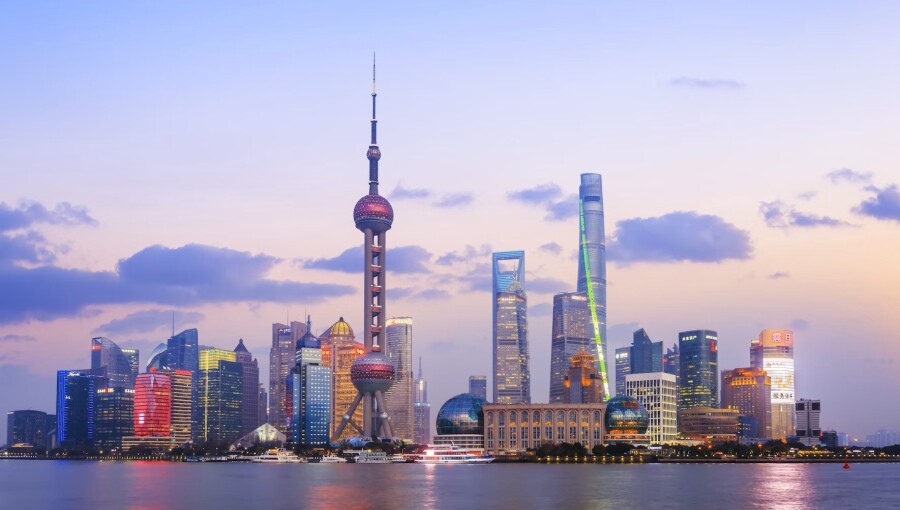
Shanghai - China / bne IntelliNews
By Mark Buckton - Taipei November 3, 2025

China was long filed under “too foreign, too dangerous, too different” in many Western newsrooms. Not anymore. Beijing is now impossible to ignore, and only now are many Western media outlets starting to realise it.

A phenomenon noted by Beijing-based current affairs commentator Jianlu Bi in March this year in the South China Morning Post, the annual spectacle of China’s “two sessions”, was treated in Western newsrooms as a political theatre piece of sorts - performed on a stage of secrecy and state control.

Foreign correspondents would often - and still do for the most part - file dispatches heavy with scepticism, searching for cracks behind the slogans. Yet this year, a quiet shift was evident. This came not in the form of a softening of the smirks behind the copy, but a recalibration in recognition of Beijing’s progress.

China’s economic machine is still watched with hawk-like intensity, but the tone in major Western outlets is no longer uniformly acid, Bi says. In research he conducted with colleagues monitoring keyword trends across 10 leading UK and US media outlets a pattern was noticed. In 2019, around 70% of stories on the Chinese economy, tech sector or environmental policy came across with a negative tone. Six years later, however, that number had dropped to around 40%.

According to Bi, the number of neutral reports are rising across all areas with positive-toned economic coverage also edging up.

Commenting on the same issue, albeit slightly more directly, a former resident of China and Bne partner, Arnaud Bertrand, posting on X recently said “Even The Economist, the poster child of “China bad” coverage who hilariously have predicted China’s collapse almost every year for the past 3 decades, entitled their latest issue “Why China is winning the trade war,” before adding, somewhat sardonically “Quite the incredible reversal of narrative to anyone familiar with their editorial line.”

The shift is not, as Bi suggests, a sudden bout of media admiration. Rather, Western newsrooms covering China, Japan and South Korea - long dominated by a revolving cast of veteran correspondents shuttling between ‘Far East’ postings and Western capitals - are being dragged, somewhat reluctantly, into the present.

That they are being forced to come face-to-face with a more layered understanding of China’s economic and technological heft does not always go down well.

Media seen as de-facto representatives of their nations by governments across Asia are no longer able to dismiss China’s performance as scripted or superficial. The numbers tell their own story, and they are becoming harder and harder to wave away.

In 2024, consumption drove nearly half of China’s GDP expansion - outpacing both investment and exports. Electric vehicle (EV) uptake soared by roughly 40% year-on-year, powered by an aggressive state strategy to boost domestic demand. This sector in particular shows no sign of abating any time soon and is booming across much of East and Southeast Asia. Special sovereign bonds and “trade-in” drives are being deployed not as throwaway gimmicks, Bi adds, but as pillars in a coordinated push to keep households spending and businesses moving.

Meanwhile, in the boardrooms of Silicon Valley and the corridors of Brussels, another reality is setting in: China’s technology ecosystem is no longer merely “catching up”. It is competing, and, in some sectors, leading.

The startling rise of domestic AI models like DeepSeek, alongside the continued surge of Huawei are two key examples cited. Both have forced Western capitals to acknowledge that the global innovation race is no longer a one-horse sprint to the finish. There will never be a finish and a nation like China, used to playing the long-game, knows this and plans accordingly. To this end, with in excess of four million 5G base stations now operational around the country, China’s digital infrastructure is expanding at a clip Western telecom planners can only dream of. That it may – or may not – be used for purposes such as monitoring populations in some areas, while a valid story in itself, needs to be tempered when covering the bigger picture.

Then there is the climate front. China today produces a reported 80% or so of the world’s solar panels. This is a phenomenal industrial dominance that gives Beijing what many in the West looking for the negative angle deem unfair leverage over the global energy transition. The country’s EV and hybrid vehicle market is also booming and as a result is rewriting the international auto market.

Added to this, for Western policymakers scrambling to meet emissions targets, China is no longer simply a polluter to criticise through media friends. Instead, Beijing must be seen as a competitor, a supplier and, increasingly, a benchmark – and this is happening - slowly.

Western critics by way of their domestic media outlets with international reach do, quite rightly, still point to coal use as a problem in China. Yet while China’s fossil fuel dependence remains a gaping contradiction in its green narrative, to pretend its renewable push is cosmetic is to ignore the largest expansion of clean-energy capacity anywhere on Earth.

Crucially, China’s model contrasts sharply with the policy spasms seen in Washington, where tariff whiplash and election-cycle politics create whirling uncertainty. Beijing’s long-range planning - rigid to a fault, critics argue - nevertheless offers a stability increasingly valued by investors weary of ideological left-right lurches in the West and associated supply-chain tantrums.

For Western media, the challenge is therefore less ideological and more existential: how to report China with rigour without defaulting to reflexive derision. As Bertrand says “Multipolarity makes understanding mandatory: the West can no longer afford the luxury of misunderstanding China. The cost has become too high.”

One individual of note with an apparent understanding to this end is US Secretary of War, Pete Hegseth. Posting on X on November 2, Hegseth wrote “I just spoke to President Trump, and we agree - the relationship between the United States and China has never been better” continuing “Following President Trump’s historic meeting with Chairman Xi in South Korea, I had an equally positive meeting with my counterpart, China’s Minister of National Defense Admiral Dong Jun in Malaysia. And we spoke again last night. The Admiral and I agree that peace, stability, and good relations are the best path for our two great and strong countries.”

That two of the most powerful men in the Western hemisphere - Trump and Hegseth - are waking up to China as an equal is groundbreaking, and must be treated as such. No longer can the US or wider Western world or its media, look down on Beijing.

Whether Hegseth’s next claim that “As President Trump said, his historic “G2 meeting” set the tone for everlasting peace and success for the US and China. The Department of War will do the same - peace through strength, mutual respect, and positive relations” proves true in the long-run will be for future generations and journalists to comment upon.

When Hegseth then closed “The Department of War will do the same - peace through strength, mutual respect, and positive relations. Admiral Dong and I also agreed that we should set up military-to-military channels to deconflict and de-escalate any problems that arise. We have more meetings on that coming soon” it is at least an indicator that the man with the US' nuclear launch codes is viewing China as on a par with the US.

How this ends up being reported by CNN, Fox, and the New York Times stateside vis-a-vis Jianlu Bi’s positive VS negative China-reporting breakdown though, will only be apparent as the week unfolds.

For now, as long-time China watchers in Asia are well aware, the country is not collapsing, and will not collapse in the future. Nor is it conquering the world. And as any long-time journalist covering the region worth his or her salt will explain - perhaps in hushed tones if on an all-expenses paid Western media posting - China is evolving. So too must the global conversation around it, both in government circles and through the media.

Trump makes fools of Britain’s China hawks – Steve Howell


“Britain’s long-standing policy – whoever occupies Downing Street – of hanging on to America’s coat-tails is a recipe for being badly bruised when there is a sudden change of direction.”

By Steve Howell

The US and China surprised almost everyone last week by calling off their trade war – for now at least. The summit between presidents Xi and Trump ended with both parties dropping plans for tougher trade restrictions and tariffs. Asked to evaluate it on a scale of one to ten, Trump said that he thought “it was a 12.”

This was awkward for the British media. For weeks, they had been pumping out headlines on what they called the China spy scandal – the collapse of the prosecution two men accused of passing information to China. There were virtually no dissenters to the view that the charges being dropped was bad news. The only issue for the media was who to blame for the failure to convict the two defendants, as if the small matter of their actual guilt was not in doubt.

For the prosecution to go ahead, Britain had to have deemed China to be an enemy to which passing information would be a breach of the Official Secrets Act. The conservatives accused the government of deliberately withholding from the Crown Prosecution Service the evidence of enemy status needed for a conviction. The government countered that the conservatives had not classified China as an enemy when they were in power.

From my survey of the media, Keir Starmer came off worst. Fairly typical headlines were the Times’s “China spy fiasco reveals cowardice at No 10” and the Telegraph’s “Starmer’s abject China cowardice threatens the West’s very future.” For the Daily Mail, columnist Dan Hodges asked: “How could Keir Starmer get away with lying about China when Boris Johnson was hauled over the coals for a piece of cake?”

Amid these accusations of lying and cowardice, there was at least a little levity from one journalist. Tom Peck, the political sketch writer for the Times, took us back to 2015 when China was seen as Britain’s economic saviour and David Cameron took President Xi for a pint at a pub near Chequers. “The whole point of that exercise,” Peck wrote, “was to prove that China definitely wasn’t a threat, but the chairman never actually got his round in, did he, so the clues were there.”

That pub visit came at a time when the West generally was eager to get a slice of the surplus capital China had been accumulating since being admitted to the World Trade Organization in 2000. Not long afterwards, however, the political climate in the US shifted markedly. In the build up to the US elections of 2016, both Bernie Sanders and Trump – from very different perspectives – made cheap imports from China an issue and blamed them for the de-industrialisation of the Midwest ‘rust belt’ states. On being elected, Trump introduced the first wave of tariffs on China, marking the start of a new Washington consensus that President Biden not only continued but escalated.

True to form, Britain fell into line. Xi was not invited again. The friendly images in the media were replaced by scaremongering over China attacking our infrastructure and stealing our technology (as if they needed to). Voices in the media and business favouring trade were drowned out or denounced as Beijing apologists and useful idiots.

Amid the furore over the China ‘spy’ case, our commentariat appears not to have noticed the emerging change of policy in Washington. To be fair, Trump’s rhetoric is sometimes difficult to read. So, it’s perhaps understandable that journalists peddling an anti-China have been wrong-footed. The Telegraph’s Sherelle Jacobs was certainly caught out badly, having written shortly before the summit that the government’s “refusal to break with China has explosive geopolitical implications.” She thought that Britain’s “inaction over China” could send Trump “over the edge” and claimed that “if anything ends up destroying the Special Relationship it will be our gutless cosying up to Beijing.” She must have been mortified when Trump described his meeting with Xi as “the G2 summit”, relegating the G7 – of which Britain is a member – to second class status.

Britain’s most strident China hawk, Iain Duncan-Smith, seems – for now – to have gone to ground. On Thursday, as news was breaking of the Trump-Xi summit success, the former Tory leader was still attacking Starmer for refusing to define China as a “systemic threat” and speaking darkly of “an axis of totalitarian states” with China “at the heart.”

Duncan-Smith’s hope had been that Trump would set aside his ‘America first’ pragmatism and join the crusade to confront China. In an interview with Sky during the US president’s state visit to Britain in September, he said that if the countries that believe in “freedom, democracy and the rule of law” don’t unite “the totalitarian states… will dominate the world and it will be a terrible world to live in.”

This is rich, even by Duncan-Smith’s standards. He apparently thinks that the rule of law means people are guilty of spying until proven innocent, even if – judging by the leaks – the evidence amounts to no more than allegations of passing on Westminster gossip for no remuneration. And, given his strident support for Israel, he probably does not care that the world is already terrible to live in for those Gazans who have managed to survive two years of genocidal slaughter by a country that, in his world, is one of the good guys.

Duncan-Smith is a leading light in the Inter-Parliamentary Alliance on China, which was set up in 2000 to “confront” the rise of China and promote the interests of Taiwan. No doubt he was pleased that, while Trump was in China, Taiwan’s president was hosting a delegation from AIPAC, the American-Israel Public Affairs Committee. In a post on X, Lai Ching-te said he looked forward closer Taiwan-US-Israel cooperation to “deepen strategic partnerships, invest in advanced technology and enhance our defense capabilities.” That does not sound to me like an axis that would promote democracy and the rule of law.

It remains to be seen what Trump’s China game plan is. The trade agreement arising from his summit with Xi has yet to be finalised. There is talk of Xi visiting Washington. Whatever happens, a couple of things are clear. Firstly, Britain’s long-standing policy – whoever occupies Downing Street – of hanging on to America’s coat-tails is a recipe for being badly bruised when there is a sudden change of direction. Secondly, if the US has had to treat China with respect, it is absurd for Britain to act as if it is ready to send gun-boats up the Yangtze again.

Britain needs trading partners. You do not have to be a fan of the USA’s billionaire-dominated politics or its endless wars to recognise that Britain should trade with the world’s largest economy. Equally, you do not have to be a fan of China’s one-party system or its friendly relations with Russia to believe that it is important to engage constructively with the world’s second largest economy. Trade is not only essential for the growth and jobs, it can also foster greater understanding between nations. The danger with trade wars is that they can lead to deadly ones.

  • Steve’s new book, ‘Cold War Puerto Rico: Anti-Communism in Washington’s Caribbean Colony’, will be published by the University of Massachusetts Press on May 1, 2026. The book is already available for pre-order through major retailers such as Barnes & Noble and Waterstones. The recommended retail price for the paperback is $34.95 but UK pre-orders via Steve’s website are at the special price of £20 including postage. The publisher is also offering a 20% discount for pre-orders via their website by using the code UMASS20.
  • Steve Howell is a journalist, author and former political adviser to Jeremy Corbyn. You can follow him on Twitter/X and subscribe to The Rest is Bullshit for regular updates and analysis from Steve.
  • This article was originally published on The Rest is Bullshit on 2 November 2025.


Op-Ed

China is looking beyond Trump — The long game will win


By Paul Wallis
EDITOR AT LARGE
DIGITAL JOURNAL
October 31, 2025


US President Donald Trump (L) and China's President Xi Jinping shake hands as they arrive for talks at the Gimhae Air Base, located next to the Gimhae International Airport in Busan on October 30, 2025 - Copyright AFP ANDREW CABALLERO-REYNOLDS

After the massive buildup and post-match analyses to the Xi-Trump meeting, a few details have been ironed out but not folded. The actual outcome was somewhat underwhelming. Trump backed away from his tariff position. Xi essentially stuck to pure diplomacy.

Xinhua produced a truly seamless report on the meeting, highlighting Xi’s points without excessive detail. It’s a pleasure to read and very well done. The net takeaway from that report could be used as a template for PR graduates.

Trump was quoted as saying that “The United States and China have always had a fantastic relationship, and it will be even better,” as faithfully recorded by Xinhua.

Another possible source of revenue for Xinhua could be courses in applied tact. That vibe also set the tone for the meeting.

The actual outcome of the meeting was a softening of images, not necessarily of positions. The contrast between Trump’s on-again/off-again positions couldn’t be clearer. Many commentaries say China “won” the meeting.

That may well be a massive understatement. China has absolutely nothing to gain from endless bickering and pedantry over minor trade issues. The US has lots to lose by any further perception of inflexibility in its trade positions. This meeting provided a good excuse for the Chinese to make their point softly, and the US to reposition from an unworkable stance.

The overall impression is that China is playing a long game, most importantly not getting derailed or distracted. China was at APEC; Trump didn’t bother to stick around. APEC is a sort of de facto trade forum for the Southeast Asian region. This is the neighborhood for Xi, but not for Trump.

There’s quite a lot of talk in various unofficial Chinese media about US bullying. That may be a polite description of the antiquated, totally US-centric world view espoused by America’s invaluable flunkies

.
China’s economy has been supported by exports, which have offset weak consumer spending – Copyright AFP –

There are 8 billion people on this planet. 340 million of them claim to be Americans or are hoping to be. 1.4 billion are Chinese. Time is passing, and the world is moving on, with or without the benefit of melodramatic plutobrat politics in the US.

Modern world trade can’t work on the basis of 1950s economics and geopolitical nostalgia. The long game makes perfect sense, particularly if you can call the shots like a gigantic economy. China has its issues, sure, but so does the US.

The directionless, incredibly tiresome US soap opera can only last so long. People want to have lives and make money. That’s not happening. The domestic mess is the top priority for a huge cleanup. It doesn’t take a PhD in knitting to see that something has to go.

This idiotic global economic guessing game can only go on for so long, and no longer. This meeting made that clear.

___________________________________________________

Disclaimer
The opinions expressed in this Op-Ed are those of the author. They do not purport to reflect the opinions or views of the Digital Journal or its members.
Canada PM says Xi talks ‘turning point’, apologises to Trump


By AFP
November 1, 2025


Canada's Prime Minister Mark Carney welcomed a reset in ties with China - Copyright AFP 

JUNG Yeon-je

Canadian premier Mark Carney on Saturday called his talks with China’s leader Xi Jinping a “turning point” in restoring their battered ties, adding he raised tricky topics with Beijing like foreign interference.

Carney also confirmed from the APEC summit in South Korea that he had apologised to Donald Trump over an anti-tariff ad campaign that prompted the US president to raise tariffs on Canada.

Canada’s relations with China have been among the worst of any Western nation, but on Friday Carney and Xi held the first formal talks between the countries’ leaders since 2017, as both manage Trump’s trade onslaught.

“This meeting marked a turning point in our bilateral relationship. We have now unlocked a path forward,” Carney told reporters.

Xi also invited Carney to visit China.

A Canadian statement said that the leaders discussed “respective sensitivities regarding issues including agriculture and agri-food products, such as canola, as well as seafood and electric vehicles.”

Carney said that he brought up alleged Chinese influence in Canadian elections, saying that it was “important to have that discussion” in order to get relations “back on track”.

Ties fell into a deep freeze in 2018 after the arrest of a senior Chinese telecom executive on a US warrant in Vancouver and China’s retaliatory detention of two Canadians on espionage charges.

Ottawa and Beijing have since engaged in tit-for-tat tariffs including on Canadian canola, an oilseed crop used to make cooking oil, animal meal and biodiesel.

– Trump ‘offended’ –

Trump last Saturday hiked tariffs on Canada by 10 percent after a “fake” anti-tariff ad campaign that featured late US president Ronald Reagan.

The US president flatly rejected any resumption of trade negotiations even after Carney said sorry for the ad.

“I did apologise to the president. The president was offended,” Carney said on Saturday, while insisting he was relaxed about when talks would resume.

“After all the noise of this week, Canada still has the best trade deal of any country with the US,” he said.

“We can spend our time watching Truth Social worrying about the reactions of individuals. We are staying calm,” he said.

“We’ll wait until they’re ready.”

He added that he took heart from the Toronto Blue Jays who are fighting to become the first Canadian team to win the baseball World Series since 1993.

“They take risk, they’re aggressive, and they’re a team… And our Canada is taking risks, and we are a team,” Carney said. “I will confess that I was looking at my phone during session two of APEC.”

‘Swing for the fences’: Carney promises bold budget as US threat grows


By AFP
November 1, 2025


Canada's Prime Minister Mark Carney said he will propose an ambitious budget to reform his country's economy - Copyright AFP Frederic J. BROWN


Geneviève NORMAND

Canada’s new Liberal government unveils its first budget on Tuesday, with Prime Minister Mark Carney saying “bold risks” are needed to reform an economy facing unprecedented economic threats from the United States.

US President Donald Trump’s trade policies have hit Canada hard, driving up unemployment and squeezing businesses in crucial tariff-hit sectors like autos, aluminum, and steel.

Carney, a former central banker who only entered politics in January, has warned Canadians that the Trump-era disruptions in US-Canada relations are not a passing phase.

“Our relationship with the United States will never be the same as it was,” he told students at the University of Ottawa in a pre-budget speech last month.

Carney said his government would propose a budget that addresses the stark new geopolitical realities facing Canada.

Among the headline items will be major increases in defense spending to bring Canada in line with NATO targets.

Funds will also be allocated to a series of national projects that Carney has said are key to Canada’s economic sovereignty, given the “rupture” in economic ties with the United States.

These range from port expansion to energy production and the infrastructure needed to boost extraction of critical minerals from remote areas.

“We used to take big, bold risks in this country. It is time to swing for the fences again,” he said in the Ottawa speech.

“This is what this upcoming budget will be about: building, taking control, and winning.”

Carney and Finance Minister Francois-Philippe Champagne have flagged that spending increases will be partly offset by cuts to government operating budgets.

But those savings will not cover all the new costs.

University of Ottawa public policy expert Genevieve Tellier told AFP she expects the deficit to be “very large.”

“I wouldn’t be surprised if it were around CAN$100 billion ($71 billion),” she said.


– Confidence vote –


Carney’s April election win left his Liberals three seats short of a majority in Canada’s parliament. That means the government needs opposition support — or abstentions — to pass its budget.

Because the budget is a confidence vote, its defeat would trigger fresh elections.

“Anything is possible,” said McGill University political scientist Daniel Beland, stressing the Liberals will “try everything” they can to pass the budget.

Polling suggests Carney’s popularity has softened since the election.

He told voters that his broad international experience in leadership roles in global finance made him the ideal leader to negotiate with Trump.

But opposition parties have hammered Carney over his failure so far to secure a tariff-easing trade deal with the United States.

Trump has suspended trade talks over an anti-tariff advertisement produced by Ontario’s provincial government, which quotes former Republican US president Ronald Reagan.

Carney has said he is willing to restart trade negotiations whenever Trump is ready.

Defending his record, the prime minister has reminded Canadians that Trump is adhering to an existing North American trade deal, meaning roughly 85 percent of cross-border commerce remains tariff-free in both directions.

Tellier said she sees “little chance” of the government falling over the budget vote.

She predicted a flurry of last-minute negotiations before a decisive vote is called several days after the budget is presented to parliament.

There is also no clear indication that opposition parties would benefit from snap elections.

“Maybe it would even benefit the government to have elections,” Tellier said.

“They are just three votes short of a majority, and the government is still popular.”