Monday, November 10, 2025

SPACE/COSMOS


The International Space Station celebrates 25 years of human life in space. Here’s a look back at it
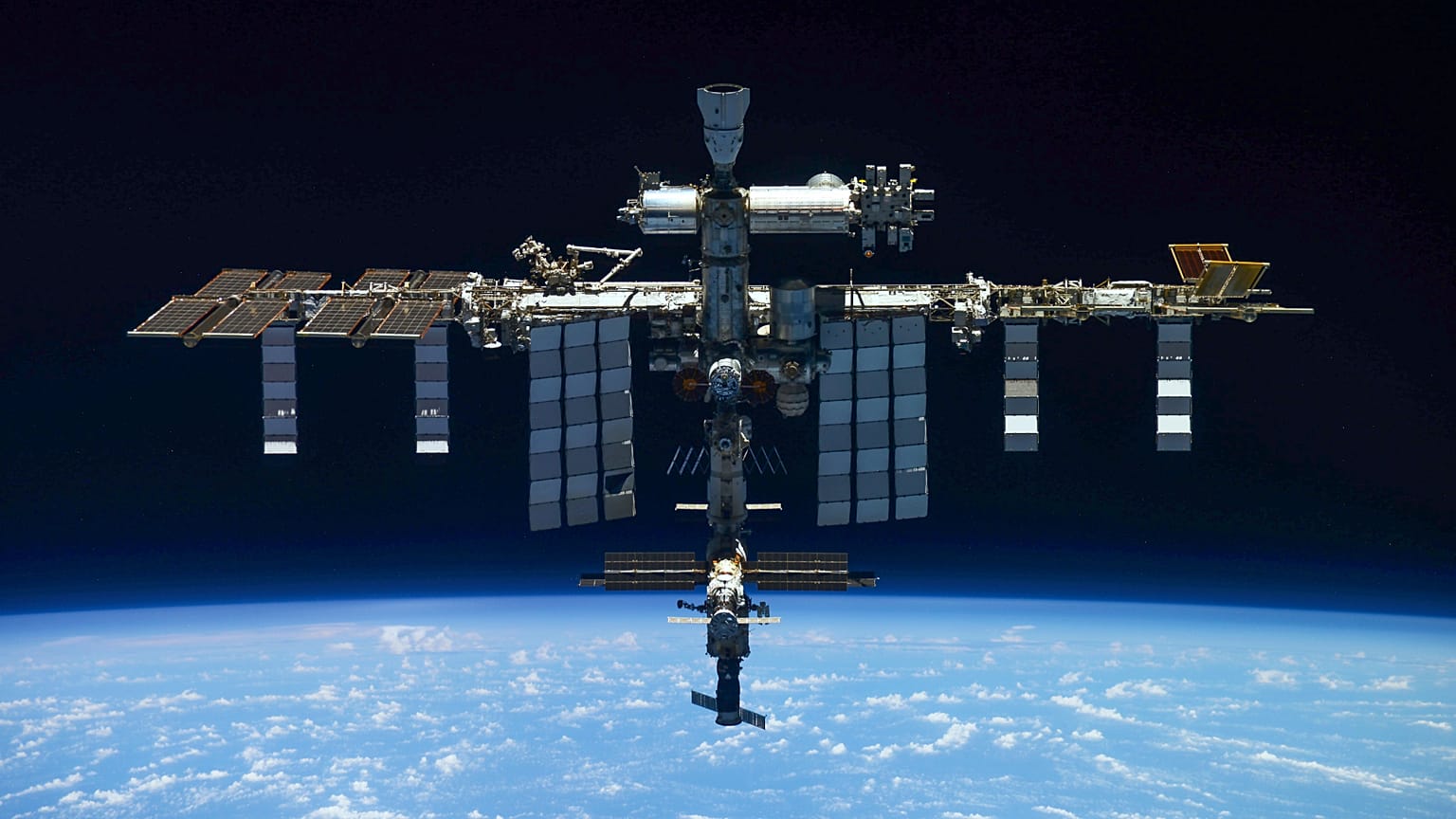
In this handout photo released by Roscosmos Space Agency Press Service, a view of the International Space Station taken on March 30, 2022.
Copyright Roscosmos Space Agency Press Service via AP, File
By Anna Desmarais
Published on 

Three American and Russian astronauts landed at the International Space Station for the first time in November 2000. We take a look back at some of the station’s biggest moments.

On October 31, 2000, three astronauts from the United States and Russia blasted off from Kazakhstan on a two-day flight into space. Their destination: a 109 metre-long floating station perched above the Earth.

This Expedition 1 crew’s job was to bring the new International Space Station (ISS) to life by doing something no one had done before: spend four months in orbit assembling life support and communications systems needed for a long-term stay in space.

In the last 25 years, the ISS has seen over 290 people from 26 countries visit the space station. Most have been professional astronauts, but sometimes, space tourists and even movie directors have paid a visit.

The space laboratory has hosted more than 4,000 experiments from over 5,000 researchers from 110 countries, according to the United States National Aeronautics and Space Administration (NASA), the American space agency.

It’s also the main training ground for deep space missions. Astronauts are using it to prepare for the upcoming Artemis missions, which will bring humans back to the Moon’s surface for the first time in more than 50 years – and if it all goes to plan, onwards to Mars.

Euronews Next takes a look back at the history of the ISS to celebrate the 25 year anniversary of human life in space.

How was the ISS built?

The ISS National Laboratory says it was inspired by the same dream that many space innovators have today: living in space.

The American government started building the ISS with that goal in mind as far back as the 1950s, by designing a modular orbital station that would house crews and refuel spacecraft on their way to a long-term base on the Moon.

Throughout the 1960s, both the US and Russia advanced their own ideas of what a space station could look like.

By 1984, the ISS project was approved by US President Ronald Reagan, a budget was allotted, and eventually partners in Europe, Canada, and Japan were brought on, the laboratory said.

George Abbey, the director of NASA’s Johnson Space Centre at the time of the ISS’ development, said on the 20th anniversary in 2020 that the Russians allowed the Americans to live nearly 1,000 days in orbit on board their space station, the Mir.

From 1994 to 1998, the Shuttle-Mir programme “prepared the way” for the ISS and “began an era of cooperation and exploration” in space, NASA said.

Europe’s role

The European Space Agency (ESA) got involved in 1988, when it signed a memorandum of understanding with NASA.

The ESA built two of the station’s elements, including the European Columbus laboratory, which specialises in research in physics, materials sciences, and life sciences. It also built several Automated Transfer Vehicles (ATV), or supply ships that carried up to seven tonnes of cargo with provisions, scientific payloads, and propellant to the ISS.

Europe also contributed to equipment and design in the ISS, with the agency claiming that more than one-third of pressurised elements in the station were designed and built by suppliers in the bloc.

The eventual end result of this international cooperation, including the ESA’s involvement, is the largest humanmade object ever to orbit the Earth.

NASA describes the ISS as “larger than a six-bedroom house,” with two bathrooms, a gym, and a 360-degree bay window. The station has a pressurised volume of 1,005 cubic metres and a mass of nearly 420,000 kilograms.

25 years of memories

The ISS has been the backdrop for historic and personal moments alike over the last 25 years. One of the first astronauts to land at the station, Russian Yuri Malenchenko, married his wife Ekaterina Dmitriev from 380 kilometres above the Earth in 2003.

In 2004, American astronaut Mike Fincke listened from the ISS as his wife gave birth to their daughter, Tarali, near Houston, Texas. In the Indian dialect spoken by his wife’s family, Tara means “star”.

There’s been tragedy too for those onboard the ISS. American Daniel Tani mourned family from the station in 2007, when ground crews told him that his 90-year-old mother had died in a car crash.

Then in 2011, American astronaut Scott Kelly found out that his sister-in-law, US congresswoman Gabrielle Giffords, had been shot in the head and survived.

One of the most recent ISS missions is also one of the most memorable. In 2024, astronauts Butch Wilmore and Suni Williams went up to the ISS to test Boeing’s new Starliner capsule in what was supposed to be a weeklong trip.

However, they stayed at the station for more than nine months because of safety concerns over the capsule. NASA eventually enlisted the Elon Musk-owned SpaceX to bring the astronauts back to Earth.

Most of the people who have visited the station have flown the flag of their country, but some enthusiasts have started to pay their way into space.

The first space tourist, California billionaire Dennis Tito, went up with the Russians in 2001 despite objections from NASA. The Russians continued to fly private clients, including a movie crew who went up to the station in 2021.

The station continues to welcome new crews. In June, the first astronauts in decades from India, Poland, and Hungary were welcomed to the station along with Peggy Whitson, the station’s first female commander.

The station has also been the place where thousands of research projects have been conducted. Because of testing on the ISS, scientists developed life support systems that can be used on commercial flights between space stations for the upcoming Artemis missions, NASA said.

Researchers have grown over 50 species of plants on the station – including vegetables, grains, and legumes – and are testing ways to scale crop growth to sustain life in space without the need for shipments.

Astronauts have also broken ground on 3D printing tools and spare parts from the station.

The end of the ISS’ life

The ISS is almost at its end of its life. There are plans for NASA, Russia’s Roscosmos, and the other partner states to deorbit the station.

That’s because the “technical lifetime” of the station is affected by the high number of dockings and undockings that space crews have done over its 25-year lifespan, NASA said, as well as the extreme temperature changes in space.

Russia will work with the Americans on the ISS until 2028 and the US will eventually deorbit the entire system after the station is retired in 2030.

NASA said the US will replace the ISS with “commercially-owned and operated platforms” in orbit for future missions to the Moon and Mars.

The station will be decommissioned by first bringing the station closer to the Earth and then mounting a re-entry mission that will land the station into an unpopulated area in the ocean.

NASA is paying SpaceX nearly $1 billion (€866 million) to boot the space station from orbit in early 2031, according to The Associated Press. The company will launch a heavy-duty capsule to dock with the station and steer it to its landing site in the Pacific Ocean.

For Europe’s part, the ESA said it will stay involved in operations in low-earth orbit (LEO), such as Terrae Novae, an exploration programme that sends robots ahead of humans to the Moon and Mars.

It is also looking to strike business deals for in-flight equipment to support the scientific research of the bloc’s scientists in space.


Quantum Sensors In Space: Unveiling Invisible Universe

Schematic of space-based search for ultralight exotic bosons and the prototype space quantum sensor, including vapor cell, magnetic shield, fiber-optic gyroscope, and radiation shielding box. CREDIT: ©Science China Press


November 10, 2025 

By Eurasia Review


Exotic-boson-mediated interactions comprise 16 forms, of which 15 are spin-dependent and 10 are velocity-dependent. These interactions mat induce energy shifts in atomic energy levels, which can be detected as pseudomagnetic fields by quantum spin sensors.

The SQUIRE project plans to deploy quantum spin sensors on space platforms such as the China Space Station to search for such pseudomagnetic fields induced by exotic interactions between sensor spins and Earth’s geoelectrons. By integrating quantum precision measurement with space technology, SQUIRE overcomes the terrestrial bottleneck of simultaneously enhancing two critical parameters—relative velocity and polarized spin number.

The key advantages of space-based detection lie in: (i) The China Space Station operates in low Earth orbit at a stable velocity of 7.67 km/s relative to Earth—nearly the first cosmic velocity and ~400 times faster than moving sources in terrestrial experiments. (ii) Earth itself serves as a massive natural polarized spin source, with unpaired geoelectrons in the mantle and crust—polarized by the geomagnetic field—providing approximately 10⁴² polarized electron spins, exceeding laboratory SmCo₅ spin sources by ~10¹⁷. (iii) Orbital motion modulates exotic interaction signals into periodic oscillations. For the China Space Station (orbital period ~1.5 hours), the signal is modulated to ~0.189 mHz, a frequency band with inherently lower noise than DC regimes.

Thanks to these unique space advantages, even under the most stringent current coupling constant constraints, the amplitude of exotic fields in the SQUIRE scheme can reach up to 20 pT—far exceeding terrestrial detection limits (0.015 pT). The expected sensitivity for velocity-dependent exotic interactions with force ranges >10⁶ m is enhanced by 6–7 orders of magnitude.
Prototype Space Quantum Sensor: Engineering a Detector for Space Conditions

Developing the space quantum sensor prototype is central to realizing the SQUIRE mission, requiring high sensitivity and long-term stability in the complex space environment. Space-based spin sensors face three primary interference sources: geomagnetic fluctuations, platform mechanical vibration, and cosmic radiation.

To address these, the SQUIRE team developed a prototype integrating three breakthrough technologies: (i) Dual Noble-Gas Spin Sensor: Using ¹²⁹Xe and ¹³¹Xe isotopes with opposite gyromagnetic ratios, the sensor suppresses common-mode magnetic noise while preserving sensitivity to SSVI signals. This achieves 10⁴-fold magnetic noise suppression, and combined with multi-layer magnetic shielding, reduces geomagnetic fluctuations to sub-femtotesla. (ii) Vibration Compensation Technology: Equipped with a fiber-optic gyroscope, the system actively compensates for platform vibration, reducing noise to a negligible 0.65 fT. (iii) Radiation-Hardened Architecture: A 0.5 cm aluminum enclosure and triple modular redundancy in control circuits mitigate cosmic ray impacts. This ensures functionality even if two of three redundant circuits fail, reducing disruptions to <1 per day.

Integrating these technologies, the SQUIRE prototype achieves a single-shot sensitivity of 4.3 fT @ 1165 s—ideal for detecting SSVI signals with a 1.5-hour period—laying a solid technical foundation for on-orbit high-precision dark matter detection.
Broader Scientific Impact: A Space-Ground Integrated Sensing Network

Beyond exotic interaction searches, quantum spin sensors on the China Space Station will enable a wide range of fundamental physics research in space. SQUIRE envisions a “space-ground integrated” quantum sensing network, linking orbital and terrestrial sensors to dramatically enhance sensitivity across multiple dark matter models and beyond-Standard-Model phenomena, including other exotic interactions, Axion halos, and CPT violation probes.

Specifically, high-speed orbital motion enhances coupling between axion halos and nucleon spins, achieving a 10-fold sensitivity improvement over terrestrial direct dark matter searches. As China’s deep space exploration advances, the SQUIRE framework will inspire the use of distant planets (e.g., Jupiter and Saturn, rich in polarized particles) as natural polarized sources, expanding the frontiers of physics exploration on cosmic scales.


Eurasia Review

Eurasia Review is an independent Journal that provides a venue for analysts and experts to publish content on a wide-range of subjects that are often overlooked or under-represented by Western dominated media.


Within a second after the Big Bang: The birth of the first black holes, boson stars, and cannibal stars


A new study reveals that during a possible phase of primordial matter domination, interactions between particles could have given rise to the first compact cosmic objects.


Scuola Internazionale Superiore di Studi Avanzati


Before atomic elements came together, less than a second after the Big Bang, if particles condensed into halos of matter, these halos may then have collapsed, creating the first black holes, boson stars, and so-called cannibal stars. This is the conclusion of a new study just published in Physical Review D, conducted by a team of researchers from SISSA – Scuola Internazionale Superiore di Studi Avanzati, in collaboration with INFN, IFPU, and the University of Warsaw. Starting from the hypothesis, proposed by some cosmological models, that in the earliest phases of the Universe there was a brief Early Matter-Dominated Era (EMDE), the authors investigated how particles might have interacted with each other, discovering that such interactions could give rise to a surprising variety of cosmic objects.The study thus shows that even in the very first instants after the Big Bang, the Universe could already be a stage for a rich and complex physical phenomenology.

Right After Inflation: What Happened Next

Recent advances in cosmology have made it possible to reconstruct in detail the history of the Universe, from the rapid initial expansion known as inflation to primordial nucleosynthesis, the formation of the first atomic nuclei heavier than hydrogen, which occurred between 10 seconds and 20 minutes after the Big Bang. The intermediate period, however, remains largely unexplored. As the authors explain: “An intriguing possibility is that during this interval, matter temporarily dominated the Universe.” In this scenario, matter halos can naturally be formed. Furthermore, if the particles could interact with one another, then the interactions canlead to a gravothermal collapse, resulting in compact objects such as black holes and other exotic cosmic structures.

Strange Structures at the Dawn of the Universe

Among these compact objects, researchers suggest that cannibal stars could have formed. Cannibal stars are similar to traditional stars, except that it is the particle self-annihilations instead of nuclear fusion that powers the stars. At the same time, the authors note, boson stars may also have formed, where the quantum nature of particles supports the star. These stars might have populated the newborn Universe for only a few seconds before collapsing further into primordial black holes (PBHs). Alternatively, the PBHs could have formed directly from the collapse of the matter halos.

New Hypotheses on Primordial Black Holes

According to the study, the halos formed during an EMDE had relatively small masses (smaller than 10²⁸ grams) and, following gravothermal collapse, could have generated even smaller primordial black holes.Using a simplified theoretical model , the researchers showed that in some cases, PBHs might be overproduced, violating observational constraints; in others, asteroid-mass PBHs could form, potentially accounting for all the dark matter in the Universe. Finally, some PBHs might evaporate quickly, disappearing before primordial nucleosynthesis, that is, before the formation of light atoms such as hydrogen and helium.

New Perspectives on the Universe

The results also open up broader perspectives. As the authors conclude, “It would be interesting to explore the formation of cannibal stars and boson stars in the present-day Universe, through the collapse of self-interacting dark matter halos. Moreover, though more speculative, studying star formation and accretion in simple particle models could provide new insights into the complex astrophysical processes that shape our Universe.”

Mysterious ‘impossible’ merger of two massive black holes explained


A comprehensive set of simulations by Flatiron Institute astrophysicists and their colleagues revealed that magnetic fields are responsible for creating black holes with masses in a range previously thought to be largely off-limits


Simons Foundation

Simulation Still Image 

image: 

A still image from a computer simulation of a black hole’s formation and evolution.

view more 

Credit: Ore Gottleib/Simons Foundation


In 2023, astronomers detected a huge collision. Two unprecedentedly massive black holes had crashed an estimated 7 billion light-years away. The enormous masses and extreme spins of the black holes puzzled astronomers. Black holes like these were not supposed to exist.

Now, astronomers with the Flatiron Institute’s Center for Computational Astrophysics (CCA) and their colleagues have figured out just how these black holes may have formed and collided. The astronomers’ comprehensive simulations — which follow the system from the lives of the parent stars through to their ultimate death — uncovered the missing piece that previous studies had overlooked: magnetic fields.

“No one has considered these systems the way we did; previously, astronomers just took a shortcut and neglected the magnetic fields,” says Ore Gottlieb, astrophysicist at the CCA and lead author of the new study on the work published in The Astrophysical Journal Letters. “But once you consider magnetic fields, you can actually explain the origins of this unique event.”

The collision detected in 2023, now known as GW231123, was observed by the LIGO-Virgo-KAGRA collaboration using detectors that measure gravitational waves, the ripples in space-time caused by the movements of massive objects.

At the time, astronomers couldn’t fathom how such large fast-spinning black holes came to exist. When massive stars reach the end of their lives, many collapse and explode as a supernova, leaving behind a black hole. But if the star falls within a specific mass range, a special type of supernova occurs. This explosion, called a pair-instability supernova, is so violent that the star is annihilated, leaving nothing behind.

“As a result of these supernovae, we don’t expect black holes to form between roughly 70 to 140 times the mass of the sun,” Gottlieb says. “So it was puzzling to see black holes with masses inside this gap.”

Black holes in this mass gap can be formed indirectly, when two black holes merge to form a larger black hole, but in the case of GW231123, scientists thought this was improbable. The merging of black holes is a tremendously chaotic event that often disrupts the spin of the resulting black hole. The black holes of GW231123 were the fastest spinners seen by LIGO, dragging space-time around them at nearly the speed of light. Two black holes of their size and spin are incredibly unlikely, so astronomers thought something else must be at work.

Gottlieb and his collaborators investigated by conducting two stages of computational simulations. They first simulated a giant star 250 times the mass of the sun through the main stage of its life, from when it starts burning hydrogen to when it runs out and collapses in a supernova. By the time such a massive star had reached supernova stage, it had burned through enough fuel to slim down to just 150 times the sun’s mass, making it just above the mass gap and large enough to leave a black hole behind.

A second set of more complex simulations, which accounted for magnetic fields, dealt with the aftermath of the supernova. The model started with the supernova remnants, a cloud of leftover stellar material laced with magnetic fields and a black hole at its center. Previously, astronomers assumed that the entire mass of the cloud would fall into the newborn black hole, making the black hole’s final mass match that of the massive star. But the simulations showed something different.

After a nonrotating star collapses to form a black hole, the cloud of leftover detritus quickly falls into the black hole. However, if the initial star was spinning rapidly, this cloud forms a spinning disk that causes the black hole to spin faster and faster as material falls into its abyss. If magnetic fields are present, they exert pressure on the disk of debris. This pressure is strong enough to eject some of the material away from the black hole at nearly the speed of light.

These outflows ultimately reduce the bulk of material in the disk that eventually feeds into the black hole. The stronger the magnetic fields, the greater this effect. In extreme cases with very strong magnetic fields, up to half of the star’s original mass can be ejected through the black hole’s disk ejecta. In the case of the simulations, the magnetic fields ultimately created a final black hole in the mass gap.

“We found the presence of rotation and magnetic fields may fundamentally change the post-collapse evolution of the star, making black hole mass potentially significantly lower than the total mass of the collapsing star,” Gottlieb says.

The results, Gottlieb says, suggest a connection between the mass of a black hole and how fast it spins. Strong magnetic fields can slow down a black hole and carry away some of the stellar mass, creating lighter and more slowly spinning black holes. Weaker fields allow heavier and faster-spinning black holes. This suggests black holes may follow a pattern that ties their mass and spin together. While astronomers know of no other black hole systems on which this connection can be observationally tested, they hope future observations may find more such systems that could confirm this connection.

The simulations also show that the formation of these types of black holes creates bursts of gamma rays, which might be observable. Looking for these gamma ray signatures would help confirm the proposed formation process and reveal how common these massive black holes might be in the universe. Ultimately, if such a connection is confirmed, it would help astronomers gain a deeper understanding of the fundamental physics of black holes.


An infographic describing the new work.

Credit

Lucy Reading-Ikkanda/Simons Foundation


Simulation Video [VIDEO] 

These 3D renderings of a direct-horizon collapsar with an initially weak magnetic field illustrate the system’s evolution. Early in the collapse, accretion disk winds unbind much of the stellar envelope, reducing the mass available for accretion onto the black hole. Eventually, a one-sided jet emerges from the region just outside the black hole, spinning down the black hole and expelling the remaining stellar material.

Credit

Ore Gottleib/Simons Foundation


About the Flatiron Institute

The Flatiron Institute is the research division of the Simons Foundation. The institute's mission is to advance scientific research through computational methods, including data analysis, theory, modeling and simulation. The institute's Center for Computational Astrophysics creates new computational frameworks that allow scientists to analyze big astronomical datasets and to understand complex, multi-scale physics in a cosmological context.


Toxic Beauty: Health Risks Of Latin America’s Cosmetics Trade – Analysis


The informal trade of cosmetics and beauty products is common in Latin American countries. Many of these products contain heavy metals and toxic substances with health effects that take years to appear. Copyright: Zoraida Portillo


November 10, 2025 
By Aleida Rueda

Across Latin America’s cities, a lucrative informal trade in cosmetics and personal hygiene products is thriving.

But, often unbeknown to those who buy them, many of these items are laced with toxic chemicals and heavy metals. They are sold in vast quantities without labels, warnings, or regulation.

Studies reveal the presence of arsenic, mercury, lead and other metals in lipsticks, eyeshadows, nail polish, skin lighteners, and hair products sold cheaply in markets and informal shops.

In downtown Lima, hundreds of people flock daily to the bustling galleries around the historic centre El Cercado to buy cosmetics wholesale and retail, largely ignored by municipal inspectors.

“I come here every month or so to stock up (…) everything is very cheap here,” said Zenobia Urquiza, who runs a market stall in Matucana province.

“I take the opportunity to stock up on some makeup items that sell easily, for example, now that it’s Halloween I’m bringing black eyeshadows, fluorescent eyeshadows, black and bright coloured nail polishes,” she told SciDev.Net.

None of these products have a label, brand, or health certificate identifying their source.

“Do you want quality or price? If you want quality, go buy from Aruma [the largest makeup chain in Peru] or from a catalogue and it will cost you an arm and a leg,” said one vendor.

While regional data is scarce, the informal beauty market represents major losses for businesses. Peru’s Chamber of Commerce reported in 2024 that counterfeit shampoos, fragrances, creams, lipsticks, talcum powder, and nail polish cost the country’s cosmetics industry over US$260 million.

Some, however, profit enormously. “I make about 5,000 soles [about US$1,500] a day just on this stall, sometimes more, sometimes less (…), and in total I have ten stalls,” said the same vendor.

Clandestine laboratories have multiplied, producing cosmetics by hand, often in unsanitary conditions.

In July 2025, Peruvian authorities seized nearly two tonnes of counterfeit cosmetics and hygiene products in El Cercado—expired, adulterated, or lacking health registration.

“The worrying thing about this case is that the use of these products made with unknown substances poses a health risk, because their use can cause itching, allergies, hair loss and other more serious health problems,” explained Rumi Cabrera, a specialist from Peru’s Ministry of Health, at the time.

In an article in the journal Frontiers in Public Health, Abdullah M. Alnuqaydan, a researcher at Qassim University, Saudi Arabia specialising in cosmetics toxicity, says toxins can travel into the bloodstream through dermal absorption and pose a real danger to the human body.
A regional problem

The trend seen in Lima is emerging across Latin America, where demand for beauty and personal care products has exploded. The region’s formal market was valued at US$58.71 billion in 2024 and is expected to reach US$95.06 billion by 2034.

Luisa Torres Sánchez, from Mexico’s National Institute of Public Health, believes Latin America is particularly vulnerable to the harmful effects of some of these products. “Culturally, we use them more, but also our socioeconomic conditions lead us to choose to sacrifice quality for price,” she told SciDev.Net.

Added to this, products that are banned in other countries, such as pesticides or plastics are allowed to enter Latin America freely due to weak regulations.

Europe, for instance, banned semi-permanent gel nail polishes containing toxic hardeners such as trimethylbenzoyl diphenylphosphine oxide (TPO) and N,N-dimethyl-p-toluidine (DMPT) from September this year. These substances remain in wide use in Latin America.

“If they are banned in Europe, could they reach our open-air markets? Perhaps we are receiving the cheapest products with the highest concentration of toxic substances. We don’t know,” Torres warned.
Cancer-causing metals

Researchers are beginning to map the risks. In 2023, as part of her thesis at the National University of San Marcos, Peruvian chemist Evelyn Santos analysed 30 lipsticks from informal Lima markets using atomic absorption spectrophotometry. All contained heavy metals—0.6 ppm of cadmium and 0.2 ppm of mercury on average.

Under US Food and Drug Administration standards, the samples contained permissible amounts of mercury, but cadmium levels exceeded safety limits. By stricter EU standards, most contained heavy metals well above permissible limits.

“What I found in my analysis does not eliminate alarm—lip products that are bought in downtown Lima contain heavy metals, they contain cadmium and mercury,” Santos warned.

“And the presence of heavy metals is very risky, since these metals tend to accumulate in the body and we don’t know what damage this may cause in the future.”

Similar findings emerged in Mexico. Researcher Francisco Bautista and his team at the National Autonomous University of Mexico’s Center for Research in Environmental Geography analysed cosmetics sold in Mexican street markets, using spectrophotometry, X-ray fluorescence and scanning electron microscopy.

They found high concentrations of vanadium—a carcinogenic metal—in low- and mid-range lipsticks, “ranging from hundreds […] to thousands”, according to an article published in Mexico’s Journal of Public Health

“Acute vanadium poisoning affects the respiratory and digestive systems and causes heart palpitations, exhaustion, depression and tremors in the fingers and hands,” the article said.

The researchers also detected copper, nickel, tin, lead chlorate, and other minerals, especially in cheaper brands.

“Ideally, heavy metals such as lead, nickel, vanadium and cadmium should not be among the components of lipsticks, as there are no safe concentrations for the human body,” they added.
Children at risk

Children and teenagers are also increasingly affected. “Schoolgirls buy a lot of makeup because it’s cheap and allows them to be fashionable,” says Peruvian market trader Urquiza.

A study in São Paulo found high arsenic levels in children’s costume makeup, with cancer risks exceeding accepted limits.

Meanwhile, teenagers, influenced by social media, often use products designed for adult skin. Expertswarn that this can lead to risks such as hormonal imbalances, allergic reactions, and exposure to chemicals such as parabens, phthalates, sulphates, and formaldehyde.

Bautista explained that so-called “influencers” on social media platforms such as TikTok and Instagram have their own makeup brands. In his study, several samples of lipsticks and eyeshadows containing heavy metals came from beauty influencers.

“They don’t even know what they’re selling, but they’re promoting it, and it’s full of heavy metals (…) If I had daughters, I would tell them: ‘Forget about these cheap influencer brands’.”
Long-term threat

Assessing the health impact of these products is challenging because damage develops slowly.

“It’s not easy to study,” said Martha Téllez-Rojo, an epidemiologist at Mexico’s National Institute of Public Health. She added: “If I use a deodorant with aluminium today (…) it’s a very slow process.”

Her team has followed 800 women and their children in Mexico City for more than 30 years. In most cases, they found traces of heavy metals in urine and evidence of early neurodevelopmental and hormonal effects, revealing that these substances can be passed from mother to baby.

“I couldn’t say if it’s the deodorant or the cream or the eyeliner, but there are metabolites in their urine associated with effects that we observe from a very early age, very small, that accumulate and affect their neurodevelopment, endocrine system, their sleep patterns or their lipid processing,” Téllez-Rojo explained.

Nanotechnology specialist Paulina Abrica González, from Mexico’s National Polytechnic Institute, agrees that studying these associations is difficult and time-consuming. She focuses on evaluating the potential harm of nanoparticles used in cosmetics to give skin a smoother appearance.

“I may not wear a lot of makeup, but I do apply it daily (…) And we use it for almost our entire lives, from a young age or childhood, so what we’re going to see are the long-term effects,” she said.

Abrica and her team used animal tests known as comet assays to test titanium oxide nanoparticles found in cosmetics for genotoxicity—the ability of a substance to damage genetic material (DNA) in a cell. This damage can lead to mutations, which may result in diseases such as cancer or birth defects.

Although they found greater DNA damage at higher nanoparticle concentrations, it takes time for the substance to accumulate. Abrica said: “We won’t have results for another five or ten years.”

The researcher warned that this poses a challenge for regulatory bodies which assess—and approve—the safety of cosmetics based on immediate tests that may not be suitable for determining long-term effects. “That’s why we often find out too late that a product is harmful,” she added.
Precautionary principle

Experts agree that the time taken to generate evidence must not delay regulation.

“It’s not that we want to say, ‘Don’t use nanoparticles!’ (…) But we do want to raise awareness about the concentrations, the types of nanoparticles, and the skin types,” Abrica said.

Consumers, she added, deserve transparency about ingredients and concentrations.

Torres agreed: “I believe that as consumers we have the right to demand to know what we’re putting into our products. Yes, I’ll buy your cream, but tell me what’s in it.”

Bautista believes that if the risk is particularly high, consumers should be alerted. “That is called the precautionary principle (…) If we applied the precautionary principle, many cosmetic products, lipsticks and eyeshadows would be withdrawn from the market,” he said.

Ultimately, he warned, “We have to stop using these products (…) The use of these products by minors should be strictly prohibited.”

Yet informal sales continue across the region. For many, the choice is economic. As Urquiza, the makeup vendor, put it: “If they had labels they’d be more expensive and we wouldn’t be able to buy them, and poor people also have the right to look good, right?”

SciDev.Net requested comments from health authorities in Mexico and Peru but received no responses ahead of publication.

This piece was produced by SciDev.Net’s Latin America and Caribbean desk and edited for brevity and clarity. It featured additional reporting by Zoraida Portillo in Lima. 


Aleida Rueda

Aleida Rueda is a science journalist based in Mexico City. She graduated in Journalism from the National University of Mexico (UNAM) and did a Master’s degree in Journalism for News Agencies at the University Rey Juan Carlos (Spain), which included an internship at the editorial desk of EFE agency in Cairo, Egypt. She also did a Diploma Course in Journalism for Developing Countries at the Indian Institute of Mass Communication, in New Delhi.
Support For Declaring Ivan The Terrible 
A Saint Again On The Rise In Russia – OpEd


Ivan the Terrible and His Son Ivan on November 16th, 1581. Painting by Ilya Repin (1885). Source: Wikipedia Commons.

November 10, 2025 
By Paul Goble

In the 1990s, some Russians called for Ivan the Terrible to be canonized as a saint in the Russian Orthodox Church. That movement was not encouraged by either the religious or secular authorities of their country. But now there are signs that the cult of the notorious medieval Russian ruler is reemerging and growing in strength.

The erection of a statue of Ivan in Vologda has been the occasion for discussions of this, even though most have suggested that this move was simply yet another of the outrageous actions of that federal subject’s governor, Georgy Filimonov, wo has gained notoriety by his dry law, prohibition of abortions and formation of groups of new oprichniki.

But the cult of Ivan the Terrible is far larger and deeper than that, commentator Ivan Zheyanov argues in a new article on the PointMedia portal, and very well may succeed this time around in having the notorious Russian ruler named a saint by the Moscow Patriarchate (pointmedia.io/story/690a1597e657f59b666dce48).

The late Patriarch Aleksii and the current one Kirill both declared that it was unthinkable that the church could declare Ivan the Terrible a saint, with the current head of the Russian Orthodox Church even declaring that he considered the case “closed” for all time (ria.ru/20240716/kirill-1960059761.html).

But despite that, groups like the Russian Community and Forty Forty and the so-called Orthodox oligarch Konstantin Malofeyev, all increasingly close allies of the Patriarchate, have stepped up their efforts to promote a cult of Ivan the Terrible; and Patriarch Kirill has said that Ivan’s reputation has been besmirched by Western propaganda (patriarchia.ru/article/105296).

The major reason that all these groups and individuals want to boost Ivan is not that he demonstrated any commitment to Christianity – that would be impossible to do – but rather that he recognized and promoted a view of the tsar as the primary defender of the Russian state by his harsh policies and thus provides the true model his successors should follow.

Given that focus and given that the ROC MP has often canonized Russian rulers for their secular actions, it is thus not unthinkable that the church may do so in the case of Ivan the Terrible, something that will please those Russians who appear to believe that even Stalin wasn’t harsh enough


The Sudanese who told the world what happened in El-Fasher

Port Sudan (Sudan) (AFP) – "Sixteen killed." "Seven killed." "Thirty-one killed." "People are eating cowhide to survive." "The bombs are getting closer." "They're shooting people trying to run away."


Issued on: 10/11/2025 - FRANCE24


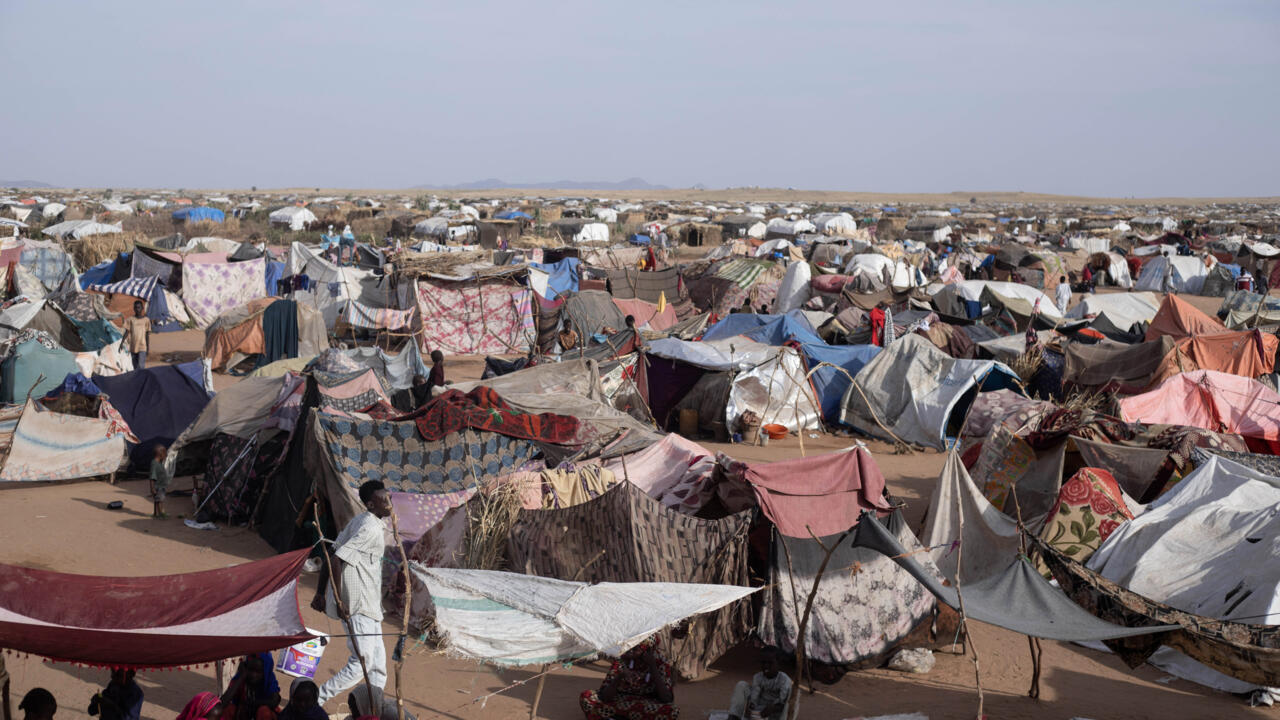
Survivors for the battle for El-Fasher have sought shelter in nearby Tawila © - / AFP

These were the grim updates shared with AFP's veteran Sudan correspondent Abdelmoneim Abu Idris Ali by people trapped in the 18-month-long siege of El-Fasher, a city overrun by the paramilitary Rapid Support Forces (RSF) two weeks ago.

Throughout the siege and ensuing battle, it was thanks to ordinary civilians that AFP and other news organisations were able to form a picture of what was happening there.

They were Dr Omar Selik, Dr Adam Ibrahim Ismail, Sheikh Moussa and activist Mohamed Issa -- men who relayed vital information from a city mostly cut off from communications.

They have all since been killed.


Until their deaths they played a crucial but, for security reasons, anonymous role in documenting Sudan's two-year war between the army and the RSF.

Ismail, a young physician, was detained by RSF fighters on October 26 as he tried to flee the city.

He was shot dead the following day.

Until his last moments, Ismail had been treating "the wounded and the sick" at the Saudi Hospital, El-Fasher's last functioning medical facility, according to the Sudanese Doctors' Union.

AFP's Abu Idris Ali learned of Ismail's death through that statement, having spoken to him only days earlier.

"His voice was weary," Abu Idris Ali recalled from Port Sudan.

"Every time we ended a call, he said goodbye as if it might be the last time."
'War machine'

In September, Abu Idris Ali had already lost three other local sources -- people who answered his calls and questions whenever communications allowed.

They were killed in a drone strike on a mosque in El-Fasher on September 16, which killed at least 75 people.

"Their voices painted a picture of El-Fasher," he said.

"Through them, I heard the groans of the wounded, the sorrow of the bereaved, the pain of those crushed under the war machine."

Before the war broke out in April 2023, AFP journalists criss-crossed the vast country, regularly visiting far-flung areas of Darfur.

It was there that Abu Idris Ali first met Sheikh Moussa, who opened the door to his modest hut in 2006, beginning a two-decade-long friendship.

Though he never met the tireless Dr Selik or the fiery 28-year-old Mohamed Issa, Abu Idris Ali said, "their voices ring in my ear every day."

Dr Selik, a kind-hearted medic who acted as a key source for journalists worldwide, witnessed the collapse of El-Fasher's health system before his own demise.

Hospitals were shelled, shuttered, or emptied of supplies, yet he continued to work tirelessly.

"He always tried to hide the tinge of sadness in his voice when he gave me toll figures," Abu Idris Ali recalled.

"He spoke like he was talking to a patient's family, breaking the news of the death of a loved one."

Fearful for his own family, he sent them to safety while staying behind to save lives.

Since his death, other doctors have taken up the mantle, but bombs fell daily, striking hospitals and killing medical staff.
'Another kind of grief'

Only days before his death, activist Issa told AFP he had fled the famine-hit Abu Shouk displacement camp, overrun by the RSF.

At 28, after months of crossing frontlines to deliver food, water and medicine to trapped families, he was killed.

"Every time I asked him what was happening in the city, his voice would ring out boisterous: 'nothing bad inshallah, I'm a little far away but I'll go find out for you!'" Abu Idris Ali said.

"You couldn't stop him -- and off he went."

Sheikh Moussa had been uprooted from his South Darfur village 22 years ago by the Janjaweed militia, from which the RSF would end up descending.

He spent the rest of his life in refugee camps.

"Violence broke out over and over outside his door, yet his laugh never faded," Abu Idris Ali recalled.

When bombs rained down on El-Fasher, Sheikh Moussa "would speak endlessly of the pain his people were facing, but if you ever asked him how he was, he would only ever say: al-hamdulillah, thank God".

"Every phone call, I could see him, always sitting cross-legged in the shade outside his door, always in a blindingly white jalabiya robe and matching prayer cap, always smiling despite the horrors around him."

Sheikh Moussa never made it home to his village, between El-Fasher and Nyala, the South Darfur state capital.

"Many of those 75 people gathered in that mosque had run for their lives just days before, but an RSF drone showed them there was no fleeing death," Abu Idris said.

"Every death is a tragedy, one we are accustomed to reporting. Yet it is another kind of grief when it is someone you have broken bread with, someone whose voice you heard every day."

© 2025 AFP

Sudan’s Civil War Ravages The Core Of Our Humanity – OpEd


People who have fled El Fasher arrive in Tawila in North Darfur, Sudan. Photo Credit: UNOCHA

November 10, 2025 

By IDN
By Alon Ben-Meir


The Sudanese civil war is one of the greatest tragedies we are witnessing today. The international community is disgraceful for sitting on its hands, watching with indifference this ongoing humanitarian catastrophe.

Sudan’s civil war erupted in April 2023, and so far, several rounds of peace talks have been of no avail in bringing an end to the horrific, ongoing conflict. Two generals who were aligned in bringing about the 2021 coup are now the leaders of the opposing sides: General Abdel Fattah al-Burhan is the head of the Sudanese Armed Forces (SAF) and, in essence, the country’s de facto president. His one-time deputy and now opponent is General Mohamed Hamdan Dagalo, leader of the 100,000-strong Rapid Support Forces (RSF).

In June 2025, the RSF won a significant victory when it seized control of the region along Sudan’s border with Libya and Egypt. Libyan strongman General Khalifa Haftar has been accused of supporting the RSF by providing it with weapons and fighters.

The RSF also controls most of Darfur and much of neighbouring Kordofan. In fact, there are fears that the country may once again be divided into two states if the RSF carries through with its declared plan to establish a rival government.
Unfathomable Atrocities

Perhaps the most horrifying consequence of the conflict is the rape and killing of innocents, including children and toddlers. The UN reports that over 40,000 people have been killed and more than 14 million have been displaced; the Integrated Food Security Phase Classification has identified widespread famine, which is affecting nearly 400,000 people. There’s also been horrifically extensive sexual violence against very young children, and reports of children attempting to end their own lives as a result of these attacks.

The Massalit people and other non-Arab communities in Sudan’s West Darfur state have been the target of ethnic cleansing. The RSF and allied Arab militias have perpetrated atrocities and relentless assaults in Massalit neighbourhoods in El Geneina, the capital of West Darfur, slaughtering thousands and leaving as many without a home or refuge.

In February, the Sudanese army bombed Nyala, South Darfur’s largest city, with unguided bombs. These strikes killed dozens and devastated civilian neighbourhoods — a textbook case of indiscriminate warfare. Meanwhile, UN convoys have been attacked multiple times, including in early June and late August, proving again that humanitarian workers are under siege too.
The Complicit Countries in Sudan’s Mayhem

General al-Burhan is primarily supported by Qatar, which provides him with financial backing and military equipment. He is also supported by Iran, which is reportedly supplying drones, and Eritrea, which hosts training camps for SAF-aligned groups, especially near the eastern borders.

The RSF is getting significant backing from the United Arab Emirates, which has been accused of sending them weapons and drones. Turkish defence firms have also been involved in providing drones that end up being used by both sides.

The Washington Post has reported on how the use of drugs – specifically Captagon, a synthetic amphetamine – by militia fighters “has introduced a dangerous new variable to an already lawless battlefield.” Captagon pills, which can be produced in the hundreds of millions, make fighters more prone to violence and more likely to commit unspeakable atrocities.

Half of Sudan’s population now depends on humanitarian aid to survive – over 25 million people relying on food deliveries just to make it through the day, in a country where bombs keep falling and villages are burned to ash.

Both the RSF and SAF are committing atrocities with impunity, with civilians trapped in the middle of this nightmarish war: targeted ethnic killings, gang rapes, airstrikes on hospitals and homes, looting of aid, and blockades that starve entire cities.

If either side pushes for total victory, which at this point seems all but unattainable, it will involve an escalation of the slaughter to truly catastrophic proportions – as it will mean that other states (Russia, Iran, UAE, Libya, Chad, Ethiopia, Egypt, etc.), which have thrown in with one side or the other, will have to significantly ramp up their support in military aid and the provision of more advanced weaponry.

Both sides remain utterly entrenched in their mutual opposition, and the states backing them do not seem willing to consider applying diplomatic pressure to change the status quo.

If the conflict continues to rage for years, it would destroy whatever is left of Sudan and only deepen the calamity that has been inflicted on millions of Sudanese civilians.
There is No Time to Lose

The civil war in Sudan is a moral and humanitarian outrage—a power squabble between two ruthless military leaders, neither of whom has the true interests of their country at heart, but each of whom is greedy for more power and wealth while civilians are paying an unfathomable price in death and destruction.

The international community must come to its senses and make a concerted diplomatic effort to bring an end to this senseless carnage and indiscriminate killing, rape, and pillage.

Such an effort may sound like wishful thinking, but how many more children must see their parents be murdered or sexually assaulted? How many more mothers must watch as their children are killed before their eyes? How many more women must be gang raped before being brutally killed by drug-fueled paramilitaries? How many more children must attempt to end their own lives to escape the horror of their existence?
The International Community Must Act Now

Several conditions must be met for the war to come to an end. Sadly, there is no reason to believe that Trump will do anything to end the war. His complicity in the genocide in Gaza speaks volumes about his apathy and callousness. Thus, ending the war would require a nuanced international diplomatic push, especially from the UN and the EU.Support credible investigations and impose a comprehensive arms embargo on all parties involved in Sudan to cut off the flow of weapons and end their cynical and self-serving support.
Coordinate targeted sanctions on individuals and entities supplying financial or military support to the combatants, and ensure protection for the millions still trapped in this war.
Push for an international-led peacekeeping mission to protect civilians and create safe zones for humanitarian aid.
Sponsor inclusive peace talks that involve not just the warring parties but also local civil society leaders and regional stakeholders.
Increase humanitarian funding and logistical support to ensure food, medical aid, and shelter reach those in need.
Establish an international inquiry or tribunal to document war crimes and hold perpetrators accountable, creating pressure for both sides to negotiate.
Leverage regional diplomacy by engaging neighbouring African and Middle Eastern countries to support a unified peace effort.

This is a war without any redeeming qualities – there are no lofty ideals at stake, and neither side, if victorious, is likely to ensure the country a better or brighter future. But an end to the war would mean halting an ever-growing crisis, which is affecting millions of men, women, and children whose lives are beset with starvation and the daily threat of sexual violence, mutilation, and death.

It is time for Western powers to act. Otherwise, their moral bankruptcy will be on full display, as conditions will continue to degenerate and ultimately devolve into an unimaginable living hell for tens of millions of innocent Sudanese.


Dr. Alon Ben-Meir is a retired professor of international relations, most recently at the Centre for Global Affairs at NYU. He taught courses on international negotiation and Middle Eastern studies.


IDN

IDN-InDepthNews offers news analyses, features, reports and viewpoints that impact the world and its peoples. It has been online since 2009. Its network spans countries around the world.


Takaichi’s Foreign Policy Comes Into Focus In Japan – Analysis


Japan's Prime Minister Sanae Takaichi arriving at the Prime Minister’s Office. Photo Credit: Prime Minister’s Office of Japan


November 10, 2025 
Geopolitical Monitor
By Jonathan Bak

The decision to elect Sanae Takaichi as Japan’s prime minister marks a significant moment in the country’s political and diplomatic trajectory. Known for her ambitious and conservative stance, Takaichi brings clear priorities to her new role of managing the evolving challenges of both domestic and international affairs. Among her challenges is Japan’s ongoing support for Ukraine in its efforts to repel Russia’s invasion.

Since 2022, Takaichi has advocated for Ukrainian security and a negotiated ceasefire, and her approach to foreign policy blends continuity with new strategic considerations. While Japan’s support for Ukraine and pressure on Russia are set to continue, Takaichi also seeks renewed diplomatic engagement with Moscow and its partners to address key bilateral issues. Yet despite any conciliatory initiatives, the Ukraine war will continue to loom large in Takaichi’s policy agenda.

Japan’s Record of Support for Ukraine

After Russia’s 2014 invasion of Crimea, Japan joined other G7 nations in imposing sanctions on Moscow. In the wake of the 2022 invasion, Japan increased pressure on Russia and to date, has imposed hundreds of sanctions on Russian individuals and entities. Japan is also one of the few non-European Union countries that holds frozen Russian assets.

Since 2022, Tokyo has increased support for Ukraine, providing $16 billion in economic assistance. It supplies non-lethal military assistance and signed a 10-year security arrangement with Kyiv in November 2024. Japan has also assisted in ordinance removal efforts since 2023. The country has joined cross-regional collectives such as the Coalition of the Willing and the Indo-Pacific Four, ensuring support for Ukraine in the present and future.

President Zelensky was gratuitous in congratulating Takaichi’s election success, indicating that it portended a strengthening of Ukraine-Japan relations. Soon after the prime minister and her cabinet took office, the country hosted the third annual Ukraine Mine Action Conference in Tokyo. During the conference, newly-appointed Japanese Foreign Minister Motegi Toshimitsu affirmed that Japan will continue to assist in Ukraine’s de-mining operations. He announced the launch of the Ukraine Mine Action Support Initiative. This support package underscores that de-mining efforts will not just include ordinance removal; they will also focus on reconstruction, economic resilience, and the restoration of human security. In other words, de-mining efforts under Takaichi will emphasize a forward-looking perspective on post-conflict and reconstruction of Ukraine.


Takaichi’s Foreign Policy Blueprint


Takaichi’s first policy speech as Japan’s leader presented her plans for national security and foreign policy. She emphasized that military developments in Russia, China, and North Korea are serious concerns. Each country has played a role, directly or indirectly, in the Ukraine war. She stated that Japanese diplomacy will be restored in each case. Under her leadership, Japan and China will work to promote a mutually beneficial strategic relationship. While she denounced North Korea’s nuclear and missile development, she indicated her openness to meeting with Kim Jong Un to discuss the return of Japanese abductees. Regarding Russia, Takaichi asserted that the war of attrition must not expand into a cross-regional conflict. Though relations with Moscow are at an all-time low, she emphasized that territorial issues must be resolved and that a peace treaty must be enacted. For defense, she announced plans to increase spending to 2% of GDP.

Based on this speech, Takaichi’s views on foreign and defense policy appear to have adjusted. While she remains committed to enhancing military capabilities, she now places greater emphasis on diplomacy in bilateral matters, particularly with countries she has previously criticized. Interestingly, shortly before her speech, Russian aircraft conducted a fly by over the Sea of Japan, prompting a response from the Self-Defense Forces. After her address, the Kremlin acknowledged her pledge for bilateral peace. Despite her condemnation of the invasion and being bannedfrom Russia, her previously hawkish tone seems to have shifted toward a more pragmatic approach.

One possible reason for the shift may be a desire to better align Japan’s policies with its most important ally, the United States. Takaichi has sought to ensure a symbiotic relationship with President Donald Trump, aiming to address key bilateral matters such as finalizing the trade agreement and responding to his push for US allies to increase defense spending. She may also be strategically echoing Trump’s approach by pursuing bilateral relationships with other regional leaders, including Vladimir Putin, Kim Jong Un, and Xi Jinping.

Another possibility is that she is modeling her approach on Shinzo Abe’s diplomatic endeavors by building a rapportwith Putin. During his time in office, Abe was the only world leader to consistently engage with Putin and to develop a personal relationship. Although the territorial dispute over the Kuril Islands was never fully resolved, there was notable progress in bilateral cooperation that has not been seen since. A third possibility is that Takaichi recognizes that the rhetoric and actions of a parliamentarian differ from those of a head of government, who must focus on what is best for the nation as a whole.

Efforts to engage with Russia could be a hit or miss. In the post-Abe years, longstanding issues with Russia have been persistent. These include the dispute with the Kuril Islands, Russian aircraft flying into Japanese airspace, the Russian navy conducting joint exercises with its Chinese counterpart in the Sea of Japan, and Japan being placed on the unfriendly countries list. Granted, dialogue could lead to a revival in bilateral relations, but Moscow has statedthat it can only commence once Tokyo stops the “anti-Russian rhetoric.”

Strategic Foresight

Despite Takaichi’s pledge to engage Russia through diplomacy, she made her support for Ukraine clear. Shortly after the policy speech, Takaichi attended the Coalition of the Willing meeting virtually. This event was her first major international appearance as prime minister and made her the first Japanese leader to participate in such meetings. European leaders praised her for choosing this assembly for her debut and reaffirming Japan’s support. Takaichi stated on the record that Japan’s support for Ukraine will also include building social and economic resilience. The members all agreed that they will continue to inflict economic pressure on Russia to end the aggression. Takaichi’s focus on post-conflict resilience, exemplified by Japan’s leadership at the Ukraine Mine Action Conference, reflects her commitment to preparing for Ukraine’s eventual recovery and regional stability.

Japan’s role in supporting Ukraine’s sovereignty appears unchanged, but it now places greater emphasis on strategic foresight. While Takaichi has expressed a willingness to engage in dialogue with regional leaders, she has not diminished national security measures or pressure on Moscow. The war in Ukraine will affect the Indo-Pacific. Regardless of the war’s outcome, Russia and North Korea will emerge with experience in modern warfare, including grey zone tactics, drone warfare, and cyber capabilities. North Korean state media has already criticizedTakaichi, particularly her pledge to increase military capabilities and asserting that she is turning Japan into a “war state.”

Taiwan is another security issue that involves Japan. Many believe that a Taiwan contingency is still possible, which has been juxtaposed to the invasion of Ukraine. As China continues to enhance its military capabilities, plans have been drafted to evacuate the Sakishima Islands in the event that the situation escalates. In her first summit with Xi, Takaichi emphasized the importance of stability and security in the Taiwan Strait. However, Beijing was not pleased when she subsequently met with Taiwanese officials at the APEC Summit. Overall, once the Russia-Ukraine war ends, the geopolitical environment will shift, and Takaichi is preparing for new challenges that may arise.


This article was published by Geopolitica Monitor.com

Geopolitical Monitor
Geopoliticalmonitor.com is an open-source intelligence collection and forecasting service, providing research, analysis and up to date coverage on situations and events that have a substantive impact on political, military and economic affairs.


Sunday, November 09, 2025


UK Children’s dental health still very poor despite interventions 


University of Leeds


Children's access to NHS dentists and rates of tooth decay remain very poor despite improvements from national government interventions, oral health experts say. 

Analysis of the latest government data by the Child of the North initiative gives cause for cautious optimism, they say, but the schemes need to be scaled up and strengthened to meet the needs of young people across the country. 

The latest update, titled Improving Children’s Oral Health Update: Integrated Health and Education Solutions, is the seventh to be released as part of the Child of the North’s #ChildrenFirst campaign. It comes one year since the initiative exposed the unacceptable state of children’s oral health, and evidence-based solutions to address it. 

The update commends government action taken in the past year to improve children’s oral health, including introduction of a national supervised toothbrushing programme; plans for the expansion of water fluoridation in the North East of England; consultation on the expansion of the soft drinks industry levy; and bans on both the sale of high-caffeine energy drinks to children and on junk food advertising before 9pm. 

But it shows that despite these improvements, children living in England’s most deprived communities are still over three times as likely to be admitted to hospital for tooth extractions than those living in more affluent areas. 

It also shows: 

  • children living in the most deprived areas of England are more than twice as likely to experience decay as those living in the least deprived areas 

  • 26.9% of five-year-olds have tooth decay 

  • In West Yorkshire, 950 school days were lost for dental reasons across nine schools in one academic year 

Peter Day, Professor of Children's Oral Health in the University of Leeds’ School of Dentistry and Consultant in Paediatric Dentistry at Leeds Teaching Hospitals NHS Trust, co-led the report with Zoe Marshman, Professor in Dental Public Health at the University of Sheffield. 

Both researchers have acted as advisors on the UK Government’s ‘supervised toothbrushing programme’, which aims to reach up to 600,000 children in the most deprived areas. Their research shows that the programme has been rolled out to 240,000 children across schools and nurseries since launching in March this year. 

Professor Day said: “These are exciting times. While disease levels remain stubbornly high—impacting our most vulnerable children and families—the government has taken important steps to implement the policy recommendations outlined in our original report.  

“As we transition into delivery mode, evaluating the impact of these policies is essential. Engagement from schools and nurseries will be critical. We must capture the broader benefits, particularly those affecting education, such as attendance, school readiness, and attainment.” 

Professor Marshman said: “There has been no real improvement in children’s oral health for nearly 10 years and our first national report published in September 2024 called for urgent action. Since then there have been major new ambitious initiatives announced with real potential to address this worrying trend.  

“To achieve this potential requires partnership working across national and local government with child education and health professionals engaging with parents and children.  

“Universities are key to evaluating the impact of these initiatives on dental disease and child wellbeing.” 

#ChildrenFirst builds on a major series of reports produced last year on key topics identified by Northern child health leaders as major issues of concern, including poverty, special educational needs, school attendance and mental health. The reports included evidence-based plans and recommendations for policymakers to help address these issues. 

The 2025 #ChildrenFirst campaign was launched at the National Opportunity Summit hosted in Leeds on Monday 8 September, where Minister Josh MacAlister pledged his support towards building a country that works for all children on his first day as Parliamentary Under-Secretary in the Department for Education. 

The #ChildrenFirst campaign also includes the launch of toolkits designed to help schools, child health workers and local authorities take practical steps to improve the health and wellbeing issues faced by the children and young people in their care. Organisations can download the toolkits free of charge.  

The toolkits are published on a weekly basis over the 12 week period from September to December 2025 alongside the re-released reports in the ‘A country that works for all children and young people’ series, which were produced jointly by Child of the North – a collaboration between the N8 Research Partnership and Health Equity North – and the Centre for Young Lives think tank. 

The toolkits provide evidence and suggestions about how all parties can work together to build a country that works for all children and young people. The goal is to ensure alignment between practitioners on the ground and government’s work on the Opportunity Mission to make certain that every child has the best possible start in life. 

Baroness Anne Longfield, Founder of the Centre for Young Lives, said: “Action taken by Government since the Child of the North and Centre for Young Lives report is welcome. The reality is that far too many children continue to suffer the effects of poor oral health, particularly in areas of higher deprivation. 

“The Government’s proposals for a programme of supervised teeth-brushing in schools is a positive step forward, as is its overall focus on boosting children’s wellbeing. But we know that so much more can be achieved - whether through local oral health strategies, supervised toothbrushing, or supporting healthier food and drink choices. 

“We need to take evidence-based action and develop a national plan to tackle a rotten teeth crisis affecting millions of our children. We are calling on anyone who cares for children and young people to play their part in tackling this issue.” 

Each of the 12 reports is based on in-depth research carried out by academic experts in children and young people’s health and wellbeing from universities across the North of England and beyond, including N8 Research Partnership members Leeds, Manchester, Durham, York, Lancaster, Liverpool, Sheffield and Newcastle, the University of Bradford, and others. 

The policy recommendations made in the reports have helped to shape the Government's Opportunity Mission - the goal of which is to break down the link between a person’s background and their future success, and giving children the best start in life.  

Professor Mark Mon-Williams, who edited the report series, said: The number of children with rotten teeth is a powerful indicator of the wider decay in child wellbeing that is affecting millions of young lives across the UK.   

“This report shows that we can make progress when health, education, and policy work hand in hand. We must now ensure these efforts to improve outcomes for all children reach every community. Good oral health is one of the essential components needed if we are to give every child the best chance to achieve and thrive in school and beyond.” 

The report update, the original report, toolkits and last year's webinar are all available on the N8 Research Partnership website. 

Further information 

Email media enquiries to University of Leeds press officer Lauren Ballinger via l.ballinger@leeds.ac.uk. 
 

University of Leeds 
The University of Leeds is one of the largest higher education institutions in the UK, with more than 40,000 students from about 140 different countries. We are renowned globally for the quality of our teaching and research. 
We are a values-driven university, and we harness our expertise in research and education to help shape a better future for humanity, working through collaboration to tackle inequalities, achieve societal impact and drive change. 
The University is a member of the Russell Group of research-intensive universities, and is a major partner in the Alan Turing, Rosalind Franklin and Royce Institutes www.leeds.ac.uk 
Follow University of Leeds or tag us into coverage: Bluesky | Facebook | LinkedIn | Instagram 

Child of the North 
Child of the North is a partnership between the N8 Research Partnership and Health Equity North and includes partners from across the North of England. Its vision is to develop a platform for collaboration, high-quality research, and policy engagement to support fairer futures for children living in the North of England.  

N8 and N8+ 
The N8 Research Partnership is a collaboration of the eight most research-intensive universities in the North of England: Durham, Lancaster, Leeds, Liverpool, Manchester, Newcastle, Sheffield, and York.  

N8+ extends this partnership to include additional collaborators beyond the core eight institutions, uniting broader research expertise and increasing collective influence around shared priorities. Partnerships in Bradford, including with the University of Bradford and Born in Bradford have been instrumental for the Child of the North initiative.