The International Space Station celebrates 25 years of human life in space. Here’s a look back at it
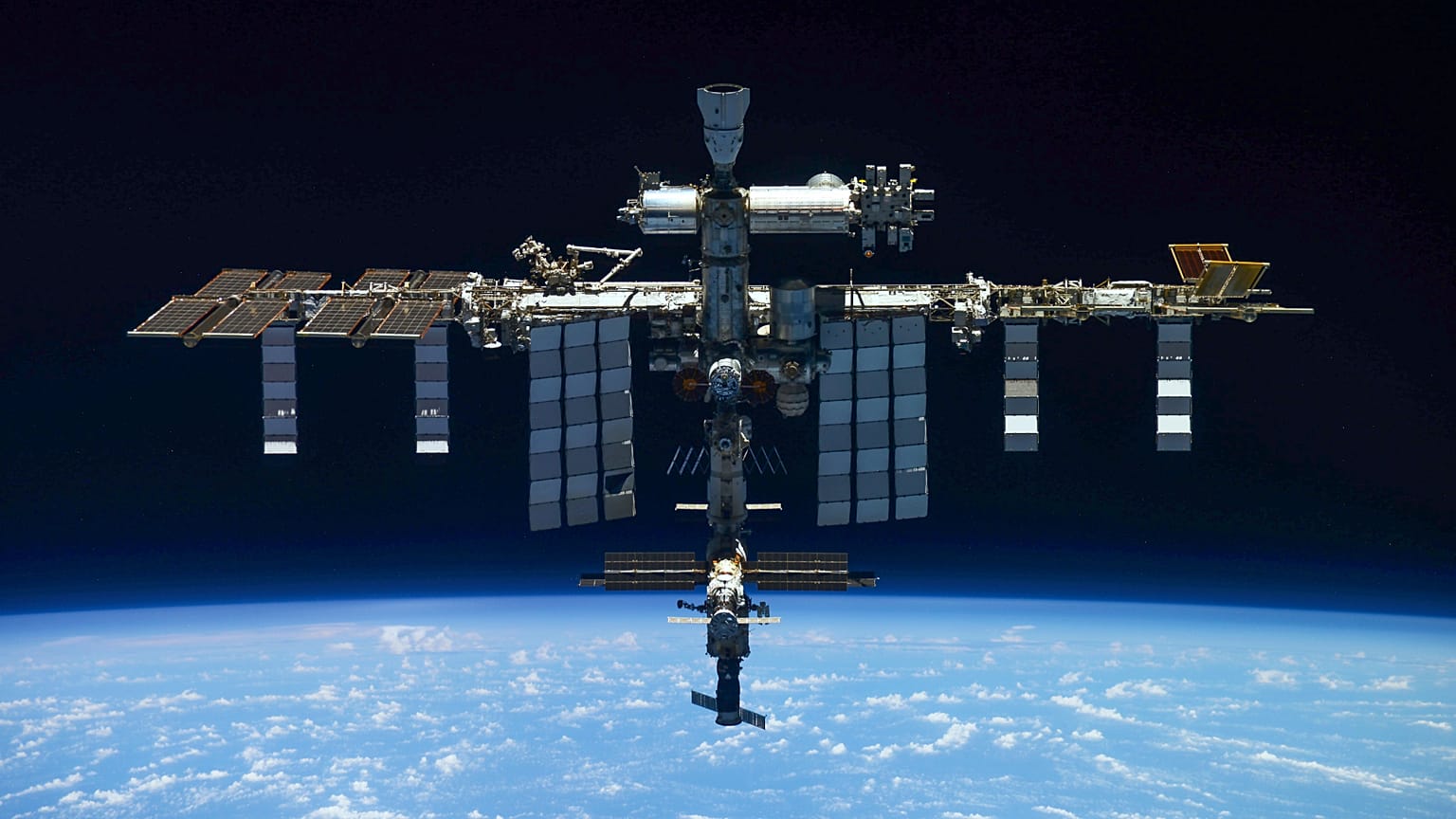
Three American and Russian astronauts landed at the International Space Station for the first time in November 2000. We take a look back at some of the station’s biggest moments.
On October 31, 2000, three astronauts from the United States and Russia blasted off from Kazakhstan on a two-day flight into space. Their destination: a 109 metre-long floating station perched above the Earth.
This Expedition 1 crew’s job was to bring the new International Space Station (ISS) to life by doing something no one had done before: spend four months in orbit assembling life support and communications systems needed for a long-term stay in space.
In the last 25 years, the ISS has seen over 290 people from 26 countries visit the space station. Most have been professional astronauts, but sometimes, space tourists and even movie directors have paid a visit.
The space laboratory has hosted more than 4,000 experiments from over 5,000 researchers from 110 countries, according to the United States National Aeronautics and Space Administration (NASA), the American space agency.
It’s also the main training ground for deep space missions. Astronauts are using it to prepare for the upcoming Artemis missions, which will bring humans back to the Moon’s surface for the first time in more than 50 years – and if it all goes to plan, onwards to Mars.
Euronews Next takes a look back at the history of the ISS to celebrate the 25 year anniversary of human life in space.
How was the ISS built?
The ISS National Laboratory says it was inspired by the same dream that many space innovators have today: living in space.
The American government started building the ISS with that goal in mind as far back as the 1950s, by designing a modular orbital station that would house crews and refuel spacecraft on their way to a long-term base on the Moon.
Throughout the 1960s, both the US and Russia advanced their own ideas of what a space station could look like.
By 1984, the ISS project was approved by US President Ronald Reagan, a budget was allotted, and eventually partners in Europe, Canada, and Japan were brought on, the laboratory said.
George Abbey, the director of NASA’s Johnson Space Centre at the time of the ISS’ development, said on the 20th anniversary in 2020 that the Russians allowed the Americans to live nearly 1,000 days in orbit on board their space station, the Mir.
From 1994 to 1998, the Shuttle-Mir programme “prepared the way” for the ISS and “began an era of cooperation and exploration” in space, NASA said.
Europe’s role
The European Space Agency (ESA) got involved in 1988, when it signed a memorandum of understanding with NASA.
The ESA built two of the station’s elements, including the European Columbus laboratory, which specialises in research in physics, materials sciences, and life sciences. It also built several Automated Transfer Vehicles (ATV), or supply ships that carried up to seven tonnes of cargo with provisions, scientific payloads, and propellant to the ISS.
Europe also contributed to equipment and design in the ISS, with the agency claiming that more than one-third of pressurised elements in the station were designed and built by suppliers in the bloc.
The eventual end result of this international cooperation, including the ESA’s involvement, is the largest humanmade object ever to orbit the Earth.
NASA describes the ISS as “larger than a six-bedroom house,” with two bathrooms, a gym, and a 360-degree bay window. The station has a pressurised volume of 1,005 cubic metres and a mass of nearly 420,000 kilograms.
25 years of memories
The ISS has been the backdrop for historic and personal moments alike over the last 25 years. One of the first astronauts to land at the station, Russian Yuri Malenchenko, married his wife Ekaterina Dmitriev from 380 kilometres above the Earth in 2003.
In 2004, American astronaut Mike Fincke listened from the ISS as his wife gave birth to their daughter, Tarali, near Houston, Texas. In the Indian dialect spoken by his wife’s family, Tara means “star”.
There’s been tragedy too for those onboard the ISS. American Daniel Tani mourned family from the station in 2007, when ground crews told him that his 90-year-old mother had died in a car crash.
Then in 2011, American astronaut Scott Kelly found out that his sister-in-law, US congresswoman Gabrielle Giffords, had been shot in the head and survived.
One of the most recent ISS missions is also one of the most memorable. In 2024, astronauts Butch Wilmore and Suni Williams went up to the ISS to test Boeing’s new Starliner capsule in what was supposed to be a weeklong trip.
However, they stayed at the station for more than nine months because of safety concerns over the capsule. NASA eventually enlisted the Elon Musk-owned SpaceX to bring the astronauts back to Earth.
Most of the people who have visited the station have flown the flag of their country, but some enthusiasts have started to pay their way into space.
The first space tourist, California billionaire Dennis Tito, went up with the Russians in 2001 despite objections from NASA. The Russians continued to fly private clients, including a movie crew who went up to the station in 2021.
The station continues to welcome new crews. In June, the first astronauts in decades from India, Poland, and Hungary were welcomed to the station along with Peggy Whitson, the station’s first female commander.
The station has also been the place where thousands of research projects have been conducted. Because of testing on the ISS, scientists developed life support systems that can be used on commercial flights between space stations for the upcoming Artemis missions, NASA said.
Researchers have grown over 50 species of plants on the station – including vegetables, grains, and legumes – and are testing ways to scale crop growth to sustain life in space without the need for shipments.
Astronauts have also broken ground on 3D printing tools and spare parts from the station.
The end of the ISS’ life
The ISS is almost at its end of its life. There are plans for NASA, Russia’s Roscosmos, and the other partner states to deorbit the station.
That’s because the “technical lifetime” of the station is affected by the high number of dockings and undockings that space crews have done over its 25-year lifespan, NASA said, as well as the extreme temperature changes in space.
Russia will work with the Americans on the ISS until 2028 and the US will eventually deorbit the entire system after the station is retired in 2030.
NASA said the US will replace the ISS with “commercially-owned and operated platforms” in orbit for future missions to the Moon and Mars.
The station will be decommissioned by first bringing the station closer to the Earth and then mounting a re-entry mission that will land the station into an unpopulated area in the ocean.
NASA is paying SpaceX nearly $1 billion (€866 million) to boot the space station from orbit in early 2031, according to The Associated Press. The company will launch a heavy-duty capsule to dock with the station and steer it to its landing site in the Pacific Ocean.
For Europe’s part, the ESA said it will stay involved in operations in low-earth orbit (LEO), such as Terrae Novae, an exploration programme that sends robots ahead of humans to the Moon and Mars.
It is also looking to strike business deals for in-flight equipment to support the scientific research of the bloc’s scientists in space.

Schematic of space-based search for ultralight exotic bosons and the prototype space quantum sensor, including vapor cell, magnetic shield, fiber-optic gyroscope, and radiation shielding box. CREDIT: ©Science China Press
November 10, 2025
By Eurasia Review
Exotic-boson-mediated interactions comprise 16 forms, of which 15 are spin-dependent and 10 are velocity-dependent. These interactions mat induce energy shifts in atomic energy levels, which can be detected as pseudomagnetic fields by quantum spin sensors.
The SQUIRE project plans to deploy quantum spin sensors on space platforms such as the China Space Station to search for such pseudomagnetic fields induced by exotic interactions between sensor spins and Earth’s geoelectrons. By integrating quantum precision measurement with space technology, SQUIRE overcomes the terrestrial bottleneck of simultaneously enhancing two critical parameters—relative velocity and polarized spin number.
The key advantages of space-based detection lie in: (i) The China Space Station operates in low Earth orbit at a stable velocity of 7.67 km/s relative to Earth—nearly the first cosmic velocity and ~400 times faster than moving sources in terrestrial experiments. (ii) Earth itself serves as a massive natural polarized spin source, with unpaired geoelectrons in the mantle and crust—polarized by the geomagnetic field—providing approximately 10⁴² polarized electron spins, exceeding laboratory SmCo₅ spin sources by ~10¹⁷. (iii) Orbital motion modulates exotic interaction signals into periodic oscillations. For the China Space Station (orbital period ~1.5 hours), the signal is modulated to ~0.189 mHz, a frequency band with inherently lower noise than DC regimes.
Thanks to these unique space advantages, even under the most stringent current coupling constant constraints, the amplitude of exotic fields in the SQUIRE scheme can reach up to 20 pT—far exceeding terrestrial detection limits (0.015 pT). The expected sensitivity for velocity-dependent exotic interactions with force ranges >10⁶ m is enhanced by 6–7 orders of magnitude.
Prototype Space Quantum Sensor: Engineering a Detector for Space Conditions
Developing the space quantum sensor prototype is central to realizing the SQUIRE mission, requiring high sensitivity and long-term stability in the complex space environment. Space-based spin sensors face three primary interference sources: geomagnetic fluctuations, platform mechanical vibration, and cosmic radiation.
To address these, the SQUIRE team developed a prototype integrating three breakthrough technologies: (i) Dual Noble-Gas Spin Sensor: Using ¹²⁹Xe and ¹³¹Xe isotopes with opposite gyromagnetic ratios, the sensor suppresses common-mode magnetic noise while preserving sensitivity to SSVI signals. This achieves 10⁴-fold magnetic noise suppression, and combined with multi-layer magnetic shielding, reduces geomagnetic fluctuations to sub-femtotesla. (ii) Vibration Compensation Technology: Equipped with a fiber-optic gyroscope, the system actively compensates for platform vibration, reducing noise to a negligible 0.65 fT. (iii) Radiation-Hardened Architecture: A 0.5 cm aluminum enclosure and triple modular redundancy in control circuits mitigate cosmic ray impacts. This ensures functionality even if two of three redundant circuits fail, reducing disruptions to <1 per day.
Integrating these technologies, the SQUIRE prototype achieves a single-shot sensitivity of 4.3 fT @ 1165 s—ideal for detecting SSVI signals with a 1.5-hour period—laying a solid technical foundation for on-orbit high-precision dark matter detection.
Broader Scientific Impact: A Space-Ground Integrated Sensing Network
Beyond exotic interaction searches, quantum spin sensors on the China Space Station will enable a wide range of fundamental physics research in space. SQUIRE envisions a “space-ground integrated” quantum sensing network, linking orbital and terrestrial sensors to dramatically enhance sensitivity across multiple dark matter models and beyond-Standard-Model phenomena, including other exotic interactions, Axion halos, and CPT violation probes.
Specifically, high-speed orbital motion enhances coupling between axion halos and nucleon spins, achieving a 10-fold sensitivity improvement over terrestrial direct dark matter searches. As China’s deep space exploration advances, the SQUIRE framework will inspire the use of distant planets (e.g., Jupiter and Saturn, rich in polarized particles) as natural polarized sources, expanding the frontiers of physics exploration on cosmic scales.
Eurasia Review
Eurasia Review is an independent Journal that provides a venue for analysts and experts to publish content on a wide-range of subjects that are often overlooked or under-represented by Western dominated media.
Within a second after the Big Bang: The birth of the first black holes, boson stars, and cannibal stars
A new study reveals that during a possible phase of primordial matter domination, interactions between particles could have given rise to the first compact cosmic objects.
Scuola Internazionale Superiore di Studi Avanzati
Before atomic elements came together, less than a second after the Big Bang, if particles condensed into halos of matter, these halos may then have collapsed, creating the first black holes, boson stars, and so-called cannibal stars. This is the conclusion of a new study just published in Physical Review D, conducted by a team of researchers from SISSA – Scuola Internazionale Superiore di Studi Avanzati, in collaboration with INFN, IFPU, and the University of Warsaw. Starting from the hypothesis, proposed by some cosmological models, that in the earliest phases of the Universe there was a brief Early Matter-Dominated Era (EMDE), the authors investigated how particles might have interacted with each other, discovering that such interactions could give rise to a surprising variety of cosmic objects.The study thus shows that even in the very first instants after the Big Bang, the Universe could already be a stage for a rich and complex physical phenomenology.
Right After Inflation: What Happened Next
Recent advances in cosmology have made it possible to reconstruct in detail the history of the Universe, from the rapid initial expansion known as inflation to primordial nucleosynthesis, the formation of the first atomic nuclei heavier than hydrogen, which occurred between 10 seconds and 20 minutes after the Big Bang. The intermediate period, however, remains largely unexplored. As the authors explain: “An intriguing possibility is that during this interval, matter temporarily dominated the Universe.” In this scenario, matter halos can naturally be formed. Furthermore, if the particles could interact with one another, then the interactions canlead to a gravothermal collapse, resulting in compact objects such as black holes and other exotic cosmic structures.
Strange Structures at the Dawn of the Universe
Among these compact objects, researchers suggest that cannibal stars could have formed. Cannibal stars are similar to traditional stars, except that it is the particle self-annihilations instead of nuclear fusion that powers the stars. At the same time, the authors note, boson stars may also have formed, where the quantum nature of particles supports the star. These stars might have populated the newborn Universe for only a few seconds before collapsing further into primordial black holes (PBHs). Alternatively, the PBHs could have formed directly from the collapse of the matter halos.
New Hypotheses on Primordial Black Holes
According to the study, the halos formed during an EMDE had relatively small masses (smaller than 10²⁸ grams) and, following gravothermal collapse, could have generated even smaller primordial black holes.Using a simplified theoretical model , the researchers showed that in some cases, PBHs might be overproduced, violating observational constraints; in others, asteroid-mass PBHs could form, potentially accounting for all the dark matter in the Universe. Finally, some PBHs might evaporate quickly, disappearing before primordial nucleosynthesis, that is, before the formation of light atoms such as hydrogen and helium.
New Perspectives on the Universe
The results also open up broader perspectives. As the authors conclude, “It would be interesting to explore the formation of cannibal stars and boson stars in the present-day Universe, through the collapse of self-interacting dark matter halos. Moreover, though more speculative, studying star formation and accretion in simple particle models could provide new insights into the complex astrophysical processes that shape our Universe.”
Journal
Physical Review D
Subject of Research
Not applicable
Article Title
Gravothermalizing into primordial black holes, boson stars, and cannibal stars
Mysterious ‘impossible’ merger of two massive black holes explained
A comprehensive set of simulations by Flatiron Institute astrophysicists and their colleagues revealed that magnetic fields are responsible for creating black holes with masses in a range previously thought to be largely off-limits
image:
A still image from a computer simulation of a black hole’s formation and evolution.
view moreCredit: Ore Gottleib/Simons Foundation
In 2023, astronomers detected a huge collision. Two unprecedentedly massive black holes had crashed an estimated 7 billion light-years away. The enormous masses and extreme spins of the black holes puzzled astronomers. Black holes like these were not supposed to exist.
Now, astronomers with the Flatiron Institute’s Center for Computational Astrophysics (CCA) and their colleagues have figured out just how these black holes may have formed and collided. The astronomers’ comprehensive simulations — which follow the system from the lives of the parent stars through to their ultimate death — uncovered the missing piece that previous studies had overlooked: magnetic fields.
“No one has considered these systems the way we did; previously, astronomers just took a shortcut and neglected the magnetic fields,” says Ore Gottlieb, astrophysicist at the CCA and lead author of the new study on the work published in The Astrophysical Journal Letters. “But once you consider magnetic fields, you can actually explain the origins of this unique event.”
The collision detected in 2023, now known as GW231123, was observed by the LIGO-Virgo-KAGRA collaboration using detectors that measure gravitational waves, the ripples in space-time caused by the movements of massive objects.
At the time, astronomers couldn’t fathom how such large fast-spinning black holes came to exist. When massive stars reach the end of their lives, many collapse and explode as a supernova, leaving behind a black hole. But if the star falls within a specific mass range, a special type of supernova occurs. This explosion, called a pair-instability supernova, is so violent that the star is annihilated, leaving nothing behind.
“As a result of these supernovae, we don’t expect black holes to form between roughly 70 to 140 times the mass of the sun,” Gottlieb says. “So it was puzzling to see black holes with masses inside this gap.”
Black holes in this mass gap can be formed indirectly, when two black holes merge to form a larger black hole, but in the case of GW231123, scientists thought this was improbable. The merging of black holes is a tremendously chaotic event that often disrupts the spin of the resulting black hole. The black holes of GW231123 were the fastest spinners seen by LIGO, dragging space-time around them at nearly the speed of light. Two black holes of their size and spin are incredibly unlikely, so astronomers thought something else must be at work.
Gottlieb and his collaborators investigated by conducting two stages of computational simulations. They first simulated a giant star 250 times the mass of the sun through the main stage of its life, from when it starts burning hydrogen to when it runs out and collapses in a supernova. By the time such a massive star had reached supernova stage, it had burned through enough fuel to slim down to just 150 times the sun’s mass, making it just above the mass gap and large enough to leave a black hole behind.
A second set of more complex simulations, which accounted for magnetic fields, dealt with the aftermath of the supernova. The model started with the supernova remnants, a cloud of leftover stellar material laced with magnetic fields and a black hole at its center. Previously, astronomers assumed that the entire mass of the cloud would fall into the newborn black hole, making the black hole’s final mass match that of the massive star. But the simulations showed something different.
After a nonrotating star collapses to form a black hole, the cloud of leftover detritus quickly falls into the black hole. However, if the initial star was spinning rapidly, this cloud forms a spinning disk that causes the black hole to spin faster and faster as material falls into its abyss. If magnetic fields are present, they exert pressure on the disk of debris. This pressure is strong enough to eject some of the material away from the black hole at nearly the speed of light.
These outflows ultimately reduce the bulk of material in the disk that eventually feeds into the black hole. The stronger the magnetic fields, the greater this effect. In extreme cases with very strong magnetic fields, up to half of the star’s original mass can be ejected through the black hole’s disk ejecta. In the case of the simulations, the magnetic fields ultimately created a final black hole in the mass gap.
“We found the presence of rotation and magnetic fields may fundamentally change the post-collapse evolution of the star, making black hole mass potentially significantly lower than the total mass of the collapsing star,” Gottlieb says.
The results, Gottlieb says, suggest a connection between the mass of a black hole and how fast it spins. Strong magnetic fields can slow down a black hole and carry away some of the stellar mass, creating lighter and more slowly spinning black holes. Weaker fields allow heavier and faster-spinning black holes. This suggests black holes may follow a pattern that ties their mass and spin together. While astronomers know of no other black hole systems on which this connection can be observationally tested, they hope future observations may find more such systems that could confirm this connection.
The simulations also show that the formation of these types of black holes creates bursts of gamma rays, which might be observable. Looking for these gamma ray signatures would help confirm the proposed formation process and reveal how common these massive black holes might be in the universe. Ultimately, if such a connection is confirmed, it would help astronomers gain a deeper understanding of the fundamental physics of black holes.
An infographic describing the new work.
Credit
Lucy Reading-Ikkanda/Simons Foundation
These 3D renderings of a direct-horizon collapsar with an initially weak magnetic field illustrate the system’s evolution. Early in the collapse, accretion disk winds unbind much of the stellar envelope, reducing the mass available for accretion onto the black hole. Eventually, a one-sided jet emerges from the region just outside the black hole, spinning down the black hole and expelling the remaining stellar material.
Credit
Ore Gottleib/Simons Foundation
About the Flatiron Institute
The Flatiron Institute is the research division of the Simons Foundation. The institute's mission is to advance scientific research through computational methods, including data analysis, theory, modeling and simulation. The institute's Center for Computational Astrophysics creates new computational frameworks that allow scientists to analyze big astronomical datasets and to understand complex, multi-scale physics in a cosmological context.
Journal
The Astrophysical Journal Letters
Article Title
Spinning into the Gap: Direct-Horizon Collapse as the Origin of GW231123 from End-to-End GRMHD Simulations
Article Publication Date
10-Nov-2025

No comments:
Post a Comment