Friday, November 14, 2025


Breaking Rust: AI artist tops US chart for first time as study reveals alarming recognition stats
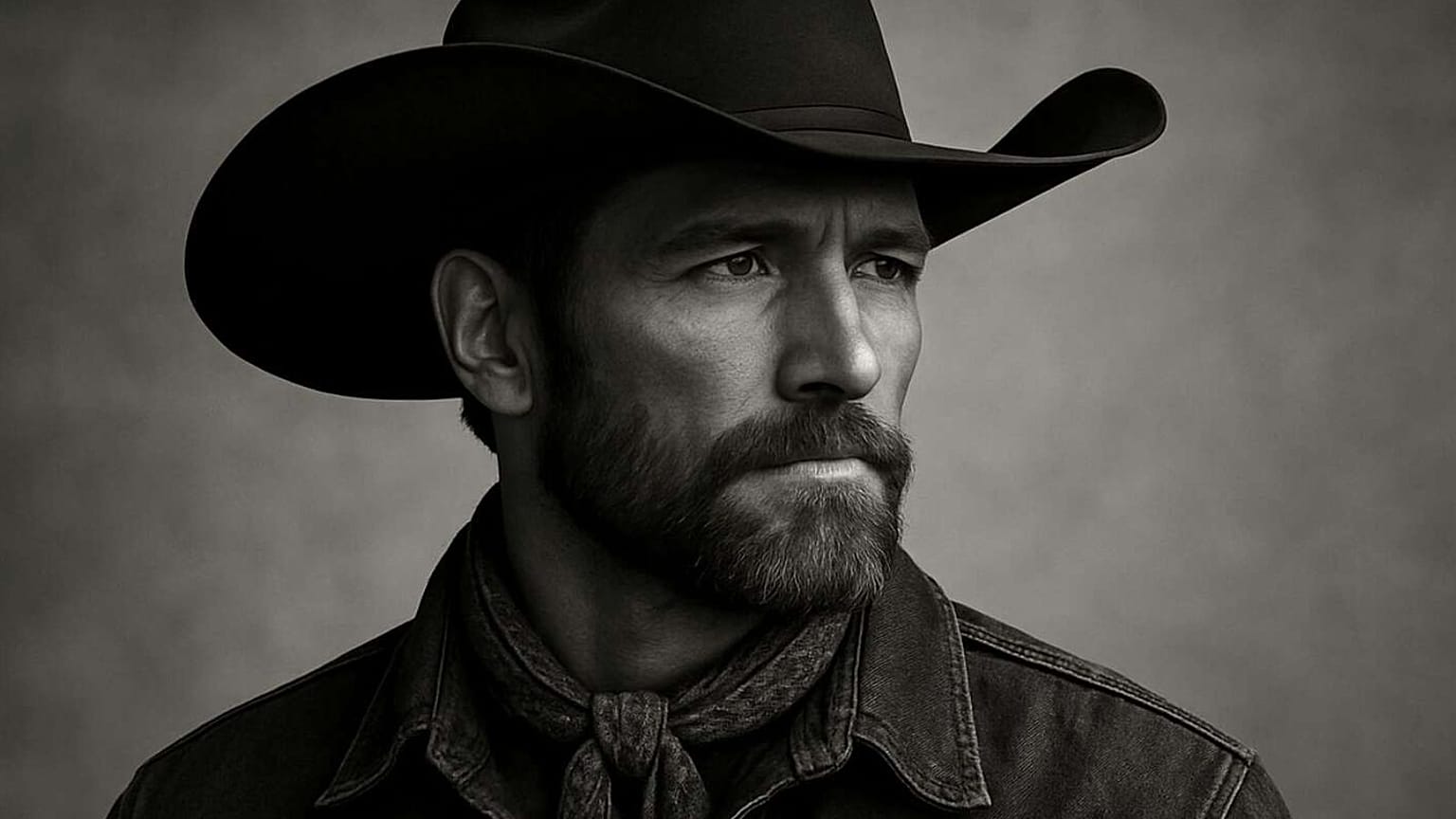
AI-created image depicting Breaking Rust
Copyright Instagram - Breaking Rust


By David Mouriquand
Published on 

An AI-generated music persona has topped the US Billboard charts for the first time, at the same time as a “first-of-its-kind" study from French streaming service Deezer reveals that 97 per cent of people “can’t tell the difference” between real music and AI-generated music.

It’s a first, and not one worth celebrating.

A song generated by artificial intelligence has topped the charts in the US for the first time, as a country “artist” named Breaking Rust has landed the Number 1 spot on Billboard’s Country Digital Song Sales chart.

The viral track, ‘Walk My Walk’, has over 3.5 million streams on Spotify - a platform on which “he” is a verified artist and which has prior form when it comes to giving AI-generated bands a platform.

Other Breaking Rust songs like ‘Livin’ on Borrowed Time’ and ‘Whiskey Don’t Talk Back’ have amassed more than 4 million and 1 million streams respectively. And if you just cringed your way into a mild aneurysm when reading that last song title, you’re only human.

Not all that much is known about Breaking Rust, apart from “his” nearly 43,000 followers on Instagram and a Linktree bio that reads: “Music for the fighters and the dreamers.”

How profound.

Any gluttons for clichéd dross who choose to head to the Instagram page will find several generic AI-generated videos of stubbly cowboys looking like factory-reject Ben Afflecks walking on snow-covered train tracks, lifting weights and holding their hats under the rain. In other words, stereotypical Outlaw Country fantasies that reek of fragile masculinity and necktie fetishes.

Still, fans are clearly loving it, seemingly unbothered that the “Soul Music for Us” glaringly lacks, you know, a soul.

“Love your voice! Awesome song writing! I want more” reads one comment on a video, while another writes: “I don’t know if this is a real guy but his songs are seriously some of my favorite in life.”

“I LIKE THE SONG, NO MATTER WHO CREATED IT!” screams one comment on YouTube.

Some listeners also appear not to realize that Breaking Rust isn’t human, as fans are complimenting the lyricism (strewth!) and even asking the “artist” go on tour.

This is not the first time that an AI-generated act has debuted on Billboard’s charts. One notable example is Xania Monet, who made headlines in September when the tracks ‘Let Go, Let Go’ climbed to No.3 (Gospel) and ‘How Was I Supposed To Kow’ peaked at No. 20 (R&B).

Created by Telisha “Nikki” Jones using the AI platform Suno, Monet has been a particularly visible AI “artist” – one which even triggered a bidding war to sign “her”. Hallwood Media, led by former Interscope executive Neil Jacobson, ultimately won and signed Monet to a reported multimillion-dollar deal.

Who knows whether the same will happen for Breaking Rust, but the chart-topping success does signal a continuing shift in the music industry.

There have been concerns about the use of generative AI in all creative sectors – from Hollywood with the writer and actor guild strikes and the creation of the so-called AI actress Tilly Norwood to the recent internet meltdown over Coca-Cola making their Christmas adverts entirely AI-generated. And the more AI-created bands and musicians continue to proliferate, the more real human artists will struggle to break through – let alone generate revenues from their craft.

As Josh Antonuccio, director of the School of Media Arts and Studies at Ohio University, recently told Newsweek: “Whether it’s lyrical assistance, AI-assisted ideation, or wholesale artist and song creation, AI-generated content is going to become a much more common reality and will continue to find its way into the charts.”

He added: “The real question starts to become 'will fans care about how it’s made?'”

Indeed, the success of Breaking Rust comes as a new, “first-of-its-kind" study has found that 97 per cent of people “can’t tell the difference” between real music and AI-generated music.

The survey, conducted by French streaming service Deezer and research firm Ipsos, asked around 9,000 people from eight different countries (Brazil, Canada, France, Germany, Japan, the Netherlands, the UK and the US) to listen to three tracks to determine which was fully AI-generated.

According to the report, 97 per cent of those respondents “failed” - with 52 per cent saying they felt “uncomfortable” to not know the difference.

The study also found that 55 per cent of respondents were “curious” about AI-generated music, and that 66 per cent said they would listen to it at least once, out of curiosity

However, only 19 per cent said they felt that they could trust AI, while another 51 per cent said they believe the use of AI in music production could lead to “generic” sounding music.

“The survey results clearly show that people care about music and want to know if they’re listening to AI or human made tracks or not,” said Alexis Lanternier, CEO of Deezer. “There’s also no doubt that there are concerns about how AI-generated music will affect the livelihood of artists, music creation and that AI companies shouldn’t be allowed to train their models on copyrighted material.”

Earlier this year, artists including Paul McCartney, Kate Bush, Dua Lipa and Elton John urged UK Prime Minister Keir Starmer to protect the work of creatives, with Sir Elton posting a statement saying that “creative copyright is the lifeblood of the creative industries”. He added that government proposals which let AI companies train their systems on copyright-protected work without permission left the door “wide open for an artist’s life work to be stolen.”

Sir Elton previously claimed that AI would “dilute and threaten young artists’ earnings”, a statement backed by thousands of real-life artists who continue to petition the music industry to implement safeguards related to artificial intelligence and copyright.

In February, more than 1,000 artists, including Annie Lennox, Damon Albarn and Radiohead, launched a silent album titled 'Is This What We Want?', in protest against UK government plans that could allow AI companies to use copyrighted content without consent.

The album, featuring the sounds of empty studios and performance spaces, was designed to be a symbol of the negative impact controversial government proposals could have on musicians' livelihoods.

Kate Bush, one of the leading voices in the protest, expressed her concerns by saying: "In the music of the future, will our voices go unheard?"

The question still stands and feels more urgent than ever, considering the chart-topping sounds of Breaking Rust.

Give us empty studio sounds over soulless cowboy platitudes any day of the week.


These videos of Ukrainian soldiers are


deepfakes generated from the faces of


Russian streamers


A number of videos have been circulating online that claim to show tearful Ukrainian soldiers who claim they were mobilised against their will. In reality, these videos are all deepfakes generated using the faces of Russian video game streamers.


Issued on: 13/11/2025 -
By:The FRANCE 24 Observers/
Quang Pham
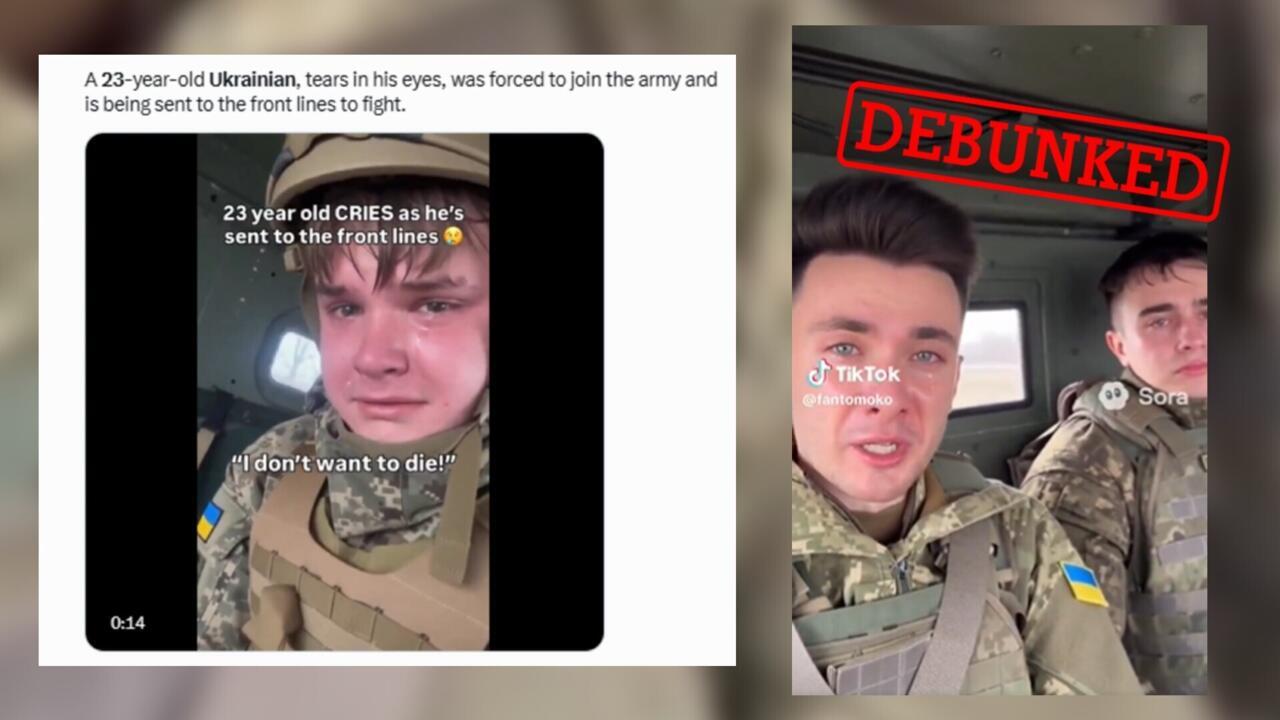

These videos, which claim to show Ukrainian soldiers refusing to fight, were actually generated by artificial intelligence. They were posted on social media on November 2, 2025. © X


At first glance, the video that has been widely shared on X and TikTok since November 2 is a tearjerker. It claims to show a young Ukrainian soldier – more boy than man – crying and saying he doesn’t want to go and fight:


"They mobilised me. I am leaving for Chasiv Yar [Editor’s note: a town in the Donetsk oblast, or administrative region, in eastern Ukraine]. Help me, I don’t want to die. I am only 23. Help me, please.”

"Ukraine is sending its young people to the slaughterhouse,” commented one social media user who posted the video on X. This user commonly shares both anti-Semitic and pro-Russian views.
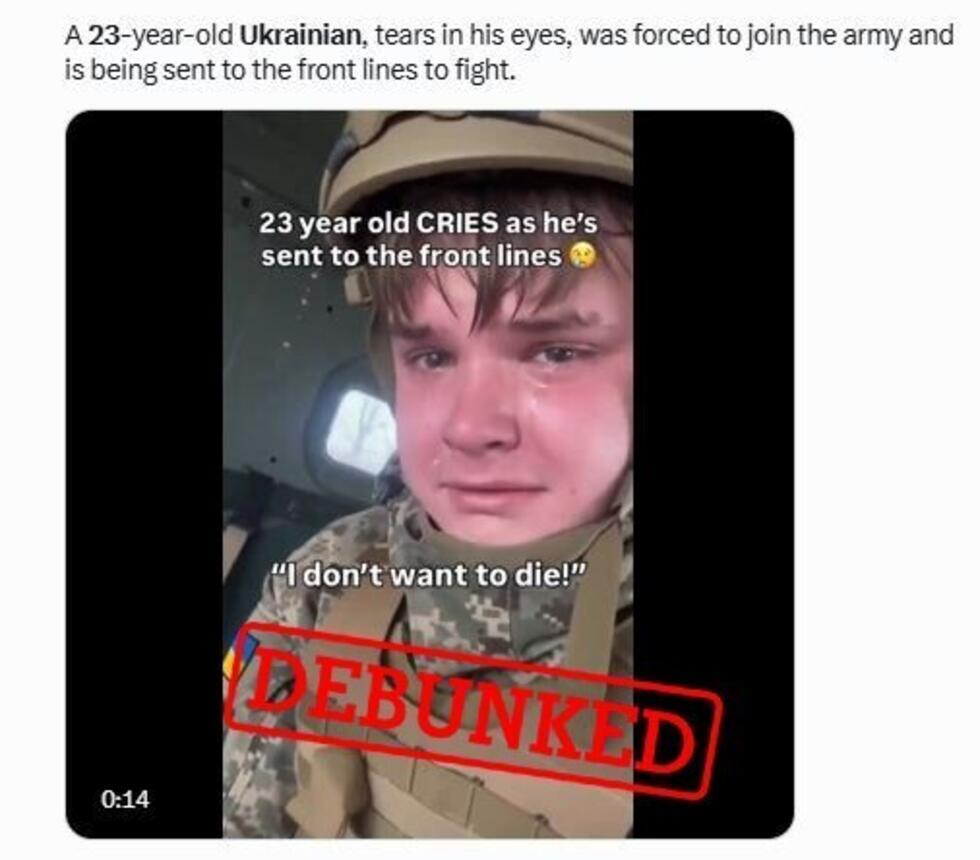
This video of a crying Ukrainian soldier was generated by artificial intelligence. © X


This video isn’t the only one – dozens of similar videos have also been circulating on other social media platforms, especially TikTok. These videos claim to show Ukrainian soldiers deployed against their will to Pokrovsk, an important strategic town in the Donbas region that is the epicentre of a Russian offensive:

"They are bringing us to Pokrovsk, we don’t want to go, please.

Someone help us, please.

We don’t know what to do, they are bringing us by force.

My god, mama, mama, I don’t want to."
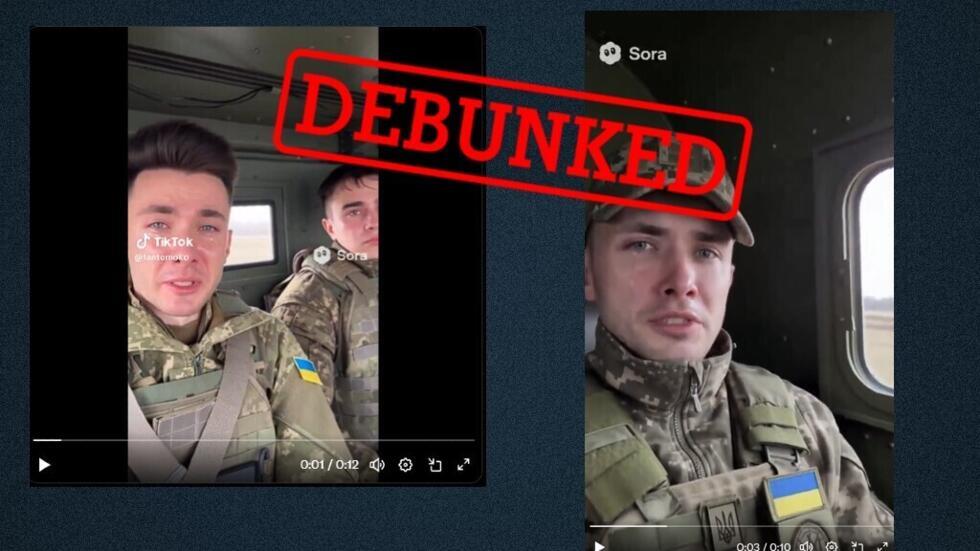
These videos of young Ukrainian soldiers claiming that they don’t want to be deployed to Pokrovsk were all generated by artificial intelligence. They were posted online on October 31, 2025. © X, TikTok

Fake videos generated by artificial intelligence

While it is true that the Ukrainian army has been reckoning with a growing number of desertions in recent months and that many Ukrainian men do want to avoid serving, these videos are fake. They were all generated by artificial intelligence (AI).

There are a few clues.

First of all, the videos of Ukrainian soldiers claiming that they don’t want to be deployed to Pokrovsk feature a watermark: an image of a small cloud and the word Sora. That’s the visual logo – or signature – of Sora 2, an artificial intelligence video generator created by OpenAI which puts these watermarks on generated videos in an attempt to prevent them from being used out of context.
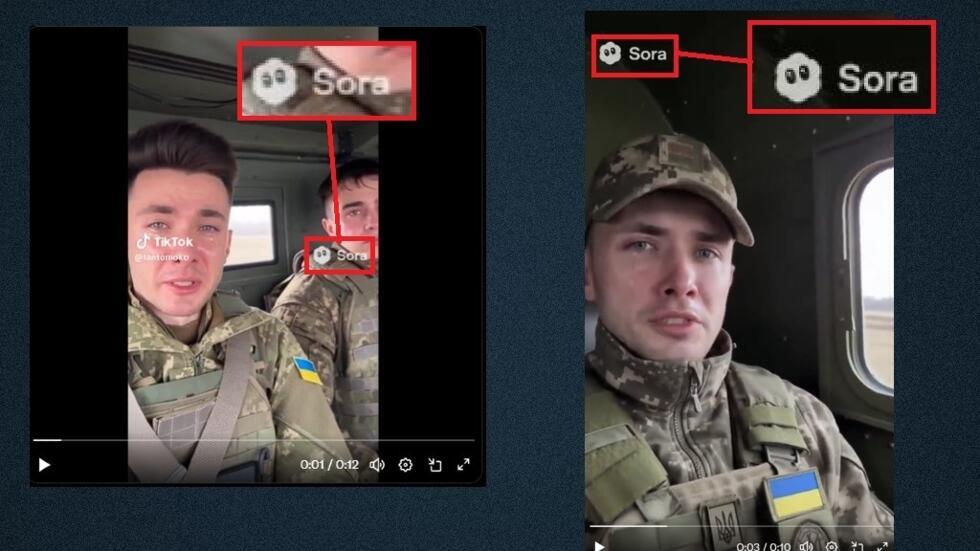
These fake videos of Ukrainian soldiers being deployed to Pokrovsk feature the watermark of artificial intelligence video generator Sora. © X, TikTok


The video of the 23-year-old soldier supposedly being shipped off to Chasiv Yar doesn’t have a watermark. However, we have previously reported in another article that the Sora AI watermark can be removed. And there are other clues that this video, too, was generated by AI.

First, the description of his circumstances that the soldier gives doesn’t align with how conscription actually works in Ukraine. The soldier claims that he was conscripted when he was 23. However, the Ukrainian parliament set the age for military service in Ukraine at 25. People under that age can volunteer, but they can’t be conscripted.

The helmet that the soldier is wearing also features anomalies – clues that it was generated by artificial intelligence. The man is wearing a NIJ IIIA ballistic helmet (which offers protection against 9mm bullets). However, there are differences between the helmet the “soldier” is wearing and the real helmet, which you can see on a specialist site. For example, a screw that appears round on the real helmet looks deformed in the AI-created video. The helmet in the video has a round piece that doesn’t appear on the real model. AI has a tendency to add elements when it is generating images of objects.

At left is the fake video of a 23-year-old soldier. At right is an image of a real Fast NIJ IIIA ballistic helmet. Our team outlined the differences. © X, Antam.fr.


All of these videos of fake Ukrainian soldiers came from the same TikTok profile – "fantomoko". This account’s watermark appears on these videos.

The profile, now offline, seems to have published mainly fake, AI-generated videos. A large number of the videos shared by this account feature the Sora 2 watermark as well as the hashtags #fakeall and #sora2.
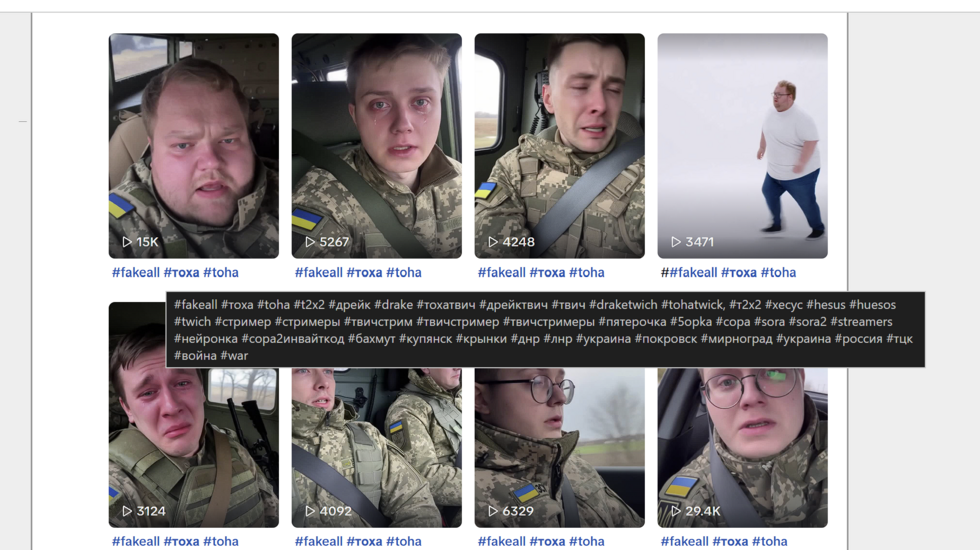
This is the TikTok profile of fantomoko, featuring dozens of AI-generated videos depicting fake Ukrainian soldiers. © TikTok

The Russian streamers whose identities were stolen

Italian fact-checking outlet open.online first reported a strange detail about these videos and the identity theft behind them. They seemed to be created from the faces of Russian streamers – users who stream themselves live on social media – in this case, while playing video games.

The Sora 2 AI video generator only takes a few seconds to create "deepfakes", which appear to show real people speaking with real voices but in fact are artificial.

The supposed 23-year-old soldier featured in the video was created using the face of kussia88, a Russian streamer with a Twitch profile that has 1.3 million followers.

The soldier complaining about being shipped to Pokrovsk was generated using videos of Russian streamer Aleksei Gubanov, known as "JesusAVGN". Gubanov actually opposes Russian Presdient Vladimir Putin’s regime and is now based in the United States.

Our team spoke to Aleksei Gubanov, who was horrified by the way his face was used to create these videos:

“I have no connection whatsoever to these videos – all of them were created by someone using the Sora neural network.

Moreover, I personally drew attention to these videos during my recent livestream, and I warned my audience that someone is deliberately trying to sow discontent in society by spreading such content. These materials play directly into the hands of Russian propaganda and cause serious harm to Ukraine, as they quickly gain a large number of views – and people, unfortunately, tend to believe them.”

The Centre for Countering Disinformation, a body linked to the Ukrainian government, spoke out about the video of the 23-year-old soldier. They described the video as fake news that “promotes the narrative of conscription at the age of 22-23” despite the fact that the age of military service is still 25. The aim of this disinformation campaign? "To sow distrust within Ukrainian society, disrupt mobilisation efforts and discredit Ukraine in the eyes of the international community,” the organisation said on X.

This article has been translated from the original in French.


Is being kind good for your health? Science suggests yes

Copyright Credit: Canva Images

By Theo Farran
Published on 14/11/2025 

Studies show that kindness may help reduce stress, ease physical pain, fight loneliness, and stay healthy for longer.

Most of us think of kindness as something we do for other people – holding a door, offering a compliment, helping a stranger cross the road.

But research suggests that these small, thoughtful gestures might be doing us a favour as well.

“Kindness can give you this overwhelmingly positive, warm feeling that connects you to the other person,” said Zita Oravecz, a professor of human development and family studies at The Pennsylvania State University, or Penn State, in the United States.

Psychologists even have a name for it: “positivity resonance” – a brief but powerful moment of shared goodwill that can reverberate through the body.

“It happens on the biological and the behavioural level,” Oravecz said. “People smile at each other, the love hormone oxytocin gets released, their heart rates synchronise".

When our brains release neurochemicals like oxytocin, dopamine, and serotonin, they help suppress stress hormones such as cortisol. Over time, this can help lower blood pressure and reduce inflammation.

The science of 'positivity resonance'

This phenomenon has measurable health effects. Studies show that acts of kindness – from helping a neighbour to volunteering – can lower stress, reduce anxiety, lift mood, and even lessen physical pain.

In one experimental studypublished in 2022, people who were asked to perform regular acts of kindness saw greater reductions in both depression and anxiety symptoms than those who weren't.

“Social connection is one of the ingredients of life most strongly associated with well-being. Performing acts of kindness seems to be one of the best ways to promote those connections," said David Cregg, one of the study's authors who was then a researcher at The Ohio State University.

The United Kingdom’s Mental Health Foundation reports similar benefits: helping others can reduce stress and improve self-esteem, happiness, and overall emotional wellbeing.

An international trial published online by Social Psychiatry and Psychiatric Epidemiology suggested kindness decreases social isolation and loneliness, which are increasingly linked to a variety of health problems.

These findings come as the World Health Organization (WHO) reports that loneliness affects one in six people worldwide.

Physical benefits of kindness?

Furthermore, kindness doesn’t just boost mental health – it may also ease physical pain.

decade-long study of about 48,000 people in the UK found that those who regularly donated money to charity or volunteered their time experienced less pain that interfered with their ability to work.

The research tracked participants between 2011 and 2020. After accounting for factors such as age, income, initial health status, and depression, researchers found that people who either donated or volunteered reported lower levels of pain interference over time compared with those who did neither.

The effect was strongest among people who donated both their time and money on a regular basis.

Another study tracked nearly 13,000 American adults over a decade, findings that people who volunteered at least 100 hours per year had a lower risk of death and were less likely to experience physical limitations later in life.

They were also more active and reported higher levels of optimism, happiness, and life purpose, the study found. Notably, there was no link between volunteering and other health issues, such as diabetes, sleep problems, or depression – underscoring that there are still open questions about how exactly kindness is linked to health.

Ultimately, while we might imagine kindness as something grand or time-consuming, Oravecz insists it doesn’t have to be.

“Even small acts of kindness can have large, unforeseen consequences,” she said. “It can alter someone’s life path".


Italy redefines sexual violence law to include explicit 'free and current' consent

A woman attends a demonstration on the occasion of International Day for the Elimination of Violence against Women in Milan, 25 November, 2023
Copyright Luca Bruno/Copyright 2023 The AP. All rights reserved


By Euronews
Published on 

Italy updates its law to redefine sexual violence, focusing on consent rather than physical coercion. The amendment is backed by major party leaders and aligns with the Istanbul Convention.

Italy's Chamber of Deputies Justice Commission has approved an amendment to the sexual violence bill to include mandatory consent, in a shift from previous law that focused on physical coercion or threats.

The amendment, presented by Michela Di Biase of the Democratic Party (PD) and Carolina Varchi of Brothers of Italy (FdI), was backed directly by party leaders Elly Schlein and Giorgia Meloni following contacts in recent days, according to parliamentary sources.

"This is an important step forward for the Italian penal code," Di Biase said during commission proceedings.

"This new text represents a great cultural change, because too often we have witnessed women being forced to justify themselves even in the face of the violence they have suffered. Sex without consent is rape," she explained.

The new text states that anyone who commits or induces sexual acts without the free and current consent of the other person will face six to 12 years imprisonment.

Consent is defined as a "free, conscious and unequivocal manifestation of the person's willingness to participate in the sexual act" valid for the entire duration of the act and revocable at any time.

Consent obtained by coercion, abuse of authority, threat, deception or by taking advantage of a condition of physical or mental vulnerability is not valid under the amendment.

The change updates Article 609-bis of the Criminal Code, which was introduced by Law No 66 of 1996 and moved sexual violence from the sphere of public morality to crimes against the person.

Law No 69/2019, known as the Code Red, raised penalties from six to 12 years and introduced specific aggravating circumstances.

The definition aligns with the Istanbul Convention and jurisprudence from Italy's Supreme Court, which has recognised sexual violence even in the absence of physical resistance.

The amendment is scheduled to be passed to the Chamber of Deputies next Monday before moving to the Senate.

LGBTQ+ Russians fleeing Georgia say country mirrors Kremlin's playbook

LGBTQ+ Russians fleeing Georgia say country mirrors Kremlin's playbook
A protest against LGBTQ+ activists in Georgia, documented by Tbilisi Pride . / Tbilisi Pride


By bne IntelliNews November 13, 2025

When Aleksei Suetin and his partner were attacked at an open-air gathering in Georgia last summer, the metal skewers striking his back felt like more than just physical violence. They felt like a warning of what was to come.

For Suetin and thousands of other LGBTQ+ Russians who fled President Vladimir Putin's crackdown, Georgia had represented hope: a nearby refuge where they could rebuild their lives. Now, many say they're witnessing a terrifying replay of the same trajectory that forced them underground in Russia.

"The homophobic rhetoric from Georgian Dream had been ramping up for a while," Suetin recalled. "My partner got stripped and beaten by the police when they found LGBT content on his phone. And of course there is the LGBT propaganda law. The moment it got adopted, we knew we definitely weren't welcome in Georgia anymore.

"Georgia is rapidly becoming the same as Russia in terms of LGBT rights," Suetin continued from Valencia, Spain, where he and his partner arrived in early November to seek asylum. "The only thing left for them to copy is labelling us 'extremists'. If we had stayed, we'd have to hide who we are or risk ending up in jail."

A familiar pattern

Anton*, another Russian exile in Tbilisi, describes the progression with chilling familiarity, having already lived through Russia's gradual criminalisation of LGBTQ+ rights.

"After Georgian Dream pushed through a law called 'On the Protection of Family Values’, I started feeling increasingly unsafe as a queer person," Anton said.

"Last summer, I was helping organise an open-air event. It was one of our regular outdoor gatherings, and everything seemed fine until a group of local homophobic men showed up and attacked us. I was physically assaulted. I got hit on my back with metal skewers. We called the police, but the attack was never treated as a hate crime. No one was held accountable."

The aftermath transformed his daily life. "My partner and I couldn't even hold hands in public without fear. I experienced anxiety and I stopped wearing clothes with rainbow symbols. We were always on edge, trying to avoid attention."

But what frightens Anton most isn't what has already happened; it's knowing what comes next.

"I can clearly see where this is all heading. I saw the same trajectory in Russia," he explained. "First it was about 'protecting minors’, then they banned all so-called 'LGBT propaganda’, and eventually they labelled the entire LGBT movement as extremist. In Georgia, the government has started taking similar steps: passing restrictive laws, encouraging hate and criminalising our visibility. I felt like I was watching history repeat itself."

Now in Spain with his partner applying for refugee status, Anton struggles with the loss. "Honestly, I didn't want to leave. I was forced to. I had no real choice if I wanted to stay safe," he said. "I'm leaving behind friends, a chosen community, and a life I had built over the past few years: events I helped organise, people I trust, and a sense of belonging. Now I have to start all over again from scratch, in a new country, in a new language. That's not easy."

Going underground

Dmitri*, who began organising LGBTQ+ events in early 2023, watched his community space transform from a safe haven into something that feels increasingly precarious. The monthly gatherings grew from simple meetups to elaborate events with performances, becoming a vital hub. By December 2024, they had held 36 full-format parties.

"In 2023, we could generally feel more at ease on the streets, even walk hand in hand, and not worry too much," Dmitri recalled. "We could openly make social media posts in support of the LGBT community. We created information leaflets and brochures for our party guests about what to do if they encountered homophobia. We held parties openly themed around events like Pride Month."

Everything changed last September when Georgia adopted the "Law on Protection of Family Values and Minors": legislation that critics say could have been copy-pasted from the Kremlin's playbook.

The law is sweeping in scope: same-sex marriage is banned, LGBTQ+ people cannot adopt or foster children, gender recognition is criminalised, and trans-specific healthcare is outlawed. Any media content, school curriculum or public gathering deemed to "popularise" LGBTQ+ issues can now be shut down. Breaking these rules is punishable by fines of up to GEL5,000 (about €1,660, or nearly four months' wages for the average Georgian).

"After the introduction of the new laws, following advice from lawyers, we had to hide all the posts that were already online and stop using any LGBT symbols or direct references altogether," Dmitri said. "We had to increase security at the entrance, conceal parts of performances on social media: essentially, go underground."

Despite the risks, the events continue. "We continue our work because it's important, necessary, and has become a life mission at this point. However, of course, there's a constant background anxiety and fear, even though we're not doing anything illegal."

The parallels to Russia are unmistakable. "As of today, the situation here feels similar to life in Russia around 2020 to 2022," Dmitri observed. "In some ways, we feel like we're outside the law. For now, we're not criminals, and they can't imprison us just for being part of the LGBT community. However, we're no longer just ordinary people who can live their daily lives freely. We have to stay alert and constantly wonder whether we're standing out too much or drawing unwanted attention."

A tenfold surge

The impact on LGBTQ+ migration has been dramatic. According to Equality Movement, a Georgian LGBTQ+ rights organisation, the number of LGBTQ+ individuals seeking to migrate to safer countries increased approximately tenfold in 2024: what the organisation calls "an initial result of anti-LGBT law."

In 2024, Equality Movement provided legal assistance to 52 victims of hate crimes, documenting a disturbing pattern of attacks through dating apps and group violence often committed on transphobic grounds. Social workers report that approximately 60% of the 240 beneficiaries receiving services required mental health support, with depression, anxiety and panic attacks being most prevalent: a crisis they directly link to the radicalisation of homophobia in the country.

"Georgian LGBTI people continued to flee the country in large numbers. Although there are no official statistics, community organisations report that these numbers have significantly increased," the organisation noted.

Spain has emerged as a primary destination, with both Suetin and Anton seeking refuge there. Other LGBTQ+ Georgians and Russian émigrés have fled to various EU countries, as well as to neighbouring Armenia as a transit point.

"We left for Armenia at the end of August, and from there we flew to Spain on November 3," Suetin said. "We've only been here a couple of days and it's been very hectic. It's certainly a relief knowing that homophobia is punishable here instead of encouraged."

The "safe country" question

The mass exodus comes amid growing controversy over several European countries' designation of Georgia as a "safe country of origin": a classification that makes asylum claims automatically inadmissible except in exceptional circumstances.

In April 2024, the United Kingdom added Georgia to its safe states list under the Illegal Migration Act. Czechia, Germany and Italy have also added Georgia to their respective safe country lists in recent years.

The approach among EU countries is not uniform, however. While some added Georgia to safe country lists in 2023, Belgium removed Georgia from its list the same year. The Netherlands has designated Georgia as safe but explicitly exempts LGBTQ+ asylum applicants from this designation.

The Equality Movement report notes that the situation represents a reversal of years of progress by queer-feminist initiatives in Georgia, with the space for establishing a supportive environment for LGBTQ+ community members now "critically restricted”.

Human rights organisations warn that without international pressure, Georgia's trajectory will continue to mirror Russia's, culminating, as Russian exiles fear, in the eventual designation of the LGBTQ+ movement itself as extremist.

"The only thing left for them to copy is labelling us 'extremists,'" Suetin said. It's a warning from someone who has seen this story before and knows exactly how it ends.

* Names have been changed to protect individuals' safety


German companies defenceless against cyberattacks, study shows

Security specialists are in short supply in nine out of ten German organisations. In times of hybrid attacks, experts consider this to be dangerous.
Copyright AP Photo

By Franziska Müller
Published on 

Germany faces a severe shortage of cybersecurity specialists, with record damages of €202.4 billion in 2024 due to cyberattacks, a study by Strategy& reveals.

Germany lacks cybersecurity specialists to counter a surge in attacks that caused record damage of €202.4 billion in 2024, according to a study by Strategy&, a global business unit of PwC.

Nine out of 10 organisations surveyed reported a shortage of specialists, up from two-thirds in 2023, the analysis found.

"Last year alone, German air traffic control, the Federal Statistical Office and the Society for Eastern European Studies were the target of cyberattacks from abroad," said Lucas Sy, Partner at Strategy& Germany and author of the study.

"If we want to secure Germany's digital resilience, we need to act now and pull out all the stops."

Russia and China pose a particular threat, according to Sinan Selen, president of the German Federal Office for the Protection of the Constitution, BfV. "Germany has been a target of Russian actors for years, with increasing intensity," he said.

Cyberattacks caused damage totalling €267 billion to German organisations in 2024, according to digital association Bitkom. Cyberattacks accounted for around €179 billion of that total, with the remainder caused by theft of data and IT equipment, and by analogue and digital espionage and sabotage.

Meanwhile, only half of public-sector job advertisements for cybersecurity specialists attracted more than 10 applications per position, Strategy& found. More than a quarter of organisations surveyed reported a decline in applications.

More than two-thirds of organisations said candidates only partially or did not meet requirements. Knowledge of cybersecurity standards or data protection is often insufficient, according to the study.

Risk management in peril the most

The greatest shortage is in security-critical roles such as risk management, with 57% of respondents reporting the most significant gap in management positions designed to recognise or respond to cyberattacks.

Financial constraints also hamper recruitment: 78% of public sector organisations cited financial reasons as the leading cause of cancellations, compared with 48% in the private sector. Low or poor pay remains the most critical driver of staff turnover after recruitment, the report found.

"The situation in the public sector is particularly critical," Sy said. "Urgently needed experts often switch to tech companies that offer significantly more attractive salaries."

Only around 20% of organisations are making strategic use of AI to mitigate staff shortages, according to the study.

Andreas Lang, Director at Strategy& Germany, said bonuses and allowances must be used to stop the exodus to the tech industry.

"Routine tasks in the cybersecurity sector can be made more efficient through outsourcing and automation, thus freeing up highly specialised professionals," Lang said.

Sy warned that without measures such as targeted bonuses, better pay classifications or international recruitment, bottlenecks in security-critical areas would persist.

"If the state does not strengthen its cyber expertise, the ability of entire institutions to act will be at stake in the worst case scenario," Lang said, "and with it Germany's digital resilience."