Friday, November 14, 2025


Iraqi PM al-Sudani's coalition comes first in Iraq’s parliamentary election

Iraqi PM al-Sudani's coalition comes first in Iraq’s parliamentary election
Shia al-Sudani, Iraqi PM out in streets on November 12. / Prime Minister Media Office
By bna Cairo bureau November 13, 2025

Iraq’s Reconstruction and Development Coalition, led by Prime Minister Mohammed Shiaa al-Sudani, has secured its next term in the country’s 2025 parliamentary elections, according to preliminary results released by the Independent High Electoral Commission (IHEC) on November 13.

The vote, held on November 11, drew 12mn ballots from roughly 21.5mn eligible voters, producing a turnout of 56.11% which is considered one of the highest participation rates in recent years on the back of success for the incumbent al-Sudani led faction. 

In Baghdad, al-Sudani’s coalition won 411,026 votes, securing 15 out of the capital’s 69 seats. The Sunni-led Taqaddum Party, headed by former Parliament Speaker Mohammed al-Halbousi, came second in the capital, while former prime minister Nouri al-Maliki’s State of Law Coalition ranked third. Taqaddum secured 10 seats and State of Law eight, according to initial tallies.

Celebrations erupted in Baghdad as supporters of Sudani’s bloc took to the streets following the announcement of the results, with reports showing that many people in the predominantly Shi'ite areas of the city came out in support.

In a televised statement after the results were made public, al-Sudani congratulated his supporters, saying, “I congratulate the masses of the Reconstruction and Development Coalition for achieving first place in the election results.”

He confirmed that his alliance remains “open to all political forces” in efforts to form the next government.

“We will work to achieve the will and interest of all the people, including those who boycotted, because Iraq belongs to everyone,” he added.

The prime minister said, “The electoral competition has ended, and I call on everyone to place the national interest above all else in the service of Iraqis. The people’s decision is the final judgement, and we must form a competent government.”

In the Kurdistan Region, the Kurdistan Democratic Party (KDP), led by Masoud Barzani, secured the most votes in Erbil, Duhok, and Nineveh. The Patriotic Union of Kurdistan (PUK) led in Sulaymaniyah and Kirkuk, while the Tasmim Alliance, headed by Basra Governor Asaad al-Eidani, won in Basra.

Al-Sudani, who seeks a second term, will need to form a broader coalition with other Shiaa, Sunni and Kurdish groups. Since the 2003 US-led invasion, a sectarian system has reserved the premiership for a Shia, the presidency for a Kurd, and the speaker role for a Sunni. A total of 7,743 candidates, including 2,247 women, ran in the election.

The European Union praised Iraqis for “exercising their democratic right to vote”, describing the election as an essential step in strengthening institutions, accountability and inclusion. The EU sent an expert electoral mission at IHEC’s request and reaffirmed its commitment to supporting Iraq’s stability “amid ongoing geopolitical shifts in the Middle East”.

The EU emphasised that Iraq's stability is becoming increasingly important amid ongoing geopolitical shifts in the Middle East, and reiterated its willingness to continue assisting Iraq as a partner in advancing its democratic and reform agendas.

Bulgaria’s parliament overturns president’s veto on Lukoil refinery law

Bulgaria’s parliament overturns president’s veto on Lukoil refinery law
/ Lukoil Neftochim
By bne IntelliNews November 13, 2025

Bulgaria’s parliament on November 13 overturned President Rumen Radev’s veto on a law that gives the government more control over the local assets of Russia’s oil company Lukoil, less than ten days before new US sanctions take effect.

The decision comes ahead of US sanctions on Lukoil that take effect on November 21, which could block payments and halt the operation of its Bulgarian assets. The government of Prime Minister Rosen Zhelyazov is in talks with Washington to delay the measures by up to one year, though officials say a six-month extension is more likely.

Lawmakers voted 128–59 to reject the veto and approve amendments allowing the state to appoint a special administrator to run Lukoil’s operations in Bulgaria, including the Neftochim Burgas refinery — the largest in the Balkans — and its network of gas stations, BTA reported.

The new rules allow the administrator to sell company assets and make decisions that cannot be challenged in court or through administrative appeals.

President Radev had vetoed the bill on November 12, saying it gave excessive power to the government and risked “arbitrariness and abuse.” Lawmakers from the ruling majority quickly rejected his objections in an emergency session that same evening.

Energy Minister Zhecho Stankov said the new powers are needed to secure fuel supplies. “The special administrator will ensure the refinery continues operating if imports of Russian crude are banned or if the company refuses to cooperate,” he told lawmakers.

The Burgas refinery supplies most of Bulgaria’s fuel and is considered a vital national asset. Officials fear the sanctions could disrupt production, causing shortages and price hikes.

The post of special administrator was first created in 2023 when Lukoil resisted switching to non-Russian crude. Under the new amendments, the administrator will have full control over operations and financial monitoring to prevent funds from being sent to sanctioned entities.

OFAC imposed sanctions on October 23 against Lukoil and Rosneft as part of expanded measures targeting Russia’s energy sector. The restrictions block financial transactions and services, giving the companies until November 21 to wind them down.

Carlyle Eyes Lukoil Assets After Gunvor's $22 Billion Deal Collapses

Carlyle is in talks with Lukoil for the potential acquisition of the latter’s international operations, Reuters has reported, citing unnamed sources. The news follows Gunvor’s attempt to buy the assets, only to change its mind after the Trump administration called it a “Kremlin puppet” and said it would block the deal.

The private equity major is still in the early stage of the negotiations, but it has applied for a license that would clear the way to an acquisition, one of the Reuters sources told the publication. The next step would be due diligence, which would need to take place soon because the sanctions against Lukoil kick in on November 21, making any dealings with it by companies using the U.S. financial system illegal.

Lukoil is the most active Russian energy company internationally, with upstream operations in the Middle East, Central Asia, and Latin America, and retail fuel businesses in many parts of the world, including the United States. The company announced plans to sell its international business following President Trump’s decision to step up pressure on Russia in a bid to bring it to the peace negotiations table with Ukraine. The latest round of sanctions zero in on Lukoil and Rosneft, which together account for about half of Russia’s total oil exports. Lukoil alone produces some 2% of the world’s oil, Reuters noted in its report.

Swiss-based commodity major Gunvor was quick to make an offer for the business at $22 billion. The U.S. government, however, was equally quick in its reaction to the news, with the Department of the Treasury saying, “President Trump has been clear that the war must end immediately. As long as Putin continues the senseless killings, the Kremlin’s puppet, Gunvor, will never get a license to operate and profit.

Gunvor was co-founded by a Russian businessman, Genadiy Timchenko, who, however, sold his stake in 2014. The Swiss commodity firm has called the Treasury’s claims “fundamentally misinformed and false.”

By Irina Slav for Oilprice.com


Thais navigate flooded homes and ancient temples by boat

Ayutthaya (Thailand) (AFP) – For three months, Thai retiree Somkid Kijniyom has been sleeping in a small boat surviving on dry food handouts in the waist-high floodwaters that have filled his home.


Issued on: 14/11/2025 - FRANCE24


Thai retiree Somkid Kijniyom is enduring unusable toilets, subsisting on food donations and navigating dangerous currents in his boat © Lillian SUWANRUMPHA / AFP


Relentless rains have plunged Thailand's Ayutthaya province, home to a UNESCO-listed ancient city, into what residents say is its worst flooding in years.

Murky waters have turned residential areas into vast, dangerous canals, reaching depths of up to three metres (10 feet) and creeping up the ancient capital's iconic temple ruins and gilded shrines.

"I have to endure life. I don't know what to do," said Somkid, who eventually constructed a high platform on top of tables to create a safe, dry sleeping area instead of the boat.

But he said the situation was "inconvenient", enduring unusable toilets, subsisting on food donations and navigating dangerous currents in his boat.

Residents claimed the unusual duration of the flooding -- almost four months -- and severity were largely due to mismanagement © Lillian SUWANRUMPHA / AFP


"I hope the water will subside soon," he said.

The rainy season's floods affected over 60,000 of the province's households and killed 18 people this year, Ayutthaya's Disaster Prevention and Mitigation Office said Friday.

It said that 38 temples in the area were also affected.

Vichai Asa-nok, who had to move out of his flooded home to a temple-run shelter, said the waters "came fast, very fast".

"The situation has become very difficult," he told AFP, with the flooding more extensive and lasting longer than in previous years.

Residents claimed the unusual duration -- almost four months -- and severity were largely due to mismanagement.

While the government has offered 9,000 baht ($280) in aid per household affected, some residents felt it was not enough © Lillian SUWANRUMPHA / AFP


Community leader Boonchob Thongseejud said that authorities failed to release water into nearby fields, effectively rendering villages a "rest stop for water" before it gushes south down the Chao Phraya river to Bangkok and into the Gulf of Thailand.

He said water levels had surpassed those seen in a 2011 crisis by approximately 40 centimetres.

While the government has offered 9,000 baht ($280) in aid per household affected, some residents felt it was not enough.

Vichai said the sum is barely enough to purchase basic materials such as plywood to elevate homes, let alone the up to 3,000 baht for cleanup.

"It should be in the tens of thousands," he said.

© 2025 AFP
REVANCHISTS


EU parliament votes to dilute landmark rules holding corporations accountable

European lawmakers have backed the weakening of flagship EU environmental and human rights rules as part of a drive to slash red tape for businesses. The move will free many corporations from the obligation to fix human rights and environmental issues in their supply chains or face EU fines.


Issued on: 14/11/2025 - RFI

The chamber of the European Parliament on 7 May, 2022. © AFP - VALERIA MONGELLI

Approved only last year, the Corporate Sustainability Due Diligence Directive (CSDDD) was hailed by green and civil society groups but criticised by businesses.

In a vote on Thursday, the EU parliament's biggest centre-right bloc joined forces with the hard right to back amendments that significantly reduce the number of companies to which the rules apply. They secured support from 382 lawmakers, with 249 voting against.

The directive is one of the first to fall under Brussels' new drive to make life easier for European industry, which is struggling in the face of competition from the United States and China.

The text requires large companies to fix the "adverse human rights and environmental impacts" of their supply chains worldwide. This means tracking deforestation and pollution that they or their suppliers and subcontractors cause, plus other issues like forced labour – and taking steps to curtail them.

But EU lawmakers backed limiting its application to large companies. Now only businesses with 5,000 employees and more than €1.5 billion in turnover will be bound by the rules, a revision of the original threshold of 1,000 employees and €450 million in turnover.

They also moved to do away with the European civil liability regime, which served to harmonise firms' obligations in the event of breaches, referring to national legislation instead.

Right-wing push

Jorgen Warborn, a lawmaker from the centre-right European People's Party (EPP) who sponsored the text, said ahead of the vote that the changes would boost competitiveness for companies while keeping "Europe's green transition on track".

But the outcome triggered an outcry among the EPP's traditional partners on the left and centre, who denounced what they fear is a new alliance between the centre and the far right in the EU parliament.

René Repasi of the Socialists & Democrats (S&D) accused the EPP of having "torpedoed any middle-ground compromise".

"The conservatives marched ahead with a red pen – striking away the firewall and redrawing their self-made majority together with the anti-democratic forces on the fringes," he said.

The far-right Patriots group hailed the result as a "significant success" and a "victory for workers, farmers and industry".

"Today, Patriots for Europe broke the old coalition's deadlock and opened the path to replace the Green Deal straitjacket with a competitiveness-driven agenda," the group wrote on social media platform X, referring to the EU's ambitious climate policies.

An ultimate round of negotiations is now to kick off with member states and the European Commission, aimed at finalising the changes by the end of the year.
Landmark law

Stéphane Séjourne, the EU commissioner for industry, said the amendments came on the back of extensive consultations and in "response to the firm and repeated demands of member states and the new parliamentary majority".

Right and far-right parties, which made significant gains in the 2024 European elections, have been clamouring for Brussels to take a more pro-business slant and ditch some of its green policies.

German Chancellor Friedrich Merz and French President Emmanuel Macron had called for the CSDDD to be scrapped altogether. The directive has also come under fire from trade partners including the United States and Qatar, who warn the rules risk disrupting their gas supplies to Europe.

The World Wildlife Fund accused the EU of "turning its back on climate and nature" in the name of simplification.

"These laws that provided hope, security, and promise for a fairer and more sustainable future have been reduced to performative exercises that have little effect on the real needs of people, nature, and businesses," said Mariana Ferreira of the WWF's European policy office.

The text was proposed by the European Commission in 2022 after a parliamentary push inspired by the 2013 collapse of the Rana Plaza garment factory building in Bangladesh, which left at least 1,134 people dead.

Its approval in 2024 was hailed as historic and celebrated as a landmark in the fight to preserve the planet and promote better working conditions across the globe.

(with AFP)


Top economists call on world leaders to set up an international panel on inequality

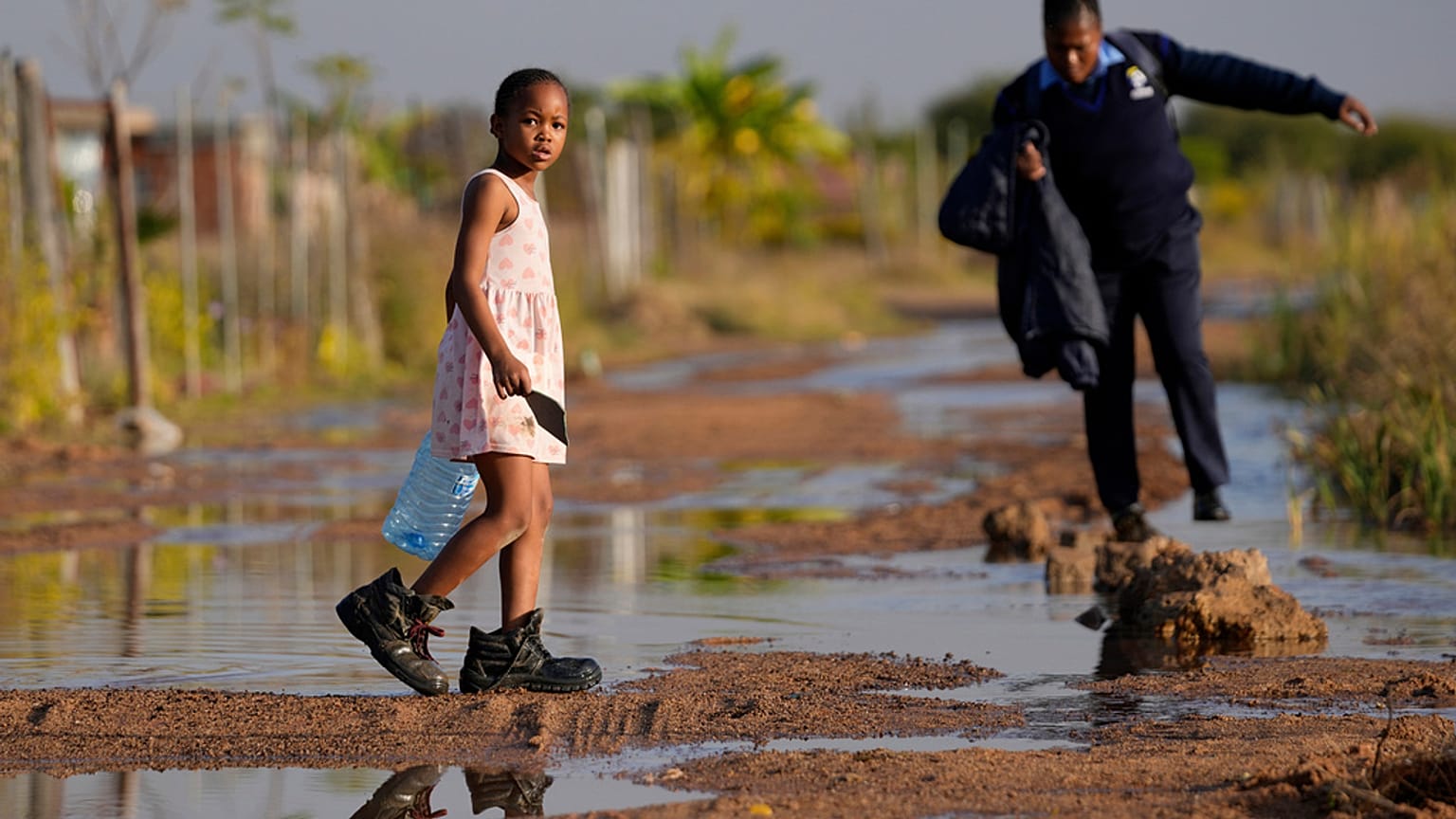
A young girl carrying an empty water bottle through a flooded street caused by an overflowing water reservoir in Hammanskraal, Pretoria, South Africa, 26 May, 2023
Copyright Themba Hadebe/Copyright 2023 The AP. All rights reserved.


By AP with Nadya Oppenheim
Published on 

As the G20 prepares to discuss global inequality, prominent economists are calling for a dedicated international panel, arguing that unchecked wealth gaps are undermining stability and trust.

Hundreds of top economists and other experts, including former US Treasury Secretary Janet Yellen, called on Friday for the world to set up an independent international panel on income and wealth inequality.

The call in an open letter came before the Group of 20 summit in South Africa next weekend, when a report on global inequality, chaired by Nobel Prize-winning American economist Joseph Stiglitz, is due to be presented to world leaders.

That report, which was released this month, said that the world is facing an inequality emergency as well as a climate emergency, leading to more political instability and conflicts, and “decreased confidence in democracy”.

Between 2000 and 2024, the richest 1% captured 41% of all new wealth created in the world, the report said. Meanwhile, one in four people globally — around 2.3 billion people — now face moderate or severe food insecurity, meaning they regularly skip meals. That number has increased by 335 million people since 2019, the report said

The report recommended a new International Panel on Inequality to advise governments on how to address the issue in the same way the UN-appointed Intergovernmental Panel on Climate Change does to help develop climate policies.

The economists and inequality experts, which include Nobel laureates and former senior officials at the World Bank and the International Monetary Fund, said in their letter addressed to world leaders that they were concerned “that extreme concentrations of wealth translate into undemocratic concentrations of power, unravelling trust in our societies and polarising our politics”.

South Africa, which hosts the G20 summit on 22-23 November, wants global inequality to be one of its main topics, even as South Africa itself is ranked as the most unequal country in the world by the World Bank.


Breaking Rust: AI artist tops US chart for first time as study reveals alarming recognition stats

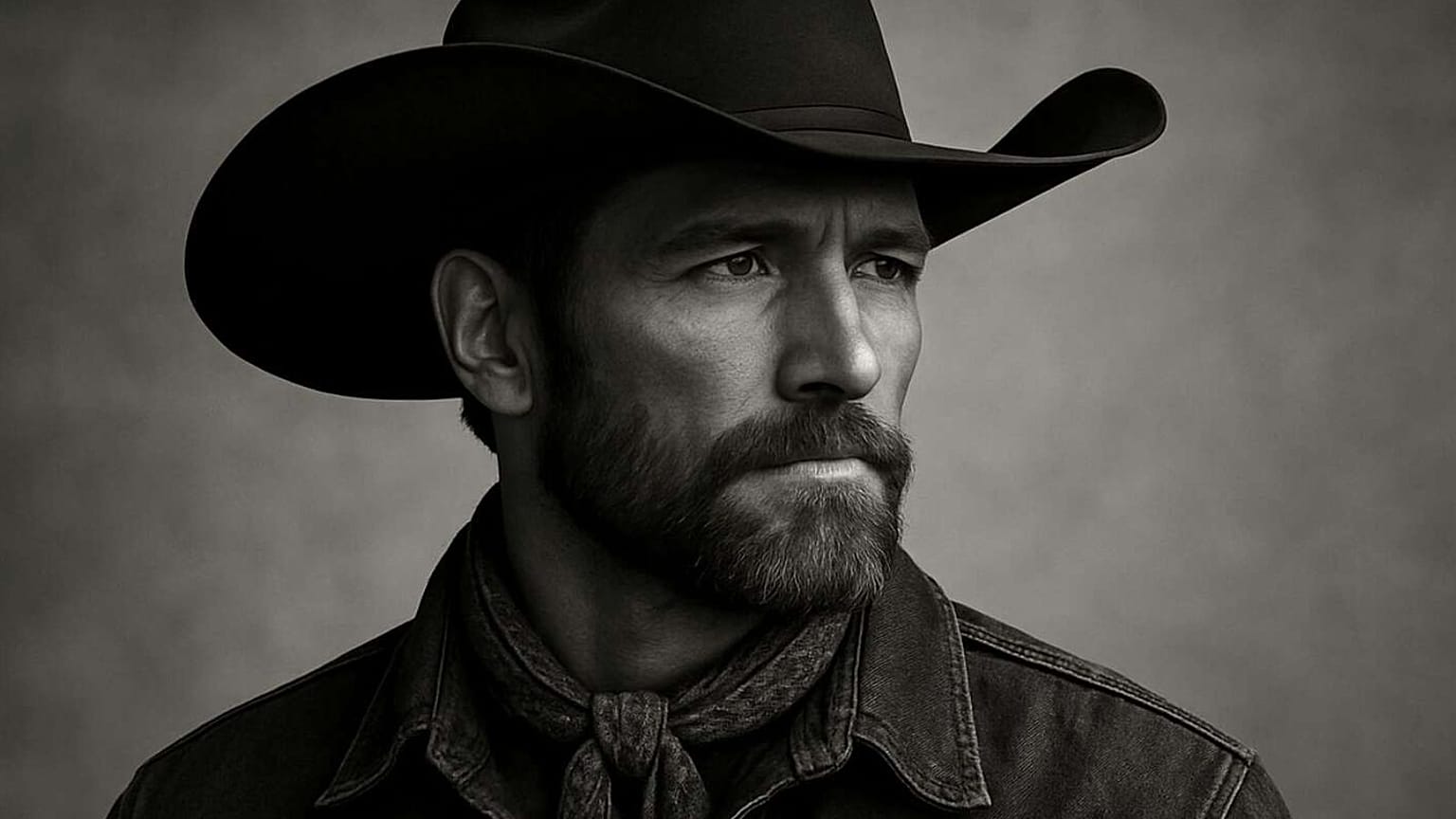
AI-created image depicting Breaking Rust
Copyright Instagram - Breaking Rust


By David Mouriquand
Published on 

An AI-generated music persona has topped the US Billboard charts for the first time, at the same time as a “first-of-its-kind" study from French streaming service Deezer reveals that 97 per cent of people “can’t tell the difference” between real music and AI-generated music.

It’s a first, and not one worth celebrating.

A song generated by artificial intelligence has topped the charts in the US for the first time, as a country “artist” named Breaking Rust has landed the Number 1 spot on Billboard’s Country Digital Song Sales chart.

The viral track, ‘Walk My Walk’, has over 3.5 million streams on Spotify - a platform on which “he” is a verified artist and which has prior form when it comes to giving AI-generated bands a platform.

Other Breaking Rust songs like ‘Livin’ on Borrowed Time’ and ‘Whiskey Don’t Talk Back’ have amassed more than 4 million and 1 million streams respectively. And if you just cringed your way into a mild aneurysm when reading that last song title, you’re only human.

Not all that much is known about Breaking Rust, apart from “his” nearly 43,000 followers on Instagram and a Linktree bio that reads: “Music for the fighters and the dreamers.”

How profound.

Any gluttons for clichéd dross who choose to head to the Instagram page will find several generic AI-generated videos of stubbly cowboys looking like factory-reject Ben Afflecks walking on snow-covered train tracks, lifting weights and holding their hats under the rain. In other words, stereotypical Outlaw Country fantasies that reek of fragile masculinity and necktie fetishes.

Still, fans are clearly loving it, seemingly unbothered that the “Soul Music for Us” glaringly lacks, you know, a soul.

“Love your voice! Awesome song writing! I want more” reads one comment on a video, while another writes: “I don’t know if this is a real guy but his songs are seriously some of my favorite in life.”

“I LIKE THE SONG, NO MATTER WHO CREATED IT!” screams one comment on YouTube.

Some listeners also appear not to realize that Breaking Rust isn’t human, as fans are complimenting the lyricism (strewth!) and even asking the “artist” go on tour.

This is not the first time that an AI-generated act has debuted on Billboard’s charts. One notable example is Xania Monet, who made headlines in September when the tracks ‘Let Go, Let Go’ climbed to No.3 (Gospel) and ‘How Was I Supposed To Kow’ peaked at No. 20 (R&B).

Created by Telisha “Nikki” Jones using the AI platform Suno, Monet has been a particularly visible AI “artist” – one which even triggered a bidding war to sign “her”. Hallwood Media, led by former Interscope executive Neil Jacobson, ultimately won and signed Monet to a reported multimillion-dollar deal.

Who knows whether the same will happen for Breaking Rust, but the chart-topping success does signal a continuing shift in the music industry.

There have been concerns about the use of generative AI in all creative sectors – from Hollywood with the writer and actor guild strikes and the creation of the so-called AI actress Tilly Norwood to the recent internet meltdown over Coca-Cola making their Christmas adverts entirely AI-generated. And the more AI-created bands and musicians continue to proliferate, the more real human artists will struggle to break through – let alone generate revenues from their craft.

As Josh Antonuccio, director of the School of Media Arts and Studies at Ohio University, recently told Newsweek: “Whether it’s lyrical assistance, AI-assisted ideation, or wholesale artist and song creation, AI-generated content is going to become a much more common reality and will continue to find its way into the charts.”

He added: “The real question starts to become 'will fans care about how it’s made?'”

Indeed, the success of Breaking Rust comes as a new, “first-of-its-kind" study has found that 97 per cent of people “can’t tell the difference” between real music and AI-generated music.

The survey, conducted by French streaming service Deezer and research firm Ipsos, asked around 9,000 people from eight different countries (Brazil, Canada, France, Germany, Japan, the Netherlands, the UK and the US) to listen to three tracks to determine which was fully AI-generated.

According to the report, 97 per cent of those respondents “failed” - with 52 per cent saying they felt “uncomfortable” to not know the difference.

The study also found that 55 per cent of respondents were “curious” about AI-generated music, and that 66 per cent said they would listen to it at least once, out of curiosity

However, only 19 per cent said they felt that they could trust AI, while another 51 per cent said they believe the use of AI in music production could lead to “generic” sounding music.

“The survey results clearly show that people care about music and want to know if they’re listening to AI or human made tracks or not,” said Alexis Lanternier, CEO of Deezer. “There’s also no doubt that there are concerns about how AI-generated music will affect the livelihood of artists, music creation and that AI companies shouldn’t be allowed to train their models on copyrighted material.”

Earlier this year, artists including Paul McCartney, Kate Bush, Dua Lipa and Elton John urged UK Prime Minister Keir Starmer to protect the work of creatives, with Sir Elton posting a statement saying that “creative copyright is the lifeblood of the creative industries”. He added that government proposals which let AI companies train their systems on copyright-protected work without permission left the door “wide open for an artist’s life work to be stolen.”

Sir Elton previously claimed that AI would “dilute and threaten young artists’ earnings”, a statement backed by thousands of real-life artists who continue to petition the music industry to implement safeguards related to artificial intelligence and copyright.

In February, more than 1,000 artists, including Annie Lennox, Damon Albarn and Radiohead, launched a silent album titled 'Is This What We Want?', in protest against UK government plans that could allow AI companies to use copyrighted content without consent.

The album, featuring the sounds of empty studios and performance spaces, was designed to be a symbol of the negative impact controversial government proposals could have on musicians' livelihoods.

Kate Bush, one of the leading voices in the protest, expressed her concerns by saying: "In the music of the future, will our voices go unheard?"

The question still stands and feels more urgent than ever, considering the chart-topping sounds of Breaking Rust.

Give us empty studio sounds over soulless cowboy platitudes any day of the week.


These videos of Ukrainian soldiers are


deepfakes generated from the faces of


Russian streamers


A number of videos have been circulating online that claim to show tearful Ukrainian soldiers who claim they were mobilised against their will. In reality, these videos are all deepfakes generated using the faces of Russian video game streamers.


Issued on: 13/11/2025 -
By:The FRANCE 24 Observers/
Quang Pham


These videos, which claim to show Ukrainian soldiers refusing to fight, were actually generated by artificial intelligence. They were posted on social media on November 2, 2025. © X


At first glance, the video that has been widely shared on X and TikTok since November 2 is a tearjerker. It claims to show a young Ukrainian soldier – more boy than man – crying and saying he doesn’t want to go and fight:


"They mobilised me. I am leaving for Chasiv Yar [Editor’s note: a town in the Donetsk oblast, or administrative region, in eastern Ukraine]. Help me, I don’t want to die. I am only 23. Help me, please.”

"Ukraine is sending its young people to the slaughterhouse,” commented one social media user who posted the video on X. This user commonly shares both anti-Semitic and pro-Russian views.

This video of a crying Ukrainian soldier was generated by artificial intelligence. © X


This video isn’t the only one – dozens of similar videos have also been circulating on other social media platforms, especially TikTok. These videos claim to show Ukrainian soldiers deployed against their will to Pokrovsk, an important strategic town in the Donbas region that is the epicentre of a Russian offensive:

"They are bringing us to Pokrovsk, we don’t want to go, please.

Someone help us, please.

We don’t know what to do, they are bringing us by force.

My god, mama, mama, I don’t want to."

These videos of young Ukrainian soldiers claiming that they don’t want to be deployed to Pokrovsk were all generated by artificial intelligence. They were posted online on October 31, 2025. © X, TikTok

Fake videos generated by artificial intelligence

While it is true that the Ukrainian army has been reckoning with a growing number of desertions in recent months and that many Ukrainian men do want to avoid serving, these videos are fake. They were all generated by artificial intelligence (AI).

There are a few clues.

First of all, the videos of Ukrainian soldiers claiming that they don’t want to be deployed to Pokrovsk feature a watermark: an image of a small cloud and the word Sora. That’s the visual logo – or signature – of Sora 2, an artificial intelligence video generator created by OpenAI which puts these watermarks on generated videos in an attempt to prevent them from being used out of context.

These fake videos of Ukrainian soldiers being deployed to Pokrovsk feature the watermark of artificial intelligence video generator Sora. © X, TikTok


The video of the 23-year-old soldier supposedly being shipped off to Chasiv Yar doesn’t have a watermark. However, we have previously reported in another article that the Sora AI watermark can be removed. And there are other clues that this video, too, was generated by AI.

First, the description of his circumstances that the soldier gives doesn’t align with how conscription actually works in Ukraine. The soldier claims that he was conscripted when he was 23. However, the Ukrainian parliament set the age for military service in Ukraine at 25. People under that age can volunteer, but they can’t be conscripted.

The helmet that the soldier is wearing also features anomalies – clues that it was generated by artificial intelligence. The man is wearing a NIJ IIIA ballistic helmet (which offers protection against 9mm bullets). However, there are differences between the helmet the “soldier” is wearing and the real helmet, which you can see on a specialist site. For example, a screw that appears round on the real helmet looks deformed in the AI-created video. The helmet in the video has a round piece that doesn’t appear on the real model. AI has a tendency to add elements when it is generating images of objects.

At left is the fake video of a 23-year-old soldier. At right is an image of a real Fast NIJ IIIA ballistic helmet. Our team outlined the differences. © X, Antam.fr.


All of these videos of fake Ukrainian soldiers came from the same TikTok profile – "fantomoko". This account’s watermark appears on these videos.

The profile, now offline, seems to have published mainly fake, AI-generated videos. A large number of the videos shared by this account feature the Sora 2 watermark as well as the hashtags #fakeall and #sora2.

This is the TikTok profile of fantomoko, featuring dozens of AI-generated videos depicting fake Ukrainian soldiers. © TikTok

The Russian streamers whose identities were stolen

Italian fact-checking outlet open.online first reported a strange detail about these videos and the identity theft behind them. They seemed to be created from the faces of Russian streamers – users who stream themselves live on social media – in this case, while playing video games.

The Sora 2 AI video generator only takes a few seconds to create "deepfakes", which appear to show real people speaking with real voices but in fact are artificial.

The supposed 23-year-old soldier featured in the video was created using the face of kussia88, a Russian streamer with a Twitch profile that has 1.3 million followers.

The soldier complaining about being shipped to Pokrovsk was generated using videos of Russian streamer Aleksei Gubanov, known as "JesusAVGN". Gubanov actually opposes Russian Presdient Vladimir Putin’s regime and is now based in the United States.

Our team spoke to Aleksei Gubanov, who was horrified by the way his face was used to create these videos:

“I have no connection whatsoever to these videos – all of them were created by someone using the Sora neural network.

Moreover, I personally drew attention to these videos during my recent livestream, and I warned my audience that someone is deliberately trying to sow discontent in society by spreading such content. These materials play directly into the hands of Russian propaganda and cause serious harm to Ukraine, as they quickly gain a large number of views – and people, unfortunately, tend to believe them.”

The Centre for Countering Disinformation, a body linked to the Ukrainian government, spoke out about the video of the 23-year-old soldier. They described the video as fake news that “promotes the narrative of conscription at the age of 22-23” despite the fact that the age of military service is still 25. The aim of this disinformation campaign? "To sow distrust within Ukrainian society, disrupt mobilisation efforts and discredit Ukraine in the eyes of the international community,” the organisation said on X.

This article has been translated from the original in French.