Friday, November 14, 2025


Guinea's Giant Iron Ore Mine Begins Loading its First Shipment

The Simandou depost (Rio Tinto)
The Simandou deposit (Rio Tinto)

Published Nov 13, 2025 10:06 PM by The Maritime Executive


The largest new iron ore mining project in years, Simandou, has just dispatched its first ore shipment. Simandou is a massive integrated mining, rail and seaport venture carried out by an international consortium, and is the biggest project of its kind ever built in Africa. It will handle up to 120 million tonnes of high grade ore per year, equal to about seven percent of total global export loadings. 

Simandou's mining lease area is split into two halves, one developed by a Rio Tinto-led consortium and the other led by Singaporean shipowner Winning International Group. The two groups jointly own a railway company, La Compagnie du TransGuinéen (CTG), which operates a 370-mile-long line connecting the inland deposit with the seaport at Morebaya. The rail logistics are the linchpin of the project, and were masterminded and built by Winning's CEO, Sun Xiushun. (The government of Guinea also holds a minority share in all of the operating consortia.)

Simandou is a gamechanger for the Capesize bulker fleet, which will serve its purpose-built ore loading port. With a total deposit size of about 3.3 billion tonnes, it should be shipping out its world-class ore for the next two to three decades.  

The project is also going to change the future of the corridor along the new rail route, where businesses and residents will now have ready access to transport. 

"Simandou is more than a mining project: it is the driving force behind a national transformation. This collective success reflects the vision of the Head of State and the determination of an entire nation to build a future of shared prosperity," said Guinean presidential chief of staff Djiba Diakite in a statement. 

The consortium is a team of rivals, and tensions have seeped in on occasion, according to the South China Morning Post. 18 Chinese-made locomotives were shipped to Conakry for the rail line, but were rejected by the Guinean government. The project development agreement required American locomotives only, so the Chinese shipment was reportedly sent back. Guinean officials say that they stipulated the highest-quality infrastructure and equipment in every category, and will stick precisely to the specifications of the contract - because the government of Guinea will own all of it in 35 years, when the leases expire.

"For that reason, we need robust facilities and high-quality products. We do not want to inherit something that requires excessive maintenance after 35 years," Bouna Sylla, Guinean mining minister, told the South China Morning Pos

ECOCIDE

Mining giant BHP liable for Brazil’s worst environmental disaster, UK court says


A British court ruled that global mining giant BHP is liable for the 2015 collapse of a dam in southeastern Brazil. The event was the country's worst environmental disaster, unleashing a wave of toxic sludge that killed 19 people and polluted the length of the Doce River.


Issued on: 14/11/2025 
By: FRANCE 24

Homes lay in ruins after two dams burst in 2015, flooding the small town of Bento Rodrigues in Minas Gerais state, Brazil. © Felipe Dan, AP

London's High Court ruled Friday that global mining giant BHP Group is liable over the 2015 collapse of a dam in southeastern Brazil.

"BHP are strictly liable as 'polluters' in respect of damage caused by the collapse," of the dam, the court said in its ruling following a large-scale trial.

Hundreds of thousands of Brazilians, dozens of local governments and around 2,000 businesses sued BHP over the collapse of the Fundao dam in Mariana, southeastern Brazil, which was owned and operated by BHP and Vale's Samarco joint venture.

Brazil's worst environmental disaster unleashed a wave of toxic sludge that killed 19 people, left thousands homeless, flooded forests and polluted the length of the Doce River.


Judge Finola O'Farrell said in a summary of her ruling that BHP should not have continued to raise the height of the dam before its collapse, which was "a direct and immediate cause of collapse of the dam giving rise to fault-based liability on the part of BHP".

READ MOREThe Mariana mining disaster

According to the victims' lawyers, BHP was aware that toxic sludge was accumulating at rates that far exceeded the annual limit. The lawyers said the build-up contributed to the disaster at the mine, which was managed by Samarco, co-owned by BHP and Brazilian miner Vale.

BHP argued during the trial that it had prioritised safety and acted responsibly.

Acknowledging the "terrible tragedy", BHP maintained that a compensation agreement it reached last year in Brazil – worth around $31 billion – provided a resolution. However, a majority of the 620,000 claimants, including 31 municipalities, argued that they were not sufficiently covered by the deal.

BHP said it would appeal against the ruling and continue to fight the lawsuit.

The victims first filed the UK legal action in 2018 to demand compensation from BHP, as one of its global headquarters was in Britain at the time of the disaster.

The trial at the High Court in London ran from October 2024 to March this year.

Vale and BHP were acquitted in November 2024 of criminal charges by a Brazilian court, which ruled there was insufficient evidence linking them to the dam's failure.

(FRANCE 24 with Reuters, AP and AFP)


Law firm to drop London lawsuit against Brazil mining group over dam disaster

Reconstruction efforts at Samarco’s Fundão tailings dam in 2017. (Image courtesy of BHP)

Law firm Pogust Goodhead will have to reimburse 811,000 pounds ($1.1 million) to Brazilian mining lobby group Ibram after it decided to drop a London lawsuit against the group over a 2015 dam disaster, Ibram told Reuters on Thursday.

The amount is related to the costs faced by Ibram as part of the lawsuit filed by 25 Brazilian cities represented by PG over the collapse of a dam owned by Samarco, a joint venture between Vale and BHP, which killed 19 people and polluted a major river.

On Friday, a London court is expected to announce its decision on BHP’s liability in the case.

The lawsuit was filed by cities and individuals impacted by the collapse who did not want to join the 170 billion real ($31.5 billion) compensation agreement the firms reached with Brazilian authorities last year.

The law firm did not respond immediately to a request for comment.

Ibram has accused the cities of violating Brazil’s constitution by filing lawsuits abroad to obtain compensation for the dam collapse, taking the dispute to the Brazilian Supreme Court.

In August, a Supreme Court justice determined that foreign legal decisions and laws must go through the country’s justice system to take effect domestically.

“It is essential that Brazil protects its sovereignty over mineral resources. Ibram’s actions have always sought to ensure that public policies and judicial decisions respect this right,” Ibram president Raul Jungmann said in a statement.

($1 = 0.7451 pounds)

($1 = 5.4039 reais)

(By Marta Nogueira and Fernando Cardoso; Editing by Leslie Adler and Stephen Coates)


Glencore said to invest in Chinese aluminum smelter’s IPO

Stock image.

Glencore Plc and Hillhouse Investment Management plan to invest in Chuangxin Industries Holdings Ltd.’s upcoming initial public offering in Hong Kong, people familiar with the matter said, signaling confidence in the Chinese aluminum smelter’s prospects as the metal’s price surges.

The Swiss commodity giant and the asset manager are poised to participate as cornerstone investors — an IPO buyer guaranteed a share allocation for agreeing to hold the stock for a period of time — the people said, asking not to be identified in discussing a private matter.

China Hongqiao Group Ltd., the country’s largest private aluminum producer, is also set to be a cornerstone, the people said. The three firms and other cornerstone investors may buy about half of the deal, they said.

Based in China’s Inner Mongolia, Chuangxin plans to start taking investor orders as soon as Friday for an IPO that may fetch about $700 million.

Chinese aluminum smelters, producing half of the world’s primary aluminum, are enjoying elevated profitability helped by a government-imposed capacity ceiling and resilient demand from the renewable energy sector. Aluminum has also been one of the strongest performers on the London Metal Exchange in recent months, reaching a three-year high last week.

Deliberations are ongoing, and details of the deal including the investments might change, the people added.

A representative for Glencore had no immediate comment. A China Hongqiao representative declined to comment. Chuangxin and Hillhouse didn’t respond to requests for comment.

Chuangxin counts on the production of primary aluminum and alumina for much of its business. Its biggest customer is Shanghai-listed Innovation New Material Technology Co., which is headed by Chuangxin’s chairman, Cui Lixin, according to a filing with the Hong Kong stock exchange.

Hong Kong listings are set to close 2025 at a four-year high, with proceeds potentially topping $40 billion, according to Bloomberg Intelligence’s estimate. But some listings have recently flopped on their debuts, signaling that investors are becoming increasingly skeptical after a banner year.

China International Capital Corp. and Huatai Securities Co. are arranging Chuangxin’s IPO.

(By Dave Sebastian)


Morgan Stanley questioned by US House panel over Zijin Gold IPO in Hong Kong


Stock image.

Morgan Stanley’s underwriting of Zijin Gold International’s Hong Kong IPO placed it and its US investors at risk of regulatory, financial and reputational harm, a US House of Representatives committee told the bank on Thursday.

Zijin Gold is a subsidiary of Zijin Mining Group, a global mining company based in China that is on a US government list of companies whose imports are banned over alleged human rights abuses involving Uyghurs.

In September, Morgan Stanley assisted with Zijin Gold’s IPO to help its parent company raise funds by selling its non-Chinese gold mining assets and listing them on the Hong Kong Stock Exchange, the House’s select committee on China said. That raised questions of whether it helped Zijin Mining evade the US prohibitions, according to the committee.

Morgan Stanley declined to comment. Zijin Gold and Zijin Mining did not immediately respond to requests for comment.

“When US financial institutions engage with Chinese firms linked to Uyghur forced labor, they undermine the US government’s goal of deterring forced labor globally,” Representative John Moolenaar, the committee’s chair, wrote in a letter to Morgan Stanley CEO Ted Pick.

In January, Zijin Mining was added to the Uyghur Forced Labor Prevention Act Entity List, which restricts imports tied to what the US says is an ongoing genocide of minorities in China’s western Xinjiang region.

US officials say Chinese authorities have established labor camps for Uyghurs and other Muslim minority groups in Xinjiang. Beijing denies any abuses.

In the letter, Moolenaar seeks documents and communications about Morgan Stanley’s involvement in the public offering related to the company’s links to the Chinese government, Chinese Communist Party, military, and human rights abuses. He asked for the information by November 27.

The letter is the latest action by his committee on US financial institutions’ involvement in underwriting IPOs of Chinese companies with ties to the Chinese military or to illegal labor practices.

In July, the committee subpoenaed documents from JPMorgan and Bank of America over their roles in underwriting the Hong Kong IPO of China’s CATL, the world’s largest electric vehicle battery maker. CATL has been designated a Chinese military company by the US Department of Defense.

(By Karen Freifeld and Kanishka Singh; Editing by Jamie Freed)


Oil tanker diverts to Iranian territorial waters in Gulf of Oman incident

Oil tanker diverts to Iranian territorial waters in Gulf of Oman incident
A Marshall Islands-flagged tanker is reprortedly heading into Iranian waters following IRGC / UKMTO
By bnm Tehran bureau November 14, 2025

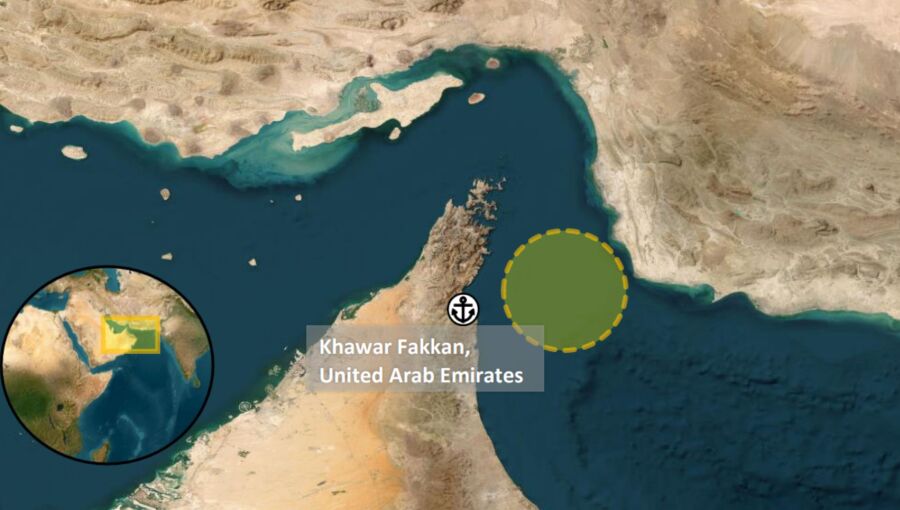
A Marshall Islands-flagged oil tanker sailing from the United Arab Emirates to Singapore made a sudden course change and was heading towards Iranian territorial waters after being approached by three small boats, British Maritime Operations Centre (UKMTO) reported on November 14.

The UK authority said the tanker, reported 22 nautical miles east of the UAE port of Khor Fakkan, had been approached by three small vessels whilst transiting southbound through the Strait of Hormuz before later deviating course in the Gulf of Oman. The agency described the incident as "likely highly targeted".

"UKMTO has received a report of an incident 86NM northeast of Ras Tanura, Saudi Arabia. The Master reports vessel approached by a small military craft and is flashing a green laser light towards the bridge. The small military craft keeps hailing vessel to turn to port towards Iranian territorial waters."

The United Kingdom Maritime Trade Operations centre, which first reported the incident as a "suspicious event", stated it had received an alert of an incident 20 nautical miles east of Khor Fakkan. UKMTO marked the incident as suspicious activity and added that authorities are investigating.

Iranian media continues to report the initial Embrey report; however, local agencies linked to the Islamic Revolutionary Guards Corps (IRGC) have not yet reported the incident. 

This incident follows another maritime incident regarding Iran's movements. On October 12, approximately 75% of Iran's fleet began transmitting their location signals and switched off around one day later.

This marked the first time Iran's oil fleet had activated tracking systems since the Trump administration imposed comprehensive sanctions on Tehran's oil exports in 2018, according to IRGC-linked Tasnim News Agency.

The tracking systems began transmitting signals again approximately one week later. Kepler Information Company calculated that 75 vessels out of 89 ships carrying Iranian crude oil eastward were visible on ship tracking platforms. The ships have since resumed operations, but the incidents have prompted market speculation about the reasons.


Japan May Follow South Korea's Path in Seeking Nuclear Submarines

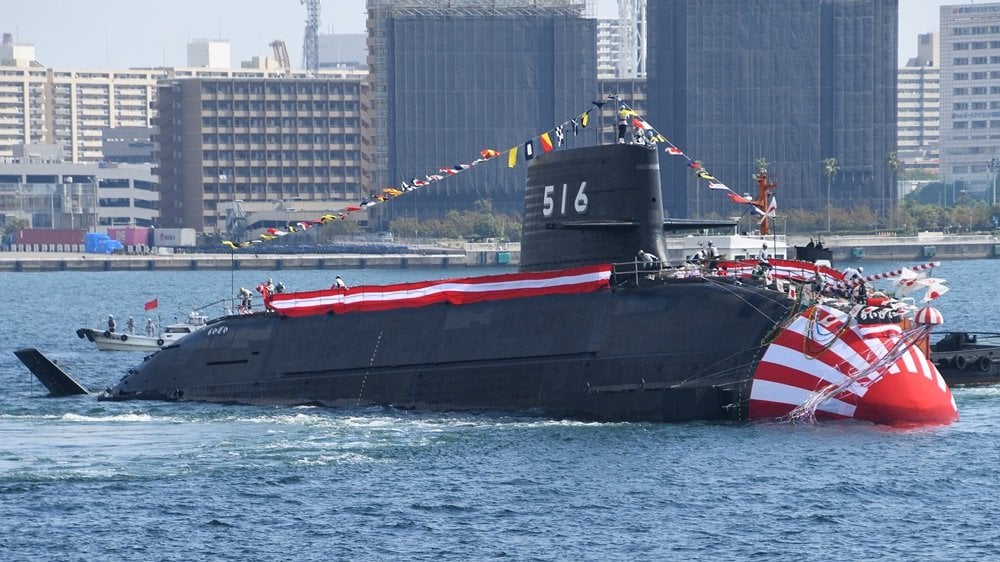
The brand new conventional attack submarine JS Raigei at launch (Hunini / CC BY SA 4.0)

Published Nov 13, 2025 2:43 PM by The Maritime Executive


Prompted by the recent agreement between the United States and South Korea for the latter to acquire nuclear-powered submarines, Japan is considering going down the same path - which would be a radical move given prohibitions in the Japanese constitution and traditional anti-nuclear sentiment.

The agreement finalized between President Trump and South Korea's President Lee Jae Myung at Gyeongju on October 29, 2025, when Trump approved South Korea’s request to begin building its own domestic naval reactors and nuclear submarines, which would be run on American-made enriched uranium fuel. The recent agreement formed part of a wider trade and investment deal between Korea and the U.S., including a much-desired 15 percent overall U.S. tariff rate – low enough to keep Korean exporters competitive in the American market.

After the meeting, President Donald Trump suggested that South Korea’s submarines would be built by Philadelphia Shipyards, which was acquired last year by the South Korean Hanwha Group. However, South Korean defense minister Defense Minister Ahn Gyu-back cast doubt on this possibility and noted that more advanced shipbuilding capacity exists in Korea (notably including the experience and tooling for building submarines). "Philly Shipyard lacks such facilities," said Ahn last weekend. "Domestic [Korean] construction is the most rational approach."

The Japanese interest in acquiring a similar capability was expressed on November 6 by Japan's new Defense Minister Shinjiro Koizumi, speaking on Japanese television. Koizumi was appointed as part of a coalition agreement between Prime Minister Sanae Takaichi's Liberal Democratic Party and the Nippon Ishin, which committed the coalition both to accepting a Ministry of Defense expert panel recommendation to expand Japan's submarine force. It also recommended that the new boats should be “equipped with vertical launch missile systems and next-generation propulsion systems.”

The drive to expand Japan's submarine fleet, which currently consists of 22 operational submarines spread between the Oyashio, S?ry? and Taigei classes, has been prompted - as has South Korea's interest - by expansions in both the Chinese and North Korean submarine fleets. Defense Minister Shinjiro Koizumi, in specifying on television that the new submarines needed to be nuclear-powered, said that the “environment surrounding Japan has become so severe” that Japan needed “to switch to nuclear power.”

Japanese political coalitions tend not to last too long, but this initiative, coming at the start of a new coalition government, has a good chance of acquiring momentum that will carry though to successive governments, given that submarine acquisition programs can last decades. In a bid to develop home-grown capability, the Japanese might also wish to cooperate with Rolls Royce, whose submarine nuclear reactors have benefitted from recent investment. The Rolls Royce submarine reactors also form the basis of SMR small nuclear power stations, the first three of which are to be built in Wylfa in North Wales; these too could also may appeal to a Japanese constituency still put off investment in large nuclear power stations by the tsunami disaster at Fukushima in 2011.


Op-Ed: A "Night Court" for the U.S. Navy's Administrative Overload

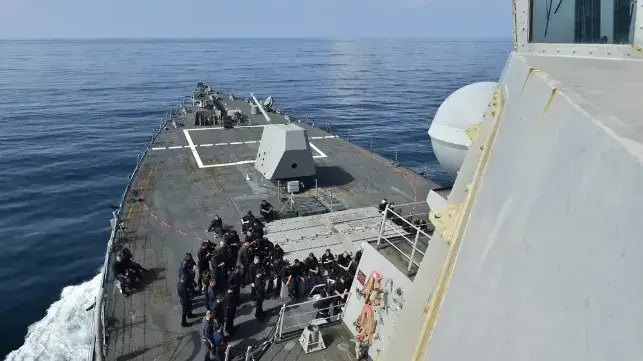
Safety meeting, USS Gridley, 2014 (USN)

Published Nov 13, 2025 8:29 PM by CIMSEC


[By Lt. Chris Rielage]

Time is our critical resource now. The Navy knows that we have a few scant years before we face major risk for an invasion of Taiwan. In the Naval Surface and Mine Warfighting Development Center (SMWDC) headquarters in San Diego, countdown clocks on the wall measure the days before mid-2027 arrives. The force is in a dead sprint, not a marathon – and we need to throw off excess weight.

To meet the challenge of war with China, the surface force has been driving hard towards more tactical competence. New equipment is rapidly hitting the fleet. New simulators are being built around the world. New cohorts of Warfare Tactics Instructors (WTIs) are graduating. SMWDC is even expanding the Surface Warfare Combat Training Continuum (SWCTC) to boost and standardize tactical knowledge across the surface force.

All of this looks good on paper. But when these efforts reach the ships, they collide with the tight schedules of sailors who count the hours in the day and often come up short. Sailors already work an average of 88.3 hours a week while underway. Where will the time for these warfighting reforms come from?

If sailors are already fully occupied and their schedules are overflowing, it hardly matters how good the new simulators or WTIs are. The present system of time allocation in the surface fleet is not a deliberate product of a warfighting-centric focus, but rather an unchecked process of creeping administrative overload. When new tacticians and training tools hit the fleet, they are eclipsed and diluted by a vast array of miscellaneous requirements. The leaders of the surface force must launch an effort to systematically protect time for tactics by aggressively pruning other requirements, or else these new efforts will fall short.

Guarding the Fleet’s Time

Thankfully, a model for how to do this already exists – a “night court.” Twice, Secretaries of Defense have convened night courts, which are rapid reviews of large groups of programs by a top official to aggressively triage acquisition programs. Most recently, then-Secretary of Defense Mark Esper convened a night court for both the Army and the larger Pentagon in 2019. In the process, Secretary Esper refocused billions of dollars to better fund reform efforts. In the defense world, night courts like this are also occasionally called “zero-based reviews.” The difference is subtle – a zero-based review starts from a clean slate and adds programs that are considered the most necessary, while a night court starts with the existing plan and cuts out excess.

The term “night court” will be used here, but the Navy could reasonably use either method. The end goal is the same. Senior admirals should review every program that owns a fraction of a sailor’s day, and ruthlessly remove the ones that, as the Secretary of War wrote recently, get in the way of “winning our Nation’s wars without distraction.” 

Are there truly programs the fleet can afford to cut? Certainly. Consider the Fall Protection program. Warships are expected to:

  • Appoint a Fall Protection Program Manager and several “Competent Persons” to run the program. 
  • Send those individuals to school – three days for the program manager and four days for each Competent Person. These individuals are usually senior Combat Systems personnel, already hard-pressed to maintain equipment and train for war.
  • Develop a command instruction for fall protection and rescue plans for a fall.
  • Perform a shipwide inspection for hazardous areas – anywhere with any height over four feet – and make design changes to the ship to remove the hazard. When this is impossible (which is usually the case on warships), post warning signs.
  • Train end users – any sailor who might go near a height over four feet – on the program. 
  • Regularly inspect the program, and be prepared for outside assessors to audit it.

The Department of the Navy’s Fall Protection instruction, which outlines these requirements, is 185 pages long – twice as long as many of the surface fleet’s latest tactical publications. 

We all agree that stopping falls is good in the abstract. No one wants to see a shipmate get injured. However, the truth is that the fleet simply cannot afford to spend precious time like this when pressing warfighting demands are calling. Sailors are continuously ensnared by programs, well-intentioned but ultimately misguided, that detract from fundamental tactical work. Warships do not have two crews – one that handles programs and one that handles combat. We face a zero-sum game with our time. Every minute that a sailor spends on an administrative program is a minute not spent on sharpening combat skills. 

Leading the Night Court

Commander, Naval Surface Force Pacific (CNSP) – the surface fleet’s Type Commander (TYCOM) – is best placed to run this night court. Not only is CNSP close enough to ships to personally speak to the urgency of the problem, they also have the senior authority to directly cut many programs. CNSP has the holistic perspective to rebalance the time allocations of the surface force, understanding both the urgency of the strategic situation and which administrative requirements do truly matter. No one leader can remove every detrimental program alone. Fall Protection, for example, will require congressional action to exempt warships from OSHA. CNSP is senior enough, however, to cut a wide swath using the span of their own authority, and to advocate for the changes that require departmental or congressional authority. 

CNSP is not the only path to success, but it is the simplest. The Chief of Naval Operations (CNO) or Secretary of the Navy (SECNAV) could also build a programmatic night court – more directly replicating the acquisition night court that Secretary Esper created – but they are too distant from the fleet. The more echelons a leader is removed from a problem, the more they face what public economist Anthony Downs called a “message-distortion problem.” In any large bureaucracy, each layer of the chain of command, even when completely well-intentioned, naturally filters out some portion of any message as it works its way up. This feature of large bureaucracies makes the Navy’s most senior leaders ill-placed to judge which programs should be removed to improve time allocations at the deckplate level. Not only is CNSP closer to the fleet, senior leaders at CNSP have bypass mechanisms – tours, direct conversations with sailors, and a network on the waterfront – available to get to the core of each program’s value. Instead of leading it directly, the CNO and SECNAV are better suited to act as senior champions for a TYCOM-led night court.

The Night Court Process

The night court should go through three phases. First, measurement. Surface force leaders need to understand every program that takes up a sailor’s time. The team that runs the night court should be careful here. If they turn this information-gathering step into yet another tasker for ships, they may actually make the problem worse. The better answer is to put three or four SWO-qualified officers who have just departed sea tours in a room, and have them brainstorm a list of every requirement they encountered. Start the night court off of that rough draft, and only afterwards follow up with more comprehensive studies and requests for information. The goal is to move quickly, not to waste a year waiting for a formal – and quickly outdated – product.

The next step is adjudication. Each program must defend its existence to the night court. The key here is that program owners must not simply explain that a problem exists, but convince CNSP that their program meaningfully addresses the problem. Using Fall Protection again as an example, it is not good enough to list fall statistics – the Fall Protection team must convince CNSP that their program stops falls without putting an undue burden on ships.

Once the night court judges against a program, the last and hardest step is removal. The night court should identify the source of the program requirement, and if it is within CNSP’s influence, cut it directly. If the requirement is imposed on the surface fleet by a higher authority like congress, CNSP should push them for reform. Some of this work will generate natural friction amongst stakeholders. To build support, the night court should aggressively publicize how many hours of fleet time it saves, emphasize how many pages of administrative requirements it has cut, and cultivate support from combat-focused leaders who can speak to the warfighting benefits.

The goal is that, in the long run, regular night court reviews – perhaps every 1-2 years – cease to be radical. Ideally, guarding sailors’ time to emphasize warfighting will become a standard part of how the surface fleet operates and conceives of its identity: a more austere and focused force, supported by a more disciplined bureaucracy.

Dragging the Fleet Down

If surface force leaders like CNSP do not do the work of cutting time requirements, more time will not magically appear. Instead, the task of prioritizing will fall to unit commanders, junior officers, and chiefs. They will be forced to make changes within the margins of a system overflowing with years of creeping administrative overload, which has long surpassed the available time of sailors. The best of them will be honest about the fact that they cannot do everything, and accept hits to their record in exchange for a ruthless prioritization of combat skills. Ships with strong warfighting focus will fail more administrative inspections, earn fewer awards, and look worse on paper. Those leaders – the ones willing to be honest – will be winnowed out by a personnel system that does not appreciate nuance. The remaining leaders will take dishonesty as a norm and even an unavoidable price to be paid in exchange for career security. They will superficially hit their required administrative wickets at the cost of lethality. The Army War College report “Lying to Ourselves” famously described this dynamic within its own service, and the surface fleet is just as prone to it. Our failure to control excess time demands on ships yields an overflowing system that incentivizes dishonesty.

At this late hour, we cannot keep everything. When a crew member falls overboard, we teach them to immediately shed their steel-toed boots. Boots are normally vital – they keep our sailors safe in a shipboard industrial environment. But in the crisis of a man overboard, they drag sailors down. Our peacetime programs are the same. We can shed weight now, or we can drown in wartime.

LT Chris Rielage is a SWO and ASW/SUW WTI onboard USS CARL M LEVIN (DDG 120) in the Pacific. His publications have previously appeared in USNI’s Proceedings and CIMSEC. These opinions are expressed in a personal capacity and do not necessarily reflect the official views or policies of the Department of the Navy or the U.S. government.

This article appears courtesy of CIMSEC and may be found in its original form here

The opinions expressed herein are the author's and not necessarily those of The Maritime Executive.

 

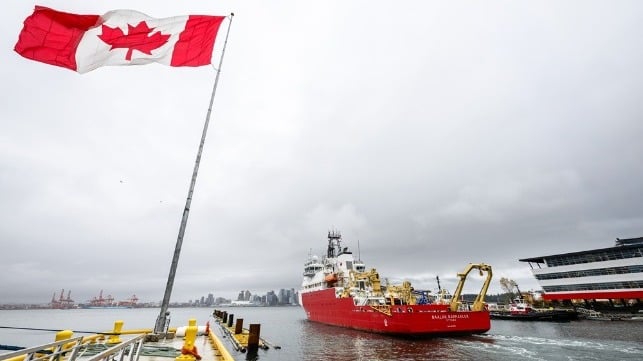
Seaspan Delivers $900M Science Ship After Eight-Year Delay

OOSV
Courtesy Seaspan

Published Nov 13, 2025 5:58 PM by The Maritime Executive


Canadian shipbuilder Seaspan has delivered the CCGS Naalak Nappaaluk, the new flagship of Canada's science fleet. 

The CCGS Naalak Nappaaluk is named after an Inuit elder from Nunavik, and is a much-anticipated replacement for the decommissioned CCGS Hudson, which was 59 years old when removed from service in 2022. Nappaaluk was supposed to replace Hudson without a gap in availability, but delivery was repeatedly set back because of the pandemic and a reshuffle of the National Shipbuilding Strategy's priorities. After cumulative delays, Nappaaluk arrived eight years late and about 1,000 percent over budget.

The new vessel will be Fisheries and Oceans Canada’s main platform for oceanographic science, as well as a useful cutter when needed by the Canadian Coast Guard for SAR or sovereignty purposes. 

As would be expected for a premier oceanographic research vessel of 5,000 tonnes displacement, the Naalak Nappaaluk is well-equipped for research missions: multiple lab spaces, a seawater sampling system for CTD and oxygen levels, a drop keel with a sensor suite, and an A-frame at the stern for deploying gear. Designed to PC 6, the ship is capable for light ice operations in the Arctic. 

In a statement, Seaspan said that the delivery marks a proud moment for all involved, "another proof point for the Government of Canada of the success of the [National Shipbuilding Strategy, or NSS]." However, the delivery also illustrates the program's substantial cost: Originally budgeted for about US$80 million when construction began, the delivered price of Naalak Nappaaluk ballooned more than tenfold to US$910 million - one of the largest percentage cost overruns in recent shipbuilding history, and an example of the expenditures needed to revive a national shipbuilding capability. 

“With the delivery of the CCGS Naalak Nappaaluk, Canada’s largest dedicated science vessel, the National Shipbuilding Strategy has helped create high-quality jobs, strengthen our shipbuilding industry, and expand the Coast Guard’s scientific and operational capabilities," said Joël Lightbound, Minister of Government Transformation, Public Works and Procurement, in a statement Thursday. "It shows how strategic federal investments in shipbuilding support Canadian industry while enhancing our ability to monitor, understand, and protect our oceans." 

Next, the vessel will sail to Patricia Bay for the Canadian Coast Guard to begin training and familiarization. When this is complete, she will make the long transit to the Bedford Institute of Oceanography in Halifax, Nova Scotia, where she will be homeported.


Video: Ukraine Hits Russian Oil Terminal at Novorossiysk

Novorossiysk
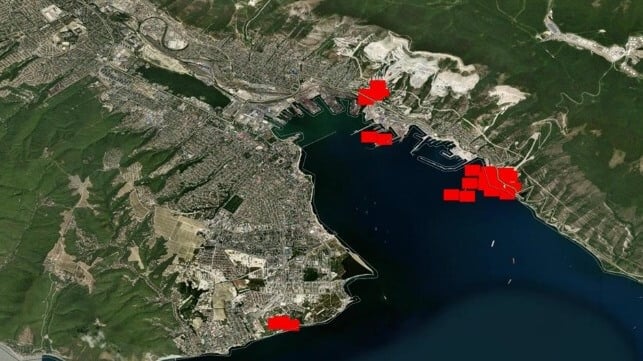
Large infrared signatures consistent with fires at Novorossiysk, especially concentrated at the oil loading terminal (NASA FIRMS)

Published Nov 13, 2025 11:01 PM by The Maritime Executive


Ukrainian forces carried out a massive strike on the Russian port of Novorossiysk, inflicting significant damage on oil loading terminals that are vital to Russia's revenue stream. At least one vessel has also been reported damaged on Russian social media, but the claim has not been confirmed.

Novorossiysk is home to the Sheskharis loading terminal, where Transneft's pipelines from inland Russia deposit Urals crude into tankers for export. The terminal appears to have been hit hard in the Ukrainian strike, and multiple bystander videos showed it engulfed in flames. 

A separate, white-hot explosion and fire were captured on video, and multiple open-source analysts suggest that the blast was consistent with a direct hit on an air defense battery. If the Russian air defenses for the city have been taken down, then further attacks could follow in the nights to come. 

The Sheskharis terminal is directly adjacent to the port's naval station, previously considered a place of relative safety for the Black Sea Fleet. The extent of any damage to warships at Novorossiysk was not immediately clear, but NASA FIRMS fire detection sensing suggests no signs of heat sources in the naval harbor. Given the proximity, the strike shows that Ukraine can now hold this key base at risk, despite the long distance. 

The attack follows just days after a similar strike on the port of Tuapse, where Ukrainian cruise missiles and drones hit oil loading piers and moored tankers. Ukrainian drone forces have also kept up a steady tempo of attacks on Russia's terrestrial pipelines and oil refineries, including an apparent hit on the Saratov refinery on Thursday night. Taken all together - the strikes on refining infrastructure, pipelines and crude oil export terminals - Ukrainian forces appear to be making a multi-pronged effort to deny Russia's oil producers access to market. 


Op-Ed: Mideast Reclaims Key Role in VLCC Market as OPEC+ Reopens the Tap

tanker
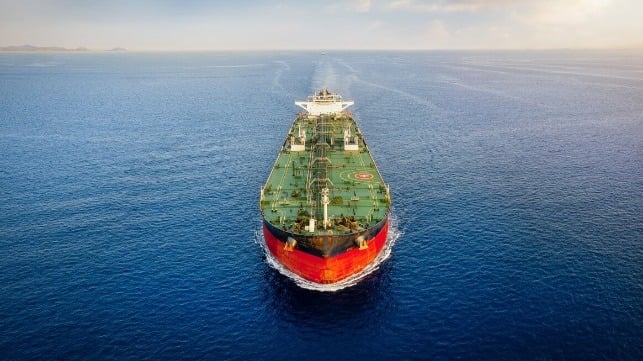
SHansche / iStock

Published Nov 13, 2025 11:43 PM by Mette Fredericksen


As the global VLCC community gathers in Dubai for Bahri Week, all eyes are once again on OPEC and Middle East production policy. OPEC+ members, led by Saudi Arabia, have begun unwinding their voluntary production cuts, and the return of supply is reshaping momentum across both oil and tanker markets. After more than a year of orchestrated oil market tightness, the reintroduction of barrels is reestablishing the Middle East as the core driver of VLCC demand.

In oil markets, the balance has shifted subtly but decisively. As Middle Eastern producers have increased output, a growing share of those incremental barrels has been drawn into Asia, which remains the deepest and most price-sensitive demand center. Earlier this year, Asian refiners relied more on stock drawdowns and opportunistic Atlantic Basin cargoes, but as Middle Eastern supply loosened and differentials softened, their focus has swung back toward the region. 

For the tanker market, this evolution has been unambiguously positive. As OPEC+ producers have completed their rebalancing after earlier oversupply and the Middle East moves beyond its seasonal demand peak, more crude oil is now moving into the export market. That is already visible in rising VLCC cargo counts and fixture momentum. The increase has not been dramatic — but it has been consistent and sustainable. It is precisely this kind of predictable, volume-driven trade - rather than sporadic arbitrage flows, that underpins lasting rate support for supertankers.

The VLCC segment remains particularly responsive to Middle East oil flows. With 85% of crude and condensate exported from the region in 2024–2025, already being carried by VLCCs, and 75% of the OPEC+ production increase stemming from this region, the scale of the opportunity is obvious. Each additional barrel made available for export directly translates into greater long-haul transport demand — and VLCCs are uniquely positioned to absorb that trade.

On the supply side, vessel availability remains tight, and with no significant movement in the VLCC fleet size the freight market direction will remain driven by consistent vessel demand in the near term. VLCC fleet growth is effectively negligible this year, with new deliveries limited. Even with more newbuildings scheduled to enter the market in 2026, much of that additional capacity will be offset by an aging fleet that is gradually seeing its utilization decline. In practice, the effective reduction in trading ability from older vessels is likely to outweigh the capacity added from new tonnage.

Even with the improving fundamentals, the market is not without risks. Geopolitical volatility in the Middle East and Red Sea remains ever-present and continues to cast a shadow on freight dynamics. The current demand strength also depends on Asian refiners maintaining healthy margins — a downturn there could temper cargo intake. And while OPEC+ is currently prioritizing exports, its strategy remains reactive and could pivot back toward restraint if crude prices come under pressure.

Looking ahead, the return of Middle Eastern supply appears to be more than a temporary boost — it signals a structural shift in the fundamentals supporting the VLCC market. With Asia continuing to pull incremental barrels and Middle Eastern exports moving back toward growth rather than restriction, the demand base for VLCCs is strengthening. Combined with limited net fleet expansion and an aging fleet, the freight market is set to be driven increasingly by cargo demand rather than ship supply. While geopolitical and policy risks remain in view, the balance of momentum has turned decisively positive, and the current strength in the VLCC freight market is a reflection of this shift.

Mette Fredriksen is head of research and insight at Tankers International.

The opinions expressed herein are the author's and not necessarily those of The Maritime Executive.