Friday, November 14, 2025

Beijing Lures Private Investors to Reignite Infrastructure Growth

  • China is shifting from state-led spending to attracting private investment in major infrastructure projects.

  • Projects include energy, transport, oil and gas pipelines, hydropower, and nuclear power.

  • The government will now allow private firms to hold larger stakes—beyond the previous 10% cap—in strategic projects

After decades of funding major infrastructure projects with state money, the Chinese government has zeroed in on private capital as a source of fresh cash for big projects in everything from transport to energy, to power generation, and drones.

In a new policy presented earlier this week, Beijing signaled private capital is now welcome in hydropower, nuclear power, oil and gas pipelines, and water supply, media reported, citing government officials.

“Private investment serves as a key barometer reflecting economic vitality and plays a crucial role in stabilizing growth, employment and expectations,” the deputy director of China’s National Development and Reform Commission said, as quoted by the South China Morning Post.

The changes introduced this week include a prescription for state entities leading projects in a number of areas to carry out a study of the feasibility of private investment for each of these projects. The areas include railways, hydropower, nuclear power, power transmission, oil and gas pipelines, liquefied natural gas import terminals and storage, and water supply

“While encouraging private capital participation in key projects, we also equally support all types of market entities to participate, fostering complementary advantages and common development among diverse forms of ownership,” Guan Peng, deputy director of the Department of Fixed Asset Investment at the NDRC, said as quoted by China Daily.

To take better advantage of this barometer that can stabilize growth—recently uneven in the world’s biggest growth engine—the Chinese government has introduced changes in private company ownership limits in projects that fall within the scope of the new legislation. It has also prohibited the addition of extra conditions for private companies in public tenders on infrastructure projects.

Previously, private companies were not allowed to own a stake higher than 10% in such projects, but with the new rules, they would be able to do just that, after the strict rules led to an outflow of foreign investment over the past few years, Bloomberg noted in its report on the news. This year alone, foreign direct investment is down by 10%, the publication said.

With those limits, Chinese private companies have been reluctant to put their money into such projects, and this appears to have finally drawn the attention of the authorities. In fact, per the People’s Daily, the NDRC has been working to boost private capital participation in infrastructure projects for several years now, allowing private entities to take stakes as high as 20% in some projects, for instance, nuclear power.

These efforts have paid off, according to data for this year, which shows that private investment in infrastructure has gone up by 7%, even if overall it declined amid U.S. President Donald Trump’s trade offensive that had a special focus on China. However, private companies have been finding it harder to stay profitable, which was one big reason for the latest policy changes that aimed to boost their participation in infrastructure and energy projects.

The NDRC boasted it had recommended a grand total of 105 real estate investment trust infrastructure projects to the China Securities Regulatory Commission so far. The projects had raised a combined $29 billion since their listing and were expected to drive five times that amount in project investment.

“We will further improve regular communication mechanisms between government and enterprises, strengthen coordination, and solidly promote the implementation of the Private Economy Promotion Law to facilitate high-quality development of the private investment,” the deputy director of the NDPC’s Bureau of Private Economy, Ling Zhongguo, said as quoted by the People’s Daily.

Going forward, according to some of the reports on the new policy changes, the government would focus on drawing more private capital into energy projects, including everything from oil and gas to electricity transmission, highlighting yet again the significance of that sector.

By Irina Slav for Oilprice.com

Trump’s Energy Pushback Sends Shockwaves Through Wind Industry

  • Wind pioneers Henrik Stiesdal and Andrew Garrad warn that a growing political backlash is threatening the momentum of the global energy transition.

  • Trump’s rollback of renewable incentives, along with soaring costs, supply chain disruptions, and high interest rates, has created a hostile environment for wind and solar projects.

  • Leading energy companies like Shell and BP are scaling back their renewable ambitions and are refocusing on oil and gas.


The energy transition faces the biggest challenge yet as a global backlash against renewable energy – spearheaded by U.S. President Donald Trump – is gaining momentum, according to two of the European pioneers of wind turbine design.

President Trump’s views on wind energy and climate change are extreme, but they are symptomatic of a global shift in the perception of the need for and benefits from the energy transition, say Henrik Stiesdal and Andrew Garrad, a Dane and a Brit, who are often referred to as the “Godfathers of wind.”

“This sort of change is a very dangerous thing”

Stiesdal and Garrad have won the 2024 Queen Elizabeth Prize for Engineering “for their achievements in advancing the design, manufacture and deployment of high-performance wind turbines, allowing wind energy to make a substantial contribution to the world’s electricity generation.”

Stiesdal was responsible for the turbine design for the world’s first offshore wind farm, while Garrad pioneered the BLADED computational design tool, which allows engineers to model a turbine system and predict its behavior.

After 40 years of helping the world develop wind energy, Stiesdal and Garrad are now concerned that the marked shift in perception of renewables, especially offshore wind energy, could hold back the rollout of clean energy technologies.

“Trump is symptomatic. I mean an extreme symptom of that, but you can see it I think in all Western countries certainly, perhaps not elsewhere,” Garrad told CNBC earlier this month, before being bestowed, together with Stiesdal, with the Queen Elizabeth Prize by King Charles III.

President Trump has slammed wind energy, rolled back or scrapped many Biden-era incentives for renewables, and has criticized other countries’ approach to energy policy, including the UK.

President Trump has repeatedly called for the UK to incentivize oil and gas production and “get rid of” wind farms.

At the UN General Assembly in September, the President went on the offensive and attacked clean energy globally, and called climate change “the greatest con job ever perpetrated on the world.” He derided renewable energy as ineffective, expensive, and a financial drag, calling it a “joke”.

President Trump also described windmills as “pathetic and so bad, so expensive to operate” before referring to them as “the most expensive energy ever conceived.”

The “Godfather of wind” Garrad noted that the backlash against wind energy is not “just a wind energy problem.”

“To do this sort of change is a very dangerous thing. And I think it has shown that this is a political business,” Garrad told CNBC.

“It’s a personal decision by a politician, who happens to be a rather powerful one — and it has sent shockwaves around the place.”

According to Garrad, the renewable energy industry now faces a general shift in mood, which needs to be addressed.

Costs Add to Headwinds

The unfavorable regulatory and political climate in Washington is one of the main hurdles to renewable energy and the energy transition. But it’s not the only one. Soaring costs, supply chain issues, high interest rates, power curtailments, and mismatches with grid availability and capacity have added to the headwinds in wind and solar energy in recent years.

Ørsted, the world’s largest offshore wind developer, has become this year the poster child of the current regulatory and structural issues facing the wind energy sector.

Ørsted has recently completed a huge rights issue equal to some $9.35 billion, to cover immediate financing needs amid regulatory uncertainties in the U.S., after the Trump Administration tried to have it stop work at a nearly completed project off the East Coast.

Faced with numerous headwinds, Ørsted last month said it would slash its workforce numbers by 2,000 by 2027, eliminating a quarter of its current roles.

Regulatory changes, cost inflation, and high interest rates have impacted project economics in the offshore wind industry in the past three years.

The economics weren’t fantastic even before 2022, but European oil and gas majors decided to invest in renewables when they announced shifts to net zero and targets to leave their oil production decline.

This shift lasted only a couple of years until energy security became more important—to every country—than sustainability. Big Oil abandoned the ambitious renewables targets and returned to what they do best—pump oil and gas to ensure the energy supply the world needs.

In one of the latest withdrawals, Shell this week exited two offshore wind power projects in Scotland as the world’s top oil and gas firms continue to scale back their investment and involvement in renewable energy.

Shell and the other European supermajor, BP, have shifted focus back to their core oil and gas business. The pivot took place after the energy crisis made energy security and affordability more important than sustainability, while high interest rates and supply chain issues further reduced already meager returns from clean energy projects and made many new energy ventures uncompetitive.

The most competitive projects still go forward, especially in jurisdictions with favorable policies, including China and Europe. Enthusiasm in Europe has waned but the need for domestically generated electricity without the reliance on gas imports underpins continued clean energy development.

The renewable energy industry now has to find its Goldilocks place between the overly zealous proponents and the opponents, branding it “pathetic”.

By Tsvetana Paraskova for Oilprice.com


Rio Tinto Inks New Wind Power Deal to Advance Kennecott Decarbonisation

Rio Tinto is stepping up its U.S. decarbonisation strategy with a new 15-year virtual power purchase agreement (VPPA) that will supply renewable electricity from TerraGen’s recently completed Monte Cristo I wind farm in Texas to its Kennecott copper operations in Utah.

Under the agreement, Rio Tinto will procure 78.5 MW of renewable power from the 238.5 MW project, which entered commercial operation this week. The deal is the latest in a growing portfolio of U.S. renewable energy arrangements intended to cut emissions associated with the company’s mining and processing operations.

Kennecott Managing Director Nate Foster said the agreement strengthens Rio Tinto’s domestic renewable energy position while supporting the expansion of greenfield renewable capacity on the U.S. grid. The company has been adding onsite solar at the mine as well, including a 5 MW project commissioned in 2023 and a 25 MW solar installation nearing completion.

The move aligns with Rio Tinto’s corporate climate strategy, which targets a 50% reduction in Scope 1 and 2 emissions by 2030 and net-zero operations by 2050. The miner already sources roughly 78% of its global power needs from renewables and aims to increase that share to 90% by the end of the decade. The new VPPA supports both grid decarbonisation and the company’s long-term effort to cut the carbon footprint of copper—a metal critical to electrification and clean energy infrastructure.

The agreement also reinforces a broader trend among major miners rapidly scaling renewable procurement to manage exposure to carbon costs, meet customer expectations for low-carbon materials, and stabilize long-term energy prices in the U.S. market.

By Charles Kennedy for Oilprice.com


China reports largest gold discovery in more than seven decades

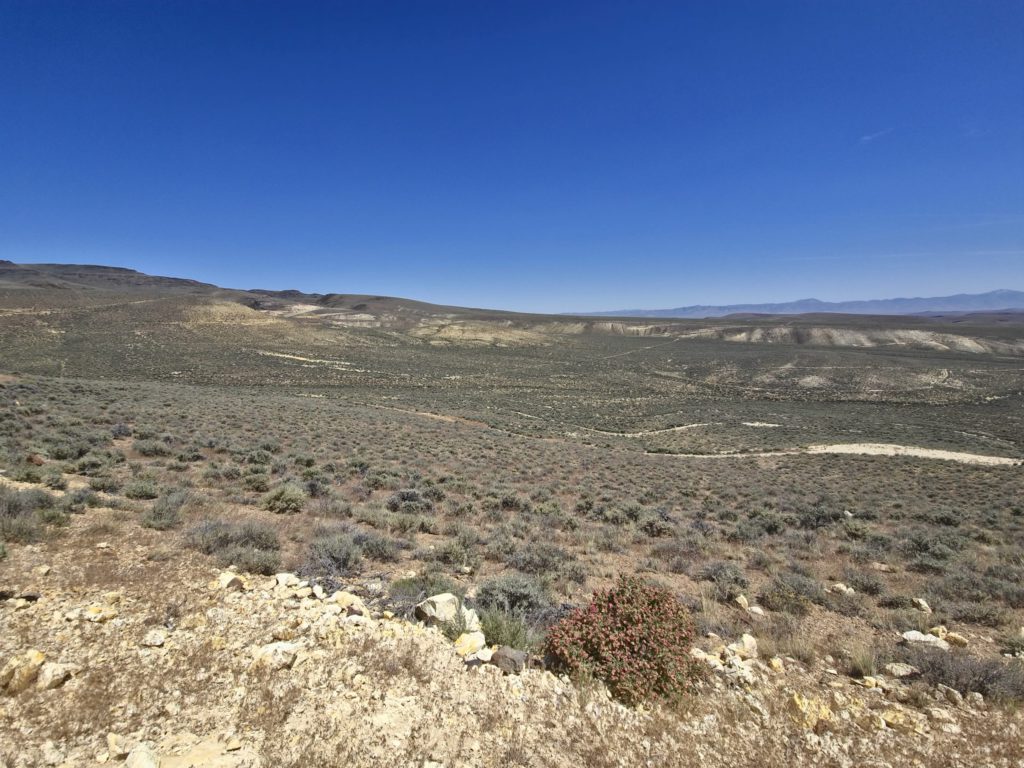
China finds a large gold deposit, 14 November 2025
Copyright Christophe Meneboeuf - http://www.pixinn.net/Creative Commons CC-BY-SA 3.0 If you want to reuse this picture, you have to credit Christophe Meneboeuf as its rightful author.


By Jesús Maturana
Published on 

China has announced the discovery of the largest gold deposit found in the country since 1949, with an estimated 1,444 tonnes of reserves in Liaoning province. The find, completed in just 15 months, comes as gold prices hit record highs.

China’s Ministry of Natural Resources confirmed the discovery of the Dadonggou deposit on Friday. This is the largest single gold find reported in the country since the founding of the People’s Republic in 1949. Officials say the site contains an estimated 2.586 million tonnes of ore with an average grade of 0.56 grams per tonne, amounting to around 1,444 tonnes of gold.

At current prices, that volume of gold is worth more than €166bn. Gold has reached record levels this year, trading at more than €115,000 per kilogram.

The project was carried out by the state-run Liaoning Geological and Mining Group, which deployed nearly 1,000 technicians and workers and completed the exploration in just 15 months — an unusually short period for a deposit of this size.

The ministry has described the find as “ultra-large” but low-grade, and said it has already passed an initial economic feasibility assessment.

However, authorities have not disclosed the precise location of the site beyond confirming it is in eastern Liaoning province, prompting speculation about the strategic considerations behind the limited disclosure.

A safe-haven asset in turbulent times

The discovery comes during a period of surging demand for gold. Prices have risen by more than 50% this year, fuelled by a weaker dollar, geopolitical tensions and strong buying by central banks — particularly in emerging economies looking to diversify their reserves.

China has accelerated its mineral exploration efforts in recent years. In 2024, officials reported the discovery of a deposit of more than 1,000 tonnes in Hunan province, and another of over 40 tonnes in Gansu in October. The country produced 377.24 tonnes of gold in 2024, a 0.56% increase on the previous year.

Domestic consumption reached 985.31 tonnes in 2024, with demand for bars and coins rising by more than 24% year-on-year. Analysts say the trend reflects growing interest among China’s expanding middle class in safeguarding wealth amid global economic uncertainty — making gold an increasingly popular safe-haven asset across the country.


Newfoundland’s golden future: New Found


Gold completes Maritime Resources


takeover


In a move that’s shaking up Canada’s gold mining landscape, New Found Gold (TSXV:NFG) has officially taken over Maritime Resources. 

 November 13, 2025


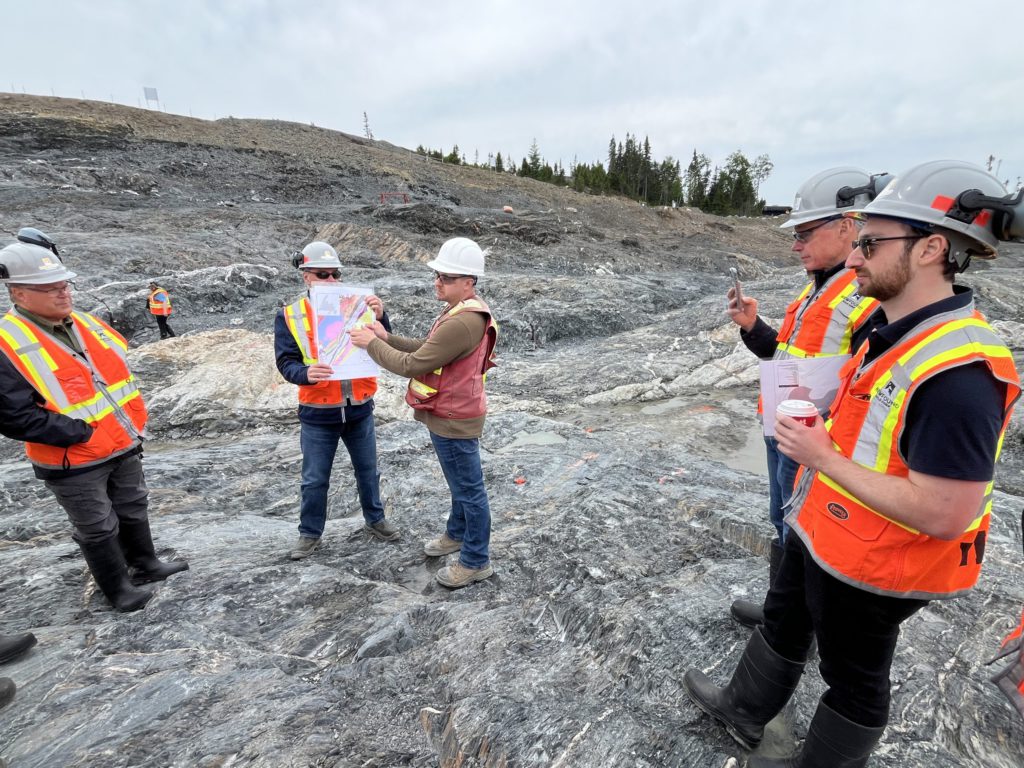
Visiting the Iceberg zone at New Found Gold’s Queensway project in northeast Newfoundland. 
Credit: Blair McBride


In a move that's shaking up Canada's gold mining landscape, New Found Gold (TSXV:NFG) has officially taken over Maritime Resources. The deal, announced earlier this year, has now been sealed, creating a new powerhouse in the Canadian gold industry.

New Found Gold, once a newcomer in exploration, has rapidly transformed into a budding gold producer. By snatching up Maritime Resources, the company now boasts two prime assets in Newfoundland: the Queensway gold Project and the Hammerdown gold project.

Keith Boyle, New Found Gold's CEO, is bullish about the merger. He said, "In less than a year, New Found Gold has transformed from an early-stage exploration company to an emerging Canadian gold producer with camp-scale exploration potential. Today we see two high-quality assets, the Queensway gold project and the Hammerdown gold project, located in a Tier 1 jurisdiction with strong synergies, come together at a time of highly favourable gold prices."

The deal sees Maritime Resources shareholders receiving 0.75 New Found Gold shares for each Maritime share they held. As part of the shake-up, Allen Palmiere, a seasoned mining executive, has joined New Found Gold's board, while Melissa Render has stepped down.

Garett Macdonald, Maritime's outgoing CEO, expressed optimism about the merger: "We are pleased with the completion of the business combination and are excited for New Found Gold as it grows into Canada's newest mid-tier gold producer."

This acquisition is just one part of New Found Gold's ambitious expansion plans. The company recently announced a deal to increase its Queensway project by a third, potentially covering 2,440 sq. km (234,050 ha).

With gold prices riding high and two promising projects now under its belt, New Found Gold is positioning itself as a rising star in Canada's gold mining sector. Industry watchers will be keeping a close eye on how this newly formed gold producer performs in the coming months.

More information is posted on www.NewFoundGold.ca.

Secure your wealth today — buy gold bullion directly through our trusted partner, Sprott Money.


Iran’s missing uranium stockpile is growing concern at UN nuclear watchdog

Mine containing uranium ore samples. AI-generated stock image by Anastasiia.

United Nations nuclear inspectors said they are seriously concerned about the status of Iran’s inventory of near-bomb-grade uranium, as the Islamic Republic continues to deny them access to sites bombed several months ago by the US and Israel.

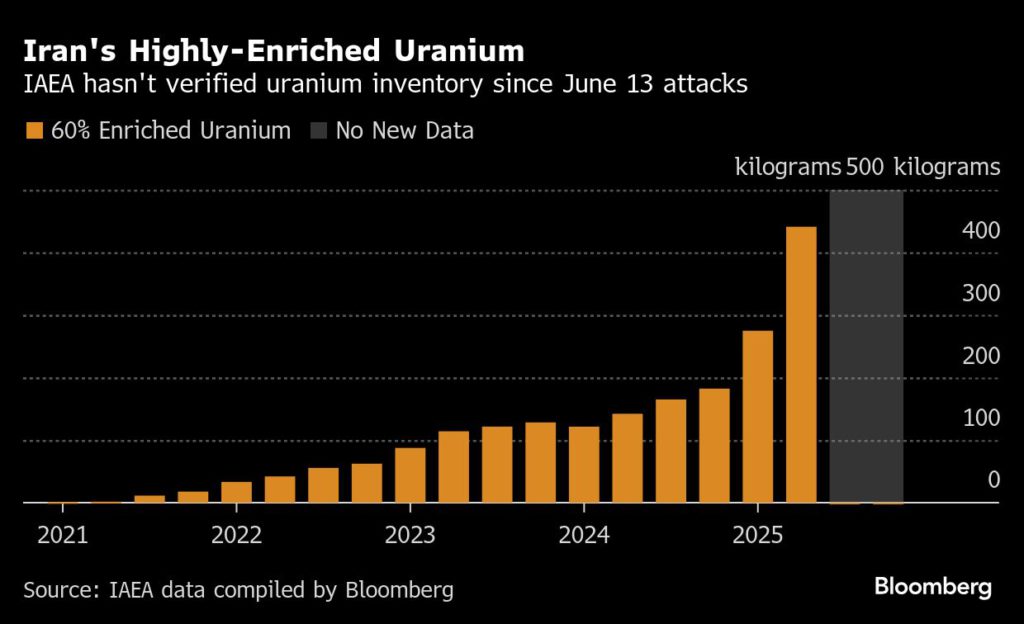
The International Atomic Energy Agency reiterated it hasn’t been able to verify Iran’s fuel stockpile since mid-June, according to documents seen by Bloomberg. It’s the first IAEA report since the UN security council reimposed sanctions that demand Iran suspend enrichment activities.

“The agency’s lack of access to this nuclear material in Iran for five months means that its verification — according to standard safeguards practice — is long overdue,” wrote IAEA Director General Rafael Mariano Grossi, adding Tehran’s failure to inform his agency about the uranium’s whereabouts is a “matter of serious concern.”

While satellite images show Israeli and US attacks destroyed much of Iran’s surface-level nuclear activity, they also rolled back decades of access by UN inspectors to Tehran’s vast atomic complex. Iran’s nuclear work has concerned the West for decades and tensions over the nature of its atomic program — which dates back to the 1950s — have frequently shaken oil markets and spurred fits of both conciliation and conflict with the US.

The Islamic Republic has always denied harboring intentions to develop a nuclear weapon and says it’s accelerated its uranium enrichment in response to US President Donald Trump’s first-term decision to quit the landmark 2015 nuclear deal and heavily sanction its economy.

Recent satellite imagery shows Iranian activity around the bombed sites in Fordow, Natanz and Isfahan, according to two senior diplomats who asked not to be identified in exchange for discussing restricted information. Agency inspectors aren’t certain whether the activities are restricted to clean-up efforts or potentially include relocating uranium inventories.


Grossi reiterated his agency “will not be in a position to provide assurance that Iran’s nuclear program is exclusively peaceful” until Iran improves its cooperation. The country has yet to submit a damage assessment or estimate the state and location of its uranium reserves.

Prior to June’s attack, Iran possessed sufficient highly-enriched uranium reserves to quickly craft about a dozen warheads.

The IAEA assessed that seven of Iran’s declared nuclear facilities were impacted by the June strikes. Another 13 facilities were unaffected, with some, including the Bushehr power plant and Tehran research reactor, having already received inspectors.

Iran’s foreign ministry said on Monday that IAEA inspectors had visited Bushehr and the Tehran reactor last week.

Trump’s move to heavily bomb some of Iran’s key nuclear sites in June immediately derailed active negotiations between Tehran and Washington to try to resolve their differences. Iran has since said that it’s not prepared to re-enter talks unless it has a guarantee that it won’t be bombed again.

Even if the Islamic Republic immediately submitted to inspections and fully cooperated with the IAEA, it could take years to re-establish certainty over the fate of Iran’s nuclear stockpile. Containment vessels where the material is stored may have been destroyed, releasing kilograms-worth of uranium into the environment, according to the diplomats.

“The agency has lost continuity of knowledge in relation to the previously declared inventories of nuclear material,” read the IAEA report. “It is critical that the agency is able to verify the inventories of previously declared nuclear material in Iran as soon as possible in order to allay its concerns.”

(By Jonathan Tirone)


Eagle Energy Metals reports positive metallurgical results for Aurora uranium project

Eagle Energy’s Aurora uranium project in southeast Oregon. credit: Eagle Energy Metals

Eagle Energy Metals reported on Wednesday new metallurgical optimization results from its flagship Aurora uranium project in southeast Oregon.

The company acquired the Aurora uranium project in 2024, which it says is the largest mineable uranium deposit in the US. Its land package spans the Oregon-Nevada border, with the mine on the Oregon side and the plant on the Nevada side.

The results showed recoveries in the high-80% range and an approximate 60% reduction in acid use, signaling major gains in processing efficiency and cost reduction, the company said in a press release.

According to Eagle, the tests demonstrated no requirement for separate processing of clay and middlings, simplifying the flowsheet while reducing capital and operating costs. Also, the leach duration was reduced to around 12 hours from 24 hours previously, with no requirement for ferric sulphate, further reducing reagent costs.

Eagle’s flagship project includes the Aurora deposit, with 32.75 million lb. indicated and nearly 5 million lb. inferred of near-surface uranium resource, and the adjacent Cordex deposit, which it says offers significant potential to expand the project’s overall resource inventory, based on over 500 completed drill holes.

Uranium is a crucial source of reliable baseload power as nuclear energy, and the US requires an estimated 32 million lb. of uranium annually for its current nuclear reactors. Energy Fuels’ White Mesa in Utah is the only producing mill in the US.

In 2024, the US purchased 50 million lb. of uranium, but only produced 677,000 lb., according to the Energy Information Administration.

“Reducing acid use and cutting processing times can make a meaningful difference in the economics of a uranium project,” Eagle Energy Metals CEO Mark Mukhija said in the news release.

“These results show that Aurora’s uranium may be recovered more efficiently and at lower cost than anticipated, without sacrificing performance,” Mukhija continued. “For Eagle, that would be a clear validation of the project’s quality and a key step toward building a reliable US uranium supply chain that can support the nation’s clean energy goals.”

Eagle expects the project to serve as its flagship asset following the completion of its proposed business combination with Spring Valley Acquisition Corp. Upon closing, Eagle plans to list on Nasdaq under the ticker NUCL.

By pairing a large, geologically low-risk uranium resource with its SMR technology, Eagle said it aims to help strengthen the US uranium supply and help rebuild a secure domestic nuclear supply chain.


Ascend Elements lands multi‑year lithium carbonate offtake deal with Trafigura

Image from Ascend Elements.

Massachusetts-based battery materials recycler Ascend Elements has announced a multi‑year offtake agreement for lithium carbonate with global commodities giant Trafigura, totalling 15,000 metric tons to be delivered between 2027 and 2031.

The partnership pairs Ascend Elements’ hydro‑to‑cathode technology with Trafigura’s global marketing and logistics platform to accelerate a resilient battery materials supply chain, the company said.

Under the terms of the deal, Trafigura will provide global marketing and logistics capabilities, while Ascend Elements produces refined, low-carbon lithium carbonate produced from recycled lithium‑ion batteries and manufacturing scrap via its patented hydro-to-cathode process.

The partnership supports Ascend Elements’ North American and European pipeline. Trafigura expands its portfolio of recycled materials it can place across its global customer base, supporting OEMs to meet circularity and compliance goals.

“Trafigura’s global platform paired with our hydro-to-cathode process turns circularity into supply security,” Ascend Elements CEO Linh Austin said in a news release.

“Together we’ll deliver low-carbon, recycled lithium carbonate that is traceable, responsibly-sourced, and available where customers build across the US and Europe, reducing carbon, cost and geopolitical risk while accelerating a resilient battery supply chain,” Austin said.

“Ascend Elements’ patented process, which produces battery-grade lithium carbonate from domestic scrap, is advancing the development of domestic battery supply chains in the US and Europe – a priority to ensure security of supply,” added Gonzalo De Olazaval, Trafigura’s global head of metals and minerals.

Chinese battery material makers push for higher prices as cobalt rally hits supply chain

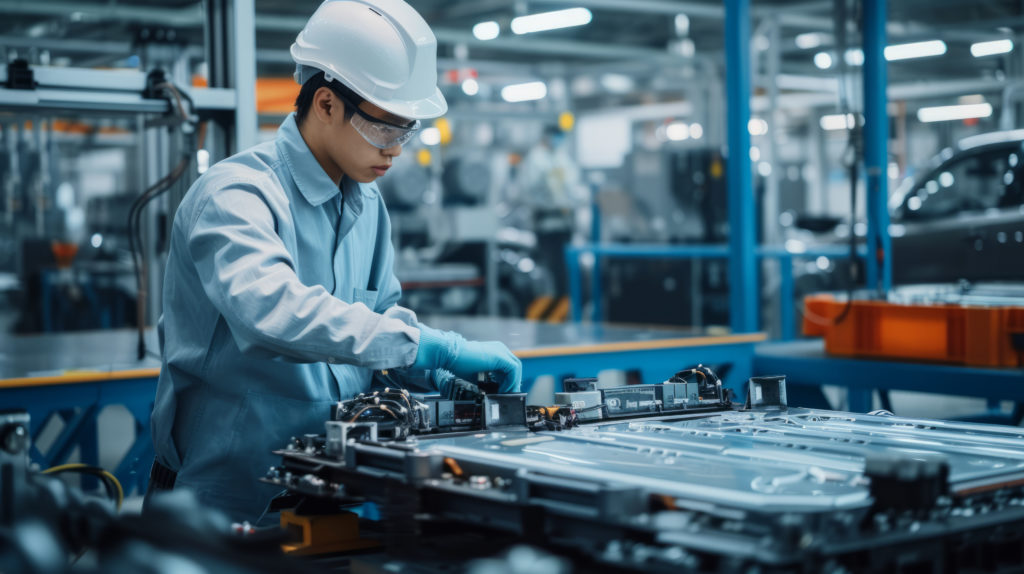
Chinese engineer working on EV car battery cells module in a electric vehicle factory. Stock image.

Suppliers to China’s electric-vehicle battery makers are pushing for higher prices for key cobalt-based materials, aided by a sharp rebound in cobalt and a tightening market for raw materials in batteries.

Makers of nickel-manganese-cobalt (NCM) precursors, the feedstock used to produce cathodes for NCM batteries, which are used in roughly a fifth of Chinese EVs, have sought higher offers for long-term contracts in recent weeks, according to three traders and producers who spoke on the condition of anonymity.

NCM precursors are normally priced at a fixed discount to spot cobalt sulfate in China, typically at around 10%, but producers are now pushing for discounts closer to 5%, the sources said.

Some are also seeking to further reduce discounts on spot orders next year, one source added.

Whether buyers will accept higher-than-desired offers is unclear and the sources said negotiations could be difficult because major NCM battery makers can choose from a wide pool of suppliers.

The price push is the first in nearly two years and comes as cobalt markets rebound, with prices more than doubling this year after export restrictions were imposed by the Democratic Republic of the Congo, the world’s top producer.

Cobalt traded near $24 a pound on Thursday, up from around $10 per pound before Congo’s export ban was rolled out in late February, helping to end a three-year slump for the battery metal.

The higher offers also coincide with signs of an uptick in China’s battery market after a downturn, which started in 2023, was sparked by excess capacity.

“The rebalancing of supply and demand has slightly increased battery and supply chain pricing from trough levels,” said Yuqian Ding, head of China autos research at HSBC, in a November 11 note.

Lithium-ion batteries using NCM chemistries are favoured in longer-range and performance-focused EVs, while lithium iron phosphate batteries dominate the mass-market segment.

(By Dylan Duan, Lewis Jackson and Zoey Zhang; Editing by Thomas Derpinghaus)


Chinese Solar Giants Bet on Batteries to Survive Industry Meltdown

Chinese solar equipment producers are shifting from panels to battery storage to tackle a chronic oversupply in the panel and equipment market that has crashed many sector players’ bottom lines.

The latest to make the move was one of the largest in the sector, Longi Green Energy Technology. Bloomberg cited a security filing by the company showing that it was planning to buy a majority stake of 62% in local battery storage maker PotisEdge.

The surge in EVs and solar and wind power installations has resulted in excessive manufacturing capacity in these key non-hydrocarbon energy industries, igniting price wars that have hurt most companies in the sector, including the biggest solar panel manufacturers. Chinese authorities realized last year that cutthroat competition, overcapacity, and low-quality manufacturing are hurting enterprises.

Meanwhile, the companies rushed to cut costs, with the biggest solar players in the country slashing close to a third of their workforce in 2024 alone. Longi Green Energy, Jinko Solar, Trina Solar, JA Solar, and Tongwei together cut as many as 87,000 jobs last year, according to Reuters calculations based on security filings.

Now, they are looking for a turnaround amid continued losses despite the government crackdown on overcapacity. The combined losses of the country’s six biggest solar panel and cell manufacturers doubled in the first half of 2025, to $2.8 billion. Longi, however, managed to trim the loss in the third quarter thanks to cost-cutting efforts, and its leadership is confident the company will return to the black in the current quarter.

Energy storage is a growth market globally as the countries with the highest density of wind and solar installations realize those sources of electricity need backup to reduce the waste of output commonly called curtailment, which becomes necessary when panels and turbines generate more electricity than the grid needs because they cannot respond to demand fluctuations the way baseload capacity can.

By Irina Slav for Oilprice.com