It’s possible that I shall make an ass of myself. But in that case one can always get out of it with a little dialectic. I have, of course, so worded my proposition as to be right either way (K.Marx, Letter to F.Engels on the Indian Mutiny)
Monday, November 17, 2025
Researchers develop first-ever common language for cannabis, hemp aromas
Researchers have taken a significant step toward creating a standardized language for describing the aromas of cannabis and hemp.
“Aroma plays a key role in how consumers judge cannabis quality, yet until now there’s been no standardized language to describe it,” said Tom Shellhammer, professor of food science and technology at Oregon State University. “This research lays the groundwork for a shared vocabulary that benefits consumers, retailers and growers.”
The study, recently published in PLOS One, also has public health implications. Shellhammer noted that aroma-based quality assessment offers an alternative to relying solely on potency of THC, the compound responsible for cannabis’s psychoactive effects. While high THC levels are often perceived as a marker of quality, research shows they can contribute to negative health outcomes, including impaired driving, cannabinoid hyperemesis (severe nausea and vomiting) and acute psychosis.
Shellhammer, known for his research on hops and beer flavor, compared the cannabis industry’s focus on THC to judging beer or wine solely by alcohol content. He pointed out that after Prohibition, wines were often fortified with extra alcohol, and early IPAs featured higher alcohol levels. As those industries matured, aroma and ingredient origin became central to quality assessment.
Cannabis and hemp are both classified as Cannabis sativa L., a single species in the Cannabaceae family. In the U.S., the distinction is based on THC concentration: hemp contains 0.3% or less THC, while anything above that must be sold in state-regulated cannabis markets.
For the study, a panel of 24 individuals (ages 21–70, median age 32; 14 females, 10 males) evaluated aroma profiles. Most had prior experience with sensory analysis of food and beverages. They were asked about their familiarity with cannabis and hemp, and were fairly equally split between slightly, moderately and extremely familiar.
The panel analyzed the hemp samples at Oregon State and, to ensure legal and state-compliant handling, the cannabis sample evaluation was carried out in space owned by a local cannabis dispensary. The panelists only examined aroma of the plant material, not aroma from smoked cannabis or hemp.
Researchers developed a descriptive aroma lexicon of 25 terms, building on earlier work published in 2023 by a team including Jeremy Plumb and Adie Rae, a neurobiologist who is also a co-author of the paper with Shellhammer. The terms originated from data collected in Portland’s Cultivation Classic cannabis competitions from 2018 to 2020.
In the new study, researchers found hemp and cannabis exhibited overlapping sensory profiles, though cannabis was more frequently described as skunky, musty and animalic (savory), whereas hemp had higher frequencies of citrus, fruity and candy-like aromas.
Additionally, four distinct aroma profiles emerged from the research:
Fruit, berry, candy.
Citrus and chemical.
Cheesy and vomit/fecal.
Funky, earthy, musty, straw, fuel, black tea, woody and nutty/toasted.
The first three were predominately associated with hemp samples and the fourth was mostly related to cannabis. The scientists believe the profiles will evolve with more research.
The researchers also studied terpenes and volatile sulfur compounds in hemp and cannabis and found neither strongly predicted sensory perception. This is important, the researchers note, because in the hemp and cannabis industry specific aromas are often mistakenly associated with specific terpenes.
“As the cannabis industry transitions from unregulated to legal frameworks, it’s critical to offer consumers tools for assessing product quality beyond terpenes and THC,” Shellhammer said. “This work begins to lay the foundation for that.”
Hemp flowers
Credit
Oregon State University
Journal
PLOS One
Study shows people support higher taxes after understanding benefits of public goods
Researchers explore how understanding the benefits of public goods can change public opinion about taxation and expenditure
Researchers conducted a questionnaire-based study to evaluate taxation and found that if citizens understand the value of public goods and the government’s role in maintaining them, public opinion about taxation and expenditure can change, potentially reducing inequality.
Credit: Dr. Tomoko Matsumoto from Tokyo University of Science, Japan Image link: https://link.springer.com/article/10.1007/s42973-025-00228-2
Research overview A research team led by Associate Professor Tomoko Matsumoto from the Institute of Arts and Sciences at Tokyo University of Science, Japan, along with Associate Professor Daiki Kishishita and Associate Professor Atsushi Yamagishi, both from Hitotsubashi University, Japan, has demonstrated that providing people with information about the universal benefits of public goods significantly increases support for higher taxation. This finding reveals a new mechanism that could contribute to reducing inequality by expanding government size while maintaining tax progressivity.
The research team conducted an experiment with approximately 3,000 United States (U.S.) citizens, providing information about the benefits that public goods such as transportation infrastructure and public sanitation bring to people. The results showed that support for expanding government size increased substantially among the group that received information, and this effect was observed uniformly regardless of income level or political stance. Meanwhile, there was almost no impact on people's views or support for the progressivity of taxes or expenditures.
These results suggest that investment in public goods functions as a "political foundation" that enhances citizens' support for government and enables redistribution by expanding government size. This is a groundbreaking achievement demonstrating that even in politically divided societies, raising awareness of public goods that benefit everyone can ultimately lead to reduced inequality.
This research was published online in the international academic journal The Japanese Economic Review on October 27, 2025.
Research background How public goods are distributed to citizens and their effects have been studied both theoretically and empirically. Much of the previous research has focused primarily on the extent to which each income group benefits from public goods and how much tax each group pays to fund them.
However, in democratic societies, public opinion significantly influences policy, particularly fiscal activities. Conventional thinking holds that fiscal spending becomes possible when citizens understand the severity of inequality, and research has focused on citizen understanding. Conversely, multiple prior studies have suggested the possibility that governmental fiscal activities, such as welfare spending, can lead to citizen understanding.
Building on these research findings, the research team posed the question: "If citizens' understanding of the benefits of public goods advances, can we change their preferences toward taxation and public goods investment?" The team examined this previously overlooked possibility.
Dr. Matsumoto comments, "Inequality has been steadily growing for nearly half a century. Amid this global trend of widening inequality, to explore the possibility of reducing such inequality, we chose the highly polarized, high-inequality, developed nation of the U.S. as our experimental setting."
Prior to the experiment, the research team established the following hypotheses:
Hypothesis 1: Realizing the governmental role in providing public goods increases support for a larger government.
Hypothesis 2: Realizing the governmental role in providing public goods decreases support for tax progressivity.
Hypothesis 3: Realizing the governmental role in providing public goods decreases support for spending progressivity.
Hypothesis 4: The direction of the treatment effects in hypotheses 1–3 is independent of socioeconomic status and political ideology.
To test these hypotheses, the research team conducted an online survey in July 2021 with approximately 3,000 U.S. citizens. The U.S. was chosen as the research subject because it is politically divided and has a relatively small government among the Organization for Economic Co-operation and Development countries, making it optimal for testing hypotheses about government expansion.
Survey participants were randomly assigned to either a group that received information about the government's role in public goods (information group) or a group that did not (control group). The information group received three types of information about maintaining transportation infrastructure and public sanitation: specific costs and expenditure amounts, efficiency (lack of waste), and specific benefits they receive.
The results were as follows:
For hypothesis 1, support for bigger government (a 1% tax rate increase) rose dramatically by 10 percentage points in the information group. This result is noteworthy considering that tax increases are typically unpopular.
For hypothesis 2, regarding tax progressivity, the difference between those who received information and those who did not was only 1.9 percentage points, with no significant effect.
For hypothesis 3, when asked about the use of additional tax revenue obtained by the government, the information group showed a 3.8 percentage points decrease in responses saying, "should be used only for supporting the poor." This is a significant but not large difference. Support for maintaining existing welfare policies remained unchanged.
Particularly noteworthy are the results for hypothesis 4. The results for hypotheses 1–3 showed the same trends regardless of income level, political ideology, race, or gender. This suggests that even in divided societies, if there is prior information about public goods and the government's role, a unanimous consensus can be formed across political divides, potentially enabling expanded investment in public goods.
Future prospects This research demonstrated that when citizens understand the benefits of public goods, support for expanding government size (raising taxes) increases. It also suggested that redistribution through government expansion (policies to reduce income inequality) is possible with almost no reduction in the progressivity of taxes or expenditures (where higher-income individuals pay higher tax rates and lower-income individuals receive more benefits).
These results indicate the possibility of a different approach to reducing inequality than traditional methods. Previously, the focus has been on methods to address inequality through increasing progressivity, such as heavier taxation of the wealthy or providing information showing the severity of income disparities. What this research newly demonstrates is that citizens' views can change through the provision of public goods and recognition of their benefits, enabling redistribution through government expansion, while maintaining progressivity.
Empirical research in the U.S. has suggested that the Nordic model—a welfare state providing universal public goods rather than goods targeted only to the poor—could be a viable model for other countries. Furthermore, since similar effects were observed regardless of income level, political stance, race, or gender, there is potential for broad consensus formation through appropriate information provision about public goods, even in politically divided societies.
However, this research is based on an online survey of U.S. citizens, and future research is needed regarding its applicability to other countries and cultural contexts. Additionally, further verification is required regarding impacts on actual policy implementation and voting behavior.
Dr. Matsumoto comments, "While inequality continues to widen without abating, I hope this provides hints for how we can maintain society while preserving a sense of mutual support."
About Tokyo University of Science Tokyo University of Science (TUS) is a well-known and respected university, and the largest science-specialized private research university in Japan, with four campuses in central Tokyo and its suburbs and in Hokkaido. Established in 1881, the university has continually contributed to Japan's development in science through inculcating the love for science in researchers, technicians, and educators.
With a mission of “Creating science and technology for the harmonious development of nature, human beings, and society," TUS has undertaken a wide range of research from basic to applied science. TUS has embraced a multidisciplinary approach to research and undertaken intensive study in some of today's most vital fields. TUS is a meritocracy where the best in science is recognized and nurtured. It is the only private university in Japan that has produced a Nobel Prize winner and the only private university in Asia to produce Nobel Prize winners within the natural sciences field.
About Associate Professor Tomoko Matsumoto from Tokyo University of Science Dr. Tomoko Matsumoto is an Associate Professor at Tokyo University of Science. She received her Ph.D. in Politics from the University of Tokyo in 2016. Her research focuses on quantitative political science, including public opinion, elections, redistribution, and elite mobility. She has published more than 10 papers and delivered over 70 presentations. She previously served as a Designated Lecturer at Nagoya University and as a Visiting Research Professor at New York University. In 2024, she received the Tokyo University of Science Outstanding Researcher Encouragement Award.
Funding information This study was financially supported by the Tokyo Center for Economic Research, the Murata Science Foundation, the Institute of Economic Research, Hitotsubashi University, and JSPS KAKENHI (Grant Numbers 20K22131, 22K13339, and 25K00629). Open Access funding provided by Tokyo University of Science.
Public goods provision, preferences over public finance, and distributional effects
New Malaria Drug Heralds Resistance Breakthrough
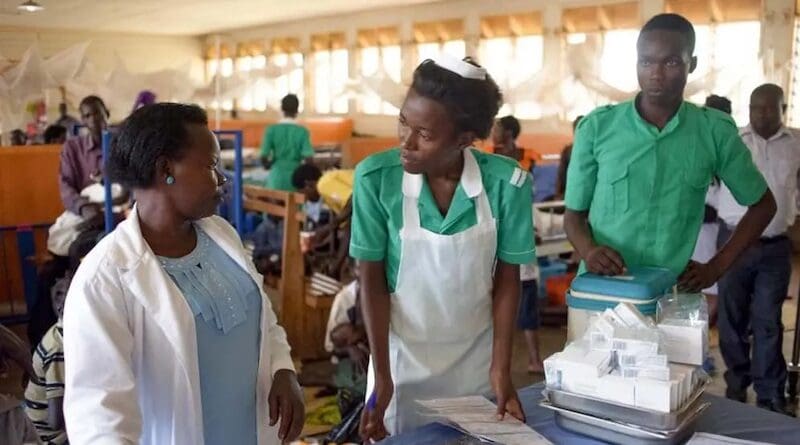
Ugandan health care workers during a clinical trial. Swiss drugmaker Novartis has announced a new malaria drug it says has proved to be effective in trials.
The first new malaria treatment in decades holds promise against rising drug resistance after Swiss drugmaker Novartis announced it was as effective at treating the disease as established treatments.
The new drug—known as GanLum—uses a completely different mechanism to fight the malaria parasite, meaning it works even when the parasite is resistant to existing treatments.
“Its novelty lies in the molecule it contains called ganaplacide which is completely new and unlike any existing antimalarials currently in use,” said Michael Delves from the London School of Hygiene and Tropical Medicine, who was not involved in the trial but helped in the early stage of the drug’s development.
“This means that Plasmodium, the parasite that causes malaria, has never seen it before and therefore has no defence against it.”
Drug-resistant malaria was first observed in Cambodia in 2008 and has been observed more recently in several African countries, including Rwanda, Uganda, and Tanzania, according to the WHO.
GanLum proved to be effective in a late-stage trial of over 1,600 malaria patients across 12 countries in sub-Saharan Africa, Novartis said in a media release on Wednesday (12 November). Given as a sachet of granules once a day for three days, it cured 97.4 per cent of participants, compared to an existing treatment, which cured 94 per cent.
Transmission
As well as treating the symptoms of malaria, the drug also stops malaria from spreading as it targets the parasite as it prepares to transmit the disease to mosquitoes.
“Breaking this cycle of infection means that we can drive down new cases of malaria and prevent the spread of drug resistance,” Delves told SciDev.Net.
Regulatory approvals could come in around 16 months, meaning it could be available on the market in 2027, according to Medicines for Malaria Venture, which developed the drug in collaboration with Novartis.
If approved, the drug would be the first new malaria treatment on the market since artemisinin-based combination therapy was introduced in 1999.
“GanLum could represent the biggest advance in malaria treatment for decades, with high efficacy against multiple forms of the parasite as well as the ability to kill mutant strains that are showing signs of resistance to current medicines,” said Abdoulaye Djimdé from the University of Science and Technology, of Bamako, Mali, in a media release.
Sally Nicholas, head of vector control and therapeutics, infectious disease at Wellcome, who was not involved in the trial, said: “As the first malaria treatment with a novel mechanism since 1999, it offers vulnerable communities real hope against drug resistance and transmission.”
Mounting resistance
Growing resistance to artemisinin-based treatments poses a significant threat to global malaria control efforts.
Olugbenga Mokuolu, professor of paediatrics at Nigeria’s University of Ilorin and scientific advisor on malaria for the country’s Ministry of Health, told SciDev, Net: “Having an effective non-artemisinin therapy is important because it provides an additional tool as we continue to confront growing artemisinin resistance.
“This combination offers a valuable alternative within the antimalarial portfolio, especially for regions where resistance is emerging.”
Novartis presented the trial data at this year’s American Society of Tropical Medicine and Hygiene annual meeting in Toronto, Canada.
The president of the society, David Fidock, who heads a group of experts on antimalarial drug resistance that advises the WHO Malaria and Neglected Tropical Diseases programme and was not involved in the study, hailed the “innovative ways of fighting drug-resistant malaria” presented at the meeting.
The new compound was first identified as having potential to fight malaria after a screening of 2.3 million molecules to find drug candidates at Novartis labs in San Diego, California in collaboration with Swiss Tropical and Public Health Institute, Wellcome Trust and Medicines for Malaria Venture.
This article was produced by SciDev.Net’s Global desk with additional reporting from Jackie Opara in Lagos, Nigeria.
Ben Deighton
Ben Deighton is the Managing Editor of SciDev.Net.He is responsible for ensuring our editorial independence and the quality of our articles and multimedia products. Ben joined SciDev.Net in July 2017 after four years as editor of Horizon magazine.
Islamic Soft Power: Malaysia Well-Positioned To Consolidate Global Leadership On Halal Branding And Governance – Analysis
The halal industry has evolved from a niche religious concern into a phenomenon that connects with economic development and geopolitical strategy. What began as a mechanism to ensure compliance with Islamic dietary laws has expanded into a global industry encompassing sectors such as pharmaceuticals, cosmetics, logistics, and tourism. In 2021, the global market for halal food was valued at US$1,978 billion, and is expected to be worth US$3,907.7 billion by 2027.[1] The halal industry holds such significance for Malaysia that even under pressure from the United States with regards to halal import restrictions in ongoing trade talks, Malaysia remains steadfast in upholding its halal standards.[2] This unwavering stance underscores how deeply ingrained the halal policy is within Malaysia’s economic and cultural framework.
Laluddina et al., in their study, highlight the diverse expansion of the halal sector beyond food and beverages (F&B). They emphasise that halal-certified pharmaceuticals and health products are a growing but underdeveloped niche, while halal cosmetics are projected to become a multibillion-dollar global market.[3] The paper also notes the rise of halal tourism, where compliance in hospitality and services reflects an expanding dimension in halal lifestyle. In Malaysia, the halal sector is also deeply embedded in the state’s political project to present Malaysia as a modern, progressive Muslim-majority nation.
This paper situates the halal industry within the framework of soft power which includes the influence of culture, politics, and foreign policy[4] while also drawing on Peter Mandaville and Shadi Hamid’s concept of “Islam as statecraft” where governments actively deploy Islam as part of their foreign policy repertoire.[5] Just as Mandaville and Hamid demonstrate that Muslim-majority states use Islam to bolster legitimacy, build alliances, and project identity abroad, Malaysia’s halal governance represents a case where religious authority has been translated into economic strategy and foreign policy.
Through institutions like JAKIM and the Halal Industry Development Corporation (HDC), Malaysia has not only established itself as a global authority on halal certification but also shaped the international narrative of what constitutes “trusted” halal. In this sense, halal becomes both a diplomatic resource and a moral brand. Furthermore, Mutual Recognition Agreements (MRAs) play a central role in halal diplomacy by positioning certification not only as a technical trade tool but also as an instrument of international influence. Through MRAs, countries like Malaysia extend the credibility of their domestic halal authority abroad, projecting themselves as standard-setters. This fosters economic diplomacy, as exporters benefit from smoother market access, as well as religious–cultural diplomacy, since recognition of halal standards affirms shared Islamic values.
This article asks whether Malaysia can sustain its normative leadership in the halal sphere amid rising competition from emerging players like Indonesia, and increasing fragmentation in global halal standards. As the global halal economy becomes more contested and commercially saturated, Malaysia faces the challenge of sustaining its soft power.
MAHATHIR AND THE ORIGINS OF HALAL AS SOFT POWER
Mahathir Mohamad’s tenure as Malaysia’s fourth prime minister marked a shift in how Malaysia conceptualised and operationalised Islam within the framework of national development. His Vision 2020, unveiled in 1991, aimed to position Malaysia as a fully developed nation not only in economic and technological terms, but also in its ability to balance modernity with Islamic values. Central to this vision was the strategic integration of Islam into state institutions and policies, a process that scholars often refer to as the bureaucratisation of Islam.[6] The halal industry emerged within this context, not merely as a response to religious obligations but as an instrument of state-led development and identity formation.
However, as Liow argued, JAKIM’s monopoly on halal certification has in effect augmented the state’s hegemony over the practice of Islam, such that even opposition forces have had to subscribe to their established standards. The prominence of JAKIM in this area has also given the state a high degree of visibility in Malaysian society, allowing it in this instance to define the parameters of religiocultural practice.[7]
A key institutional innovation during Mahathir’s era was the formalisation of halal certification under the Department of Islamic Development Malaysia (JAKIM), established in 1997. JAKIM’s role extended beyond religious advisory functions to include the development of halal standards and the regulation of halal products. This transformed halal from an informal cultural-religious practice into a bureaucratised and internationally recognisable certification system, with the state as its central authority. Mahathir’s administration sought not only to give assurance to domestic Muslim consumers but also to position Malaysia as a global leader in halal governance.
By promoting halal as a brand associated with technocratic competence, moral authority, and religious authenticity, Mahathir reframed Islamic governance to be compatible with modern economic development. This narrative allowed Malaysia to present itself as a model for other Muslim-majority countries seeking to harmonise Islam and modernity. Thus, under Mahathir, halal was not merely a regulatory concern but also an instrument of norm-setting and international influence. ABDULLAH BADAWI AND NORM INSTITUTIONALISATION THROUGH HALAL GOVERNANCE
The leadership transition from Mahathir Mohamad to Abdullah Ahmad Badawi in 2003 marked a moment of continuity and consolidation in the country’s Islamic governance strategy. While Abdullah was less authoritarian “with little of [Mahathir’s] confrontational temperament”,[8] he did not reverse Mahathir’s Islamisation agenda. Instead, he rearticulated it through the framework of Islam Hadhari, a concept aimed at reconciling Islamic principles with modern governance, economic development, and scientific advancement. Within this framework, the halal industry was reaffirmed as a central pillar of Malaysia’s soft power, but now with more explicit institutional and international dimensions.
One of Abdullah Badawi’s most significant contributions to the institutionalisation of Malaysia’s halal strategy was the establishment of the Halal Industry Development Corporation (HDC) in 2006. Unlike JAKIM, which focused on religious certification, HDC was designed to coordinate and promote Malaysia’s halal industry as a key component of national economic growth. HDC’s initiatives bore fruit with Malaysia’s halal exports rising significantly, reaching RM55 billion in 2023, with a target of reaching RM75 billion by 2030.[9] Domestically, the HDC worked to streamline and professionalise the halal supply chain across sectors, whereas internationally, it acted as a trade diplomacy arm, facilitating halal investments, bilateral partnerships, and the international recognition of Malaysian halal standards.
The HDC then launched the Halal Industry Master Plan (HIMP) in 2008.[10] Embedded within the broader context of the Third Industrial Master Plan (IMP3) and the Ninth Malaysia Plan, HIMP envisioned a comprehensive halal ecosystem extending beyond food to include pharmaceuticals, logistics, cosmetics, and Islamic finance. By embedding halal development into long-term national planning, Abdullah ensured that halal would not be treated as a niche concern, but as a mainstream driver of growth and innovation. The latest iteration (HIMP 2030) was launched by Deputy Prime Minister Zahid Hamidi in 2024.[11] This move signaled that halal is a strategic economic asset and a platform for Malaysia’s global engagement.
Abdullah’s administration also invested heavily in international outreach through the organisation of World Halal Forums, trade exhibitions, and policy dialogues that attracted stakeholders from Muslim and non-Muslim countries alike.[12] In doing so, Malaysia advanced a form of state-led norm diffusion, where the state sought to shape how halal was understood, regulated, and consumed globally. This projection of Malaysia as a “halal hub”[13] thus went beyond economic ambitions to become a deliberate soft power strategy for extending Malaysia’s religious and moral influence in the global Islamic economy. HALAL TODAY: SUCCESS, SYMBOLISM, AND SOFT POWER IN ACTION
Malaysia’s halal industry today represents one of the most comprehensive and institutionalised halal ecosystems globally, extending far beyond food into diverse sectors. By positioning halal as a quality assurance standard with ethical, hygienic, and health-conscious attributes, Malaysia has sought to universalise halal appeal, targeting not only Muslim consumers but also health-conscious and ethical consumer markets worldwide. The halalan toyyibanprinciple underscores that halal is inseparable from notions of quality and safety, and in Malaysia this is institutionalised through MS 1500:2009, which embeds shariah compliance into internationally recognised food safety and hygiene systems.[14]
At the heart of this ecosystem lies JAKIM, whose halal certification has become one of the most widely accepted in the world. JAKIM functions as an instrument of religious legitimacy and bureaucratic soft power. Its certification is recognised in 47 countries, and is often advantageous for companies seeking access to Muslim markets to possess.[15] This gives Malaysia leverage in the global halal economy and strengthens its normative leadership. In fact, Malaysia has occupied the first position for 11 consecutive years in the Global Islamic Economic Index, of which halal certification is one of the key indicators.[16]
However, Malaysia’s halal project is not without contradictions. Domestically, the system has faced criticism over bureaucratic inefficiencies and public controversies that undermine trust. Halal has occasionally been weaponised in public discourse to signal moral superiority, enforce socio-political boundaries, or punish perceived ideological dissent. A notable recent flashpoint in the debate over the meaning and misuse of “halal” in Malaysia was the “ham and cheese sandwich” controversy involving a chicken ham product sold at a KK Mart outlet at Universiti Malaya. Though the sandwich contained no pork,[17] it was labelled simply as “ham”, and bore a halal logo. However, the supplier did not hold official halal certification from JAKIM, making the use of the official logo unauthorised. These tensions reveal the limits of state-led religious governance when confronted with consumer skepticism and political contestation. CHALLENGE TO MALAYSIA’S HALAL HEGEMONY
While Malaysia has long enjoyed first-mover advantage in the global halal industry, its leadership is now increasingly challenged by rising competitors; most notable of these is Indonesia, which possesses sufficient demographic scale and symbolic capital to rival Malaysian soft power in the Muslim world. As the country with the world’s largest Muslim population, Indonesia commands significant moral and market influence. For years, its halal sector had remained decentralised and largely informal, but recent institutional reforms have radically transformed its positioning.
The passage of the Halal Product Assurance Law in 2014, and the subsequent establishment of the Badan Penyelenggara Jaminan Produk Halal (BPJPH) in 2017, marked a decisive shift. The law mandated halal certification for a wide range of goods and services, effectively centralising what had previously been a fragmented regulatory landscape.[18] Under President Joko Widodo, Indonesia has moved to institutionalise and formalise halal standards through cooperation with the Indonesian Ulama Council (MUI), and state-driven market expansion.[19] While Indonesia formalised mandatory halal certification in 2014, implementation has been slow, with BPJPH struggling to coordinate effectively with the MUI and newly-established halal audit institutions (Lembaga Pemeriksa Halal, LPH).[20]
Indonesia’s Masterplan Ekonomi Syariah Indonesia (MEKSI) 2019–2024 represents the state’s first comprehensive attempt to align halal industry development with broader national economic strategy. This has given rise to a comprehensive halal economy roadmap, which seeks to integrate halal governance into national industrial planning, mirroring the earlier Malaysian model. However, Syafiq Hasyim argues that Indonesia’s halal project is emblematic of broader shariatisation, where religious norms become codified in state law and daily life. This transformation has reshaped institutional authority, intensified debates around the theological rigidity of the Shafi’i school versus market-driven flexibility, and triggered concerns over minority rights.[21]
Indonesia’s halal tourism sector also suffers from fragmented certification, inconsistent promotion across provinces, and limited global visibility despite its rich Islamic heritage and diverse landscapes. In the Global Muslim Travel Index 2025 which tracks Muslim-friendly destinations, Indonesia is ranked fifth behind Malaysia, Turkiye, Saudi Arabia, and the United Arab Emirates.[22] This highlights how Indonesia’s halal diplomacy remains more aspirational than consolidated.
At the same time, other countries have entered the fray. Thailand’s “Kitchen of the World” initiative seeks to capture a share of the halal food market by leveraging its agricultural exports and food-processing infrastructure.[23] The Central Islamic Council of Thailand (CICOT) is the highest Islamic authority in the country to be officially recognised by the Thai government. CICOT oversees halal certification in Thailand, particularly through its Halal Standard Institute of Thailand (HSIT). In the Middle East, countries such as Qatar and Saudi Arabia are developing in-house halal certification systems when previously, Saudi Arabia only required halal certification for imported meat and meat-based products.[24] Ministry of Industry and Advanced Technology of the United Arab Emirates functions as the national regulator in the halal sector. It sets and enforces halal standards and conformity assessments and oversees the UAE Halal Certification Scheme. These moves reflect a broader fragmentation of global halal standards, with regional powers asserting their own regulatory systems.
Halal manufacturing and exporting is not limited to Muslim-majority countries or within Asia; many Western countries have become major players as well, serving both Muslim consumers at home and exporting to halal markets abroad. For example, Australia, Brazil, Russia, the U.K. and the U.S. are among the biggest halal suppliers in the West, with Brazil and Australia ranking as leading exporters of halal meat.[25] Moreover, established Western companies like Nestlé and Unilever have developed halal-certified product lines to meet global demand.[26] These examples show that halal production is more than just religious compliance, and many non-Muslim countries and companies are deeply involved in the industry.
While Malaysia continues to position itself as the global halal hub, other countries in Asia present notable challenges that could reshape its leadership. As explained by Rozaidah Idris et al.,[27] Brunei Darussalam leverages the credibility of a single, state-led certification system. Japan, though a non-Muslim country, has innovated in halal logistics and tourism to capture inbound Muslim markets, signalling new competition in niche areas. China, meanwhile, commands vast domestic demand and links its halal ambitions with the Belt and Road Initiative. These developments underscore that Malaysia’s leadership requires continuous innovation and diplomacy if it is to remain the benchmark for halal integrity and governance. For example, the mutual halal certification agreement between Malaysia and Indonesia is a significant step towards streamlining regulations and enhancing trade efficiency.[28] This initiative is poised to strengthen bilateral ties and elevate Malaysia’s soft power, fostering collaboration rather than competition with neighbouring countries.
THE FUTURE OF HALAL DIPLOMACY
The entrenchment of the halal industry within Malaysia’s economic and diplomatic architecture makes a full reversal of its global role highly unlikely. Over the past three decades, halal has become deeply embedded in Malaysia’s international identity, functioning as both a national brand and a tool of cultural diplomacy. Malaysia’s halal industry has emerged as a crucial instrument of its soft power, enabling the country to strengthen diplomatic engagements across both Muslim and non-Muslim contexts. By positioning itself as a global leader in halal certification and standard-setting, Malaysia projects cultural and religious legitimacy. As Anwar Ibrahim has highlighted, the persistent international demand for Malaysia’s halal expertise reflects the credibility of its institutions.[29] This credibility enables Malaysia to extend influence beyond trade by shaping global halal norms and creating pathways for trust-based partnerships.
The diplomatic implications of halal cooperation are evident in Malaysia’s growing partnerships with countries such as Senegal and Japan. In West Africa, halal engagement forms part of broader collaborations in trade, haj management, and waqf, thus embedding Malaysia within the socio-economic fabric of Muslim societies.[30] With Japan, a non-Muslim majority country, halal trade and certification cooperation not only expand Malaysia’s export base but also enhance its role as a bridge between Muslim and non-Muslim worlds.[31] In both cases, halal functions as a form of normative power that aligns economic diplomacy with cultural diplomacy. Through these initiatives, Malaysia leverages its halal industry as a strategic platform for cultivating long-term diplomatic goodwill through cooperation in trade and investment.[32]
Nevertheless, maintaining influence in an increasingly competitive and fragmented global halal market demands more than historical legitimacy. Soft power, by nature, is not static. It must be continuously cultivated and adapted to remain persuasive. Malaysia’s current halal strategy, while institutionally robust, risks stagnation if it fails to evolve alongside shifting consumer expectations and geopolitical dynamics. The next phase of halal soft power must align with contemporary global concerns, particularly around ethics, sustainability, and social responsibility. One promising path forward is the promotion of “ethical halal” in addition to halalan toyyiban, which expands the concept of halal beyond ritual compliance to encompass issues such as environmental sustainability, labour rights, and animal welfare. In Malaysia, the halal industry has been embraced by non-Muslim companies; these play a pivotal role in its success, given their dominance in most of Malaysia’s industries.[33] This also demonstrates that halal products can be more aggressively marketed even in non-Muslim-majority societies as well, therewith enhancing Malaysia’s soft power and inclusive approach.
Another problem is the proliferation of unauthorised halal logos. Fraudulent use of logos such as in the ham sandwich scandal enables actors to bypass established certification processes. In this regard, technological innovation offers a promising solution. The adoption of blockchain technologies for halal certification and traceability can create a transparent and tamper-proof ledger that records every stage of production, distribution, and certification. Rather than relying solely on a printed logo, consumers and regulators could verify the authenticity of a product through digital records accessible via QR codes or similar tools.[34]
Additionally, Malaysia could maintain its leadership role by championing regional coordination, such as developing an ASEAN Halal Standard to streamline trade within the region, and reaffirming its authority in halal governance.
Finally, linking halal governance to Malaysia Madani, which is the current administration’s values-based development vision, is a unique normative proposition. By aligning halal with Madani principles of ethics, justice, and moderation, Malaysia can promote a distinct halal model that resonates both spiritually and socially. Beyond mere rhetoric, Anwar Ibrahim’s government is as dedicated as his predecessors to expanding Malaysia’s halal industry. The administration has announced plans to establish a Malaysian Halal Commission and develop Halal Industrial Parks in three states. These initiatives are projected to boost the halal export value to RM80 billion.[35] This not only revitalises Malaysia’s soft power credentials but also positions the country as a thought leader in the next phase of global halal discourse. As reminded by the prime minister himself during his speech at the Global Halal Summit 2025, “halal is more than just a label, it is an international symbol of trust.”[36]
For endnotes, please refer to the original pdf document.
About the author: Syaza Shukri is Visiting Senior Fellow at the ISEAS – Yusof Ishak Institute and an Associate Professor at the International Islamic University Malaysia.
The Institute of Southeast Asian Studies (ISEAS), an autonomous organization established by an Act of Parliament in 1968, was renamed ISEAS - Yusof Ishak Institute in August 2015. Its aims are: To be a leading research centre and think tank dedicated to the study of socio-political, security, and economic trends and developments in Southeast Asia and its wider geostrategic and economic environment. To stimulate research and debate within scholarly circles, enhance public awareness of the region, and facilitate the search for viable solutions to the varied problems confronting the region. To serve as a centre for international, regional and local scholars and other researchers to do research on the region and publish and publicize their findings. To achieve these aims, the Institute conducts a range of research programmes; holds conferences, workshops, lectures and seminars; publishes briefs, research journals and books; and generally provides a range of research support facilities, including a large library collection.