Wednesday, November 19, 2025

Opinion

The truth about Trump's claim about Thanksgiving dinner



Photo by Jonathan Cooper on Unsplash

November 18, 2025

President Donald Trump wants Americans to believe “affordability” can be measured in terms of turkey and stuffing. On his social media platform he recently wrote: “2025 Thanksgiving dinner under Trump is 25% lower than 2024 Thanksgiving dinner under Biden, according to Walmart. My cost (sic) are lower than the Democrats on everything, especially oil and gas! So the Democrats’ ‘affordability’ issue is DEAD! STOP LYING!!!”

At a White House event the next day, Trump doubled down: “They came out and they said Trump’s Thanksgiving dinner — same things — is 25% less than Biden’s. … We are the ones that have done a great job on affordability, not the Democrats,” he said, calling Democrats’ focus on living costs a “con job.”

Here’s the problem: Trump’s claim isn’t based on federal data, independent analysis or even a consistent measure of prices. It’s based on a Walmart holiday promotion that changes every year. And because the lists aren’t remotely comparable, the claim doesn’t tell us much about affordability. So, in the name of “science” (and more than a little bit of curiosity), I decided to conduct a little experiment at the Walmart Supercenter off West New Circle Road in Lexington to see what was going on in the real world.
Talking turkey about prices

To be fair to the president, Walmart did announce that its 2025 Thanksgiving basket is “25% cheaper” than last year’s. As many outlets have pointed out, however, the two lists are nowhere near the same. This year’s basket includes 15 products, six fewer than the 21 in 2024. Count each item individually, and it’s 22 this year versus 29 last year. The pecan pie? Gone. Sweet potatoes? Gone. Two cans of cream of mushroom soup were cut to one. Fresh onions, celery and corn muffin mix? Also gone. In their place, there were sometimes substitutes, and three boxes of macaroni appear on the 2025 list but not the 2024 list.

Both the 2024 and 2025 Walmart Thanksgiving lists have been scrutinized and critiqued by journalists, who noted that their contents shift from year to year, making direct comparisons unreliable. Yet no one I could find has conducted an apples-to-apples comparison using the same 2024 basket of goods and pricing those identical items for 2025 — a method more aligned with how economists measure inflation. In fact, that’s exactly how the Consumer Price Index (CPI) works: It tracks the cost of the same fixed basket of goods over time to determine how prices have truly changed.(Photo by Joe Raedle/Getty Images)

So that’s exactly what I did. Armed with last year’s Walmart Thanksgiving list, I went to the New Circle Road Walmart to find every item: same size turkey, same bag of potatoes, same cans of green beans and same cream of mushroom soup. Think of me as part bargain hunter, part social scientist. I prowled the aisles with the tenacity of someone who’s seen one too many “rollback” signs, even prompting a couple of Walmart employees to ask what I was up to.

What I found told a very different story than the one being shared by the president. Pricing last year’s exact basket in 2025 came to $59.37 or roughly $7.42 per person, about 6% higher than the cost of the same meal in 2024. (All food items were priced on Nov. 11.)

The turkey alone rose from 88 cents per pound to 97 cents per pound (around a 10% increase), and staples like onions, potatoes and gravy mix may have ticked up as well. Some canned goods may have held steady, but nothing meaningfully dropped. The exact per-unit prices in 2024 are unknown, though Walmart stated the meal “… serves eight people for less than $7 per person.” For anyone shopping with a list and a calculator rather than a campaign slogan, the verdict is clear: Thanksgiving isn’t getting cheaper, no matter how many exclamation points you put after a sentence.
Facts over fanfare

Recreating last year’s full Walmart Thanksgiving basket in 2025 showed the truth: The same meal is about 6% more expensive — not 25% cheaper as claimed. Prices are still rising, even if the pace is a bit slower than the peak of inflation during the Biden administration.

I’ll admit this wasn’t a formal experiment conducted with all the rigor of a trained economist. I didn’t control for every variable or run multiple trials at multiple Walmart locations. But even a simple apples-to-apples comparison is far better than making bold statements without any data. Late night “truths” might grab headlines, but they are a poor gauge of affordability.

A sale on turkey or taters doesn’t capture the costs Kentucky families and families across the nation face every day like rent, gas, health care, child care and other essentials. Using a limited, ever-changing basket of groceries to claim that “Thanksgiving is cheaper” misrepresents what affordability looks like for real households.

If we care about honest debates on the economy and what affordability looks like, we need reliable, consistent data, not marketing gimmicks or “truths” based on a retail promotion. Tools like the Consumer Price Index, produced by the Bureau of Labor Statistics, exist for a reason: They track real changes in prices over time so policymakers, the Federal Reserve, and citizens alike can make informed decisions about the economy.

Plus, Kentucky families, who know the difference between a real deal and a “bless your heart” kind of deal, deserve an honest assessment of what’s getting more affordable and what’s not. And Kentucky families, who can stretch a dollar further than a Frankfort politician can stretch a mile of the Mountain Parkway, understand that true affordability isn’t determined by a catchy retail promotion; it’s measured with facts, not fanfare. When it comes to an honest assessment of affordability, leave the stuffing in the turkey, not in your economic analysis.

Trump ignoring 'economic misery' of Americans may sink his second term: analysis

November 18, 2025
ALTERNET

President Donald Trump and his agenda suffered a bruising rebuke in the 2025 elections, and a new analysis of the situation from The Guardian suggests that he only has himself to blame.

Despite being an off-year slate of elections, the recent races in Virginia, New Jersey, Georgia, and New York City received an outsized spotlight as voters took to the polls to express their disapproval of President Donald Trump's administration. Across the board, Democrats who campaigned on affordability won races by significant margins, signaling voter discontent with Trump’s handling of economic issues.

In a Tuesday article, The Guardian’s Eduardo Porter noted that Trump campaigned to victory in 2024 on two issues: the cost of living and racial grievances, with the latter being expressed through pledges of mass deportations, removing “critical race theory” from schools and targeting diverse initiatives across the government and in the private sector.

However, Porter argued that since Trump's returning to the White House, the president has all but completely dropped efforts to tackle high prices of daily necessities. Instead, he has ramped up immigrations raids and ICE enforcement to historic levels, putting a particular focus on Democrat-led cities with diverse populations. As for the economy, Porter highlighted various Trump policies that have actively made matters worse for many Americans.

“Trump seems not only to have forgotten his promises on the economy, he also appears to enjoy stoking Americans’ economic anxieties,” Porter explained. “His array of tariffs against friend and foe has slowed the economy, stalling employment growth while it raises the prices of key necessities. His decision to end subsidies for health insurance plans under Obamacare will drastically raise premiums for millions of Americans. And there is probably no better strategy than ending [Supplemental Nutrition Assistance Program] food assistance payments — as he did during the government shutdown — to deepen the economic misery of the poor.”

The continued economic strain has caused voter outrage against Trump to spread further than just the typical left-wing opposition. In the recent elections, Democrats notched notable victories in deep-red states, including Mississippi and Georgia. Voter demographic data also shows a major shift away from Republican candidates by groups the swung for Trump in 2024, including young men and Latinos.

“It seems evident today that stoking Americans’ racial grievances will not be enough for Trump to cling to power,” Porter concluded. “He had to deliver on the economy too. And he hasn’t.
‘Trillion Dollar War Machine’: Understanding US Militarism and How to Dismantle It

William D. Hartung and Ben Freeman’s extremely timely and necessary book explains how today’s crises are the predictable consequence of an entrenched system of militarism, a politics captured by lobbies, and elite self-dealing.


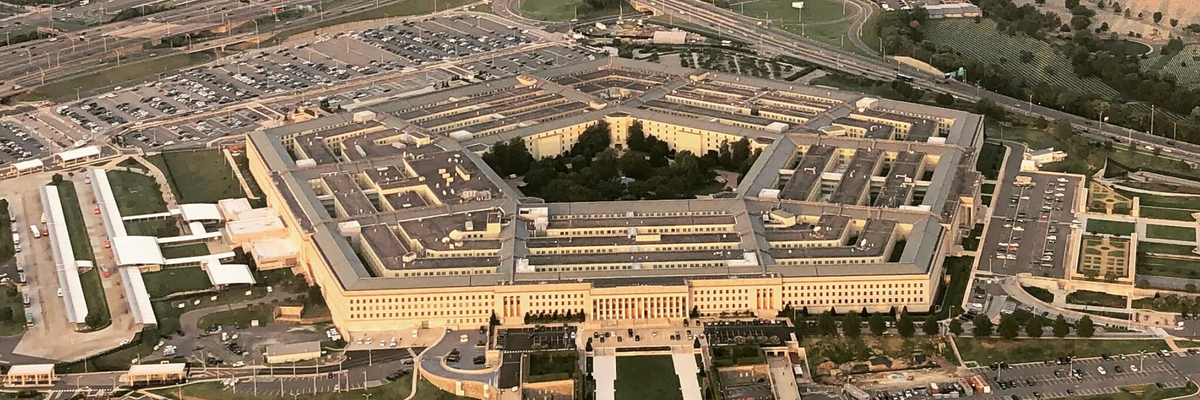
This aerial photo shows the Pentagon on September 9, 2018.
(Photo: Wiyre Media/flickr/cc)

Joseph Bouchard
Nov 19, 2025
Common Dreams

At this very second, Washington is pouring billions into escalations toward a potential invasion of Venezuela that would set Latin America on fire, escalate tensions with neighbors, and trap US troops in another undefined quagmire. It has already conducted about a dozen strikes on unproven “drug boats” in the Caribbean, without congressional approval, a trial, or even demonstrated intelligence, killing innumerable Venezuelan and foreign civilians, while it has moved Naval strike groups and carriers near Venezuela’s shores. This is one of the disastrous and preventable results of American militarism, exceptionalism, and the military-industrial complex that fuels them.

Such is the context in which The Trillion Dollar War Machine lands on bookshelves. William D. Hartung and Ben Freeman’s extremely timely and necessary book explains how these crises are not a series of isolated events, but the predictable consequence of an entrenched system of militarism, a politics captured by lobbies, and elite self-dealing that traces its lineage back to President Dwight D. Eisenhower’s 1961 warning about the military-industrial complex.

RECOMMENDED...

Groups Warn Billions More for Pentagon Would Supercharge Trump Authoritarianism


Their diagnosis offers a map of the structural forces that continuously push America toward war, even when the public wants peace and even when national security (and economics) is the pretext rather than the driver. America engineers itself into these wars for elite interests.

As Hartung and Freeman detail, more than half of the Pentagon budget now goes to private contractors. These corporations, especially the “Big Five” of Lockheed Martin, RTX (formerly Raytheon), Boeing, General Dynamics, and Northrop Grumman, have together absorbed more than $2.1 trillion in Pentagon contracts in the post-9/11 era. The book opens by reminding us that $8 trillion were wasted by the war machine on the wars in Iraq and Afghanistan.

The end of the world and MAD could be ushered in because Lockheed Martin and Congress can’t stop obsessing over their stocks and profits.

That sum alone could have fully decarbonized the US electrical grid; paid off every student loan in the country; and still had trillions left for climate resilience, healthcare, and democratic infrastructure. Even just maintaining the system as it is costs billions—America’s 750 military bases in 80 countries cost $55 billion a year to maintain. A lot of them, like in Guam, have also destroyed the environment, caused irreparable health effects, and stalled the local economy and democracy.

When Jamal Khashoggi was murdered, and Congress briefly considered blocking US weapons transfers to Saudi Arabia, lobbyists went to work behind the scenes to “derail the initiative.” In the same week they lobbied lawmakers, they donated to the same lawmakers’ campaigns. Everything about that should look like bribery. But because the military-industrial complex is woven into the legal, regulatory, and cultural DNA of Washington, it is perfectly legal. In fact, it’s just a regular Tuesday. This is the machinery that powers nearly every war the United States engages in.

Hartung and Freeman document how 945 lobbyists work directly for Pentagon contractors; how dozens of them are simultaneously registered as foreign agents; and how former members of Congress, Pentagon staffers, and even chiefs of staff for the nation’s most powerful leaders pass seamlessly through the revolving door to sell weapons to Egypt, Saudi Arabia, Qatar, and other authoritarian regimes. American foreign policy is shaped in lobbying offices, overpriced dinners, and backdoor negotiations with firms that openly expect “business benefits” from new wars. The consequences of this model are catastrophic for human life.

The book recounts how US weapons have fueled atrocities in Yemen, the Philippines, Nigeria, Egypt, and now Gaza, where the authors confirm what most of us progressives already knew; that most of the people killed “have nothing to do with Hamas.” They cite updated reporting that the Biden administration concluded more than 100 separate arms transfers to Israel in the first months of the war, without even informing Congress.

More than half of the conflicts on Earth involve US weapons on at least one side. The United States continues to arm regimes that Freedom House classifies as “not free,” even when those regimes commit torture, disappearances, mass detentions, and extrajudicial murders. Even this week, there has been reporting into Egypt’s continued use of torture and crimes against humanity in its “counterterrorism” efforts, with US weapons and taxpayer money. Wherever there is repression, inequality, or mass death, US weapons are often close by. The results do not make the US, or the world, safer, freer, or more prosperous; in fact, they do quite the opposite.

Hartung and Freeman trace how an arms industry that began as an adjunct to US defense has transformed into a permanent, profit-seeking entity that requires conflict to justify its existence. They revisit the “last supper” of the 1990s, when defense mergers consolidated the industry into a small cluster of giants, and the Pentagon volunteered billions in taxpayer dollars to subsidize those mergers, even giving executives multimillion-dollar “golden parachutes,” funded by tax money.

They revisit how the highly dangerous nuclear triad was shaped not by strategy but by “turf wars” between the Air Force and Navy, each desperate to preserve its slice of the budget. That’s right, the end of the world and MAD could be ushered in because Lockheed Martin and Congress can’t stop obsessing over their stocks and profits. Hartung and Freeman also revisit the disastrous Littoral Combat Ship program, the “Little Crappy Ship,” which was pushed through political pressure even after the Navy warned it was unfit for combat. M1 Abrams tanks were also sold to Ukraine, after being pushed by think tanks funded by defense contractors, even as the tanks resulted in catastrophic casualties for Ukrainian fighters. In every case, the logic is identical. Weapons are built because there is profit in building them, not because there is security in possessing them. Don’t fall for the tired arguments about “job creation” and “American manufacturing,” either; Hartung and Freeman show other, non-military economic sectors are much better at creating jobs, for cheaper. Most MIC jobs aren’t even unionized.

One of the book’s most disturbing contributions is its detailed exploration of how the war machine’s surplus equipment, tactics, and political culture flowed into policing. The authors describe a country where protesting can be met with military-grade rifles, armored vehicles, acoustic weapons, and tear gas developed for counterinsurgency. They note that more than 6,500 police departments have received $7 billion worth of Pentagon equipment through the 1033 Program. They argue that “it’s not the police, it’s a paramilitary force.” It’s simply the domestic mirror of the foreign policy problem (also called the Imperial Boomerang). Now, American communities live under the terror and oppression that much of the world has suffered through, in Washington’s own wars.

The authors argue for a “new peace network,” a coalition of movements that understand militarism as a unifying force behind poverty, racial injustice, surveillance, climate destruction, and authoritarianism.

The authors also underline the economic argument for dismantling the war machine. Military spending has become one of the least efficient job creators in the entire US economy. Investments in healthcare, education, climate resilience, and clean energy create far more jobs than investments in defense. Pentagon contractors, they show, are shedding union jobs at historic rates. Corporations like Lockheed Martin spend billions on stock buybacks rather than innovation. Automation will soon cut even more jobs. The economic bargain that once tied militarism to employment is dissolving. The authors argue that a just transition away from militarism is not just possible. It is necessary.

The authors also expose how deeply media culture is implicated in sustaining this system. Hartung and Freeman recount how Hollywood rewrites scripts at the Pentagon’s request in exchange for access to hardware. How think tanks funded by weapons manufacturers produce reports that conveniently recommend more weapons purchases. How television networks turn war planners into celebrities, how the Iraq War was sold through manufactured narratives, and how even major news organizations were swept up in the 9/11 wave of militarism. They highlight the “artificial consensus” that emerges when the same small circle of MIC-funded think tanks supply the experts for congressional hearings, television panels, and academic publications. This is why dissent is always framed as fringe, because it goes against an entire manufactured apparatus of propaganda and warfare, funded by taxpayer money and corporations.

The book is chock-full of these stories, each more infuriating than the other, but compiled in a way that could drive someone numb. However, do not despair; the authors, as they should, propose a successful path forward.

Every chapter offers a form of resistance, however small. They emphasize the importance of organizations like the Project on Government Oversight (or POGO), which, though it started out mostly getting attention from conspiracists and sci-fi enthusiasts, has defended whistleblowers and exposed fraud. They highlight reporting from independent outlets like ProPublica and FAIR that refuse to act as stenographers for the war machine, and progressive fighters in Congress like Sen. Elizabeth Warren (D-Mass.), Sen. Bernie Sanders (I-Vt.), and Rep. Ro Khanna (D-Calif.), who have pushed back from the inside.

They recount moments when insiders resisted corruption, when whistleblowers forced accountability, and when activists successfully shut down harmful programs. Public opinion overwhelmingly opposes new nuclear weapons, endless wars, and blank-check aid to repressive allies. The machine can be broken, but it takes an “all-hands-on-deck approach,” as the authors hammer home.

The book’s most hopeful chapter focuses on the much-needed peace movement. The authors argue for a “new peace network,” a coalition of movements that understand militarism as a unifying force behind poverty, racial injustice, surveillance, climate destruction, and authoritarianism. They highlight the Poor People’s Campaign, built on Dr. Martin Luther King Jr.'s vision, which brings veterans, workers, and marginalized communities into a shared struggle against economic exploitation and war. They emphasize that any new peace movement must bridge ideological divides, drawing support from libertarians, populists, progressives, veterans, and communities directly harmed by war and militarization. They warn against grifters and extremists who exploit anti-war sentiment to push bigotry or authoritarian agendas (one could maybe think of examples, like Tucker Carlson, Matt Walsh, Nick Fuentes, or even Donald Trump). They insist that a principled peace movement must be rooted in solidarity, democracy, and human dignity.

This is where Hartung and Freeman’s credibility matters. Both authors have spent years inside Washington, fighting the very system they describe. Freeman’s landmark investigations at the Project on Government Oversight reshaped our understanding of foreign influence, and his current work at the Quincy Institute, including with the Think Tank Funding Tracker, continues to expose the financial pipelines between authoritarian regimes and corporations, and US policymaking.

Their blueprint also includes campaign finance reform to sever the link between money and militarism. It includes transparency laws to expose think-tank conflicts of interest, robust whistleblower protections for insiders willing to confront corruption, new priorities for federal spending that center human needs rather than endless war, and, most importantly, reimagining foreign policy around genuine defense rather than global weapons distribution. They, for instance, point to arming Ukraine against Russia’s imperialistic invasion as a noble cause (with caveats of course, which they get into), but warn against arming Israel, whose wars in the Middle East are not defensive. But this can’t happen without people pushing relentlessly.

The book ends with a warning and a call to action. The war machine is everywhere. It exists in budgets; in lobby shops; in universities; in movies; in police departments; in political campaigns; at sports games; and in the language we use to talk about our politics, society, culture, and life. But monsters can be tamed. They can be disrupted, defunded, delegitimized, and replaced.

We must get informed (first by reading this book!), pressure our representatives, support whistleblowers, follow and strengthen genuine independent media, create and join movements fighting militarism, and refuse to accept that endless war is the price of life, freedom, and citizenship. We all have agency, power, and responsibility to stop the war machine. Time to organize.


Our work is licensed under Creative Commons (CC BY-NC-ND 3.0). Feel free to republish and share widely.

Joseph Bouchard
Joseph Bouchard is a journalist and researcher from Québec covering security and democracy in Latin America. His articles have appeared in Responsible Statecraft, Reason, The Diplomat, Le Devoir, and RealClearPolitics, among others. He is a PhD student in Politics at the University of Virginia and a SSHRC doctoral fellow on Latin American Politics.
Full Bio >
As Trump Issues New Threats to Mexico and Colombia, Democrats Push to End Unauthorized Aggression

Rep. Gregory Meeks, who introduced a war powers resolution, said Trump’s actions combine the “worst excesses of the war on drugs and the war on terror.”


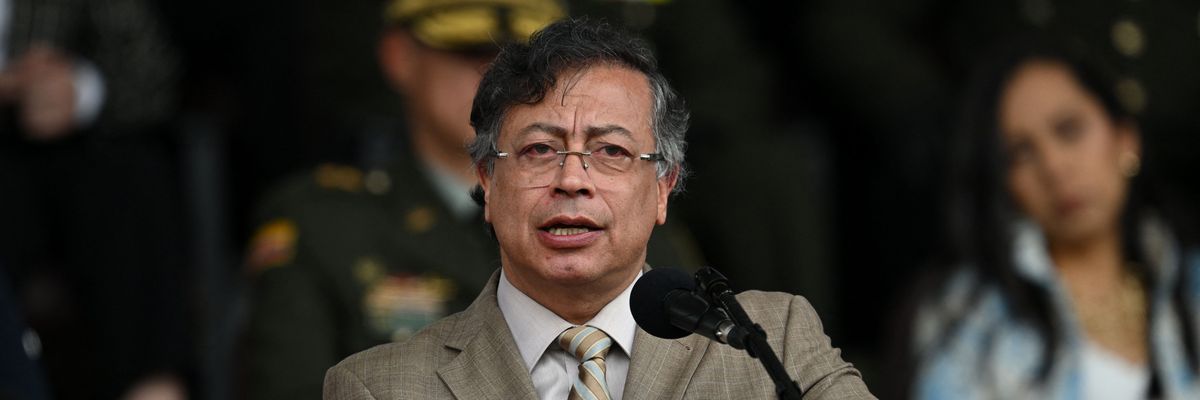
Colombia’s President Gustavo Petro delivers a speech during the commemoration of the 134th anniversary of the National Police and the promotion of officers at the General Santander Police Academy in Bogotá on November 13, 2025.
(Photo by Raul Arboleda/AFP via Getty Images)


Stephen Prager
Nov 18, 2025
COMMON DREAMS

As Democrats in the US House of Representatives introduced their latest measure to stop President Donald Trump from continuing his attacks against alleged drug cartels without approval from Congress, the president said he wouldn’t “rule out” deploying US ground troops in Venezuela—and warned he could escalate attacks across Latin America, with possible strikes in Mexico and Colombia as well.

Shortly after the Department of Defense, called the Department of War by the Trump administration, announced its 21st illegal airstrike on what they’ve claimed, without evidence, to be “narco-terrorist” vessels mostly in the Caribbean—attacks that have killed at least 83 people—Trump told reporters in the Oval Office on Monday that he may soon begin similar operations against drug cartels in mainland Mexico.

RECOMMENDED...

‘We Have Lived This Nightmare Before’: Latin American Lawmakers Condemn Trump Extrajudicial Killings

“Would I launch strikes in Mexico to stop drugs? It’s OK with me. I’ve been speaking to Mexico. They know how I stand,” he said. “We’re losing hundreds of thousands of people to drugs. So now we’ve stopped the waterways, but we know every route.”

Earlier this month, following reports from US officials that the Trump administration had started “detailed planning” to send US troops to Mexico, the nation’s president, Claudia Sheinbaum, retorted that “it’s not going to happen.”

In his comments Monday, Trump threatened to carry out strikes in Colombia as well, saying: “Colombia has cocaine factories where they make cocaine. Would I knock out those factories? I would be proud to do it personally.”

Colombian President Gustavo Petro has been one of Latin America’s fiercest critics of Trump’s extrajudicial boat bombings, last week referring to the US president as a “barbarian.” Trump, meanwhile, has baselessly accused Petro of being “an illegal drug leader,” slapping him and his family with sanctions and cutting off aid to the country.

In response to Trump’s threats on Monday, Petro touted the number of cocaine factories that have been “destroyed” under his tenure. According to figures from the Colombian Ministry of Defense, around 18,000 of them have been taken out of commission since Petro took office in 2022, a 21% increase from Colombia’s previous president.

Immediately after Trump issued his threat against Colombia, he backpedaled, saying: “I didn’t say I’m doing it, I would be proud to do it.”

However, reporting from Drop Site News earlier this month has suggested that Sen. Lindsey Graham (R-SC) “was briefed by Secretary of War Pete Hegseth on the new list of hard targets inside Venezuela, Colombia, and Mexico in early October, and lobbied fellow senators on expanding the war to include drug-related sites in Colombia.”

The senator had alluded to the plans on CBS News’ “Face the Nation,” saying: “We’re not gonna sit on the sidelines and watch boats full of drugs come into our country. We’re gonna blow them up and kill the people who want to poison America. And we’re now gonna expand our operations, I think, to the land. So please be clear about what I’m saying today. President Donald Trump sees Venezuela and Colombia as direct threats to our country, because they house narco-terrorist organizations.”

On Tuesday, a group of Democrats in the US House of Representatives introduced another measure that would stop Trump from continuing his attacks against alleged drug cartel members without approval from Congress.

The measure would require the removal of “United States Armed Forces from hostilities with any presidentially designated terrorist organization in the Western Hemisphere,” unless Congress authorizes the use of military force or issues a declaration of war. Previous measures to stall Trump’s extrajudicial attacks have been narrowly stymied, despite receiving some support from the Republican majority.

“There is no evidence that the people being killed are an imminent threat to the United States of America,” said Rep. Gregory Meeks (NY), the top Democrat on the House Foreign Affairs Committee, who introduced the resolution.

Meeks added that Trump’s campaign of assassinations in Latin America combines “the worst excesses of the war on drugs and the war on terror.”

Trump’s threats of military action come after Hegseth announced what he called “Operation Southern Spear” last week, which he said would be aimed at “remov[ing] narco-terrorists from our hemisphere.” In a description that evoked the 19th-century Monroe Doctrine, Hegseth wrote on social media that “the Western Hemisphere is America’s neighborhood—and we will protect it.”

In the Oval Office, Trump declared, without evidence, that with each strike his administration carries out against Venezuelan boats, “we save 25,000 American lives,” which experts say is obviously false since Venezuela plays a very minor role in global drug trafficking.

Several international legal experts have said Trump’s strikes constitute a war crime. Earlier this month, Oona A. Hathaway, a professor of international law at Yale Law School, said that members of the Trump administration “know what they are doing is wrong.”

“If they do it, they are violating international law and domestic law,” Hathaway said. “Dropping bombs on people when you do not know who they are is a breach of law.”

The Trump administration has argued that its actions are consistent with Article 51 of the UN’s founding charter, which requires the UN Security Council to be informed immediately of actions taken in self-defense against an armed attack.

The administration has not provided evidence that its attacks constitute a necessary form of self-defense. But last month, a panel of independent UN experts said that “even if such allegations were substantiated, the use of lethal force in international waters without proper legal basis violates the international law of the sea and amounts to extrajudicial executions.”


After ‘Disgusting Display’ at White House, Omar Says Congress Must Stop Trump Sale of F-35s to Saudis

“Trump is prioritizing weapons-contractor profits and his own family’s business interests,” said US Rep. Ilhan Omar.


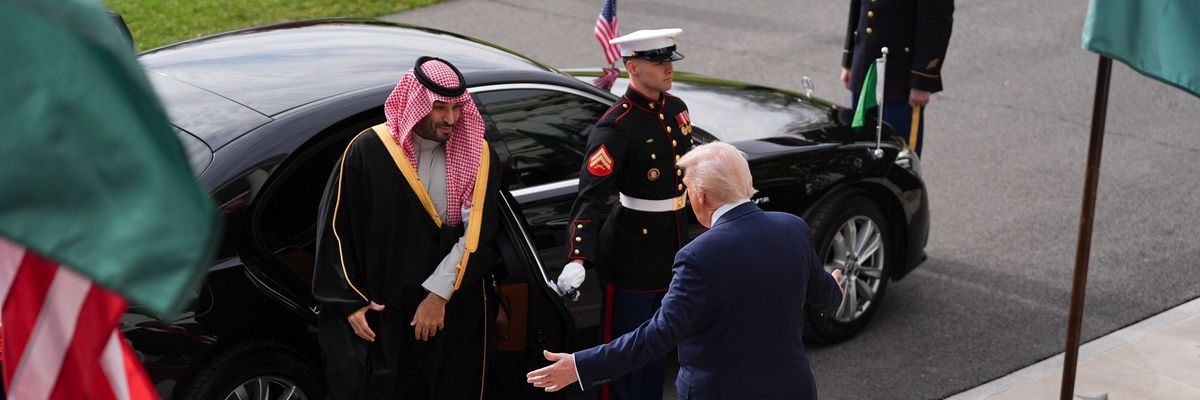
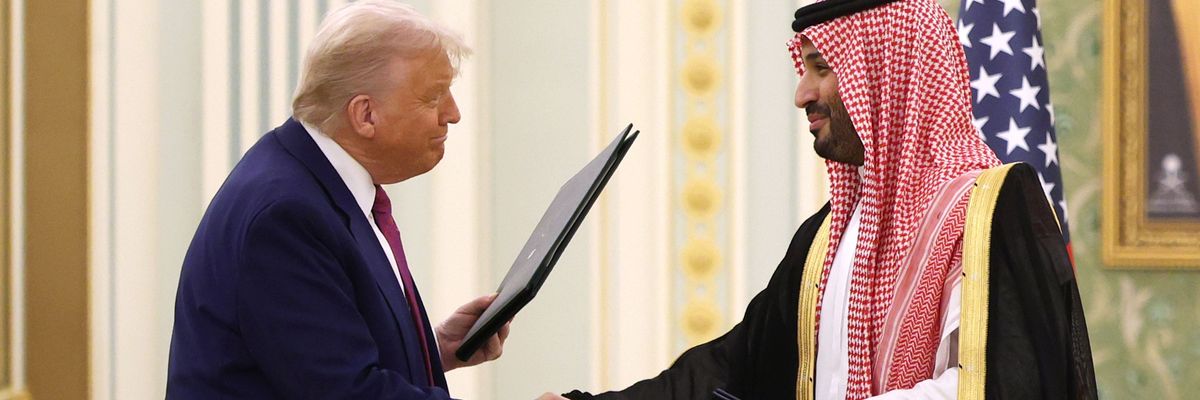
US President Donald Trump greets Saudi Crown Prince Mohammed bin Salman on November 18, 2025 at the White House.
(Photo by Demetrius Freeman/The Washington Post via Getty Images)

Jake Johnson
Nov 19, 2025
COMMON DREAMS

The deputy chair of the Congressional Progressive Caucus said Tuesday that lawmakers should pull out all the stops to prevent US President Donald Trump from selling F-35s to Saudi Arabia following Saudi Crown Prince Mohammed bin Salman’s White House visit.

Rep. Ilhan Omar (D-Minn.) called the White House reception for bin Salman, who is commonly known as MBS, a “disgusting display” and a “new low in longstanding US support for the repressive monarchy,” pointing to Trump’s whitewashing of the crown prince’s role in the horrific murder of journalist Jamal Khashoggi in 2018.

Omar also condemned Trump’s attack on ABC News reporter Mary Bruce, who asked about Khashoggi’s murder during the crown prince’s White House visit.

“It is truly disturbing that the president of the United States dismissed Khashoggi’s entrapment, murder, and dismemberment at the hands of MBS’ assassins simply as, ‘things happen,’” said the Minnesota Democrat.

Omar called on fellow lawmakers to join her in working to block Trump’s “reckless and corrupt deals” with the Saudis, including his proposed sale of F-35 fighter jets.

“With announced sales of F-35 warplanes and billions in financial investments, Trump is prioritizing weapons-contractor profits and his own family’s business interests, including Jared Kushner’s private equity firm that took $2 billion from MBS,” said Omar, who noted that the Saudis have used US arms to devastating effect in Yemen.

The details of Trump’s proposed F-35 sale are not yet fully clear, but the US president indicated on Tuesday that the agreement would not include any conditions. The Saudi regime is one of the world’s worst human rights abusers, wielding the death penalty and other repressive tactics to violently crush dissent.

“We’re going to have a deal. They’ve going purchase F-35s,” Trump said Tuesday. “They’re buying them from Lockheed and it’s a great plane.”

Once Congress is formally notified of the proposed sale, lawmakers will have a limited window to consider a resolution of disapproval that, if passed, would block the transaction.

“While the defense industry and American billionaires will profit handsomely with the gifts Trump is doling out to MBS. The American people will be left holding the bill.”

During Tuesday’s meeting, Trump announced that his administration has designated Saudi Arabia as a “major non-NATO ally,” a status that enhances military cooperation between the two countries. Israel is also a “major non-NATO ally” of the US.

Omar said Tuesday that “no American soldiers may be sent into harm’s way to defend Saudi Arabia” as part of the agreement “without a debate and vote of authorization from Congress.”

“My Progressive Caucus colleagues and I are committed to ensuring that this remains the case,” she added.

The human rights group DAWN, an organization founded by Khashoggi, also voiced concerns about the security pact, warning in a statement that Trump is working to “protect a reckless, impulsive dictator, all in the interests of personal and corporate gains.”

“While the defense industry and American billionaires will profit handsomely with the gifts Trump is doling out to MBS,” the group added, “the American people will be left holding the bill.”

7 Years After Khashoggi Murder, Trump to Reward Saudi Crown Prince With Sale of F-35s

“Sadly, we have a president who prefers the Saudi model—an autocracy run by a trillionaire family—to democracy,” said US Sen. Bernie Sanders.


US President Donald Trump and Saudi Crown Prince Mohammed bin Salman attend a signing ceremony at the Saudi Royal Court on May 13, 2025 in Riyadh, Saudi Arabia.
(Photo by Win McNamee/Getty Images)

Jake Johnson
Nov 18, 2025
COMMON DREAMS


US President Donald Trump said Monday that he intends to authorize the sale of F-35 fighter jets to the autocratic kingdom of Saudi Arabia as the country’s leader, Crown Prince Mohammed bin Salman, heads to the United States for the first time since the horrific 2018 murder of journalist Jamal Khashoggi.

“We will be selling F-35s,” Trump told reporters in the Oval Office ahead of bin Salman’s arrival.

The Saudis, Trump added, “want to buy them, they’ve been a great ally.”

The Saudi crown prince, commonly known as MBS, is set to meet with Trump in the White House on Tuesday, heightening concerns among experts and watchdogs about a potential security pact and corrupt business deals with the kingdom. The New York Times reported Monday that the Trump Organization, formally run by the president’s two eldest sons, is “in talks that could bring a Trump-branded property to one of Saudi Arabia’s largest government-owned real estate developments.”

“The prince is overseeing a $63 billion project that is set to transform the historic Saudi town of Diriyah into a luxury destination with hotels, retail shops and office space,” the Times noted. “Saudi officials toured the Diriyah development with Mr. Trump during the president’s official state visit in May, with the goal of piquing his interest in the project.”

Robert Weissman, co-president of the watchdog group Public Citizen, said Tuesday that “we’re seeing the complete merger of Trump’s business interests with US diplomacy and military policy.”

“Trump’s apparent authorization of F-35 sales to Saudi Arabia comes amidst reports of new Trump family business deals with the Saudi government and its affiliates,” said Weissman. “These deals seem poised to direct tens of millions into the Trump family coffers in exchange for little more than permitting the family name to be attached to development projects.”

The F-35 program, which is expected to cost US taxpayers trillions of dollars in the coming years, is widely seen as a boondoggle that primarily benefits massive defense contractors such as Lockheed Martin, the producer of the jets.

Internally, Pentagon officials have voiced concern that selling F-35s to Saudi Arabia could give China access to the jets’ technology.

“How are Americans supposed to think that Trump’s decision on F-35 sales, over internal objections, not to mention over human rights concerns, is unconnected to Trump’s business arrangements with Saudi Arabia?” Weissman asked.

US Sen. Bernie Sanders (I-Vt.) said in response to bin Salman’s upcoming White House visit that “this is the dictator who had a US columnist murdered for criticizing the Saudi royal family.”

“Sadly, we have a president who prefers the Saudi model—an autocracy run by a trillionaire family—to democracy,” Sanders added.


UN Approval of Gaza ‘Stabilization Force’ Slammed as ‘Denial of Palestinian Self-Determination’

CodePink said the plan “will leave Palestine in the hands of a puppet administration, assigning the United States, which shares complicity in the genocide, as the new manager of the open-air prison.”


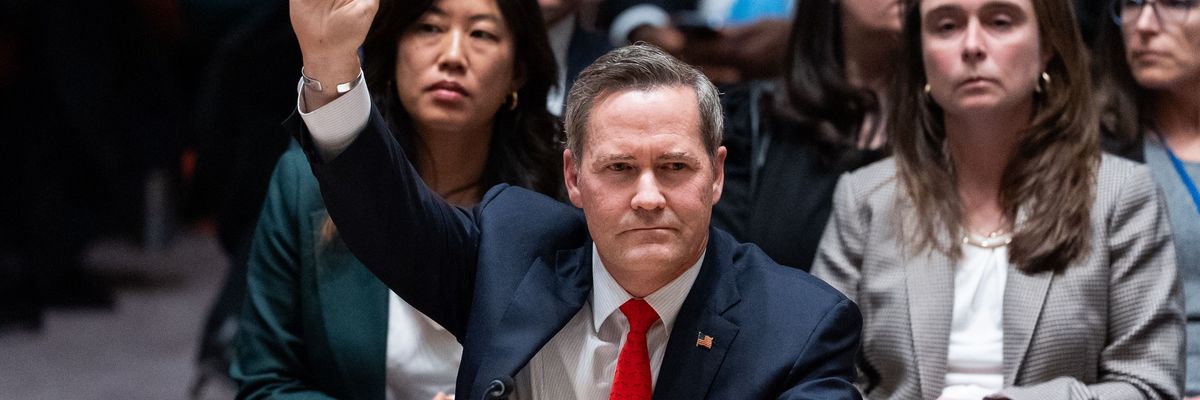
US Ambassador to the United Nations Mike Waltz raises his hand to vote in favor of a draft resolution to authorize a so-called international stabilization force in Gaza, on November 17, 2025 in New York City.
(Photo by Adam Gray/Getty Images)


Brett Wilkins
Nov 17, 2025
COMMON DREAMS

Palestine defenders decried Monday’s approval by the United Nations Security Council of a US plan authorizing a so-called international stabilization force for Gaza—a plan decried by one peace group as a denial of Palestinian self-determination.

Thirteen UNSC members voted for the resolution, while no nation voted against the proposal. China abstained, as did Russia, which submitted a rival draft resolution.

While US Ambassador to the UN Mike Waltz hailed the approval of what he called a “historic and constructive resolution,” Hamas, which has ruled Gaza since 2007, rejected what it said “imposes an international guardianship mechanism on the Gaza Strip, which our people and their factions reject.”

“Assigning the international force with tasks and roles inside the Gaza Strip, including disarming the resistance, strips it of its neutrality, and turns it into a party to the conflict in favor of the occupation,” added Hamas, which the US labels a terrorist organization.

After waging war on Gaza for over two years, Israeli officials also rejected the resolution for opening the door to Palestinian statehood—which is officially recognized by around 150 nations but is vehemently opposed by Israel—with Prime Minister Benjamin Netanyahu calling such an outcome “unacceptable.”

The approved stabilization force will be tasked with securing Gaza’s borders, protecting civilians, facilitating humanitarian assistance, supporting a redeployed Palestinian police force, and supervising disarmament of Hamas and other militant resistance groups. Under the plan, Israeli occupation forces would fully withdraw from Gaza after the stabilization force achieves security and operational control of the Palestinian exclave.

Then, a transitional governing body—the so-called Board of Peace led by US President Donald Trump—would be established to coordinate security, humanitarian aid, and reconstruction. The plan, which builds on Trump’s 20-point peace proposal adopted in last month’s tenuous ceasefire, dangles the carrot of a pathway toward Palestinian self-determination and statehood under a reformed Palestinian governing authority.

Human Rights Watch criticized the vote in an X post stating that “the fact that the words ‘human rights’ don’t appear in the resolution adopted by the Security Council today speaks volumes.”


The US-based peace group CodePink said in a statement that “the resolution, while disguised as a peaceful and humanitarian proposal, is in reality a blueprint for the internationalization of the Israeli occupation and a complete denial of Palestinian self-determination.”

CodePink continued:
The resolution imposes a two-year mandate to “secure borders,” “protect civilians,” and “decommission weapons,” with the stated goal of disarming Palestinian resistance. However, it does nothing to address and end the root cause of the violence: Israel’s ongoing siege, occupation, and ethnic cleansing. The United States, which armed and shielded the Israeli government unconditionally as it killed and displaced hundreds of thousands of Palestinians, should not be considered a neutral actor of good faith. A military force that answers to a “Board of Peace” chaired by the US president is an extension of US and Israeli interests, plain and simple.

“The establishment of a ‘technocratic Palestinian administration’ that answers to a US-led board will strip the Palestinian people of political agency,” CodePink added. “Essentially, it will leave Palestine in the hands of a puppet administration, assigning the United States, which shares complicity in the genocide, as the new manager of the open-air prison that Israel has already established.”

Members of the New York branch of the Palestine Youth Movement led a demonstration outside the US mission to the UN in Manhattan to protest the resolution.


“We see through this thinly veiled attempt to strip the Palestinian people of their sovereignty, self-determination, and right of return,” the group said on Instagram. “The people reject any and all occupation plans for Gaza. Our movement will continue to struggle against Zionism and imperialism until Palestine is free, from the river to the sea.”
US Labor Movement Cheers as House Members Force Vote to Restore Federal Workers’ Union Rights

“We commend every Democrat and Republican who signed the discharge petition to bring the Protect America’s Workforce Act to a vote, but the fight isn’t over,” said AFL-CIO president Liz Shuler.


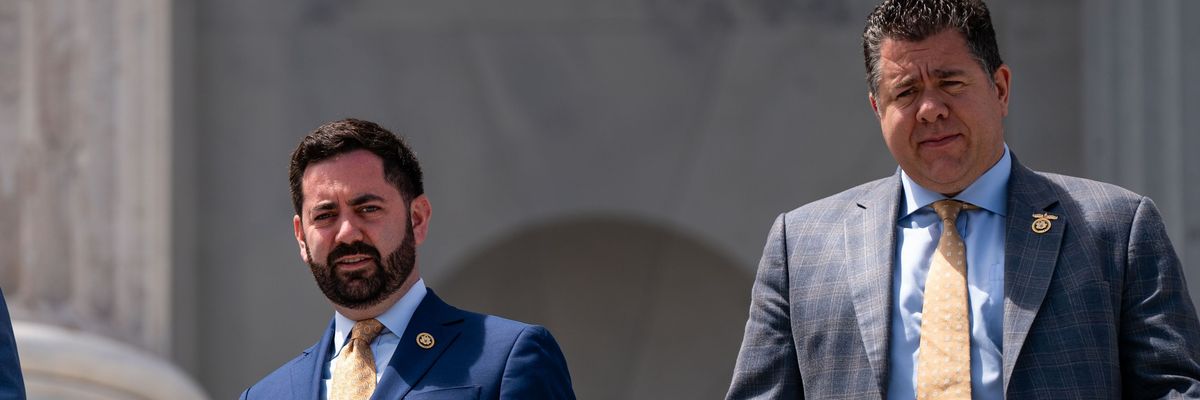
Congressmen Mike Lawler and Nick LaLota, both New York Republicans, walk down the steps of the House of Representatives on Capitol Hill in Washington, DC on April 30, 2024.
(Photo by Kent Nishimura/Getty Images)


Jessica Corbett
Nov 17, 2025
COMMON DREAMS


Two Republicans in the US House of Representatives on Monday added their names to a discharge petition that will now force a vote on legislation to restore the collective bargaining rights of hundreds of thousands of federal workers targeted by GOP President Donald Trump.

US Reps. Jared Golden (D-Maine) and Brian Fitzpatrick (R-Pa.) responded to Trump’s legally contentious executive order by introducing the Protect America’s Workforce Act in April. They began collecting petition signatures in June. At least 218 members had to sign it to override House Speaker Mike Johnson (R-La.) and force a vote on the bill.

Two New York Republicans, Congressmen Nick LaLota and Mike Lawler, signed the petition on Monday. It was previously signed by the sponsors, House Democrats, and GOP Reps. Rob Bresnahan (Pa.) and Don Bacon (Neb.). Their move came on the heels of an end to the longest government shutdown in US history, which left some federal workers furloughed and others working without pay.

“Every American deserves the right to have a voice in the workplace, including those who serve their country every single day. Supporting workers and ensuring good government are not opposing ideas,” Lawler said in a statement. “They go hand in hand. Restoring collective bargaining rights strengthens our federal workforce and helps deliver more effective, accountable service to the American people.”

“Speaker Johnson has run out of excuses to delay a vote on this legislation to restore federal workers’ rights.”

Golden, a former Blue Dog Coalition co-chair who recently announced his plans to retire from Congress after this term, thanked the newest signatories for joining the fight for his bill.

“America never voted to eliminate workers’ union rights, and the strong bipartisan support for my bill shows that Congress will not stand idly by while President Trump nullifies federal workers’ collective bargaining agreements and rolls back generations of labor law,” Golden said. “I’m grateful to Reps. LaLota and Lawler for bringing this discharge petition over the finish line, and I’m calling on Speaker Mike Johnson to schedule a clean, up-or-down vote on this bill.”

Liz Shuler, president of the American Federation of Labor and Congress of Industrial Organizations (AFL-CIO), the country’s largest federation of unions, similarly welcomed the latest signatures and set her sights on the House speaker.

“The labor movement fought back against the largest act of union-busting in American history by doing what we do best: organizing,” Shuler said in a Monday statement. “Working people built a bipartisan coalition to restore union rights to federal workers in the face of unprecedented attacks on our freedoms. We commend every Democrat and Republican who signed the discharge petition to bring the Protect America’s Workforce Act to a vote, but the fight isn’t over.”

“Speaker Johnson has run out of excuses to delay a vote on this legislation to restore federal workers’ rights,” she continued. “It’s time to bring the Protect America’s Workforce Act to a vote and restore federal workers’ right to collectively bargain and have a voice on the job.”


Everett Kelley, national president of the American Federation of Government Employees (AFGE)—which is the largest federal workers union, representing 820,000 people in the federal and District of Columbia governments—also applauded the development on Monday.

“An independent, apolitical civil service is one of the bedrocks of American democracy,” Kelley said in a statement. “Today, lawmakers stood up together to defend that principle and to affirm that federal workers must retain their right to collective bargaining. This is what leadership looks like.”

“Federal workers do their jobs every day without regard to politics. Today’s action honors that commitment,” Kelley asserted.

“AFGE will continue fighting until these essential rights are fully restored, including by fighting to retain Section 1110 of the must-pass National Defense Authorization Act,” he vowed, referring to an amendment to the NDAA that restores bargaining rights to hundreds of thousands of civilians working in the US Department of Defense.

While discharge petitions are rarely successful, this one secured the necessary 218 signatures following a similar victory last week, when the newest member of Congress, Rep. Adelita Grijalva (D-Ariz.), signed her name to an effort to force a vote on releasing files related to deceased sex offender Jeffrey Epstein.

‘This Is Our Reality’: Charlotte Residents Horrified After Border Patrol Arrests Women for Honking Car Horn


“Our city has gone from a thriving city to a standstill,” said one local official.


A resident holds up a sign to warn drivers of a possible Immigration and Customs Enforcement (ICE) operation in Charlotte, North Carolina, on November 16, 2025.
(Photo by Peter Zay/AFP via Getty Images)


Brad Reed
Nov 18, 2025
COMMON DREAMS

Residents in Charlotte, North Carolina are expressing outrage after two local women were arrested for honking their car horn to alert others that US Border Patrol was in the area.

Local news station WCNC reported on Monday that the two women, who are US citizens, were taken into custody in the city’s Plaza Midwood neighborhood after Border Patrol agents pulled them over and accused them of interfering in operations by honking their horn...


Charlotte Residents Defend Community as ICE Arrives for Latest Trump Immigration Crackdown


‘We Do Not Want ICE Here’: NC Officials Oppose Trump Targeting Immigrants in Charlotte

Video of the incident shows masked federal agents yelling at the women and demanding that they roll down their car windows. When the women do not comply, one officer smashes through the window and then he and other officers pull them out of the vehicle
.


The two women, who have not been identified, then spent several hours in an FBI facility before being released with citations.

Local resident Shea Watts, who took video of the encounter, told WCNC that he was feeling “somewhere between disbelief and just being really upset that this is our reality now” as he watched the incident unfold.

Watts also discussed his own interactions with the federal officers whom he was filming.

“I was already close to despair and feeling helpless and hopeless,” he said. “But I think just the reminder that if we see something, to document it. I tried to be respectful and ask questions and knowing my own rights, and I was told to back up a couple times, which, that’s fine, but at the end of the day, this all feels a little heavy handed.”

Charlotte has become the latest target of the Trump administration’s mass deportation operation, which has already drawn opposition from both local residents and elected officials in the North Carolina city.

NBC News reported on Monday that many Charlotte residents are living in fear of immigration operations in the city, with some local businesses closing down and some local churches reporting dramatic drops in attendance during the current operation.

Jonathan Ocampo, US citizen of Colombian descent who lives in the area, told NBC News that he’s started carrying his passport with him everywhere for fear of being mistaken for an undocumented immigrant.

“I’m carrying it here right now, which is sad,” he said. “It’s just scary.”

Charlotte city council member-elect JD Mazuera Arias told The Guardian on Monday that the immigration enforcement operations have had a chilling effect on the entire community.

“Our city has gone from a thriving city to a standstill,” he said.
Trump Plan to Privatize Student Loans Denounced as ‘Giveaway to Wealthy Insiders’

“By selling parts of the federal student loan portfolio, the Trump administration may seek to unlawfully strip borrowers of their legally guaranteed protections,” wrote a group of more than 40 Democratic lawmakers.


US Secretary of Education Linda McMahon and Treasury Secretary Scott Bessent listen after the signing of an executive order in Washington, DC on July 31, 2025.
(Photo by Jim Watson/AFP via Getty Images)


Jake Johnson
Nov 18, 2025
COMMON DREAMS

Dozens of Democratic lawmakers in the US House and Senate warned Monday that the Trump administration’s reported push to sell off the federal government’s massive student portfolio to the private market would be disastrous for borrowers and a “lucrative giveaway” to predatory corporations.

The lawmakers, led by Sens. Elizabeth Warren (D-Mass.) and Bernie Sanders (I-Vt.) in the Senate and Rep. Ayanna Pressley (D-Mass.) in the House, pointed with alarm to recent reports indicating that Treasury and Education Department officials have met repeatedly with finance industry executives for the purpose of valuing the federal government’s student loan portfolio, which is believed to be worth around $1.7 trillion.

“By selling parts of the federal student loan portfolio, the Trump administration may seek to unlawfully strip borrowers of their legally guaranteed protections,” the lawmakers wrote in a letter to Education Secretary Linda McMahon and Treasury Secretary Scott Bessent. “As experts have explained, private investors’ ‘interest would likely be to squeeze as much profit from the repayment as they could.’ Those profits would likely come at the expense of the borrower via fewer protections and less generous benefits.”

Politico reported last month that the Trump administration is considering selling at least part of the federal government’s student loan portfolio to private companies.

Though small relative to the federal portfolio, the private student loan market has an “outsized” impact on borrowers, the advocacy group Protect Borrowers explained earlier this year.

“While private student loans account for roughly 8% of all student loan debt, more than 40% of student-loan-related complaints submitted to the Consumer Financial Protection Bureau (CFPB) are about private loans,” the group said. “Of these private student loan complaints, roughly one-third are from borrowers who are struggling and can’t afford their monthly payment. This is because, unlike federal student loans, private loans lack critical safeguards for students and parents.”

In their letter to McMahon and Bessent, the Democratic lawmakers demanded that the Trump administration “immediately cease any efforts to privatize the federal student loan portfolio,” arguing that “this sale would be a giveaway to wealthy insiders at the expense of working-class borrowers and taxpayers.”

Warren echoed that sentiment in a statement, saying, “Any way you spin it, this sale would be a massive giveaway to giant companies.”

“It’d be a tremendous mistake,” the senator added.
MONOPOLY CAPITALI$M

‘Colossally Wrong Decision’ as Facebook Parent Company Wins Instagram-WhatsApp Antitrust Case

“This court has effectively told every aspiring monopolist that our current justice system is on their side.”


A mobile phone screen displays Meta logo and a digital screen displays founder of Meta Mark Elliot Zuckerberg in the background in Ankara, Turkey on October 28, 2025.
(Photo by Arda Kucukkaya/Anadolu via Getty Images)

Brad Reed
Nov 19, 2025
COMMON DREAMS

Anti-monopoly advocates are warning that a federal judge’s ruling in favor of Facebook parent company Meta in a major antitrust case will have negative repercussions for US consumers by allowing Facebook to continue wielding monopoly power in the social media marketplace.

Judge James Boasberg in the District Court for the District of Columbia ruled Tuesday that the company’s acquisitions of Instagram and WhatsApp did not violate US antitrust policy.


RECOMMENDED...


‘Blunt Corruption’: Trump DOJ Hands Google an Antitrust Win After Tech Giant’s Ballroom Donation

Boasberg found that the Federal Trade Commission (FTC) had not proven Meta holds monopoly power in the personal social networking market, “largely because he folded TikTok and YouTube into the same market and concluded that their popularity reduces Meta’s share below illegal levels,” said the American Economic Liberties Project (ALEP).

John Bergmayer, legal director at Public Knowledge, argued that Boasberg’s ruling demonstrates a basic misunderstanding about the economics of the social media market.

“The court’s opinion reflects a view of the market that is at odds with how digital-platform power operates today,” he said. “Meta systematically acquired emerging competitors precisely because direct, head-to-head competition threatened its dominance. Meta’s consolidation strategy deprived consumers of innovative services and prevented the development of a truly competitive social-networking ecosystem.”

Nidhi Hegde, executive director of ALEP, described the ruling as a “colossally wrong decision” that “turns a willful blind eye to Meta’s enormous power over social media and the harms that flow from it.”

“These deals let Meta fuse Facebook, Instagram, and WhatsApp into one machine that poisons our children and discourse, bullies publishers and advertisers, and destroys the possibility of healthy online connections with friends and family,” she said. “By pretending that TikTok’s rise wipes away over a decade of illegal conduct, this court has effectively told every aspiring monopolist that our current justice system is on their side.”

Hegde added that it should now fall upon US Congress to “step in and break up Big Tech, prohibit addictive surveillance algorithms, and create the conditions for building a better future.”

Open Markets Institute policy counsel Tara Pincock said Boasberg’s ruling was “profoundly misguided,” and accused the judge of blocking the FTC from reversing a mistake it made last decade when it signed off on Meta’s purchases of Instagram and WhatsApp.

“Judge Boasberg erred in concluding that Facebook competes with TikTok and YouTube,” said Pincock, a former state assistant attorney general in Utah. “I was part of the bipartisan coalition of states that brought this case alongside the FTC in December 2020, and the court’s framing misrepresents what is at stake. This case has never been about generic ‘time and attention.’ It is about how people connect, communicate, and build communities—and about how a powerful company abused its dominance to protect itself from competition.”
Dems Introduce Bill to ‘Stop Apparent Bribery Involving Trump Ballroom Donations’

“Billionaire companies are bankrolling Trump’s ballroom and it stinks of bribery,” said Sen. Elizabeth Warren.


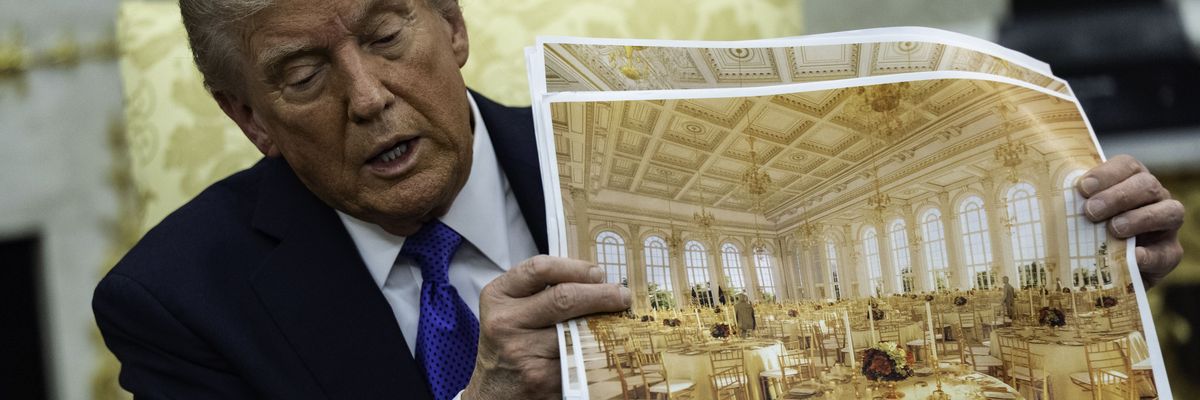
US President Donald Trump speaks holding a photos of his White House ballroom, in the Oval Office in Washington, DC on October 22, 2025.
(Photo by Salwan Georges/The Washington Post via Getty Images)

Brett Wilkins
Nov 18, 2025
RAW STORY

Amid concerns over President Donald Trump’s White House ballroom, a pair of Democratic US lawmakers on Tuesday introduced legislation “to root out apparent bribery and corruption” involving the $300 million project.

Sen. Elizabeth Warren (D-Mass.) and Rep. Robert Garcia (D-Calif.) introduced the Stop Ballroom Bribery Act, described by Warren’s office as “the first piece of legislation addressing the ballroom that would impose donation restrictions.”

“Billionaires and giant corporations with business in front of this administration are lining up to dump millions into Trump’s new ballroom—and Trump is showing them where to sign on the dotted line,” Warren said in a statement. “Americans shouldn’t have to wonder whether President Trump is building a ballroom to facilitate a pay-to-play scheme for political favors. My new bill will put an end to what looks like bribery in plain sight.”

Garcia said: “Donald Trump is raising hundreds of millions of dollars to build himself a White House ballroom at a time when millions of American families can barely make ends meet. It’s outrageous that the White House won’t reveal who’s bankrolling Trump’s pet project, and that the people’s house could be funded by shady figures, corrupt money, and bad actors.”

“This bill will ban contributions from anyone with a conflict of interest, prevent bribery, and ensure we can hold any administration accountable for blatant corruption,” he added.

Noting that many of the “wealthy individuals, corporations, and organizations” funding the ballroom “need something from the Trump administration,” Warren’s office flagged “serious concerns of quid-pro-quo arrangements and possible bribery.”

“Ethics experts have argued that the apparent pay-to-play relationship between Trump and business leaders oversteps the norms of presidential behavior and could erode Americans’ trust in government,” the senator’s office added.

As Warren’s office noted:
Key ballroom donors currently have business interests in front of the Trump administration. For example, Google, which recently donated $22 million to settle President Trump’s censorship lawsuit against YouTube, will benefit if Trump’s [Department of Justice] decides not to appeal a recent judicial ruling in a relevant antitrust case. Meanwhile, Union Pacific Railroad is seeking federal approval of a lucrative merger and Palantir is working to get more federal contracts.

The White House has refused to be fully transparent, publishing only a noncomprehensive donor list missing multiple key donors and offering donors anonymity. Donations for projects like the ballroom are often channeled through the National Park Service and philanthropic partners; nonprofits with formal ties to property used by the president and [Vice President JD Vance] raise unique conflict-of-interest risks when fundraising from individuals and corporations with interests in front of the federal government.

The Stop Ballroom Bribery Act would:Impose pre-donation restrictions, including banning contributions from entities and individuals that present a conflict of interest, make it clear that donations cannot be conditioned on receipt of benefits from the federal government, require congressional approval for foreign donations, and proscribe the president and other senior officials and their families from taking donations;
Impose post-donation restrictions, including banning the display of donors’ names and logos, enact a two-year cooling-off period before a donor to a covered project can lobby the federal government, and prohibit conversion of leftover donated funds to anyone’s personal use or to benefit the president and other senior officials and their families;
Require transparency, including the disclosure of any meetings with senior federal officials or their relatives within a year of the donation, and mandate National Park Service publication of all donations to covered projects and ban anonymous donations; and
Enable enforcement, judicial review, and the pursuit of civil and criminal penalties for violators.

"President Trump's decision to unilaterally destroy the East Wing of the White House to build a ballroom financed by wealthy individuals and corporations not only ignores our country's laws but raises serious ethical concerns—namely, whether individuals and corporations funded this project in the hopes of buying access and influence," said Debra Perlin, vice president for policy at Citizens for Responsibility and Ethics in Washington (CREW), which supports the legislation.

Virginia Canter, chief counsel and director for ethics and anticorruption at Democracy Defenders Action—another backer of the bill—said that “over the past year, President Trump has raised millions of dollars for vanity projects at the White House—like paving over the Rose Garden and demolishing the beloved East Wing.”

“These funds have come from private donors without meaningful transparency or accountability,” Canter added. “The highest office in the land should never be for sale, nor should it ever appear to be.”