Thursday, November 27, 2025


An Unexpected Con To End Free Speech


How Trump Uses Jews

by  and  | Nov 27, 2025 

Rooting out terrorism and antisemitism was the supposed reason that plainclothed ICE agents arrested doctoral student Rümeysa Öztürk on a street in Somerville, Massachusetts, after she coauthored an op-ed calling on Tufts University to divest from companies with ties to Israel due to the killing and starvation of Palestinian civilians. There is an international movement to boycott, sanction, and divest from Israel, but in the United States, President Donald Trump is imperiling the freedom even to publicly discuss such ideas, which should, in effect, be considered a test case for his larger attack on free speech. So far, the test is going well for Trump.

In what seems a long time ago, in 2024, the Heritage Foundation, a right-wing think tank, released a blueprint for what it called “a national strategy to combat antisemitism” by addressing what it described as “America’s virulently anti-Israel, anti-Zionist, and anti-American ‘pro-Palestinian movement.’” In essence, and in what’s amounted to an extraordinarily effective work of political theater that has been sold to my own state, Massachusetts, among other places, that foundation dubbed its political opponents “supporters of terrorism.” It also labeled organizations working in opposition to its agenda a “terrorist support network,” and claimed for itself the noble mantle of “combating antisemitism” — even as it deftly redefined antisemitism from hatred of Jewish people to criticism of the U.S.-Israel alliance. President Trump has put the Heritage Foundation strategy into action and gone even further.

It may be his most original idea. As political scientist Barnett Rubin put it in September, “President Trump always says he’s very creative and accomplishes things no one has ever done before. And now he is building a fascist regime which is legitimized by the fight against antisemitism. Nobody ever thought of doing that before.”

How the Defense Department (Oops, Sorry, the War Department) Promotes World Peace

I attended Hebrew school as a child, and today, when I try to recall what I learned there about Israel and Palestine, I find in my memory an image of a desert, replete with flowers, and the pleasant recollection that the State of Israel was founded in that empty landscape. In 1998, I visited Israel with my family. My brother had his bar mitzvah at the mountain-top fortress of Masada overlooking the Dead Sea. Though I enjoyed an enviable private school education, I didn’t hear the word Nakba until adulthood. That Arabic word for catastrophe refers to the displacement of 700,000 Palestinian people for Israel’s founding in 1948. A majority of the population of the modern-day Gaza Strip descended from refugees of the Nakba.

According to Amnesty International and the Israeli human rights organization B’Tselem, Israel has imposed a system of oppression on Palestinians across Israel and in the Occupied Palestinian Territories through an enforced system of segregation that constitutes apartheid. For decades, Israel has controlled who could enter or exit the Gaza Strip and, from 2007 on, that 25-mile strip of land functioned as what Human Rights Watch called an “open-air prison.” As of 2022, the unemployment rate in Gaza had hit 45%, and 65% of the people there were living in poverty. On October 7th of the following year, an armed group broke out of Gaza and waged attacks on Israel that killed 1,195 people, 815 of whom were civilians.

In the two years since then, Israel has responded by killing more than 67,000 Palestinians in Gaza in a military campaign of such horror that, as the head of Doctors Without Borders reported to the U.N. Security Council, children as young as five said that they preferred to die rather than continue living in fear while witnessing the slaughter of their family members. A girl named Sham was born in Gaza in November 2023 and survived smoke poisoning as an infant. As a toddler, she was diagnosed with acute malnutrition, before being killed on May 6th of this year when Israel dropped explosives on the shelter where she was living with her family. The United Nations and prominent experts, including Israeli-American professor of Holocaust and genocide studies Omer Bartov, have concluded that Israel’s war on Gaza is a genocide. The current ceasefire has slowed, not stopped, the death toll.

By 2024, the International Court of Justice, the world’s highest court, had ruled that Israel’s occupation of Gaza, the West Bank, and East Jerusalem was illegal; that Israel needed to halt all settlement construction, evacuate its settlers, pay restitution to Palestinians, and allow them the right of return. It also indicated that all states and international organizations have a legal obligation not to assist Israel’s further occupation of the area.

However, since October 2023, according to the Israeli Defense Ministry and the Council on Foreign Relations, using 800 transport planes and 140 ships, my own country has delivered 90,000 tons of arms and equipment to Israel, including tanks, artillery shells, bombs, and rockets. The U.S. government gives Israel billions of dollars annually in military aid, which that country spends mostly on purchases made through the U.S. “Foreign Military Sales” program. According to a Defense Department website, that program sells “articles and services [that] will strengthen the security of the United States and promote world peace.”

Despite how, as Israeli historian Lee Mordechai described it, Israel has limited the flow of information out of Gaza and campaigned to discredit critical voices, a July Gallup poll found that 60% of Americans disapprove of Israel’s military actions there. Even more strikingly, a September Washington Post poll found that nearly half (48%) of Jewish Americans disapprove (and only 46% approve).

But according to recommendations issued by the Massachusetts Special Commission on Combating Antisemitism, a group created by state law in 2024, a teacher discussing such polling in a classroom could precipitate an anonymous complaint filed with the state police on the grounds that the educator has rendered the learning environment in my state hostile to Jewish students.

School Teachers Are the Problem!

Last February, Special Commission co-chair and State Representative Simon Cataldo conducted an inquisition — yes, an inquisition — into the president of the Massachusetts Teachers Association (who is himself Jewish), including presenting a series of materials on Israel/Palestine that Cataldo had obtained from a database of educator resources. He displayed a graphic called “Born Unequal Abroad,” which lists the different rights afforded to an American Jewish child and the child of Palestinian refugees in Lebanon. The former can visit Israel and even become an Israeli citizen at any time, while the latter is barred from visiting and has no pathway to citizenship (even through marriage). Cataldo seemed to regard that graphic (and others like it) as self-evidently antisemitic and displayed it as a smoking gun that revealed the supposed antisemitism festering within the Massachusetts Teachers Association.

In other words, in my home state today, “combating antisemitism” means a governor- and legislature-appointed commission conducting an inquisition of a (Jewish) union leader for the offense of failing to suppress critical discussion of a foreign nation that the world’s leading human rights organizations have found to be upholding a system of apartheid and committing genocide. At the same time, actual antisemitism — that is, the hatred of Jewish people by xenophobic nationalists — has gone largely unexamined by the Commission in the midst of its campaign to shut down criticism of Israel. (I imagine President Trump and the Heritage Foundation applauding in the background.)

Indeed, over the course of a year of hearings, the Special Commission has perhaps irreparably merged the concept of antisemitism with criticism of Israel, which seems to have been the point. State Senator and Commission Co-Chair John Velis actually uses the terms “anti-Israel” and “antisemitic” interchangeably, though they do have different meanings and anyone charged with the responsibility of leading a state panel on antisemitism should know that. Velis, who is not Jewish, has taken multiple trips to Israel paid for by the Israeli government as well as a charity affiliated with the American Israel Public Affairs Committee, the lobby group known as AIPAC.

The Special Commission has unveiled recommendations for Massachusetts schools that include utilizing a definition of antisemitism that, according to the ACLU, will have the effect of chilling free speech. It has also recommended launching a statewide reporting system in which anonymous allegations of antisemitism in schools would be collected by the state police.

Following the initial release of those recommendations, Governor Maura Healey issued a statement applauding the Commission’s work. Organizations like the Jewish Community Relations Council of Greater Boston have also sent out emails to their membership commending the Commission.

Perhaps in response to the hours of dissenting public testimony that (mostly Jewish) people as well as scholars and education experts have offered, the commissioners wrote in their most recent report, “We should listen to and respect people who say that they have been harmed by antisemitism; we should not gaslight them or tell them that their experience is invalid.”

Who could argue?

A Federal Judge Weighs In

After Tufts University student Rümeysa Öztürk was abducted from the street by ICE agents for the offense of co-writing an op-ed in the school paper asking the school to divest from companies with ties to Israel, a federal judge found that Secretary of State Marco Rubio and Secretary of Homeland Security Kristi Noem had violated the First Amendment through a policy of targeting for deportation noncitizens who criticized Israel or voiced support for Palestinians. The judge also found that executive orders issued by President Trump had relied on a definition of antisemitism that encompassed First Amendment-protected speech (the same definition recommended by the Massachusetts Commission!).

But will that federal court ruling even matter? According to the same judge, “The effect of these targeted deportation proceedings continues unconstitutionally to chill freedom of speech to this day.”

Pulitzer Prize-winning author Benjamin Moser has noted that, after October 7th, some American Jewish institutions not only supported Israel’s reign of terror over Palestinian civilians but also applauded the clampdown on free speech in order to sustain the killing. “The younger generations, people who have seen with their own eyes the crimes of the so-called Jewish state, and who feel the sacrilege, the impious desecration, of the values they thought were Jewish,” he wrote, “will never return to these institutions.”

But will it matter? Surely, it won’t stop Donald Trump from using his version of Jewish identity as a moral shield for his attack on free speech.

In Massachusetts, a coalition of organizations has publicly opposed the Special Commission’s recommendations and, in the western part of the state where I live, a group of residents has resorted to putting out yard signs with QR codes on them to call attention to this travesty. I’m part of that effort, but does it matter?

In California, a new law, ostensibly intended to protect Jewish students from discrimination, goes into effect on January 1st. It has, however, put educators on alert that they may be accused of antisemitism if they share information deemed critical of Israel.

Meanwhile, the leaders of civil society organizations appear ill-suited to resist such suppression of free speech and, in some cases, seem to embrace it. In January, members of the American Historical Association voted 428 to 88 in favor of declaring their opposition to “scholasticide” (the deliberate destruction of an education system) in Gaza. But the Association’s leadership council vetoed that vote. A similar episode occurred at the Modern Language Association.

Amy Hagopian, a professor emeritus of global health at the University of Washington, who for years taught a class on war and health, recently wrote about how she was expelled from the American Public Health Association after publicly protesting a decision by its executive board to halt consideration of a resolution on Palestinian health justice. (An anonymous complaint had alleged that the protest was antisemitic.)

An Alternative Could Look Like This

The usual line-toeing of politicians in both major parties has involved reciting statements of support for Israel, whatever it does. By contrast, Zohran Mamdani was clear during his victorious campaign to become mayor of New York City that he supports an end to apartheid for Palestinians and opposes the crimes against humanity committed by Israel. In American politics, that represented a fresh playbook. He focused successfully on his city’s absurdly high cost of living and did so as part of a coalition that included people of the Jewish faith and other faiths, even as powerful moneyed interests lined up against him. And he won.

Keep in mind that a clear majority of Americans do indeed disapprove of Israel’s actions in Gaza, so it makes sense that there was an electorate for a candidate who would tell the truth about the oppression of Palestinians, while rejecting claims that it’s antisemitic to do so. Mamdani won a third of voters who specified Judaism as their religion (just as he won a third of Catholics). He also overwhelmingly won among those with no religious affiliation (a quarter of the electorate) and those whose religious affiliation was described as “Other,” which is where exit pollsters put people who are Muslim.

Trump’s urge to suppress free speech may be about Israel today, but count on one thing: it will be about something else tomorrow. The real question is whether Americans will accept his violations of the First Amendment or fight to protect free speech even when they dislike things other people have to say.

Copyright 2025 Mattea Kramer

Mattea Kramer, a TomDispatch regular, is the author of the award-winning novel The Untended about capitalism and the American opioid crisis.

Follow TomDispatch on Twitter and join us on Facebook. Check out the newest Dispatch Books, John Feffer’s new dystopian novel, Songlands (the final one in his Splinterlands series), Beverly Gologorsky’s novel Every Body Has a Story, and Tom Engelhardt’s A Nation Unmade by War, as well as Alfred McCoy’s In the Shadows of the American Century: The Rise and Decline of U.S. Global Power, John Dower’s The Violent American Century: War and Terror Since World War IIand Ann Jones’s They Were Soldiers: How the Wounded Return from America’s Wars: The Untold Story.

Takaichi’s Claim of “Theory of Undetermined Taiwan Status” Shows She Remains Unrepentant


"San Francisco Peace Treaty" Illegal, Invalid: Chinese FM


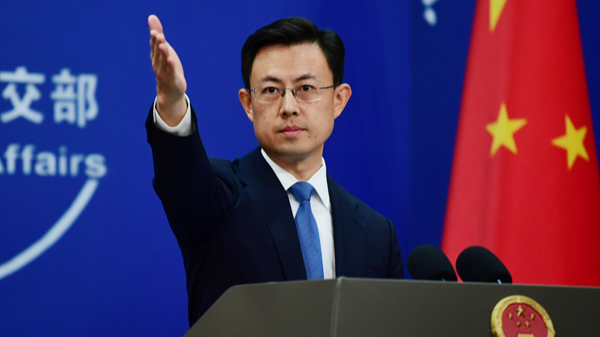
Chinese Foreign Ministry spokesperson Guo Jiakun

Responding to Japanese Prime Minister Sanae Takaichi’s claims that under the “San Francisco Peace Treaty,” Japan “is not in a position to determine or recognize the legal status of Taiwan,” Chinese Foreign Ministry spokesperson Guo Jiakun said on Thursday that Takaichi’s remarks deliberately ignore internationally binding documents while relying solely on the illegal and invalid “San Francisco Peace Treaty,” once again showing she remains unrepentant and disregards UN authority. Guo warned that the international community should also remain highly vigilant.

According to the Yomiuri Shimbun, during a parliamentary debate on Wednesday, Japanese Prime Minister Sanae Takaichi claimed that under the “San Francisco Peace Treaty,” Japan renounced all right, title, and claim to Taiwan, and Japan is not in a position to determine or recognize the legal status of Taiwan.

When asked to comment on Takaichi’s such remarks, Guo stressed at Thursday’s press briefing that Taiwan island’s return to China is an important part of the victory in World War II and the post-war international order. A series of internationally binding documents, including the Cairo Declaration, the Potsdam Proclamation, and Japan’s Instrument of Surrender, all confirmed China’s sovereignty over Taiwan.

Guo noted that the question of Taiwan’s status was thoroughly resolved in 1945 with the victory of the Chinese People’s War of Resistance Against Japanese Aggression. On October 1, 1949, the Central People’s Government of the People’s Republic of China (PRC) was proclaimed, becoming the sole legitimate government representing the whole of China.

“This is a change of government in which China, as a subject under international law, did not change and China’s sovereignty and inherent territorial boundaries stayed unchanged. Thus, the government of the People’s Republic of China naturally and fully enjoys and exercises China’s sovereignty, including sovereignty over the Taiwan region.” Guo said.

Guo noted that the 1972 Sino-Japanese Joint Statement clearly stipulates that, “the Government of Japan recognizes the Government of the PRC as the sole legitimate government of China;” “the PRC government reaffirms that Taiwan is an inalienable part of its territory; and the Government of Japan fully understands and respects this position of the Chinese Government and adheres to the stance specified in Article 8 of the Potsdam Proclamation.”

“The so-called ‘San Francisco Peace Treaty’ was a document issued to collude with Japan, excluding important WWII belligerents such as China and the Soviet Union,” Guo said.

Guo stressed that this treaty violates the provision prohibiting separate peace with enemy states as stipulated in the Declaration by United Nations signed by 26 countries including China, the US, the UK, and the Soviet Union in 1942, as well as the purposes and principles of the UN Charter and basic norms of international law. Any disposition under this treaty involving China’s territorial and sovereign rights as a non-signatory state, including the determination of Taiwan’s sovereignty, is illegal and invalid.

“Takaichi deliberately ignored the Cairo Declaration and the Potsdam Proclamation, which possess full international legal effect and are explicitly emphasized in bilateral documents, while solely highlighting the illegal and invalid ‘San Francisco Peace Treaty’,” Guo said.

“This once again demonstrates that she remains unrepentant to this day, continues to undermine the political foundation of China-Japan relations established with the spirit of the four political documents between the two countries, disregards UN authority, openly challenges the post-war international order and basic norms of international law, and even attempts to hype up the so-called ‘theory of undetermined Taiwan status,'” the spokesperson stressed. “This is adding insult to injury. China firmly opposes this, and the international community should also remain highly vigilant.”

China once again urges Japan to earnestly reflect on its mistakes, retract its erroneous remarks, honor its commitments to China with concrete actions, and fulfill the minimum obligations of a UN member state with practical deeds, Guo said.

Global Times, where this article was first published, takes great pains to present facts and views that could help the readers better understand China. Read other articles by Global Times, or visit Global Times's website.
Japan: Can The ‘Bond Vigilantes’ Decide The Fate Of Takaichi Administration? – Analysis


November 27, 2025 
 Anbound
By Wei Hongxu


Just one month into her tenure as Japan’s Prime Minister, Sanae Takaichi has already sparked diplomatic controversy. At the same time, the situation in the financial markets is creating more challenges for her. Investors who oppose her fiscal policies are driving down Japanese government bond prices. Amid this pushback, Takaichi may be forced to adjust her domestic policies, making it increasingly difficult for her to fulfill her campaign promises. She risks not only political attacks but also following in the footsteps of the short-lived tenure of the former UK Prime Minister Liz Truss.

As November progressed, with expectations of a Federal Reserve rate cut dwindling and the U.S. dollar strengthening, both the Japanese yen and Japanese government bonds found themselves in jeopardy once again. This was particularly true after Sanae Takaichi became Japan’s new prime minister and advocated for loose fiscal policies, which caused growing concerns in the market, further depressing both the yen and Japanese bonds. On November 19, the yield on Japan’s newly issued 10-year government bonds rose to 1.76%, the highest since June 2008. The yield on 20-year bonds climbed to 2.795%, marking a record high since statistics began in 1999, while the 40-year bond yield surged to a historic peak of 3.695%. The sharp rise in bond yields also had a ripple effect on other markets. On November 18, Japan experienced falling stocks, bonds, and currency. The Nikkei 225 index in Tokyo plunged by 3.22%, the largest drop since early April of that year. On the same day, the yen weakened, breaking through the 155 yen-per-dollar threshold, a level that had previously been seen as a potential intervention point. By November 19, the yen had fallen further to 157 yen per dollar, with investors testing whether the Japanese government would intervene in the market.

The decline in Japanese government bonds has been driven not only by concerns that Takaichi’s remarks could potentially damage Japan’s economy, but more significantly by market fears that the Japanese government’s new economic stimulus plan could worsen fiscal burdens. On November 21, Takaichi’s administration unveiled a JPY 21.3 trillion fiscal stimulus package, far exceeding the previously expected JPY 14 trillion. More than half of this package would be directed towards providing inflation subsidies to Japanese households. This move signals a fundamental shift in Japan’s previous policies of maintaining a budget balance and promoting exchange rate stability. The “radical” nature of the stimulus plan has led the market to draw comparisons between Takaichi’s approach and the “Truss storm” in the UK, referencing the rapid collapse of former UK Prime Minister Liz Truss’s economic policies. The yield on the 10-year Japanese government bond briefly surged above 1.8%, and by November 21, it remained above 1.78%. Meanwhile, the yen held steady at around JPY 156.4 per USD, signaling continued market uncertainty and skepticism about the government’s fiscal direction.

The “bond vigilantes” are making a comeback and could once again steer the market, influencing Japan’s fiscal policies. A recent report from Goldman Sachs highlighted that, as investors grow more cautious about Japan’s larger-than-expected stimulus plan, the Japanese bond market is likely to see a return of fiscal risk premiums, which would put pressure on long-term government bonds and the yen. Goldman Sachs noted that concerns are mounting about the Japanese government’s potential abandonment of its “annual budget balance” commitment and long-term fiscal targets. Even if the outcome does not turn out to be as extreme as feared, market sensitivity to fiscal issues has clearly increased. This means that any path toward eventual stabilization could be rocky, with the potential for volatility as investors closely watch how Japan navigates these fiscal challenges.

Japan’s government debt problem is longstanding and not solely the responsibility of Prime Minister Sanae Takaichi. As of the end of fiscal year 2024 (March 31, 2025), Japan’s total government debt has surged to JPY 1,323.72 trillion, marking an increase of JPY 26.554 trillion from the previous fiscal year and setting a record for the ninth consecutive year. Currently, Japan’s debt-to-GDP ratio stands at a staggering 264%, the highest in the world, far surpassing the United States’ 129% and China’s 76.9%. Takaichi’s more aggressive policy proposals are likely to exacerbate this issue. During her campaign, she mentioned plans to increase household subsidies to offset the impact of inflation on consumer spending. However, such a policy of expanded fiscal spending will inevitably push inflation higher, driving up food prices, which are already on the rise. In the long term, this approach is unlikely to significantly improve household income, thereby constraining domestic consumption. At the same time, fiscal loosening will continue to put downward pressure on the yen. While a weaker yen benefits Japan’s stock market and export trade, it also increases the cost of imports, particularly food and energy. The rising prices of these imports will have a restrictive effect on domestic demand, further complicating Japan’s economic challenges.


In fact, Japan’s economy has not fully escaped the danger of both domestic and external challenges. The latest data shows that Japan’s GDP shrank in the third quarter. Japan’s real GDP for Q3 contracted at an annualized rate of 1.8%, marking a return to negative growth since the first quarter of 2024. This suggests that, after emerging from deflation, Japan now faces the risk of stagflation. Recent inflation data also paints a concerning picture. In October, Japan’s core consumer price index (CPI), excluding fresh food, rose by 3.0% year-on-year to 112.1, marking the 50th consecutive month of year-on-year increases. The price increase surpassed September’s 2.9%, continuing to widen. On a month-to-month basis, the CPI rose 0.4%, also higher than the previous month’s increase. Food prices were even more dramatic, with the price of regular Japonica rice still up 39.6% year-on-year, despite a slight dip in its growth rate. On the external front, Japan’s exports have contracted for four consecutive months, partly due to U.S. tariffs. Domestically, private consumption, which accounts for more than half of Japan’s economic output, has seen a significant slowdown, dropping from a 0.4% growth in Q2 to just 0.1% in Q3. At the same time, real wages in Japan have continued to lag behind inflation, leading to a contraction in real household income. In August, inflation-adjusted real wages fell 1.4% year-on-year, marking the eighth consecutive month of decline.

The economic slowdown has provided a rationale for Takaichi’s government to restart the fiscal expansion of Abenomics. Japan’s economy has moved beyond the “Lost Thirty Years” and entered a new economic cycle. However, this does not mean that Japan can simply replicate the approach of Abenomics and apply it without adaptation. On one hand, Japan’s economic structure has undergone significant changes, and on the other, the external environment is vastly different from what it was during the Abenomics era. Therefore, in terms of prospects, the Takaichi government has limited options to choose from.

The most immediate consequence of fiscal expansion is likely to be higher inflation. Japan has run trade deficits for many years, and its current-account surplus relies heavily on investment income. A continued depreciation of the yen could alter capital flows. Since the COVID-19 pandemic, the yen has depreciated by more than 50%, and its drag on the economy has grown increasingly pronounced. This suggests that Takaichi’s policies, aside from pushing up inflation and inflating stock-market bubbles, may offer limited support to the real economy. At the same time, persistent yen weakness could reverse the recent return of overseas capital, thereby affecting Japan’s equity markets. In fact, Japanese stocks have seen sharp volatility in recent weeks. As of November 19, the Nikkei 225 had fallen for four consecutive trading days, dropping a cumulative 4.8% and wiping out roughly JPY 1.2 trillion in market value, the steepest decline in nearly three months. This is a clear indication of the growing erosion of investor confidence.

Relentlessly rising inflation will inevitably require the Bank of Japan (BOJ) to raise interest rates. Although the BOJ is under political pressure from the Takaichi administration and may postpone a rate hike in December, a yen rate increase in 2026 appears unavoidable if inflation remains uncontained. Even if Takaichi’s policies produce short-term results, over the longer term, they are likely to worsen inflation and interrupt the hard-won economic recovery cycle.

The issue is that, as the BOJ exits its ultra-loose stance and moves toward monetary-policy normalization, Japan’s growing government-bond supply may again face a shortage of buyers. This problem already surfaced during the bond-vigilante episode in May, when the Ministry of Finance had to adjust the maturity structure of its issuances and scale back long-term bond auctions. Yet, such measures address only the symptoms, not the root cause. Without increased fiscal revenue, if the Takaichi government presses ahead with expanding fiscal deficits regardless of the consequences, Japan’s sovereign credit standing could come under sustained pressure.

If investors withdraw further, the BOJ could eventually be forced to resume large-scale Japanese government bond (JGB) purchases, directly contradicting its inflation-fighting goals and ultimately pushing inflation even higher. Nomura Securities recently warned that, unless the government takes bond-market turmoil seriously, another round of “bond vigilante” action could be triggered. Amundi, Europe’s largest asset manager, issued a report noting that concerns over the new prime minister’s borrowing plans could drive long-maturity Japanese government bond yields to fresh historic highs in the coming months. Amundi cautioned that the “JGB sell-off storm” that once sent global equity, bond, and currency markets tumbling could potentially strike again, dealing another heavy blow to global financial markets.

Researchers at ANBOUND have previously noted that the growing impact of today’s “bond vigilante” actions, which are powerful enough to influence political trajectories, stems from the deepening financialization of sovereign fiscal systems. Although Takaichi has been in office for only about a month, she already faces multiple challenges. Among these, the bond vigilantes represent the most immediate and consequential threat to her ability to remain in power.

The foundation of bond-vigilante action lies in underlying economic and policy conditions. If Takaichi ignores market reactions and continues to push large-scale stimulus measures, the strength of the bond vigilantes could once again topple her. On the other hand, if she yields to market pressure and adjusts her fiscal policies, she will be seen as reneging on her campaign promises, thereby undermining her political base. In this sense, Takaichi has very little room to maneuver.
Final analysis conclusion:

Confronted with both domestic and external pressures, the Takaichi administration is facing growing concern from bond-market investors over its large-scale stimulus plans, concerns that have revived “bond vigilante” activity. This has driven Japanese government bond prices lower, weakened the yen, and contributed to heightened volatility and declines in Japan’s stock market. Given the deepening financialization of government finances and the discipline imposed by capital markets and economic fundamentals, the bond vigilantes pose an even more significant and immediate threat to Takaichi’s governance.


Dr. Wei Hongxu is a Senior Economist of China Macro-Economy Research Center at ANBOUND, an independent think tank.

Anbound

Anbound Consulting (Anbound) is an independent Think Tank with the headquarter based in Beijing. Established in 1993, Anbound specializes in public policy research, and enjoys a professional reputation in the areas of strategic forecasting, policy solutions and risk analysis. Anbound's research findings are widely recognized and create a deep interest within public media, academics and experts who are also providing consulting service to the State Council of China.