Friday, December 05, 2025


India passes milestone power generation capacity as non-fossil share tops 51%

India passes milestone power generation capacity as non-fossil share tops 51%
/ Andrey Metelev - Unsplash
By bno - Mumbai bureau December 4, 2025

India’s installed power generation capacity has climbed to 505,023 MW as of October 31, 2025, with non-fossil fuel sources now accounting for more than half of the national mix, Minister of State for Power Shripad Yesso Naik told the Rajya Sabha (India's Upper House) this week in a written reply, according to a government press release. The latest figures show that fossil-fuel-based capacity stands at 245,600 MW, while non-fossil fuel sources—including 250,643 MW of renewable energy—have reached 259,423 MW, reflecting a 51.37% share of total generation.

The milestone represents a significant step in India’s energy transition, following shortly after the country met its Nationally Determined Contributions target of securing 50% of its installed power capacity from non-fossil fuel sources—achieved five years ahead of schedule. The minister said the continued shift towards renewable and clean energy will be central to India’s long-term roadmap to balance climate action with energy security, affordability and development needs.

The latest capacity data underscores the scale of India’s renewable energy expansion. Renewable energy sources—covering solar, wind, biomass, small hydro and waste-to-energy—now account for 49.6% of total installed capacity, nearly matching fossil fuels. Solar alone contributes 129,924 MW, followed by 53,600 MW of wind and 10,757 MW of biomass and cogeneration. Hydro power—including pumped storage projects—adds another 50,348 MW.

Nuclear power, at 8,780 MW, represents 1.74% of the total but has been identified by the government as a strategic pillar for long-term clean energy expansion. Overall, India’s non-fossil fuel capacity of 259,423 MW surpasses fossil fuel-based capacity of 245,600 MW, underlining a structural shift in the sector.

The government has outlined a series of policy interventions undertaken to accelerate renewable energy deployment as it works towards achieving 500GW of non-fossil capacity by 2030. These include waivers of Inter-State Transmission System (ISTS) charges for solar and wind power projects commissioned by June 2025, for green hydrogen projects until December 2030, and for offshore wind until December 2032.

Standard bidding guidelines have been issued for tariff-based competitive bidding for solar, wind, hybrid and firm renewable energy (FDRE) projects. The Ministry of New & Renewable Energy has also put forward an annual renewable energy bidding trajectory of 50GW from FY24 to FY28, giving developers long-term clarity.

Other major initiatives include 100% FDI under the automatic route for renewable energy, the Green Energy Corridor Scheme to strengthen transmission for RE evacuation, and the development of large-scale solar parks to provide ready land and grid connectivity.

Schemes such as PM-KUSUM, PM Surya Ghar Muft Bijli Yojana, the National Programme on High Efficiency Solar PV Modules, PM JANMAN-linked solar village initiatives, the National Green Hydrogen Mission and viability gap funding for offshore wind projects form part of the country’s broader push to scale clean energy consumption. The Renewable Purchase Obligation (RPO) and the new Renewable Consumption Obligation (RCO) framework—backed by penalties for non-compliance—are expected to significantly boost renewable uptake among large consumers.

Calling nuclear power a crucial component of India’s transition to net zero by 2070, the minister highlighted the government's plan to scale nuclear capacity to 100 GW by 2047. A dedicated INR200bn Nuclear Energy Mission aims to develop at least five indigenous small modular reactors (SMRs) by 2033 while promoting next-generation nuclear technologies.

Proposed amendments to the Atomic Energy Act, 1962, and the Civil Liability for Nuclear Damage Act, 2010, are expected to facilitate greater private-sector participation. Bharat Small Reactors based on PHWR technology are being upgraded for industrial decarbonisation, and BARC is developing SMRs to repurpose retiring coal stations.

Fuel security efforts include new uranium discoveries, including reserves expected to extend the Jaduguda mine’s life by 50 years, and progress on the closed fuel cycle through the Prototype Fast Breeder Reactor. To accelerate project development, NPCIL and NTPC have formed a joint venture—ASHVINI—to build nuclear power plants.

Alongside generation expansion, the government is focusing on energy storage and grid balancing technologies. A viability gap funding scheme for Battery Energy Storage Systems (BESS) has already placed 13.22 GWh of capacity under implementation with INR37.6bn in support, while a second VGF scheme for 30 GWh of BESS capacity has been approved with INR54bn from the Power System Development Fund.

Ten pumped storage projects totalling 11,870 MW are under construction, backed by a new PSP policy aimed at enabling deeper renewable integration. Offshore wind development is also advancing, with viability gap funding allocated for the first 1 GW of capacity.

In addition, The National Green Hydrogen Mission targets at least 5mn tonnes of annual green hydrogen production and about 125 GW of associated renewable energy capacity by 2030—a move aimed at cutting emissions in hard-to-abate sectors and fostering a new industrial ecosystem.

India’s energy mix at a glance (as of October 31, 2025)


• Total installed capacity: 505,023 MW
• Fossil fuel sources: 245,600 MW (48.6%)
– Coal: 218,258 MW
– Gas: 20,132 MW
– Lignite: 6,620 MW
– Diesel: 589 MW
• Non-fossil fuel sources: 259,423 MW (51.37%)
– Renewable energy: 250,643 MW
– Hydro: 50,348 MW
– Wind: 53,600 MW
– Solar: 1,29,924 MW
– Biomass/cogeneration: 10,757 MW
– Nuclear: 8,780 MW

The minister said the latest figures reaffirm India’s strong momentum in expanding clean energy capacity and

 

Iraq identifies attackers behind Khor Mor gas field drone strike as Iran-backed militias

Iraq identifies attackers behind Khor Mor gas field drone strike as Iran-backed militias
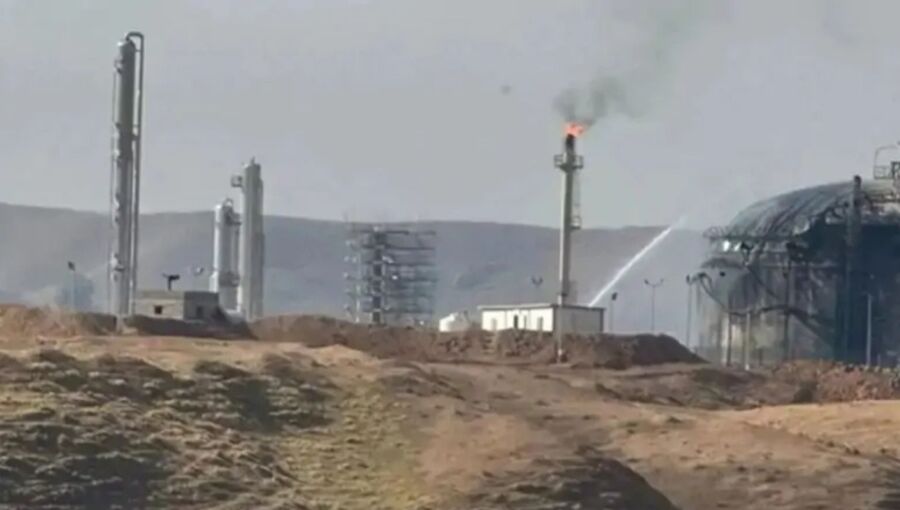
Iraqi officials subtly point to Iran-linked groups behind the recent attack on its gas field. / K24
By Newsbase MENA syndicate December 4, 2025

Iraq's investigation committee has identified the perpetrators of the November 26 drone attack on the Khor Mor gas field in Sulaymaniyah province as "outlaw elements" from alleged Iran-linked militia groups, with arrest warrants issued for some suspects, according to a statement released on December 3.

Khor Mor is one of the most important gas fields in Kurdistan and Iraq, operated by UAE-based Dana Gas to supply power plants in the region. The field's operators, UAE-based Dana Gas and Crescent Petroleum, have invested billions in developing Iraq's largest non-associated gas field — companies with their own troubled history with Iran over a failed gas deal that has cost Tehran billions in arbitration losses.

Crescent Petroleum, the largest shareholder in Dana Gas, has been in a long-term legal wrangle with Iran over debts, which culminated in a recent legal ruling handing over Iran's last oil headquarters, the NIOC House, in London. 

Iraqi Prime Minister Mohammed Shia al-Sudani endorsed the investigation findings. However, authorities did not publicly name the group responsible for what was the 11th attack on the facility from the same area in a bid not to enrage Tehran and its proxies in the country.

The committee found that two drones carried out the attack: one struck the field, and the other fell outside. Both drones were launched from areas east of Tuz Khurmatu district, south of the gas field. Debris has been secured for memory device analysis.

"Security agencies have begun collecting technical evidence to convict them and bring them to justice," military spokesman Sabah al-Numan said.

The investigation committee was chaired by the interior minister and included the National Intelligence Service chief, the Kurdistan Regional Government interior minister, and the Joint Operations Command, with technical support from representatives of the Popular Mobilisation Forces.

The committee issued six recommendations, including redeploying security forces in the eastern Salahuddin operations sector, replacing commanders in the area with "competent leadership", enhancing intelligence coordination between federal and regional agencies and installing air defence systems at the field.

The attack on November 26-27 sparked a fire in one of the storage tanks. It halted gas supplies to electricity generation stations in Kurdistan Region, according to the regional natural resources and electricity ministries.

Daily financial losses from the attack reached $7.41mn due to halted gas production alone, according to Eco Iraq Observatory. The investigation remains ongoing to identify all individuals involved in what authorities described as "a serious terrorist act targeting Iraq's sovereignty and economic resources". 

Local officials earlier pointed to Iran-backed militias as the likely source, acting against US interests in the region. Kurdistan Regional Government Deputy Chief of Staff Aziz Ahmad questioned on social media: "How many attacks must happen before the US government simply allows the KRG to purchase kinetic anti-drone equipment for us to defend our skies and critical infrastructure?"

The investigation committee notably included representatives from the Popular Mobilisation Forces (PMF), the umbrella organisation for predominantly Shia militias with close ties to Iran, raising questions about the inquiry's independence, according to several Kurdish outlets who were reportedly enraged by their inclusion.

Dana Gas and Crescent Petroleum, the Khor Mor operators, have been locked in a decades-long legal battle with the National Iranian Oil Company over a separate failed gas deal, a dispute that has cost Tehran billions to date after being dragged through the courts in what it claims is a politically motivated case.

In 2001, NIOC signed a 25-year contract with Crescent Gas Corporation to export 500mn cubic feet of natural gas daily from Iran's offshore Salman field to the UAE, with deliveries scheduled to begin in 2008.

The deal collapsed after Iran's government, under political pressure from hardliners, refused to supply gas despite Crescent investing approximately $300mn in infrastructure and NIOC spending over $1.5bn developing the Salman field.

Ultra-hardliner Saeed Jalili, then secretary of Iran's Supreme National Security Council (SNSC) under hardline President Mahmoud Ahmadinejad, is considered the staunchest critic of the deal. Several reformist officials accused Jalili of sabotaging the agreement due to personal grudges against liberal Oil Minister Bijan Zanganeh, who served in the Khatami and Rouhani administrations.

Crescent filed an arbitration in 2009 at the Permanent Court of Arbitration in The Hague. The tribunal ruled in 2014 that NIOC had breached its contractual obligations and, in 2021, awarded Crescent $2.43bn in damages. With accrued interest, the award reached approximately $2.75bn by January 2025.

Separately, Dana Gas won $607.5mn from NIOC for the same breach, covering only the first 8.5 years of the 25-year contract. Additional arbitration claims could raise the total damages sought to $18bn.

NIOC has not fulfilled its payment obligations. In 2024, a UK court ordered the transfer of NIOC House in London, a prestigious building on Victoria Street overlooking Parliament, to Crescent as a partial settlement. A Rotterdam office was earlier seized in 2022.

Experts estimate total costs to Iran, including legal fees and lost revenue from flared gas, exceed $7.25bn.

 French tap water tainted by widespread forever chemicals, study finds


France's drinking water is contaminated with PFAS "forever chemicals" in 92 percent of samples, a nationwide study has found, revealing the scale of pollution from substances that do not break down in the environment.


Issued on: 04/12/2025 - RFI

\
French health officials carried out extensive water testing to assess levels of long-lasting pollutants. © AFP - LIONEL BONAVENTURE

The National Agency for Food, Environmental and Occupational Health Safety (Anses) analysed more than 600 tap water samples and the same number of raw water samples taken between 2023 and 2025 from sites covering about one-fifth of France’s distributed water.

The tests show that trifluoroacetic acid, or TFA, is the most common PFAS found in drinking water. PFAS are known as forever chemicals because they persist for extremely long periods.

TFA is the smallest member of this group and forms when several industrial pollutants and pesticides break down. Officials say it is close to being classed by the European Union as toxic for reproduction and it also shows signs of harming liver function.

Ineffective treatments

Average TFA levels measured slightly above 1,000 nanograms per litre. The strongest reading reached 25,000 nanograms per litre in water taken downstream from a factory that produces TFA, which Anses says is evidence that current treatments are ineffective.

France’s previous record was 13,000 nanograms per litre in Moussac, near a Solvay plant that made TFA until September 2024.

“I have never seen such levels of TFA concentration in drinking water,” said environmental chemist Hans Peter Arp, adding the concentrations will keep rising because more TFA precursors are expected to enter ecosystems.

Anses said the results fall below the “indicative health value” used by the Health Ministry. In a note published on 23 December 2024, the ministry adopted Germany’s provisional level of 60,000 nanograms per litre, below which risk is considered zero.

France has set a reduction goal of 10,000 nanograms per litre and two samples in the study exceed that figure. The Netherlands applies a far stricter limit of 2,200 nanograms per litre.

These values will remain provisional until the European Food Safety Authority sets a reference level for safe daily intake of TFA from all sources. Its conclusions were expected this year but have been postponed to July 2026.

“The threshold proposed by the EFSA does not call into question the provisional value used in France,” said Matthieu Schuler, deputy director at Anses.

Pesticide rules


EU rules set a stricter limit of 100 nanograms per litre for metabolites of so-called relevant pesticides – by-products left behind when the active substances in pesticides break down.

The European Commission considers TFA one of these metabolites because of its “worrying toxicity” for development. All samples taken by Anses exceed this 100-nanogram limit by an average factor of 10.

If France classified TFA in this way, most tap water would be labelled non-compliant. The health ministry has not asked Anses to assess TFA’s status as a pesticide metabolite.

Anses also found that TFA levels do not match the presence of other PFAS. Hydrology specialist Xavier Dauchy, who helped lead the study, said this shows separate contamination routes including atmospheric fallout.


Other chemicals detected

The study found 11 of the 20 PFAS that EU rules label a priority for water checks from January under a 2020 directive.

PFOS, identified as a possible carcinogen, appeared in 19 percent of samples. Nine samples exceeded the 100-nanogram limit. For the first time in France, the study detected TFMSA, another ultra-short-chain PFAS, in 13 percent of samples.

Anses said it should be added to permanent water monitoring.

A polluter-pays fee meant to push industry to cut PFAS discharges was due to start this year under a law passed in February. Lawmakers have postponed it to 2027.

“This vote protects the industrialists rather than drinking water,” said Green MP Nicolas Thierry, who authored the PFAS law. He said the delay leaves municipalities facing decontamination costs without resources.

Research estimates put France’s annual clean-up bill at €12 billion.

(with newswires)


Europe’s groundwater reserves in danger from Climate Crisis

Europe’s groundwater reserves in danger from Climate Crisis
/ bne IntelliNews
By Ben Aris in Berlin December 3, 2025

Europe is turning into an underground desert as groundwater reserves are severely depleted due to intensifying climate impacts and long-term overextraction, according to a new study reported by The Guardian on November 29.

The findings have rung alarm bells as future supplies of drinking water will literally dry up, food production will plummet, and swaths of the Continent will become suitable for either agriculture or human life.

The analysis, conducted by scientists at Graz University of Technology in Austria, reveals that nearly all European countries experienced below-average groundwater levels between 2018 and 2024 in what will become an irreversible change in the medium-term.

The researchers warn that many aquifers have not yet recovered from extreme droughts in 2003 and 2018, pointing to a systemic decline in one of Europe’s most critical freshwater sources.

“Europe’s groundwater reserves have already been severely overexploited in many places and are therefore very vulnerable to the climate crisis,” said hydrologist Professor Günter Blöschl, a co-author of the study, cited by The Guardian.

Groundwater provides approximately 65% of drinking water in the European Union and supports about 25% of water used in agriculture. The long-term depletion of reserves is being driven by a combination of recurring droughts, higher evaporation rates caused by rising temperatures, and the continuous pumping of water for irrigation and industry.

The study is based on satellite data from the Gravity Recovery and Climate Experiment (GRACE) mission, which measures changes in the Earth's gravity field linked to variations in water mass. As bne IntelliNews reported, the weight of melting water flowing from the polar ice caps to the equator is already visibly slowing the earth's rotation and adding measurable extra seconds to the length of a day. The researchers examined trends across 31 European countries, finding widespread declines in subterranean water storage.

“This development is very worrying,” said Professor Claudia Hahn, lead author of the study. “The consequences will be felt not only by nature, but increasingly by us humans too.” The study found that most at risk are southern European countries such as Spain, Italy and Greece, but also warned that problems in traditionally water-rich regions such as parts of Germany and France will get worse as well.

The authors urge European governments to treat groundwater as a finite resource and to develop more robust water management systems. This includes reducing overuse, improving efficiency in agriculture, and increasing efforts to restore natural recharge areas such as wetlands and forests.

“We are seeing the result of decades of unsustainable water use,” said Blöschl. “The climate crisis is now making those practices untenable.”

Changes to the weather in Europe will be compounded by the collapse of the AMOC (Atlantic Meridional Overturning Circulation), otherwise known as the Gulf Stream that is expected in the coming decades. That will trigger a mini-ice age that will bring down temperatures in northern Europe by as much as 20°C.

Combined these two effects will drive populations from increasingly arid southern Europe and those from freezing northern climes into a narrow temperate band running across the centre of Europe.


Latvia’s hydrogen aircraft dream crashes

Latvia’s hydrogen aircraft dream crashes
Fokker Next Gen Latvia planned to develop a hydrogen-fuelled passenger aircraft with a range of up to 2,500 km. / Fokker Next Gen
By bne IntelliNews December 3, 2025

Ambitious plans to launch hydrogen-powered aircraft production in Latvia’s Liepaja have ground to a halt, with Fokker Next Gen Latvia entering liquidation less than a year after it was founded. 

The liquidation process now casts serious doubt on whether any part of the hydrogen aircraft programme envisioned for Liepaja will continue. 

“Fokker Next Gen has announced the closure of its legal representation in Latvia. The decision is part of the group's internal review and consolidation of operations, with the company focusing its main activities in the Netherlands at this stage,” the Latvian Investment and Development Agency (LIAA) confirmed in a statement on its website. 

"The international investment environment is currently challenging for many high-tech companies, and restructuring is not uncommon. Fokker Next Gen's decision to concentrate its activities in the Netherlands is an internal process within the group. The memoranda of cooperation with Latvian institutions remain in force, and Latvia continues to develop its hydrogen and modern aviation technology ecosystem, maintaining its existing achievements," said Ieva Jāgere, director of the LIAA.

The venture, established in February 2024 with a modest share capital of €2,800, was wholly owned by Dutch parent firm Fokker Next Gen. It had arrived in Latvia with sweeping promises – hundreds of high-skilled jobs and a pioneering role in Europe’s emerging hydrogen aviation sector.

Those projections never materialised. In its short first year, the company reported no operating revenue and posted losses of €135,474. Fixed investments amounted to just under €4,000, and only one employee was on the payroll by year’s end, according to Latvian LETA newswire. The company’s dissolution formally began on December 1.

Despite this, the LIAA had previously showcased the project as one of Latvia’s most significant upcoming industrial endeavours. The Ministry of Economics also signed a memorandum of understanding with Fokker Next Gen in late 2023, outlining plans to develop a 120-150-seat hydrogen-fuelled passenger aircraft with a range of up to 2,500 km, the agency said.

The initial phase was expected to create as many as 100 jobs in Latvia within three years, working alongside Riga Technical University and municipalities across the Kurzeme coast. At the time, Economics Minister Viktors Valainis described the project as a major opportunity for Latvia’s technological reputation, pledging close support and a smooth path through state procedures.

Momentum briefly increased in May 2024 when Fokker Next Gen and airBaltic signed a memorandum to collaborate on aircraft development, with the airline promising operational insight, LETA said.


Environmental crime growing sharply across Western Balkans, watchdog warns

Environmental crime growing sharply across Western Balkans, watchdog warns
/ pics_kartub via Pixabay
By Clare Nuttall in Glasgow December 3, 2025

Environmental crime has become one of the fastest-growing illicit economies in the Western Balkans, fuelled by corruption, weak law enforcement and a lack of public awareness, according to a new report by the Global Initiative Against Transnational Organized Crime (GI-TOC).

The study says environmental crime is now “among the most lucrative transnational criminal activities in the world”, generating an estimated $110bn-281bn annually” and expanding at a rate of 5-7% per year. All major types of environmental offences — from illegal logging and wildlife trafficking to hazardous-waste dumping and industrial pollution — are found across the region.

Air pollution, river contamination and unregulated construction are taking a heavy toll on ecosystems and public health. The report notes that in Serbia alone, “6,592 people die prematurely each year due to ambient air pollution.”

GI-TOC identifies hotspots across the six Western Balkan states. Illegal logging is widespread in Kosovo, Bosnia & Herzegovina and Montenegro, while Albania and Bosnia face severe river pollution. Montenegro has emerged as a key transit point for wildlife trafficking. Serbia’s mining hub of Bor is singled out for “dangerously high concentrations of toxic metals in the air and water”.

Albania’s Ishem–Erzen river basin is contaminated with cadmium and lead at levels “exceeding EU standards by more than 100 times,” the report says.

Low indictments, high impunity

Despite the scale of damage, prosecutions remain rare. “Some types of environmental crime leave few or no traces, are easily concealed, or are deliberately covered up … This makes it difficult to bring cases to court,” the report warns.

Prosecutors often deprioritise such offences. In Serbia, the authorities recorded only 13 environmental crime indictments in 2021, a strikingly low figure for a country with some of Europe’s worst air pollution. Across the region, indictments remain limited: Albania registered 80 cases that year, Bosnia 256, Kosovo 471, Montenegro 166 and North Macedonia 113.

Interviewees “consistently emphasised that the number of indictments does not reflect the actual scale of environmental harm,” GI-TOC writes. In Bosnia, the data shows very few convictions.

One case in Zenica detailed in the report illustrates the obstacles. A citizens’ association, Eko Forum, filed a criminal complaint against a local steelworks for pollution, but more than five years later, prosecutors suspended the investigation. The prosecutor’s office argued that the companies had made efforts to address the issue and that “there was no deliberate wrongdoing”. 

The report concludes that political interference is a key barrier to justice. Experts interviewed said “political corruption prevents court proceedings from taking place and satisfactory verdicts from being reached.”

Criminal markets

GI-TOC documents a series of major criminal schemes. In Bosnia, authorities uncovered the illegal import and dumping of “hundreds of tonnes of waste from Italy”.  Kosovo is losing more than 700 hectares of forest annually to illegal logging and wildfires, while Montenegro faces “financial losses amounting to €20bn through forest-concession mismanagement”. 

In North Macedonia, Lake Ohrid is threatened by fish poaching and regulatory capture, while Skadar Lake in Montenegro is a hotspot for illegal construction and wildlife poaching.

The report stresses that its focus on criminal markets reveals dynamics often absent from traditional climate assessments, describing the study as “a complementary but more targeted perspective on the region’s environmental vulnerabilities”. 

Grass-roots groups, environmental journalists and local activists are at the forefront of exposing abuses. GI-TOC highlights “the crucial role of civil society, journalists and environmental activists, including women who have led long-standing resistance movements in defence of rivers and forests.”

But citizens frequently hesitate to report violations. “Citizens often fear reporting environmental crimes, especially when the offenders are powerful entities,” the report says.

Public awareness of reporting procedures remains low, prompting calls for nationwide campaigns.

All six Western Balkan states are candidates or potential candidates for EU membership, but the report says they have made “limited progress in… aligning their policies and legislation with the European Union acquis” in areas such as water management, chemicals and environmental crime.

GI-TOC warns that the region’s patchwork approach to environmental protection is insufficient. It calls for stronger institutions, better enforcement, coordinated action across agencies and a clear distinction between administrative and criminal offences.

“Tackling environmental crime requires strong international cooperation and a multi-stakeholder approach,” the authors write — including governments, civil society, academia, the private sector and local communities.

Without significant reforms, the watchdog concludes, environmental crime will continue to flourish in the Western Balkans, threatening biodiversity, public health and the region’s European integration prospects.

Former EU foreign policy chief Mogherini detained in corruption case

Belgian police arrested three people, including former foreign policy chief Federica Mogherini, and raided EU offices in a corruption probe that names her as a suspect.


Issued on: 04/12/2025 - RFI

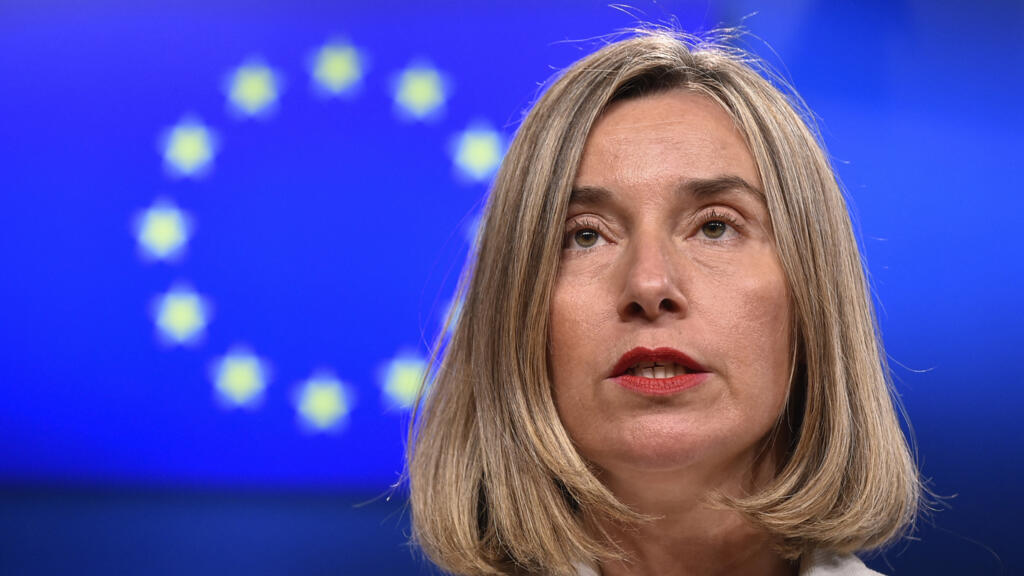
Former EU foreign policy chief, Federica Mogherini, was taken into custody on Tuesday, 2 December in Belgium as part of an investigation into the fraudulent use of European funds. © John Thys / AFP

On Tuesday, Belgian authorities arrested the trio after searching the EU diplomatic service’s headquarters in Brussels and the College of Europe, a prestigious training institute for future policymakers, in Bruges.

The European Public Prosecutor’s Office (EPPO) said on Wednesday that Mogherini, now rector of the College of Europe, was among those detained, along with a senior college staff member and an official from the European Commission.

The EPPO said the Belgian Federal Judicial Police questioned all three before formally notifying them of the accusations. These relate to suspected procurement fraud and corruption, conflict of interest and breaches of professional secrecy.

All three were released afterwards, with investigators saying they were unlikely to flee.

High-profile investigation

Mogherini led the EU’s external action service from 2014 to 2019 and was involved in some of the bloc’s most delicate diplomatic efforts, including the Iran nuclear talks and efforts to ease tensions between Serbia and Kosovo.

The EPPO said police had searched the suspects’ homes as well as several college buildings and the headquarters of the European External Action Service (EEAS), the EU’s foreign policy body.

The EEAS sits in central Brussels, close to other major EU institutions.

Investigators have not linked any outside actor or foreign government to the case. The probe focuses instead on what the EPPO described as “strong suspicions" of fraud in awarding a tender to run a training programme for junior diplomats at the EU Diplomatic Academy during the 2021-2022 academic year.

The EEAS was then overseen by Josep Borrell, who served as Vice President of the European Commission


Blow for EU integrity efforts

The accusations against Mogherini come as the EU tries to move past several corruption and influence-peddling scandals.

The largest, known as Qatargate, emerged in late 2022 and involved lawmakers, parliamentary aides, lobbyists and relatives.

Belgian prosecutors said Qatari and Moroccan officials paid cash to shape EU decisions, though both countries denied wrongdoing.

There have been no convictions and the prospects for a trial remain unclear.

Earlier this year, several people were arrested in a probe involving Chinese tech giant Huawei, suspected of bribing members of the European Parliament.

In 2023, a former aide to far-right German MEP Maximilian Krah was detained over allegations of spying for China. Krah, now in Germany’s federal parliament, said he had no knowledge of the suspicions involving his former staffer.

(with newswires)


‘I Have Full Confidence In The Justice System’, Mogherini Says Amid EEAS-Gate


File photo of Federica Mogherini. Photo Credit: Federica Mogherini, Facebook


December 4, 2025 
 EurActiv
By Eddy Wax and Elisa Braun

(EurActiv) — Former EU foreign policy chief Federica Mogherini is “very serene” about the ongoing fraud investigation in which she has been named a suspect, her lawyer said on Wednesday, a day after Belgian authorities questioned her for several hours and searched her Brussels residence.

Mogherini’s status as a suspect is part of a wider probe first reported by Euractiv, which led to the arrests and subsequent release of Mogherini and senior European Commission official Stefano Sannino.

Belgian police also raided the EU’s diplomatic service as investigators examine allegations of improperly shared confidential information linked to an EU-funded tender involving the College of Europe.

“I have full confidence in the justice system, and I trust that the correctness of the College’s action will be ascertained,” Mogherini said in a statement, adding she would offer “full collaboration to the authorities.”

Mogherini was interrogated from 2 p.m. until shortly after midnight on Tuesday, her lawyer Mariapaola Cherchi of Cherchi & De Vos told Euractiv.

“Mrs Mogherini has answered with total transparency, she is very serene despite the very heavy ordeal for someone like her, who has been very devoted towards the European institutions, as her track record shows,” Cherchi said.

She described the questioning as polite and focused, with investigators pressing for detailed explanations about the public tender at the centre of the case.

Mogherini’s release without any restriction on her movements was “a positive sign,” she added.

Following the hearing, the European Public Prosecutor’s Office (EPPO) confirmed that Mogherini had been formally notified of her status as a suspect – meaning the investigation remains open as prosecutors assess whether she is cleared or further implicated.

EPPO said she was released because she is not considered a flight risk and remains presumed innocent.


UK

Reeves’ budget fails to break with austerity – Steve Wright, FBU

FBU General Secretary Steve Wright addresses Gloucester FBU members as they rallied against harmful shift changes proposed by fire service management on 18 June 2025. Photo credit Steve Wright on Twitter/X


“Without meaningful action on taxing extreme wealth, this Budget does not yet provide secure, long-term investment or break with austerity.”
Steve Wright, FBU General Secretary

The Fire Brigades Union has responded to Reeve’s budget, describing it as a continuation of austerity, with “significant gaps” in public sector funding and a wealth tax needed to tackle the cost of living crisis.

Fire Brigades Union general secretary Steve Wright comments on the Budget delivered by Chancellor Rachel Reeves:

Firefighters, like all public sector workers, have waited years for a Budget that starts to turn the page on austerity. Although there are steps in the right direction, significant gaps remain that must be addressed if our public services are to be rebuilt.

The increase in the statutory minimum wage is welcome and will help many low-paid workers. However, we had hoped to see more action to boost pay across the board, reflecting Labour Party conference policy and the reality of the cost of living. Lifting the two-child benefit cap is long-overdue commitment to addressing child poverty.

However, without meaningful action on taxing extreme wealth, this Budget does not yet provide secure, long-term investment or break with austerity.

The fire service will continue to face huge pressure and the risk of further cuts, including fire station closures, cuts to numbers and continued real-terms pay cuts for firefighters.

As an affiliated union, we will continue to work with the Labour government. But, under my leadership, we will stand firm in pressing for the investment our service urgently requires to keep our communities safe.”