Friday, December 05, 2025

Russian neo-Nazi group 'Rusich' regularly posts images of war crimes

IDENTICAL IDEOLOGY AS UKR. NEO  NAZI'S


Russian neo-Nazi paramilitary group Rusich took to Telegram in mid-November to post a photo of one of its fighters posing in front of three bodies of Ukrainian soldiers. It is thought to be the tip of the iceberg in terms of war crimes committed by this group, which is currently deployed on the Ukrainian front.


Issued on: 04/12/2025 - 
By:The FRANCE 24, Observers / Guillaume MAURICE


Videos posted on social media by the Rusich paramilitary group feature pagan rituals, heavy machine guns and Nazi salutes and promote violence and supremacist ideology. © Telegram / dshrg2 - Molfar.Institute


WARNING: SOME OF THE INFORMATION IN THIS ARTICLE MAY BE UPSETTING

In the photo, the Russian fighter, wearing a ski mask and a bulletproof vest and carrying a Kalashnikov, poses proudly in front of three bodies on the ground. The three dead men are all dressed in the military fatigues – complete with a yellow armband – worn by Ukrainian soldiers, though they have been stripped of their weapons. The photo, which was posted on Telegram on November 15, is captioned: “Take this as an example. That’s how an army of victors takes photos, not victims.”
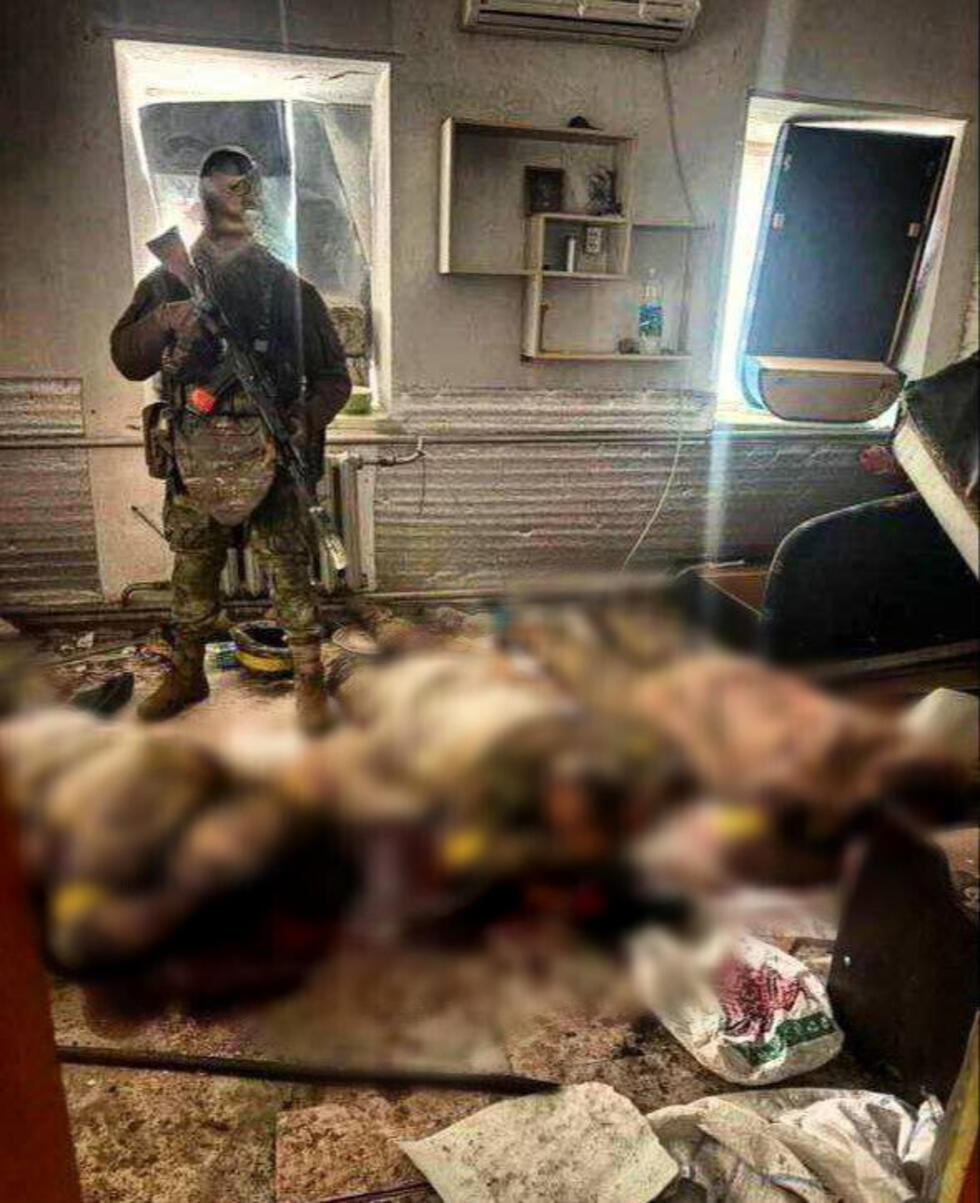
In this photo posted on Telegram on November 15, this Russian fighter poses in front of the bodies of three Ukrainian soldiers. © Telegram / dshrg2


According to pro-Russian blogger ButusovPlus, the photo was taken in the region of Pokrovsk, though it is impossible to independently verify this location.

A few hours later, the photo was followed by a second post, this time one that called on followers to send similar images in order to obtain an unspecified sum of cryptocurrency.


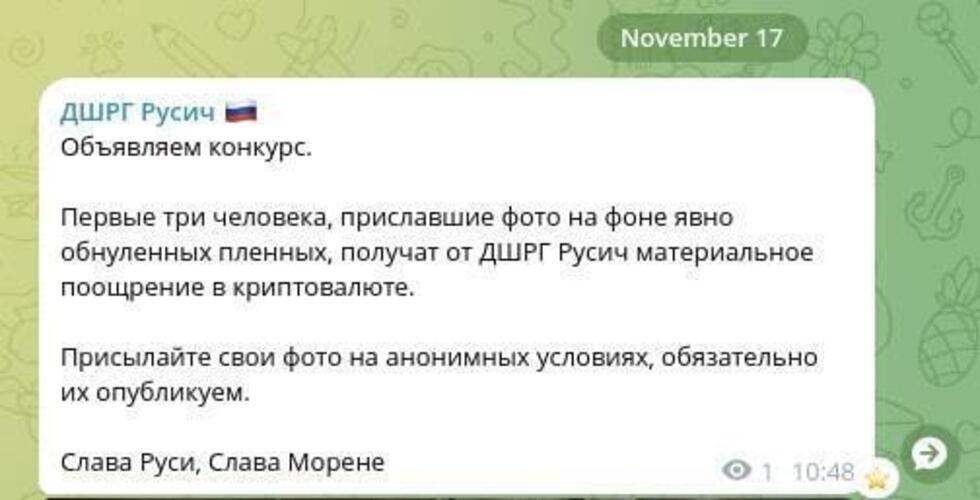
The message goes on to become even more macabre. “We are announcing a competition. The first three people who send a photo of prisoners who have clearly been executed will get a crypto money reward from Rusich.”

The post has since been deleted by the administrator of the Telegram channel.

This message was posted on Rusich Telegram channel on November 15. It calls on followers to send images of Ukrainian soldiers who have been executed in exchange for payment. © Telegram / dshrg2

The Telegram channel that has been sharing these photos is unfortunately well-known. Since it was created, it has featured content promoting war crimes, including decapitations, the humiliation of prisoners and executions.

These atrocities are the hallmark of Rusich, a group of Russian mercenaries who regularly display neo-Nazi references. They became well-known in Donbas in 2014, then acted alongside the Russian mercenary operation, the Wagner Group. Currently, members of this group are active on the Ukrainian front. While it is difficult to estimate how many of them there are, analysts agree that Rusich had a few dozen fighters in 2022.
‘Their aim is to terrorise their adversary’

Today, Rusich has become a byword for terror, says Candace Rondeaux, a professor at Arizona State University:


"Rusich is one of the pillars of the irregular warfare that the Kremlin has been engaged in since 2014. Their aim is to terrorise their adversaries by showing off their brutality.

Rusich was close to the Wagner universe and that of the Redut group (Editor’s note: a Russian mercenary group with close links to the intelligence services); they intervened in Syria but also in Libya. It is also a paramilitary group that operates with the blessing of the GRU (Editor’s note: the Russian military intelligence service) and recruits within the Russian ultra-nationalist movement and amongst former Russian parachutists (Editor’s note: also called the VDV).

Since it was created in 2014, Rusich has been seen as a force that carries out complex operations, including reconnaissance missions, sabotage or sniping. Some of their forces are operating behind enemy lines in Ukraine.”
Neo-Nazi ideology

The members of the unit regularly show off ultra-nationalist and neo-Nazi symbols on Telegram. Case in point: the badge worn by members of the unit, which features an ultra-nationalist symbol called the Kolovrat superimposed on top of the Russian imperial flag (black, yellow and white).

Top left is the Kolovrat symbol, which is featured on the Rusich badge (bottom left). This pagan symbol is frequently worn by members of the unit, as shown by a photo posted on Rusich Telegram channel on November 16 (right). © Indextreme.fr - Telegram / dshrg2


Ricardo Parreira, an expert in far-right symbols, says that the Kolovrat has become a sort of banner for neo-Nazi groups in Eastern Europe:


“This is a symbol that was supposedly used by Slavic civilisations, as far back as the 11th century, but there are very few artefacts that document this. After the end of the Second World War, it was adopted by several neo-Nazi groups in Eastern Europe and in Russia, like the neo-Nazi party Russian National Unity.

When the war in Ukraine began in 2014, the Kolovrat symbol gained more recognition and was then picked up by international far-right groups. Both Russian and Ukrainian nationalist groups wore this symbol during the conflict, even though they were enemies."

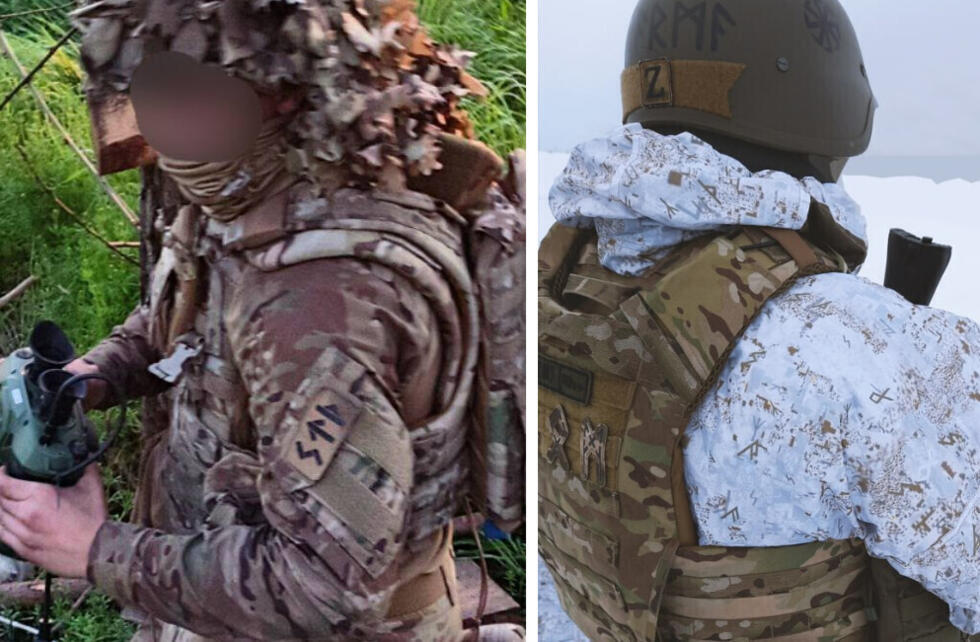
The men in Rusich also wear other symbols favoured by neo-Nazis around the world. Rusich fighters often flaunt the Tyr and Odal runes from Norse mythology.


These members of Rusich display a Tyr rune on a patch on the arm (left) and an Odal rune on the back of the tactical vest (right). © Telegram / dshrg2

Parreira says that these symbols are used by many ultra-nationalist groups around the world:


"These days, all of these runes are references to a white supremacist and neo-Nazi ideology. But they were also used by Nazis, back in the day, as well as by some pagan movements, some of which are racist.

These symbols are meant to perpetuate the myth of a white people with Indo-European roots, supposedly the ancestors of both the Slavs and people from the Nordic countries. So they are symbols of an ethnopluralism (Editor’s note: a political ideology that promotes distinct ethnic and cultural groups living side by side but not mixing) that appears as frequently amongst the French extreme right (Institut Iliade, Nouvelle Droite) as in Russian supremacist circles."

Rusich members also seem to enjoy making references to the Third Reich. In a Telegram post from May 30, 2025, fighters from the unit wished one of their fellow fighters a happy birthday by adding an SS symbol to the wing of a drone.


In this screenshot of a video posted on May 30, 2025, on the Rusich Telegram channel, fighters from the unit wrote a birthday message that features the SS symbol. © Telegram / dshrg2

One of the founders and the current leader of Rusich, Alexey Milchakov, stated publicly in an interview that he considers himself a Nazi and not a patriot or a nationalist.

He also called for the extermination of Ukrainians, “so they can no longer raise their children”. Ukrainian investigative group Molfar reported that Milchakov is believed to have cut off the ears of Ukrainian fighters in 2014 before publishing images of these atrocities on VKontakte.


Oleksiy Milchakov was a member of the Russian neo-Nazi movement during his youth. © molfar.institute


According to the pro-Ukrainian ButusovPlus, Milchakov is actually deployed with the 417th Reconnaissance Battalion of the 42nd Guards Motor Rifle Division within the Russian army. According to the Institute for the Study of War, Milchakov’s unit was active to the west of the town of Zaporizhzhia in October 2025.
War crimes posted on social media

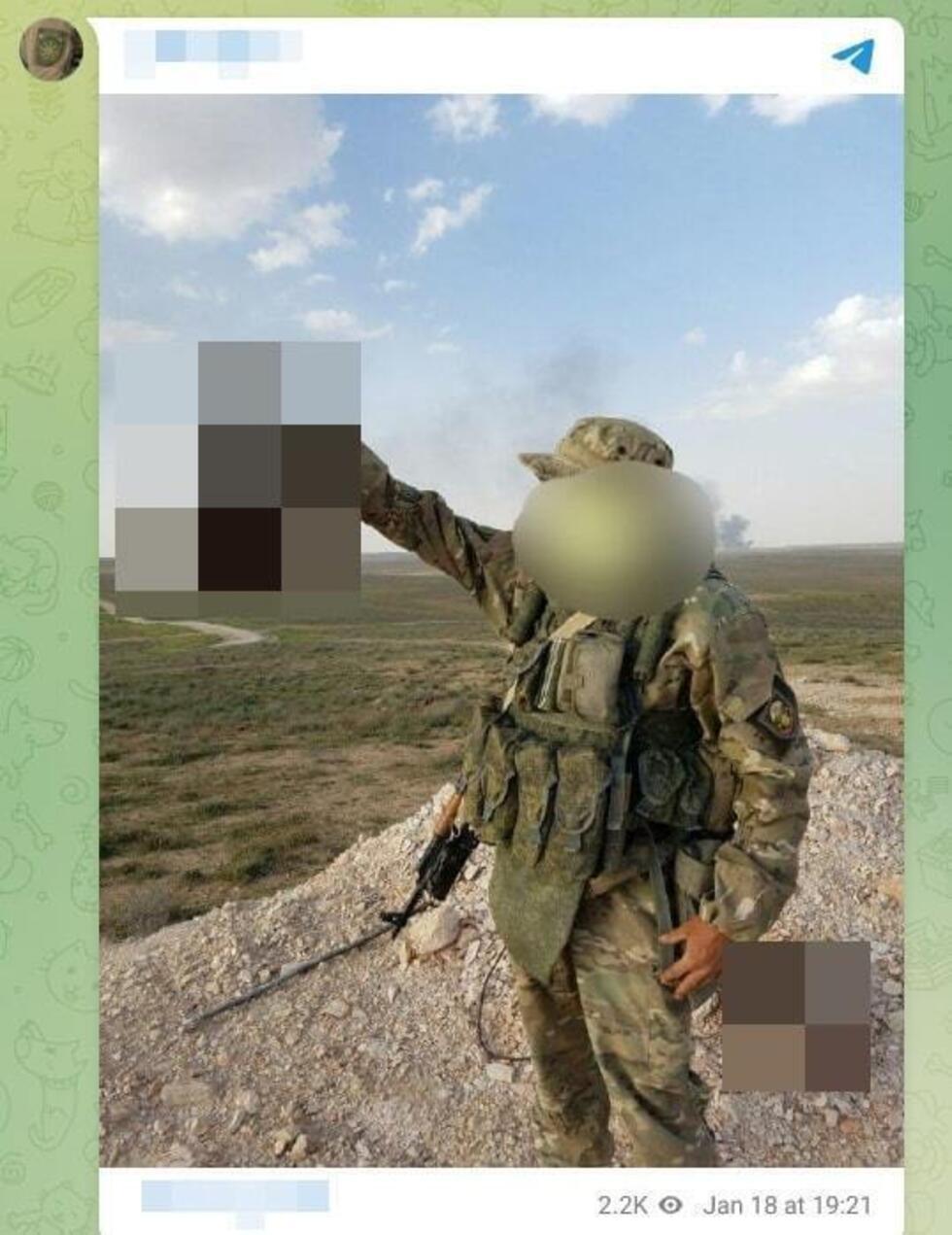
Throughout its existence, the Rusich group’s cruelty has set it apart from other Russian mercenary groups. In 2017, one of its members posed proudly holding the severed head of a man near Palmyra, Syria.


A Telegram account close to the Rusich group published a photo on June 18, 2021, of a man in a Russian uniform brandishing a severed head. Geolocation: 34.8766944, 37.9440556 © Bellingcat


The administrators of the Rusich Telegram channel continue to post scenes of horror. On November 26, 2024, the account posted an image of a severed head with a severed hand stuffed into its mouth. We don’t know where this image was taken.

In July 2024, the group posted an image of the body of a man lying in the middle of the street with a sword stuck into his chest. The body is partially dressed in Ukrainian Army military fatigues. An image that the account said was a “surprise for its followers”.

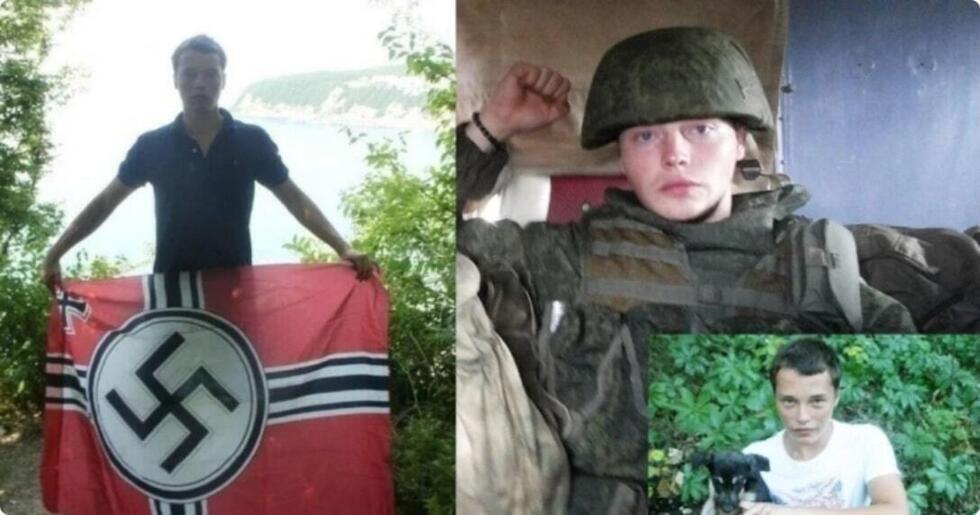
Similar photos and videos of crimes posted on social media were used in the trial of one of Rusich’s leaders, Yan Petrovsky. Petrovsky was arrested in Finland on July 20, 2023. He was sentenced to life in prison in Finland for four war crimes that he committed in eastern Ukraine in 2014.


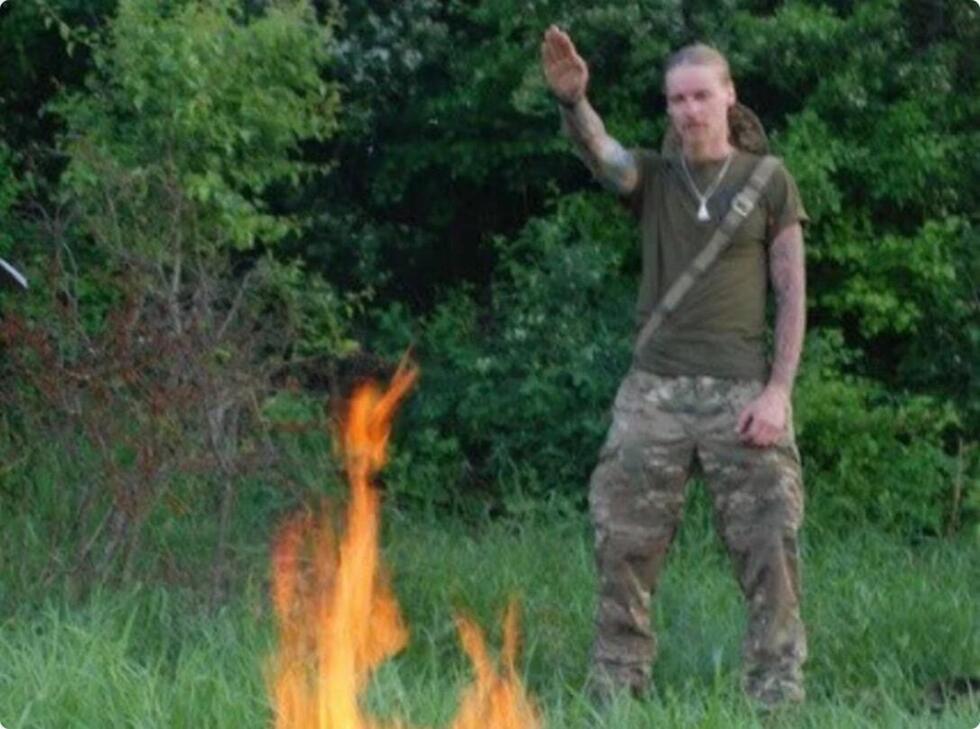
Here is a photo of Yan Petrovsky performing a Nazi salute, published by the Ukrainian investigative group, Molfar. © molfar.institute

‘Rusich perpetuates the idea that you can act in total impunity’

For Rondeaux, these posts are part of a well-planned communication strategy within the group:

“Communication has been part of the very DNA of Rusich since 2014. Back then, the group had its own Instagram account, its own YouTube channel and it was also very active on VKontakte (Editor’s note: a Russian social media network).

Rusich is carrying out psychological warfare on social media by publishing images of its crimes. It perpetuates the idea that the Kremlin and its troops can act in total impunity.

That serves a particular narrative, certainly now when Ukraine and Russia are considering a peace agreement that would not include any kind of system of reparations for Russian war crimes.”

This article has been translated from the original in French.
Trump slashes migrant work permits from five years to 18 months in renewed crackdown

The Trump administration on Thursday slashed the validity of work permits for refugees, asylum seekers and other migrants to just 18 months, stepping up its immigration crackdown only two days after freezing applications from citizens from 19 restricted nations.


Issued on: 05/12/2025
By: FRANCE 24

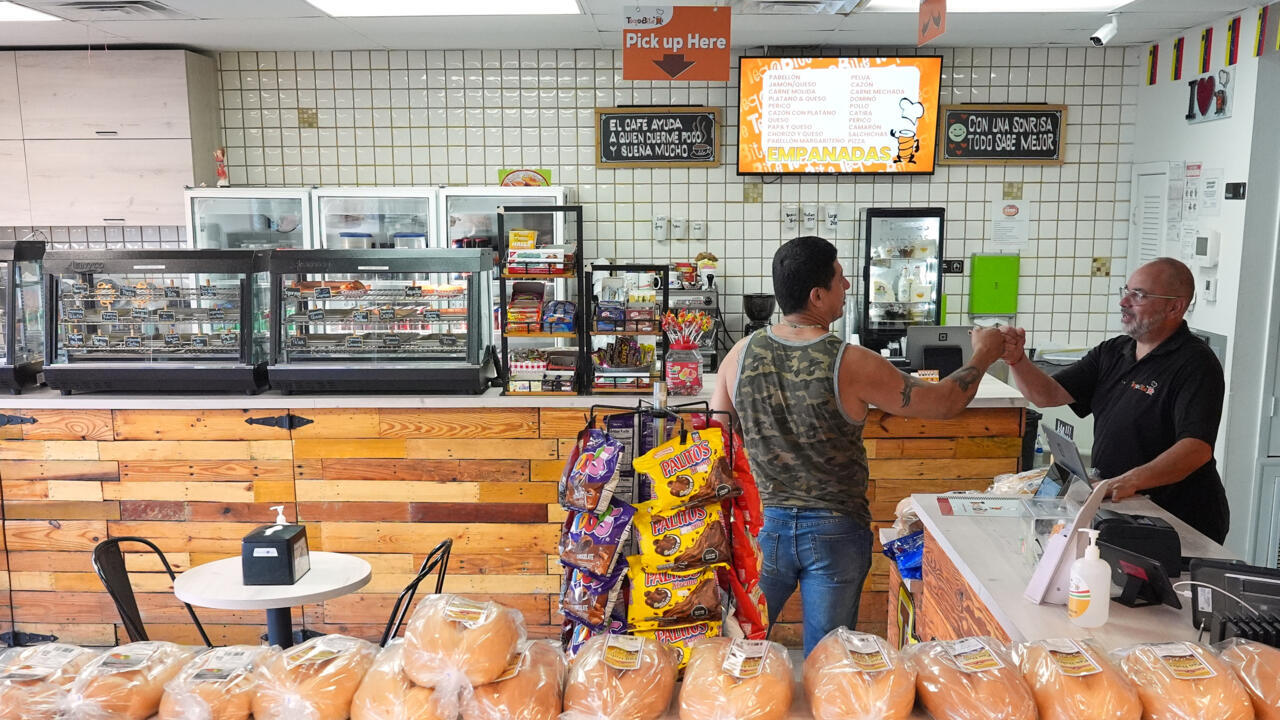
Dario Romero, right, co-owner of Venezuelan restaurant TeqaBite, 
greets a customer, Thursday, Aug. 21, 2025. © Rebecca Blackwell, AP

US President Donald Trump’s administration on Thursday cut to 18 months, from five years, the period of time work permits are valid for refugees, asylum seekers and other migrants.

The move, the latest in the administration’s sweeping immigration crackdown, took place just two days after it halted immigration applications for citizens from 19 nations.

It also followed allegations that two National Guard members were shot last week by an Afghan man who entered the United States through a resettlement programme after the 2021 military withdrawal.

Joseph Edlow, director of US Citizenship and Immigration Services (USCIS), cited the November 26 shooting in the US capital as a reason for the change.

“Reducing the maximum validity period for employment authorisation will ensure that those seeking to work in the United States do not threaten public safety or promote harmful anti-American ideologies,” Edlow said in a statement.

“After the attack on National Guard service members in our nation’s capital by an alien who was admitted into this country by the previous administration, it’s even more clear that USCIS must conduct frequent vetting of aliens,” he added.

USCIS said the shortened work permit validity will apply to migrants admitted as refugees, migrants granted asylum and those whose deportation has been suspended.

On Tuesday, the Trump administration halted immigration applications for citizens of 19 nations already subject to travel restrictions.

Green card and citizenship processing was halted for people from those countries, which include Afghanistan, Yemen, Haiti, Venezuela, Sudan and Somalia.

Trump, who campaigned on a pledge to deport millions of undocumented migrants, said after the National Guard shooting that he planned to “permanently pause migration from all Third World countries”.

(FRANCE 24 with AFP)
TikTok to comply with Australia’s ‘upsetting’ under-16 social media ban


TikTok on Friday said it will comply with Australia's ban on social media for under-16s which comes into effect December 10. The ByteDance-owned social media company said the measures "may be upsetting" for some of its young users but it was necessary to comply with Australian law. The company's statement came a day after Meta began removing under-16s in Australia from Instagram, Threads and Facebook.


Issued on: 05/12/2025 - 
By: FRANCE 24

TikTok says Australia's social media ban for under-16s may be upsetting for some users. © Nhac Nguyen, AFP

TikTok said Friday it will comply with Australia's imminent ban on under-16s joining social media on the day it comes into force, but told users the changes "may be upsetting".

Australia's world-first legislation comes into effect December 10, curbing the world's most popular social media platforms and websites, including TikTok, Instagram and YouTube.

Companies face fines of Aus$49.5 million (US$32 million) if they fail to take "reasonable steps" to comply.


TikTok will block under-16s in Australia on the day the law comes into effect, it said, meaning they will no longer be able to hold or create an account.

"Teens with an existing account will be notified that they will no longer be able to use their existing account, which will become inactive," it said.

"If they previously published content, it will no longer be available for others to view on TikTok."

The social media giant said youngsters who have been blocked can submit an appeal to prove their age, including by facial images, credit card authorisation or official ID.

"We understand that these changes may be upsetting, but they are necessary to ensure that TikTok complies with Australian law," the company said in a statement.

Teens who fall under the law will have a choice of confirming their age, downloading their information, deleting their account, or asking for a reminder to recover their TikTok accounts when they turn 16.

TikTok urged parents to "have conversations" with their teens to ensure they are truthful about their age.

A week ahead of the ban, Communications Minister Anika Wells said some Australian teens had killed themselves as social media algorithms "latched on" – targeting them with content that drained their self-esteem.

"This specific law will not fix every harm occurring on the internet, but it will make it easier for kids to chase a better version of themselves," she told reporters.

An internet rights group last week launched a legal challenge to halt the ban.

The Digital Freedom Project said it had challenged the laws in Australia's High Court, calling them an "unfair" assault on freedom of speech.

Australia's restrictions have generated interest around the world as regulators wrestle with the potential dangers of social media.


Malaysia indicated it was planning to block children under 16 from signing up to social media accounts next year, while New Zealand will introduce a similar ban.

(FRANCE 24 with AFP)
Algerian court increases jail time for French journalist convicted of 'terrorism'

A court in Tizi Ouzou, in eastern Algeria, on Wednesday announced a ten-year sentence in the appeal trial of French sports journalist Christophe Gleizes, accused among other things of "glorifying terrorism". Arrested in May 2024, he has been detained since his trial in June, when he was originally sentenced to seven years in prison.


Issued on: 03/12/2025 - RFI

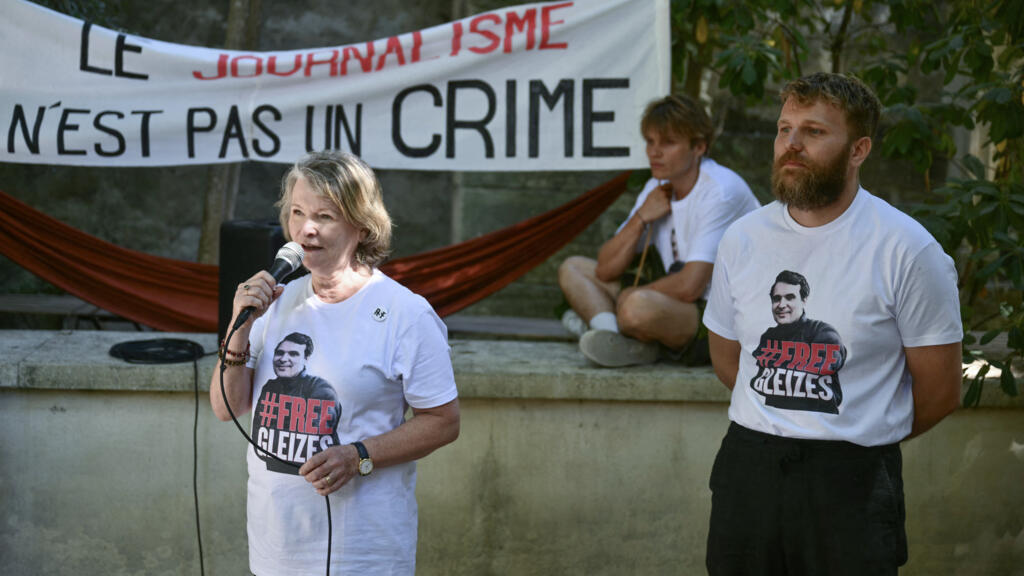
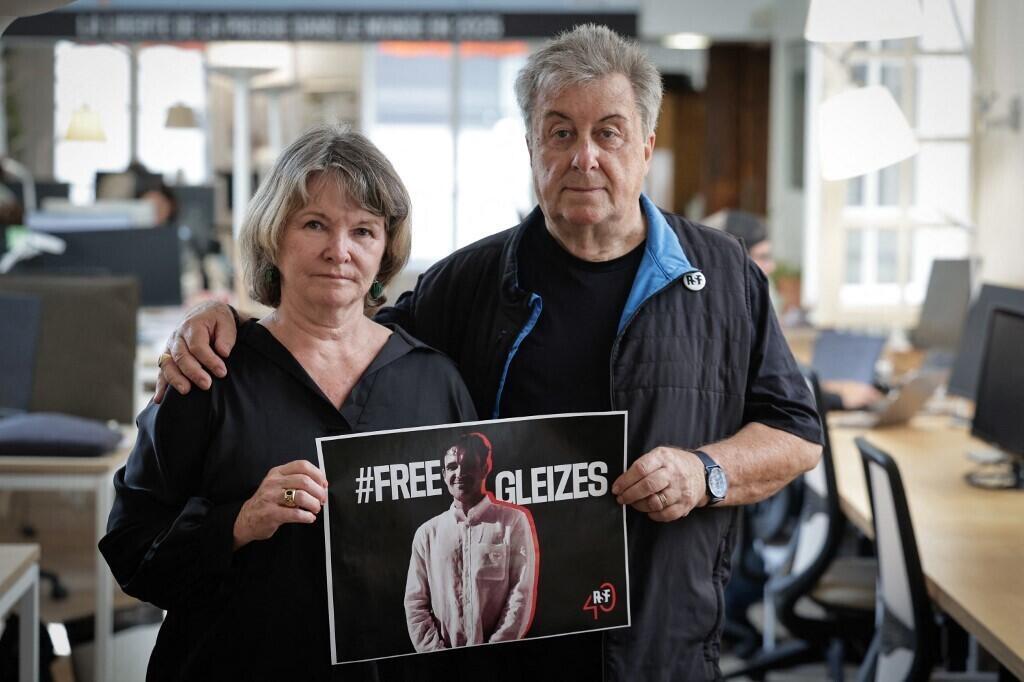
Mother of Christophe Gleizes, Sylvie Godard (L) next to Christophe Gleizes' brother, Maxime Gleizes at a march in Avignon in support of French sports journalist Christophe Gleizes detained in Algeria and convicted of "glorifying terrorism", 16 July 2025. © CHRISTOPHE SIMON / AFP


"The accused did not come to Algeria to do journalistic work but to commit a hostile act," said the prosecutor, who also requested a fine of 500,000 Algerian dinars (approximately €3,300).

Christophe Gleizes, 36, a contributor to the French magazines So Foot and Society, imprisoned in Algeria since the end of June, had previously asked the court for leniency, stating that he should have applied for a journalist visa instead of a tourist visa to come and report.

Called to the stand at his appeal trial on Wednesday morning, 36-year-old Gleizes asked for leniency, acknowledging that he had made "many journalistic errors despite [his] good intentions."

A contributor to the French magazines So Foot and Society, Gleizes also admitted that he should have been aware that some of his contacts were linked to an organisation classified as terrorist in Algeria.

"I beg your mercy so that I can be reunited with my family," he said in an emotional testimony.


Tourism visa

Gleizes had travelled to Algeria to write an article about the country's most successful football club, Jeunesse Sportive de Kabylie (JSK), based in Tizi Ouzou, 100 km east of Algiers.

French NGO Reporters Without Borders (RSF) said he was arrested on 28 May 2024 and placed under judicial supervision, for "entering the country with a tourist visa, for 'glorifying terrorism' and 'possession of publications for propaganda purposes that harm the national interest'".

The justice system accused him of having been in contact with an offical from the JSK, who was also one of the leaders of the Movement for the Self-Determination of Kabylie (MAK), which was classified as a terrorist organisation by Algerian authorities in 2021.

According to RSF, the initial exchanges between the two men "took place well before this categorisation by the Algerian authorities" and "the only exchange that occurred in 2024 concerned the preparation of his report" on JSK, "something Christophe Gleizes has never hidden."

Gleizes "has no business being in prison; his only crime is having done his job as a sports journalist and loving Algerian football," Thibaut Bruttin, director general of RSF told the press in October.

During the initial trial in June, Gleizes' French lawyer, Emmanuel Daoud said that there had been "a complete misunderstanding of the journalistic profession," by Algerian authorities.

"We had to explained to the judges that a journalist does not engage in politics," that he "is not an ideologue," "not an activist," Daoud told France Inter radio.

The lawyer insisted however on his respect for the "independent and sovereign" Algerian justice system and refuted accusations circulating in France that the journalist was "being held hostage".

He stressed that Gleizes had been able to receive visitors, had access to his criminal file, and consulted with his lawyers.

Support campaigns

In September, RSF launched a petition and an campaign in support of Gleizes and called on football clubs to raise awareness of Gleizes' imprisonment by making statements before matches.

"Support for Christophe Gleizes is a grassroots movement of all those who love journalism and those who love sport," Bruttin said.

At the end of November, nine media organisations published a petition, calling for Gleizes' release, stating that the"freedom of the press cannot be held hostage".

They reiterated that "a reporter who interviews a sports official is not complicit in their positions: they are doing their job."

They added that "diplomatic tensions must never lead to imprisonment, especially of journalists", referring to the recent tensions between France and Algeria.

Indeed at the time of his arrest, Gleizes found himself caught in the midst of a diplomatic crisis between France and its former colony, marked in particular by the withdrawal of the two ambassadors and the reciprocal expulsions of diplomats.

Tensions escalated with France's recognition of Moroccan sovereignty over Western Sahara in July 2024, where Algeria backs the pro-independence Polisario Front.

Last November, Algerian authorities arrested the Franco-Algerian writer Boualem Sansal, who spent a year in prison on national security charges before being pardoned last month.

Relations also took a dive when in January this year, when Algeria refused to take back an Algerian influencer deported from France, accused of inciting violence on social media.


Macron joins family's push to free jailed French journalist in Algeria

France is ramping up diplomatic efforts to secure the release of Christophe Gleizes, the French sports journalist handed a seven-year prison sentence in Algeria, with President Emmanuel Macron insisting he wants to see him home “as soon as possible”. 

Gleizes’s parents told RFI they hope to meet Macron as soon as possible to push for their son's freedom.


Issued on: 04/12/2025 - RFI

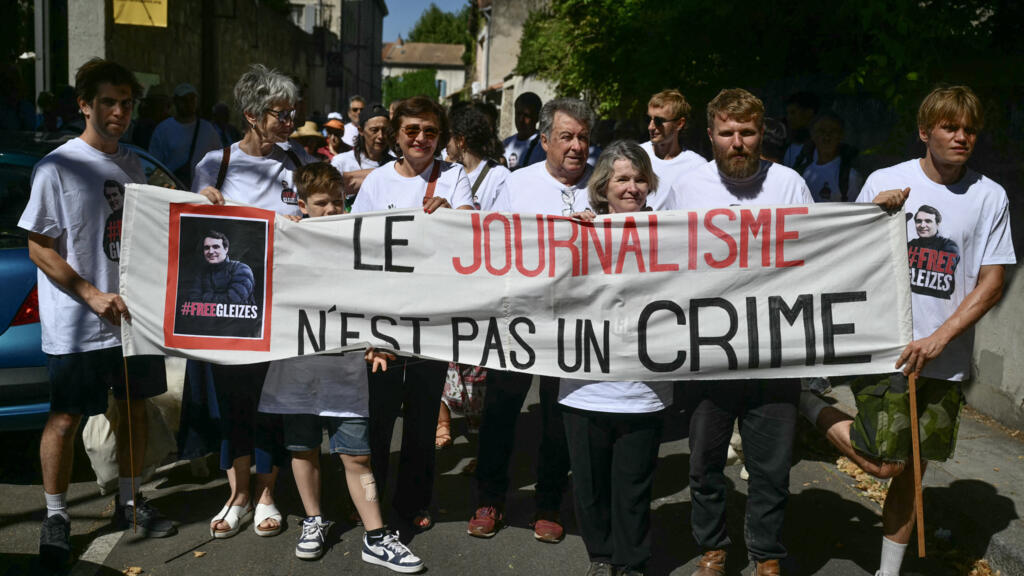
The family of Christophe Gleizes, a French sports journalist convicted in Algeria of "glorifying terrorism", protest in Avignon, southern France, on 16 July 2025. Their banner reads: "Journalism is not a crime." © AFP - CHRISTOPHE SIMON

The Elysée Palace said Thursday that Macron was “deeply concerned” by the verdict and would continue engaging with Algiers to secure the journalist’s return to France.

It follows the decision by an Algerian appeals court, a day earlier, to uphold his conviction for “glorifying terrorism” and “possessing publications for propaganda purposes harmful to national interests”.

Gleizes, 36, a freelancer for So Foot and Society, is France’s only journalist imprisoned abroad, according to Reporters Without Borders (RSF).

His detention comes at a tense period in relations between France and Algeria. Interior Minister Laurent Nuñez has called the journalist’s freedom “a major element” in ongoing discussions between the two countries.

“We will do everything in our power to secure the release” of Gleizes, the minister told broadcaster France 2. “Discussions are ongoing, and we will continue them with the Algerian side.”

'Still in shock'


Gleizes was arrested in May 2024 while reporting in Tizi Ouzou, the heart of the Kabylie region and home to JS Kabylie, Algeria’s most decorated football club.

Algerian authorities accuse him of having contact with figures linked to the Movement for the Self-Determination of Kabylie (MAK), which they labelled a terrorist organisation in 2021.

He has been detained since his trial in June.

His mother Sylvie Godard and stepfather Francis Godard told RFI on Thursday that the decision to uphold the sentence had blindsided them.

“We are still in shock over this verdict,” said Sylvie. “We thought he would get a suspended sentence, maybe a prison sentence, but definitely not another seven-year prison sentence.”

Sylvie and Francis Godard, the mother and stepfather of French sports journalist Christophe Gleizes, at the headquarters of press freedom watchdog Reporters Without Borders in Paris, on 27 August 2025. © AFP - STEPHANE DE SAKUTIN

Inside a 'violent' hearing


Francis Godard said the hearing itself was exceptionally charged, with prosecutors' arguments tipping into invective. He told RFI: “The verdict is harsh and it must be said that the hearing was also violent.”

He added that the presiding judge repeatedly tried to portray Christophe as an accomplice in a criminal operation.

According to his mother, Gleizes appeared stunned but stoic when the verdict was announced. “His face was pale,” she said.

The family attempted to speak to him briefly before he was taken back to prison, but Sylvie recounted: “There wasn’t much humanity... They forbade us from seeing him.”

Release campaign

Gleizes now has one week to decide whether to appeal to Algeria’s highest court.

“We are regaining our fighting spirit and we are going to regain our energy so that we can get him out of there as quickly as possible,” his mother told RFI.

She added that the family is hoping for direct engagement with the French president. “We really hope to meet with [Macron] in the next few days and discuss with him the possible courses of action and strategies to be implemented.”

Gleizes also has the backing of press freedom groups including RSF, which denounced his sentence as “outrageous”.

The case has injected fresh strain into relations between Paris and Algiers, already complicated by disagreements over Western Sahara and the expulsion of diplomats last year.

French-Algerian writer Boualem Sansal was arrested in Algiers and sentenced in March to five years in prison for making comments about Western Sahara that Algerian authorities said undermined the country's territorial integrity.

He was freed last month after intense negotiations with Algeria by France and Germany.

(with AFP)
Hostage video shows abducted Malian journalists asking for help


Two journalists from Mali’s state broadcaster ORTM have appeared in a video released by the armed Islamist group JNIM, more than six weeks after they were abducted in the centre of the country. Collgeaues have described the images as shocking.


Issued on: 03/12/2025 - RFI

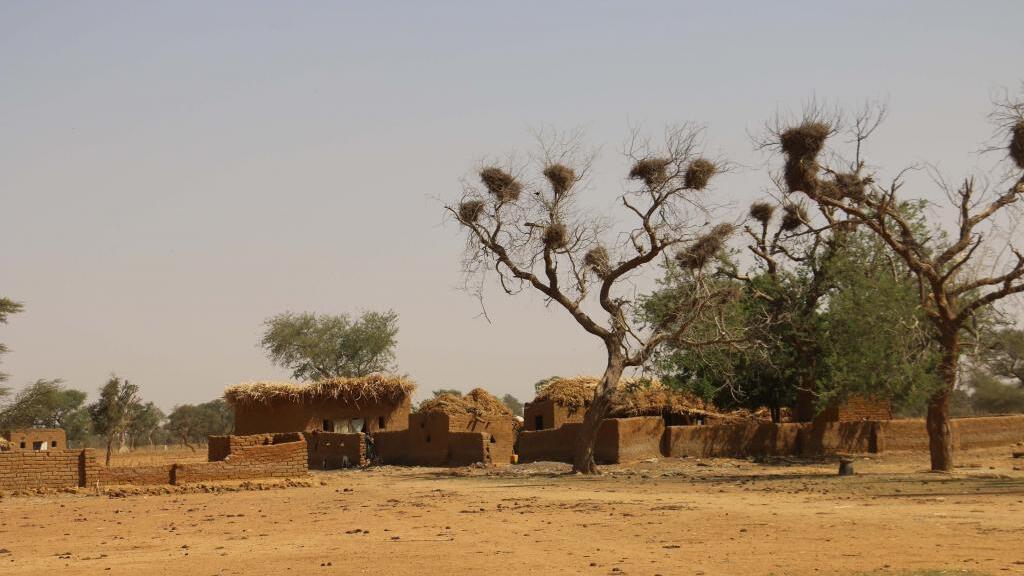
A village in Mali’s Mopti region, where the two ORTM journalists were abducted in October. © Coralie Pierret / RFI

Daouda Koné, the ORTM director based in Douentza in central Mali, and his cameraman Salif Sangaré were taken on 14 October while travelling between Sévaré, a major road junction near Mopti, and Konna, a town further northeast on the Niger River flood plain.

The footage shows both men wearing boubous in front of a cloth backdrop that hides their surroundings. They look dejected but appear in good health.

Speaking under duress, the pair said they were being treated well and called on those watching to “do everything possible” to free them.

After viewing the clips, ORTM journalists told RFI they were "hard to watch” and “it hurts a lot”

Mali’s transitional authorities – the military-led government that took power after coups in 2020 and 2021 – have offered no public reaction since the men were taken a month and a half ago.


Wish for 'discretion'


Management at ORTM and national journalist organisations have also remained silent.

There has been no official statement following the release of the video either. One source said there was a wish for “discretion” and “effectiveness”.

Local sources said community leaders from the Mopti region had opened discussions with JNIM, an al-Qaeda-linked militant group known for attacks, kidnappings and assaults on security forces across the Sahel.

Some sources said they were surprised by the publication of the footage and now fear the situation may be stuck. An ORTM journalist said: “We hope to find our colleagues safe and sound soon.”


Fuel embargo


In a separate move, Mali’s transitional authorities have decorated fuel operators and drivers taking part in fuel convoys, including some who were killed.

It comes during an embargo on fuel imports to the country declared in early September by JNIM, which is linked to al-Qaeda and has carried out repeated attacks on tankers on Malian roads.

Presidential decrees published in the Official Journal on 1 December granted honours to 16 oil company executives and union leaders, to 31 injured drivers and, posthumously, to 27 drivers killed on Malian roads, including three Ivorians and one Burkinabè.

The recognition reflects the support given by fuel operators and the sacrifices made by transport workers who continue trying to supply the country.

Military escorts have been strengthened and administrative procedures sped up in the past 10 days, easing pressure on the capital.
EU agrees deal on genetically edited crops, sparking renewed debate

European Union member states on Wednesday agreed a deal on regulating new genomic techniques in crops. While this promises greater innovation in farming, it has also reignited debate over transparency and environmental risks.


Issued on: 04/12/2025 - RFI

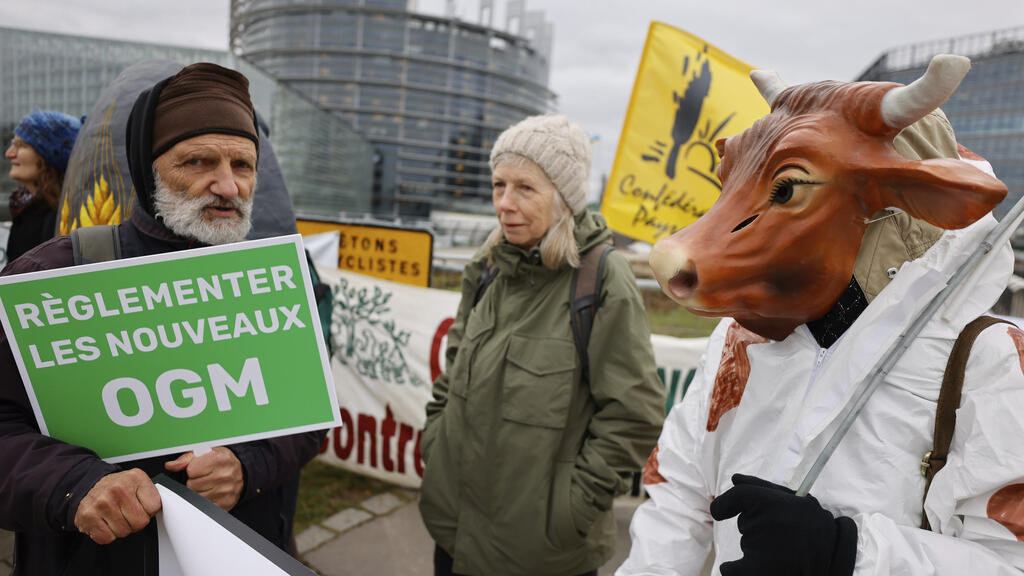
The Confédération Paysanne farmers' union protest against ‘New GMOs’ in Strasbourg in February 2024. AP - Jean-Francois Badias

New genomic techniques (NGT) add, remove or tweak small sections of DNA using precise gene editing tools. Plants made this way differ from traditional genetically modified organisms, which involve inserting genetic material from one species into another to create a hybrid.

The long-running debate over NGTs has frequently been a heated one.

Supporters argue that NGTs represent a targeted approach that can bring about changes that might otherwise have occurred naturally or through selective breeding, only much faster.

Agriculture unions have been among the most enthusiastic backers of the technology, seeing it as a practical way to produce crops that can better withstand climate shocks and require fewer inputs such as fertiliser and pesticides – at a time when farmers are under pressure to cut emissions while keeping yields high.


A provisional deal

In a joint statement, the European Parliament and the Council of the EU said they had reached a provisional deal on "a set of rules that establish a legal framework for new genomic techniques".

The regulation, they added, is designed to improve the agrifood sector’s competitiveness and level the playing field for European producers, while strengthening food security and reducing reliance on imports.

Jessica Polfjärd, the Swedish MEP steering the file through the parliament, welcomed the breakthrough. She said the technology would pave the way for climate-resilient plants capable of delivering higher yields on smaller areas of land, which she called a win for both farmers and the environment.

A key component of the compromise is an easing of existing rules for certain NGT plants that fall under “category 1” and are considered equivalent to naturally occurring varieties.

These lower-risk plants would face a lighter regulatory touch. However, the agreement draws clear red lines – NGTs designed to be resistant to herbicides or engineered to produce insecticides will be barred from the market, and organic farming will remain strictly off limits.


Labelling concerns

However, critics worry about potential environmental impacts or unforeseen consequences for food chains. Environmental groups and the organic sector have pushed back throughout the negotiations.

One flashpoint has been labelling. Charlotte Labauge of the Pollinis NGO lamented that consumers will not be informed when NGT category 1 plants appear in final products.

Under the deal, seed bags sold to farmers will indicate the presence of such plants, but there will be no requirement to label food as such on supermarket shelves.

Traceability and patent rules have also proved divisive issues, fuelling months of wrangling among EU countries and lawmakers. Major farming unions under Copa-Cogeca, along with big seed companies, had urged Brussels to simplify the rules to avoid falling behind global competitors such as the United States and China, where NGTs are already in use.

Environmental campaigners, however, maintain that loosening requirements risks undermining transparency and safety.

With negotiators now aligned, the proposal edges closer to becoming law. However, it must still secure formal approval from EU member states and the European Parliament before the new framework can take effect.

(with newswires)


Africa’s Gen Z unrest shows 'generational divide’ between people and politicians

Africa’s rising Gen Z movements are putting governments under pressure. Young people on the continent say they want a real place in shaping their countries’ futures, yet many feel excluded by leaders far older than them. Their frustration is spilling into streets from Madagascar to Morocco, and new survey data points to fast-falling trust in institutions.


Issued on: 05/12/2025 - RFI

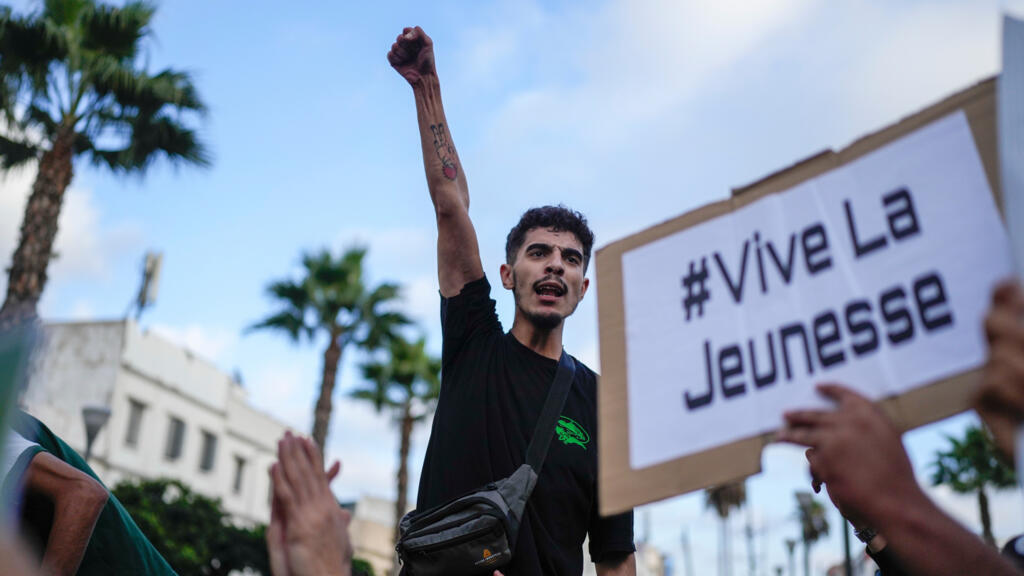
Demonstrators in Casablanca, Morocco, take part in a youth-led protest calling for reforms and greater accountability, 5 October 2025. AP - Mosa'ab Elshamy

By:  Melissa Chemam with RFI

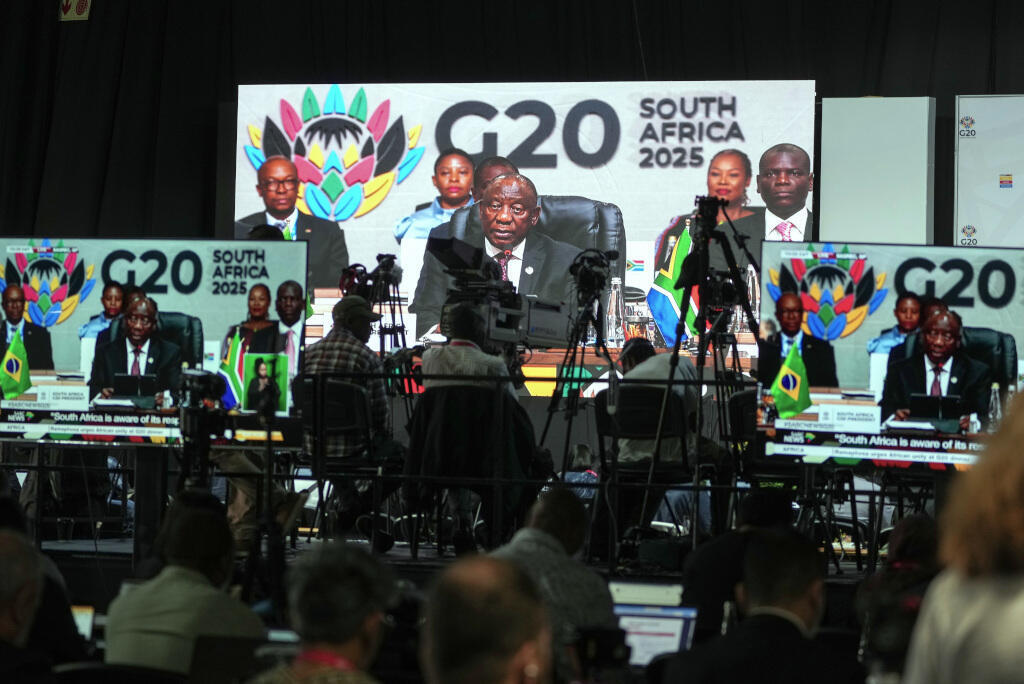
South Africa used its G20 presidency this year to push youth involvement more than any previous summit. The Y20 process – created in 2010 to bring young people into G20 debates – took on new urgency, given that Africa has the world’s largest population under the age of 30.

Y20 South Africa 2025 ran under the theme Youth for Global Progress. Its aim was to open space for young leaders to help shape the global agenda.

Levi Singh, its 31-year-old chief negotiations coordinator, said encouraging youth participation in global events and politics should be an absolute priority. This G20, he added, was the most successful so far in getting that message across.

“As this was the last time that the global south was leading the G20 for the foreseeable future, we thought it was a unique opportunity to mobilise around youth participation,” Singh told RFI.


Generation gap


The idea of making youth leadership a formal part of political systems drew far more support in the Global South than in the seven richest nations in North America and Europe, Singh said.

“In Africa in particular, you see the median age today is 19 years old, yet the median age of an African leader, a parliamentarian, a minister or a president, is between 67 and 69," he explained.

"So there's a profound intergenerational divide between the majority of the population and those who are in power and in leadership positions.

“At the Y20, we weren't calling for people over 65 to be chucked out of office, but for a greater sense of intergenerational collaboration, learning, sharing and power sharing, ultimately.”


South Africa's President Cyril Ramaphosa led the G20 up until the leaders' summit, in Johannesburg, South Africa, on 22 November 2025. AP - Jerome Delay

The Ichikowitz Family Foundation, which runs an annual survey on youth attitudes across Africa, included these themes in its latest research. The African Youth Survey gathers views from tens of thousands of young people in 25 countries. This year, it focused on the G20.

Its report found fast-eroding trust in democratic institutions and government accountability.

While young Africans once expected leaders to create jobs, solve the climate crisis and drive innovation, many now feel “the system is failing them”, the foundation's chairman Ivor Ichikowitz told RFI.

The survey, he added, shows a polarised view of current leadership.

“On the extremely negative side, there are many respondents who are saying that they are frustrated with their governments and this plays out in what we've seen in Madagascar, what we've seen in Kenya, what we've seen in other countries in Africa,” Ichikowitz said. “This is not unexpected.”


Young people push back

Events across the African continent over the past year form part of that picture – from the coup in Gabon to Gen Z protests in Madagascar and Morocco.

The unrest shows rising frustration among young people who now believe they must take control of their own futures, Ichikowitz said, adding: "They can't rely only on governments."

Climate change has also become a key issue, with deeper awareness of environmental concerns among respondents. There is strong frustration around this too.

“There's a realisation among the population that we surveyed that this is a reality that's been created by the world's most industrialised nations – and Africa is bearing the brunt of the consequences,” Ichikowitz said.

Young people believe Africa has the means to solve the problem, but they also know that protecting the environment will mean major sacrifices that could limit development and economic opportunities.

“Africa is not being compensated for this reality,” Ichikowitz added.

One message, Singh said, came through repeatedly in the Y20 working groups.

“Young people, in particular those from the Global South, are fatigued by the constant framing by policymakers and world leaders of them as a problem and something that needs to be fixed – as opposed to an asset that requires investment and planning."


Trump Threatens Mark Kelly For Reiterating The Military’s Obligation To The Constitution – OpEd
Sen. Mark Kelly. Photo Credit: Gage Skidmore, Wikipedia Commons

December 4, 2025
By Ivan Eland


The Trump administration recently threatened to return retired Navy captain, former astronaut, and now Senator Mark Kelly to active duty and court-martial him—along with investigating other veterans in Congress—merely for publicly advising members of the military to honor their oath to defend the Constitution and refuse to obey illegal orders (presumably from President Donald Trump, the commander in chief of the U.S. armed forces).

Of course, Trump’s threats are outrageous but unsurprising. He has said he wants to terminatethe Constitution. He has also said that Article II, which defines the presidency, allows him to do whatever he wants.

More than the flag, the national anthem, the pledge of allegiance, and the Declaration of Independence, the Constitution provides the pillars for the preservation of the American republic. That’s why the military Oath of Enlistment pledges allegiance to the Constitution rather than to a person or branch of government. In short, the phrase “America is ruled by laws, not men” best sums up American society and government.

Trump assumes he can order the military to do his bidding, and that is why those veterans in Congress reminded military personnel that they owe allegiance to the Constitution.

Trump’s threat to court-martial Kelly is not only a threat to the senator but also to any service member who thinks that one of Trump’s questionable orders might be illegal. There have been many of those, both in Trump’s first term and now accelerating in his second.


During the first term, Trump used the military to assassinate Qasem Soleimani, effectively the second-ranking leader in Iran, without authorization from Congress. This could have sparked a war had it not been for Iran’s restrained and telegraphed retaliatory attack on a U.S. base in the Middle East. Trump also waged war on ISIS in Syria and Iraq, continuing the illegal war begun by President Barack Obama. That war stretched the post-9/11 congressional Authorization of the Use of Military Force (AUMF), which only allowed action against those who perpetrated those attacks (al-Qaeda in Afghanistan and Pakistan) and those who harbored them (the Afghan Taliban), into a war against ISIS and other groups that had nothing to do with 9/11. Obama had followed President George W. Bush, who had stretched the 2001 AUMF into a worldwide war against terrorist groups “of global reach,” not all of which was focused on attacking U.S. targets.

In his second term, Trump has been targeting small boats allegedly carrying drugs far from the United States in the Southern Caribbean and Eastern Pacific. Previously, such boats were stopped by the Coast Guard, and if drugs were found, the traffickers were put into law-enforcement channels for criminal trials. Since drug trafficking is not punishable by death, the killing of 83 people so far without due process or a congressional declaration of war is illegal.

But the worst illegal orders Trump has given, and those most injurious to the Constitution, have sent troops or National Guard forces into U.S. cities in the absence of an insurrection or requests by the states affected. So far, the courts have bluntly ruled that such deployments to Los Angeles and Washington, D.C. are illegal.

None of Trump’s illegal uses of the military—or for that matter, those of Bush, Obama, or other past presidents—have led to mass resignations of or even significant protests by service personnel to military lawyers (who have conveniently been winnowed and neutered by Trump). This compliance by officers and enlisted personnel is understandable, given the severe career and legal penalties for insubordination. Moreover, Congress has let presidents get away with illegal unilateral military attacks at least since the Civil War. Congress should start doing its job.

The Constitution’s framers clearly gave the power to initiate war to Congress, the people’s House and Senate, in reaction to Europe’s monarchs, who unilaterally took their countries to war for personal aggrandizement, with the costs borne by the common people through combat deaths, destruction of property, and high taxes. Thus, the framers intended Congress to be asked to approve military actions in advance, except for an emergency response to an attack. Yet even after America was attacked on 9/11 and by the Japanese at Pearl Harbor in 1941, Congress was asked to approve retaliatory military action.

Thus, if Trump continues to take clearly illegal unilateral military actions in far less dire circumstances—by striking alleged drug-trafficking boats, attacking Venezuela to try to topple its leader for alleged trafficking without congressional approval, or sending troops to more American cities under trumped-up pretexts—perhaps groups of rank-and-file military members will express their unhappiness to their immediate commanders. Congressional and media reaction to Secretary of Defense Pete Hegseth’s seemingly illegal order to kill all people on those small boats, even survivors in the water, should make military people realize that they don’t possess the immunity that Trump does from being held responsible for being involved in carrying out illegal orders or war crimes. Furthermore, the brouhaha over Hegseth’s apparent lawless behavior and the warning by Kelly and others may put a bug in military ears about the right path to take if a full-blown constitutional crisis arises—that is, to refuse illegal orders, no matter who gives them.


This article was published at Independent Institute


Ivan Eland

Ivan Eland is Senior Fellow and Director of the Center on Peace & Liberty at The Independent Institute. Dr. Eland is a graduate of Iowa State University and received an M.B.A. in applied economics and Ph.D. in national security policy from George Washington University. He has been Director of Defense Policy Studies at the Cato Institute, and he spent 15 years working for Congress on national security issues, including stints as an investigator for the House Foreign Affairs Committee and Principal Defense Analyst at the Congressional Budget Office. He is author of the books Partitioning for Peace: An Exit Strategy for Iraq, and Recarving Rushmore.


Production Vs. Consumption: The Structural Dilemma And The Critical Shift In China’s Economic Future – Analysis


Anbound
By Zhou Chao

As 2025 gradually draws to a close, although a series of economic and trade agreements have recently been reached between the United States and China, and China has made new concessions in imports of U.S. agricultural products, the overall stance of the U.S. government and the specific statements from high-ranking officials suggest that there has been no substantial shift in the U.S. approach to economic pressure on China. The external and internal pressures on China’s economy remain significant.

While the communiqué from the Fourth Plenary Session of the 20th Central Committee highlighted principles such as “expanding domestic demand” and “improving living standards while increasing consumer spending”, it also emphasized strengthening the foundation of the real economy. The communiqué stressed maintaining a focus on the real economy, prioritizing the directions of smart, green, and integrated development. It called for maintaining a reasonable share of manufacturing and building a modern industrial system centered on advanced manufacturing. At the same time, it also underlined the importance of optimizing and upgrading traditional industries while fostering and growing emerging and future industries. Additionally, it emphasized the idea of fostering new demand through new supply and promoting consumption and investment.

Based on these official statements, China’s future plans will likely continue to focus on high-tech manufacturing, maintaining a policy orientation centered on the upgrading of production, especially in the manufacturing sector. This is not only a result of economic structural inertia but also an inevitable consequence of geopolitical competition. Therefore, the country’s economic development over the next five years will likely remain centered around industrial upgrading and the strategy of becoming a manufacturing powerhouse. However, under the dual pressures of external competition and internal consumption weakness, the production-oriented development model may be facing a historic challenge of rebalancing.

First of all, external competitive pressures have strengthened the production-centered economic orientation. Over the past few decades, China’s economic growth has been highly reliant on the expansion of the production side. Manufacturing has not only been the pillar of employment and tax revenue but also the material foundation of the country’s competitiveness. Today, this model has been further reinforced by changes in the international landscape.


As U.S.-China strategic competition intensifies, particularly with the gradual deepening of regional geopolitical tensions, the ongoing tariff threats from the Trump administration, and the escalating sanctions on Russian oil products, the global industrial chain is accelerating its fragmentation. For China, this situation necessitates maintaining “control and substitutability” in key areas. This strategic imperative has directly driven the country to concentrate more resources on technological research and development as well as high-end manufacturing. Chinese official commentary has repeatedly emphasized that the world is undergoing a “historic transformation not seen in a century”, with a combination of technological revolution and great power competition, and it is a world which China must secure the “strategic high ground” in the global technological race.

A prominent Singaporean scholar has also emphasized that manufacturing remains the core of hard power. When conflict arises, it is not the service sector but manufacturing that determines the fate of a nation. This assessment has almost become a policy consensus. Whether electric vehicles, photovoltaic equipment, or new energy technologies, China now holds a global leading edge in most segments of these industrial chains. Policymakers are naturally inclined to continue strengthening this direction in order to maintain an upper hand in geopolitical competition.

Yet, the result of this strategic reinforcement is the relative marginalization of consumption and people’s livelihoods in resource allocation. In the upcoming 15th Five-Year Plan, while terms like “promoting consumption” and “expanding domestic demand” will still be mentioned, the actual policy focus is likely to remain on the supply side. High-tech manufacturing, advanced materials, artificial intelligence, new energy, and other sectors will continue to receive tax reductions, credit incentives, and financial support. In contrast, policies aimed at improving residents’ consumption capacity, such as income distribution, social security, and public services, are likely to still lack substantial breakthroughs. The country’s strategic choice, that is, prioritizing the reinforcement of the supply side and stabilizing the security of industrial chains, has been almost inevitable under international competitive pressure. However, at the same time, this has also perpetuated the structural pattern of production being prioritized while consumption lags.

Secondly, weak domestic demand is becoming a major constraint on the continued development of the manufacturing sector. If the key term for China’s economic miracle over the past twenty years was “production surplus supporting growth”, the current key term has shifted to “insufficient demand stifling vitality”. Beneath the seemingly stable 5% growth rate, deflationary pressure, debt risks, and sluggish consumption have created a real and multifaceted dilemma.

In the past two years, China’s Producer Price Index (PPI) has continued to show negative growth, and the downward price trend has spread from industry to retail. Executives at food delivery platform Meituan previously disclosed that the average dining price has fallen back to levels close to 2015. According to platform data, in the third quarter of 2025, per capita spending on all categories of dining dropped by 12% year-on-year, with new store openings experiencing a decline of 18%. Fast food set meals have dropped from the RMB 35 range to RMB 25, while snack items have stabilized at under RMB 15. This clear trend of consumption downgrade reflects the dual pressures of slower income growth and a more conservative consumer mindset.

Meanwhile, the shrinkage of real estate wealth has weakened expectations for household assets, the psychological impact left by the COVID-19 pandemic has reduced consumer confidence, and the inadequacy of the social security system has forced residents to maintain high savings rates. The result is that, even with policy stimuli such as consumption vouchers, subsidies for replacing old products with new ones, and childcare allowances, it is still difficult to stimulate substantial demand. Some analysts point out that even though the 15th Five-Year Plan may mention social welfare in the policy framework, the shift from deflation to reflation remains difficult to achieve.

Structurally, China’s imbalance between production and consumption has become increasingly evident. In 2024, China’s share of global manufacturing reached 31.6%, maintaining its position as the world’s leader for the fifteenth consecutive year. However, analysts, based on data from the country’s National Bureau of Statistics, point out that in 2024, China’s total personal consumption amounted to about USD 5.53 trillion, which accounts for less than 10% of global personal consumption expenditure. On a per capita basis, it is also less than 60% of the global average. While the accuracy of this calculation is still open to debate, it reveals that China, as the world’s largest manufacturer, is not one of the world’s major consumer markets. This supply-demand mismatch leads to overcapacity, frequent price wars, declining corporate profits, and ultimately undermines the sustainability of industrial upgrading. In other words, the stronger the production system, the greater its dependence on stable demand. However, long-term weakness on the demand side will, in turn, weaken the growth potential of the production side, creating a “strong production, weak consumption” structural tug-of-war.

Insufficient consumption is not just an economic issue, but also a signal that reveals a structural imbalance in wealth distribution. The growth model in China of the past has favored resources flowing toward enterprises and government sectors, rather than common households. While this approach drove investment and output in the short term, it has weakened the growth foundation of the income side in the long term. An economy lacking strong consumer demand, even with an advanced manufacturing sector, cannot establish a stable domestic circulation. Therefore, leading production capacity does not automatically translate into economic vitality, unless policies can facilitate a greater flow of wealth back to households, making consumption the true driving force in the economic growth chain instead of a passive endpoint.

The key to future transformation lies in shifting from a “production-driven” model to a “consumption-driven” one. This means there is a need to rebuild income and confidence. The true turning point for China’s economy in the future may not necessarily come from external shocks, but from the inevitable internal structural adjustments. When external demand is no longer sufficient to support overall goals, China must rely on domestic demand through the expansion of household income and consumption to sustain economic vitality. At that point, reforms in income distribution, social security, and public services will become crucial pivot points for structural transformation.

Current policies will continue to follow a high-quality development path centered on manufacturing. This phase is unavoidable, as international competition remains fierce, and China must maintain its technological and industrial chain advantages. However, at the same time, without rebuilding the consumption foundation at the institutional level, even high-quality manufacturing will lose its internal momentum. Therefore, finding a reasonable policy balance between the two is essential.

This balance signifies a reallocation of resources. The future growth of the country cannot rely solely on investment and exports; it must also depend on the sustained growth of household incomes. Increasing the share of labor compensation, improving social security, reducing the burden of education and healthcare, and expanding the middle-income group are fundamental ways to stimulate consumption. It also involves modernizing the consumption structure. With the aging population and the widespread adoption of the digital economy, new areas of consumption such as healthcare, elderly care, smart services, and green home products will become new growth engines. Finally, there needs to be a shift in policy mindset, in that consumption should be viewed as the “source” of growth, not just the “result” of it. Only by ensuring that the fruits of production flow back to households and making households the core drivers of innovation and consumption can the internal circulation of the economy truly align. This not only involves a rebalancing at the economic level, but also a necessary shift in the nation’s overall strategic focus, as the expansion of consumption can, in turn, strengthen the production system, thereby providing a more stable and sustainable market foundation for the upgrading of manufacturing.

Historically, the practical victories of socialist revolutions took place in countries that were economically and politically relatively underdeveloped, such as Tsarist Russia. As a result, the new regimes in these countries, upon their establishment, had a strong impulse to focus on building productive forces, while the consumption sector remained largely neglected for a long time.

From a global perspective, every industrialized country must, at some stage, complete the shift from a production-oriented to a consumption-oriented model. The United States experienced this transition in the 1960s, South Korea in the 1990s, and Japan in the 1980s. China will eventually reach this stage as well; the timing, pace, and manner of the transformation will determine its costs. It is foreseeable that China’s policy may only truly shift from “production-first” to “consumption-first” when external demand significantly shrinks, and exports can no longer sustain growth. At that point, consumption will not only become a necessary complement to economic growth, but also a common foundation for industrial upgrading and social stability. The longer this structural shift is delayed, the more likely its costs will manifest in the future through greater volatility. This is the reason that the current issue of insufficient consumption can no longer be viewed as merely a cyclical fluctuation, but rather as a deep structural challenge that affects long-term stability.

The pursuit of hard power and the strategic focus on services are both valid reasons and directions for development. However, these reasons and directions cannot fully align with the socio-economic reality. Therefore, the current Chinese economic policies that serve hard power will ultimately face the challenge of achieving a balance. This balance does not negate the importance of manufacturing, but rather emphasizes that only when the resilience and vitality of the consumption side are enhanced can the strategic advantages of the production side be sustainably supported in the domestic market, thus forming a stable, dual-engine drive for the country’s economic growth.
Final analysis conclusion:

The future of China’s economy depends on how “growth” is defined. Its past successes have been driven by miracles on the production side, but the country’s future sustainability must rely on rebuilding the consumption side. External competition demands the strengthening of manufacturing, while internal balance requires that we enhance consumption; the former concerns survival, the latter development. Only when production and consumption form a positive interaction can the country stabilize its economic core in the midst of a turbulent international landscape. The true test of China’s 15th Five-Year Plan lies not only in how to continue manufacturing, but in how to ensure that every product of production becomes a starting point for driving consumption, employment, and improvements in quality of life. This, perhaps, is the deeper meaning of high-quality development.


Zhou Chao is a Research Fellow for Geopolitical Strategy programme at ANBOUND, an independent think tank.


Anbound

Anbound Consulting (Anbound) is an independent Think Tank with the headquarter based in Beijing. Established in 1993, Anbound specializes in public policy research, and enjoys a professional reputation in the areas of strategic forecasting, policy solutions and risk analysis. Anbound's research findings are widely recognized and create a deep interest within public media, academics and experts who are also providing consulting service to the State Council of China.

U.S. Conservation Group To Sue Feds Over Lack Of National Wolf Recovery Plan


A gray wolf in snow. (Eric Cole/U.S. Fish and Wildlife Service)


December 4, 2025 
 Oregon Capital Chronicle
By Micah Drew

(Oregon Capital Chronicle) — Conservation groups are gearing up to take the federal government to court to preserve the protected status of gray wolves across the country.

The Center for Biological Diversity in a Tuesday letter, informed the U.S. Wildlife Service that it intends to file a lawsuit alleging the agency violated the Endangered Species Act by not preparing a national gray wolf recovery plan.

The letter, addressed to Interior Secretary Doug Burgum and USFWS Director Brian Nesvik, says that the agency is “attempting to skirt its duty” to develop a nationwide recovery plan, and unlawfully stated that wolves would not benefit from a recovery plan.

“FWS has made numerous premature efforts to reduce or remove federal protections for wolves under the ESA, which the courts have nearly universally rejected,” wrote Collette Adkins, senior attorney for Center for Biological Diversity. “The only successful delisting effort was in the Northern Rocky Mountains, where Congress (through a rider to an appropriations bill) directed FWS to remove wolf protections. Since then, the Center and its allies have submitted petitions to relist wolves in the northern Rockies and across the West, which FWS denied. In August 2025, the U.S. District Court for Montana ruled that FWS unlawfully denied the petitions and remanded to FWS for new analysis.”

In mid-November, USFWS announced it would not release a National Wolf Recovery Plan, despite previously announcing a plan was in the works last year. The agency said the species doesn’t need federal protection.

The move comes as wolves are in the crosshairs of members of Congress who have proposed multiple bills to delist the species from the Endangered Species Act nationwide.

In the United States, wolves are managed in three different groups.

In the Northern Rockies — Montana, Idaho, Wyoming and parts of Washington and Oregon — wolves were removed from the endangered species list and are managed by their respective state wildlife agencies, which allow hunting.

A population of wolves in Minnesota are listed as a threatened species under the Endangered Species Act, while wolves in the remaining 44 U.S. states are listed as endangered species.

The letter from the Center for Biological Diversity says that the “piecemeal” recovery efforts have prevents a nation-wide recovery of the species.

“Reliance on such an outdated and geographically restricted plan prevents FWS from facilitating nationwide wolf recovery, including in places such as the West Coast, Southern Rocky Mountains, and the Northeast,” the letter states. “For these reasons, the failure to develop a nationwide wolf recovery plan violates the agency’s mandatory duty under Section 4(f) of the ESA.”

Adkins said the Center will pursue litigation in U.S. District Court if the Fish and Wildlife Service does not make any changes to its current stance on wolf recovery.

In the most recent federal litigation, which saw a federal judge in Missoula vacate the government’s determination that gray wolves in the Western U.S. don’t need increased protections under the Endangered Species Act back in August, was brought by several coalitions of conservation groups, including the Center for Biological Diversity.


This story was originally produced by Daily Montanan, which is part of States Newsroom, a nonprofit news network which includes Oregon Capital Chronicle, and is supported by grants and a coalition of donors as a 501c(3) public charity.


Oregon Capital Chronicle

The Oregon Capital Chronicle, founded in 2021, is a professional, nonprofit news organization. We focus on deep and useful reporting on Oregon state government, politics and policy. Staffed by experienced journalists, the Capital Chronicle helps readers understand how those in government are using — or abusing — their power, what’s happening to taxpayer dollars, and how citizens can stake a bigger role in big decisions.