European Union member states on Wednesday agreed a deal on regulating new genomic techniques in crops. While this promises greater innovation in farming, it has also reignited debate over transparency and environmental risks.
Issued on: 04/12/2025 - RFI
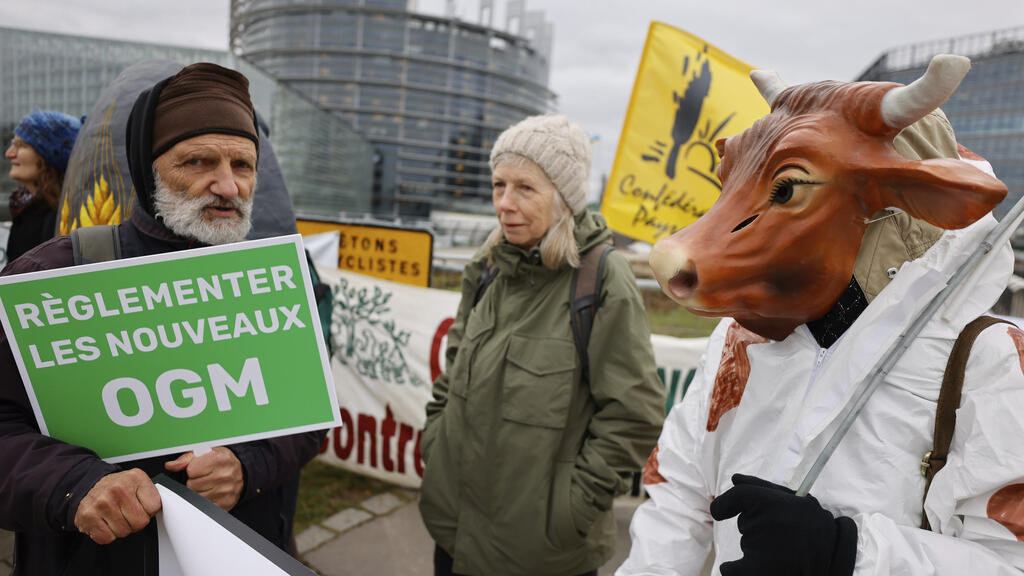
The Confédération Paysanne farmers' union protest against ‘New GMOs’ in Strasbourg in February 2024. AP - Jean-Francois Badias
New genomic techniques (NGT) add, remove or tweak small sections of DNA using precise gene editing tools. Plants made this way differ from traditional genetically modified organisms, which involve inserting genetic material from one species into another to create a hybrid.
The long-running debate over NGTs has frequently been a heated one.
Supporters argue that NGTs represent a targeted approach that can bring about changes that might otherwise have occurred naturally or through selective breeding, only much faster.
Agriculture unions have been among the most enthusiastic backers of the technology, seeing it as a practical way to produce crops that can better withstand climate shocks and require fewer inputs such as fertiliser and pesticides – at a time when farmers are under pressure to cut emissions while keeping yields high.
New genomic techniques (NGT) add, remove or tweak small sections of DNA using precise gene editing tools. Plants made this way differ from traditional genetically modified organisms, which involve inserting genetic material from one species into another to create a hybrid.
The long-running debate over NGTs has frequently been a heated one.
Supporters argue that NGTs represent a targeted approach that can bring about changes that might otherwise have occurred naturally or through selective breeding, only much faster.
Agriculture unions have been among the most enthusiastic backers of the technology, seeing it as a practical way to produce crops that can better withstand climate shocks and require fewer inputs such as fertiliser and pesticides – at a time when farmers are under pressure to cut emissions while keeping yields high.
A provisional deal
In a joint statement, the European Parliament and the Council of the EU said they had reached a provisional deal on "a set of rules that establish a legal framework for new genomic techniques".
The regulation, they added, is designed to improve the agrifood sector’s competitiveness and level the playing field for European producers, while strengthening food security and reducing reliance on imports.
Jessica Polfjärd, the Swedish MEP steering the file through the parliament, welcomed the breakthrough. She said the technology would pave the way for climate-resilient plants capable of delivering higher yields on smaller areas of land, which she called a win for both farmers and the environment.
A key component of the compromise is an easing of existing rules for certain NGT plants that fall under “category 1” and are considered equivalent to naturally occurring varieties.
These lower-risk plants would face a lighter regulatory touch. However, the agreement draws clear red lines – NGTs designed to be resistant to herbicides or engineered to produce insecticides will be barred from the market, and organic farming will remain strictly off limits.
Labelling concerns
However, critics worry about potential environmental impacts or unforeseen consequences for food chains. Environmental groups and the organic sector have pushed back throughout the negotiations.
One flashpoint has been labelling. Charlotte Labauge of the Pollinis NGO lamented that consumers will not be informed when NGT category 1 plants appear in final products.
Under the deal, seed bags sold to farmers will indicate the presence of such plants, but there will be no requirement to label food as such on supermarket shelves.
Traceability and patent rules have also proved divisive issues, fuelling months of wrangling among EU countries and lawmakers. Major farming unions under Copa-Cogeca, along with big seed companies, had urged Brussels to simplify the rules to avoid falling behind global competitors such as the United States and China, where NGTs are already in use.
Environmental campaigners, however, maintain that loosening requirements risks undermining transparency and safety.
With negotiators now aligned, the proposal edges closer to becoming law. However, it must still secure formal approval from EU member states and the European Parliament before the new framework can take effect.
(with newswires)
However, critics worry about potential environmental impacts or unforeseen consequences for food chains. Environmental groups and the organic sector have pushed back throughout the negotiations.
One flashpoint has been labelling. Charlotte Labauge of the Pollinis NGO lamented that consumers will not be informed when NGT category 1 plants appear in final products.
Under the deal, seed bags sold to farmers will indicate the presence of such plants, but there will be no requirement to label food as such on supermarket shelves.
Traceability and patent rules have also proved divisive issues, fuelling months of wrangling among EU countries and lawmakers. Major farming unions under Copa-Cogeca, along with big seed companies, had urged Brussels to simplify the rules to avoid falling behind global competitors such as the United States and China, where NGTs are already in use.
Environmental campaigners, however, maintain that loosening requirements risks undermining transparency and safety.
With negotiators now aligned, the proposal edges closer to becoming law. However, it must still secure formal approval from EU member states and the European Parliament before the new framework can take effect.
(with newswires)


No comments:
Post a Comment