Friday, December 12, 2025

Racing towards great white sharks in Australia


By AFP
December 10, 2025


Hundreds of satellite-linked buoys lie off the eastern coast of Australia to catch sharks - Copyright AFP Saeed KHAN


Laura CHUNG

Sensible people might prefer to flee at torpedo speed from a great white shark, but there’s one job in Australia that pays you to race towards the predators.

And when you reach the big fish, you have to fix a tracker to its dorsal fin while bobbing in a boat on the ocean swell.

The job is key to a sophisticated protection network that lets swimmers, surfers and fishers check for the aquatic hunters in real time when they venture into the water.

Every day, workers lay 305 satellite-linked buoys at popular spots in waters up to 15 meters (50 feet) deep along the coastline of New South Wales as part of the state-run programme.

The so-called smart drumlines have baited hooks and when a shark takes a bite it is caught, sending a signal to the tagging team.

Then comes the hard part.

But it’s not the wild “rodeo” people might think, said Paul Butcher, principal research scientist for the state government shark tagging and tracking programme for the past 10 years.

“The sharks are really benign. The process has little impact on those sharks,” he told AFP.

A boat races to the buoy within 16 minutes of the alert.

If the fish is one of three potentially dangerous species — a great white, bull shark or tiger shark — team members get to work.

They wrap two ropes around the animal: one near its tail and another in front of the pectoral fin to support its body.


– Trance-like state –


Once the carnivore has been pulled close to the side of the boat, it is rolled to one side carefully while ensuring seawater is passing through its gills.

The position places the shark naturally into a trance-like state that minimises the risk of harm to the team and the animal.

Workers measure the shark’s length, collect tissue samples, and fit an acoustic tag to its dorsal fin.

Finally, the animal is released at least one kilometre (half a mile) offshore, vanishing into the blue with a flick of its tail.

The whole process takes about 15 minutes.

“You get some animals that have their own personalities,” Butcher said.

“Great whites, when we catch them, they’re easy to work on next to the boat. Tiger sharks, not so much. And bull sharks are really benign as well.”

In the past 10 years, the state’s programme — managed by the Department of Primary Industries — has tagged 1,547 white sharks, 756 tiger sharks and 240 bull sharks.

Tagged sharks are detected when they swim past one of 37 listening stations dotted along the coastline.

That sets off an alarm on the SharkSmart app, giving beachgoers an instant notification on their mobiles and smart watches.

The technology forms part of a multi-layered approach that authorities have adopted, alongside spotter drones and old-fashioned nets.


– Fatal attacks on the rise –


More than 1,280 shark incidents have been recorded around Australia since 1791 — about 260 of them fatal — according to a national database.

Though still relatively rare, fatal attacks are on the rise with 57 reported deaths in the 25 years to 2025, compared to 27 in the previous quarter-century.

In November, a three-metre (10-foot) bull shark fatally bit one woman and injured her boyfriend off a remote beach north of Sydney.

The Swiss tourists were reportedly filming a pod of dolphins.

Despite overfishing depleting some shark species, scientists say the rise in fatalities may be linked to the growing numbers of people taking to the water.

Rising ocean temperatures also appear to be swaying sharks’ migratory patterns.

Researchers say shark lives, too, need protecting.

Globally, about 37 percent of oceanic shark and ray species are now listed as either endangered or critically endangered by the International Union for Conservation of Nature, a database for threatened species.
ISLAMOPHOBIC BABUSHKA BAN

Austria set to vote on headscarf ban in schools


By AFP
December 10, 2025


Austrian lawmakers are set to vote on a headscarf ban for girls in schools 
- Copyright AFP Alex HALADA

Austrian lawmakers on Thursday are expected to approve a law banning headscarves in schools for girls under 14, a move rights groups and experts say is discriminatory and could deepen societal division.

Austria’s conservative-led government — under pressure at a time when anti-immigration sentiment is running high — proposed the ban earlier this year. They argue it is to protect girls “from oppression”.

In 2019, when the country introduced a ban on headscarves in primary schools, the constitutional court struck it down, calling it unconstitutional and discriminatory. This time however, the government insists that its law is constitutional.

The law, if passed, would prevent girls younger than 14 from wearing headscarves that “cover the head in accordance with Islamic traditions” in all schools.

“When a girl… is told that she must hide her body… to protect herself from the gaze of men, it’s not a religious ritual, but oppression,” Integration Minister Claudia Plakolm said when presenting the bill.

The ban, which applies to “all forms” of the Islamic veil including hijabs and burqas, would take full effect with the start of the new school year in September, Plakolm said.

From February, an initial period would be launched during which the new rules would be explained to educators, parents and children with no penalties for breaking them.

But for repeated non-compliance, parents would face fines ranging from 150 to 800 euros ($175-930).

The government said that about 12,000 girls would be affected by the new law, basing its figures on a 2019 study that showed that approximately 3,000 girls aged below 14 wore a headscarf six years ago.


– ‘Stigmatised’ –


Rights organisations have criticised the bill, including Amnesty International Austria.

Amnesty said it “constitutes blatant discrimination against Muslim girls” and described it as an “expression of anti-Muslim racism”.

Such measures risk “fuelling existing prejudices and stereotypes against Muslims”, the group warned.

The draft law has also drawn criticism from the IGGOe, the body officially recognised as representing the country’s Muslim communities.

It said the ban “jeopardises social cohesion”, saying “instead of empowering children, they are stigmatised and marginalised”.

Angelika Atzinger, managing director of the Amazone women’s rights association, said a headscarf ban “sends girls the message that decisions are being made about their bodies and that this is legitimate”.

Her comments appeared in a statement published by the anti-racism group SOS Mitmensch, which also opposes the proposed law.

Austria’s anti-immigration, far-right Freedom Party (FPOe), which won last year’s general election but failed to form a government, said the ban did not go far enough. They want it extended to all students, teachers and other staff.

The governing coalition said it was confident the revised ban would not be overturned a second time.

It argued that the law provides for such restrictions if the rights of a child, which are enshrined in the constitution, would otherwise be infringed upon.

But constitutional law expert Heinz Mayer has raised doubts that a ban can be constitutional, recalling the top court’s ruling in 2020, which found that “one religion was being discriminated against”.

It also ruled that “if the headscarf is a symbol of oppression”, a ban puts children in “an uncomfortable situation”, but not the people who impose it on them, he told AFP.

In France, authorities banned school children in 2004 from wearing “signs or outfits by which students ostensibly show a religious affiliation” — such as headscarves, turbans or Jewish skullcaps — on the basis of the country’s secular laws, which are meant to guarantee neutrality in state institutions.
Taiwan to keep production of ‘most advanced’ chips at home: deputy FM


By AFP
December 11, 2025


Taiwan makes more than half of the world's chips, and nearly all of the most advanced ones - Copyright AFP I-HWA CHENG

Taiwan plans to keep making the “most advanced” chips on home soil and remain “indispensable” to the global semiconductor industry, the deputy foreign minister told AFP, despite intense Chinese military pressure.

The democratic island makes more than half of the world’s chips, and nearly all of the most advanced ones, that power everything from smartphones to AI data centres.

Its dominance of the industry has long been seen as a “silicon shield” protecting it from an invasion or blockade by China — which claims the island is part of its territory — and an incentive for the United States to defend it.

But the threat of a Chinese attack has fuelled concerns about potential disruptions to global supply chains and has increased pressure for more chip production beyond Taiwan’s shores.

“We will try to maintain the most advanced technology in Taiwan, and to be sure that Taiwan continues to play an indispensable role” in the semiconductor ecosystem, Deputy Foreign Minister Francois Chih-chung Wu told AFP in an interview Wednesday.

“I think it’s the same logic for every country, even countries not under such a very complicated geopolitical situation.”

China has ramped up military pressure on Taiwan in recent years, deploying on an almost daily basis fighter jets and warships around the island.

Taiwan has responded by increasing defence spending to upgrade its military equipment and improve its ability to wage asymmetric warfare.


– ‘Core interest’ –


The island does not have enough land, water or energy to accommodate the fabrication plants, or fabs, needed to meet soaring demand for chips, “so step by step we enlarge our investment in the world, but still linking with Taiwan”, said Wu, who was previously the representative to France.

Taiwan’s TSMC, the world’s largest chipmaker, has already invested in fabs in the United States, Japan and Germany.

And earlier this year the firm pledged to spend an additional US$100 billion on US chip plants, as President Donald Trump threatened to impose tariffs on overseas-made semiconductors.

However, replicating TSMC’s factories in the United States is full of challenges, said Wu, citing Taiwan’s “very special culture to make the semiconductors very well”.

The best way to reduce risks to the chip industry was not to move fabs abroad but to “prevent the war”, Wu said.

US Secretary of Commerce Howard Lutnick said recently he had proposed to Taiwan a 50-50 split in chip production, an idea that Taipei rejected.

While Washington is Taiwan’s most important security backer, some of Trump’s comments about the island and flip-flopping on Ukraine have raised doubts over his willingness to defend it.

Wu, however, expressed confidence that the United States, as well as Europe, would respond to a Chinese attack on Taiwan in order to protect their “national interest” in the region.

“It just happens that your interest and Taiwan’s interest we share together,” Wu said.

Those interests, he said, included the semiconductor industry but also peace, and freedom of navigation in the Taiwan Strait, which is a key international shipping route.

“I think Donald Trump understands better and better, day by day, the strategic importance of Taiwan… and will defend American interests in his own way,” Wu said.

“We are the core interest of China, but we are also a core interest of the US.”


AI’s $400 bn problem: Are chips getting old too fast?


By AFP
December 10, 2025


Jensen Huang is CEO of Nvidia, the leader among chip makers that are releasing new and more powerful processors much faster than before 
- Copyright GETTY IMAGES NORTH AMERICA/AFP Andrew Harnik


Thomas URBAIN

In pursuit of the AI dream, the tech industry this year has plunked down about $400 billion on specialized chips and data centers, but questions are mounting about the wisdom of such unprecedented levels of investment.

At the heart of the doubts: overly optimistic estimates about how long these specialized chips will last before becoming obsolete.

With persistent worries of an AI bubble and so much of the US economy now riding on the boom in artificial intelligence, analysts warn that the wake-up call could be brutal and costly.

“Fraud” is how renowned investor Michael Burry, made famous by the movie “The Big Short,” described the situation on X in early November.

Before the AI wave unleashed by ChatGPT, cloud computing giants typically assumed that their chips and servers would last about six years.

But Mihir Kshirsagar of Princeton University’s Center for Information Technology Policy says the “combination of wear and tear along with technological obsolescence makes the six-year assumption hard to sustain.”

One problem: chip makers — with Nvidia the unquestioned leader — are releasing new, more powerful processors much faster than before.

Less than a year after launching its flagship Blackwell chip, Nvidia announced that Rubin would arrive in 2026 with performance 7.5 times greater.

At this pace, chips lose 85 to 90 percent of their market value within three to four years, warned Gil Luria of financial advisory firm D.A. Davidson.

Nvidia CEO Jensen Huang made the point himself in March, explaining that when Blackwell was released, nobody wanted the previous generation of chip anymore.

“There are circumstances where Hopper is fine,” he added, referring to the older chip. “Not many.”

AI processors are also failing more often than in the past, Luria noted.

“They run so hot that sometimes the equipment just burns out,” he said.

A recent Meta study on its Llama AI model found an annual failure rate of 9 percent.


– Profit risk –


For Kshirsagar and Burry alike, the realistic lifespan of these AI chips is just two or three years.

Nvidia pushed back in an unusual November statement, defending the industry’s four-to-six-year estimate as based on real-world evidence and usage trends.

But Kshirsagar believes these optimistic assumptions mean the AI boom rests on “artificially low” costs — and consequences are inevitable.

If companies were forced to shorten their depreciation timelines, “it would immediately impact the bottom line” and slash profits, warned Jon Peddie of Jon Peddie Research.

“This is where companies get in trouble with creative bookkeeping.”

The fallout could ripple through an economy increasingly dependent on AI, analysts warn.

Luria isn’t worried about giants like Amazon, Google, or Microsoft, which have diverse revenue streams. His concern focuses on AI specialists like Oracle and CoreWeave.

Both companies are already heavily indebted while racing to buy more chips to compete for cloud customers.

Building data centers requires raising significant capital, Luria points out.

“If they look like they’re a lot less profitable” because equipment must be replaced more frequently, “it will become more expensive for them to raise the capital.”

The situation is especially precarious because some loans use the chips themselves as collateral.

Some companies hope to soften the blow by reselling older chips or using them for less demanding tasks than cutting-edge AI.

A chip from 2023, “if economically viable, can be used for second-tier problems and as a backup,” Peddie said.


Oracle shares dive as revenue misses forecasts

By AFP
December 10, 2025


Oracle founder and chief technology officer Larry Ellison says the business cloud computing titan is going to work with all AI chip makers, not just Nvidia, as it invests in the technology - Copyright GETTY IMAGES NORTH AMERICA/AFP JUSTIN SULLIVAN

Shares in business computing giant Oracle fell more than 10 percent on Wednesday on word its revenue missed heady expectations, dampening artificial intelligence euphoria in the market.

The slide in after-market trades came despite Texas-based Oracle reporting that net income in the recently-ended quarter nearly doubled to $6.1 billion in revenue, up 14 percent from the same period a year earlier to $16.05 billion.

Oracle’s cloud and business computing unit accounted for $8 billion of that revenue, an increase of 34 percent from the same quarter in 2024, according to the earnings report.

“AI training and selling AI models are very big businesses,” Oracle chief executive Mike Sicilia said in the release.

“We think there is an even larger opportunity — embedding AI in a variety of different products.”

But investors are wary of the massive investments tech companies are making in artificial intelligence models and infrastructure, wondering how and when they will pay off.

Oracle has taken on billions of dollars in debt to pay for AI infrastruture and is reported to be considering borrowing even more.

The company has also announced it is putting significant resources into partnerships with AI chip makers and model builders, such as OpenAI and Meta.

“We are now committed to a policy of chip neutrality where we work closely with all our CPU and GPU suppliers,” Oracle founder and chief technology officer Larry Ellison said in the earnings release.

“There are going to be a lot of changes in AI technology over the next few years, and we must remain agile in response to those changes.”

Oracle shares were down some 10.7 percent to $199.50 in after-market trades that followed release of the earnings figures.
TIME CELEBRATES THE U$ OLIGARCHY

Time magazine names ‘Architects of AI’ as Person of the Year


By AFP
December 11, 2025


According to Time magazine, 2025 was the year AI shifted from promise to reality - Copyright TIME / TIME Person of the Year/AFP TIME

Time magazine named the “Architects of AI” as its Person of the Year on Thursday, highlighting the US tech titans whose work on cutting-edge artificial intelligence is transforming humanity.

Nvidia’s Jensen Huang, OpenAI’s Sam Altman and xAI’s Elon Musk are among the innovators who have “grabbed the wheel of history, developing technology and making decisions that are reshaping the information landscape, the climate, and our livelihoods,” Time wrote.

One of two covers of the magazine is a homage to the famous 1932 photograph of ironworkers casually eating lunch on a steel beam above New York City.

In the Time illustration, sitting astride the city are Meta’s Mark Zuckerberg, AMD chief Lisa Su, Musk, Huang, Altman as well as Google’s AI boss Demis Hassabis, Anthropic’s Dario Amodei and Stanford professor Fei-Fei Li.

“Racing both beside and against each other, they placed multibillion-dollar bets on one of the biggest physical infrastructure projects of all time,” the magazine said of the group.

“They reoriented government policy, altered geopolitical rivalries, and brought robots into homes. AI emerged as arguably the most consequential tool in great-power competition since the advent of nuclear weapons.”

Alongside popular AI models like ChatGPT and Claude, Time credited investors like SoftBank CEO Masayoshi Son, who has plunged billions of dollars into the technology.

Time’s Person of the Year selection is an acknowledgement of the year’s most influential figure.

The title last year went to president-elect Donald Trump. Others have included singer Taylor Swift and Ukrainian leader Volodymyr Zelensky.


– ‘Gravitational center of 2025’ –


According to the magazine, which is owned by Silicon Valley billionaire Marc Benioff, 2025 was the year AI shifted from promise to reality and when ChatGPT usage more than doubled to 10 percent of the world’s population.

“This is the single most impactful technology of our time,” Huang, CEO of chipmaker Nvidia — the most valuable company in the world — told Time.

He predicted that AI will eventually grow the global economy from $100 trillion to $500 trillion.

But the magazine also pointed to AI’s darker side.

Lawsuits have alleged that chatbots contributed to suicides and mental health crises, sparking debates about “chatbot psychosis,” where users may devolve into delusions and paranoia.

In one case, the California parents of 16-year-old Adam Raine are suing OpenAI after he took his own life. They claim that ChatGPT provided information about suicide methods.

Time noted too looming job displacement as more companies race to replace workers with AI models.

Yet the magazine notably steered away from using AI to generate its cover art, opting instead for human artists.

Thomas Hudson, chief analyst at US research firm Forrester, said the Person of the Year choice rightly reflected AI’s heavy influence this year.

“AI has been the gravitational center of 2025 for the economy and the source of endless discussions on how it will shape the future of our societies,” he said in a statement.
Windswept Kazakh rail hub at the heart of China-Europe trade


By AFP
December 11, 2025


Central Asia is in the midst of a logistics boom
 - Copyright AFP Ruslan PRYANIKOV


Bruno KALOUAZ

Operating a huge cargo lifter, Zhandos Nurmagambetov was stacking containers onto a train before it headed across the steppe of Kazakhstan on a new railway route vital for China-Europe trade.

Central Asia is in the midst of a logistics boom, as Beijing invests heavily in the New Silk Road — a vast overland transport network linking China to Europe that can help bypass Russia and shorten freight routes.

On Kazakhstan’s border with China, the once-sleepy small town of Dostyk, whose name translates as “friendship”, has become a surprisingly vital hub in global trade.

“We receive and ship goods mainly from Europe, Asia and Russia,” Nurmagambetov told AFP, as he moved 20-tonne containers using the industrial forklift.

“A 39-car train is about 900 metres (0.6 miles) long. We carry out this operation in 40 minutes,” Nurmagambetov told AFP as wind swept through the cargo terminal.

On the side of the metal boxes, the names of major Chinese logistics hubs — Xi’an and Zhengzhou — reveal the thousands of kilometres the goods have already travelled. Europe is another 4,000-plus kilometres away.

Located in the Dzungarian gate, a mountain pass that connects Kazakhstan to China’s Xinjiang region, Dostyk is near the “continental pole of inaccessibility” — the place on Earth furthest from the ocean, which is around 2,500 kilometres away.

Despite its geographic isolation, strong winds and frequent dust storms, Dostyk is the largest freight station in the country and a “hub for export and import trade,” according to Zhanat Utegulov of Kazakhstan Railways.


– Bypassing Russia –


Container trains going through Dostyk and Alashankou, the Chinese city on the other side of the border, have two options to reach Europe: the traditional route via Russia, or the new Trans-Caspian International Transport Route (TITR) through Central Asia.

Europe is backing the second, which bypasses Russia and has seen “increased interest since the Russian invasion of Ukraine”, the World Bank said in a report.

For landlocked Kazakhstan, an enormous country spanning almost 3,000 kilometres from east to west, the new route presents a huge economic opportunity.

Some 85 percent of all rail cargo between China and Europe passes through Kazakhstan, and President Kassym-Jomart Tokayev has said he wants the country to be “a golden bridge between China and Europe”.

The initiative demonstrates the strategic importance of Central Asia, where Europe and the United States also compete for influence.

Development of the route, which can cut delivery times and also avoids the Suez Canal, has been rapid.

Though Kazakhstan and China share a 1,800-kilometre border, the first container trains to Europe only launched in 2013, said railway official Utegulov.

Russia’s 2022 full-scale invasion of Ukraine and imposition of Western sanctions were a major boost for the TITR.

Trade volume jumped more than six-fold between 2021 and 2024, according to official Kazakh data.

At Dostyk, the recent opening of a double track could increase freight loads five-fold — from 12 to 60 daily train pairs with the Chinese side, Kazakhstan says.

On a platform currently under construction, a giant steel plate is set to bear the slogan “One Belt, One Road”, China’s official name for the New Silk Road, a favoured initiative of Chinese President Xi Jinping.


– ‘Volume is increasing’ –


At the previously neglected outpost of Dostyk, westward-bound cargo is hoisted onto the wider-track gauges used across the former Soviet Union.

“Trains arrive from China to Europe. We transfer them onto the wider track, put them on the rails and send them on, the same for trains arriving from Europe,” Erlan Kazhibekov, a railway dispatcher, told AFP.

In front of him stood a huge screen where red, yellow and green traffic lights coordinate the flow of trains amid increasing volumes.

Serik Naymanchalov, a driver who remembers the quiet railway of the 1990s and now makes frequent journeys to China, hailed the progress.

“Upon arrival in Alashankou, we hand over the cargo documents. We uncouple the locomotive and leave the cargo. We are then given other cars to continue our journey (back) to Kazakhstan,” he said.

Amid the logistics boom, Tokayev has warned Kazakh citizens and businesses against “resting on their laurels”.

There is little sign of that along the route. As well as the expansion of Dostyk, an entirely new railway border crossing to the north is set to open in 2027.
South Korea exam chief resigns after tests dubbed too hard


By AFP
December 11, 2025


South Korea's college entry exam -- known locally as the "Suneung" -- is essential for admission to top universities - Copyright POOL/AFP/File KIM HONG-JI

The chief organiser of South Korea’s notoriously gruelling university entrance exams has quit — after complaints that an English test he designed was just too difficult.

South Korea’s college entry exam — known locally as the “Suneung” — is essential for admission to top universities and widely regarded as a gateway to social mobility, economic security and even a good marriage.

But this year just over three percent of those who took the exam scored top marks in the English test — the lowest since absolute grading was introduced for the subject in 2018.

Students were given just 70 minutes to answer 45 questions.

One question singled out for criticism asked students to assess the political philosophers Immanuel Kant and Thomas Hobbes and analyse their views on the rule of law.

Another asked students to consider the nature of time and clocks, while another probed how the idea of existence might apply to video game avatars.

That has sparked significant backlash in a country where the exam is taken so seriously that flights are grounded nationwide for 35 minutes during the English listening test to eliminate any potential noise.

In response, Oh Seung-keol, the chief of Korea’s Institute for Curriculum and Evaluation, stepped down.

He felt “a heavy sense of responsibility for the English section of the test, which did not align with the principles of absolute evaluation,” the institution said in a statement sent to AFP.

He also apologised for “causing concern to test-takers and their parents, and for causing confusion in the college entrance exam process”.

The agency has also issued a separate apology, saying it “takes seriously the criticism that the test failed to meet the appropriate level of difficulty and the goal of reducing students’ academic burden”.

Enormous pressure placed on students in South Korea’s ultra-competitive education system has been partly blamed for teenage depression and suicide rates that are among the highest in the world.

This month, South Korea’s National Assembly approved an amended law banning private English-language educational institutes from administering entrance tests to preschoolers.

And test scores have long been a highly sensitive and scrutinised issue.

This week, the nephew of Samsung Electronics chief Lee Jae-yong — one of South Korea’s most powerful and wealthy families — made headlines after he reportedly missed just one question on the exam, earning him admission to the nation’s top Seoul National University.
US plans to order foreign tourists to disclose social media histories

Applicants would need to provide their social media histories from the last five years


By AFP
December 10, 2025


The US-Canada border. — © AFP Geoff Robins

The administration of US President Donald Trump plans to order visa-exempt foreign tourists to disclose their social media histories from the last five years before entering the country, according to an official notice.

The proposal laid out in a notice published Tuesday in the Federal Register would apply to visitors from 42 countries, including Britain, France, Australia and Japan, who do not need a visa to enter the United States.

Currently, those travellers only need apply for a waiver known as the Electonic System for Travel Authorization (ESTA), which still requires them to provide certain personal details.

Under the proposed new rules, the collection of social media data would become a “mandatory” part of ESTA applications.

Applicants would need to provide their social media histories from the last five years, according to the notice.

They would also have to submit other “high-value data fields” including phone numbers from the last five years, email addresses from the past decade, personal details of family members and biometric information.

The public has 60 days to comment on the proposal.

The Trump administration has tightened curbs on entering the United States, part of a sweeping crackdown on migration.

Along with Mexico and Canada, the country will host the 2026 World Cup, which is certain to attract large numbers of soccer fans from across the world.
Reddit files legal challenge to Australia social media ban


By AFP
December 11, 2025


Online discussion site Reddit launches a legal challenge to Australia's social media ban on under-16s, just days after the landmark laws came into effect
 - Copyright AFP/File Lionel BONAVENTURE


Laura CHUNG

Online discussion site Reddit launched a legal challenge Friday to Australia’s social media ban on under-16s, just days after the landmark laws came into effect.

This week, the country became the first to ban under-age users from a raft of popular apps and websites — Facebook, YouTube, Instagram and X among them.

Tech companies that fail to comply face Aus$49.5 million (US$33 million) fines if they do not purge Australia-based users younger than 16.

The court filings by US-based Reddit, a discussion forum site made up of thousands of sprawling niche communities, challenge the general validity of the law, arguing that it should be exempt from the government’s list of banned platforms because it is “not an age-restricted” app.

It added that the law “infringes the implied freedom of political communication”, and called for it to be reviewed by Australia’s High Court.

A Reddit spokesperson said the government had not been consistent in selecting which platforms should be banned, with some apps with large under-16 user groups exempt.

Platforms currently exempt from the law include Roblox, Pinterest and WhatsApp, but the government has stressed that the list remains under review.

The spokesperson also said that Reddit was an online discussion forum aimed at adults, rather than driven by algorithms and social engagement.

There were serious privacy concerns associated with how platforms needed to verify users’ ages and the collection of personal data which increased the risk of leaks or hacks, the spokesperson added.

Before the ban was enacted December 10, Reddit previously said it would comply with the Australian government’s legislation, but warned it was “legally erroneous”.

An Australian government spokesperson said authorities were ” on the side of Australian parents and kids, not platforms”.

“We will stand firm to protect young Australians from experiencing harm on social media.”


– Closely watched –


Reddit’s case is separate from one filed by an internet rights group last month, which is also seeking to overturn the laws on the grounds they are an “unfair” assault on freedom of speech.

Australia’s social media ban is being closely watched by all those worried about the dangers of social media, with New Zealand and Malaysia mulling similar restrictions.

The Australian government concedes the ban will be far from perfect at the outset and canny teenagers will find ways to slip through the cracks.

But authorities say unprecedented measures are needed to protect children from “predatory algorithms” filling phone screens with bullying, sex and violence.


‘Not black or white’: Teens worldwide react to Australia social media ban

By AFP
December 7, 2025


Australia's landmark move to ban under-16s from social media will be closely watched by other countries - Copyright AFP/File DAVID GRAY


AFP bureaus

Australia’s landmark move to ban under-16s from social media will be closely watched by other countries, which could follow suit with similar laws.

AFP spoke to teenagers and adults around the world about the Australian ban, which comes in on Wednesday. Here are some of their reactions:

– Mumbai: ‘Nothing is black or white’ –

At the seafront in India’s Mumbai, 19-year-old Pratigya Jena scrolls with her friends through Instagram videos of a posing influencer and a camel at a beach.

Social media “should be partially banned because according to me nothing is either black or white”, the student said.

“Gen Z are very active, they are doing really well on social media. And doing great things, especially young entrepreneurs,” Jena said.

At the same time, children watching adult content online “has a very bad effect”.

At a Mumbai park, cricket coach Pratik Bhurke, 38, said Australia’s move would encourage children to spend time outdoors and could have “great benefits” in India too.

– Berlin: ‘Help to detox’ –

In the chilly German capital, Luna Drewes, 13, is watching selfie-style TikTok clips posted by other young people.

“Actually a good thing in some ways because social media often portrays a certain image of how people should look, like girls have to be thin,” she said of the ban.

Another teenager, Enno Caro Brandes, said: “I’m 15 so for me the ban would definitely come into effect. I can’t really imagine giving it up completely.

“A ban is a bit extreme, but it could definitely help to do a detox.”

– Doha: ‘Really stupid’ –

An AI baby singing and answering interview questions are among the videos served up to Firdha Razak, 16, as she scrolls in her room.

Razak is not in favour of a ban. “It’s really stupid, honestly,” although “there’s not really much we can do as 16-year-olds” if governments decide to act, she said.

The families of many people in Qatar live abroad, so “it’s going to be so much harder to talk to them”.

Also in Doha, Youssef Walid, 16, said bans like Australia’s were “a bit harsh” and hard to enforce.

“We can use VPN. We can easily bypass the security and easily make new accounts,” he said.

– Lagos: ‘We were born with it’ –

At a Nigerian high school, Mitchelle Okinedo is revising for exams, checking over her hand-written notes. In the classroom — where phones are banned — students in uniform sit at separate desks.

“I see where the (Australian) government is coming from. Students nowadays, they are really distracted,” Okinedo said.

Even so, “we were born with it”, the 15-year-old added. “And I don’t think it’s something I want to stop.”

Her mother, 50-year-old event planner Hannah Okinedo, agrees with a social media ban for under-16s, saying most parents “don’t have time to monitor their children all day”.

– Mexico City: ‘Express yourself’ –

Young Mexico City resident Aranza Gomez, 11, has had a smartphone with access to social media for one year.

Without it, “I would honestly feel sad. I wouldn’t really have a good way to spend my time,” she said.

Santiago Ramirez Rojas, 16, is sitting on a bench in the Tabacalera district, scrolling through posts containing news about Argentina and tour dates for a musician.

“Social media today is very important for expressing yourself, no matter how old you are,” said Rojas.

But “there are many kidnappings that begin online” and “younger kids, around 10 or 12, are much more vulnerable”.

– Sydney: ‘Not going to have any impact’ –

In Australia one family has diverging ideas on how the law will go.

“I don’t think the government really knows what they’re doing and I don’t think it’s going to have any impact on children of Australia,” said 15-year-old Layton Lewis.

But his mother Emily Lewis hopes it will help children “have better, more authentic relationships”.

“They’ll make proper plans, like we used to, to meet up with their friends face-to-face and have proper conversations as opposed to these illusive friendships online,” she said.

burs-kaf/pst


‘Downward spiral’: French mother blames social media for teen’s suicide


By AFP
December 10, 2025


Image: — © Digital Journal


Benjamin Massot and Claire Robiche

A French mother whose teenage son took his own life is fighting to hold social media platforms accountable, saying their algorithms pushed suicide-related content that sent the 15-year-old into a “downward spiral”.

Emmanuelle Pouedras told AFP her story as France mulls scaling back social media access for teens, including through a possible ban for children under 15 similar to the one in Australia.

Clement had only just started his second year of secondary school when he jumped off a bridge in the northwestern region of Brittany in 2024.

His mother, a 55-year-old shopkeeper, and her husband, Sebastien, are now seeking to reopen the investigation into his death and hold social media platforms to account.

In September, they filed a complaint against TikTok and Meta among other such companies on charges including incitement to suicide.

The vast majority of the videos on his TikTok “For You” page — where the platform’s algorithm recommends content — were “inciting him to death, telling him he doesn’t matter to anyone”, Clement’s mother told AFP at home in the town of Lorient.

The self-harm content “exacerbated” her son’s distress and sent him into a “downward spiral”, she said.

“TikTok knew he wasn’t doing well, TikTok did nothing, and TikTok is not helping us find the truth,” she said, accusing the platform of failing to act.

Her son was also cyberbullied on the messaging service WhatsApp right up until the last hours before his death, she told AFP.

Pouedras was on Wednesday to meet French President Emmanuel Macron in the town of Saint-Malo, also in Brittany, where he was to discuss the challenge that social media and their algorithms pose to democracy.

In a letter she sent to the president on Monday, she described her son as “yet another victim of social media”.

– ‘Incitement’ to death –

Before Clement died, Pouedras said she was wary of the potential harm posed by unfettered access to smartphones and required her two children to keep theirs out of their bedrooms at night.

During the investigation into Clement’s death, police did not examine his phone but she later found messages indicating he had been cyberbullied.

“Have you finished your shitty suicide?” read one text sent in a group chat on the messaging service WhatsApp.

She said she spent months trying to contact social media platforms, including Snapchat, Instagram and TikTok, to gain access to his data to try to understand what led to his death.

But she received only partial responses, despite platforms being required to give her access to this data, according to France’s data protection authority CNIL, she told AFP.


Students place their phones in lockers after switching them off at a highschool in Lorient – Copyright AFP Loic VENANCE

The family filed a complaint on September 19, their lawyer Pierre Debuisson accusing the platforms of “deliberate obstruction”. He argued that social media sites were the scene of a wave of “multiple incitements to suicide, accessible to minors without any protective filter”.

The regional public prosecutor’s office did not say what action it would take in response to the Pouedras’ complaint.

TikTok told AFP it “strictly prohibits content that depicts or promotes suicide or self-harm” and “removes 98 percent of violating content before it is even reported”.

Searches containing terms such as “suicide” are redirected to “a page with dedicated resources”, it added.

Meta, the parent company of WhatsApp, did not immediately respond to AFP’s request for comment.

– World first crackdown –

There is a growing global push to address the impact of social media on young people’s mental health.

In September, a French parliamentary commission probing the psychological effects of TikTok recommended banning social media for children under 15 and adopting a “digital curfew” for 15- to 18-year-olds.

The commission was launched in March, after seven families sued TikTok in late 2024, accusing them of having exposed their children to content that could push them to suicide.

Macron in recent weeks has urged stricter oversight of social media and their algorithms, describing it as the “Wild West”.

In a world first, Australia on Wednesday banned under-16s from social media, declaring it was time to “take back control” from formidable tech giants.

New Zealand and Malaysia are mulling similar restrictions.

YouTube, Meta and other social media giants have lined up to condemn the ban.

EMOTIONAL PLAGUE

Escapism or exaltation? ‘Narco-culture’ games raise concern in Mexico


By AFP
December 12, 2025


Video game developers like Angel Villaverde, 19, say the more realistically gruesome a game is, the more popular - Copyright AFP Julio César Aguilar
Arturo ILIZALITURRI

In violence-riddled Mexico, children as young as 13 are hooked on bloody video games that vividly recreate the horrors of the country’s narco war.

Some experts say it’s a way of coping. Critics, including President Claudia Sheinbaum, see it as monetized glorification of a genre known as “narco culture.”

With thousands of daily users, the games allow players to choose whether they want to be a cartel hitman, a police officer or a soldier.

There are wild chases and brutal shootouts, gold-plated pistols, personalized bulletproof helmets, and souped-up cars.

“It really draws me in, seeing things I’d like to have in real life — for example, who wouldn’t want to have a Lamborghini, or a big truck, a big house?” gaming fanatic Alan Crespo, a 24-year-old farmer from San Blas on Mexico’s Pacific coast, told AFP.

Crespo is on the older side of the player age spectrum, with most between 13 and 18 and hailing primarily from northern Mexican states like Sinaloa, Chihuahua and Baja California — synonymous with cartel violence.

This age group was born amid the wave of violence unleashed in 2006, when the Mexican government militarized the fight against drug trafficking — a strategy that has claimed nearly half a million lives.


– Hell’s Troop –


Dozens of war-like games can be found on online platform Roblox, which allows programming enthusiasts to design their own video games for others to play.

The most popular ones attract up to 1,000 users a day. The games are free, though players can purchase better weapons or uniforms with real money.

The more realistic and gruesome a game is, the more popular, developers say.

“Players aren’t interested in seeing made-up names of criminal groups,” said Angel Villaverde, a 19-year-old who designs games on his computer in Monterrey in Mexico’s northeast.

Users of the game “Tamaulipas Belico,” for example, can choose to play as a member of the Jalisco New Generation Cartel (CJNG) or of the Northeast Cartel (CDN).

Both have been designated “foreign terrorist organizations” by US President Donald Trump and are responsible for innumerable deaths, including of civilians.

Matches entail killing off one’s enemies to take control of buildings, usually gas stations or shops.

Opponents patrol in camouflaged army pickups or in vehicles decorated with a demon drawing and the number 666 — the insignia of the CDN’s Tropa del Infierno (Hell’s Troop) armed wing, known for its extreme brutality.


– ‘Apology for violence’ –


Mexico’s so-called “narco-culture” can also be found in music, films and fashion items glorifying the criminal life.

Sheinbaum rejects what she considers an “apology for violence” and has launched a campaign against the sub-culture, including an eight-percent tax on video games with violent content.

Behavioral scientists say that through gaming, young people may feel they have a sense of control over a violent reality that makes them anxious.

Student Alejandro Solorzano, 18, a game developer from Tijuana, notes that players are “fascinated by going around doing criminal activities.”

“It’s something warlike, it’s something grotesque, but it’s fictional at the same time” he told AFP.

Ainhoa Vasquez of Chile’s Federico Santa Maria Technical University, says gaming may also be a way of “making sense” of a violent society, of “transferring real anguish” to a fictional realm.

These experiences can be “a catharsis,” said Vasquez, who studies cultural representations of the drug trade.

The platform Roblox, which reported some 112 million daily users worldwide in the second quarter of this year, recently tightened its controls to protect minors.

Among other measures, it implemented a system to verify users’ ages to prevent harassment by adults on the platform.

Gamer warns conspiracy-theorist TikTokkers are more dangerous than 'drunk drivers'


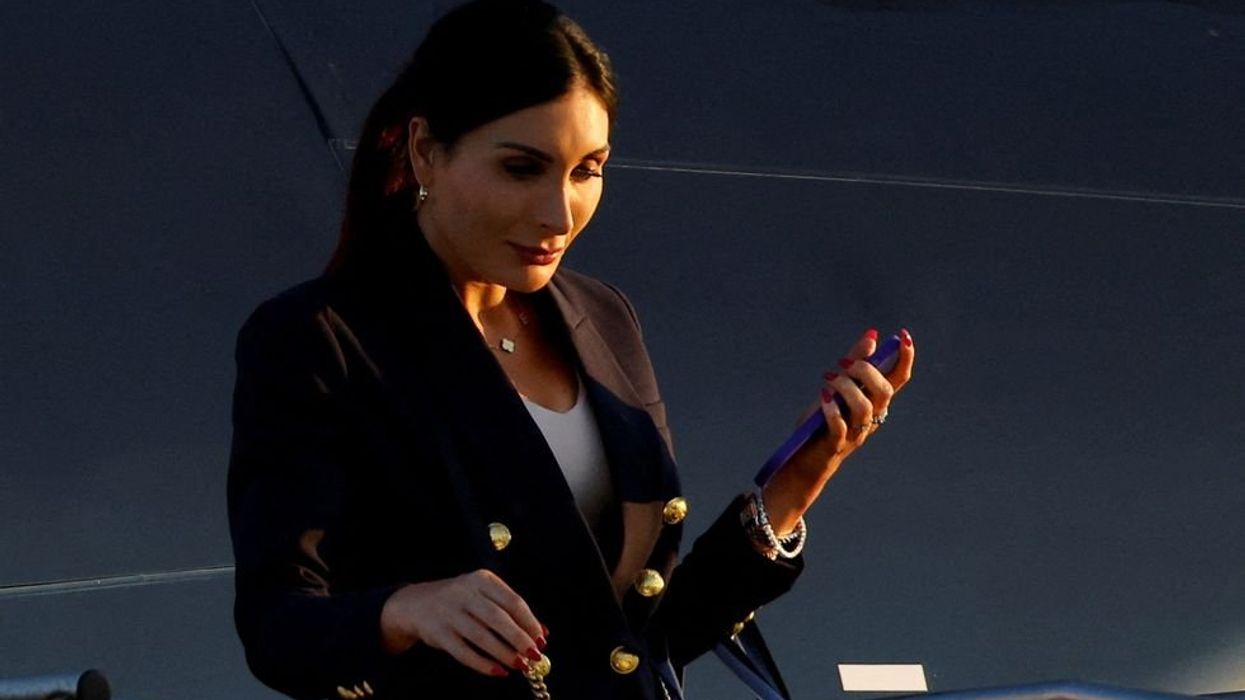
Laura Loomer arrives ahead of Donald Trump's debate with Democratic presidential nominee and U.S. Vice President Kamala Harris, in Philadelphia, Pennsylvania, U.S., September 10, 2024. REUTERS/Eduardo Munoz/File Photo

November 29, 2025
ALTERNET

Slate reports videogames stuff a lot of entertainment into one sandbox, and some of them augment their storylines with every kind of conspiracy imaginable.

The two-decade-old Assassin’s Creed games are peppered with “almost every kind of conspiracy theory you can think of,” reports Joshua Rivera. “In the fiction of Assassin’s Creed, humanity is descended from ancient aliens, and this knowledge is suppressed throughout history; the tide of world events is influenced by a shadow war between two secret societies; the media exists to manipulate the public. This makes for an exciting series of video games with a near-limitless scope. It also echoes uncomfortable real-world conspiracy theories that have proven consequential in our lifetime.”

But how seriously do players take conspiracies that try to rope aliens in with an over-controlling order of the Knights Templar and a “bloodthirsty” Pope Alexander VI — a pope more known for nepotism, unexciting papal decrees and for his reputation as a patron of the arts? Media critic and scholar Cameron Kunzelman tells Slate no more than any other media source.

“Conspiracy exists as a crime that you can be charged with, because conspiracies do exist!” said Kunzelman. “There are groups of people who make decisions together that can impact other people, and they can do that secretly. Seemingly lots of things that are involved in what’s being released right now in the Epstein files are what we would call dyed-in-the-wool, true conspiracy. From human trafficking to much more banal, but just as bad, practices of money moving around and political meetings.”

But Kunzelman said today a wide variety of conspiracies are getting “mashed together” into big ugly “metaconspiracies.”


“Where conspiratorial movements at one time were seen as discrete from one another, now they kind of attach to each other and they get folded into QAnon,” said Kunzelman, whose new book “Everything is Permitted” claims that this massive folding of conspiracies mirrors how entertainment franchises are now built.

But, like zombies and other things that should not exist, they are perpetual motion machines that sometimes keep churning away long after their creators are dead and gone, using the engine of capital “to keep themselves revolving and moving,” said Kunzelman.

But Kunzelman’s book points out that algorithms on things like YouTube and other sites shunt viewers into “harder stuff,” that even our basic entertainment patterns make us minor conspiracy theorists.

“Every part of our lives where we engage with the internet is about putting us in a ditch that leads to another ditch that leads to another ditch,” Kunselman told Slate. “And unfortunately, the scale of that, the allure of that, often leads into things that will harm us in some way. It’ll remove us from our actual communities. It will put us into kind of epistemic places that are only engaged with their own ideas. … whatever happens to you is whatever happens to you.”

Oddly, Kunzelman is one video game enthusiast who thinks platforms that shunt audiences down a rabbit hole need more policing, arguing that we don’t even build open roads without some guardrails.

“I think being a very influential conspiracy-theorist TikTokker is probably on the whole more dangerous than being a drunk driver for an afternoon,” said Kunzelman. “I think it’s harming more people in serious and real ways. But we don’t take it seriously at all. It’s a bipartisan belief that these industries should not be constrained by the law, and by any concern for other human beings. I think that’s bad."

Read the Slate report at this link.