Sunday, December 14, 2025

A Challenging and Volatile Year for U.S. Shale


  • Oil had a weak and volatile year, while natural gas outperformed on the back of LNG approvals, higher breakevens, and emerging data-center demand.

  • Despite price pressure, U.S. E&Ps outperformed expectations, and production is unlikely to decline unless oil approaches the $50 per barrel threshold.

  • Looking ahead to 2026, U.S. shale operators may expand international exposure as domestic inventories mature and global shale opportunities gain attention.

The US shale exploration and production (E&P) and Lower 48 midstream sectors experienced a volatile and challenging 2025, likely a far cry from what operators envisioned this time last year as the second Trump administration’s ‘energy dominance’ agenda was taking shape. With WTI languishing below $60 for much of the year, oil E&Ps moderated activity, with the oil-directed rig count dropping from 415 in January to 386 by Thanksgiving. In contrast, Henry Hub gas prices remained supported throughout much of the year, with the front month now north of $5 per million British thermal units (MMBtu). In short, there is more long-term gas bullishness in the US oil and gas industry than perhaps at any time in recent memory, while even the most ardent oil bulls seem to recognize the short-term challenges.

Year of gas and LNG

In the broader US energy conversation, 2025 brought natural gas into focus. The end of the Biden administration’s LNG pause unleashed around 7.6 billion cubic feet per day (Bcfd) of future feedgas demand from newly sanctioned US Gulf Coast LNG export projects, driving total feedgas demand to double its 2024 level by 2030. However, when the 2025 Gulf Coast LNG FIDs enter service later this decade, market conditions will not resemble the previous wave of LNG projects (2016-2021). Lower 48 dry gas breakevens, and therefore Henry Hub, will be materially higher. At the same time, LNG prices will be facing downward pressure due to global supply additions, shrinking the spread between Henry Hub and international benchmarks.

The short-term market may be previewing some of these dynamics. The Title Transfer Facility (TTF)-Henry Hub differential in early December is around $4 per MMBtu, the lowest since early 2021. This will be one of the most important spreads to watch in 2026, as Golden Pass LNG aims to begin operations shortly and aim to ramp up to its full capacity of 2.3 Bcfd.

Costs and timelines require close monitoring, as nine projects are currently under construction in a tightening labor and supply chain environment. The capital investment required to build LNG liquefaction plants continues to increase, with standard capex now rising to near $1,100-$1,200 per ton, roughly 20% higher than the projects sanctioned in 2022-23. EPC contractors are also becoming more rigid with contract terms to pass more cost overrun risk to the developers.

In the broader political and tech world, gas has come to the forefront not via LNG but rather the race for AI supremacy and the surge in plans to develop data centers fueled by dedicated gas-fired power generation plants (as well as with renewables). The amount of data center capacity that is actually built and the corresponding gas demand it ultimately represents will warrant close scrutiny in the years ahead. Rystad Energy will continue to closely monitor data center projects globally in 2026 in order to refine our outlook for the gas and power demand they will drive.  

US oil outlook steady as long as WTI holds above $55

Public US oil-focused E&Ps in 2025 defied expectations – including their own guidance updates in May – of slowing production, while the nation’s oil output repeatedly hit record. We estimate that most US oil E&Ps have a ‘corporate breakeven’ of near $60 per barrel, a level at which they can maintain dividends, buybacks, interest and general and administrative (G&A) expenses while drilling breakeven wells (NPV10). Even so, in our estimation, it would require prices to fall closer to $50 per barrel to initiate capex cuts that would spur outright production declines. Triggering production declines is unpalatable for several reasons. For one, sliding output raises per-unit operating costs and potentially leads to suboptimal utilization of midstream assets. Second, due to steep shale well decline rates, cutting capex too sharply leaves a dent in PDP (proved, developing and producing) volumes that generate cash flow and underpin valuations. And third, when prices return to higher levels, ramping up drilling to reach previous output levels is a steeper climb, requiring a sharper jump in spending.

As a result, we would expect operators to be willing to slightly reduce payout ratios in the short term to protect output. There is a historical precedent in the capital discipline era. When oil prices fell from their 2022 highs, operators, having proven their ability to remain disciplined, reduced payout ratios to preserve and deploy cash for longer-term inventory acquisitions through mergers and acquisitions (M&A). With potential contributions from G&A and operational synergies from M&A in 2026, a lower payout ratio could see E&Ps defend corporate breakeven and maintain volumes at $55 per barrel WTI.

Efficiency gains still have room to run

Regardless of the macro environment, it’s clear that shale operators will continue to adopt new technologies and generate further operational efficiencies to drive down unit costs. Drilling and completions (D&C) efficiencies continued to improve in 2025 as operators pushed the envelope to reduce overall costs in a softer oil macro environment. The potential ceiling for efficiency gains has been debated for several years, but we believe there is still room for meaningful improvements. Ultra-long lateral wells remain a relatively new space for Lower 48 operators, and best practices for drilling and completing these wells will continue to evolve.

Simul-fracs have gained a greater market share over the past several years, and we expect operators to accelerate efforts toward trimul- and even quattro-frac designs to capture further economies of scale. A key bottleneck is sourcing and delivering the large frac water volume required within a short period of time to execute on trimul and quattro fracs. Still, the growing prevalence of contiguous acreage positions – particularly among larger operators – will enable bigger pad development. This will lead to longer laterals and the execution of simul, trimul and quattro fracs at scale using continuous-pumping techniques. Taken together, these trends support another step-change in efficiency over the coming years.

Separately, ExxonMobil’s recent use of petcoke blended with conventional proppant to enhance well performance has renewed industry interest in lightweight proppant alternatives. With Tier 1 inventory concerns increasingly top-of-mind, operators are likely to intensify experimentation with novel proppant blends to improve recoveries.

US E&Ps on an international shopping spree?

In 2026 we will also be watching for US E&Ps reversing the retrenchment trend of the 2010s and adding international exposure. Privately-held Oklahoma-based Continental Resources acquired a block in Argentina’s massive Vaca Muerta shale last month, just a few months after forming a joint venture with TPAO to explore and develop shale resources in Turkiye. EOG also entered a shale exploration license in the UAE, conventional exploration in Bahrain and potentially Alaska (yet to be confirmed). While moves such as these are indicative of a more mature US shale industry, they are not necessarily indicative of the often-discussed short-term challenge of limited Tier 1 inventory. Rather, these serve as potential medium-term growth options that are perhaps not as obvious in the Lower 48 as they once were under the prevailing macro conditions.

By Rystad Energy

India Greenlights First-Ever Coal Exports Policy

India’s government approved on Friday auctions for coal that buyers could use for industrial activity and exports in yet another reform in the vast coal sector.  

The government endorsed the new policy for auction of Coal Linkage for Seamless, Efficient & Transparent Utilisation (CoalSETU)—supply that buyers can procure via auctions and use the coal for any industrial purpose and for exports.       

Coal holders will be eligible to export coal up to 50% of their volumes, according to the new government policy. 

Currently, India’s power plants have surplus coal and the country will start exporting the fossil fuel, Indian Information Minister Ashwini Vaishnaw said on Friday, as carried by Reuters

“Nepal, Bangladesh, Bhutan, have immediate requirement of coal which can be met from this export policy,” Vaishnaw said, as quoted by local daily the Economic Times

India is the second-largest coal consumer of coal in the world, behind China, and is a sizeable producer as it seeks to meet more of its demand for the energy commodity with domestic production. 

Earlier this year, the government eased coal supply restrictions, allowing independent power producers to bid and procure coal supply at auctions for periods of between 1 and 25 years. Under the new measure, power producers can bid for coal for periods of up to 25 years at a premium above the notified price at auctions. The power plants will also have the flexibility to sell the electricity as per their choice.     

Coal remains the pillar of India’s power system. Coal-fired power generation and capacity installations in India continue to rise and coal remains the backbone of India’s electricity mix with about 60% share of total power output. 

India has added as much as 7.2 gigawatts (GW) of coal-fired power capacity in the current fiscal year ending March 2026, which is already about 60% above the capacity expansion for the whole of the previous fiscal year, government data showed earlier this week.    

By Charles Kennedy for Oilprice.com

Fermi Tanks 50% Amid Shock Exit of First Texas Data Center Customer

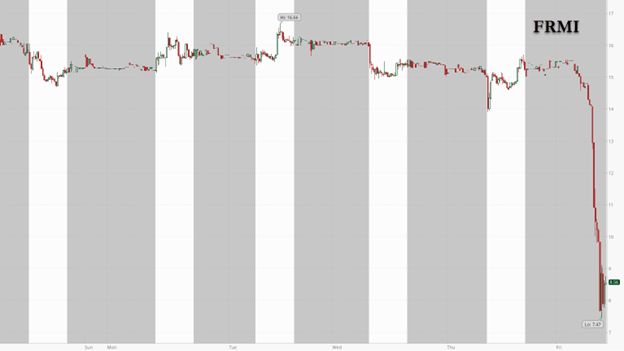
Fermi America announced their first potential tenant for the Project Matador data center campus terminated their $150 million Advance in Aid of Construction agreement (i.e., lease). The stock has plunged as much as 50% in premarket trading in what is a wild overreaction with unprecedented demand for data center space (especially data centers named after the president) still offset with limited supply.

Several weeks ago, we documented Fermi's difficulties with signing their first major tenant last month for their President Donald J. Trump Advanced Energy and Intelligence campus in Texas, set to become the world's largest mixed-use data center. Co-founded by former Texas Governor and Secretary of Energy Rick Perry, the company has yet to close a deal with a data center developer for their massive 11 GW campus outside of the Pentax facility.

What is bizarre, is that the company is on track to bring hundreds of megawatts on line for the site by the beginning of next year, has 6 GW of gas turbine power already permitted, and is currently progressing with the NRC to allow the construction of 4 AP1000 reactors. Yet somehow there isn't a line of potential customers around the block desperate for rack space. At least not yet, although we expect that will change one Trump tweets about it. 

Fermi is marketing their campus towards hyperscalers, with some tenants likely to include the biggest tech players such as Palantir. One of the government’s leading AI providers, Palantir was noted as currently being in discussion with Fermi about taking up a spot at Project Matador with a site visit expected to occur in the near future.

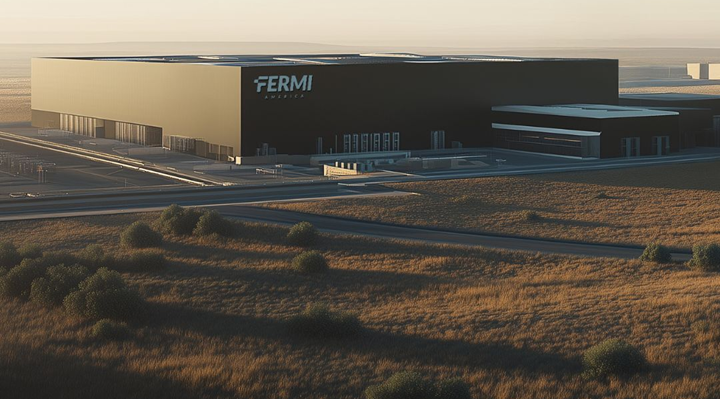
Fermi's Project Matador - The President Donald J. Trump Advanced Energy and Intelligence Campus.

The company notes that negotiations on the terms of the lease are continuing with their first potential mystery tenant that has cut off the $150 million for construction advances, and Fermi is continuing discussions with other potential tenants.

We have noted multiple times the extreme difficulties experienced by other data center developers throughout the United States, and abroad, with overcoming local opposition from NIMBY activists. Locals are still struggling to welcome the large data center developments to their towns due to concerns about increased energy consumption and prices, along with water usage.

With some of the data centers consuming as much as an entire city’s worth of water on their own, many activists have been able to petition regional leadership to block data center development on those grounds alone. Fermi has already demonstrated that they are well ahead of this with pre-permitting already completed for new power generation and millions of gallons of water per day already secured from nearby towns with access to massive aquifers.

By Zerohedge.com


Harbour Energy Deepens UK North Sea Footprint With $170 Million Waldorf Deal

Harbour Energy has struck a $170 million deal to acquire substantially all the UK subsidiaries of Waldorf Energy Partners and Waldorf Production, both currently in administration, marking another step in the consolidation of the UK North Sea.

The transaction, which Harbour says will be funded from existing liquidity, is expected to be immediately materially accretive to free cash flow and enhance the resilience and longevity of its UK business. Completion is targeted for the second quarter of 2026, subject to regulatory approvals and the settlement of creditor claims.

The acquisition is set to add around 20,000 barrels of oil equivalent per day of oil-weighted production and approximately 35 million barrels of oil equivalent of 2P reserves. It also increases Harbour’s operated interest in the Catcher field to 90%, up from 50%, a move that the company says will improve the financial stability of the joint venture.

In addition, Harbour will gain a new production foothold in the Northern North Sea through a 29.5% non-operated interest in the Kraken oil field, broadening its geographic exposure within the basin.

Beyond headline production and reserves, Harbour is targeting significant operational and financial synergies. The integration of Waldorf’s non-operated portfolio into Harbour’s UK organization is expected to unlock efficiencies, while the deal structure allows Harbour to leverage its investment-grade balance sheet to release an estimated $350 million of cash currently posted as security for Waldorf’s decommissioning liabilities.

The acquisition also brings additional UK ring fence tax losses, which could further enhance Harbour’s cash flow profile over time.

Scott Barr, managing director of Harbour’s UK business unit, said the transaction builds on actions already taken to sustain the company’s position in the basin amid ongoing fiscal and regulatory pressures. He highlighted the stabilization of the Catcher partnership, immediate cash flow benefits, and improvements to the long-term sustainability of Harbour’s UK operations, including employment and energy security.

The deal comes as the UK North Sea faces mounting challenges, including higher taxes, regulatory uncertainty, and growing decommissioning obligations. In this environment, asset sales out of administration and increased consolidation among established operators have become more common, particularly where stronger balance sheets can absorb late-life assets and associated liabilities.

For Harbour Energy, the acquisition reinforces its strategy of selectively investing in high-quality, cash-generative North Sea assets while seeking scale and operational control in a mature basin.

By Charles Kennedy for Oilprice.com

BW Energy Makes Strategic Angola Entry with Chevron-Operated Block Deal

BW Energy has taken a major step into Angola’s offshore sector, striking a joint deal with Maurel & Prom (M&P) to acquire minority stakes in two producing deepwater blocks from Azule Energy, the Eni–BP joint venture that dominates much of the country’s upstream landscape.

Under the agreement, the consortium will purchase a combined 20% interest in Block 14 and 10% in the adjacent Block 14K. BW Energy’s net stake will be 10% in Block 14 and 5% in Block 14K, while M&P will hold the same. The transaction gives BW Energy an immediate producing foothold in Angola—one of Africa’s most established oil provinces—and positions the company for future operated developments in the region.

“Entry into Angola is a key step in BW Energy’s West Africa growth strategy,” CEO Carl K. Arnet said. “We see clear upsides beyond current production in Block 14 and the opportunity to develop stranded assets using existing infrastructure.”

Block 14, operated by Chevron, is a mature deepwater hub with nine producing fields and gross output of around 40,000 barrels per day. BW Energy’s share will total roughly 4,000 bpd. Block 14K, a cross-border tie-back between Angola and Congo, delivers an additional 2,000 bpd via existing facilities.

Net producing reserves for BW Energy are estimated at 9.3 million barrels, with scope for further recovery gains through additional infill drilling and development work. The licenses run until 2038, and decommissioning obligations are already provisioned.

The acquisition carries a base consideration of $97.5 million for BW Energy and the same for M&P, with each company paying a $6 million upfront deposit. Contingent payments of up to $57.5 million per party may be triggered if Brent crude exceeds set thresholds between 2026 and 2028 or if production milestones linked to the PKBB development are met.

Regulatory approval from Angola’s National Oil, Gas and Biofuels Agency (ANPG) is required, with closing expected by mid-2026.

For BW Energy—fresh off drilling progress in Namibia’s Kudu area—the deal marks another building block in a strategy focused on developing proven reserves and leveraging existing infrastructure in Africa’s mature basins.

How White Hydrogen and Carbon Mineralization Could Decarbonize Industry

  • Geological formations in Newfoundland, specifically the Bay of Islands Ophiolite Complex, are capable of producing low-cost "geologic" hydrogen and permanently sequestering carbon dioxide through a reaction called serpentinization.

  • The production of geologic hydrogen is projected to cost significantly less than current renewable hydrogen, and the region's rock has a theoretical capacity for massive CO2 storage.

  • Engineers are working to accelerate the natural serpentinization process by injecting CO2-enriched water to simultaneously dispose of industrial emissions and harvest the resulting hydrogen, while also yielding critical minerals.

In the remote geology of western Newfoundland, a specific formation of ancient oceanic crust is shifting from a subject of academic study to a target for industrial decarbonization. The region’s ophiolite belts, sections of Earth’s mantle pushed onto land, are drawing attention for their theoretical ability to produce low-cost hydrogen while permanently mineralizing carbon dioxide.

This geological convergence arrives as the energy sector seeks scalable alternatives to manufactured hydrogen. While "green" hydrogen produced via electrolysis remains expensive, creating a barrier to widespread adoption, naturally occurring or geologic hydrogen offers a potentially cheaper pathway.

The Economics of "Gold" Hydrogen

Industry data suggests that geologic hydrogen, often called "white hydrogen”, could be produced for between $0.50 and $1 per kilogram. This price point is significantly lower than current renewable hydrogen production costs, which often exceed $4 per kilogram.

The push to explore these formations coincides with a surging market for carbon management. According to a report by MarketsandMarkets, the global sector for carbon capture, utilization, and storage (CCUS) is projected to reach $17.75 billion by 2030, up from an estimated $5.82 billion in 2025. This 25 percent compound annual growth rate is driven largely by government mandates and rising carbon prices that incentivize heavy industry to manage emissions.

The Mechanism: Serpentinization

The focus in Newfoundland centers on the Bay of Islands Ophiolite Complex. Geologists regard this formation as one of the most complete sequences of ophiolites in the world. The rocks here are ultramafic, meaning they are rich in magnesium and iron but low in silica.

When these rocks encounter water, they undergo a chemical reaction known as serpentinization. The reaction oxidizes the iron in the rock, splitting water molecules to release hydrogen gas naturally. Crucially, the process also creates highly alkaline fluids that react aggressively with carbon dioxide. The CO2 is converted into solid carbonate minerals, effectively turning a greenhouse gas into stone.

Research conducted by Memorial University on the local Blow Me Down massif indicates that this process creates brucite, a mineral that facilitates rapid carbon sequestration. The study suggests that for every tonne of brucite formed, 0.63 metric tonnes of CO2 can be sequestered.

Industrializing a Natural Cycle

While serpentinization occurs naturally, it is a slow process. The current wave of exploration targets "stimulated" production. By drilling into these formations and injecting CO2-enriched water, engineers aim to accelerate the reaction. This method theoretically allows operators to dispose of industrial carbon emissions while harvesting the resulting hydrogen for energy.

Esti Ukar, a research associate professor at the Jackson School of Geosciences, suggests that engineering these natural hydrogen accumulations is the key to viability.

"Natural accumulations of geologic hydrogen are being found all over the world, but in most cases they are small and not economical, although exploration continues," Ukar said. "If we could help generate larger volumes of hydrogen from these rocks by driving reactions that would take several million years to happen in nature, I think geologic hydrogen could really be a game changer."

Capacity and Critical Minerals

The scale of the potential storage is significant. Peer-reviewed research on the Bay of Islands Complex calculated a theoretical total CO2 storage capacity of 5.1 x 10^11 tonnes. While practical constraints would limit the accessible volume, even a fraction of that capacity represents a massive carbon sink compared to Canada’s annual emissions.

Beyond energy and carbon, the chemistry of these rocks has implications for critical mineral supply chains. The highly reducing conditions required to generate hydrogen also favor the formation of awaruite, a rare nickel-iron alloy, and chromite. Explorers in the region have identified mineralized zones of chromite exceeding 700 meters in length within the Lewis Hills Massif.

Regulatory and Infrastructural Outlook

Despite the favorable geology, the sector faces hurdles common to emerging technologies. The International Energy Agency notes that while carbon capture project announcements are increasing, global deployment lags behind climate targets.

Policymakers are attempting to close this gap with financial instruments. Tax credits and grants are being established in North America and Europe to de-risk exploration. For hard-to-abate sectors such as steel manufacturing and cement production, where electrification is difficult, the prospect of mineral carbonation offers a distinct advantage: permanence. unlike gaseous storage in depleted oil wells, mineralized carbon cannot leak.

As engineering teams look to validate the Memorial University findings in the field, Newfoundland’s ophiolites may soon serve as a test case for whether the Earth’s crust can be engineered to function simultaneously as a fuel source and a waste repository.

By Michael Kern for Oilprice.com 

South Sudan Deploys Troops to Secure Heglig Oil Field

South Sudan has moved troops into Sudan’s Heglig oil field under what it calls a tripartite agreement with Sudan’s two warring factions. The move is a rare arrangement aimed at shielding critical oil infrastructure as fighting escalates across West Kordofan.

South Sudan’s army chief of staff, Paul Nang, appeared in a video address from Heglig, saying South Sudanese forces entered the field following an agreement between President Salva Kiir, Sudanese Armed Forces leader Abdelfattah El Burhan, and Rapid Support Forces commander Mohamed Hamdan Dagalo. Under the deal, both Sudanese factions are to withdraw from the area, allowing South Sudanese troops to secure oil installations and prevent sabotage.

Nang said the deployment is strictly limited to protecting infrastructure and that South Sudanese forces will not take part in military operations inside Sudan. The objective, he said, is to “completely neutralise” the oil field as a combat zone, even as battles intensify elsewhere in the region.

Heglig matters far more to Juba than to Khartoum. The field hosts a central processing facility capable of handling about 130,000 barrels per day of South Sudanese crude, which is exported via pipelines running through Sudan to Port Sudan. South Sudan resumed oil exports through Sudan in January after a near year-long suspension.

While Sudanese economists say the loss of Heglig has limited impact on Sudan’s finances, South Sudan has far less room for disruption.

Production at Heglig has already fallen sharply, from about 65,000 barrels per day to roughly 20,000 since fighting between the SAF and RSF erupted in April 2023. The outlook darkened further this week when China National Petroleum Corporation confirmed it had withdrawn from Sudan after three decades, citing deteriorating security in West Kordofan.

By Julianne Geiger for Oilprice.com


The Struggle for Sudan’s Oil Corridor

The Rapid Support Forces (RSF), the paramilitary bloc that broke from the Sudanese army and now dominates most of Sudan’s western belt, has moved on the Balila facility in West Kordofan, and it is already affecting the energy corridor. Balila feeds directly into the GNPOC line carrying South Sudan’s Dar blend to Port Sudan, and operators now acknowledge disruptions along the corridor. South Sudan’s budget rests almost entirely on these flows. Any interruption tightens the margin immediately. By taking Balila, the RSF has positioned itself on top of some prime infrastructure that affects both Sudan and South Sudan at a moment when neither can absorb further shocks.

The RSF is likely to hold the area. It controls the rural belts linking West Kordofan to Darfur, giving it reliable logistics and manpower. It does not need to run the field. It only needs to control movement and decide whether crude flows. The group has done this for years at gold sites. It secures the perimeter, controls access, and imposes its own rule, while leaving technical operations to others. Balila will be handled the same way. Operators pulling non-essential staff is the first sign of how exposed the corridor now is.

The timing overlaps with a quiet U.S.–Saudi attempt to stabilize the political track before state institutions deteriorate further. Washington wants Riyadh to set the terms; Riyadh wants U.S. cover for a settlement that sidelines factions it views as too close to the UAE. Abu Dhabi continues to back the RSF and shows no interest in easing off while the group is advancing. This leaves a narrow space where each actor is trying to influence outcomes without triggering a direct clash.

Riyadh is focused on keeping the pipeline corridor functioning and preventing a wider breakdown that would jeopardize Port Sudan. U.S. envoys are telling counterparts that Washington will not support or fund a settlement reached with the RSF sitting on the country’s main revenue assets. Neither actor is preparing to escalate, but both are working to limit an RSF path to uncontested control of Sudan’s export system.

The RSF understands this environment quite well. Taking Balila shows it can alter the facts faster than diplomatic tracks can adjust, and the early signs of reduced flows reinforce the point. It signals to Riyadh and Washington that negotiations cannot bypass RSF interests and signals to Abu Dhabi that its backing is yielding results. Unless one of the major sponsors shifts position, the RSF will likely hold the corridor long enough to force its terms into whatever political structure emerges next.


Bananas Ahoy as Overboard Containers Wash Ashore

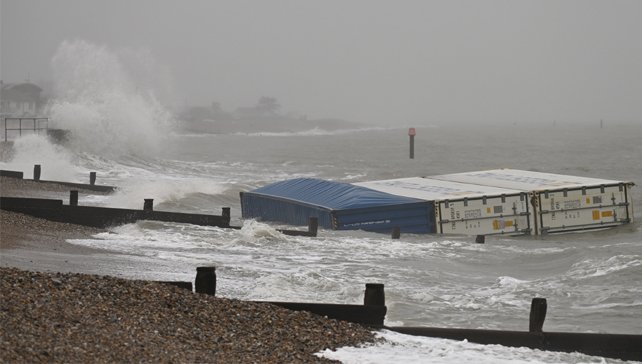
overboard container driven on shore
Containers that fell overboard were drive onshore during the storm (Andy/BirderNikon on X)

Published Dec 11, 2025 6:36 PM by The Maritime Executive


Five days after eight containers carrying bananas were washed overboard from the reefer ship Baltic Klipper in Southampton Water, bananas in the thousands are still washed up onto the beaches of the West Sussex coast in southern England. A total of 16 containers were lost overboard, with others transporting plantains and avocados.

It has turned into a bit of a bonus day for residents who have been finding the jetsam within the wreckage of the containers. With heavy seas and high winds, the containers were driven onto shore, and many were broken apart. As of Tuesday, 11 of the 16 containers had beached. HM Coastguard reports that a helicopter and an aircraft have been carrying out searches for the missing containers.


Police, customs authorities, and the Receiver of Wrecks have warned beachcombers not to eat the bananas or to take them home.  But local people have interpreted prevailing Wrecks and Salvage law in a more free market fashion, and have helped themselves to the bananas, rather than see them going to waste.

Even after five days at sea, what were green and unripe bananas when washed overboard have now ripened despite the cold conditions. True to the spirit of journalistic inquiry, your correspondent can attest that seawater has not degraded the taste of the bananas, with the only threats to health posed by skin slippage and by eating too many of them.


Bananas ended up driven inland as the storm continued (CJRC)


Due to the stormy and windy weather in the Selsey area, bananas have been swept off the beach into coastal roads, making for slippery driving conditions in some areas.

Shipping in the port of Southampton, which was delayed on Saturday, December 6, has now resumed. The port was operating, however, with a single lane for shipping as the authorities worked to locate the containers. The P&O Cruises ship Iona held overnight at her berth in Southampton, has now reached Tenerife, the first stop on its somewhat curtailed cruise.  

The Baltic Klipper was shifted into Portsmouth on Monday night. Pictures show additional toppled containers still aboard the ship.


Members of the British government have been calling for strong efforts to ensure the shipping company and its insurers will pay the costs of the cleanup. Seatrade, which operates the vessel, said its insurers are fully engaged in the process, and in the meantime, volunteers are scouring the beaches, aiding in the cleanup (and possibly taking a few bananas home as a reward).