Wednesday, December 17, 2025

The Future of Humanity’s Past: U.S. Archaeology Confronts a Research Hinge Point

December 17, 2025
The long American century is over. Across the world, affiliations and institutions staked in blood and soil, faith-based (as opposed to empirically based) ways of knowing, and personalized, autocratic power are all in ascendance. Notions of linear, inevitable progress and conceptual frames that wall off modernity from what came before now seem more like pipe dreams or propaganda than a data-grounded record of humanity’s journey. Rather than being at the “end of history,” we are still mired waist-deep in it.

For the discipline of archaeology, the patterns, trends, and lessons visible in the global record of the past have never been more relevant. Not merely because our multiscalar visions of human history are geographically broader and more detailed than they ever have been, but because it seems clear that the myriad ways humans behave, interrelate, and aggregate today are not fundamentally out of range from the repertoire of behaviors that we as a species have practiced for many millennia.

Archaeology’s singular contribution to understanding people and their interactions with each other and the natural environment has always been its worldwide documentation of past lifeways over long time spans. The discipline offers otherwise hidden insights into populations for whom written records are lacking and an expanded lens into those that have such records, but leave many persons forgotten. Unlike texts, which are generally written by “the winners,” archaeology need not be subject to elite determinism. Through cross-cultural comparisons, it also reveals recurrent temporal patterns that are relevant to contemporary global problems, and unlike present-day parallels, archaeologists, with their vantage on the past, know the outcomes. Knowledge and debates concerning the past offer grounding and guidance for charting the future.

It is within this broader context that U.S. archaeologists currently confront a hinge point in research on humanity’s major episodes of change. From varying perspectives, generations of scholars have documented deep-time global shifts in population, mobility, food procurement, settlement size, leadership, trade, conflict, affiliative identities, and religious ideologies. And in doing so, they have shown that from place to place, such shifts did not occur in the same way, at the same tempo, or even in the same sequence. Efforts to synthesize these findings have sought regularities within embedded temporal and spatial scales.

But the recent convergence of two developments has created a critical juncture in how this research can proceed. Most obvious is the Trump administration’s abrupt cancellation of virtually all federal archaeological funding in early 2025 (Brown, 2025Lidz, 20251. Less recognized is an interpretive disconnect that has been percolating for decades between newly collected data and outdated ways of thinking about the past.

Here, we briefly describe this pivotal moment’s dual foundations and then propose strategies for moving forward. In the short term, the most easily implemented approach for circumventing federal cuts is to systematically mine previously collected data for recurrent temporal patterns. The companion issue of interpretive disconnect can be avoided if such efforts are question-driven, comparative, network-based, and processual. In the longer term, the likelihood of obtaining alternative financial support for new fieldwork can be increased by widely publicizing how temporal regularities in the human past offer lessons for resolving critical global problems today.

The Hinge Point’s Dual Foundations

The hinge point’s dual foundations of federal funding cuts and interpretive disconnect are linked by the recent proliferation of cutting-edge high technology methods. In the case of funding cuts, the instigating factor is cost. Various governmental agencies have, in recent years, subsidized multitudinous investigations related to humanity’s major transitions through academic projects worldwide and cultural resource management contracts in the United States. These efforts have increasingly relied on methods borrowed from the natural, life, and computational sciences to collect and analyze large arrays of archaeological evidence (Sinclair, 2022). Examples include highly refined dating techniques; sophisticated aDNA, archaeobotanical, phytolith, zooarchaeological, and compositional analyses; precise satellite and Lidar mapping; and, most recently, artificial intelligence.

Such work is expensive because it requires sophisticated equipment and well-trained personnel in both the field and laboratory. And when fieldwork involves excavation, which often destroys archaeological contexts, responsible research mandates detailed and time-consuming data recording. Because budgets are high, the loss of federal financial support cannot easily be replaced by grants from other sources, raising the question of how such research can proceed.

The hinge point’s second foundation is the interpretive disconnect between the reams of exciting data produced by cutting-edge high technology methods and the zombie-like persistence of 19th-century categorical thinking. In short, this persistence has had the pernicious effect of steering conclusions in established directions, thereby reifying traditional grand narratives. And in doing so, it has obscured novel aspects of new findings and discouraged creative thinking that could generate new conceptual approaches 2.

More specifically, the adoption of categorical thinking by 19th-century archaeologists conformed to prevailing modes of thought in anthropology, the natural sciences, and society at large. Archaeologists developed two classificatory frameworks: 1) culture historical charts to sort local and regional scale observations of ancient material remains into spatial-temporal units, and 2) unilinear evolutionary sequences to order ancient societies worldwide into stages. Despite substantial evidence to the contrary, both treated their constituent entities as internally homogeneous, discretely bounded, and changing in a stepwise fashion. Refining categories in ever greater detail remained the discipline’s paramount goal through the mid-20th century, with non-classificatory interpretations added only at the end of an investigation.

A major paradigm shift occurred with the advent of radiocarbon dating during America’s post-World War II embrace of the sciences. With chronology building no longer an all-consuming task and influenced by contemporary societal upheavals, some 1960s archaeologists adopted entirely new systems and processual models and applied more deductive logic. This was followed in subsequent decades by a succession of other approaches. But before proceeding with any state-of-the-art analyses, archaeologists must first situate their material remains in space and time and have a general sense of the kind of group being studied. To do this, they have continued to rely on culture historical schemes and cultural evolutionary sequences.

The consequence of this prerequisite framing for current applications of cutting-edge high technology methods is that new findings are inadvertently grounded in implicit assumptions about homogeneity, boundedness, and stepwise change. Bolstered by inductive reasoning, the ramifying effect is that interpretations remain generally consistent with what is already known. These issues are epitomized by the results of recent aDNA research. Despite revealing high degrees of mobility often over long time spans, interpretations have reflexively plugged into migrationist models that depend on presumptions about the mass movement of self-contained, homogeneous groups that suddenly replaced one another. The hinge point challenge is to develop unencumbered conceptual frameworks that are as sophisticated as the cutting-edge high technology methods they are applied to.

Moving Forward

For U.S. archaeologists, no matter where in the world they work and whether their careers are in academia, cultural resource management, museums, or government, the era of federally subsidized data collection projects has ended, at least for now. One strategy for moving research on humanity’s major transitions forward is to seek smaller grants from state, tribal, and private entities. Another is to collaborate with well-financed projects in Western Europe, China, or the Gulf States. A third is to systematically mine, compare, and synthesize extant data to elucidate temporal patterns, critical turning points, and recurrent relationships between key factors.

The last option is the easiest to implement in the short term. Reams of raw data relevant to the entire range of topics associated with humanity’s major transitions are waiting to be accessed and systematically compared. Potential sources include appendices in print and online publications, records housed in perhaps thousands of physical repositories and archives worldwide, and various digital platforms 3. The costs of locating previously collected data, collating it, and identifying recurrent patterns pale in comparison to even the smallest-scale field projects. As such, research based on existing information may be more likely to receive financial support from state, tribal, and private entities. It may also offer collaborative opportunities with well-funded colleagues in other countries, with whom communication can be sustained at a distance via email, Zoom, and other video conferencing tools.

Exemplifying the rich promise of extant raw data are two recent analyses of the development of economic inequality that compared house size measurements across roughly 1,000 archaeological sites worldwide (Feinman et al., 2025Kohler et al., 2025). A major finding was that although potential for inequality generally increased over time, it was not always realized, and when it was, the sequences were highly variable. Moreover, domestication did not lead to an immediate uptick in inequality, and increased inequality did not correlate in any regular way with polity-wide population thresholds or additional tiers in the political hierarchy.

Published studies are another resource that can be mined for recurrent temporal patterns. Illustrating this strategy’s value is recent synthetic research on the mobile to sedentary transition (Feinman and Neitzel 2023Feinman and Thompson 2025). The results have shown that increasing settlement permanence followed highly divergent and fluctuating pathways within embedded temporal and spatial scales. This variability was the consequence of personal decisions about the costs and benefits of denser, more stable communities. As the intensity of social interaction increased, people’s cognitive limitations for managing interpersonal relationships at key demographic thresholds were met by either fissioning or instituting new social arrangements. How such arrangements were funded was a key factor in determining whether they were autocratic or collective.

These disparate studies also exemplify two prerequisites for successful analyses of extant data. First, to avoid the interpretive difficulties caused by an overreliance on inductive logic, the research must be problem-directed. This is a relatively straightforward task, since most comparisons are prompted by a question, which is typically followed by investigative decisions about the specific kinds of data to be considered and how they should be compared.

The other prerequisite is to excise latent assumptions about cultural homogeneity, boundedness, and stepwise change. This task can be accomplished by adopting a network perspective (Brughmans et al., 2024Holland-Lulewicz, 2021Holland-Lulewicz, 2025Mills, 2017). From that perspective, patterned variability in the material record reflects affiliation choices made by people in the past. The consequent, nested webs of different kinds of social relationships varied in their internal structures, geographic ranges, permeability, durability, and congruence, all of which fluctuated as personal priorities and circumstances changed. Fine-grained dating techniques can track these shifts, revealing multiscalar spatial and temporal patterns that lie at the heart of humanity’s major transitions and why they played out the way they did in different contexts.

Broader Implications

In addition to expanding our understanding of the human past, recurrent temporal patterns also offer practical insights into some of today’s most critical worldwide problems. For issues such as the recent rise of authoritarianism and the human impacts of climate change, archaeologists can see ancient parallels and their outcomes over different time spans. With this information, they can make a unique contribution in assessing which present-day interdisciplinary and policy-focused efforts can have the greatest, most equitable effects and increase future resiliency.

With the recent global rise of authoritarianism, archaeology vastly augments the findings of political scientists, historians, journalists, and activists. The discipline has documented tremendous deep-time variability in governance for the entire range of past societies, including those with similar population levels and degrees of organizational complexity (Caraballo and Feinman, 2024). But all manifested a dynamic push/pull between collective versus power-centered actions as different constituencies sought to balance their respective priorities. Shared access to resources and infrastructure promoted collective governance, whereas inequities fostered centralization.

These regularities offer lessons for today. They show how power-sharing arrangements and leveling mechanisms can undermine or check authoritarianism at any point in its ascendance. They also illustrate the effectiveness of marshalling the intersecting interests of disparate familial, community, local, and regional populations, especially if the focus is on the unequal allocation of resources. And finally, they discourage expectations of quick results. The cumulative impacts of coalition building and collective actions may not be seen for generations.

Archaeology’s unique perspective can also guide researchers from other fields of study—policymakers, activists, and citizens—as they address the human impacts of modern-day climate change. Working with colleagues across disciplines, archaeologists have amply documented the effects of past episodes at different temporal scales, in varied ecological settings, and for societies ranging from the simplest to the most complex. Across this complicated mosaic of conditions, ancient peoples coped with displacement in diverse ways. But several commonalities offer lessons for today.

The most striking is that the combination of collectively based governance with the equitable distribution of resources produces the best short- and long-term outcomes both biologically and culturally (Blanton and Fargher, 2008Blanton et al., 2021Feinman and Carballo, 2018). Also, effective preparations for and responses to climate change disasters depend on cooperative connections within and between societal levels. Integrated strategies will vary considerably depending on the kind of disaster, its timing and geographic setting, and the number of affected people. But in all circumstances, the most successful practices and policies are directed toward a broad-based common good. Even with the best intentions and ample funding, those that are centralized and strictly top-down tend to disproportionately benefit the wealthy and powerful, thereby heightening the long-term risks for everyone.

Recurrent temporal patterns in the ancient past also offer lessons for a host of other contemporary, worldwide problems, involving population movement, economic inequality, urbanization, and environmental degradation. This far-reaching practical relevance suggests another strategy for propelling research on humanity’s major transitions beyond the current hinge point. That is, widely publicizing the discipline’s unique contributions to understanding and resolving critical issues confronting people today. Well-planned outreach efforts can increase support for archaeology grant proposals and open new opportunities for interdisciplinary collaboration.

The potential audience is vast. Most reachable are those already interested in archaeology—fellow professionals, students, avocationalists, readers of popular publications, and the curious public. Further afield are colleagues in history and political science, disciplines that are the most prolific training grounds for future leaders, policymakers, and social studies teachers. Archaeologists should also actively engage with research and policy think tanks, legislative advisory committees, current events forums, and activist groups. Higher visibility outlets include documentary films, museum exhibits, opinion pieces, topical websites, short YouTube videos, and social media.

Sustained, multi-targeted messaging about archaeology’s contemporary relevance can have the auxiliary benefit of countering the discipline’s traditional tropes of the oldest, biggest, and weirdest discoveries. Linking all the lessons is the key role of collective action within dynamic social networks. This theme counters popular views of the ancient past as an amorphous, unitary category within which, if they are considered at all, people were primitive automatons that reflexively fostered the cultural groups to which they belonged. It instead replaces stereotypical perceptions of the past with a sense of our common humanity.

Similar to us, ancient people mediated their innate tendencies for selfishness and cooperation throughout their daily lives as they made choices about aligning with others. Such relationships were inherently fragile and often transitory, just as ours are today. This understanding honors our ancient forbearers. It encourages continued investigations of the global past and recognizes that the lessons learned can help us address contemporary, real-world problems and chart more equitable, resilient futures for our descendants.

Final Thoughts

Here we have argued that U.S. archaeologists currently confront a hinge point in their research on humanity’s major transitions. The dual causes are the Trump administration’s budget cuts and conceptual stasis. At other global centers of archaeological research (for example, Western Europe, China, and the Gulf states), funding continues unabated. But they are also hindered by interpretive difficulties caused by an overreliance on induction, culture history, and its ingrained assumptions about homogeneity, boundedness, and stepwise change. For U.S. archaeologists, we have proposed several mutually reinforcing strategies for moving forward. Although their feasibility varies with the particular interests, priorities, and circumstances of different investigators, their cumulative impacts will ensure that in the face of present-day challenges, archaeology becomes a more vibrant and widely appreciated field of study.

1. These cuts were just one small part of an unprecedented tsunamic assault on all scientific research. For other examples, see James Briscoe et al., 2025Virginia Gewin, 2025Taryn MacKinney, 2025Jonathan Mahler, 2025Hannah Richter, 2025, and James Temple, 2025.

2. This self-perpetuating pattern is not unique to archaeology (see Max Kozlov, 2023Michael Park et al., 2023.

3. Easily accessed digital platforms include Archaeological Data ServiceComparative Archaeology DatabaseData Archiving and Networked ServicesOpen ContextThe Digital Archaeological Record, and the GINI Project.

This article was produced by Human Bridges, a project of the Independent Media Institute. 

Gary M. Feinman is an archaeologist and the MacArthur curator of anthropology at the Field Museum of Natural History in Chicago. Jill E. Neitzel is an archaeologist and professor emerita at the department of anthropology, University of Delaware.

Rare fresco of Jesus as the 'Good Shepherd' uncovered in Turkish town visited by the pope


IZNIK, Turkey (AP) — The painting was discovered in August in an underground tomb near Iznik, a town in northwestern Turkey that secured its place in Christian history as the place where the Nicene Creed was adopted in A.D. 325.


Mehmet Guzel and Andrew Wilks
December 15, 2025
AP

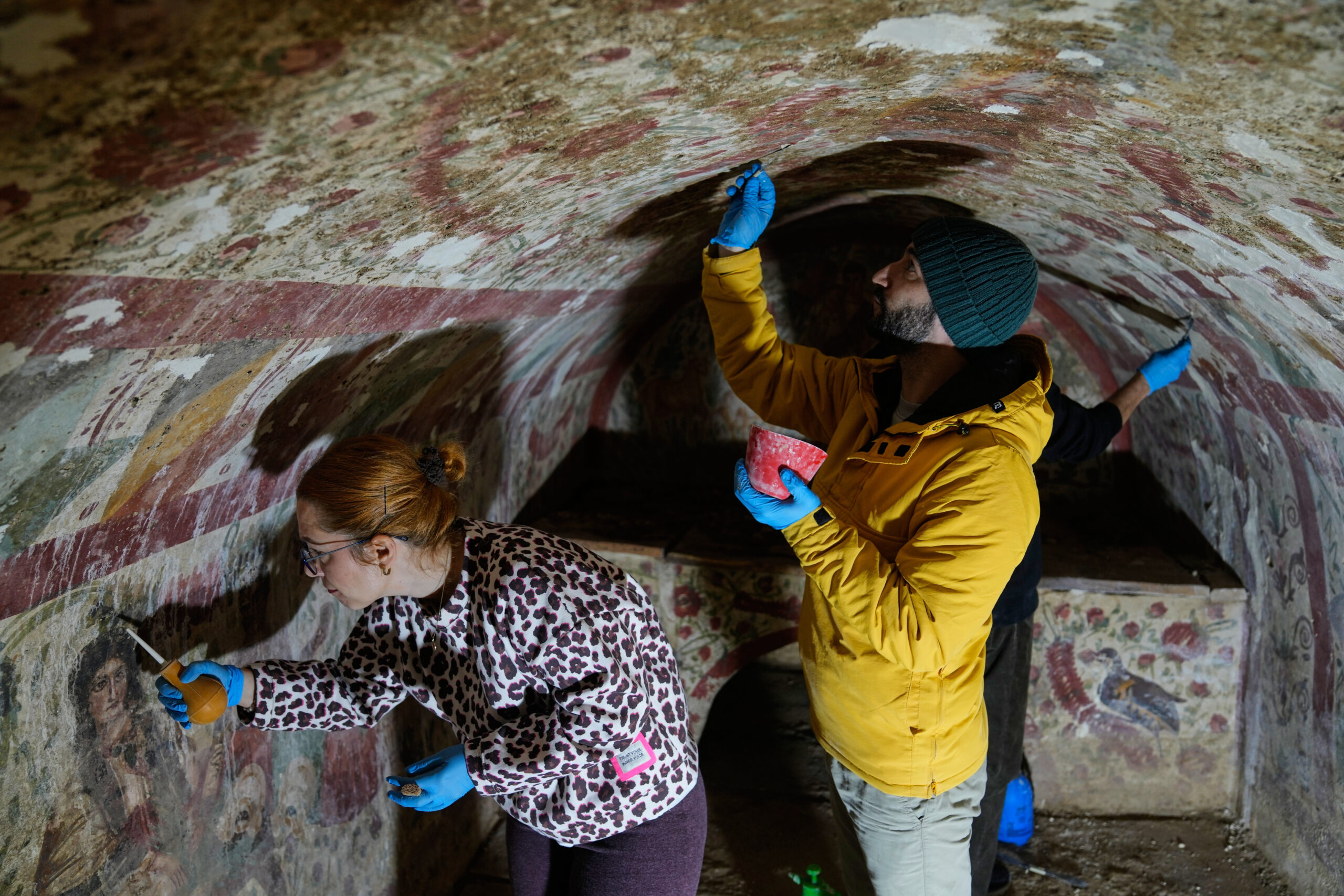
IZNIK, Turkey (AP) — Archaeologists in Turkey have uncovered one of the most important finds from Anatolia’s early Christian era: a fresco of a Roman-looking Jesus as the “Good Shepherd.”

The painting was discovered in August in an underground tomb near Iznik, a town in northwestern Turkey that secured its place in Christian history as the place where the Nicene Creed was adopted in A.D. 325. Pope Leo XIV recently visited the town as part of his first overseas trip.

At the time, the region was part of the Roman Empire, and the tomb in the village of Hisardere is believed to date to the 3rd century, a time when Christians still faced widespread persecution.

The Good Shepherd fresco depicts a youthful, clean-shaven Jesus dressed in a toga and carrying a goat across his shoulders. Researchers say it is one of the rare instances in Anatolia where Jesus is portrayed with distinctly Roman attributes.

Before the cross was widely adopted as Christianity’s universal symbol, the Good Shepherd motif played a key role in expressing faith, indicating protection, salvation and divine guidance.

Despite its central role in early Christianity, however, only a few examples of the Good Shepherd have been found in Anatolia and the one in Hisardere is the best preserved.

The Associated Press was the first international media organization granted access to the tomb. Lead archaeologist Gulsen Kutbay described the artwork as possibly the “only example of its kind in Anatolia.”

The walls and ceiling of the cramped tomb are decorated with bird and plant motifs. Portraits of noble men and women, accompanied by slave attendants, also decorate the walls.

Eren Erten Ertem, an archaeologist from Iznik Museum, said the frescoes showed “a transition from late paganism to early Christianity, depicting the deceased being sent off to the afterlife in a positive and fitting manner.”

The excavation uncovered the skeletons of five individuals, anthropologist Ruken Zeynep Kose said. Because of poor preservation, it was impossible to determine the ages of two of them, but the others were two young adults and a 6-month-old infant.

Pope Leo XIV visited Iznik last month to mark the 1,700th anniversary of the Council of Nicaea that produced a creed, or statement of faith, that is still recited by millions of Christians today.

Joined by patriarchs and priests from the Eastern and Western churches, Leo prayed that Christians might once again be united.

Turkish President Recep Tayyip Erdogan, presented a tile painting of the Good Shepherd discovery to Leo during his visit.

Anatolia witnessed pivotal moments in Christian history: St. Paul was born in Tarsus, St. John spent his final years in Ephesus and the Virgin Mary may have lived her last days near the same city.

_____

Wilks reported from Istanbul.
Let's see the facts behind Homeland Security's block on funding for Sister Norma

(RNS) — The incident shines a light on public/religious partnerships, especially when it comes to serving migrants.


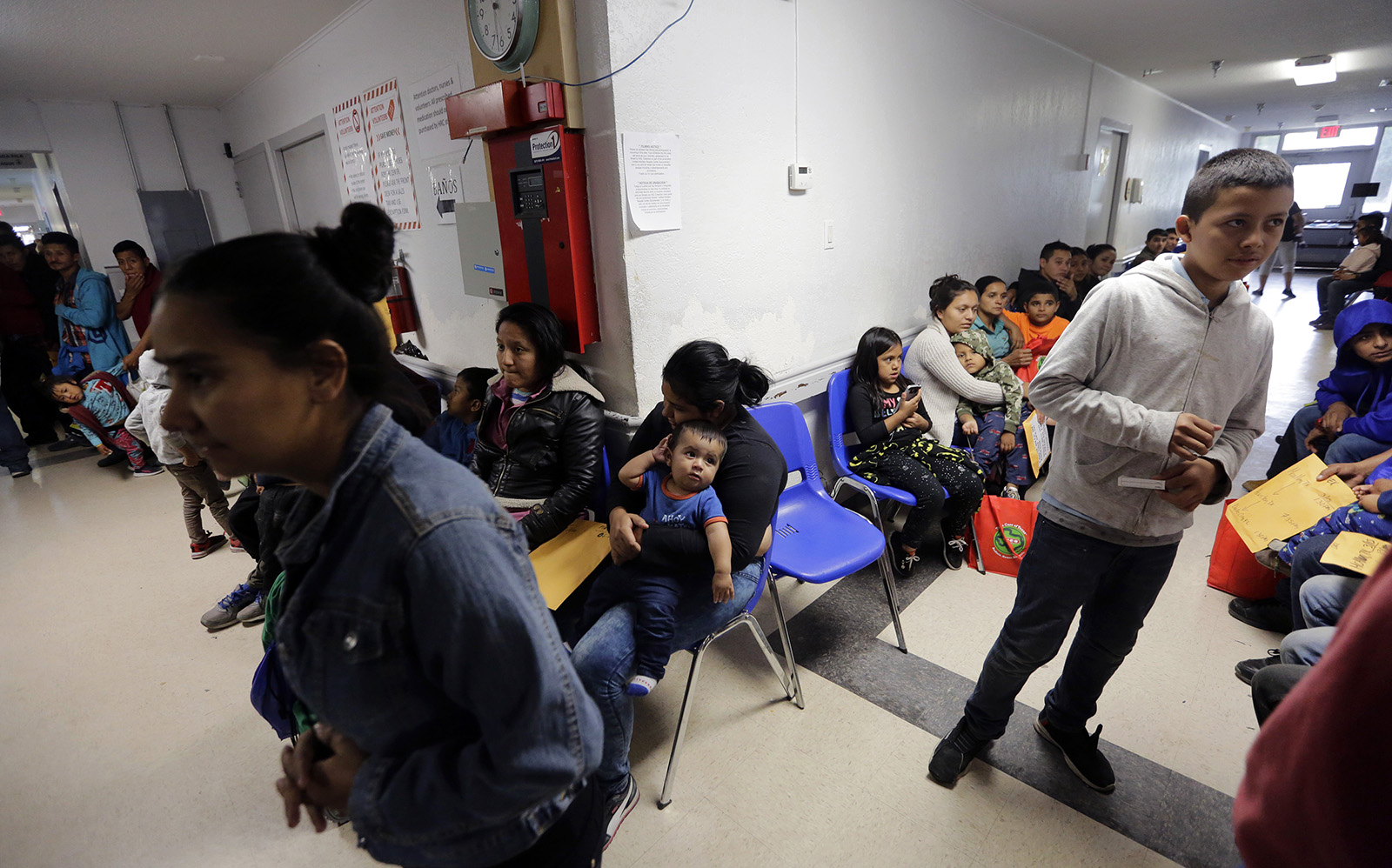
In this March 15, 2019, file photo, migrant families just released from immigration detention gather at the Catholic Charities of the Rio Grande Valley Humanitarian Respite Center in McAllen, Texas. Volunteers at Catholic Charities provide food, medical checkups, and donated clothes to migrants. (AP Photo/Eric Gay)


Arthur E. Farnsley II
December 16, 2025

(RNS) — On Friday (Dec. 12), Religion News Service reported that the Department of Homeland Security is threatening to block funding for six years for Catholic Charities Rio Grande Valley. The shelter network along the Texas-Mexico border is accused of “submitting inconsistent migrant data” and “billing the government for services provided to migrants beyond the federal 45-day limit.” The article featured the head of CCRGV, Sister Norma Pimentel. Maybe you’ve seen her accolades: “Pope Francis’ favorite nun” or “Time’s 100 most influential people in 2020.”

Just two months ago, I had the honor of speaking with Sister Norma when she met with a very small group of pastors from the Wabash Pastoral Leadership Program in Indiana. They were there learning about migration at the Mexican border. I tagged along because I’m studying the ways congregations deal with polarizing issues, including immigration.
RELATED: In Texas, an uncommon collaboration between two high-profile Catholic leaders

A different cohort of pastors had visited her offices just two years ago and experienced a very different scene. In 2023, every inch of space was occupied by people. The shelter was then handling 2,000 migrants at a time, and only by taping off paths for themselves on the floors could the staff move around the building.

When we visited earlier this year, no migrants were there to receive in-house services. President Donald Trump’s executive orders had effectively shut off the spigot that President Joe Biden’s executive orders had opened just a few years before. We had seen the same thing the previous day on our walk across the border to Mexico. Migrant services had dried up in Reynosa, Mexico, too, because there were so few migrants.

The Indiana pastors asked Sister Norma many questions about how they could help once they got home. My own question was where the money came from. I knew that, nationally, Catholic Charities got roughly two-thirds of its funding from government contracts for migrant services.

Sister Norma did not answer my question directly. This was a meeting with pastors. She was talking about ministry. To me she said, “We all pitch in together. Everyone helps out.” I did not push further. This was a meeting with pastors, not a press conference, and I am not a journalist.


Sister Norma Pimentel, left, speaks with a child at the Catholic Charities of the Rio Grande Valley Humanitarian Respite Center in McAllen, Texas, Dec. 12, 2024. (RNS photo/Aleja Hertzler-McCain, File)

I am, however, a researcher who studied faith-based welfare reform, sometimes called “charitable choice” or “faith-based initiatives,” in the late 1990s and early 2000s. I wrote two books on the topic and a pamphlet used in the George W. Bush White House. So I looked up the CCRGV budget, which is public record, and found that the majority of CCRGV’s funds comes from grants, the bulk of which come from the government.

Today I study the effects of cultural and political polarization on religious groups, so I know what’s coming as the federal government stops funding CCRGV. There will be adamant statements about the risks of religious groups’ taking public contracts. There will be charges that DHS’ action is only about the Trump administration trying to inflict pain on pro-migrant groups. There will be a brief flurry of op-eds about why the other side is so bad on this issue.

But perhaps this time we could do better as a society as we discuss this complex issue. I offer three helpful framings to improve our public debate:

First, it is fair to ask whether the DHS accusations are true. It is easy to imagine they have some truth in them. Three decades ago, I warned about using congregations as contractors because they had so little experience in grant management. Catholic Charities has a professional bureaucracy with much more experience, but let’s be honest: It is extremely difficult to keep spotless records on highly mobile migrant populations who cross an international border routinely, come from many different countries (in 2023, most of the migrants were not Mexican), and speak different languages. I am not claiming knowledge of the facts of this case, but they do matter.

Second, it is fair to examine the federal government’s record of enforcing its contracts and how penalties are determined. Critics will say the administration is selectively punishing Sister Norma and CCRGV to make a point about religious charities using government money to circumvent U.S. policy on migration. Again, I do not know if the government is selectively enforcing here, but it is easy to imagine that it is. I do know that a six-year funding ban is a very stiff penalty.

Nonetheless, and lastly, we should all be happy this incident is shining a light on public/private partnerships, including public/religious partnerships, especially when it comes to serving migrants. This is how this work is done. Catholic Charities is hardly alone in getting government money to provide social services. Lutheran Family Services and Franklin Graham’s Samaritan’s Purse both receive millions in federal aid.

Lastly, it is important to resist any attempts to oversimplify the complex issues involved here. Faith-based providers are government contractors on a large scale. Government enforcement of its own funding contracts is a legitimate task and not necessarily politically motivated persecution. Still, selective, zealous enforcement of only certain contracts is a dangerous game if it’s motivated primarily by ideology.

(Arthur E. Farnsley II is director of the Congregations and Polarization Project at Indiana University Indianapolis. The views expressed in this commentary do not necessarily represent those of Religion News Service.)


Why do some people stay in their faith and others leave? A Pew report offers clues.

(RNS) — Americans who had a good experience as children were likely to keep their faith. Those with bad experiences left, according to a new study from Pew Research Center.


Religious pluralism means more than living around people of different faiths. (Thai Noipho/iStock via Getty Images Plus)


Bob Smietana
December 15, 2025
RNS


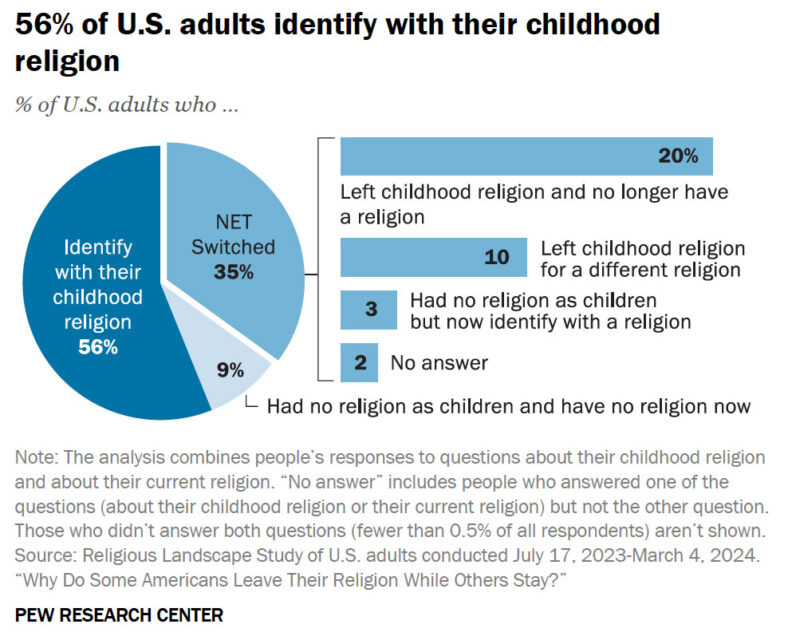
(RNS) — Americans who had a positive religious experience as kids are most likely to keep the same faith as adults. Those who had negative experiences are most likely to change faiths or give up on religion. And while a majority (56%) of Americans still identify with their childhood faith, a third (35%) have switched — including 20% who now say they have no religion.

Those are among the findings of a new report from Pew Research Center, based on data from Pew’s 2023-24 U.S. Religious Landscape Study and a survey of 8,937 American adults conducted between May 5 and May 11.

Researchers asked Americans what religion they’d been raised in as well as their current religion, then asked those who switched or left their childhood faith about why things changed. They also asked Americans who are religious why they remain part of that faith.

Nine percent indicated they weren’t raised in a religion and don’t have one today either.

For this study, released Monday (Dec. 15), changing from one brand of Protestantism to another did not count as switching faiths.

The study found that 86% of Americans were raised in a religion, but those who stayed tended to have a different experience from those who left.


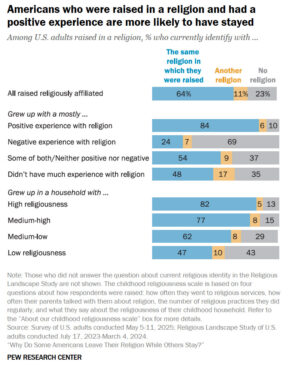
According to Pew research, Americans who were raised in a religion and had a positive experience are more likely to have stayed. Chart courtesy Pew Research Center

“Our data shows that the nature of their religious experiences as children — that is, whether they were mostly positive or negative — plays a significant role in whether they stay in their childhood religion as adults,” the study’s authors wrote.

Eighty-four percent of those who had a positive experience as children stayed in the same faith when they became adults, while 69% of those who had a negative experience now have no religion, according to the report

Americans who grew up in what Pew called “highly religious” homes were more likely to keep their childhood faith (82%) than those raised in homes with “low levels of religiosity” (47%). Those most likely to keep their childhood faith were Hindus (82%), followed by Muslims (77%), Jews (76%), those with no religion (73%), Protestants (70%), Catholics (57%), Latter-day Saints (54%) and Buddhists (45%).

Most switching between faiths comes before people turn 30 years old, according to the report. Of those who switched religion, 85% percent did so before age 30, including 46% who switched as teenagers or children.

About half of Americans (53%) who no longer claim a religion, known as nones, after growing up religious did so by age 18. Of those who switched religions, about 3 in 10 did so as teenagers.

Americans who stick with their childhood faith do so because it works for them, according to the report.

Many cited their faith’s beliefs (64%) as the top reason they retained their faith, along with having their spiritual needs met (61%) or finding meaning in life (51%) through faith. Only about a third (32%) said the faith’s social or political teachings are important reasons to keep their faith.

Protestants (70%) and Catholics (53%) were more likely to indicate their faith’s teachings were an important reason to stay compared to Jews (45%). Protestants (65%) and Catholics (54%) were also most likely to say their faith fulfills their spiritual needs. Jews were more likely to cite a sense of community (57%) or their faith’s traditions (60%) as why they stay with their religion.

Few Americans say they stay in their childhood faith out of a sense of religious obligation, including 33% of Jews, 30% of Catholics and 24% of Protestants.

Many of those who left their childhood faith and now have no religion say they don’t need religion and don’t believe, the survey suggests. Among the most important factors were that they stopped believing their faith’s teachings (51%), that religion was no longer important to them (44%) and that they gradually drifted away (42%). Scandals involving religious leaders (34%), unhappiness about social and political teachings (38%) or the way that the religion treats women (29%) were also factors.


According to Pew research, 56% of U.S. adults identify with their childhood religion. Chart courtesy Pew Research Center

Researchers also asked those who have no religion about why they are not affiliated with a faith. Among the most important reasons were that they feel they can be moral without a religion (78%), that they question religious teaching (64%) and that they don’t need religion to be spiritual (54%). About half said they don’t trust religious organizations (50%) or religious leaders (49%).

About 30% of Americans say they have no religion — a figure that has remained constant since 2020.

The report found that about 3% of Americans who were raised without any religion now identify with a faith — largely for the same reasons as religious Americans. They embrace their new faith’s beliefs (61%), say the faith meets their spiritual needs (60%) and say the faith gives their life meaning (55%), they indicated.

As part of the study, researchers also looked at the religious practices of children in the U.S. from the viewpoint of their parents. Just under half of parents with kids under 18 said their children say prayers at night (46%), say grace at meals (43%), read religious stories (43%) or attend services at least monthly (43%).

Protestant parents (61%) were most likely to say their children attend services monthly. They are also most likely (35%) to say their children are being raised in a highly religious household. Nones are least likely to say their children attend services monthly (7%) or are being raised in a highly religious household (1%).

Mothers (39%) are about twice as likely as fathers (17%) to say they play the primary role in teaching their kids about religion, according to the study.
'An alien in the house of God': Canterbury's gay dean wrestles with inaction on LGBTQ+ rights

(RNS) — Ahead of a vote in the Church of England's House of Bishops on same-sex marriage, David Monteith feels the church has given up on its commitment to reconciliation.


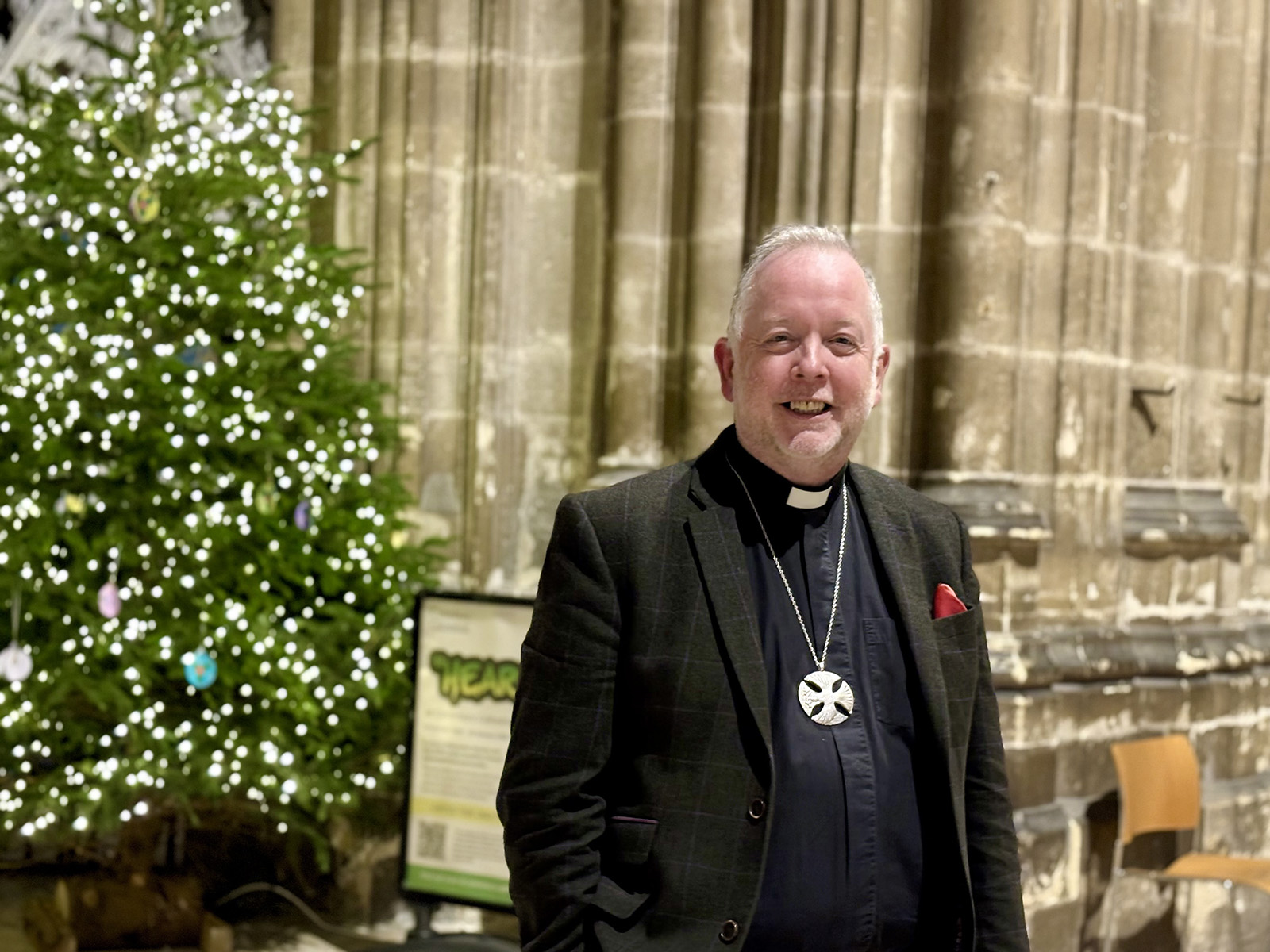
The Very Rev. David Monteith, dean of the Canterbury Cathedral in England, poses beside a Christmas tree in the entrance to the cathedral on Dec. 12, 2025. (RNS photo/Yonat Shimron)


Yonat Shimron
December 16, 2025
RNS

CANTERBURY, England (RNS) — The Very Rev. David Monteith has a very public role. As dean of the Canterbury Cathedral, the mother church of the Church of England and the larger Anglican Communion, he oversees England’s oldest and grandest cathedral.

Yet despite his important caretaking role for the Church of England’s most iconic institution, Monteith feels in many ways like an alien.

As a gay man, he functions within a church that does not allow people like him to marry. Nor will it allow a stand-alone church service of blessings celebrating same-sex relationships, only a blessing within a regularly scheduled service.

Monteith, who is 57, has been living with his partner, David Hamilton, a retired nurse specializing in palliative care, since Monteith was 21 years old. The couple registered their civil partnership in 2008 after it became possible to do so. Since then, same-sex marriage has become legal across the U.K., but not in the Church of England.

“The mutual support that we have for one another has been crucial in all of my ministry, wherever I’ve been,” said Monteith of his lifelong partner. “I can’t really imagine having done the things I’ve done without that kind of domestic support and reliability and rock that my partner gives me.”

While some Protestant denominations around the world have granted LGBTQ+ Christians full equality — allowing them to be ordained and their marriages sanctioned in the church — the Church of England has only made tentative steps toward inclusion.


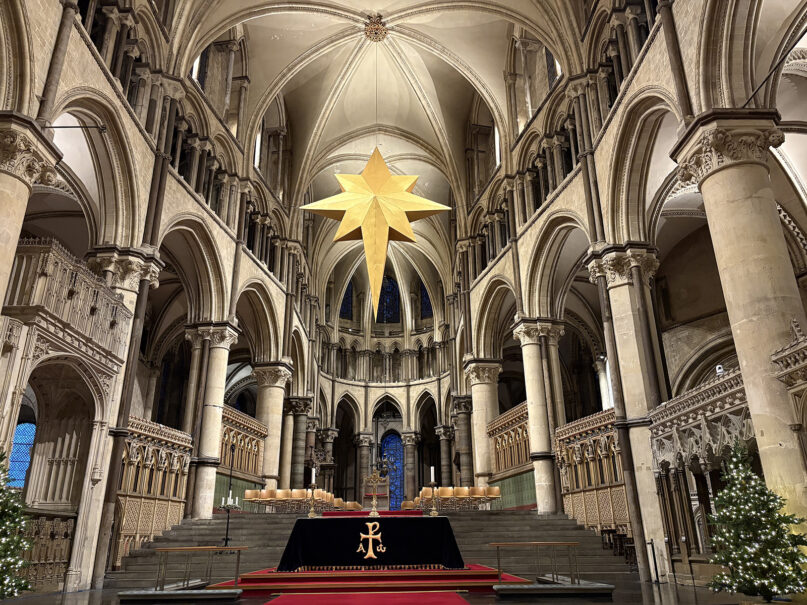
Christmas decorations adorn the Canterbury Cathedral in England. (RNS photo/Yonat Shimron)

On Tuesday (Dec. 16), the Church of England’s bishops are expected to vote on whether to expand LGBTQ+ rights, as part of the Living in Love and Faith discernment process begun in 2017. But at their October meeting, the bishops issued a statement that there would be no immediate changes to the protocols already introduced, and few expect much to happen.

This has left Monteith dejected.

“I’m pretty fed up with the Church of England as an institution,” said Monteith. “I think it’s actually become more and more homophobic over the years.”

Monteith can list the many indignities he has encountered over the years: the ways reference to his partner is often omitted in the last paragraph of his biography; the time a bishop asked him to make sure his partner was not around when certain clergy visited; the dinner invitations that excluded his partner; the churches he would never be invited to preach at and the fellow priests who avoid talking to him.


Of these slights, Monteith said, “One senses this kind of underlying disrespect and disdain with multiple microaggressions.”

The Canterbury dean is one of nearly 7,000 people who recently signed a public letter saying they were “deeply disappointed” with the bishops’ stonewalling.

“We long for the Church of England to become a truly hospitable Church for LGBTQ+ people, where all may find authentic welcome, safety, and joy in the life of Christ’s Body,” the letter said.

Chantal Noppen, the national coordinator for Inclusive Church, an ecumenical network of U.K. Christians for full inclusion, said many Anglicans are not OK with the status quo.

“The ones who signed the letter are people who are trying to stay and believe this can change,” she said. “There are thousands more that have already walked away, and we’ll never hear from them, and that should bother us, I think.”

At their October meeting, Church of England bishops agreed that prayers of blessing for same-sex couples may not be used at stand-alone, or bespoke, services because of concerns that it might be perceived as a same-sex marriage service. Instead, the bishops suggested the church’s legislative body, the General Synod, be asked to authorize stand-alone prayers, a change that would require agreement of two-thirds of the synod.

Effectively, that is very unlikely to happen, said Nic Tall, national coordinator for Together for the Church of England, an advocacy group for LGBTQ+ equality. Surmounting that two-thirds threshold is going to be virtually impossible given the increasingly conservative makeup of the synod’s three bodies — the House of Bishops, the House of Clergy and the House of Laity, Tall explained.


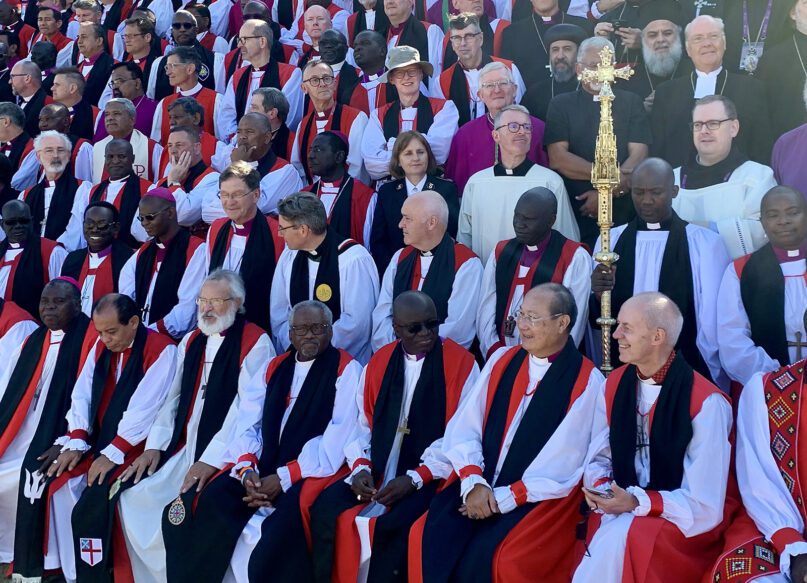
The Anglican bishops attending the Lambeth Conference prepare for their group photograph during the 2022 Lambeth Conference at the University of Kent in Canterbury, England, July 29, 2022. (Photo by Neil Turner for the Lambeth Conference)

The bishops also said that on the advice of legal counsel the only way to allow same-sex marriage for clergy would be to change canon law, a long and cumbersome process that would require Parliament’s approval because the Church of England is the established state church.

“We’ve had clergy who have been feeling, well, maybe this year, I will finally be able to marry my partner of decades-long standing,” Tall said. “And every time we sort of reach the point of any sort of decision or forward progress another hitch is found, and it’s, ‘Oh, well, we’ll have to push the process back a bit.’”

For Monteith, whose calling is bound up with the Christian understanding of reconciliation, these latest actions are a retreat from that teaching.

An Irishman, Monteith was born in Enniskillen, a Northern Irish town 80 miles west of Belfast.The town is mostly remembered for the 1987 bomb planted by the Irish Republican Army that killed a dozen people at an annual gathering for fallen soldiers. One of those injured, Gordon Wilson, lost his daughter, Marie, in the blast, but later said his faith in Jesus led him to forgive the IRA.

That example of forgiveness led Monteith to consider the priesthood. Peacemaking felt to him a worthy mission.

He met his partner at a church in the Lake District of England. Both had been brought up in traditionally conservative homes and were initially tentative about whether they should live as gay men.

“We weren’t sure whether it was right to form a gay relationship or not, but I think through the forming of that partnership we discovered that it was a good way to live,” Monteith said.

Monteith is not by nature an activist. He dresses formally in a black suit with a priest’s collar. In keeping with the season of Christmas, he sports red socks and a red handkerchief in his jacket pocket. Besides preaching at the cathedral on many Sundays, he manages a staff of 250, about 600 volunteers and an annual budget of more than 14 million pounds.

He feels passionately about LGBTQ+ equality but said he’d have to think carefully before undertaking any act of resistance.

“I’m very aware that this is not a small, ordinary parish,” he said. “What I decide to do will be seen, no doubt, by many people, and so it will have significance.

He’s aware of the theological differences around homosexuality in England as well as among Anglicans abroad, but he thinks a solution can be forged. No clergy should be required to officiate at a gay marriage, if their conscience is opposed to it, he said.

After the bishops’ October meeting, he did pen a blog post expressing his frustration. He wrote that he felt “winded” by the bishops’ inaction. “The sense of being an ‘alien in the household of God’ grows,” he wrote.

He anticipates that some priests may decide to offer stand-alone blessing services for same-sex couples despite the ban and that other priests may decide not to officiate at any weddings at all unless same-sex weddings are also allowed. Both tactics have been used elsewhere in other denominations as a way to press for change.

Monteith tries to hope. The cross he wears around his neck was fashioned by the Saxons, who came to the British Isles after the Romans and under their rule established the cathedral. His particular cross, given to him when he became dean, is etched with a dove of peace. That is meaningful to him — a reminder that though he is weary he still feels his old calling.

“While, specifically, I’m a Christian,” he said, holding the cross in his hands, “actually, my work is to be part of the making of peace and the bringing of people of different perspectives together. I know that peace and reconciliation is hard-won. It’s not cheap. It’s costly to everybody involved, but it starts, in my mind, with the ability to imagine a future in which reconciliation has happened, and that’s the key first step. ”


\