Friday, December 19, 2025

Even With Trump’s Support, Coal Power Remains Expensive and Dangerous


nnah Wiseman – Seth Blumsack
December 19, 2025


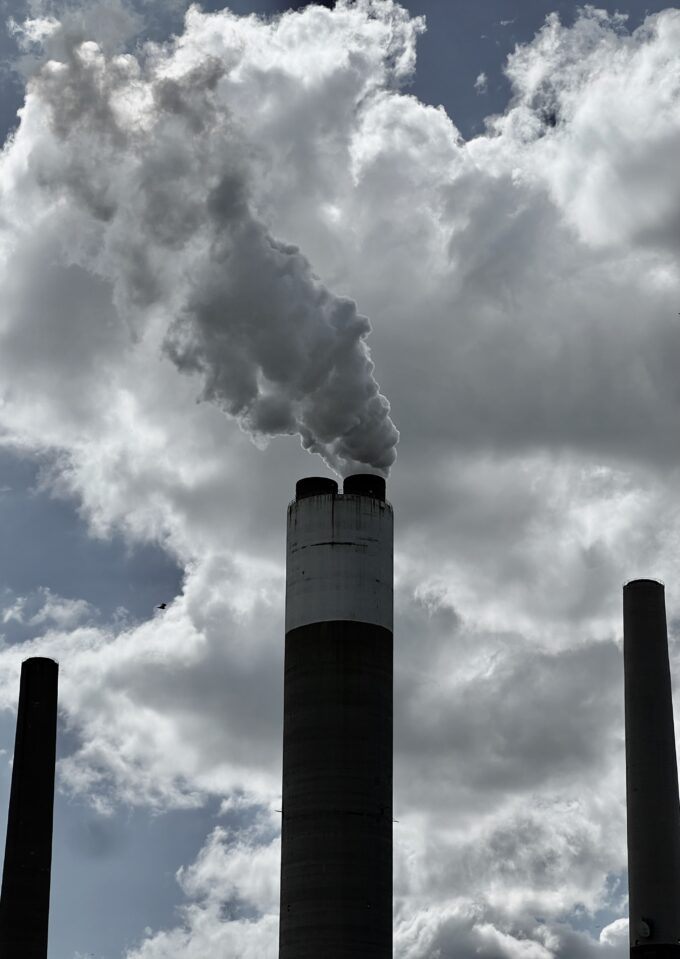
Clifty Coal Power Plant, Madison, Indiana. Photo: Jeffrey St. Clair.


As projections of U.S. electricity demand rise sharply, President Donald Trump is looking to coal – historically a dominant force in the U.S. energy economy – as a key part of the solution.

In an April 2025 executive order, for instance, Trump used emergency powers to direct the Department of Energy to order the owners of coal-fired power plants that were slated to be shut down to keep the plants running.

He also directed federal agencies to “identify coal resources on Federal lands” and ease the process for leasing and mining coal on those lands. In addition, he issued orders to exclude coal-related projects from environmental reviews, promote coal exports and potentially subsidize the production of coal as a national security resource.

But there remain limits to the president’s power to slow the declining use of coal in the U.S. And while efforts continue to overcome these limits and prop up coal, mining coal remains an ongoing danger to workers: In 2025, there have been five coal-mining deaths in West Virginia and at least two others elsewhere in the U.S.

A long legacy

Until 2015, coal-fired power plants generated more electricity than any other type of fuel in the U.S. But with the rapid expansion of a new type of hydraulic fracturing, natural gas became a cheap and stable source for power generation. The prices of solar and wind power also dropped steadily. These alternatives ultimately overcame coal in the U.S. power supply.

Before this change, coal mining defined the economy and culture of many U.S. towns – and some states and regions, such as Wyoming and Appalachia – for decades. And in many small towns, coal-related businesses, including power plants, were key employers.

Coal has both benefits and drawbacks. It provides a reliable fuel source for electricity that can be piled up on-site at power plants without needing a tank or underground facility for storage.

But it’s dirty: Thousands of coal miners developed a disease called black lung. The federal government pays for medical care for some sick miners and makes monthly payments to family members of miners who die prematurely. Burning coal also emits multiple air pollutants, prematurely killing half a million people in the United States from 1999 through 2020.

Coal is dangerous for workers, too. Some coal-mining companies have had abysmal safety records, leading to miner deaths, such as the recent drowning of a miner in a sudden flood in a West Virginia mine. Safety reforms have been implemented since the Big Branch Mine explosion in 2010, and coal miner deaths in the U.S. have since declined. But coal mining remains a hazardous job.

A champion of coal

In both of his terms, Trump has championed the revival of coal. In 2017, for example, Trump’s Department of Energy asked the Federal Energy Regulatory Commission to pay coal and nuclear plants higher rates than the competitive market would pay, saying they were key to keeping the U.S. electricity grid running. The commission declined.

In his second term, Trump is more broadly using powers granted to the president in emergencies, and he is seeking to subsidize coal across the board – in mining, power plants and exports.

At least some of the urgency is coming from the rapid construction of data centers for artificial intelligence, which the Trump administration champions. Many individual data centers use as much power as a small or medium city. There’s enough generation capacity to power them, though only by activating power plants that are idle most of the time and that operate only during peak demand periods. Using those plants would require data centers to reduce their electricity use during those peaks – which it’s not clear they would agree to do.

So many data centers, desperate for 24/7 electricity, are relying on old coal-fired power plants – buying electricity from plants that otherwise would be shutting down.

Limits remain

Despite the Trump adminstration’s efforts to rapidly expand data centers and coal to power them, coal is more expensive than most other fuels for power generation, with costs still rising.

Half of U.S. coal mines have closed within the past two decades, and productivity at the remaining mines is declining due to a variety of factors, such as rising mining costs, environmental regulation and competition from cheaper sources. Coal exports have also seen declines in the midst of the tariff wars.

The U.S. Department of the Interior’s recent effort to follow Trump’s orders and lease more coal on federal lands received only one bid – at a historically low price of less than a penny per ton. But in fact, even if the government gave its coal away for free, it would still make more economic sense for utilities to build power plants that use other fuels. This is due to the high cost of running old coal plants as compared to new natural gas and renewable infrastructure.

Natural gas is cheaper – and, in some places, so are renewable energy and battery storage. Government efforts to prevent the retirement of coal-fired power plants and boost the demand for coal may slow coal’s decline in the short term. In the long term, however, coal faces a very uncertain future as a part of the U.S. electricity mix.The Conversation

This article is republished from The Conversation under a Creative Commons license. Read the original article.

Hannah Wiseman is Professor of Law at Penn State. Seth Blumsack is Professor of Energy and Environmental Economics and International Affairs at Penn State.

The Doomsday Glacier Flunks 2025 Checkup


 December 19, 2025

Image by Amar Adestiempo.

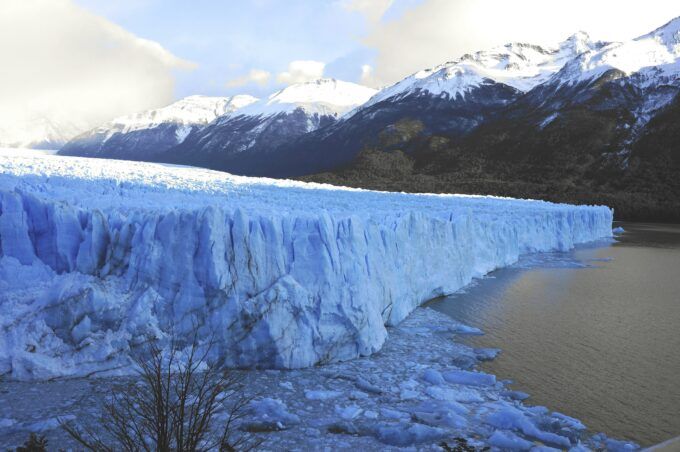
Thwaites, the most studied glacier in the world, commands attention because it is not only the widest in the world at 80 miles but also the shakiest. And its nickname “The Doomsday Glacier” certainly sets it apart from the 500 other named glaciers in Antarctica. Based upon new research of 2024-25, polar scientists have been speaking out like never before, making public predictions about a rapidly deteriorating situation and insisting upon an end to burning fossil fuels, or else!

The new studies identify new concerns: (1) undersea storms that deteriorate/melt from below (2) hundreds of ice earthquakes, fracturing the glacier (3) Thwaites Eastern Ice Shelf, a major portion of the glacier, seriously losing stability.

And finally, a final goodbye to the iconic International Thwaites Glacier Collaboration (ITGC) as it goes dark by year-end 2026. The Trump administration’s FY2026 budget request includes severe cuts to polar science, aiming to end support for the research icebreaker Nathaniel B. Palmer (NBP).

Going forward, Thwaites cascading ice shelves will be unanticipated by polar researchers, as the Nathaniel B. Palmer icebreaker, a veteran of 30 years, is no longer available. It’s been canceled by budget cuts, and the only way to study sea ice is with a vessel. From this point forward, Thwaites abstruse behavior will come as an unwelcomed surprise to coastal megacities of the world.

Nevertheless, as of today, Thwaites followers can exhale because ITGC concluded that the monster glacier will continue to retreat but will not collapse this century and will only account for several inches of sea level rise by 2100. This conclusion is confusing as several recent studies outside of the purview of ITGC are issuing alarm signals of imminent danger and catastrophic sea level rise for today’s generation, which comes as a real shocker, explained herein. This troubling difference of opinion amongst polar scientists likely points to the difficulties in analyses of an ice continent the size of Antarctica, or the US and Mexico combined; thus, subjective opinions become more prominent and can easily radically disagree. Of special note, the disagreement by scientists over future sea level rise is wide enough to drive a Mack truck through.

Thwaites is so over-the-top controversial that it has its own international study group: International Thwaites Glacier Collaboration involving 100 scientists from world-leading research institutes, but going dark soon. Interestingly, the ITGC web site states: “Thwaites Glacier’s retreat has accelerated considerably…, our findings indicate it is set to retreat further, and faster, through the 21st and 22nd centuries, and general collapse of the West Antarctic Ice Sheet over this timeframe cannot be ruled out.” The date of this general statement on the web site is not provided, but ITGC was established in 2018. Additionally, a solution is offered: “Immediate and sustained climate change mitigation (decarbonization) offers the best hope of delaying this ice loss and avoiding initiation of similar unstable retreat in marine-based sectors of East Antarctica.”

In stark contrast to ITCG’s assessment of sea level rise, other studies reported over the past 24 months by polar scientists, who are not necessarily with the ITCG, are bone rattling, e.g. an August 2024 meeting of the Scientific Committee on Antarctic Research, 1,500 scientists: “Antarctica’s glacial melt is advancing faster than ever before in recorded history.” Gino Casassa, glaciologist and head of the Chilean Antarctic Institute, one of the attendees: “Based upon current trends, sea levels will be up 13’ by 2100,” which begs the question of how high by 2035, one decade from now, and furthermore, this projection by Dr. Casassa is wide of the mark of the ITCG. In fact, this is the first known public statement of such an aggressive prediction. Additionally, in general support of Dr. Casassa’s 13-feet, in November 2024, 450 polar scientists held an emergency summit in Australia, stating: “If we don’t act, and quickly, the melting of Antarctica ice could cause catastrophic sea level rise around the globe within our lifetimes.” It is believed this is the first time such a shocking statement, specifically about Antarctica, has been issued by a major gathering of scientists. “Catastrophic, within our lifetimes” is a real punch to the gut.

Both instances go well beyond expectations by the Intergovernmental Panel on Climate Change (IPCC) and ITCG and published research in general. Both call for immediate halt to greenhouse gases, specifically carbon dioxide CO2 emissions from fossil fuel burning as well as decarbonization. Nevertheless, in the face of scientists’ warnings of deep, deep trouble, the United States is taking a path of climate change ignorance. This puts the world at risks which most of today’s American politicians will not have to face because of indeterminate timing, making it easier to “go for the money” and “screw the environment.” As such, sorrowfully, money becomes the new Golden Calf (Book of Exodus). How’d that biblical story work out?

A chilling new study in Science News, University of Manitoba, with a telling headline: Satellites Spot Rapid ‘Doomsday Glacier’ Collapse, Summary: “Two decades of satellite and GPS data show the Thwaites Eastern Ice Shelf slowly losing its grip on a crucial stabilizing point as fractures multiply and ice speeds up. Scientists warn this pattern could spread to other vulnerable Antarctic shelves… The study notes that the pinning point, once a key factor holding the TEIS in place, has slowly shifted into a feature that now contributes to its instability. This four-stage pattern of structural decline may be a signal for other Antarctic ice shelves that appear to be entering similar phases of weakness.” (Debangshu Banerjee, et al, Evolution of Shear‐Zone Fractures Presages the Disintegration of Thwaites Eastern Ice Shelf. Journal of Geophysical Research: Earth Surface, 2025)

Another new study, as of December 2025, published in Nature Geosciences is the first to systematically analyze how the ocean is melting ice shelves over just hours and days, rather than seasons or years, another real shocker. Swirling underwater storms are the protagonists that aggressively melt from down below. The study is listed in CNN Climate, Underwater ‘Storms’ are Eating Away at the Doomsday Glacier. It Could Have a Big Impact on Sea Level Rise d/d Dec. 10, 2025.

Another new study of Thwaites discusses glacial earthquakes, which weaken the gigantic glacier. About two-thirds of the events detected, 245 out of 362, were located near the marine end of Thwaites. Most of these glacial earthquakes are due to capsizing icebergs. A glacial earthquake is created when tall, thin icebergs fall off a glacier into the ocean. When icebergs capsize, they clash violently with the “mother glacier.” This generates strong mechanical ground vibrations, seismic waves, that propagate thousands of kilometers from origin. (Hundreds of Iceberg Earthquakes Detected at the Crumbling End of Antarctica’s ‘Doomsday Glacier’, Phys.org, December 14, 2025).

Whether the Doomsday Glacier craters with a big splash today, tomorrow, or next century, the fact remains that polar scientists agree it is ultra-high risk surrounded by uncertainty. The dimensions are well known, timing of sea level rise is guesswork. But because it is huge and known to be extremely unstable, someday it’ll disrupt civilization beyond the comprehension of today’s stubborn ill-informed climate deniers. And, assuming the 450 polar scientists are close to correct; they’ll see it during their lifetimes. Then what?

Robert Hunziker lives in Los Angeles and can be reached at rlhunziker@gmail.com.

Pinochetism Returns to Power in Chile

December 19, 2025

Photograph Source: Ministerio de Relaciones Exteriores de Chile – CC BY 2.0cl

José A. Kast’s resounding victory in the runoff election is bound to have a profound influence on Chile. A solid, neo-fascist, extreme right-wing force consolidated as a result of the convergence of two radical variants of Pinochetism —one led by Kast and the other, even more extreme, by Johannes Kaiser— to which rushed to join the standard-bearer of a political fiction called the “democratic right,” embodied by the former mayor of Providencia, Evelyn Matthei, the supposed heir to Sebastián Piñera’s legacy.

According to Chilean political analyst Jaime Lorca, compulsory voting—previously optional in Chile—channeled social discontent with Gabriel Boric’s government toward Pinochetism and its allies. Keep in mind that Boric’s approval ratings in the second half of his term hovered around a meager 30 percent. Issues such as insecurity, hatred of immigrants Trump style (especially Venezuelans), and inflation —close to 4 percent annually— were stirred up demagogically by Kast, a man as careless with figures and statistics as Javier Milei.

In an attempt to convince voters of the catastrophic dimensions of insecurity, he went so far as to say in his debate with the ruling coalition candidate Jeannete Jara that in Chile “1.200.000 people are murdered every year.” When he realized his mistake, he spoke then of 1.2 billion people murdered in Chile, whose total population is 19 million. The actual figure for 2024 was 1,207 homicides, a rate of 6.0 homicides per 100.000 inhabitants, a figure comparable to that of the United States and slightly higher than that of Argentina.

Despite this, the mainstream media on both sides of the Andes exaggerate insecurity in order to use fear to attract votes to the fascist parties and organizations in both countries. In any case, blunders of this kind were common in Kast’s campaign but, as in Argentina, also in Chile there is a large sector of the electorate that votes because it is an obligation. This is a public which is not interested in politics at all and is not bothered by the nonsense that a candidate may utter. Issues such as those we are analyzing account for the surprising number of votes obtained in the first electoral round by the People’s Party, led by Franco Parisi, which scraped together 20 percent of the votes and was just four percentage points behind Kast. A large part of this electoral turnout —85 percent of the registered voters—  made up mainly of new voters who go to the polls because voting is compulsory, is deeply influenced by the ideology of anti-politics, hyper-individualism, and contempt for anything that smacks of collective action, and in the runoff they leaned in favor of Kast. Some, perhaps, threw aside the deep-rooted anti-communism that prevails in Chile and supported Jara’s candidacy, but not to the extent necessary to prevent a catastrophic defeat.

What can we expect from a government headed by a fascist like Kast? Brutal cuts in social spending, a re-evaluation of the progress made in relation to women’s rights, and a redefinition of Chile’s international alliances. He will surely attempt to deepen the economic model developed during the Pinochet dictatorship, the foundations of which remained untouched by Chile’s long and unfinished democratic transition. Unfinished because the power relations and concentration of wealth that emerged after the fateful September 11, 1973, far from being reversed by the exercise of democracy, were consolidated and reinforced by successive governing coalitions. But in the context of the new US National Security Doctrine, Kast will be pressured by Washington to undertake the arduous task of cooling his country’s warm relations with China. But the Asiatic giant is Chile’s largest trading partner and the one with which a key Free Trade Agreement was signed in 2005.

On the other hand, the composition of the Chilean parliament could be a significant obstacle able to curb Kast’s foreseeable excesses. The Senate is divided equally, in two halves and it would be extremely difficult for Kast to obtain the 4/7 of the votes (57 percent) needed to reform the Constitution in the Chamber of Deputies. In any case, the formation of a government of this type represents an enormous challenge for the ruling -and almost defunct- Frente Amplio (Broad Front) and the extremely heterogenous progressive camp in general. As in Argentina after Milei’s victory, these forces face a fundamental challenge: redefining a global project for the country, devising a new narrative, designing a concrete agenda for government, revitalizing grassroots organizations, mobilizing their members, and resolving the always thorny issue of political direction and leadership.

These are urgent tasks that cannot be postponed, because any delay will result in the creation of a set of historical and structural conditions for the relaunch of a long-lasting neo-fascist political cycle that will cause serious harm to our peoples. Yet, it would be a crucial mistake to give in to pessimism and believe that yesterday’s defeat is definitive. However, such a resounding setback requires an effort of self-criticism that, among other things, realizes that the formula of “light progressivism” that invite our peoples to politically advance along an illusory “wide middle avenue” equidistant from the left and right only serve to produce further frustrations and throw open the doors of the democratic state to the advent of the extreme right or colonial neo-fascism. In times as immoderate as these, marked by a profound capitalist crisis and the imperialist offensive and the brutal Trump Corollary hanging over the heads of our peoples, moderation, far from being a virtue, becomes an unforgivable vice.

This article was produced for Página 12 and Globetrotter.

Atilio A. Borón is an Argentine sociologist, political scientist, professor, and writer. PhD in Political Science from Harvard University.