Thursday, January 01, 2026

The Crans-Montana fire: a Swiss tragedy that raises questions

Geneva (AFP) – The deadly fire that ripped through a crowded bar in the Swiss ski resort town of Crans-Montana raises numerous questions.


Issued on: 02/01/2026 - RFI

Police controlled access to the street where a fire ripped through a crowded bar during New Year celebrations in Crans-Montana © MAXIME SCHMID / AFP

Around 40 people were killed and over 100 others injured in the blaze at the New Year's party.

As investigators begin the gruelling task of identifying the victims and trying to determine what happened, here are some of the main issues they will seek to probe.
How did the tragedy occur?

"It was around 1:30 am (0030 GMT) when smoke was spotted" coming out of Le Constellation bar at the heart of the upscale resort, police commander Frederic Gisler told reporters.

A few seconds later, a witness contacted the police.

"Immediately, the red alarm, which mobilises the fire department, was triggered," Gisler said, adding that firefighters "quickly contained the blaze" while the injured were being treated.

Authorities said they launched an investigation into the fire, and declined to speculate on what caused the tragedy.

Several witness accounts, broadcast by various Swiss, French and Italian media, meanwhile seemed to point to sparklers that were apparently mounted on top of champagne bottles and held aloft by restaurant staff as part of a regular "show" put on for patrons who made special orders to their tables.

"I think there were some ladies, waitresses, with champagne bottles and little sparklers. They got too close to the ceiling, and suddenly it all caught fire," Axel, who was present at the time of the incident, told the Italian media outlet Local Team.


Was the establishment up to scratch?

Le Constellation, located on the ground floor of a residential building, has a capacity of 300 people, plus another 40 people on its terrace, according to the Crans-Montana website.

Several witnesses said the event space in the basement of the establishment, where the fire began, was connected with the ground floor by only a staircase, which some described as "narrow".

But Wallis's chief prosecutor Beatrice Pilloud did not confirm this, stressing that the cause of the tragedy was still being investigated.

Responding to questions from reporters, she said she had seen the site herself.

"What exactly constitutes a narrow staircase?" she asked, stressing that the probe would "determine whether all safety standards were met".

Pilloud also said it was "too early" to comment on whether emergency exits met the required standards, or whether the necessary procedures had been followed before organising the New Year's event.

Multiple sources told AFP on Thursday that the bar owners are French nationals: a couple originally from Corsica who, according to a relative, are safe and sound, but who have been unreachable since the tragedy.

Who are the victims?

Authorities have not yet released any information on the victims' identities, but the bar was a popular spot for tourists and was known to draw a young crowd.

"Given the international nature of the Crans resort, we can expect foreign nationals to be among the victims," Gisler said.

He said Swiss authorities were "in close contact with the victims' families, whom we are informing in real time, as well as with the various embassies involved".

Italian Foreign Minister Antonio Tajani told Italian broadcaster Rete 4 that around 15 Italians had been injured in the fire, and a similar number remained missing.

The French foreign ministry said nine French citizens figured among the injured, and eight others remained unaccounted for.

Given the bar's usually youthful clientele, questions were also being raised about the possible presence of minors at the time of the tragedy.

Stephane Ganzer, head of Wallis's security department, did not confirm that.

But, he told reporters, "you can imagine that on New Year's Eve, in a ski resort, the population is undoubtedly quite young".

© 2026 AFP
Australia's Khawaja to retire after Ashes finale, slams 'racial stereotyping'

Sydney (AFP) – Usman Khawaja said Friday he will retire from international cricket after the fifth and final Ashes clash against England, leaving a legacy as Australia's first Muslim Test cricketer while lashing out at perceived "racial stereotyping" during his 15-year career.

Issued on: 02/01/2026 - RFI


Australia's Usman Khawaja will retire after the final Ashes Test in Sydney © DAVID GRAY / AFP

The 39-year-old will pad up for the last time, should he be selected, when the Test gets under way in Sydney on Sunday, ending months of speculation about his future.

It would be an 88th Test for the classy left-hander, culminating a career where it began after making his debut at the Sydney Cricket Ground in 2011, also against England.

"The number one emotion is contentment. I'm very lucky to have played so many games for Australia the way I have," Khawaja said. "I hope I have inspired people along the way.

"I'm a proud Muslim coloured boy from Pakistan who was told that he would never play for the Australian cricket team. Look at me now, and you can do the same," he added.

Khawaja immigrated to Australia from Islamabad as a child, battling the odds to become the country's first Pakistan-born, and first Muslim, national player.

At one point, he was the only Asian first-class player in Australia and is credited as a role model who opened doors for others.

"Usman has made a huge contribution to Australian cricket both through his outstanding achievements as one of our most stylish and resilient batters since his Test debut 15 years ago, and off field, particularly through the Usman Khawaja Foundation," said Cricket Australia chief Todd Greenberg.

"On behalf of Australian cricket I would like to thank and congratulate Usman for all he has achieved."

Khawaja's foundation helps youths from refugee, immigrant, Indigenous, and poor socioeconomic backgrounds through introductory cricket programs and educational support.

-- 'Attacked me' --

Khawaja, a qualified pilot, has plundered 6,206 runs in Test cricket with 16 centuries, averaging 43.39.

He smashed a career-high 232 against Sri Lanka a year ago, but has not made three figures since.

The current Ashes series has been a rollercoaster ride, with the veteran batsman coming under scrutiny.

Australia's Usman Khawaja will retire after the final Ashes Test in Sydney 
© DAVID GRAY / AFP


He injured his back in the first Test in Perth and was replaced as opener in the second innings by Travis Head who blasted a match-winning century.

Khawaja did not feature in the next match at Brisbane and was omitted from the team for the third Test in Adelaide, only to get a lifeline when Steve Smith dropped out ill just before the toss.

He came in at number four and hit 82 and 40 before making 29 and 0 in the fourth Test at Melbourne.

"I'm glad I get to leave on amy own terms, with a little bit of dignity, and go out at the SCG where I love," he said, while expressing frustration at how he was treated.

"When I did my back (in Perth), I hurt my back and had back spasms and it was something I couldn't control.

"The way the media and past players came out and attacked me. I could have copped it for a couple of days but it went on for five days.

"The way everyone came out at me about my preparation, 'he's not committed to the team. Only worried about himself. Playing a golf competition. He's selfish, he didn't train hard enough. He's lazy'.

"These are the same racial stereotypes (I thought we had moved past).

"But obviously we haven't fully moved past that. I haven't seen anyone treated like that in the Australian cricket team before."

He nevertheless admitted the writing was on the wall during the current Ashes series.

"Going into Adelaide and then not being picked initially for that game was probably a sign for me to say 'all right, it's time to move on'," he said.

Khawaja also played 40 one-dayers and nine Twenty20 internationals.

© 2026 AFP

SPACE/COSMOS

Where The Elements Come From

The chlorine and potassium needed to support planet formation and sustain life come from exploding stars. CREDIT: JAXA

By 


Why are we here?” is humanity’s most fundamental and persistent question. Tracing the origins of the elements is a direct attempt to answer this at its deepest level. We know many elements are created inside stars and supernovae, which then cast them out into the universe, yet the origins of some key elements has remained a mystery.

Chlorine and potassium, both odd-Z elements — possessing an odd number of protons — are essential to life and planet formation. According to current theoretical models, stars produce only about one-tenth the amount of these elements observed in the universe, a discrepancy that has long puzzled astrophysicists.

This inspired a group of researchers at Kyoto University and Meiji University to examine supernova remnants for traces of these elements. Using XRISM — short for X-Ray Imaging and Spectroscopy Mission, an X-ray satellite launched by JAXA in 2023 — the team was able to perform high-resolution X-ray spectroscopic observations of the Cassiopeia A supernova remnant within the Milky Way.

The scientists utilized the microcalorimeter Resolve device onboard XRISM, providing high energy resolution an order of magnitude better than previous X-ray detectors, which allowed them to detect faint emission lines from rare elements. They then analyzed the X-ray spectrum from Cassiopeia A and compared the abundances of chlorine and potassium with several supernova nucleosynthetic models.

The team discovered clear X-ray emission lines of both elements at abundances far higher than predicted by standard supernova models. This provided the first observational evidence that a supernova can create sufficient chlorine and potassium. The team suggests that strong mixing inside massive stars caused by fast rotation, binary interaction, or shell-merger events, can significantly enhance the production of these elements.


“When we saw the Resolve data for the first time, we detected elements I never expected to see before the launch. Making such a discovery with a satellite we developed is a true joy as a researcher,” says corresponding author Toshiki Sato.

These results reveal that the elements vital for life were produced in harsh, intense environments deep inside stars, far removed from anything resembling the conditions needed for life to emerge. The study also demonstrates the power of high-precision X-ray spectroscopy for probing the origins of elements and physical processes deep inside stars.

“I am delighted that we have been able, even if only slightly, to begin to understand what is happening inside exploding stars,” says corresponding author Hiroyuki Uchida.

Next, the team plans to observe other supernova remnants with XRISM to determine whether the enhanced production of chlorine and potassium is common among massive stars or unique to Cassiopeia A. This will help reveal whether such internal mixing processes are a universal feature of stellar evolution.

“How Earth and life came into existence is an eternal question that everyone has pondered at least once. Our study reveals only a small part of that vast story, but I feel truly honored to have contributed to it,” says corresponding author Kai Matsunaga.

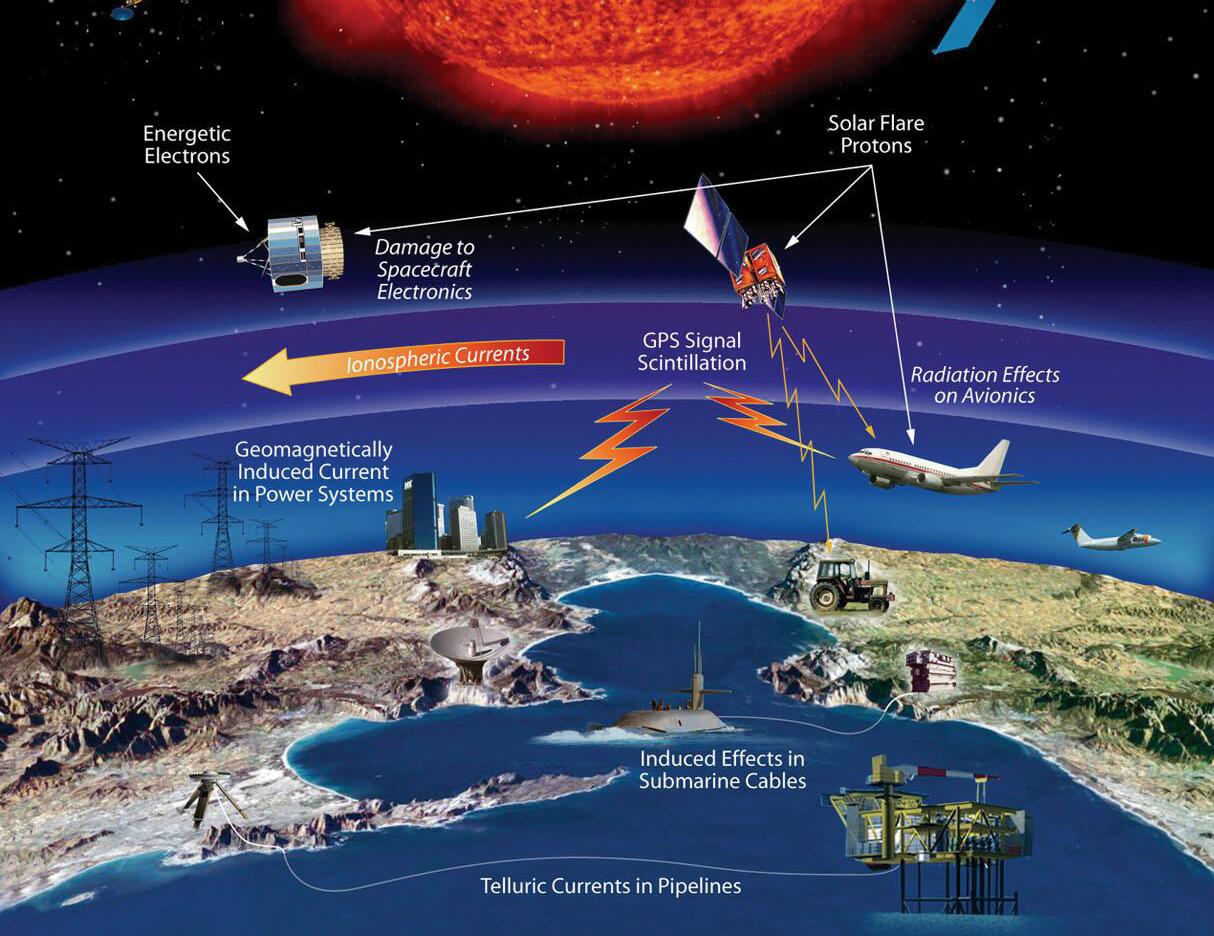
Could the Next Solar Flare Cripple Modern Technology?

  • The Van Allen radiation belts, massive regions of charged particles trapped by Earth's magnetic field, have become "fully charged" due to repeated solar storms.
  • A space weather observer warns that the next major solar storm could cause the energetic plasma in the belts to precipitate toward the planet's upper atmosphere.
  • Intense solar storms pose a significant threat to modern infrastructure, potentially causing major disruptions to satellites, GPS, radio communications, and other space-based operations.The Van Allen radiation belts are massive, doughnut-shaped regions of charged particles trapped by Earth's magnetic field. When the Sun blasts Earth with strong solar wind or solar storms, energetic particles are injected into these belts, increasing their overall energy levels.

Now, the Van Allen radiation belts are "fully charged," according to space weather observer Stefan Burns. He warns that these belts of energetic particles have been building up due to repeated solar storms over the past few months.

"The next solar storm to hit could cause this plasma to precipitate downward toward the planet's upper atmosphere," Burns said.

The effects of intense solar storms are particularly significant for satellites, GPS, radio communications, and space operations, where disruptions can occur.

With growing discussion around space-based data centers and rapidly expanding satellite internet constellations, the question arises: can a modern society built on fragile semiconductors withstand repeated X-class solar flares or a Carrington-class coronal mass ejection?

By Zerohedge 

Joint ground- and space-based observations reveal Saturn-mass rogue planet


Summary author: Walter Beckwith


American Association for the Advancement of Science (AAAS)


Simultaneous ground- and space-based observations of a newly discovered free-floating planet have enabled direct measurement of its mass and distance from Earth, according to a new study. The findings offer insights into the diverse and dynamic pathways by which planets can be cast adrift into interstellar space. Although studies to date have only revealed a handful of such free-floating planets, detections are expected to increase in the coming years, particularly with the NASA Nancy Grace Roman Space Telescope campaign that is scheduled for launch in 2027, notes Gavin Coleman in a related Perspective. “Simultaneous space- and ground-based observations of microlensing events could be applied in the planning of future exploratory missions and could lead to a better understanding of how planets form across the Galaxy.”


Planets are most often found bound to one or more stars, yet a growing body of evidence shows that some wander the galaxy alone. These objects, called free-floating or rogue planets, lack any known stellar companion. And, since they don’t emit very much light, they reveal themselves only through their subtle gravitational effects – a phenomenon called microlensing. One of the main limitations of this discovery method is that it cannot determine the distance to these planets, making independent measurement of their mass difficult. As a result, much about this elusive population of solitary worlds remains speculative.


Here, Subo Dong and colleagues report the discovery of a new free-floating planet detected via a fleeting microlensing event. However, unlike previous detections, Dong et al. uniquely observed this microlensing event simultaneously from both Earth and space, using several ground-based surveys alongside the Gaia space telescope. Tiny differences in the timing of the light reaching these distantly separated vantage points enabled measurement of the microlensing parallax, which, when combined with finite-source point-lens modeling, allowed the authors to determine the planet’s mass and location. It is ~22% the mass of Jupiter and roughly 3,000 parsecs from the center of the Milky Way. Because this planet’s mass is comparable to that of Saturn, Dong et al. argue that it likely formed within a planetary system, rather than in isolation like a small star or brown dwarf. Such low-mass rogue planets are thought to be born around stars and later expelled from their orbital confines through gravitational upheavals, such as interactions with neighboring planets or unstable stellar companions.

NO SEABED  MINING

US Interest In Seabed Mining In Areas Beyond National Jurisdiction – Analysis

Discoverer Inspiration delivers new containment cap to the Deepwater Horizon oil spill on 10 July 2010. In the background are the Discoverer Enterprise, GSF Development Driller II, and Helix Producer I. Photo Credit: U.S. Coast Guard
 photo by Petty Officer 1st Class Jonathan Caruk, Wikipedia Commons


December 31, 2025 
Congressional Research Service (CRS).
By Caitlin Keating-Bitonti

In 1980, Congress passed the Deep Seabed Hard Mineral Resources Act (DSHMRA; 30 U.S.C. §§1401 et seq.) as an interim measure to allow the United States to proceed with seabed mining activities in areas beyond national jurisdiction (ABNJ) until an international regime was in place (i.e., the United Nations Convention on the Law of the Sea [UNCLOS]). DSHMRA established a framework for authorizing U.S. citizens (e.g., individuals, corporations) to explore for and recover minerals from seabed in ABNJ. In general, exploration means the at-sea observation and evaluation of seabed mineral resources and the taking of the resource as needed to design and test mining equipment, and commercial recovery (or exploitation) means the actual at-sea mining and processing of seabed minerals for the primary purpose of commercial use (30 U.S.C. §1403).

On April 24, 2025, as part of a broader national effort to secure reliable supplies of critical minerals, President Trump issued Executive Order (E.O.) 14285, “Unleashing America’s Offshore Critical Minerals and Resources,” which directed certain federal agencies to advance seabed mining activities. This In Focus discusses the actions of the National Oceanic and Atmospheric Administration (NOAA) and U.S. companies related to seabed mining in ABNJ as well as congressional interest in the topic. The regulation of mineral-related activities occurring on the U.S. outer continental shelf by the Department of the Interior’s Bureau of Ocean Energy Management is beyond the scope of this In Focus.

Background on UNCLOS and the International Seabed Authority

UNCLOS was adopted in 1982, establishing a comprehensive international legal framework to govern activities related to the global ocean, including seabed mining. In 1994, the Agreement Relating to the Implementation of Part XI of the United Nations Convention on the Law of the Sea (commonly known as the 1994 Agreement) substantially modified the seabed mining provisions of UNCLOS to address concerns held by many industrialized nations. After the adoption of the 1994 Agreement, UNCLOS received the necessary number of signatories for the agreement to enter into force. The United States is not a party to UNCLOS or the 1994 Agreement.

UNCLOS also established the International Seabed Authority (ISA), an autonomous organization that regulates parties to UNCLOS conducting mineral-related activities in ABNJ. The ISA came into existence with the adoption of the 1994 Agreement and became fully operational in 1996. The United States participates as an observer state in the ISA but, as a non-party, has no vote in ISA business and cannot apply for or obtain a contract for seabed mining exploration or exploitation through the ISA. To date, the ISA has issued 31 exploration contracts. China holds five exploration contracts, the most of any UNCLOS party. The Metals Company (TMC), a Canadian company, has two ISA exploration contracts through sponsorships with Nauru and Tonga. TMC’s two contracts are located in the Clarion-Clipperton Zone (CCZ), a 1.7-million-square-mile area of the seafloor in the Pacific Ocean. The CCZ is estimated to contain more cobalt, manganese, and nickel—identified by the U.S. Geological Survey as critical minerals—than all known land deposits combined.

The ISA has not issued any contracts for exploitation. The ISA is working toward finalizing exploitation regulations.

Exploration Licenses Issued by NOAA

DSHMRA authorized the NOAA administrator to issue exploration licenses and commercial recovery permits to U.S. citizens for seabed mining activities in ABNJ (30 U.S.C. §1412). In 1984, NOAA issued exploration licenses for four sites located beyond U.S. jurisdiction in the CCZ. NOAA issued exploration licenses to four U.S. mining consortia, three of which were multinational private sector consortia with participating American companies. Under DSHMRA, exploration licenses are initially issued for 10 years (30 U.S.C. §1417(a)). NOAA has issued:USA-1 to Ocean Minerals Company, comprising Cyprus Minerals and Lockheed Martin Corporation (American companies);
USA-2 to Ocean Management Inc., comprising Schlumberger Technology (an American company) and Canadian, German, and Japanese companies;
USA-3 to Ocean Mining Associates, comprising Essex Minerals Co. and Sun Ocean Ventures, Inc. (American companies) and Belgian and Italian companies; and
USA-4 to Kennecott Consortium, comprising Kennecott Utah Copper Corporation (an American company) and British, Canadian, and Japanese companies.

NOAA issued these four exploration licenses 10 years before UNCLOS entered into force and 12 years before the ISA became operational. NOAA has not issued any exploration licenses since 1984, although the agency has approved extension requests. A license can be extended by five-year periods (30 U.S.C. §1417(a)). NOAA has not issued any commercial recovery permits.

Two of the four exploration licenses issued by NOAA have been surrendered. In 1997, Ocean Mining Associates relinquished USA-3. In 1999, Ocean Management Inc., the holder of USA-2, dissolved. Thus, NOAA considered USA-2 relinquished (64 Federal Register 3563).

USA-1 and USA-4 remain the only active exploration licenses issued by NOAA pursuant to DSHMRA. Lockheed Martin holds both licenses. It became the sole holder of the licenses by different means. In 1993, Kennecott Consortium relinquished USA-4 to NOAA (58 Federal Register 33933). Ocean Minerals Company, the consortium including Lockheed Martin, applied for USA-4 (58 Federal Register 34782), and NOAA issued the license in 1994 (59 Federal Register 66942). In 1995, Cyprus Minerals withdrew from Ocean Minerals Company, leaving Lockheed Martin as the sole company overseeing USA-1 and USA-4.

USA-1 and USA-4 are expected to remain in effect through June 2, 2027 (87 Federal Register 52743). However, in 2021, the ISA designated an area of the CCZ that partially overlaps with USA-1 as an Area of Particular Environmental Interest, thereby precluding seabed mining activities from taking place in the area. This designation appears to demonstrate that NOAA-issued seabed mining exploration licenses do not have international recognition. Because the United States is not a party to UNCLOS, this would likely be true for any future NOAA-issued commercial recovery permits. According to a 2017 NOAA notice, “any rights a U.S. company may have domestically are not secured internationally.”

Actions taken by Lockheed Martin suggest it may be divesting from seabed mining. In 2023, a Norwegian company, Loke Marine Minerals, acquired two ISA-issued exploration contracts from UK Seabed Resources, a subsidiary of the United Kingdom–based arm of Lockheed Martin. Loke has since filed for bankruptcy, in part due to difficulties raising new capital. Some suggest that the “industry is economically not viable.”

To extend USA-1 and USA-4 beyond June 2, 2027, Lockheed Martin would need to submit an extension request to NOAA at least six months prior to the expiration date. If the licenses are not extended, U.S. entities can request a transfer of USA-1 and/or USA-4. In such cases, NOAA is to process the request pursuant to Title 15, Section 970.516, of the Code of Federal Regulations. According to NOAA, the agency may choose not to actively solicit offers for the transfer of these licenses.

Pending Applications to NOAA

E.O. 14285 directed NOAA, in consultation with the Departments of State and Interior, to expedite the process for reviewing and issuing exploration licenses and commercial recovery permits under DSHMRA, among other actions. On April 29, 2025, TMC’s U.S. subsidiary (TMC USA) submitted applications to NOAA for two exploration licenses and one commercial recovery permit under DSHMRA. In June 2025, TMC USA amended its exploration applications. NOAA determined that these applications are “fully compliant” with DSHMRA requirements. TMC USA’s two exploration license applications (A and B) overlap with portions of TMC’s Nauru and Tonga ISA exploration contract areas in the CCZ. As part of NOAA’s applicant review process, the agency will receive and consider oral comments via virtual public hearings on January 26 and 27, 2026, and written comments through February 23, 2026.

To date, NOAA has not made a determination on TMC USA’s commercial recovery permit application. The information relevant to the application will be made public when NOAA publishes its notice in the Federal Register (15 C.F.R. §971.212).

Some speculate that TMC USA’s applications to NOAA may be part of “a tactic to put pressure on the ISA” to adopt its exploitation regulations. Exploitation regulations would allow pursuit of ISA exploitation contracts.


Recent Congressional Interest

Congress may continue to consider seabed mining issues in the context of E.O. 14285 and TMC USA’s applications to NOAA. Some bills introduced in the 119th Congress would codify and/or adapt E.O. 14285 (S. 2860, H.R. 3803, H.R. 4018). These bills echo the challenges presented in the E.O., including that “the United States faces unprecedented economic and national security challenges in securing reliable supplies of critical minerals independent of foreign adversary control.” TMC also contendsthat its subsidiary’s applications would contribute to “America’s mineral independence.” S. 2860, H.R. 3803, and H.R. 4018 would direct federal agencies to expedite the authorization of U.S. seabed mining activities under DSHMRA. According to the ISA, however, authorization of seabed mining activities outside the international framework (e.g., via DSHMRA) “may incur legal, diplomatic, economic, security, financial and reputational risks.” Congress may weigh in on whether NOAA seabed mining licenses and permits might present geopolitical conflicts. TMC USA stated that it does “not anticipate any use conflicts or interference with other users’ freedom of the high seas.” If approved, the NOAA-licensed areas would overlap with portions of areas the ISA already contracted to TMC through Tonga and Nauru sponsorships.

Some Members have called for the Senate to take up UNCLOS, contending that as a party to UNCLOS, the United States would be able to participate in setting and voting on ISA policies (S.Res. 331). Weighing the advantages and disadvantages of giving U.S. entities access to ISA contracts through U.S. accession to UNCLOS as a means to diversify its critical mineral supply chain is an ongoing issue for Congress. U.S. access to critical minerals located in ABNJ through U.S. accession to UNCLOS may reduce the potential for geopolitical conflicts. For example, following E.O. 14285 and TMC USA’s applications to NOAA, the Secretary-General of the ISA stated that “any unilateral action … sets a dangerous precedent that could destabilize the entire system of global ocean governance.”

Legislation has also been introduced (H.R. 664) to prohibit NOAA from issuing licenses and permits for seabed mining activities in ABNJ until more information is known about its potential impacts. This bill would also direct NOAA—along with the National Academies of Sciences, Engineering, and Medicine—to study the environmental impacts of mining activities. H.R. 663 would instruct the President to call for an international seabed mining moratorium until the ISA adopts a regulatory framework. As of December 2025, 40 countries have announced their opposition to deep-seabed mining.


About the author: Caitlin Keating-Bitonti, Specialist in Natural Resources Policy


Source: This article was published by the Congressional Research Service (CRS).

The Congressional Research Service (CRS) works exclusively for the United States Congress, providing policy and legal analysis to committees and Members of both the House and Senate, regardless of party affiliation. As a legislative branch agency within the Library of Congress, CRS has been a valued and respected resource on Capitol Hill for nearly a century.
US Financial Support To Argentina – Analysis


Argentina's President Javier Milei with US President Donald Trump. 
Photo Credit: White House, Flickr


January 1, 2026
The Congressional Research Service (CRS) 
By Joshua Klein and Rebecca M. Nelson

Since assuming office in December 2023, President Javier Milei has sought to overhaul Argentina’s economy through pro-market and public sector reforms, while increasing foreign policy alignment with the United States. Despite the economic reform agenda, the Argentine government has struggled to stabilize its currency. In October 2025, U.S. Treasury Secretary Scott Bessent announced U.S. financial support for Argentina, including a $20 billion currency swap line financed through the Treasury Department’s Exchange Stabilization Fund (ESF).

Although Secretary Bessent describes Argentina as a systemically important U.S. ally in Latin America, some Members of Congress have raised concerns about the use of taxpayer funds to support Argentina. For example, they have argued that the policies disadvantage U.S. exporters competing with Argentina in global markets (particularly for soy products); that a prospective increase in U.S. imports of Argentine beef could negatively impact U.S. ranchers; that U.S. support is not justified on economic grounds and puts taxpayer dollars at risk; that the measures amount to interference in a foreign democratic election; that the support unduly benefits private investors who had invested in the Argentine assets; and that the terms and details of the financial support are not public.

As Congress evaluates the Administration’s policy response to Argentina, Congress might conclude that the current status of ESF operations is the appropriate policy course and endorse the status quo. Alternatively, Congress might conclude that the current policy response is not optimal for U.S. interests. In that scenario, Congress has a number of policy options for shaping U.S. financial support to Argentina, depending on its policy goals. If Congress has concerns about financial support to Argentina, Congress could, for example, limit the Treasury Secretary’s ability to use ESF funds to support foreign governments or require the Treasury Secretary to disclose details about ESF operations involving foreign governments to key congressional committees. If Congress endorses greater financial support to Argentina, it could, for example, direct the Treasury Secretary to increase the amount and duration of currency swap line or explore additional measures of support.

For background on Argentina and the Milei administration, see CRS Report R48303, Argentina: Overview and U.S. Relations, by Joshua Klein.


Economic Crisis in Argentina

Argentina has a long history of economic turbulence—it has defaulted on its debt nine times since gaining independence in 1816, since 1950 it has had more economic recessions than any other country, and has been on an International Monetary Fund (IMF) financial assistance program for more than half of the years it has been a member of the organization.1 Analysts have pointed to a number of factors to explain the pattern of Argentina’s recurring and long-standing economic challenges, including exchange rate policy decisions, trade and investment policies, and unsustainable levels of government spending, among many others.2

Argentina’s current President, Javier Milei of the right-wing La Libertad Avanza (LLA) coalition, was elected in November 2023 on pledges to radically overhaul Argentina’s economy through libertarian free-market policymaking. Milei’s administration continues to face economic challenges and has struggled to stabilize Argentina’s currency, the peso. Some Members of Congress have expressed a range of concerns about the currency swap line extended by the Trump Administration to Argentina in October 2025.

Economic Reforms during the Milei Administration

Since taking office, President Milei has sought to introduce a pro-market, economic reform agenda. Although Milei is a polarizing figure in Argentina, he appears to have benefited from public disenchantment with traditional political parties, in part due to deteriorating economic conditions. In 2023, for example, annual inflation surpassed 200% under President Alberto Fernández (2019-2023) of the left-of-center Unión por la Patria coalition. President Milei has aimed to reduce inflation and improve Argentina’s economic prospects by implementing pro-market reforms and cutting government spending, while asserting such measures could cause short-term economic pain. Between late 2023 and 2024, the Milei administration used presidential decrees and collaborated with the Argentine congress to pass legislation that repealed or modified hundreds of laws, reduced the number of federal government ministries by nearly half, and eliminated tens of thousands of public sector jobs.

Although Milei campaigned on dollarization (officially replacing the Argentine peso with the U.S. dollar) as a way to bring stability to the country’s currency, the Milei administration instead opted for a sharp (50%) devaluation of the peso in December 2023. The “shock therapy” devaluation sought to bring the peso’s value closer in line with its market value, as well as to boost exports. The administration also announced measures for further controlled deprecation of the peso (1%-2% depreciation monthly), and, starting in April 2025, allowed the peso’s value to fluctuate within preset limits (often called an exchange rate band). The administration sought to prevent more rapid depreciation of the peso due to concerns about inflation and upcoming debt payments.3 As part of a four-year, $20 billion financial assistance program with the IMF, finalized in April 2025, the Argentine government committed to transitioning to a fully market-determined exchange rate (a “floating” exchange rate).

After a period of economic recession in the first half of 2024, President Milei’s economic adjustment policies have improved some economic conditions in Argentina. Notably, growth rebounded, inflation fell, and in 2024, the government’s ran its first fiscal surplus in more than a decade, due in large part to spending cuts (Figure 1).4 At the same time, labor unions, higher education sector workers, pensioners, health care workers, and others have organized national protests and strikes in response to the government’s spending cuts. Additionally, unemployment has fluctuated during President Milei’s tenure.5

Exchange Rate Instability Ahead of the October 2025 Midterms


The value of the peso came under renewed pressure in the runup to the October 26, 2025 midterm legislative elections. President Milei faced declining public approval ratings and increasing opposition in Argentina’s congress. Investors grew concerned that political pressures would cause the Milei government to roll back economic reforms and stymie future reforms. Investor confidence in Argentina’s economy continued to weaken as the peso hovered around the floor of the exchange rate band (Figure 2).


To keep the peso in the exchange rate band, Argentina’s central bank intervened in foreign exchange markets. Specifically, it bought pesos and sold foreign currencies. By decreasing the supply of pesos in circulation, it was able to increase the value of the peso. However, there were questions about how long the central bank could sustain this policy. For example, in one three-day period, it sold more than $1.1 billion in foreign currencies; its total foreign currency holdings at the time were around $40 billion.6 Normally central banks need foreign currencies for a variety of functions beyond management of the exchange rate, including debt payments and imports.

U.S. Financial Support


On October 9, 2025, U.S. Treasury Secretary Scott Bessent announced on X (formerly Twitter) a $20 billion currency swap with Argentina’s central bank. Specifically, the Treasury Department agreed to purchase up to $20 billion worth of pesos from Argentina’s central bank in exchange for U.S. dollars, using resources in the Department’s Exchange Stabilization Fund. The arrangement gives the Argentine government access to U.S. dollars and supports the value of the peso, an important objective of the Milei administration. Neither the Treasury Department nor the Argentine government has publicly disclosed the specifics of the agreement, including its duration. By the end of October 2025, Argentina’s central bank had traded pesos for $2.5 billion through the swap line.7 It is unusual, but not unprecedented, for the Treasury Secretary to use ESF resources to support foreign governments. Before Argentina, the most recent example is a $1.5 billion credit arrangement with Uruguay in 2002.8

In addition to the swap line, on October 15, 2025, Secretary Bessent told reporters that the United States was seeking to develop a partnership with private sector investors to provide an additional $20 billion in financing for Argentina.9 As of late November 2025, three U.S. banks were reportedly considering an agreement valued at about $5 billion.10 Also in October 2025, the Treasury Department provided $872 million in dollar liquidity support to Argentina through transactions in international reserve assets held at the IMF—support that is separate from, and in addition to, the swap line.11 The Trump Administration also announced a prospective trade and investment framework that would seek “to drive long-term growth” in Argentina by reducing tariffs and other trade barriers and improving intellectual property protections.12

Outlook for Argentina

President Milei’s party outperformed some pollsters’ expectations in the October 2025 midterm legislative elections, leading to a market rally and greater LLA representation in Argentina’s new congress. LLA became the largest bloc in the chamber of deputies and the second largest bloc in the senate of Argentina’s new congress (seated December 10), strengthening LLA’s position to advance Milei’s legislative agenda with the support of allied parties. Recurring public protests against Milei’s agenda and investigations into his administration’s alleged wrongdoings could challenge advancement of Milei’s economic policies. With the peso hovering near the floor of the exchange rate band (Figure 2) and government debt payments scheduled to rise over the next three years (Figure 3), the Milei administration may face additional hurdles to achieving economic reforms.

Argentina’s main source of foreign currency is the remaining balance on its currency swap line with the United States. The central bank’s foreign-exchange assets are largely offset by foreign-exchange liabilities, and Argentina does not have a strong trade surplus to generate inflows of foreign currency.13 If the Milei government finds itself without the adequate foreign exchange to make debt payments and sustain exchange rate policy goals, it will likely face difficult policy decisions, such as whether to default on its debt for a tenth time or allow more flexibility in the value of the peso.

Under such a scenario, the government might seek additional financial support from the United States, the IMF, or other official lenders. The prospects for securing such support are unclear. The willingness of the IMF to extend additional support to Argentina is in question given the level of exposure it faces to Argentina relative to other governments in its membership (Figure 4). Additionally, in August 2025, Argentina requested, and the IMF granted, a waiver for falling short of the foreign reserve holdings target established in the program.14


Policy Issues for Congress


The U.S. currency swap line with Argentina and related measures reflect a larger trend of strengthening U.S.-Argentina relations since President Milei assumed office. President Trump and President Milei appear to share personal and ideological affinities, and the two leaders have met in the White House twice, most recently on October 14, 2025. Secretary Bessent argued that “[t]he success of Argentina’s reform agenda is of systemic importance, and a strong, stable Argentina which helps anchor a prosperous Western Hemisphere is in the strategic interest of the United States.”15 Additionally, President Trump appeared to condition U.S. financial support on a positive electoral outcome for LLA.16

Trump officials have made statements that appear to suggest U.S. support for Argentina is intended to counter China’s influence in the country. During President Milei’s October 2025 White House visit, for example, Secretary Bessent expressed specific concern with China-linked “ports, military bases, and observation facilities that have been created in Argentina.”17 U.S. officials also have reportedly urged the Milei administration to prioritize U.S. investment in key sectors, including critical minerals and telecommunications, over that from China-based firms.18

Some Members of Congress have raised concerns about U.S. financial support for Argentina. For example, they argued that the policies disadvantage U.S. exporters competing with Argentina in global markets (particularly for soy and other agricultural products);
U.S. support puts taxpayer dollars at risk, given Argentina’s long-standing economic challenges and patterns of default;
conditioning U.S. financial assistance on certain electoral outcomes amounts to undue influence over a foreign democratic election;
the support unduly benefits private investors with interests in Argentine assets; and
the Administration has not disclosed the details and terms of the currency swap line publicly.

From an economic standpoint, there are also questions about the importance of Argentina as a U.S. trading partner or to the U.S. economy. Its previous crises, for example, have not generally spilled over to the United States or the broader global economy.

Policy Options for Congress

Congress has delegated broad discretion over the use of ESF resources to the Treasury Secretary. As Congress evaluates the Administration’s policy response to Argentina, Congress might conclude that the current status of ESF operations is the appropriate policy course and endorse the status quo. Alternatively, Congress might conclude that the current policy is not optimal for U.S. interests. In that scenario, Congress has a number of policy options for shaping U.S. financial support to Argentina and other foreign governments through the ESF, depending on its policy goals.If Congress supports U.S. financial support for Argentina, it could urge the Treasury Secretary to increase the amount or duration of the swap line, as well as coordinate with other U.S. government agencies to identify other potential sources of support. More broadly, if Congress considers the ESF a useful foreign policy tool, it could also consider increasing the size of the ESF. Congress could also provide additional guidance to the Treasury Secretary on expanding the use of ESF funds for foreign governments.

If Congress opposes financial support to Argentina, Congress could prohibit the use of ESF resources for any foreign government in general or Argentina in particular. It could also bar ESF use for particular categories of governments (e.g., governments of countries that are major export competitors or governments that are not adhering to IMF programs). Legislation has been introduced in the 119th Congress to prohibit the use of ESF funds to support Argentina (S. 2965), as well as to redirect the funds used for Argentina to other domestic priorities (H.R. 5984; H.R. 6050; and H.R. 6061).

If Congress wants to preserve the Treasury Secretary’s discretion to use ESF during crises while also exerting greater control and oversight of the fund, Congress might consider revising current rules on the use of ESF resources. For example, current law requires the President to submit to Congress a statement explaining the unique or emergency circumstances for an ESF loan or credit to a foreign government for more than six months in any 12-month period. Congress could shorten this timeframe (e.g., to one or two months). Congress also could require the Treasury Secretary to, for example, brief the relevant congressional committees within a week of establishing a new ESF financing arrangement with a foreign government; disclose the terms and conditions of ESF financing arrangements with foreign governments (e.g., to the relevant congressional committees or on the Treasury website); and/or secure congressional authorization for ESF financing to a foreign government above a certain amount or duration. Congress could also request a briefing or report that would assess any potential risks to ESF funds associated with programs to foreign governments or certain types of programs.

Conclusion


The Milei administration’s economic reforms have had mixed results. The economy is growing, inflation is down, and the government is running a budget surplus. However, unemployment has fluctuated, and there have been a number of protests against the government’s spending cuts. Going forward, questions persist about the stability of the Milei administration’s exchange rate policies and Argentina’s ability to honor looming increases in scheduled debt payments. There are also questions about whether the government will stay on track with its IMF program. The Trump Administration has used the flexibility granted to it by Congress to bolster Argentina’s foreign exchange reserves, an action that Members of Congress have debated. It remains to be seen the extent to which Congress will support or oppose actions by the Trump Administration to provide economic support to Argentina. About the authors: Joshua Klein, Analyst in Foreign Affairs, and Rebecca M. Nelson, Specialist in International Trade and Finance


Source: This article was published by the Congressional Research Service (CRS)

Footnotes
1. Ben Bartenstein et al., “One Country, Nine Defaults: Argentina is Caught in a Vicious Cycle, Bloomberg, September 11, 2019; World Bank Group, A New Growth Horizon: Improve Fiscal Policy, Open Markets, and Invest in Human Capital, 2024, p. 3; and International Monetary Fund (IMF), Argentina: History of Lending Commitments as of November 30, 2025.
2. See, for example, Eduardo Levy Yeyati, “It’s Groundhog Day in Argentina,” Americas Quarterly, April 22, 2019 and Hector Torres, “How to Fix Argentina’sRecurrent Debt Crises,” Foreign Policy, October 31, 2020.
3. Currency depreciation generally leads to inflation, as the price of imports rise. Currency depreciation also increases the size of the debt in terms of the national currency. More than half of Argentina’s outstanding debt is denominated in foreign currencies.
4. IMF, World Economic Outlook Database, October 2025.
5. Instituto Nacional de Estadística y Censos, Mercado de Trabajo. Tasas e Indicadores Socioeconómicos (EPH). Primer Trimestre 2017 a Segundo Trimestre de 2025.
6. Facundo Iglesia, “Caputo Vows to Sell ‘Down to the Last Dollar’ as Central Bank Loses US$1.1bn in 3 Days,” Buenos Aires Herald, September 19, 2025.
7. Treasury Department, ESF Monthly Financial Statement for October 2025.
8. In 1994, the Treasury Department established a swap line with Mexico through the ESF, in the context of the North American Free Trade Agreement [NAFTA, now the U.S.-Mexico Canada Agreement (USMCA)]. The swap line has been renewed annually; Mexico last used it in 1995. Treasury Department, “Exchange Stabilization Fund History,” accessed December 27, 2025; U.S. Federal Reserve, “Central Bank Liquidity Swaps,” accessed December 29, 2025.
9. Ciara Nugent et al., “US Treasury Arranging Fresh $20bn in Debt Market Support for Argentina,” Financial Times, October 15, 2025.
10. Alexander Saeedy and Justin Baer, “U.S. Banks Shelve $20 Billion Bailout Plan for Argentina,” Wall Street Journal, November 20, 2025.
11. Treasury Department, ESF Monthly Financial Statement for October 2025.
12. White House, “Joint Statement on Framework for a United States-Argentina Agreement on Reciprocal Trade and Investment,” November 13, 2025.
13. Brad Setser, “Argentina Needs Foreign Exchange Reserves of Its Own,” Council on Foreign Relations, November 4, 2025.
14. IMF, Argentina: First Review under the Extended Arrangement Under the Extended Fund Facility, August 2025.
15. Treasury Secretary Scott Bessent (@SecScottBessent), “The @USTreasury has concluded 4 days … ,” X post, October 9, 2025.
16. Nandita Bose, “Trump Won’t ‘Waste our Time’ with Argentina if Milei Loses in Midterms,” Reuters, October 15, 2025.
17. White House, “President Trump Participates in a Bilateral Lunch with the President of the Argentine Republic,” Youtube, October 14, 2025.
18. Brian Schwartz, “The U.S. Is Trying to Drive a Wedge Between Argentina and China,” Wall Street Journal, October 21, 2025.


CRS

The Congressional Research Service (CRS) works exclusively for the United States Congress, providing policy and legal analysis to committees and Members of both the House and Senate, regardless of party affiliation. As a legislative branch agency within the Library of Congress, CRS has been a valued and respected resource on Capitol Hill for nearly a century.