Wednesday, January 28, 2026

DRILL BABY DRILL

BOEM Releases Call Areas for California Offshore Drilling Plan
BOEM
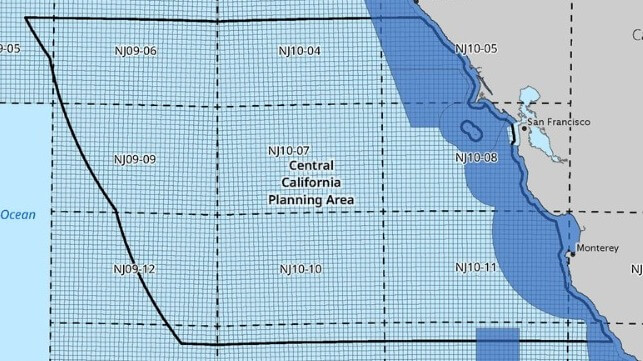
The call area for waters off San Francisco covers the majority of three national marine sanctuaries, in dark blue (BOEM)

Published Jan 26, 2026 10:16 PM by The Maritime Executive


On Monday, the U.S. Bureau of Ocean Energy Management began the process for an offshore oil and gas lease sale off California with the publication of two call areas, which cover the southern and central areas of the state. The announcement suggests that the first lease sales will occur next year - giving time for local opposition, which has already begun to gather momentum. 

"We’re taking the first step toward a stronger, more secure American energy future," said BOEM Acting Director Matt Giacona, formerly a senior government relations executive with the National Ocean Industries Association (NOIA) and the International Association of Drilling Contractors. "These calls begin a careful analysis of two key areas with promising resource potential on the Outer Continental Shelf to help guide future decisions about potential leasing and development."

Vigorous local pushback is expected. Recent polling by the Public Policy Institute of California suggests that 65 percent of the state's voters oppose offshore drilling, and all of the Democratic members of the state's congressional delegation are united against it as well, including representatives of all coastal districts. California Governor Gavin Newsom has filed a formal objection to the plan, joined by Oregon Governor Tina Kotek and Washington Governor Bob Ferguson.

California notes that the state's opposition has historically been bipartisan: Republican and Democratic state leaders alike have sought to block offshore drilling off California for the past 40 years, according to the California Natural Resources Agency. 

In other frontier areas outside of the U.S. Gulf Coast, BOEM has yet to move forward with proposals for drilling, though the potential for leasing in these areas is listed in the administration's draft five-year offshore E&P plan. Republican representatives in Alaska, the Southeast and Florida all oppose offshore E&P near their shores. In Florida, the powerful Sen. Rick Scott (R-FL) is opposed to the idea of drilling off the Panhandle - long anathema to coastal Florida voters and leaders, who value the state's tourism industry and are concerned about potential spill impacts. In the far north, Alaska Senators Lisa Murkowski and Dan Sullivan have both petitioned the administration to refocus its efforts on Cook Inlet, an area where drilling has been done before, and to discard a proposal to lease areas in the High Arctic, Bering Strait and Beaufort Sea - undeveloped regions where spill-response resources could be a thousand miles away. 

Charts accompanying BOEM's California call notice show that the call areas encompass the majority of the Chumash Heritage, Cordell Bank, Greater Farallones and the Monterey Bay National Marine Sanctuaries, as well as large segments of the Channel Islands National Marine Sanctuary. The call areas exclude a thin coastal margin extending shoreward of the California State waters boundary. 

The call is a request for interest and information, and is not necessarily indicative of a final plan for leasing opportunities. Environmental NGOs have already begun voicing opposition to the proposal. 

"California knows all too well that oil spills kill wildlife, contaminate fisheries, tarnish beaches, and impact people reliant on clean oceans," said Ashley Blacow-Draeger, Field Campaign Manager for Oceana, in a statement last year. "California is well along its transition away from offshore drilling, with numerous oil platforms already in various stages of decommissioning."

 

Containership Briefly Grounds Blocking Port of Mobile

Port of Mobile Alabama
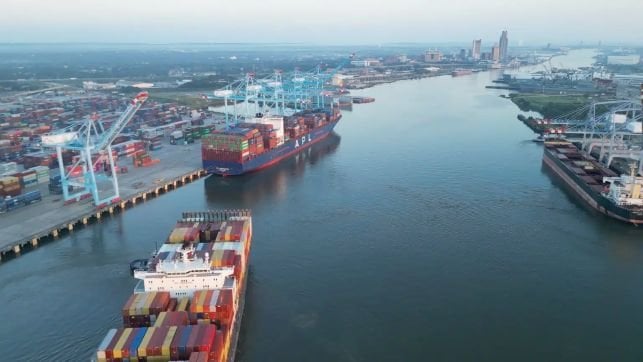
Port of Mobile completed a dredging project last October to increase the size of containerships able to call at the port (Alabama Port Authority)

Published Jan 26, 2026 6:29 PM by The Maritime Executive


The Alabama Port Authority is reporting that the containership Ruby Tower (127,952 dwt) has been refloated and is no longer blocking the Mobile shipping channel. The ship, however, is holding in Mobile Bay with tugs assisting the ship and the U.S. Coast Guard standing by.

The vessel, which is owned by UK-based Zodiac Marine, operates under charter to Ocean Network Express (ONE) and is shared with Yang Ming. It departed Mobile late morning on January 26, bound for Mexico. It got away from the APM Terminal at approximately 1100 local time with two pilots aboard.

The port authority says the ship reported a loss of steering power while it was near the eastern end of the channel. It grounded north of Gaillard Island, and traffic in the shipping channel was ordered suspended. By approximately 1600, the vessel was reported refloated and moving with an escort of three tugs. The Coast Guard was on hand to inspect the ship.

Built in 2013, the ship is 300 meters (984 feet) in length with a capacity for approximately 9,000 TEU. It is registered in Liberia.

The incident comes just months after the Port of Mobile hailed the completion of its dredging project, giving the port the capability to handle 50-foot drafts. The Alabama Port Authority called it a transformational milestone for the Port of Mobile, noting that it would have the deepest draft capabilities of any of the regional ports. 

The authority reported that the $366 million Mobile Harbor Modernization Project, was a state–federal partnership and made the port the deepest container port in the Gulf of America (Mexico). The port would be capable of handling super-post-Panamax vessels. APM Terminals Mobile was expecting the ocean lines to begin upsizing ships.


Bids Received for Removal of MSC Baltic III as Weather Damages Hulk

grounded containership
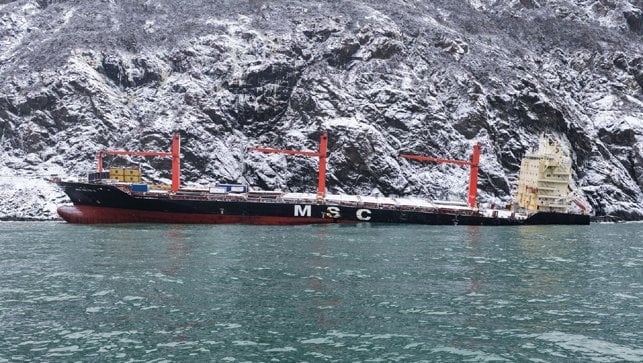
Nearly a year after grounding, bidding is underway to remove the wreck (Photos courtesy of Canadian Coast Guard)

Published Jan 27, 2026 3:16 PM by The Maritime Executive


Nearly a year after the MSC containership MSC Baltic III blacked out and grounded in a remote part of Newfoundland, Canada, salvage companies are now bidding to undertake the removal of the hulk. The second phase of the operation is being planned as efforts to clean the wreck were largely completed before winter weather set in, limiting the progress.

The insurance company for the vessel, ABL Group, reportedly closed bidding last week closed bidding for the removal project. 

The Canadian Coast Guard emphasized that under Canadian law, MSC is responsible for the removal of the MSC Baltic III from Cedar Cove. It continues to monitor the situation, confirming that it understands that the bidding process for the vessel’s removal has concluded with the proposals now being reviewed.

A contract is expected to be awarded in the coming weeks. Work, however, is not likely to begin until spring. Reports said the proposals would decide if the vessel is to be removed from shore or the water, or possibly some combination. Even before the most recent damage to the vessel during winter storms that overspread the area since November, the Canadian Coast Guard had said it would be difficult to refloat the MSC Baltic III.


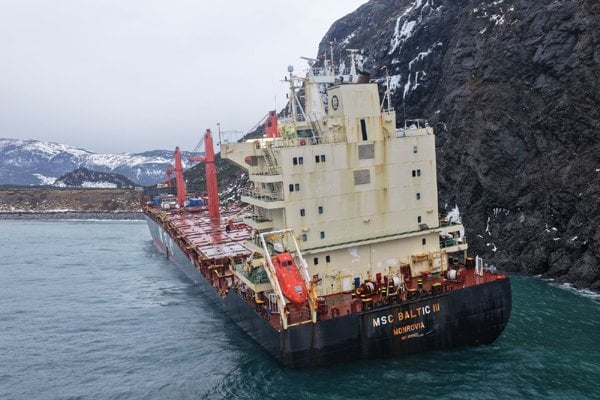
After a series of storms since November 2025, the wreck is showing further damage


When the containership lost power on February 15, 2025, it was driven ashore, and the Royal Canadian Air Force performed a daring helicopter rescue to pluck the 20 seafarers from the ship. When it went aground, it was carrying 471 containers and had about 1,700 tonnes of fuel aboard. MSC and the insurance company retained T&T Marine Salvage for the first phase of the operation, which focused on the remediation and stabilization of the vessel, removing the fuel and other potential contaminants. 

The Qalipu First Nation, which is monitoring the operation on its ancestral territories, recently reported that it was advised of the 1,700 tonnes of fuel, approximately 21 tonnes remain, mostly as small residual amounts spread across different tanks. Some of this fuel is thick and sticky, similar to tar, which makes it more challenging to remove. Additionally, the Coast Guard reported there were approximately 60 containers in the holds of the ship that were flooded and difficult to remove. Some have rotting foodstuffs, which also present a challenge.


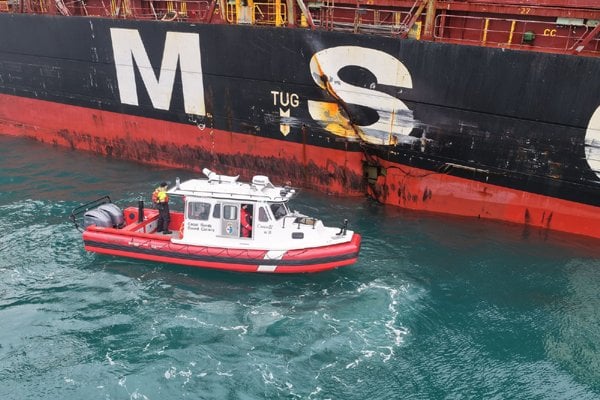
Canadian Coast Guard inspecting recent damage to the hull


Since November, the storms have increased the buckling in some of the hull plating, and the stern appears to have settled further. The ship also has a small list. The Canadian Coast Guard reported that additional structural damage was visible in a number of areas, including below deck, in the framing, and in the bulkheads, in the area of a water ballast tank.

In preparation for the winter, the teams had flooded some of the ballast tanks on the ship. The Canadian Coast Guard reports it is continuing to monitor the vessel and survey its condition after the storms as conditions permit.

Colombian Navy Seizes Two Tonnes of Cocaine Aboard CMA CGM Boxship

The seizure was the largest in Portuguese history

Cocaine
Courtesy Colombian Navy

Published Jan 28, 2026 2:46 PM by The Maritime Executive


Colombian authorities have intercepted and boarded a container ship in the Caribbean, seizing two tonnes of cocaine from its cargo. The capture prevents the drugs from reaching the European market, where they would fetch a premium price. 

The 6,500 TEU boxship CMA CGM Voltaire departed the port of Cartagena, Colombia at 1600 GMT on the 25th, headed on a routine voyage to Algeciras, Spain. The vessel serves on CMA CGM's Mediterranean-Caribbean rotation, serving ports as far east as Malta before returning across the Atlantic to the Caribbean islands. 

Acting on intelligence, Colombian forces tracked Voltaire throughout the early hours of her voyage and intercepted her northeast of Baranquilla. By 1000 hours GMT on the 26th, less than 24 hours after her departure, the Colombian Navy escorted her into the harbor at Santa Marta for inspection. 

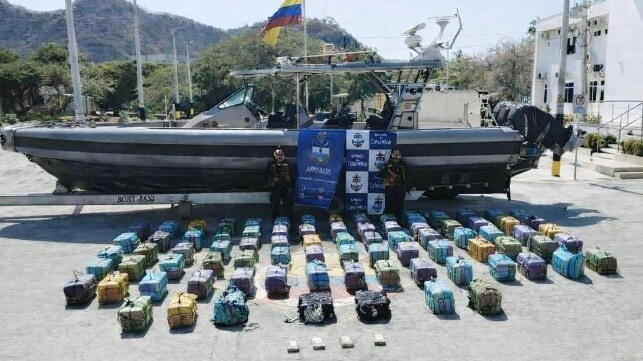
The authorities discovered more than 80 bundles of cocaine bricks aboard the ship, which totaled about two tonnes - the largest Caribbean bust yet this year, according to the Colombian Navy. Images provided by the service showed that the cocaine had been stowed in cargo containers, a standard method for high-volume smuggling. 

Courtesy Colombian Navy

"This blow suffocates the finances of transnational criminal structures, protects maritime security, legal trade and Colombia’s image before the world, and prevented more than two tons of cocaine from reaching Europe," said Colombian defense minister Pedro Arnulfo Sánchez Suárez in a statement. "We continue to close routes to drug trafficking, protecting our seas and honoring the blue of our flag."

The bust followed the dramatic capture of nine tonnes of cocaine from an unusually large semisubmersible off the coast of the Azores, a joint operation conducted by Colombian, American, British and Portuguese officials. The seizure was the largest in Portuguese history.

Colombia produces an estimated 2,500 tonnes of cocaine per year, and its cocaine economy is believed to be worth about $15 billion annually - equivalent to roughly four percent of the nation's GDP, up from two percent of GDP 20 years ago. (Colombia's government claims that UN estimates of production are inflated due to methodological issues.)


Missing Seafarer Found On Board After Large-Scale SAR Operation

Germany search and rescue operation
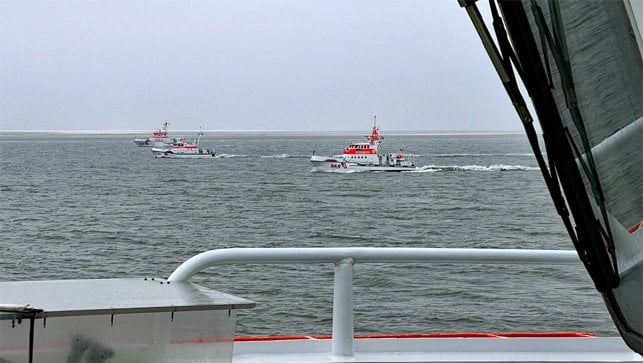
German rescue services conducted a search of the Elbe only to later learn the missing seafarer had been found on board (DSzRS)

Published Jan 27, 2026 2:33 PM by The Maritime Executive


German authorities launched a large-scale search and rescue operation after being informed of a missing seafarer from a tanker sailing on the Elbe River off Cuxhaven. Two days later, the German Sea Rescue Society (DGzRS) reports the missing person was “found on board” and handed over to the care of the rescue service on land.

The incident began on Sunday, January 25, when the crude oil tanker Songa Pearl (17,539 dwt) reported around 0600 a missing crewmember. The 144-meter (472-foot) long tanker, which is registered in Malta, was sailing from Antwerp to Gdansk. It was on the Lower Elbe River. They told the authorities that a 29-year-old seaman had last been seen several hours earlier.

The German Maritime Search and Rescue Service (DGzRS) launched a full-scale operation requesting assistance from other authorities. DGzRS reports six of its boats were dispatched, joined by boats from the Water Police in Hamburg and in Schleswig-Holstein. A pilot boat and a tug also joined the search, and the teams were being assisted by a search and rescue helicopter from the German Navy Air Service.

Due to the amount of time that had passed since the seaman was last seen, they reported a wide initial search area between the Weser and Elbe estuaries. Around 0700, one of the rescue boats discovered a lifebuoy with a flashing light, which was attributed to the Songa Pearl.

They concentrated the search on the Lower Elbe. Later, it shifted north to reflect the prevailing tides and currents. One of the concerns was that the water temperature was around one degree Celsius (33.8 degrees F).

DGzRS reported that it decided to standdown the search around 1252 on Saturday. They said it was suspended pending further information.

Today, January 27, they issued the brief update reporting that the missing person was found. They did not offer additional details on the situation. The Songa Pearl arrived earlier today in Gdansk.


Russian Navy Fleet Tug Rescues Philippine Seafarer Adrift in S. China Sea

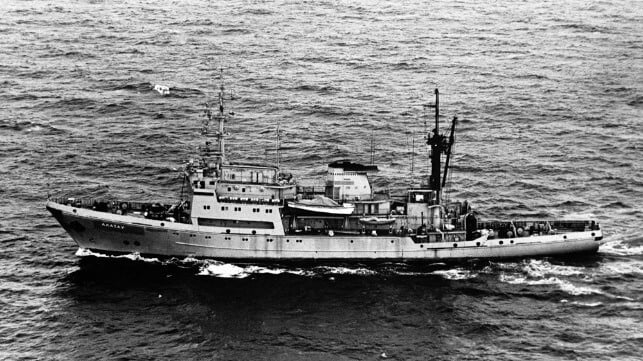
Alatau (USN file image circa 1986)

Published Jan 26, 2026 11:12 PM by The Maritime Executive


On Monday, a Russian Navy salvage tug rescued a Philippine national who had gone over the side of his vessel and had managed to stay afloat for days, Russian sources report. 

According to Russian state media, the fleet tug Alatau picked up the survivor from the waters of the southern sector of the South China Sea on Monday. The survivor had gone over the side of a tanker, identified as the "S Grace." No vessel of this name exists in shipping databases. 

The seafarer reported that he had been floating and hoping for rescue for two days, a remarkable achievement for a survivor without ans immersion suit or a flotation aid. On recovering him from the water, the crew of the Alatau gave him a medical checkup and determined that he had a clean bill of health.  

Alatau is under way for Vladivostok, where it will rejoin Russia's Pacific Fleet. The Alatau's crew plans to keep the survivor on board for the full voyage, at which point he will be offered an opportunity for repatriation. 

Alatau is an Ingul-class fleet tug assigned to the Russian Pacific Fleet. The vessel was built in 1983 and continues to serve the salvage and emergency-response needs of Russia's far eastern seaboard. Like other Russian naval vessels, she does not transmit AIS under her own name or IMO number.

In the later years of the Cold War, Alatau was a familiar sight in the Pacific, but in the post-Soviet era she fell into disrepair. She was reportedly cold-stacked in Vladivostok in the 1990s and left idle for about 15 years. She was reactivated in 2010-11, refitted and put back into operation. In 2024, she deployed to the Gulf of Aden and Red Sea for a security mission. 

The class was fitted for submarine rescue and long-distance heavy towing. With a top rated speed in the range of 19 knots and a range of up to 15,000 nm, the vessels were designed to keep up with the fleet. Russian Navy task groups often deploy with fleet tugs alongside; the practice was particularly notable in the case of the aircraft carrier Adm. Kuznetsov, which had reliability challenges in service and has since been sidelined due to persistent problems in shipyard. 


Philippines Issues No-Sail Order to Ferry Operator After Fatal Sinking

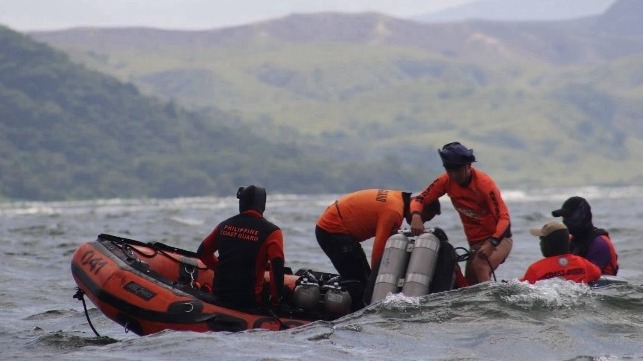
Divers work near the wreck site off Batuk Batuk Island (PCG)
Divers work near the wreck site off Baluk-Baluk Island (PCG)

Published Jan 27, 2026 11:10 PM by The Maritime Executive


The Philippine Coast Guard has issued a no-sail order to the entire fleet of the operator of the Trisha Kerstin 3, the ferry that went down off Zamboanga last weekend. 

The ferry Trisha Kerstin 3 departed Zamboanga City on Sunday night, headed for Jolo, Sulu. At about 0150 hours on Monday morning, the vessel capsized and went down off Baluk-Baluk Island. The PCG responded with the cutter BRP Tubbataha, joined by local government vessels and good Samaritans. 317 passengers and crewmembers were rescued, and 18 bodies were recovered, including the remains of one infant. After a minor downward revision of the passenger manifest, authorities believe that 10 people remain missing. 

The PCG plans to use dive teams to locate and search the wreck. An oil sheen has been spotted on the surface, a clue to the ship's location on the bottom. Divers will be backed up by a small ROV for searching hazardous compartments. 

As the search continues, Acting Department of Transportation (DOTr) Secretary Giovanni Lopez has ordered all passenger vessels belonging to operator Aleson Shipping Lines to remain in port for a 10-day safety audit. The results, he said, will determine whether Aleson is allowed to continue operating. Alternative arrangements for transport capacity are being set up to ensure that passengers are still served.

According to Lopez, Aleson vessels have had more than 30 safety incidents over the span of the last seven years, and the Philippine government wants to prevent a recurrence of the Trisha Kerstin tragedy. 

“This is not just about going after whoever is responsible. [What’s more important is] how to move forward, how to institutionalize policies [so that similar incidents do not happen again],” Lopez said at a hearing in Zamboanga, per government-owned outlet PNA. 

In 2023, a fire aboard the Aleson-owned passenger-freighter Lady Mary Joy 3 killed 32 people and left 19 missing. The casualty occurred in approximately the same region near Baluk-Baluk Island. 

The ferry that served the route before Lady Mary Joy 3, the Danica Joy, capsized in 2016 at Zamboanga due to a cargo loading error; no personnel were injured in the incident. 


Engine Room Fire Disables Car Carrier off Germany

car carrier engine room fire
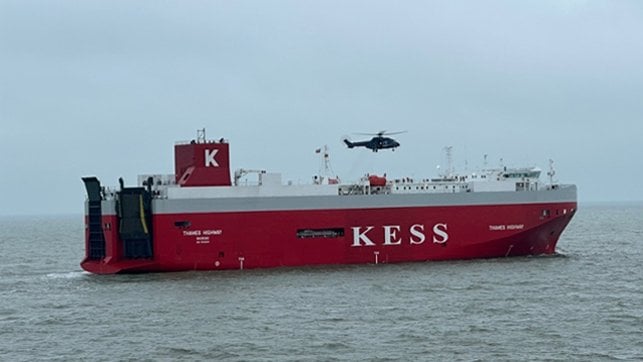
Germany airlifted firefighters to the stricken ship anchored offshore (Havariekommando)

Published Jan 27, 2026 12:18 PM by The Maritime Executive


Germany’s Central Command for Maritime Emergencies oversaw the overnight response to an engine room fire aboard a car carrier. A total of 63 emergency personnel, four ships, and two helicopters were involved in the operation to secure the vessel Thames Highway and ensure the fire was extinguished.

The vessel had departed Emden on Monday, January 26, and shortly after clearing the harbor, reported an engine room fire. The crew onboard moved quickly to seal off the engine room, and the ship was directed into an anchorage outside the port’s fairway.

Built in 2005, the Thames Highway is 7,750 dwt with a reported capacity of approximately 1,600 vehicles. It operates for "K" Line European Sea Highway Services (KESS), a short sea carrier. The vessel, which is registered in the Bahamas, had been heading for Grimsby in Great Britain. The German authorities report they were advised the ship was carrying 1,294 vehicles, of which 477 were electric cars. The ship has of 18 plus the pilot was still aboard.

The initial response to the fire was mounted with a six-person team from the Cuxhaven Fire Department that is specially trained in shipboard fires. They were airlifted to the car carrier, which was anchored northwest of Borkum and winched onto the deck. Additional firefighters from Emden and Wilhelmshaven were also dispatched to the vessel. 

As of Tuesday morning, the German authorities reported the fire had been extinguished, but the vessel was disabled and unable to move under its own power. Initially, the Cuxhaven and Wilhelmshaven fire brigades remained on the vessel but were later removed by helicopter.

As of late on Tuesday, the Dutch tug Waterstraat was alongside and beginning a tow back to port. Control over the incident had been transferred to the Emden Traffic Control Center to manage the tow after the fire was extinguished.

The Central Command for Maritime Emergencies center mounted a large response, remembering the July 2023 fire aboard the car carrier Fremantle Highway in the same general area. The Dutch Coastguard and other authorities were later criticized for a disorganized response to the fire, which caused the death of a crewmember who was forced to jump from the burning ship.  The fire got out of control and burned for days before being extinguished, and the ship was finally towed to port for a salvage operation.
 

Op-Ed: Fully-Compliant Fire Systems May Fall Short Against Modern Risks

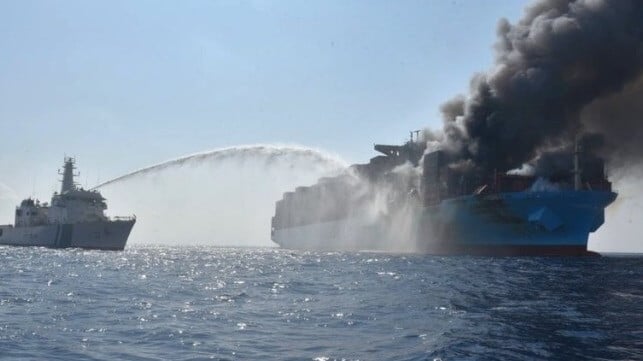
File image courtesy Indian Coast Guard

Published Jan 27, 2026 3:34 PM by John Nicholson


Inspection reports across much of the commercial fleet paint a reassuring picture. Fire detection systems are operational, fixed firefighting systems are in good working order, equipment is serviced on time and instructions are correctly posted. On paper, vessels are doing what is required of them.

The problem is that paper compliance is increasingly being mistaken for operational readiness.

Most of the fire detection and firefighting systems in service today were designed for a risk profile that has changed very little over several decades. Engine rooms, accommodation spaces and conventional cargoes are well understood, and the industry has become comfortable relying on smoke and heat detection, CO? systems, water spray and foam to manage those risks. When inspections confirm these systems are maintained and functional, vessels pass, as they should.

What inspections cannot resolve is whether those same systems are suitable for the fires the industry is now worried about.

Electric vehicles, alternative fuels and denser, more complex cargo configurations all introduce fire behavior that does not fit neatly into traditional detection or suppression assumptions. A system can be compliant, fully operational and recently serviced, yet still be slow to detect an incident or ill-matched to how it develops once it does. This is not a failure of maintenance or seamanship. It is a consequence of relying on systems designed for a different era.

Inspection data increasingly exposes this gap. It is common to encounter vessels where detection coverage is complete, firefighting systems are correctly protected and fire pumps are in good condition, while it remains unclear whether those arrangements would deliver early warning or meaningful control in a modern cargo fire scenario. The ship passes inspection, but the underlying question remains unanswered.

The industry response has been predictable. Shipping does not invest ahead of regulation unless there is a compelling commercial or operational reason to do so. As long as existing systems remain class approved and compliant, many owners see little incentive to adopt alternatives that are not yet mandated and may later be superseded. 

This caution is reinforced by the absence of a clear firefighting strategy for certain emerging fire risks. Detection technology may be advancing, but without agreement on how fires involving electric vehicles or alternative energy sources should be fought at sea, the value of earlier detection alone is difficult to justify. In that context, hesitation is rational.

The result is a growing disconnect between what inspections are designed to confirm and what operational reality is beginning to demand. Compliance frameworks continue to focus on the presence and condition of systems, while the question of whether those systems are fit for purpose in today’s risk environment remains largely unanswered.

A vessel can meet every requirement, pass every inspection and still face scenarios that fall well outside the assumptions on which its fire safety arrangements were based. That is not an argument for blame. It is an argument for acknowledging that compliance has become a lagging indicator of risk.

Until regulation, detection capability and firefighting strategy are better aligned with the fires the industry is now concerned about, inspection reports will continue to look reassuring, even as confidence in true fire readiness remains far less certain.

John Nicholson is Idwal's Head of Technical. 

The opinions expressed herein are the author's and not necessarily those of The Maritime Executive.

France tightens net on Russian ‘ghost fleet’ with second tanker intercepted

French authorities have stepped up their campaign against vessels suspected of helping Moscow dodge Western oil sanctions, with the boarding of the oil tanker 'Grinch' marking the second such operation in just a few weeks.


Issued on: 25/01/2026 - RFI

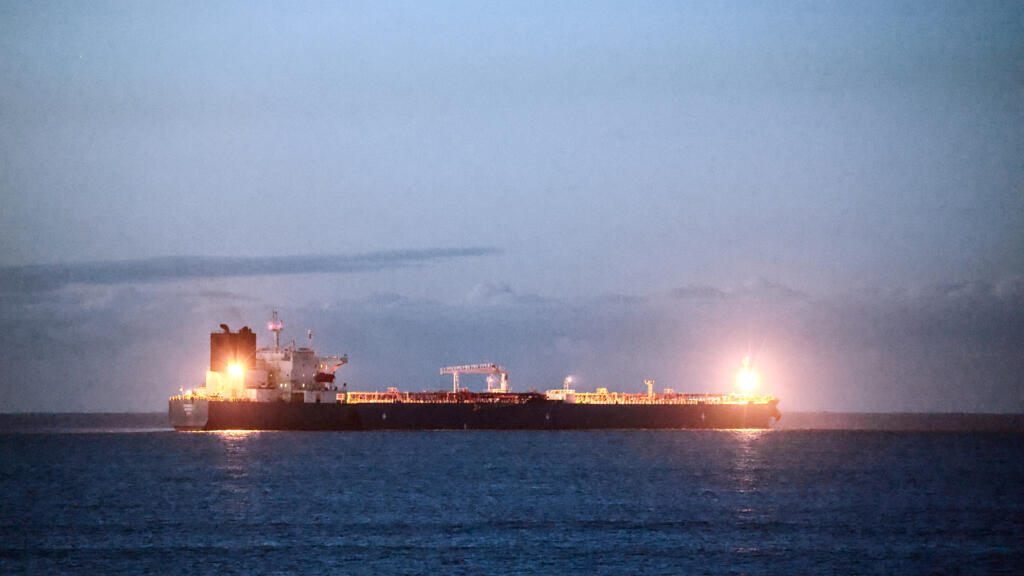
The oil tanker "Grinch", suspected of belonging to the Russian's shadow fleet, is seen outside the coast of Martigues near the port of Marseille-Fos, France, on 25 January 2026. AFP - THIBAUD MORITZ

The 249-metre tanker was escorted to the Gulf of Fos, near the oil terminal at the port of Marseille-Fos, where its 58-year-old Indian captain was taken into custody on Saturday evening.

The move came three days after an operation in which French marine commandos were airlifted onto the ship in international waters.

Judicial authorities in Marseille have now taken charge of the case, opening a preliminary inquiry into suspected flagging offences.

Investigators from the Toulon maritime gendarmerie’s research section, working alongside the Marseille ship safety centre, are carrying out checks on board the vessel, particularly focusing on navigation documents and the “validity of the flag”, according to the public prosecutor’s office.

The rest of the crew – also Indian nationals – are being kept on board while the inspections continue.

The Grinch is anchored around 500 metres from the shore near the town of Martigues, under close watch by a French Navy vessel and two gendarmerie patrol boats.

Exclusion zones

Maritime authorities have imposed both nautical and aerial exclusion zones to ensure the safety and security of the investigation.

The tanker was intercepted on Thursday morning in the Alboran Sea – between Spain and North Africa – during an operation carried out “with the assistance of several of our allies”, including the United Kingdom, French President Emmanuel Macron said in a post on X.

Footage released by the French Navy shows marine commandos rappelling from a helicopter onto the deck and swiftly taking control of the bridge, loudly identifying themselves as French forces.

The Grinch is suspected of belonging to Russia’s so-called “ghost fleet”, a network of ageing tankers used to export oil while skirting sanctions imposed over the war in Ukraine.

Under its current name, the vessel appears on the United Kingdom’s list of sanctioned ghost fleet ships.

On sanctions lists compiled by the European Union and the United States, however, it is listed under the name Carl – a reflection of the frequent renaming and reflagging used to obscure ownership and movements.

Broader push


This is the second such operation carried out by France in recent weeks. At the end of September, French forces intercepted the tanker Boracay in the Atlantic and diverted it to the port of Saint-Nazaire.

That vessel was also on the European Union’s sanctions list.

As part of the Boracay investigation, both the captain and first mate were taken into custody, though prosecutors later decided to pursue charges only against the Chinese captain.

He is due to appear before a court in Britanny on 23 February on charges of refusal to comply.

Following that case, Macron said France wanted to “increase pressure on the ghost fleet because it clearly reduces Russia’s ability to finance its war effort” in Ukraine.

The boarding of the Grinch suggests that strategy is now being enforced more visibly at sea.

According to European Union figures, some 598 vessels suspected of being part of the ghost fleet are currently subject to EU sanctions, with international maritime cooperation increasingly seen as key to tightening enforcement.

(With newswires)


Mystery Swirls Around Stateless Sanctioned Tanker in the Med

tanker
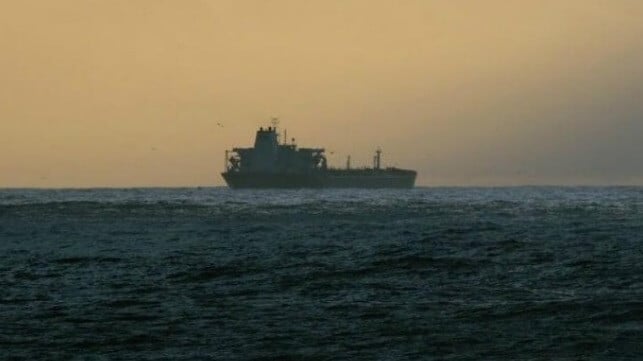
A stateless, sanctioned prodcut tanker is drawing attention as it dirfts in the Mediterranean

Published Jan 28, 2026 2:14 PM by The Maritime Executive


The situation around a stateless, sanctioned tanker that has been drifting in the Mediterranean remains unclear, with the latest reports suggesting it is now heading for the port of Tangier Med in Morocco. The tanker Chariot Tide (52,648 dwt) has been receiving international attention since it was first identified as drifting in the Mediterranean nearly a week ago. 

The tanker, built in 2007 and apparently operating under a false flag of Mozambique, was first identified as in distress last Friday by the AI shipping intelligence firm Windward. They reported the ship was displaying an AIS status of “not under command” and being trailed by tugs. The ship had periodically switched back and forth between being underway at slow speeds and drifting, repeating the not under command message. 

The ship is reported to have loaded approximately 300,000 barrels of diesel fuel at the Russian terminal of Primorsk and made its way through the Baltic and the Atlantic before starting to experience problems near Gibraltar. The problems are thought to have begun on January 22.

The tanker has been operating under EU and UK sanctions since 2024 and in 2025 claimed to be registered in Mozambique, Gambia, and Comoros, all reported to be false, as well as Tanzania. Its last listed inspections were in 2024, and in February of that year, authorities listed 14 deficiencies, including structural condition and operating issues. Ownership is listed as a shell corporation incorporated in the Marshall Islands.

Industry analyst Michelle Wiese Bockmann highlights that the lack of a flag, insurance, and clear ownership complicates the situation for the vessel to receive assistance and repairs. The speculation is that the crew is working to repair a problem with the engine or possibly the steering.

Spanish authorities acknowledged they were monitoring the tanker. AIS Signals shows a Spanish pollution control vessel shadowing the tanker, and at times, Spanish warships appear to also be operating close to the tanker. Reuters points out that it is unclear why Spain did not move to seize the ship, but the Chariot Tide appears to be attempting to stay outside Spanish territorial waters.

The tanker is showing on its AIS signal that it is back underway yet again, now at a speed of just over 3 knots. Reuters reported the tanker would proceed to Tangier Med escorted by the pollution control vessel. The Spanish vessel Clara Campoamor, which is sailing nearby, indicates on its AIS signal that it is on a SAR operation.

The situation comes as the EU has placed a new emphasis on enforcement in addition to the ongoing concerns for the environment and potential pollution from the shadow fleet. For now, everyone is waiting and watching the tanker and its next actions. 


Cash Buyer Wants to Purchase Seized Shadow Fleet Tankers for Scrapping

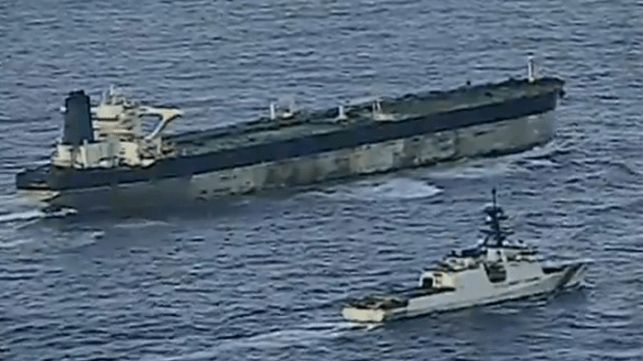
The seized shadow fleet tanker Bella 1 (Marinera) under U.S. Coast Guard control in the North Atlantic (USCG)

Published Jan 27, 2026 8:39 PM by The Maritime Executive


GMS, the world's largest cash buyer, has confirmed to Reuters that it is in talks with U.S. authorities to purchase seized, sanctioned tanker tonnage for demolition. The volume of vessels covered by this category is small so far, but could grow if the White House determines that more tanker interdictions are necessary. If the demolition sales were authorized, it would provide the Trump administration with an efficient means of offloading captured tonnage in far-flung locations.

Since December, U.S. Coast Guard boarding teams have captured seven tankers linked to Venezuela's oil trade. According to TankerTrackers.com, two of the seized vessels have arrived off the coast of Texas, both in laden condition. Two are off the coast of Puerto Rico; one more is anchored off Scotland, and is in the middle of a crew change; and two have returned to Venezuela - including one that is back to engaging in AIS manipulation, a characteristic of the shadow fleet. 

The potential for further U.S. tanker seizures exists: there are multiple shadow fleet tankers still in Venezuelan waters, and acting Venezuelan president Delcy Rodriguez has signaled that she wants to resist "orders from Washington." The Trump administration has signaled that it wants to manage all of Venezuela's oil exports for the immediate term, and has threatened consequences for Rodriguez if she does not comply with directives. After the forcible removal of longtime dictator Nicolas Maduro in _____, diplomatic relations between Washington and Caracas have yet to fully crystallize, and the Venezuelan government itself has internal divisions. The CIA is expected to lead American engagement in the country in the immediate term, according to CNN. In an evolving security environment, the prospect of further tanker interdictions could hinge on Venezuelan cooperation with the White House's plans for the country's oil exports: the tonnage is there, and the capability. 

The shadow fleet is a global phenomenon, and well over 1,000 tankers serve the blacklisted Russian, Iranian and Venezuelan markets. More than 900 of these tankers are sanctioned by the EU, UK or U.S.; while the Trump administration has not threatened vessel seizures outside of the Venezuelan trade lanes, there is considerable overlap between markets and individual vessels. In addition to U.S. action, discussions in Western Europe are under way for possible seizures in the North Sea and Baltic, and France recently conducted a boarding and seizure of a Russia-linked tanker in the Mediterranean. 

Broader sanctions license

GMS has previously sought a U.S. Treasury license to buy sanctioned ships directly from sanctioned shipowners, without U.S. government seizure as an intermediate step. The argument in favor of this proposal, GMS told the Wall Street Journal, is that it would clear out aging and dangerous tonnage from the shadow fleet. Such a market-based sale process would reduce the number of old tankers in the shadow fleet, and GMS suggests that it would reduce the fleet's overall size. Each demolition sale transaction is typically valued in the seven figures or higher. 

A general sale and purchase license from OFAC would not penalize shipowners for past sanctions violations - nor would it prevent them from resuming sanctioned activity with newer ships after concluding the demolition sale, unless more restrictions were built in.

“In order to be considered there would need to be some other incentive on top of just getting the vessel off the water,” former OFAC compliance chief Claire O’Neill McCleskey told the WSJ.