Mystery Swirls Around Stateless Sanctioned Tanker in the Med
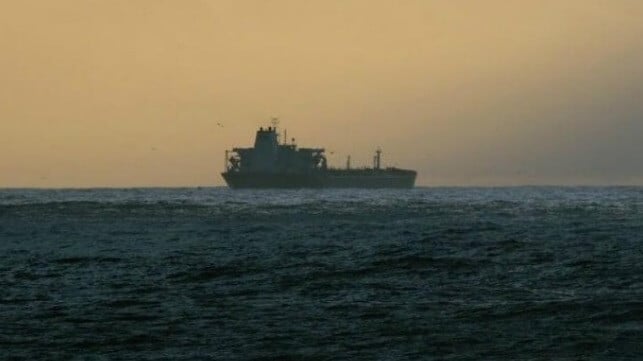
The situation around a stateless, sanctioned tanker that has been drifting in the Mediterranean remains unclear, with the latest reports suggesting it is now heading for the port of Tangier Med in Morocco. The tanker Chariot Tide (52,648 dwt) has been receiving international attention since it was first identified as drifting in the Mediterranean nearly a week ago.
The tanker, built in 2007 and apparently operating under a false flag of Mozambique, was first identified as in distress last Friday by the AI shipping intelligence firm Windward. They reported the ship was displaying an AIS status of “not under command” and being trailed by tugs. The ship had periodically switched back and forth between being underway at slow speeds and drifting, repeating the not under command message.
The ship is reported to have loaded approximately 300,000 barrels of diesel fuel at the Russian terminal of Primorsk and made its way through the Baltic and the Atlantic before starting to experience problems near Gibraltar. The problems are thought to have begun on January 22.
The tanker has been operating under EU and UK sanctions since 2024 and in 2025 claimed to be registered in Mozambique, Gambia, and Comoros, all reported to be false, as well as Tanzania. Its last listed inspections were in 2024, and in February of that year, authorities listed 14 deficiencies, including structural condition and operating issues. Ownership is listed as a shell corporation incorporated in the Marshall Islands.
Industry analyst Michelle Wiese Bockmann highlights that the lack of a flag, insurance, and clear ownership complicates the situation for the vessel to receive assistance and repairs. The speculation is that the crew is working to repair a problem with the engine or possibly the steering.
Spanish authorities acknowledged they were monitoring the tanker. AIS Signals shows a Spanish pollution control vessel shadowing the tanker, and at times, Spanish warships appear to also be operating close to the tanker. Reuters points out that it is unclear why Spain did not move to seize the ship, but the Chariot Tide appears to be attempting to stay outside Spanish territorial waters.
The tanker is showing on its AIS signal that it is back underway yet again, now at a speed of just over 3 knots. Reuters reported the tanker would proceed to Tangier Med escorted by the pollution control vessel. The Spanish vessel Clara Campoamor, which is sailing nearby, indicates on its AIS signal that it is on a SAR operation.
The situation comes as the EU has placed a new emphasis on enforcement in addition to the ongoing concerns for the environment and potential pollution from the shadow fleet. For now, everyone is waiting and watching the tanker and its next actions.
Cash Buyer Wants to Purchase Seized Shadow Fleet Tankers for Scrapping
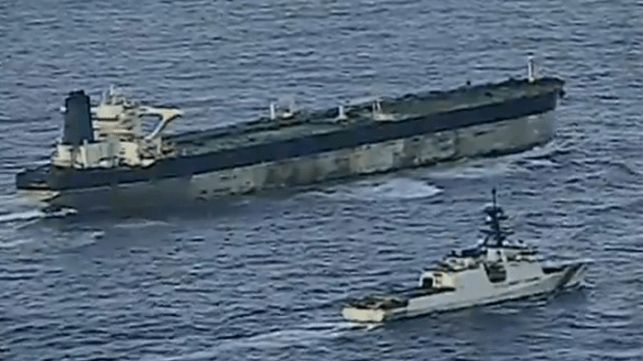
GMS, the world's largest cash buyer, has confirmed to Reuters that it is in talks with U.S. authorities to purchase seized, sanctioned tanker tonnage for demolition. The volume of vessels covered by this category is small so far, but could grow if the White House determines that more tanker interdictions are necessary. If the demolition sales were authorized, it would provide the Trump administration with an efficient means of offloading captured tonnage in far-flung locations.
Since December, U.S. Coast Guard boarding teams have captured seven tankers linked to Venezuela's oil trade. According to TankerTrackers.com, two of the seized vessels have arrived off the coast of Texas, both in laden condition. Two are off the coast of Puerto Rico; one more is anchored off Scotland, and is in the middle of a crew change; and two have returned to Venezuela - including one that is back to engaging in AIS manipulation, a characteristic of the shadow fleet.
The potential for further U.S. tanker seizures exists: there are multiple shadow fleet tankers still in Venezuelan waters, and acting Venezuelan president Delcy Rodriguez has signaled that she wants to resist "orders from Washington." The Trump administration has signaled that it wants to manage all of Venezuela's oil exports for the immediate term, and has threatened consequences for Rodriguez if she does not comply with directives. After the forcible removal of longtime dictator Nicolas Maduro in _____, diplomatic relations between Washington and Caracas have yet to fully crystallize, and the Venezuelan government itself has internal divisions. The CIA is expected to lead American engagement in the country in the immediate term, according to CNN. In an evolving security environment, the prospect of further tanker interdictions could hinge on Venezuelan cooperation with the White House's plans for the country's oil exports: the tonnage is there, and the capability.
The shadow fleet is a global phenomenon, and well over 1,000 tankers serve the blacklisted Russian, Iranian and Venezuelan markets. More than 900 of these tankers are sanctioned by the EU, UK or U.S.; while the Trump administration has not threatened vessel seizures outside of the Venezuelan trade lanes, there is considerable overlap between markets and individual vessels. In addition to U.S. action, discussions in Western Europe are under way for possible seizures in the North Sea and Baltic, and France recently conducted a boarding and seizure of a Russia-linked tanker in the Mediterranean.
Broader sanctions license
GMS has previously sought a U.S. Treasury license to buy sanctioned ships directly from sanctioned shipowners, without U.S. government seizure as an intermediate step. The argument in favor of this proposal, GMS told the Wall Street Journal, is that it would clear out aging and dangerous tonnage from the shadow fleet. Such a market-based sale process would reduce the number of old tankers in the shadow fleet, and GMS suggests that it would reduce the fleet's overall size. Each demolition sale transaction is typically valued in the seven figures or higher.
A general sale and purchase license from OFAC would not penalize shipowners for past sanctions violations - nor would it prevent them from resuming sanctioned activity with newer ships after concluding the demolition sale, unless more restrictions were built in.
“In order to be considered there would need to be some other incentive on top of just getting the vessel off the water,” former OFAC compliance chief Claire O’Neill McCleskey told the WSJ.

No comments:
Post a Comment