Monday, May 19, 2025


Let Me Now Praise James Agee
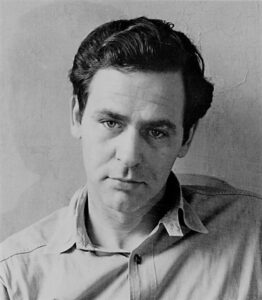

James Agee (November 27, 1909 – May 16, 1955)

On the Romantic poet John Keats’ tombstone in the Protestant Cemetery in Rome are these words, which he chose: “HERE LIES ONE WHOSE NAME WAS WRIT IN WATER.”
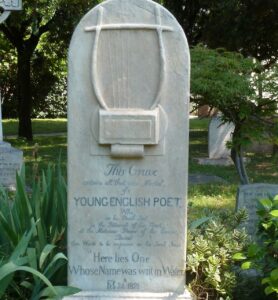
His name is not there, by choice. Keats was twenty-five when he died. In Ode to Psyche he wrote:

Yes, I will be thy priest, and build a fane
In some untrodden region of my mind,
Where branched thoughts, new grown with pleasant pain,
Instead of pines shall murmur in the wind:
…………………………………………………………………………………………..
And in the midst of this wide quietness
A rosy sanctuary will I dress
With the wreath’d trellis of a working brain,
With buds, and bells, and stars without a name,
With all the gardener Fancy e’er could feign,
Who breeding flowers, will never breed the same.

On the American writer James Agee’s burial stone in an isolated wooded spot off a dirt road in upstate New York, there are no words, although I like to think Keats’ poetic words seem appropriate to the sylvan nature of the spot and the bird song that filled the air in praise when I and my wife “trespassed” onto land that once meant so much to Agee, and where the house he once sought refuge in lies dilapidated and mute.

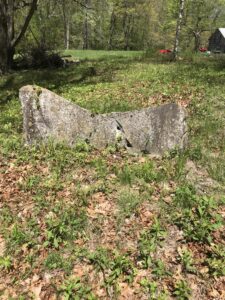
I read somewhere that he wished that a bird would be carved into the stone under which he was placed, but it is absent. Perhaps a phoenix, that symbol of the triumph of life over death and immortality, so dear to D.H. Lawrence. Maybe it, like him, flew away, and maybe a young man like Keats, who died so long before him, could conjure winged words of praise – doves of the spirit – for a man who would come long after him, nearly a century and a half after, because he sensed a connection that he could send flying into the future. Like Emily Dickinson, he knew hope was a thing with feathers, and the bird of time has no limits when it is released from the sentence. Time? Not a magazine where Agee once worked – but the real mystery and obsession of true artists. Time, death, and the fact that love brought us into existence. “Beauty is truth, truth beauty,—that is all /Ye know on earth, and all ye need to know,” wrote Keats.

Keats and Agee were pilgrims, and Agee no doubt would agree with Keats’ words that “this life is a vale of soul-making.”

Many people visit Keats’ and Percy Bysshe Shelley’s graves in the Roman cemetery; few ever have or will pay homage to Agee over the boulder that marks the spot where his body was placed after he died of a heart attack at the age of fifty-five in a NYC taxi on May 16, 1955, seventy years ago. He has largely been forgotten. If you are reading this, you may have no idea who he was and why I am writing this. I will tell you.

I am writing this because I have felt a connection to him since I was a young man, not just to his talent, but his passionate soul, beautiful writing, the religious quality of his strivings, his faith and doubt, and his sense of wonder and reverence before the mystery of existence. His deep moral outrage at the suffering forced on the poor by the rich is close to my heart, and the desperate way he threw himself into life, always aware since the age of six when his father died in an automobile accident that death shadows our every move on our short visits through life. All his work is filled with the sense of the mysterious nature of existence as described by Einstein:

The most beautiful thing we can experience is the mysterious. It is the source of all true art and science. He to whom this emotion is a stranger, who can no longer pause to wonder and stand rapt in awe, is as good as dead: his eyes are closed.

Agee’s eyes were always wide-open; he saw through them the hope and hopelessness that battle in every heart.

I am a minor writer whose work is essentially ignored, which I understand but wish wasn’t so. But I know also that recognition is not why I write; I do it because it is my effort at soul-making, which is as much a restorative endeavor as a prospective one.  Agee wrote for his soul. Years ago he grasped my ironically young-old mind when he wrote:

Now as awareness of how much life is lost, and how little is left, becomes ever more piercing, I feel also, ever more urgently, the desire to restore, and to make a little less permanent, such of my lost life as I can, beginning with the beginning and coming far forward as need be. This is the simplest, most primitive of the desires which can move a writer. I hope I shall come to other things in time; in time to write them. Before I do, if I am ever to do so, I must sufficiently satisfy this first, most childlike need.

We are all little lost children at heart, disguised to ourselves as adults, doing what we do to find the natural piety that Wordsworth said was “the Soul that rises with us, our life’s Star.” When the living ignore my work, I often shamefully respond like a hurt child, but it is just a small step to the realization that Agee and Keats shared, that we will all be forgotten in due time, that we are bubbles on the great stream, and recognition is a fool’s dream. Fugitives from our true vocations, we often engage in endless imitation, something Agee never did. To say he was true to his life’s star is to say he was never a copy but always an original.

He was the author of the posthumously acclaimed (but failure in his lifetime) classic account of dirt-poor Alabama tenant farmer families during the Depression, with searing photographs by Walker Evans, Let Us Now Praise Famous Men (the Foreword begins on page 75), the posthumously published Pulitzer Prize winning beautiful autobiographical novel, A Death in the Family, film scripts for The African Queen (1951) and The Night of the Hunter (1955), and unique film reviews for Time and The Nation magazines, among other works. Agee, a poet at heart, was acutely aware that he, and all of us over time, will be forgotten, but while the thought is upon me – before I too am extinguished like a brief spark on a chimney wall – of how powerful a writer he was and how full of moral passion his yearnings and how beautiful his prose, let me offer this long quote from an undated fragment he wrote for use in his rapturously sad A Death in the Family, a novel based on the six year-old Agee’s reaction to his father’s death in an automobile accident near their home in Knoxville, Tennessee in 1915:

Those who have gone before, backward beyond remembrance and beyond the beginning of imagination, backward among the emergent beasts, and the blind, prescient ravenings of the youngest sea, those children of the sun, I mean, who brought forth those, who wove, spread the human net, and who brought forth me; they are fallen backward into their graves like blown wheat and are folded under the earth like babies in blankets, and they are all melted upon the mute enduring world like leaves, like wet snow; they are faint in the urgencies of my small being as stars at noon; they people the silence of my soul like bats in a cave; they lived, in their time, as I live now, each a universe within which, for a while, to die was inconceivable, and their living was as bright and brief as sparks on a chimney wall, and now they lie dead, as I soon shall lie; my ancestors, my veterans. I call upon you, I invoke your help, you cannot answer, you cannot help; I desire to do you honor, you are beyond the last humiliation. You are my fathers and my mothers but there is no way in which you can help me, nor may I serve you. You are the old people and now you rest. Rest well; I will be with you soon; meanwhile may I bear you ever in the piety of my heart.

Piety has become a lost virtue (from Latin pietatem (nominative pietas) dutiful conduct, sense of duty; religiousness, piety; loyalty, patriotism; faithfulness to natural ties), as have so many others such as honor, courage, truthfulness, etc. Agee was no exemplar of every virtue, but in that he was like all of us, frail and flawed, but his audacious courage in his writing was his way to redeem his child’s soul by never holding back like so many writers do. He always drew on what was deep and true in his experience, especially the lacerating wound he suffered when his father died. That preoccupation, that youthful revelation, that presence of an absence, that hole in his heart, that death at an early age, joined to his youthful Christian devoutness and doubt, can be seen in everything he wrote.

That he came to think his ancestors could not help him was mistaken, I would say; for the bridge over the river between life and death, across the rivers Acheron and Styx, which separate the worlds of the living and the dead in Greek Mythology, runs two ways when one trusts the heart not the head. Agee, like Aeneas whom Virgil so often describes as pius in the Aeneid, was essentially a man of the heart, a rough Tennessean schooled at Harvard and in the sophisticated secular precincts of New York City where he may have turned a bit away from his youthful faithful heart under the strain of the heart attacks that killed him and the ideology of that “sophisticated” culture.

Like Agee’s father, my wife’s father died in a single car crash on a bridge at night when she was two months old. I have seen how that presence of his absence – the father that she never knew and her family’s reaction to his death: silence – affected her. Her courage in facing it inspires me. Agee, at least, had the father he loved dearly for six years, so the absence of his presence was different but similar. Who can say which was worse, the loss of presence or a lifelong absence?

When I was five years old, my mother, nine months pregnant, went to the hospital to give birth to another sibling (there were five of us already), and we were all very excited. Something happened; the baby was stillborn. When my father took me to the hospital to see my mother, I was not allowed in, but the figure of her sad face waving to me from the window on the second floor has stayed with me across the years. When I was ten years-old, my six year-old cousin accidentally shot and killed his eight year-old brother with a rifle that was hidden under a bed in a neighbor’s home. There is more, and no doubt many people have such stories to tell, but I offer these examples to reveal some of the impulses for my writing this essay about James Agee, just as one can explore the reasons behind Agee’s writing and behavior, or that of all the actions of those who never wrote a word but were marked by death in their tender years. For some, tragedy elicits words; for others, the mystery renders them mute.

Being a master of the English language and a writer from an early age with music in his words, Agee tells us at the end of his book, The Morning Watch, that when he (Richard in the book) was twelve years-old at a religious boarding school on Good Friday, feeling a new, heavy, “cold, crushing sorrow” at the thought of Jesus’s suffering, he saw hogs devour a wounded snake and felt such horror and pity, that he said to himself that:

. . . he was so far gone by now that there must be a way beyond really feeling anything, ever any more (the phrase jumped at him): (Who had said that? His mother. ‘Daddy was terribly hurt so God has taken him up to heaven to be with Him and he won’t come back to us every any more.’) ‘Ever any more,’ he heard his quiet voice repeat within him; and within the next moment he ceased to think of the snake with much pain.

Agee was such a deep feeling writer that it was impossible for him to get beyond really feeling anything, ever any more. Some critics have accused him of being too emotional and also of never having fulfilled his promise. In a luminous memoir, his good friend, Robert Fitzgerald, the poet and translator of the Odyssey and the Aeneid, puts that canard to rest:

Quite contrary to what has been said about him, he amply fulfilled his promise. In one of his first sonnets he said, of his kin, his people

‘Tis mine to touch with deathless their clay,
And I shall fail, and join those I betray.

In respect to that commission, who thinks there was any failure or betrayal?

As for those poor tenant farmer families that he praised in Let Us Now Praise Famous Men – the book that started with a commission from Fortune magazine where he was working in the 1930s to write an article that Fortune never published – Agee began it thus:

I spoke of this piece of work we were doing as ‘curious.’ It seems to me curious, not to say obscene and thoroughly terrifying that it could occur to an association of human beings drawn together through need and chance and for profit into a company, an organ of journalism, to pry intimately into the lives of an undefended and appallingly damaged group of human beings, an ignorant and helpless rural family, for the purpose of parading the nakedness, disadvantage and humiliation of these lives before another group of human beings, in the name of science, of ‘honest journalism’ (whatever that paradox may mean), of humanity, of social fearlessness, for money, and for a reputation for crusading and for unbias which, when skillfully enough qualified, is exchangeable at any bank for money (and in politics for votes, job patronage, abelincolnism, etc.’); and that these people could be capable of meditating this prospect without the slightest doubt of their qualifications to do an ‘honest’ piece of work and with a conscience better than clear, and in the virtual certitude of almost unanimous public approval. . . . And it seems curious still further that, with all their suspicion , save only for the tenants and themselves, and their own intentions, and with all their realization of the seriousness and mystery of the subject, and of the human responsibility they undertook, they so little questioned or doubted their own qualifications for this work.

All of this, I repeat, seems to me curious, obscene, terrifying, and unfathomably mysterious.

Those are the words of a man who didn’t mince words.

So let us now join with him in praising these famous men and all like them who struggle to eke out a living against the predations of the wealthy hyenas with smiling faces whose fortunes are built on the backs of working people.
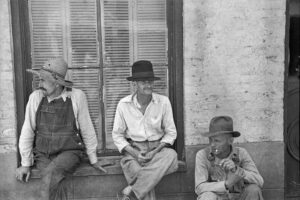
And let me now praise James Rufus Agee who died on this day, May16, 1955. He spoke for the human family, that one death was everyone’s, and as Wordsworth put it, we should give thanks for his life and give

Thanks to the human heart by which we live,
Thanks to its tenderness, its joys, and fears,
To me the meanest flower that blows can give
Thoughts that do often lie too deep for tears.
May James Agee speak to us still, if only we would listen.

Edward Curtin: Sociologist, researcher, poet, essayist, journalist, novelist....writer - beyond a cage of categories. His new book is At the Lost and Found: Personal & Political Dispatches of Resistance and Hope (Clarity Press). Read other articles by Edward, or visit Edward's website.


Trump Proposes Tax-Increases on Poor to Fund Tax-Cuts on Rich


On May 17, MSNBC, a Democratic Party propaganda-site, issued an “opinion” article that was loaded with links to its sources, including Republicans, and the article honestly represented what it reported, and its sources were entirely credible, so that that article actually constituted news, and not only this, but it is very important news for every American: Donald Trump’s proposed tax-legislation would, if passed into law, include front-end-loaded (short-term) tax-cuts for the poor, and back-end-loaded — indeed PERMANENT — tax-cuts for multimillionaires and billionaires, so as to pay for the increased spending that Trump wants for just two federal Departments — the Defense Department and the Homeland Security Department (both of which Departments most other nations’ Governments classify as being for national security or the military and so are called “defense spending”) — and decreased spending on every other federal Department (including all services to the poor).

So: on the taxes side, Trump wants increases on the poor and decreases on the rich; and, on the spending side, he wants spending increases on the military, and spending decreases on everything else.

If you want to see the MSNBC News report, click here; and, if you want to see the analysis that I did on Trump’s proposed federal budget, click here.

A further indication of Trump’s priorities as to how he intends to spend U.S. taxpayers’ dollars was provided also on May 17, at The Arab Weekly, headlining “US said to be developing ‘a plan’ to move one million Palestinians to Libya: In exchange for resettling the Palestinians, the administration would release to Libya billions of dollars of funds.” Some important background on why Palestinians refuse to relocate out of Palestine, is that any who do, will thereby lose their legal right of return because that territory will then be taken by Israel and resettled by Zionist Jews, so that the result would then be a total defeat of the Palestinians by Israel — all of their legal rights will have been lost. And whatever they might ‘gain’ would be at gunpoint — NOT as part of any authentic deal that they had participated in. (And, indeed, the recipients of those American taxpayers’ billions of dollars will have been NOT any Palestinians, but, instead, whatever Libyan ‘government’ would be agreeing to accept the Gazans.) And then, that would be a million Gazans whom Netanyahu won’t need to slaughter in order for Trump and his friends to be able to build their hotels and resorts on the Mediterranean Sea, at the sandy beaches which had formerly been the Gaza beachfront of Palestine.

According to the U.S. Constitution (Article II, Section 2, Clause 2), all proposed international agreements, or “treaties,” that the U.S. Government joins, have first been passed by a two-thirds majority of the U.S. Senate. However, ever since 1974, that provision of the U.S. Constitution has routinely been violated. (It’s done on the theory that if the Executive and the Legislative branches both want to violate it, then the treaty will be simply relabeled a “congressional-executive agreement” — CEA) — which is negotiated between those two Branches and approved not by any two-thirds vote, but only by a 50% majority in both Houses, just like any regular law does that gets to a President’s desk for his/her signature. This verbal trick against the Founders’ intention when they wrote the Constitution, makes far easier for America’s billionaires to get the treaties that they want. The U.S. has had a traitorous Government like this ever since 1945, when the Declaration-of-War clause became no longer functional — and thus the military-industrial complex started to rule the U.S. Government — which also was achieved by means of a form of CEA.)

Eric Zuesse is an investigative historian. His new book, America's Empire of Evil: Hitler’s Posthumous Victory, and Why the Social Sciences Need to Change, is about how America took over the world after World War II in order to enslave it to U.S.-and-allied billionaires. Their cartels extract the world’s wealth by control of not only their ‘news’ media but the social ‘sciences’ — duping the public. Read other articles by Eric.


The Death of Christos Tsoutsouvis

May 15 in Anarchist History:

This Day in Anarchist History, May 15, we remember the insurrectionary life and tragic, early death of Christos Tsoutsouvis.

Tsoutsouvis had been a member of one of the first Greek leftist guerrilla orgs known as the ELA or Revolutionary People’s Struggle.

Over the years he participated in a number of militant acts of property destruction and later graduated to political assassinations targeting some of the worst perpetrators of torture of the Greek military junta.

He died on 15 May 1985 in a shoot out with the police in which he managed to take 3 of them with him.

SubMedia is directed and produced by Frank Lopez. Read other articles by subMedia, or visit subMedia's website.

Bruce Springsteen Lambastes “Treasonous” Trump During Start of European Tour

And Trump Responds

bruce-springsteen-en-concert-en-allemagne-en-juillet-photo-sipa-ap-georg-wendt-1694060256.jpg
Speaking at a concert in Manchester, the American singer-songwriter said his country was “in the hands of a corrupt, incompetent and treasonous administration.”

Musicians protesting against political leaders and government policies have a long and distinguished history in the United States. Bruce Springsteen, 75, one of the country’s most beloved singer-songwriters, lambasted President Donald Trump this week at a concert in Manchester, England, during the first leg of his “Land of Hope and Dreams” tour.

Here is a transcript of Springsteen’s remarks:

Introduction to Land of Hope and Dreams

Good Evening!

It’s great to be in Manchester and back in the U.K. Welcome to the Land of Hope & Dreams Tour! The mighty E Street Band is here tonight to call upon the righteous power of art, of music, of rock ‘n’ roll in dangerous times.

In my home, the America I love, the America I’ve written about, that has been a beacon of hope and liberty for 250 years, is currently in the hands of a corrupt, incompetent and treasonous administration.

Tonight, we ask all who believe in democracy and the best of our American experiment to rise with us, raise your voices against authoritarianism and let freedom ring!

Introduction to House of a Thousand Guitars

The last check, the last check on power after the checks and balances of government have failed are the people, you and me. It’s in the union of people around a common set of values now that’s all that stands between a democracy and authoritarianism. At the end of the day, all we’ve got is each other.

Introduction to My City of Ruins

There’s some very weird, strange and dangerous shit going on out there right now. In America, they are persecuting people for using their right to free speech and voicing their dissent. This is happening now.

In America, the richest men are taking satisfaction in abandoning the world’s poorest children to sickness and death. This is happening now.

In my country, they’re taking sadistic pleasure in the pain they inflict on loyal American workers.

They’re rolling back historic civil rights legislation that has led to a more just and plural society.

They are abandoning our great allies and siding with dictators against those struggling for their freedom. They are defunding American universities that won’t bow down to their ideological demands.

They are removing residents off American streets and, without due process of law, are deporting them to foreign detention centers and prisons. This is all happening now.

A majority of our elected representatives have failed to protect the American people from the abuses of an unfit president and a rogue government. They have no concern or idea for what it means to be deeply American.

The America l’ve sung to you about for 50 years is real and regardless of its faults is a great country with a great people. So we’ll survive this moment. Now, I have hope, because I believe in the truth of what the great American writer James Baldwin said. He said, ‘In this world, there isn’t as much humanity as one would like, but there’s enough.’ Let’s pray.

In a statement, the White House lashed out at Springsteen saying that “the 77 million Americans that elected President Trump disagree with elitist and out-of-touch celebrities like Bruce Springsteen. Bruce is welcome to stay overseas while hardworking Americans enjoy a secure border and cooling inflation thanks to President Trump.”

On Friday, Mr. Trump responded on his social media platformsaying that the rocker is “just a pushy, obnoxious JERK, who fervently supported Crooked Joe Biden, a mentally incompetent FOOL, and our WORST EVER President, who came close to destroying our Country.”

He added: “Springsteen is ‘dumb as a rock,’ and couldn’t see what was going on, or could he (which is even worse!)? This dried out ‘prune’ of a rocker (his skin is all atrophied!) ought to KEEP HIS MOUTH SHUT until he gets back into the Country, that’s just ‘standard fare.’ Then we’ll all see how it goes for him!”

Dating back to pre-Revolutionary War times, protest music has always had its day. “Yankee Doodle” was ordered played by the Marquis de Lafayette after the British surrender at Yorktown. The music of the abolition movement celebrated African musical traditions.

During the Great Depression Woody Guthrie sang about refugees forced of their land and migrating across the country. Billie Holiday singing Abel Meeropol’s 1939 anti-lynching song “Strange Fruit” was a catalyst for the civil rights movement. Paul Robeson sang about mistreated workers. Pete Seeger, Bob Dylan, Joan Baez, Marvin Gaye and others crafted songs protesting, racism, social injustice, and the foolhardiness of the Viet Nam War.

In 2003, at a concert in London, The Chicks (then known as The Dixie Chicks) spoke out against George W. Bush and the Iraq War, triggering a backlash that had an enormous effect on its career. At the time, The Dixie Chicks were one of the most popular American country acts. After the statement was reported it triggered a backlash from American country listeners. The group was blacklisted by many country radio stations, received death threats and was criticized by other country musicians.

In addition to his tour, later this summer, Springsteen will release a new album collection that will include dozens of “never-before-heard” songs from previously unreleased records.

Bill Berkowitz is a longtime observer of the conservative movement. Read other articles by Bill.


The Nakba Never Ended


May 15 marked 77 years since the Nakba, which refers to the expulsion, destruction, and ethnic cleansing of Palestinians associated with the creation of Israel in 1948. While we advocate for the colonization of Palestine to be recognized by our leaders and institutions in Canada as an injustice, we are also witnessing the Nakba continue — and even accelerate — in Israel’s genocide in the occupied Gaza Strip and West Bank.

In Canada, even acknowledging the existence of the 1948 Nakba continues to be rejected. Nakba denial is a form of genocide denial and a mechanism for denying the Palestinian right of return. It is also a key element of anti-Palestinian racism, something that is consistently perpetuated by the Canadian media. In 2023, the Canadian government even boycotted the first ever event held by the United Nations to commemorate the Nakba, sending a message to Palestinians that their ongoing suffering is uniquely undeserving of recognition.

What makes Nakba denial especially absurd in 2025 is that Israel is currently causing a greater scale of dispossession in Gaza than in 1948, with at least 1.9 million Palestinians forcibly displaced from their homes. This cruelty is not an accident, but by design, as one step in a deliberate plan by Israel to permanently expel Palestinians from Gaza.

When Donald Trump announced his plan for the United States to take over Gaza and permanently expel the population, Israel’s Prime Minister Netanyahu praised it — and told lawmakers that forcing Palestinians out of Gaza was the “inevitable outcome” of his military strategy. They are blocking aid from entering Gaza, deliberately using starvation as a weapon of war — a practice strictly prohibited under international law and codified as a war crime — with the genocidal intent of ensuring that Palestinians die, if not by bomb, then by hunger. This is a way of coercing those who survive to leave Palestine.

In a chilling message to world leaders, UN experts recently warned that we are at a “moral crossroads” in Gaza, and that states “must act now to end the violence or bear witness to the annihilation of the Palestinian population in Gaza.” Similarly, this week the UN Relief Chief challenged states: “what more evidence do you need? Will you act now – decisively – to prevent genocide in Gaza and to ensure respect for international humanitarian law?”

How will Canada respond to this call? Prime Minister Carney has said that “President Trump’s proposed forced displacement of Palestinians from Gaza is deeply disturbing,” but he has taken no concrete steps to address it. No sanctions, no pressure, nothing that could ever hope to stop the genocide that is being openly plotted by US and Israeli leaders.

Last year, CJPME submitted policy recommendations outlining how Canada can acknowledge and rectify the historical tragedy of the Nakba. Some of our recommendations included:

  1. Canada must officially recognize the Nakba and our role in the partition of the Mandate of Palestine.
  2. Canada must recognize Nakba denial as a form of anti-Palestinian racism and as having a direct impact on Canadians’ right to free speech and academic freedom.
  3. The Nakba is ongoing and Canada must play a role in halting it and reversing its consequences. To halt it, Canada must pressure Israel to change course by implementing boycotts, divestments, and sanctions.
  4. Canada must insist upon the right to return, restitution, and compensation for Palestine refugees, consistent with UNGA Resolution 194 and general principles of international human rights law and refugee law, and acknowledge that these rights are distinct, they are not mutually exclusive and must not be pitted against one another.
  5. Canada must play a role in demanding accountability and reparations for the Nakba (past and ongoing) by calling on the international community to set up an International Criminal Tribunal for Palestine, and by providing support to the International Criminal Court’s open investigation into war crimes committed in the Occupied Palestinian Territories.

Acknowledging the Nakba is not just about the past, it is about the present and the future — and addressing Canada’s complicity in an ongoing genocide. As Israel advances the Nakba in Gaza while annexing the West Bank, what will Canada’s legacy be?

CJPME’s mission is to enable Canadians of all backgrounds to promote justice, development and peace in the Middle East, and here at home in Canada. Read other articles by Canadians for Justice and Peace in the Middle East, or visit Canadians for Justice and Peace in the Middle East's website.

Tens of thousands protest in The Hague to demand Dutch government action on Gaza war


Copyright Niels van der Pas via AP
By 
Emma De Ruiter
Published on 19/05/2025 

Human rights groups and aid agencies — including Amnesty International, Save the Children and Doctors Without Borders — estimated the peaceful crowd at more than 100,000 people.

Tens of thousands of red-clad protesters marched through The Hague on Sunday to demand government action to seek a halt to Israel's campaign in Gaza.

Organisers called it the country's biggest demonstration in two decades, with human rights groups and aid agencies — including Amnesty International, Save the Children and Doctors Without Borders — estimating the peaceful crowd at more than 100,000 people.

The streets of the Dutch political capital were packed with the old, young and even some babies on their first protest.

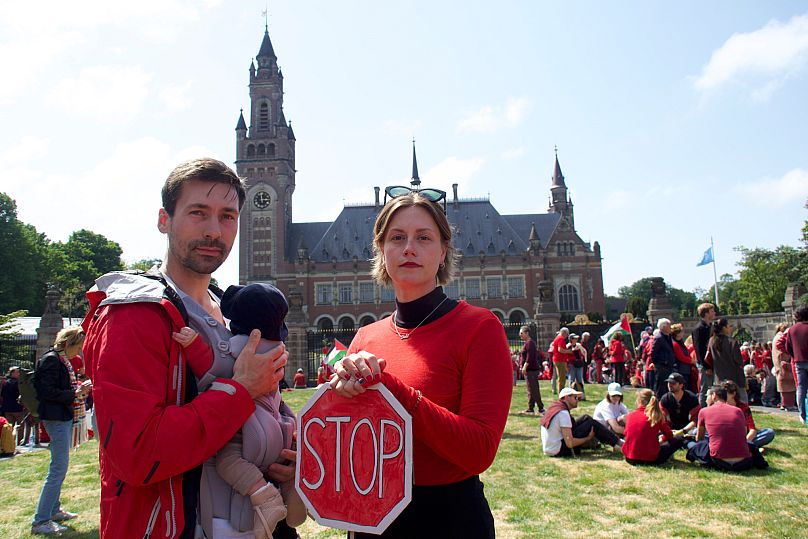
Roos Lingbeek, right, husband Stijn Joosten and daughter Dido stand in front of the Peace Palace during the Red Line protest in The Hague, Netherlands on Sunday, May 18, 2025.Niels van der Pas via AP

“We hope this is a wake-up call for the government,” said teacher Roos Lingbeek, attending the march with her husband and their 12-week-old daughter, Dido, who slept in a carrier as her parents brandished a sign simply reading: “STOP.”

The march went past the Peace Palace, headquarters of the United Nations’ International Court of Justice, where last year judges ordered Israel to do all it can to prevent death, destruction and any acts of genocide in Gaza.

Protesters walked a 5-kilometre loop around the city centre of The Hague, to symbolically create the red line they say the government has failed to set.

Protesters carry a banner that reads We trekken een rode lijn voor Gaza (We draw a red line for Gaza) during the Red Line protest in The Hague, Netherlands on 18 May, 2025.Niels van der Pas via AP

“We are calling on the Dutch government: stop political, economic and military support to Israel as long as it blocks access to aid supplies and while it is guilty of genocide, war crimes and structural human rights violations in Gaza and the Occupied Palestinian Territories,” Marjon Rozema of Amnesty International said.

Demonstrators attend the Red Line protest in The Hague, Netherlands on Sunday, May 18, 2025.Niels van der Pas via AP

Dutch policy toward Israel is just one of many issues causing splits in the Netherlands’ fragile coalition government. Hard-right leader Geert Wilders is staunchly pro-Israel and his anti-immigrant Party for Freedom holds the largest number of seats in the country’s parliament.

In a post on X, Wilders accused the protesters of supporting Hamas, calling them "confused."

Last week, however, foreign affairs minister Caspar Veldkamp of the minority centre-right VVD party urged the European Union to review a trade agreement with Israel, arguing that its blockade of humanitarian aid violated international law. Wilders hit back, denouncing the call as an “affront to cabinet policy.”