Wednesday, December 17, 2025


It’s official: the UK will assume the Presidency of the G20 in 2027, presenting a historic opportunity for this government. With aid budgets shrinking and the multilateral system in crisis, Britain will take the helm at a pivotal moment for the future of global cooperation.

This year, aid cuts have swept the G20, with UK cuts alone projected to result in 2.9 million fewer children in school and twelve million people losing access to clean water. There is no doubt that the cuts are devastating. But they need not define this government’s legacy on international development. The hopeful truth is that, by reforming the global financial system that traps countries in poverty and leaves them reliant on aid in the first place, this government could more than counteract the damage – not by writing cheques, but by rewriting the rules.

The last Labour government made historic progress. Following a UK-led debt relief initiative in 2005, the number of children completing primary school increased by an average of 20% across thirty-six of the world’s poorest countries. Once again, Labour has the power to make history by reforming financial rules to save and improve millions of lives – all whilst benefiting, rather than costing, the British economy.

READ MORE: ‘Violence against women and girls can be prevented. The UK can help lead the way’

Under today’s global rules, money is moving in the wrong direction. Instead of wealth flowing into the poorest and most climate-vulnerable countries, far more is flowing out. Aid cuts will make this worse, but the real drivers are baked into the system – tax evasion, illicit finance, resource extraction, trade imbalances, and a broken global debt system. In 2023, African nations spent over fifty times more on foreign debt payments than they received in UK aid. The least developed countries lose $46 billion each year to corporate tax abuse, while Africa is estimated to have bled a staggering $1.7 trillion through illicit financial flows since 1980 – figures that dwarf even pre-cut aid contributions.

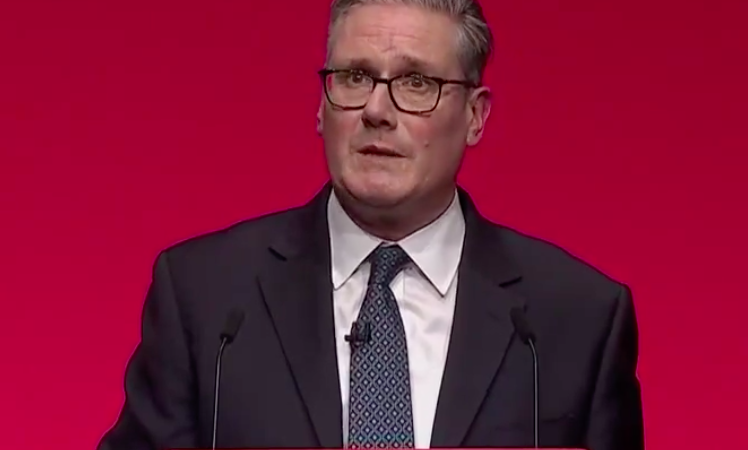
Throughout 2025, these challenges have dominated every major international summit. World leaders, from the head of the IMF to the UN Secretary General and the Pope, have called for urgent reform. The UK government, too, has rightly identified system change as a key development priority. In his very first speech to the United Nations, Keir Starmer called for reform of global financial rules to deliver a fairer deal for developing countries.

Action to tackle the global debt crisis was a manifesto commitment, and in June 2026, the government is hosting world leaders in London to discuss tackling illicit financial flows. As planning begins for the UK’s G20 Presidency, the government has a strong foundation – but supportive rhetoric has not yet translated into concrete policy. As ODA cuts increase pressure on our global South partners, rhetoric will not be sufficient – bold policy action is needed.

Subscribe here to our daily newsletter roundup of Labour news, analysis and comment– and follow us on BlueskyWhatsAppX and Facebook.

Britain has arguably more power than any other country to address the failings of the global financial system. It may not be a superpower in the way it once was, but – due to the central roles of the City of London and British Overseas Territories in the global economy – it remains a financial superpower. More than 90% of debts owed by low-income countries to financial firms like banks and hedge funds are governed by English law. A quarter of all global tax evasion is facilitated by Britain and its overseas territories, amounting to over $100 billion USD each year. By designing a G20 agenda of ambitious action in key areas like debt, tax, and illicit financial flows, Labour could make history.

More than a moral imperative, this is a strategic agenda that promises to bolster Britain’s economy and security. Fairer global financial rules would reduce migration pressures, prevent conflict, stabilise global markets, and prevent the climate damage that will push up food and energy prices for ordinary people in the UK. More functional debt and tax systems would unlock global growth, providing the UK with new trading partners, boosting our export revenues, and creating new markets for UK companies.

Labour members have not forgotten that it was the Labour Party that created the Department For International Development (DFID), enshrined 0.7% aid spending in law and drove $130 billion of debt cancellation in the 2000s. Since the aid cuts, new sign-ups to the Labour Campaign for International Development have spiked, as Party members make clear that they refuse to stand by and watch Labour abandon its proud tradition of internationalism.

Share your thoughts. Contribute on this story or tell your own by writing to our Editor. The best letters every week will be published on the site. Find out how to get your letter published.

The aid cuts were a tragedy, but they have clarified the stakes. If we can no longer rely on aid to mask the inequities of the financial system, we must fix the system itself. As we approach the UK’s historic G20 Presidency, the question is not whether reform is possible, but whether we possess the moral imagination and political courage to pursue it.


    • SHARE: If you have anything to share that we should be looking into or publishing about this story – or any other topic involving Labour– contact us (strictly anonymously if you wish) at mail@labourlist.org.
    • SUBSCRIBE: Sign up to LabourList’s morning email here for the best briefing on everything Labour, every weekday morning.
    • DONATE: If you value our work, please chip in a few pounds a week and become one of our supporters, helping sustain and expand our coverage.
    • PARTNER: If you or your organisation might be interested in partnering with us on sponsored events or projects, email mail@labourlist.org.
    • ADVERTISE: If your organisation would like to advertise or run sponsored pieces on LabourList‘s daily newsletter or website, contact our exclusive ad partners Total Politics at customer.service@totalpolitics.com.


‘Punishing migrant care workers won’t fix Britain’s problems. It will make them worse’


Less than 24 hours after the Home Secretary announced plans to change the rules on indefinite leave to remain (ILR), emails from worried constituents began arriving.

One expressed a powerful sense of betrayal and injustice: “In October 2023, my husband, my eight-year-old son, and I, holding a skilled worker visa, arrived in the UK believing that it would be a fair, equitable, democratic place where we could feel safer. As immigrants, we are making an extraordinary effort as a family to adapt to a new country and add value to it by paying our taxes from the first day we arrived.”

Since arriving in Parliament, I have been a consistent supporter of immigration reform. The existing employer sponsorship model for skilled workers creates a dangerous power imbalance, giving bosses too much control over employees and leaving care workers and others at risk of exploitation.

The trouble is, ministers keep misdiagnosing the problems we’ve inherited and – as a result – produce the wrong solutions. We are presented with immigration policy designed to out-Reform Reform and chase Nigel Farage’s tail – when we should be starting from the principle of fairness and securing the skills we need.

Until now, the skilled worker route offered a five-year pathway to ‘Indefinite Leave to Remain’ (IRL). The government is proposing to double this qualifying period to 10 years, rising to 15 for those deemed low-skilled, alongside new conditionality based on the idea of “earned” status.

It was wrong for the Home Secretary to describe workers in the social care sector as a low-income and a low-contribution group in our society. A Labour government should not be punishing migrant care workers for having their wages depressed. Social care is not just a job; it is the work of providing dignity and support for our loved ones. This is work we should value and professionalise – not denigrate.

The most unfair aspect of these changes is that they will apply to people already here. Changing the rules halfway through a legally established settlement journey is grossly unfair and, I believe, profoundly un-British. For a country that prides itself on being rules-based, pulling the rug out from under these workers who came in good faith is simply wrong. 

Over 50 MPs have signed my Parliamentary Motion opposing the changes – it calls on the government to retain the five-year pathway for existing skilled worker visa holders.

These are not numbers on a spreadsheet. They are people who have built careers, put down roots, and made lives based on a promise our government made them.

Ministers seem to have forgotten that the Health and Care Worker Visa was introduced after the pandemic precisely because there was a massive staff shortage in the sector. This remains the case today.

We now have the troubling situation where the left hand of government does not seem to know what the right is doing. The long-awaited Casey Review will set out a new strategy for social care, while the Home Office squeezes out the very workers keeping the sector running. At the same time, the Chancellor’s mantra of “growth, growth, growth” is undermined by pushing workers out of key industries.

We do need to strengthen the domestic workforce through better training, pay, and progression, but that is a separate task, and simply tightening immigration rules will not deliver it overnight. Making it harder for the social care sector to operate will only deepen public frustration in a country already burdened by the sense that everything is broken. If care homes, particularly outside big cities, cannot recruit staff and are forced to close, the outcomes will be depressingly predictable as right-wing politician double down on scapegoating migrants for pressure on services.

We need a major rethink of this flawed approach and to recognise not only the contribution migrant workers make to our society but also what will happen if we force them to leave. Our Labour government must understand that it is the workers – not the billionaires or the bankers – who keep our country moving.

It is time to stop echoing Reform and start championing those who perform vital roles in our society.

UK

Labour’s Employment Rights Bill passes through Parliament-Delivering biggest upgrade in workers’ rights in a generation


Today
Left Foot Forward 

Prime Minister Sir Keir Starmer said the development marked a "major victory for working people in every part of the country".


Despite Reform and Tory attempts to block it, Labour’s landmark Employment Rights Bill passed both Houses of Parliament yesterday, and is set to become law before Christmas, delivering the biggest upgrade in workers’ rights in a generation.

Prime Minister Sir Keir Starmer said the development marked a “major victory for working people in every part of the country”.

“We have just introduced the biggest upgrade to workers’ rights in a generation… Today our plans passed through parliament, and will soon become law,” he said.

The law will see an end to exploitative zero hour contracts, extend sick pay to all from day one, expand paternity, parental and bereavement leave, strengthen protections for pregnant women, whistle-blowers and victims of sexual harassment and also repeal Tory anti-union laws.

Despite opposition attempts to water down the bill, it has passed and been welcomed by trade unions.

Commenting on the Employment Rights Bill completing its parliamentary passage and paving the way for it to become law, TUC General Secretary Paul Nowak said: “This is an historic day and early Christmas present for working people across the country, and the trade unions who represent them.

“Banning exploitative zero-hours contracts, sick pay for all, expanding parental and bereavement leave, strengthening protections for pregnant women, whistleblowers and victims of sexual harassment, repealing Tory anti-union laws, ensuring union access to workplaces, establishing a social care fair pay agreement – these are just some of the watershed measures this Bill will now deliver.

“Unions and workers have long campaigned for these vital rights. Together, we have broken a decades long economic status quo defined by insecurity, weak rights and poor pay.

“Finally, working people will enjoy more security, better pay and dignity at work thanks to this Bill.

“It’s now vital that workers start feeling the benefits of this legislation in their lives as soon as possible.”

Unite union’s general secretary Sharon Graham said the bill must now be implemented “without any further dilution or delay”.

Graham said: “Finally the Employment Rights Bill has been passed. It now must be implemented without any further dilution or delay.”

Basit Mahmood is editor of Left Foot Forward


‘The Employment Rights Bill is a massive step forward – but we’re not done delivering for working people’


Labour’s landmark Employment Rights legislation has now, finally, passed both Houses of Parliament. It cannot be underestimated how big a leap forward this will be for working people.

We have to mark and celebrate this moment, that has been years in the making. From the very start, this has been a partnership between the affiliated unions and the Labour Party – the Labour-union link at its very best.

These policies didn’t come from nowhere. They came up through the union movement, directly from workers and workplaces, and were painstakingly negotiated through TULO – and now they’re about to be made real, changing lives of workers in every part of the country. This would not have happened without a Labour Government – but it absolutely would not have happened without the collective voice of working people that unions bring to the heart of our Party.

There’s so much in the Employment Rights Bill that our movement can be proud of. The right for everyone to have a contract that reflects the hours they actually work, access to Statutory Sick Pay from the first day of illness, fairness for unions to give workers an effective voice in their workplace, so we can negotiate and bargain for better pay and conditions for workers, and draconian Tory laws, designed to tie trade unions up in knots, will be scrapped. Together, these changes will rebalance the world of work, putting power back into the hands of working people, where it belongs.

We have overcome so many obstacles to get here. The Tories and Reform stood shoulder to shoulder with Britain’s most unscrupulous employers to frustrate, delay and block this Bill at every turn. In the House of Lords, the Liberal Democrats sided with the Tories until the last moment. Even Green Party Peers voted with the Tories to water down the right to a guaranteed hours contract. It couldn’t be clearer – only Labour stands with working people.

I want to take a moment to offer particular thanks to some of those who helped get us here – including Angela Rayner, Jonathan Reynolds, Justin Madders and, more recently, Kate Dearden and Peter Kyle who have shepherded this Bill on its rollercoaster through Parliament – and the trade unionist MPs who have relentlessly made the case for this Bill in Parliament. My thanks also to everyone in the movement who has worked on this over years – including my predecessor as Chair of Labour Unions, Mick Whelan and Andy McDonald MP for the important work they both did. Most importantly, I want to thank every single union member who has played a part in this – from raising issues in their workplace, to shaping union policy – together we have changed the law of the land to benefit all workers.

But we’re not done yet. The way these rights will be implemented is yet to be determined – and we have to get the details right so they deliver – like on the right for everyone to have a guaranteed hours contract, and a meaningful right for unions to access workplaces and meet workers.

Of course the Employment Rights Bill is not the end of the New Deal for Working People either – there’s more groundbreaking policies to come, on Equal Pay, health and safety, surveillance and tech at work and more – and TULO will be working hard to make sure those are delivered in full.

The New Deal is the union-Labour link in action. Labour campaigned on it, working people voted for it, and together the movement delivered it. That’s a message of change we can take to the doorsteps with pride.


 UK

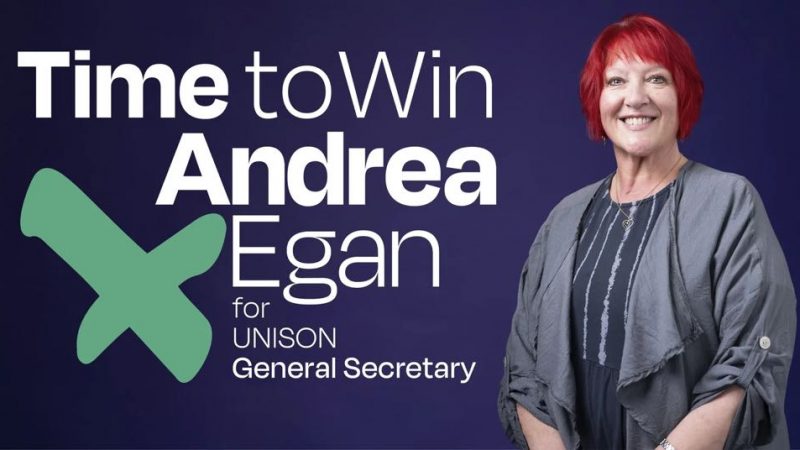
Left candidate Andrea Egan elected UNISON General Secretary

“Together, we will turn UNISON into the remarkable force for change it should be.”

Andrea Egan has released the statement below following her victory in the UNISON General Secretary Election.

This win, above all is a win for ordinary UNISON members. We public sector workers are on the frontlines of chronic underfunding, low pay, and outsourcing. We bear the brunt of it all. UNISON’s central task is to change that reality — our reality.

But that will only be possible if we recognise that an organised membership is our greatest strength, if we put faith in our collective decisions, and if we stand up to any employer or politicians who acts against our interests.

I would like to pay tribute to Christina, who has served our union for many years, and to thank her for fighting an energetic campaign.

I will work night and day to transform this union, but I cannot do it alone. Because this isn’s about me as an individual. It’s about ordinary UNISON members taking charge collectively.

We are going to need everyone – members, branch reps, grassroots activists, and our staff – pulling together. Then we can transform our union, and with it the lives of public sector workers across this country.

Andrea Egan
UNISON General Secretary elect


Andrea Egan defeats Christina McAnea in Unison general secretary election


Andrea Egan campaign ad

Andrea Egan has ousted Christina McAnea as general secretary of Unison after a vote of union members.

In a ballot of members, 58,579 (59.82%) backed Egan to lead the UK’s largest trade union with 39,353 (40.18%) backing McAnea. There were a total of 98,251 votes cast out of 1,404,684 – a turnout of seven percent.

Her election marks the first time that a lay member of the union has been elected directly to the post of general secretary.

Egan said: “We public sector workers are on the frontlines of chronic underfunding, low pay, and outsourcing. We bear the brunt of it all. Unison’s central task is to change that reality — our reality.

“This result means ordinary UNISON members are at long last taking charge of our union. We will put faith in members’ decisions and stand up to any employer, politician or cabinet minister who acts against our interests.

“Together, we will turn UNISON into the remarkable force for change it should be. That journey has begun today.”

She also paid tribute to McAnea and thanked her for “serving our union for many years” and for “fighting an energetic campaign”.

Her campaign for the post pledged to “launch a comprehensive review of [Unison’s] relationship with the Labour Party” in order to ensure “value for money”, raising the spectre of two of Britain’s biggest unions, alongside Unite, disaffiliating from the party.

Egan will begin her five-year term as general secretary on January 22 next year. You can read our interview with Andrea from during the campaign here.

READ MORE: Could Andrea Egan shatter Unison’s cosy relationship with Labour?

‘Vast swathes of Labour’s coalition feel government has fallen out of step with its mainstream’

Prime Minister Keir Starmer congratulated Egan, who was expelled from the Labour Party in 2022, on her election and thanked McAnea for her work as general secretary over the last five years.

“She played an important role in securing the landmark Employment Rights Bill and her work has ensured this Labour Government will bring in a fair pay agreement to boost the wages of social care workers.”

Labour general secretary Hollie Ridley also paid tribute to McAnea’s work as Unison general secretary and said: “Millions of workers across Britain will benefit from what she has delivered as the first woman to lead the UK’s largest trade union. Her passionate campaigning on social care in particular ensured our Labour Government can bring in a fair pay agreement for hardworking social care workers across the country.

“All of us across the Labour movement wish Christina all the very best in the future – we look forward to continuing campaigning shoulder to shoulder with her as we deliver the fairer future Britain needs.”

Reacting to the result, Mainstream’s Interim Council said it “sends its congratulations to Andrea Egan on her election as General Secretary of Unison.”

A spokesperson said: “This result shows clearly that vast swathes of Labour’s historic coalition feel the government has fallen out of step with its mainstream.

“By working hand in hand with our partners in the trade union movement, the Labour Party has ushered in huge advances for working people before and it can do so again – but only if the Party rediscovers its progressive instincts.

“We look forward to working with Andrea and all those who share our commitment to a more open Labour Party with the energy and ideas to transform the country.”

‘Egan’s victory couldn’t send a clearer message’

Neal Lawson, director of campaign group Compass, said: “Andrea Egan’s victory couldn’t send a clearer message: people are rapidly losing faith in this Labour leadership and want change.

“Their reputation for hyperfactional control, from members to the PLP to their own NEC, is alienating even those Labour has the strongest links with. This might be a good time to remember that Andrea herself was expelled from the party back in 2022.

“This shakes the ground on which the top of the Labour Party stands. They need to end the project of political centralisation and re-establish their truly progressive credentials.”

Lucy Atkinson, political director of pro-leadership group Labour First, said: “The Labour Party was formed to be the party of trade unions, and the passing of yesterday’s Employment Rights Bill is just one example of that. We are sure Unison will continue that tradition that has so benefitted their members.

“With a turnout of just seven percent, this election shows that a minority far left are able to take over a major union through engagement. It shows a need to always be organising for moderate causes within all parts of the labour movement.”

Momentum co-chairs Alex Charilaou and Sasha das Gupta said: “Andrea Egan’s win as UNISON General Secretary is the biggest step forward for the left in the labour movement for years.

“We look forward to working with UNISON and all progressive forces in trade unions to push for the transformative changes working people are crying out for.”

Egan ineligible to sit on Labour’s NEC after 2022 expulsion

Egan was expelled from Labour in 2022 after the party claimed she shared articles from Socialist Appeal, an organisation banned by Labour. As a result, LabourList understands she will not be able to sit on the party’s national executive committee, unlike her predecessor.


‘Andrea Egan’s Unison win will reshape Labour’s internal politics – we just don’t yet know how’


Photo: Unison

Andrea Egan’s victory will have major implications for the Labour Party. Andrea has made little secret of her frustrations with the Labour leadership and her desire to see changes in how the party is run and how it is governing. 

But attention should also be given to what this means for Unison members and what drove them to vote for change. 

Unions are – first and foremost – vehicles for progressing members’ interests. Unlike those of us watching from Westminster, they will not necessarily have had Unison’s relationship with the Labour Party at the forefront of their mind as they went to vote. They have chosen the more radical candidate to represent them, and work should be done by the new leadership as to what they want to see delivered as a result of this change 

Equally, 93 percent of eligible Unison members did not vote in this election – which is something the defeated side should reflect on, and Egan and her new team should be keen to change. Decisions are made by those who show up, and Egan has won fairly and by some margin.

There is no indication that the wider Unison membership differs in percentage terms from those who did choose to vote. But organisations that are predicated on amplifying workers’ voices within a democracy should care as much about that within their own democratic processes as they do in the wider country.

Most of the speculation in SW1 will be about what this means for Keir Starmer, Labour’s NEC and any potential leadership challenges. We will have to wait and see. Certainly, Christina McAnea, while not shy of criticising Labour at times, was widely seen as an ally of Starmer. Egan, on the other hand, was expelled from the party in 2022 over allegations she had shared posts from Socialist Appeal (a group who were proscribed by the party in 2021).

This shift in what has traditionally been seen as one of the more moderate unions will change the dynamics within Labour’s governing body, as well as giving more encouragement to those who see distancing themselves from the current leadership as a path to success.

Egan made noises about disaffiliating from the party throughout the campaign. But Unison is a democratic organisation, and the rules for changing this are quite a tough hurdle to get through. (Though, so too was dislodging an incumbent general secretary, so we shouldn’t discount it as a possibility.) Where Labour might see a difference is in non-affiliation funding both to the party as a whole and to individual MPs.

Egan has also spoken highly of Andy Burnham, and with Unison holding a place on Labour’s NEC – largely seen as the biggest block for a potential return to Parliament for the Greater Manchester Mayor – this could be one step closer to him returning to Parliament in time for a leadership contest should one take place in 2026.

Given Egan’s own history with this body, it may also signal that the era of hardline enforcement of rules around the sharing of social media posts may be winding down.

If Unison were to disaffiliate they would have no role in any potential leadership bid. If they stayed in place and Starmer were successfully replaced, depending on who won, they might have less interest in breaking their link with the party.

This week, the government passed its historic Employment Rights Bill – the biggest upgrade to workers’ rights in a generation. However, much of the devil will remain in the detail of secondary legislation and implementation.

With Unison – one of Labour’s largest affiliated unions – moving to the left, there will be increased pressure on the government to stick to the spirit of what was in the bill and go as far and as fast as possible in implementing change.

Equally, Unison has been intimately involved in the legislative process around the Fair Pay Agreement for care workers. This is further behind in the legislative process than the Employment Rights Bill with much work still taking place. What this means for those negotiations is another area to watch out for. 

There are also wider policy areas where Egan has been critical of the government – including on public service reform and welfare. All of which will make the government’s job harder as discontent with parts of their agenda continues to gain prominence within the party and Labour movement. 

Yesterday, the Labour government, Labour Party, and union movement were as one in their celebration of the Employment Rights Bill. Today, things have been thrown up in the air once again. Where the pieces will land may only become clear as 2026 unfolds.