Sunday, January 04, 2026

As Electricity Bills Rise, Activists Are Demanding Public Control of Utilities

“Public power” organizers are pushing for democratized control and truly public ownership of our energy system.
January 2, 2026

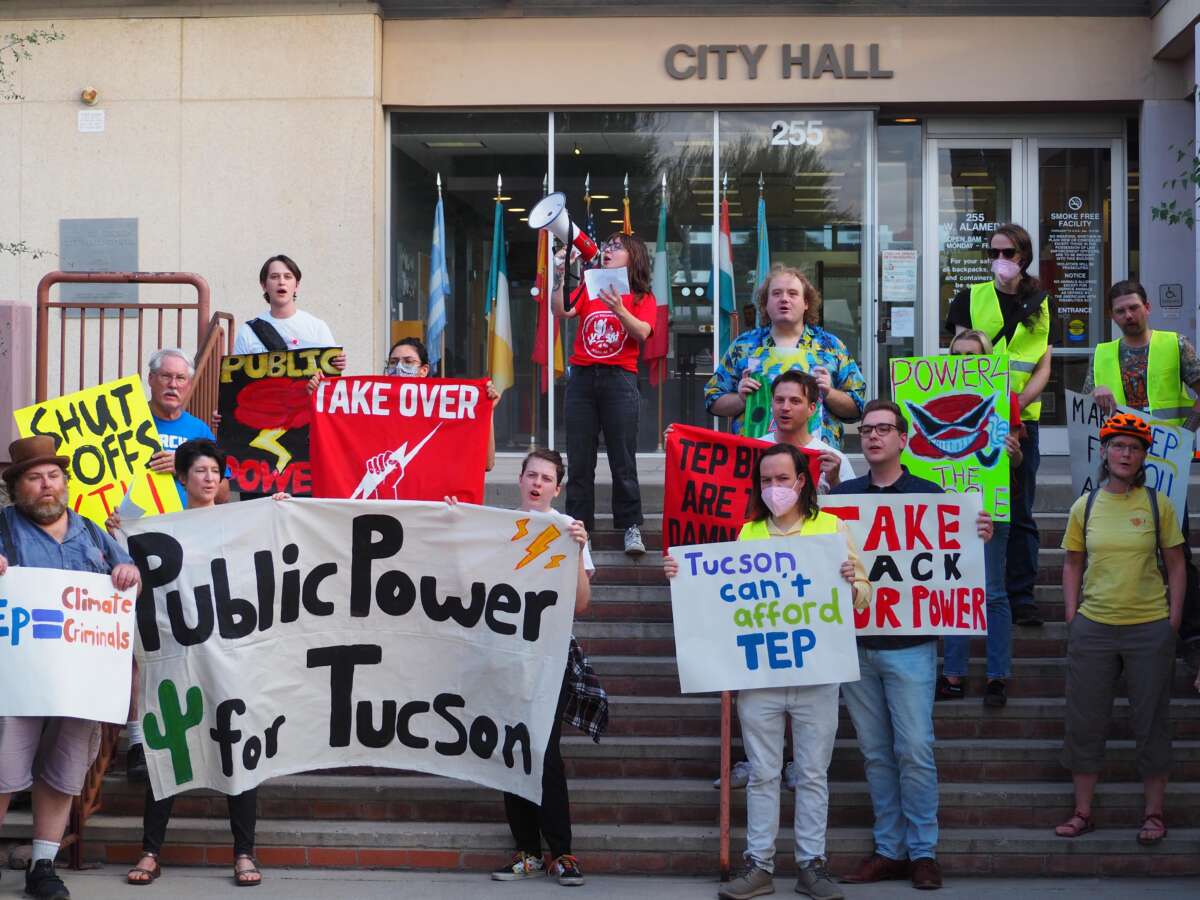
Community members rally at Tucson City Hall.Cameron Capara


Did you know that Truthout is a nonprofit and independently funded by readers like you? If you value what we do, please support our work with a donation.

Electricity bills for millions of utility customers are skyrocketing across the U.S. while the number of households facing extreme utility debt is mounting. Energy costs are being turbocharged by the AI data center boom, which is prolonging the burning of fossil fuels in the face of intensifying climate chaos. Overseeing all this is a powerful regime of investor-owned utilities that dominate our energy system. These for-profit corporations own and control the basic infrastructure we all depend on. Their executives and shareholders profit by raising electric rates or skimping on maintenance. And now, private equity firms are gunning for utilities.

But over the past few years, a vibrant movement for public power has emerged and grown.

Public power means public ownership and democratic control of our energy system. It’s an alternative to corporate-owned, profit-driven utilities. Public utilities in the U.S. are not new, and recent campaigns — from Tucson to Milwaukee, from San Diego to Ann Arbor — seek to expand and improve on this precedent, creating a truly democratic public utility system that serves human needs over profits. A notable victory for public power came with the 2023 passage of New York’s Build Public Renewables Act, and a campaign for public power in New York’s Hudson Valley has been gaining momentum.

Public power means public ownership and democratic control of our energy system. It’s an alternative to corporate-owned, profit-driven utilities.

This Truthout roundtable explores what public power means and why it’s needed, how it intersects with other issues and struggles, organizing lessons from ongoing campaigns, and more. Lee Ziesche is a climate justice organizer, co-chair of the Tucson Democratic Socialists of America (DSA), and a core organizer in Tucson’s public power campaign. She was also involved in Public Power NY’s successful campaign to pass the Build Public Renewables Act. Matt Sehrsweeney is a climate justice organizer and Metro DC DSA member who co-chairs We Power DC, Washington, D.C.’s campaign for public power. Sandeep Vaheesan is the author of the recently published book Democracy in Power: A History of Electrification in the United States and the legal director at the Open Markets Institute.

This roundtable has been lightly edited for length and clarity.


Derek Seidman: What is public power? Why’s it worth fighting for?

Matt Sehrsweeney: The priorities of investor-owned utilities (IOUs) are fundamentally at odds with those of rate payers. IOUs are obligated to maximize their profits for their shareholders, which usually means raising rates as high as possible. Operating a crucial service like providing electricity as a profit-seeking business leads to terrible outcomes for rate payers. In D.C., nearly a quarter of households are in debt to Pepco, their utility.
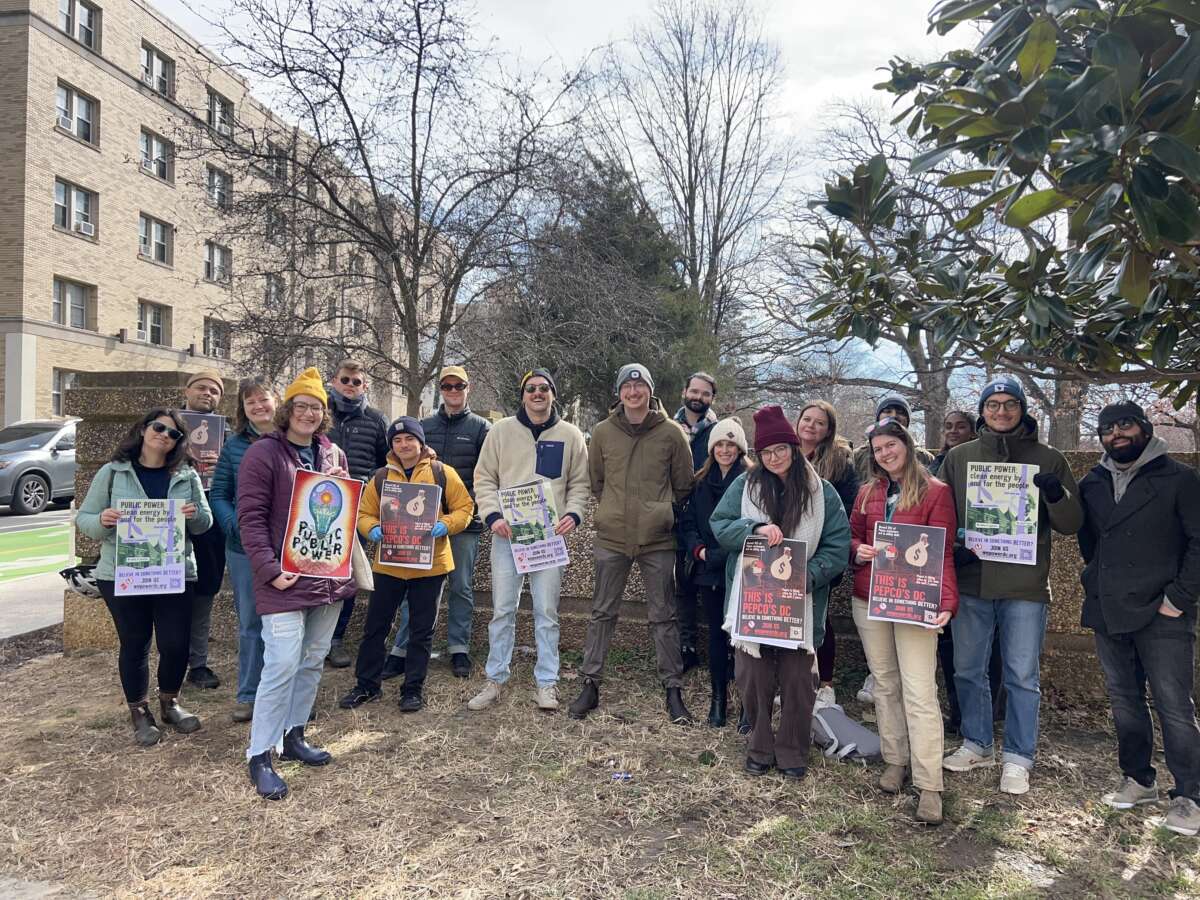
We Power DC organizers put up posters to spread the word about their campaign.
Matt Sehrsweeney

Publicly owned and operated utilities, on the other hand, are more accountable to the needs of communities and can better prioritize things like more affordable rates and reliable service. There’s also IOUs’ reliance on fossil fuels. If we want to address the climate crisis at the speed that is necessary, we need utilities that are responsive to climate goals.

Sandeep Vaheesan: Electricity is an essential service. It’s hard to imagine modern life without electricity. Given this, it’s quite odd that the financial sector and shareholders have so much power over our electricity. In the U.S., about three out of four power customers are served by an investor-owned utility. These private monopolies prioritize profits, which is antithetical to high quality, affordable, and clean electric service.

Public power offers a more promising path where public service is truly front and center. Publicly owned utilities are focused on high quality, affordable, and sustainable electricity. They’re not pressured to deliver big profits to shareholders. Public power also offers community control over things like rate design and infrastructure siting and ways to get to net zero. Public power offers the promise of bringing a more systemic, holistic approach to decarbonization.

Why is public power a core struggle for the left specifically?

Lee Ziesche: Public power is a way to actually improve the lives of working-class people. Electric bills are absurd. People are racking up debt. This is a chance to show people that socialism can work. We’ve talked to many people who aren’t socialists but whose bills are so high that they’re ready to support a socialist solution. We can prove that a public good can serve the people and be more affordable.

It makes no sense that profit-seeking corporations own the poles and wires that bring electricity into our homes. People need electricity to survive, especially in places like Tucson, where we have extreme heat. It should be a public good. That’s what public power is all about.

Sehrsweeney: These campaigns also represent an attempt to expand small-d democracy in our everyday lives. It’s about enhancing local democratic control over everyday institutions that provide basic public services. Expanding democracy is a huge part of the project of the left.

What are some important lessons you’ve learned from campaigning for public power?

Sehrsweeney: Harnessing peoples’ latent anger against utilities is crucial. People are fed up with rising electricity bills. Here in D.C., we’ve seen Pepco’s profits skyrocket. People are pissed off. Capitalizing on that anger has been a key part of our campaign.


“It’s not a natural fact of life that our bills have to go way up. Our government should be intervening to prevent these rate hikes.”

Politicizing rate hikes has been an entry point for getting people involved. It’s not a natural fact of life that our bills have to go way up. Our government should be intervening to prevent these rate hikes. We’ve pressed regulators and politicians to do their job. Rate hikes have been an important organizing site for us.

Ziesche: We’re also doing that in Tucson. Tucson Electric Power (TEP) filed for another rate hike this summer, so we put up posters around town featuring a grim reaper that say “Will you survive another TEP rate hike?”
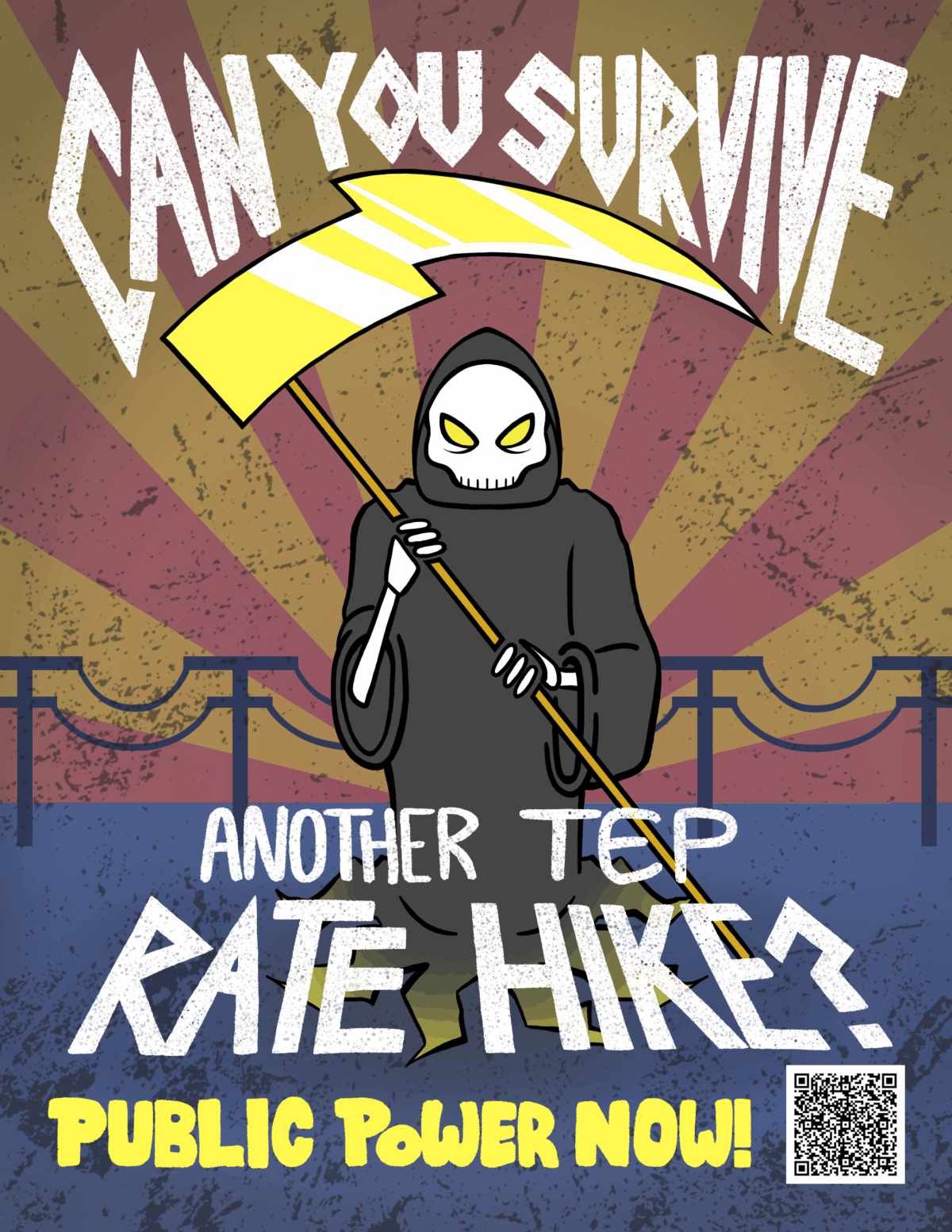
Poster designed by Trisha Smith

Be prepared to talk to a lot of people about their electric bills. Anytime there’s a major festival we’re out talking to people or asking them to sign a petition.

You should also be ready to make politicians a little uncomfortable. You have to build the power to challenge them and, if necessary, primary politicians who aren’t on board. DSA chapters waged multiple primary challenges across New York State, and we’ve done the same here in Tucson. When we were out door-knocking for Sadie Shaw, we also talked about public power. Our politicians often have cozy relationships with these powerful utilities. You need to build a big enough base to get elected officials on your side.

The public power campaign in New York was really impressive. What lessons did you take from it?

Ziesche: We built a huge statewide coalition that reflected all of New York to win the Build Public Renewables Act. A lot of the organizing originated from DSA chapters, and we got environmental justice groups and labor on board. We really built a massive movement. Thousands of people did things like submitting comments or calling the governor when we needed it.

We primaried elected officials and also challenged them in creative ways that made them incredibly uncomfortable. We made gigantic Venmo boards showing the donations that elected officials received from utilities or fossil fuel companies.

Can you talk about how the fight for public power intersects with struggles for racial and housing justice?

Sehrsweeney: In D.C., the parts of the city hardest hit by rising electricity prices and energy shut offs are predominantly Black, poor and working-class wards. Over 50 percent of Pepco’s low-income customers are in utility debt. The burden of energy injustice falls most acutely on Black and Brown communities and people facing housing insecurity. The folks most likely to be evicted are also the folks most likely to face energy shut offs.

Ziesche: Our public power campaign in Tucson merged this summer with a fight against a massive Amazon data center. Our city voted against it, but TEP is moving forward with it anyway. We know that Amazon Web Services works with Palantir to target immigrants. We have this potential monster being built in the Sonoran desert where we have almost no water. This will send our electricity through the roof and could be used to target immigrants in our community. [Note: Since this interview was conducted, Amazon pulled out of the data center project, though developers are still trying to advance it.]

Community members march to Tucson Electric Power headquarters in downtown Tucson, Arizona. Cameron Capara

We’ve also done multiple events with the Tucson Tenants Union. They have members who lose housing because they can’t afford their electric bills. Overall, we’re trying to approach our organizing more like a tenants union. How do we actually build enough power together as customers? If TEP won’t sell us back our grid at a fair price, maybe the people of Tucson can go on a bill strike and collectively stop paying our bills.

What about public power campaigns and the labor movement?

Vaheesan: The relationship between labor and public power campaigns is tricky and challenging. Most unionized workers in the power sector are represented by the International Brotherhood of Electrical Workers (IBEW), which tends to have a more conservative outlook that doesn’t necessarily embrace alternative forms of ownership. In the U.S. today, it’s also better to be a member of a private sector union than a public sector union, which often have no right to strike and now have a harder time collecting dues.

But I think these challenges can be overcome. Investor-owned utilities are under shareholder pressure to increase profits through rate hikes and cutting costs. This will become more acute as private equity enters the utility industry on a large scale. They are going to cut wages and benefits and rely more on outside contractors. The good wages and benefits that many power industry workers have long enjoyed are poised to change.

There’s an opportunity for public power campaigners to make the case to unions that public ownership shouldn’t be seen as a threat. Public power can actually be a way of maintaining and even improving the standards for workers and their unions. Further, public ownership offers the opportunity for real economic democracy, where not only communities, but the workers of the utility themselves, have a say in how the enterprise is run.

Ziesche: In New York, getting labor, especially the IBEW, to a neutral position was important, and they actually now support building renewable public energy. You need to figure out how to structure your campaign and public utilities to not hurt labor.

What are some major challenges you’ve faced? What do you wish you knew when you started out organizing that you know now?

Sehrsweeney: The goal of public power can also feel unattainably large. So you need to break things down into steps toward long-term goals. Maybe that’s opposing a data center or organizing against a rate hike. Building towards long term goals with reforms that put power back into the hands of the people is crucial.
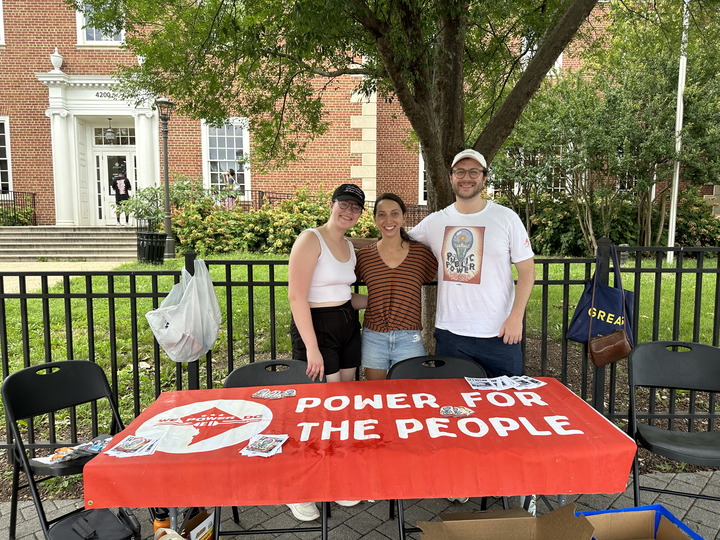
We Power DC organizers set up a table at a community event to talk to neighbors about their issues with Pepco, Washington, D.C.’s electric utility.
Matt Sehrsweeney

Figuring out how to translate these wonky issues into something that people can understand is also important. Be prepared to talk to people about their utility bills, because that’s one of the best entry points. We recently produced a white paper report on municipalization in D.C. that goes through how Pepco has failed people and has recommendations on how a public utility would be better. This study built our credibility and made legislators take us more seriously. It’s also been a good political education tool for our coalition partners and for lawmakers.

Ziesche: We are 100 percent volunteer-run, so building the capacity to take on a gigantic corporation is a challenge. We have to be our own experts and do our own research. It’s also a challenge to get taken seriously when you’re first starting out. Public power seems like a radical thing to some people. But this is actually the common sense solution. You need to explain that.

Vaheesan: The resource issue is a major obstacle to successful public power efforts, which entail taking on some of the most powerful corporate interests. On one side, you have investor-owned utilities with tens of millions of dollars to spend against municipalization, and on the other side you have a small group of hard working, dedicated volunteers who are also badly outgunned.

Also, power systems are complex and highly technical. There’s a lot of jargon. It’s easy for investor-owned utilities to say this is simply too hard for ordinary people to understand. We saw this in Maine in 2023. We need to hammer home that public utilities are a well-established institutional form. Around 54 million people in the U.S. get their electricity from publicly owned utilities. When you factor in consumer-oriented rural electric cooperatives, you’re talking about 100 million people. It’s a proven model, and we need to keep repeating that.

What’s making you feel hopeful or optimistic right now?

Sehrsweeney: At a time when the federal landscape for climate policy is so bleak, it makes sense for organizers to focus locally. Also, in addition to promoting energy justice, the fight for public power advances democracy by putting power into the hands of regular people and bringing them into the democratic project.

Vaheesan: I feel a renewed sense of possibility because of what’s happening in places like D.C. and Tucson and the mid-Hudson Valley. After many decades, public power is on the agenda again. This is a real moment of opportunity to push for public power at the state and local level and to lay the groundwork for eventual federal support. The energy affordability issue is not going away. Rate increases of 15 percent or 20 percent are becoming common. If we’re serious about energy justice and affordable rates, building public power is really the only way forward.
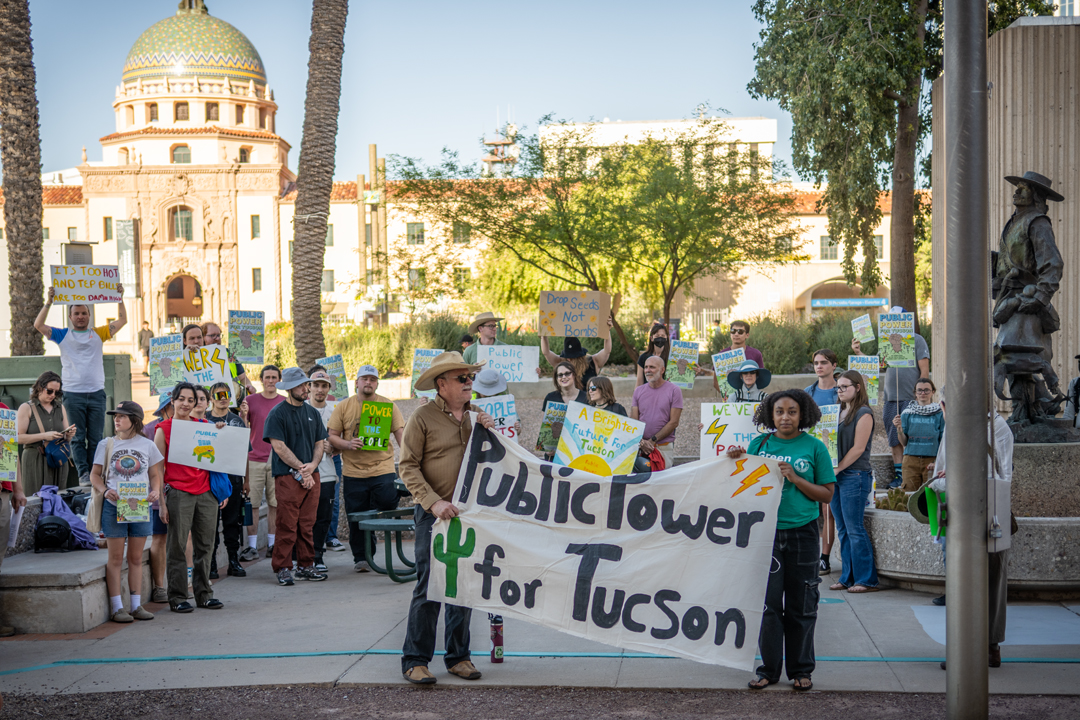
Tucson community members rally on Earth Day for public power after feasibility study results were released showing a public power utility would save customers hundreds of dollars.  Vivek Bharathan

Public power used to be the stuff of popular politics. If we do the organizing, advocacy, and public education now, we could be in a good position in three to five years to push for a major expansion of public power again.

Ziesche: When we’re out there talking to people, they’re so grateful that we’re taking on this fight. Those conversations give me a lot of hope.

Also, those of us waging different public power fights are getting connected nationally as a movement. There’s a new organization, Public Grids, that’s bringing people together. This will help our individual fights. It’s incredibly hard to take on a gigantic corporation, but together we’re showing that the entire system across this country is not working. The unaffordability crisis around electricity is also being supercharged by the massive data center build out. We’re reaching a crisis point. It’s going to be clear to most people that this current system cannot continue.


This article is licensed under Creative Commons (CC BY-NC-ND 4.0), and you are free to share and republish under the terms of the license.

Derek Seidman is a writer, researcher and historian living in Buffalo, New York. He is a regular contributor for Truthout and a contributing writer for LittleSis.


Fracking Industry Executives Are Salivating Over the AI Data Center Boom


Data centers are driving a surge in the construction of power generation facilities involving fracked gas.
January 3, 2026
Aerial view of a data center being constructed.Gerville / Getty Images

Support justice-driven, accurate and transparent news — make a quick donation to Truthout today!

“The demand for power and for AI is like nothing I’ve ever seen.”

These words were uttered during an October earnings call, not by a wide-eyed tech executive, but by Jeff Miller, the CEO of Halliburton, one of the world’s biggest oilfield services corporations.

Like droves of other companies tied to the fracked gas industry, Halliburton is pivoting toward servicing the data center boom with new loads of methane-emitting, gas-fired power generation to feed the artificial intelligence (AI) bubble being stoked by Silicon Valley billionaires and allied corporate elites.

Halliburton is merely one of many fossil fuel companies that are striking deals to power the insatiable electricity needs of data centers. More specifically, the natural gas industry — frackers, gasfield services, pipeline companies, power suppliers — are positioning themselves as bold saviors ready to step in and meet AI’s bottomless energy demands.

In doing this, fracked gas companies are fully backed by the Trump administration, with its ideological dedication to fossil fuels and its cozy relationship with billionaire oil and gas donors. For its part, Big Tech is going along, largely sidelining its purported commitments to renewable energy.


Data Centers Devour Electricity. Private Equity Is Buying Utilities to Cash In.
The seizure of public utilities for the sake of profit may lead to a disaster for consumers — and the planet. By Derek Seidman , Truthout November 11, 2025


As the global climate emergency intensifies, none of this bodes well. Despite being sold as a “clean” fossil fuel, fracked gas emits loads of methane, one of the most potent greenhouse gases, and local communities — often rural, low-income, and predominantly Black — bear the brunt of the combined nexus of data center behemoths and fossil fuel power generation being constructed in their backyards.

“The natural gas industry is directly aligning with the data center industry.”


“The natural gas industry is directly aligning with the data center industry,” Tyson Slocum, the director of Public Citizen’s Energy Program, told Truthout. “From a climate perspective, and from a local environmental perspective, data centers represent a significant impediment to action on climate change.”

“Icing on the Cake”

Natural gas currently provides over 40 percent of the electricity for data centers, making gas-fired power stations their largest power source, according to the International Energy Agency.

The massive demand for electricity from data centers is driving a surge in the construction of power generation infrastructure fueled by natural gas.

One McKinsey analyst recently noted that over 100 gigawatts (GW) of new gas-fired projects are being planned. “To put that number in perspective,” he said, “over the last five years, the U.S. added only about 35 GW of gas,” meaning this is “almost triple what it was.”

Utilities announced a slew of new gas-fired power projects in 2025 — a factor that helps explain private equity’s rush to acquire utilities. Utility powering of data centers is expected to skyrocket by 22 percent this year.

Industry leaders are swooning. “It’s been 40 or 50 years, or so, since we’ve seen demand grow the way it’s growing and is expected to grow,” said one executive of energy giant NRG.

“AI is obviously a big part,” he added.

The core driver of the fracked gas industry over the past decade has been the booming production of liquified natural gas (LNG) for export, which has vastly accelerated since the Obama administration. Today, the U.S. leads the world in natural gas production and exports.

While LNG exports are unrivaled as “the demand driver and the profit center for the domestic natural gas industry,” says Slocum, data centers “provide a significant additional profit cushion.”

“Data centers are far and away the largest variable that is increasing electricity demand,” he said. “They’re sort of the icing on the cake.”

“Help Nourish That Appetite”

With 3 million miles of gas pipelines tightly networked across the country, Slocum says the fracked gas industry has positioned itself as the prime supplier for powering data centers.

This is seen through a flurry of data center deals struck by corporations across the fracked gas supply chain — independent drillers, oil and gas majors, pipeline companies, and oilfield services companies.

EQT, a top U.S. natural producer based in Western Pennsylvania, the heart of the vast Marcellus Shale formation, struck a deal to supply two huge data center hubs in Appalachia — the Shippingport and Homer City projects — with a combined 1.5 billion cubic feet per day of gas supplies.

“Just to put this in perspective, that’s enough natural gas to power two of New York City,” gloated EQT CEO Toby Rice, who also added that Homer City and Shippingport are “just the first steps of multiple steps in multiple projects.”

EQT is hardly alone. Fracking giants like EOG and Antero Resources are striking deals to position themselves to supply data centers. Comstock Resources, owned by Dallas Cowboys owner Jerry Jones, is partnering with utility giant NextEra to “keep the lights on at a plethora of data centers” in Texas, says Natural Gas Intelligence.

Chevron, the second-largest U.S. oil and gas company, is getting in the game. “AI data centers require massive amounts of energy to function,” the company gushed in a February press release.

But have no fear, they promised. “Chevron is tapping into natural gas to help nourish that appetite,” the oil giant declared, announcing a new deal to build gas-fired power plants for data centers.

“Unleashing American Energy”


While the massive energy demands of artificial intelligence are pulling the fracking industry toward data centers, the Trump administration’s policies are also playing a critical role.

“National policy under Trump is prioritizing fossil fuels for data center development” and “particularly natural gas,” Slocum told Truthout.

“It’s explicit in Trump’s July executive order on artificial intelligence, where he defines the criteria that data centers need to meet to qualify for expedited approval, and it lists every energy source except wind and solar,” Slocum added.

That July 2025 executive order, titled “Accelerating Federal Permitting of Data Center Infrastructure,” clearly emphasizes the role of fossil fuels in powering data centers. It defines “Covered Components” — the “materials, products, and infrastructure that are required to build Data Center Projects” — using language that foregrounds “energy infrastructure” like “natural gas pipelines or laterals” and “natural gas turbines” and “coal power equipment” with no mention of words like “wind” or “solar.”

As Slocum has written, “a data center proposed to be powered by wind and solar will not qualify for expedited treatment, whereas a fossil fuel powered facility would,” adding that fossil fuel-powered data centers could also qualify for direct federal subsidies.

This codification of national policy around fossil fuels as the core supplier of data centers aligns with Donald Trump’s campaign promise to “Drill Baby Drill” and his adamantly pro-fossil fuel January 2025 executive order on “Unleashing American Energy.”

Since taking office in January 2025, the Trump administration has gone to war against renewable energy, freezing permits around solar and wind projects and denigrating windmills.


Trump and the Fossil Fuel CEOs


Trump’s ideological commitment to feeding data centers with fossil fuel-powered electricity is wedded to his cozy relationship with the fracking billionaires who helped bankroll his 2024 reelection.

Trump saw oil and gas barons as a key constituency during his 2024 reelection campaign, and industry billionaires like Harold Hamm and Kelcy Warren showered Trump with millions in donations.

As Truthout has previously noted, Trump filled out his cabinet with fossil fuel executives and boosters, including Chris Wright, the fracking-liquid-guzzling former CEO of Liberty Energy, who Trump made energy secretary.

Since then, the fossil fuel industry has benefited handsomely from Trump’s policies of environmental deregulation and tax subsidies — and a bonanza of new business tied to data centers.

Warren is the co-founder and executive chairman of pipeline giant Energy Transfer and a longtime Trump ally. Energy Transfer is awash in new business supplying data centers from Texas to Arizona and is partnering with AI giants like Oracle.

Hamm is the founder and former CEO of fracking giant Continental Resources, and is a major Trump donor who is also backing Trump’s White House ballroom. He may be Trump’s biggest fossil fuel industry ally.

“Together,” writes The New York Times, Trump and Hamm “have remade federal policy to benefit oil and gas companies, including Mr. Hamm’s Continental, and put off the transition to greener alternatives like solar power and batteries.”

The Hamm Institute for American Energy, a research and policy hub funded by Hamm, who also serves on its board, has supported natural gas for powering AI and hosted an April event on “powering AI” that featured key Trump cabinet members leading the administration’s energy policies.

Liberty Energy — again, formerly led by Trump Energy Secretary Chris Wright — is also striking deals to power data centers in Pennsylvania.

“The only thing that’ll prevent us from leading in AI is the failure to build this electric generating capacity that needs to happen,” Wright recently raved to the Council on Foreign Relations, adding that he was “using emergency powers to stop [the] closure of coal plants” and “expediting the permitting of building of new plants.”


Big Tech’s Conformity


For its part, Big Tech has quickly backtracked on its net zero commitments as it embraces gas-fired power generation for data centers.

For example, Entergy, a power generation behemoth that relies mostly on fossil fuels, is currently constructing three massive gas-fired plants to power a $10 billion Meta data center in Louisiana.

Less than a decade ago, Meta CEO Mark Zuckerberg waxed about addressing the climate crisis. Fast forward to today, and headlines like “Meta goes all in on gas to power a mega data center” are being published, while Zuckerberg and Meta are being lambasted by lawmakers, energy analysts, and community groups.

This fits a larger pattern, which Truthout has reported on, of Silicon Valley CEOs backtracking on purported climate aims and criticism of Trump to remain the president’s good graces and profit off his policies.

“Trump demands conformity, and Big Tech is providing that conformity by turning its back on its traditional commitments to increase and rely upon renewable energy,” said Slocum.

Of course, all this will exacerbate the climate crisis. The production, transport, and burning of natural gas releases huge amounts of methane, which is 86 times more powerful than carbon dioxide at trapping heat in Earth’s atmosphere.


Under Trump, data centers are also giving new life to dying and dirty coal plants.

Under Trump, data centers are also giving new life to dying and dirty coal plants, and many data centers are backed up by super-polluting diesel generators that some fear could come to be used more frequently.

As journalist Adam Mahoney has reported, in states like South Carolina and Texas, Black households disproportionately bear the brunt of the data center boom and AI’s growing fossil fuel emissions trail, especially with on-site power generation.

Many communities are resisting both data centers and their dirty emissions — from Memphis, Tennessee, to Bessemer, Alabama, to Santa Teresa, Arizona.

To be sure, Big Tech firms are also partnering on some projects with renewable energy sources to service data centers. While U.S. data centers are overwhelmingly powered by fossil fuel sources, the International Energy Agency notes that the proportion of solar, wind, and other renewables involved will increase going into the 2030s and beyond.

But this raises another question: Do we really want the renewable energy transition to be dominated by — and wasted on meeting — the profit-centered priorities of Big Tech and Wall Street firms and their fixation with the unproven, supposed wonders of AI


This article is licensed under Creative Commons (CC BY-NC-ND 4.0), and you are free to share and republish under the terms of the license.

Derek Seidman is a writer, researcher and historian living in Buffalo, New York. He is a regular contributor for Truthout and a contributing writer for LittleSis.


The Renewable Energy Revolution Is Unstoppable

By every measure, shifting from fossil fuels to electrification, renewables, and energy efficiency and conservation is far more beneficial to most people than following the same fossil-fueled road.


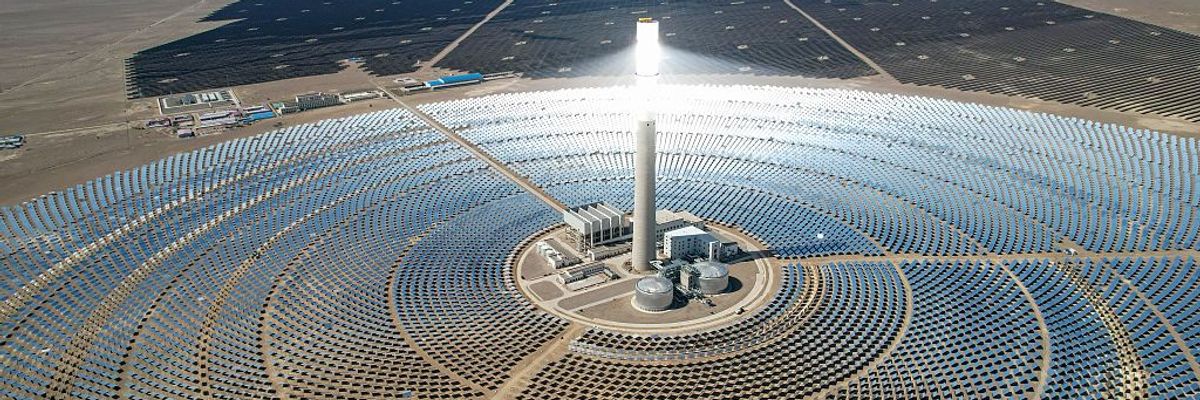
An aerial view shows the 100-megawatt solar thermal project at Jinta multi-energy complementary base, developed by China Green Development Investment Group (CGDG), on August 1, 2025 in Jiuquan, Gansu Province of China.
(Photo by Cao Hongzu/VCG via Getty Images)
Ian Hanington
Jan 04, 2026
David Suzuki Foundation


There’s good news and bad news on the climate front. Unfortunately, the bad news is horrific, as accelerating extreme weather-related events and other unfolding climate catastrophes show. But there are signs of hope. We just have to stop dragging our feet.

“We are already facing danger,” a scientists’ statement from the November COP30 climate summit in Belém, Brazil warned, adding, “COP30 has a choice—to protect people and life or the fossil fuel industry.”

Too many governments, including Canada’s, appear to be leaning toward the latter.

“We need to start, now, to reduce CO2 emissions from fossil fuels, by at least 5% per year,” the scientists wrote. “This must happen in order to have a chance to avoid unmanageable and extremely costly climate impacts affecting all people in the world.”

The only ones who benefit from continuing to exploit polluting, climate-altering fossil fuels are greedy industry profiteers and short-sighted politicians who would trade human health, economic resilience, and survivability for a handful of short-term jobs and limited economic boosts.

Studies show that “rising heat is killing roughly one person per minute, and air pollution from the burning of fossil fuels claims an estimated 2.5 million lives every year,” DW news reports. It was also “costing as much as $304 billion in global economic losses last year.”

We’ve already passed one climate “tipping point,” with warming oceans causing irreversible mass coral reef die-offs, and we’re nearing others, including Amazon rainforest devastation and collapse of crucial ocean currents.

Coral reefs support one-quarter of all marine life, and the Amazon rainforest has more animal and plant species than any other terrestrial ecosystem. It also regulates global climate and weather and holds one-quarter of the planet’s available freshwater. Ocean currents also regulate global climate and weather.

Even though emissions continue to rise as the world refuses to halt fossil fuel development and forest and wetland destruction, investments in and growth of renewable energy technology are exceeding expectations, now outpacing fossil fuel investments.

DW reports that “in 2024, the world experienced its largest-ever increase in renewable energy generation, which now provides 40% of global electricity. In the first half of this year solar and wind exceeded all demand growth for electricity, surpassing coal for the first time.” Solar capacity is doubling every three years. Wind power has tripled since 2015. The International Energy Agency reports that global renewable energy investments exceeded US$2 trillion last year, double the amounts committed to coal, oil, and gas.

To increase energy security in the face of a growing global energy crisis and reduce their reliance on increasingly expensive, inefficient fossil fuels, countries that import oil, gas, and coal are rapidly advancing electrification and renewables.

Analysis from COP30 also shows that “sticking to three key climate promises—on renewables, energy efficiency, and methane—would avoid nearly 1°C of global heating and give the world hope of avoiding climate breakdown,” the Guardian reports.

But the world continues to burn dirty, polluting coal, gas, and oil at deadly rates and has increased subsidies to the fossil fuel industry—the most profitable enterprise in history!

Canada has failed to live up to its promise to phase out fossil fuel subsidies. The federal and provincial governments are supporting expanded development of methane gas exploitation and liquefaction, and are proposing pipelines to ship more dirty bitumen from the Alberta oil sands to British Columbia ports for export, where it will be burned in other countries and not counted in our emissions reporting.

Canada’s expansion of liquefied “natural” gas production is not only economically suspect, it also makes methane-reduction pledges more difficult to meet, as LNG is almost entirely methane, and leaks and emissions occur at every step of the process, from fracked extraction and transport to liquefaction and burning.

Although 160 countries, including Canada, have signed a Global Methane Pledge, promising to cut methane emissions by 30% from 2020 levels by 2030, emissions continue to rise and countries, including Canada, continue to underreport them.

By every measure, shifting from fossil fuels to electrification, renewables, and energy efficiency and conservation is far more beneficial to most people than following the same fossil-fueled road. The only ones who benefit from continuing to exploit polluting, climate-altering fossil fuels are greedy industry profiteers and short-sighted politicians who would trade human health, economic resilience, and survivability for a handful of short-term jobs and limited economic boosts.

Regardless of what roadblocks fossil-fuelled governments throw in the way, the renewable energy revolution is unstoppable.


UN Security Council Abandoned Palestinians. Humanity Must Refuse to Follow Suit.

In the new year, Palestinians face new forms of colonization and new challenges to our rights and survival.
January 1, 2026

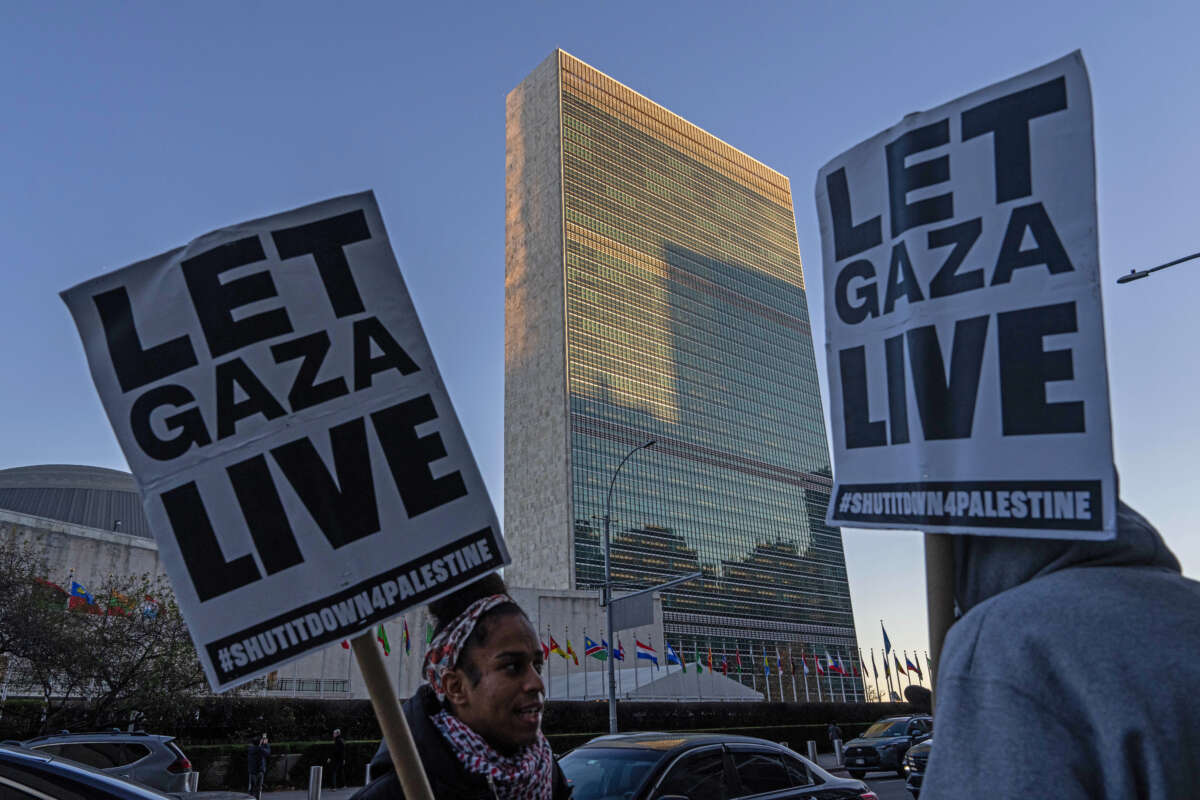
Pro-Palestinian demonstrators gather outside the United Nations headquarters on November 17, 2025, in New York City, New York.Adam Gray / Getty Images

Today we have a so-called ceasefire that is killing Palestinians on a daily basis. When it comes to Israel, the word “ceasefire” simply means that Palestinians are not allowed to retaliate against Israeli airstrikes, shelling, artillery, bombs, house demolitions, or suicide drones. In reality, Israel can fire all it wants and has been doing so since the minute the agreement took effect. According to President Donald Trump, “nothing is going to jeopardize” the ceasefire in Gaza.

The ceasefire, hailed as a success by the U.S. and the Western world, has done little to end the siege of Gaza and the deepening starvation and malnutrition of Palestinians, especially the children. And it is unlikely to usher in a pathway to freedom, equality, or self-determination for the Palestinian people in the foreseeable future.

The “ceasefire” is nothing but a cover for Israel’s genocidal practices, supported by the U.S. and Western nations, and disguised by mainstream media. It is a deceptive appearance and a ploy that deflects criticism, allows the continued supply of U.S. weapons to Israel, shields the Israeli regime from accountability, disappears the Gaza genocide from the news, and enables Israel to continue the extermination and displacement of Palestinians.

Can We Stop Pretending There Is a Functioning “Ceasefire” in Gaza?

Since October 10, 2025, the day the ceasefire agreement between Hamas and the Israeli government went into effect, the Israeli military has killed nearly 400 Palestinians and injured over 1,000, according to the Gaza Health Ministry. Under the ceasefire agreement, Israel is required to allow 600 trucks of aid and other goods into Gaza every day, but UN data show that Israel continues to block food aid, medical supplies, and tents in violation of the agreement.

Agnès Callamard, secretary general of Amnesty International, said in a statement on November 27: “The ceasefire risks creating a dangerous illusion that life in Gaza is returning to normal … the world must not be fooled. Israel’s genocide is not over.”

According to the Gaza Health Ministry, the total death toll of Palestinians since October 7, 2023, is now 70,100, with 171,151 injured and many more buried under the rubble. The Israeli bombardment resulted in an estimated 50 million tons of rubble.

What the statistics don’t reflect are the number of people in Gaza that were killed by Israel not through bombs and airstrikes, but through indirect means: Palestinians killed because of lack of shelter after Israel destroyed their homes; because of the destruction of their water supplies and desalination plants, electricity supplies, and sanitation systems; because of the flattening of clinics and hospitals; and because of starvation and diseases.

The United Nations Relief and Works Agency for Palestine Refugees (UNRWA) said shelter materials for 1.3 million people and about 5,000 trucks of emergency supplies remain stalled outside Gaza as Israel continues to block all UNRWA-associated goods from entering.

The Palestinians in Gaza, the West Bank, and East Jerusalem, who have endured 77 years of brutal Israeli military occupation and a system of apartheid that denies them their rights, are left with no choice other than to continue their struggle for liberation and against erasure and ethnic cleansing — including their right to armed resistance as recognized under international law.

UN Security Council Loses Sight of Its Mission and Betrays the Palestinians

On November 17, 2025, in an unexpected and disgraceful vote of 13-0 that is counter to the UN’s raison d’être — with two abstentions from Russia and China — the UN Security Council (UNSC) adopted Resolution 2803, which embraces Trump’s — or is it Israeli Prime Minister Benjamin Netanyahu’s? — “20-point peace plan,” effectively normalizing genocide, rewarding U.S. complicity, and establishing new colonial rule over the lives of 2.3 million Palestinians in Gaza. It grants full control over Gaza to a U.S.-led “Board of Peace,” headed by Trump himself, that will oversee the administration and reconstruction of the Strip and establishes an “International Stabilization Force” in charge of security and disarming the resistance — not a UN peacekeeping force that will protect Palestinians.

Palestinians who have endured two years of genocide — and the total destruction of their homes and livelihoods — were not part of the negotiations and had no say in this matter.

The plan — hatched by the Trump-Netanyahu team and legitimized by the UNSC — includes no mention of the genocide and does not call for accountability for the war crimes and crimes against humanity committed over the last two years. This plan, which whitewashes the genocide, will never be forgotten or forgiven by any Palestinian. It denies Palestinians their humanity, their right to self-determination, and does nothing to address their grievances or root causes of their struggle. It will simply prolong the illegal occupation and will not advance peace or stability in the region in any meaningful way.

Israel views the inclusion of language in the resolution about a “pathway to Palestinian statehood” as nonbinding. In fact, the day after the UNSC vote, Netanyahu publicly stated his strong opposition to a Palestinian state. Israeli National Security Minister Itamar Ben-Gvir demanded that Palestinian President Mahmoud Abbas be imprisoned and other Palestinian Authority officials killed if the UN paved the way to Palestinian statehood.

Just like the Oslo Accords of 1993 that were supposed to bring about self-determination and statehood for the Palestinians, this plan is also doomed for failure. Instead of peace, the Oslo Accords entrenched Israeli control over the Palestinian occupied territories, expanded Israeli settlements, increased land theft by the Israeli state, and created a system of oppression that continues to dominate Palestinian lives.
After UNSC’s Surrender to US and Israel, Is There Any Hope for Palestinians?

Across Palestine, oppression, displacement, and ethnic cleansing continue unabated. While the genocide was raging in Gaza, the West Bank saw large-scale assaults, house demolitions, armed settler rampages, and attacks on Palestinian communities resulting in the displacement of over 32,000 residents from their homes. During Operation Iron Wall, which began early in 2025, some 850 homes were demolished in the Jenin, Tulkarem, and Nur Shams refugee camps, resulting in “the largest displacement of Palestinians in one operation since the 1967 war,” according to a Human Rights Watch report released on November 20.

If there is to be hope for peace in the Middle East, we need to keep organizing for a permanent end to the genocide, the siege, and the current prevailing system of apartheid in Israel.

The UNSC vote was a major setback for the movement in solidarity with Palestine that saw tremendous global support and massive growth over the past couple of years. It shows that a lot more work is needed to make the movement broader and stronger in order to be better prepared for future challenges in the struggle for justice and liberation, especially as we are faced with the rise of authoritarianism and increased involvement of billionaires and war profiteers in politics and their influence over foreign and domestic policy.

Over the past two years, the global movement for a free Palestine won the battle of public opinion, but little has changed in the positions of the political leadership in Washington. The movement has made great strides in educating people about the struggle and plight of the Palestinians and countering media bias, largely thanks to the fearless and unstoppable younger generation, including anti-Zionist Jews in the U.S. and elsewhere who reject the ideology of settler-colonialism, Jewish supremacy, genocide, and the premise that the Israeli government speaks in the name of all Jews around the world.

The Boycott, Divestment, and Sanctions movement, commonly known as BDS, has been effective in its reach and in contributing to changes in policies of governments — from Spain to Turkey, from Malaysia to Colombia, from Slovenia to Norway and elsewhere — putting pressure on corporations and institutions complicit in the genocide and Israeli apartheid. Their sustained pressure has had a great impact, isolating the Israeli regime globally and hurting those corporations complicit in its crimes.

BDS has had many significant divestment achievements during the past two years. Those who divested from companies linked to Israel include leading European pension funds such as Denmark’s public pension fund; church groups, including Presbyterian Church (U.S.A), the United Methodist Church, and the United Church of Christ; universities such as San Francisco State University, Union Theological Seminary, University of California, Davis, and others. Internationally, Radboud University, Utrecht University, University of Amsterdam, and Trinity College Dublin, to name a few, have ended ties with Israeli academic institutions.

Many Palestine advocates felt naively optimistic when the International Court of Justice (ICJ) issued its advisory opinion on July 19, 2024, concluding that “the State of Israel’s continued presence in the Occupied Palestinian Territory is unlawful” and that “Israel is under an obligation to bring to an end its unlawful presence in the Occupied Palestinian Territory as rapidly as possible.” The resolution that followed and was adopted by the UN General Assembly (UNGA) on September 18, 2024, ordered Israel to dismantle its system of apartheid within 12 months. Instead, Israel’s system of apartheid is worse than ever before.

But regardless, the significance of the UNGA resolution; the ICJ findings; the International Criminal Court’s arrest warrants for Netanyahu and Former Israeli Defense Minister Yoav Gallant for war crimes; the recognition of the State of Palestine by the vast majority of UN member countries (157 nations, including France, Britain, and Canada); the isolation of Israel and the U.S.; the extensive reports of human rights organizations that detail Israeli apartheid; and the unprecedented and growing global movement offers Palestinians some hope of a new period of transformative changes in the struggle for Palestinian rights.

In another demonstration of the U.S. and Israel’s isolation, on November 23, 2025, the U.S., Israel, and Argentina were the only three countries to vote against a UN General Assembly resolution condemning torture, which was supported by 169 nations.


Let us keep reminding U.S. taxpayers that they are the ones footing the bill for the bombs, missiles, and weapons used by the Israeli military to kill Palestinian families and maim Palestinian children.

In spite of all these gains, we have seen the U.S. deliver some $21.7 billion worth of weapons and military aid to Israel since October 7, 2023. We have also witnessed severe repression of anti-genocide protests; numerous arrests of pro-Palestinian student activists; the silencing of dissent and violent removal of peaceful student encampments on university campuses; the erosion of academic freedom; weaponization of antisemitism; threats of university federal funding cuts; and federal kidnappings of pro-Palestinian writers, academics, and activists. Many colleges, universities, states, and countries have enacted policies that stifle pro-Palestinian activism.

What Can Palestine Advocates Do to Advance the Cause of Freedom and Equality for All?

If there is to be hope for peace in the Middle East, we need to keep organizing for a permanent end to the genocide, the siege, and the current prevailing system of apartheid in Israel. We need to increase our efforts and move into a proactive and shared commitment to keep raising our voices and educating about Palestine in order to dismantle the oppressive system and end the denial of Palestinian rights. We also need to uplift Palestinian voices so the world can hear their stories, testimonies, and lived experiences.

Activists during the civil rights movement, the anti-Vietnam War movement, and the movement against South African apartheid succeeded by using a variety of tactics to bring about changes in government policies: mass demonstrations, marches on Washington, and uprisings; student protests on university campuses; labor movement protests and strikes; grassroots organizing; pressuring Congress through lobbying; and boycotts and divestments. The movement for Palestinian freedom and equality is no different.

Let us keep reminding U.S. taxpayers that they are the ones footing the bill for the bombs, missiles, and weapons used by the Israeli military to kill Palestinian families and maim Palestinian children — funds that could otherwise be used for improving health care and education. And above all, let us make sure that Netanyahu’s campaign for a massive increase in U.S. aid to Israel does not succeed. Israel will be making the case for a 20-year U.S. commitment that will top the $3.8 billion the U.S. already sends Israel every year.

All this will depend in part on the ability of advocates for Palestine to put pressure on representatives in Congress to push for an arms embargo to halt U.S. weapons to Israel and support proposals such as the “Block the Bombs Act.”

Other actions include getting local governments to divest from companies complicit in genocide and apartheid, and electing representatives who cannot be bought by AIPAC and those capable of shifting the political calculus around U.S. support for Israel — financial, military, and diplomatic. We’ve seen it happen in New York City — the city with the U.S.’s largest Jewish population and the world’s second-largest Jewish population after Tel Aviv — with the election of Zohran Mamdani as mayor.

The suffering in Gaza demands we all face a vital question: What kind of future do we want for ourselves, and for our children and grandchildren, and are we willing to fight for it?

Today, polls show that most people in the U.S. agree that their government shouldn’t be funding Israel. This marked transformation set the stage for Mamdani’s historic win in New York City and proves that support for Palestinian rights is good politics.

Christian faith leaders were instrumental in the civil rights movement, the anti-Vietnam War movement, and the boycotts that ended apartheid in South Africa. And yet today, most — especially Christian evangelicals — seem largely silent. Christian Zionists believe that the return of Jews to the Holy Land and the founding of Israel in 1948 was a fulfillment of biblical prophecy, viewing it as a prerequisite for the Second Coming of Christ. This belief translates into unwavering political, religious, and financial support for the Israeli state and is the movement’s greatest challenge: how to get concerned congregants to demand their leaders speak up against genocide.

While the atrocities in Gaza have had a devastating impact on Palestinian lives and livelihood, Gaza has also shattered the myth of Israeli military prowess and its ability to conquer and eliminate any Palestinian resistance with its advanced weaponry and high-tech surveillance.

Contrary to Israeli ethnic cleansing plans, designs for a Greater Israel, and efforts at Palestinian erasure, Palestinians refuse to be uprooted from their homeland no matter the cost. The approximately 15 million Palestinians in the world — 6 million in occupied Gaza, the West Bank, and East Jerusalem; around 2 million in Israel; and 7 million in the diaspora — aren’t going away. Their struggle for freedom and equality will continue undeterred.

Palestine does not belong to those who are intent on ethnically cleansing its Indigenous inhabitants — and it most certainly does not belong to Donald Trump or the “Board of Peace.” Try as they might, Gaza is not available for takeover or colonization by the U.S.

An excerpt from a poem by Gaza poet Nour Abdel Latif titled “Buried Truths, Rising Voices” sums up the feelings of every Palestinian:


But a voice born of truth
is never laid to rest.
It lingers —
in the dust, in the wind,
in every heartbeat that dares to remember.
One day, it will rise again —
not as a whisper,
but as a storm.

Palestine has become a footprint and a guiding light for liberation movements around the world. It shows us that our struggles are interwoven and that our actions are most effective when we are united in fighting for change.

Around the world, when people protest and march in the streets demanding a free Palestine, they are at the same time also marching for climate justice, the right of all colonized peoples to resist their occupiers, and numerous other causes. They are marching against apartheid, militarism, empire, and fascism. They are demanding compliance with international law.

For us in the U.S., fighting for Palestinian rights is also fighting for our rights and against authoritarianism: fighting for our right to speak up, to protest, to have a free press and not to be silenced, censored, or kidnapped because of our political beliefs.

Palestine is also our future. The suffering in Gaza demands we all face a vital question: What kind of future do we want for ourselves, and for our children and grandchildren, and are we willing to fight for it? Do we speak up and act together for change, or will we let Israel and the U.S. slide the world into an abyss of hatred and endless wars?

This article is licensed under Creative Commons (CC BY-NC-ND 4.0), and you are free to share and republish under the terms of the license.

Michel Moushabeck is a Palestinian American writer, editor, translator and musician. He is the founder and publisher of Interlink Publishing, a 38-year-old, Massachusetts-based, independent publishing house. Most recently, he guest edited the winter issue of the Massachusetts Review titled “A View from Gaza.” Follow him on Instagram @ReadPalestine.
Trump’s Attempts to Control Higher Education Follow a Familiar Fascist Playbook

Trumpism has been aided by divestment that hollowed higher ed out from the core, AAUP President Todd Wolfson says.

January 1, 2026

A prerecorded message from President Donald Trump is displayed on a screen after his son Donald Trump Jr. called him from the stage to address the audience by phone during Turning Point's annual AmericaFest conference in Phoenix, Arizona, on December 21, 2025.Olivier Touron / AFP via Getty Images

The United States is on the road to a form of neofascism that, if allowed to complete its course, will have long-lasting impacts on all aspects of society. Indeed, the Trump administration is carrying out a series of policies that target the very foundations of a free and open society — including an unrelenting assault on higher education and the U.S. education system in general. Higher education in particular seeks to nurture an environment that fosters independent thought, promotes thinking skills critical for democracy, and encourages inquisitive assessment of evidence for the purpose of promoting and disseminating the truth. At least, this has been the historical mission of universities, which is why they have always been targeted by reactionary forces with the intent of transforming them into pure ideological apparatuses of the fascist state. Following this pattern, Donald Trump has sought to bend universities to his will by cutting funding and forcing them to pledge support to his administration’s initiatives for reshaping higher education by signing a Compact for Academic Excellence that basically erodes institutional independence.

How successful has Trump’s fascist takeover of higher education been so far? How are universities responding? In the exclusive interview for Truthout that follows, Todd Wolfson, the president of the American Association of University Professors (AAUP), offers insights on the battle for the soul of American higher education in the age of Trumpism. Wolfson is an associate professor of journalism and media studies at Rutgers University.

C. J. Polychroniou: Trump’s reactionary agenda has spread across all aspects of U.S. society, including politics, economics, societal norms, culture, and the environment. His culture war tactics extend to reshaping higher education, which he claimed in a recent Truth Social post “has lost its way, and is now corrupting our Youth and Society with WOKE, SOCIALIST, and ANTI-AMERICAN ideology.” Now, it is not common for U.S. presidents to dictate what colleges and universities teach and whom they hire, so Trump’s assault on higher education is a clear indication that the country is descending into fascism. What sense do you make out of Trump’s crackdown on higher education, which he has tried to justify mainly as a response to antisemitism on campuses? Is it just because he perceives universities as having become too liberal or progressive? Or is there some deeper motive behind his neofascist actions?

Uncompromised, uncompromising news

Get reliable, independent news and commentary delivered to your inbox every day.

Email*


Todd Wolfson: I would say that Trump’s attack on higher education is being driven by a couple of different ideological and material forces. First and foremost, authoritarian and fascist regimes historically have targeted various sectors of society. If we look at fascist Spain, fascist Italy, or Nazi Germany, or if we look at Victor Orbán’s Hungary and his fascist or illiberal regime, what we see are three sectors that are clearly always identified and targeted. One is the press, one is the court system, and the third is higher education. Higher ed is targeted because it’s an independent political force that has a critical role in the ideological formation of society and poses a threat to fascist or authoritarian ideology. So at one level, it’s true. This is a very old playbook that the Trump regime is using.

Another issue, in the American context, is that white voters — the Republican base — are more likely to vote Democrat if they go to college. So, in undermining college and making it so that less people attend, they are protecting their own ability to win elections. I think that’s also in play. And a corollary, and this is in Project 2025, is the desire of some aspects of white nationalists to have higher birth rates in white communities in the U.S. Project 2025 outlines how white women with a college degree are likely to have less children than white women without a college degree, so once again, this plays into their white replacement theory.

Related Story
Op-Ed |
Education & Youth
Silence Isn’t a Strategy: Academic Leaders Must Resist Assault on Higher Ed
Capitulating to the assault on higher education will only bring more attacks.
By Michael H. Gavin , TruthoutMarch 31, 2025

So I think all of those are reasons why the Trump administration has targeted and zeroed in on higher ed. And then there’s things like the protests on Gaza. Historically, college campuses are places where students protest and build power and force societies to look at themselves in the mirror. Great social change often comes from the leadership of young people, so they’re trying to crush dissent and campus protest, so that’s another aspect of this. There are probably many other reasons as well, but I think those are some reasons why the Trump administration has zeroed in on higher education.

It’s also important to note that this agenda has been in the works for decades. In the ’60s, Black Americans start getting broad access to free or highly subsidized public higher education, in particular the CUNY system in New York City and the University of California system were both free in the ’60s, and people of color were getting access to that free higher ed. American campuses were critical to, what we would call the long ’60s, the tumultuous ’60s, the effervescent ’60s, where we had the civil rights movement, the anti-war movement, the Berkeley Free Speech Movement, the Black Panther Party. These movements were anchored and organized in many ways by college kids. So that happens in the ’60s and fast forward, Ronald Reagan is running for a second term as governor in 1970 and he targets higher ed. He targets Berkeley, and his education advisor Roger A. Freeman says publicly, “We are in danger of producing an educated proletariat. That’s dynamite! We have to be selective on who we allow [to go to college].”

So, Reagan runs on a campaign on clamping down on the University of California and then starts introducing fees to that system, which was free beforehand. That opens the floodgates for the divestment that takes place across the next 50 years that we’ve witnessed. So, this started in California and it started in response to who was going to college and what was happening on our college campuses. Divestment from higher ed was politicized and racialized from the beginning.

The last thing I’ll say here is that it’s not just Reagan. That’s not the only line. Lewis Powell became a Supreme Court justice in 1972, but before that he wrote the Powell memo for the U.S. Chamber of Commerce, and in that memo, he outlines why campuses are the biggest threat to a free market society and pressed for divestment, among other things. So the divestment from American higher education that has happened over the last half century was a political strategy from the right that led to a number of horrible outcomes, skyrocketing tuition, ballooning student debt, a near-complete reliance on contingent labor, and a growing army of bureaucrats that run our institutions more like businesses and less like higher education institutions. That divestment hollowed higher ed out from the core. It started from a right-wing position that has aided and embedded the fascist attacks on our institutions that we see today.

Stopping federal grants is one of the key tools that the Trump administration is using to force institutions of higher education to kneel to its ideology. Isn’t this a violation of constitutional principles since the Constitution gives Congress the power of the purse? How much federal funding do so-called private colleges and universities receive to the point that it makes them so vulnerable to government threats?

I’m not sure I agree with the premise of this question. I do think the attacks on funding and biomedical research have been unconstitutional, but not in the way you outline it here, because there is a role for federal governments to play in making sure that there’s compliance with public and private institutions around core values. The Office of Civil Rights, which emerged on the heels of the civil rights movement, was put in place to make sure that racism did not take place on our campuses, and that grant programs and institutions adhered to a non-racist approach to higher education, and that there was a process in place for instances when they don’t. That is a federal government role.

When we talk about Trump going to the University of California or Harvard and threatening to freeze their money by alleging they have an antisemitism problem, I don’t know if it’s a constitutional problem in relationship to the power of the purse in Congress. It is a constitutional problem, as we’ve shown in court twice now, because it undermines our freedom of speech rights on our campuses. It’s also a problem because the Trump administration has not followed the procedures and rules of the Office of Civil Rights and title VI. So, if you want to prove that there’s an antisemitism problem and it’s connected to a grant, you have to go through a process and you have to make a case, and they haven’t done that at all, so we sued them twice.

We won twice in court with the Harvard and University of California cases. Basically, our argument was that you cannot freeze grants that are doing research on cancer because you’re making an unverified claim that there’s rampant structural antisemitism at an institution, you must prove it. They never proved it. So, the violation is with the First Amendment, but that said, it’s a terrible problem, and one that the AAUP is committed to combating and we’ve been successful.

At UCLA, the Trump administration froze a billion dollars. We sued. (The University of California was cowardly and did not sue and is still negotiating with the Trump administration.) Every union representing workers in the UC system signed on to the lawsuit. Combined, this represents over 100,000 workers, and we won that case. Now, the National Institutes of Health (NIH) grant money that was frozen by the Trump administration is flowing back into the university and it’s flowing because workers stood up when the administration failed to. That’s going to be a boon to the economy of California and a boon to the research infrastructure of this country. When people need to go see a doctor or have, say, Alzheimer’s therapy, it’s there because we fought to get the NIH grant that was funding the Alzheimer’s lab and doing the research that your mother needed in order to get the therapy. So we were going to fight them on every inch here.

Some universities have indeed capitulated to Trump’s fascist demands for higher education, but there are a few that are balking at the idea of surrendering their independence. Can you give us an overall assessment of the way universities are responding to the Trump administration’s war on higher education? Can you also explain why some of the nation’s most powerful universities seem to have sworn oath to a wannabe dictator?

Our universities and administrators have not covered themselves in glory during this moment. Very few have. When universities stand up, it’s usually because faculty, students, staff, unions and organizations that represent them, like the AAUP, have stood up first, and then they followed suit.

Let’s talk about the Trump administration’s “loyalty oath” compact for higher ed. Billionaire Marc Rowan, CEO of Apollo Global Management Group, wrote a compact, or co-wrote it, that was the greatest threat to the autonomy of higher education in the history of this country. They then invited nine universities to join that compact. Two days after that compact became public, and we knew the nine universities that were invited, the AAUP, along with students groups like Students Rise Up, and some of our union partners, like AFT, organized meetings with members across the nine universities, and within a week, we were organizing actions and teach-ins on all nine campuses. On October 17, about two weeks after the compact was announced, we had a national day of action throughout the country and on the heels of that, universities started rejecting the compact. What’s important to emphasize here is that students, faculty, and staff, not administrators, stood up first and stood up most vehemently and forced administrators to respond to the Trump administration’s attack on our autonomy.

The Trump administration demanded that the nine initial universities sign on by November 21. By early November, we had gotten seven of the universities to publicly reject the compact because of our organizing. The last two, the University of Texas at Austin and Vanderbilt, just never signed on. They never publicly rejected it, but they never signed on. So, no, I don’t think there are many institutions standing up, including Harvard. But when they do, they fight back because we fought back first. Even in the case of Harvard, we sued the Trump administration over the Harvard demand letter first, and a couple days later, Harvard filed a lawsuit of their own that was joined together by the First Circuit Court. Our broad coalition of students, faculty, and staff are leading this fight. We have not seen many of these administrators or presidents fighting back, in a way we need to see them fight back.

Specifically, how is the American Association of University Professors (AAUP) challenging Trump’s assault on academic freedom?

We’re approaching his assault writ large. We’re fighting on four levels in response to Trump and I’ll explain how academic freedom fits in. The first and most important level is organizing and building power on our campuses. Nothing else matters if we do not build an army of higher ed workers aligned with students to build power at the campus level, the state level and the federal level, not only to respond to Trump’s attacks, but to also then pivot and go on the offensive and redefine higher education for this country. That’s the most fundamental: organizing and building power, and building coalitions in alliance, with alumni, workers, and other key sectors of society. That’s the first and primary area of work. The second area of work, as we already discussed, is legal. We sued the Trump administration about eight times. We’ve been very successful in court. We’re using the court strategically in order to slow the Trump administration’s assault on higher ed. The third place we’re fighting them is politically. We’re in the process of talking with our members and other higher ed workers throughout the country and plan to come out with our vision for the future of higher education in the spring of 2026.


“We sued the Trump administration about eight times…. We’re using the court strategically in order to slow the Trump administration’s assault on higher ed.”

What is emerging is a call for free, public higher ed college for all. It’s going to entail an end to student debt and skyrocketing tuition. It’s going to entail an end to contingency and demanding work with dignity on our campuses. And it’s going to entail a fully funded biomedical research infrastructure and a fully funded HBCU, minority serving institution system, and most critically to this, it will include a new academic compact between the federal government, state governments, and our universities that enshrines real academic freedom, real freedom of speech and freedom of protest on campuses, and that enshrines true shared governance between faculty, students, staff, and administrations.

What we’ve seen in this period is that we’re the only ones that can actually set direction for our institutions. Our administrators have failed so we’re going to come out with our agenda, and we’re going to make it political, and we’re going to fight to win that agenda legislatively. We’re going to fight to win that agenda by electing people to office who carry that agenda in the midterms, in 2026, and every election thereafter.

On the fourth level, we must challenge the false narrative put forth by the Trump administration on higher ed and emphasize why higher ed is critical to our society and to the future of this country. Higher education is critical to democracy, our economy, and our children’s ability to get a leg up in this world. We have to make this case to the U.S. populace.

It appears, without a doubt, that Trump’s actions have also laid bare the long-standing crisis in higher education in the United States, which is attributed to a very large degree to neoliberalism’s policy agenda. Indeed, among other things, the implementation of neoliberal practices has paved the way to systematic privatization of public education, treating students as customers, and to a highly bureaucratic form of governance marked by top-down decision making that sidelines faculty. First, do you agree with this assessment of the state of U.S. higher education today and, second, what is, in your view, its future?

Yes, I agree. I think we laid out our assessment of higher education previously so I’m not going to go back into it, but clearly, the neoliberalization and corporatization of the university is the fundamental crisis that’s taken place in higher education over the last 60 years that has aided and embedded the fascist attack on higher ed that we’re witnessing now from the Trump administration.


“We need a free public higher education system, and we need that system rooted in dignity for the workers on our campuses.”

Higher education is a foundation of a democratic, multiracial society. That’s what we want to build, and that’s the higher education system that we are fighting for. That means to us, kids are able to go to college without being saddled with life-altering debt. Like almost every industrialized nation in the world right now, we want free public higher education. Kids should not have to go into debt to become the next teacher in our neighborhood school, or the next doctor or lawyer or any other number of important careers. We need a free public higher education system, and we need that system rooted in dignity for the workers on our campuses.

We must put an end to the degraded worker contracts and the contingency and the corporatization of the sector. We really need a higher ed system that’s not just rooted in students as customers, but is rooted in critical inquiry and the development of smart, thoughtful citizens in a democracy who can see through the lies and stand up for the kind of society we want to build. That cannot happen without a strong, vibrant, free, autonomous higher ed system. That’s the vision we are fighting for.
TRUMP COUP COVER UP

Trump administration tried to scrub Jan. 6 intel — but NPR stopped it


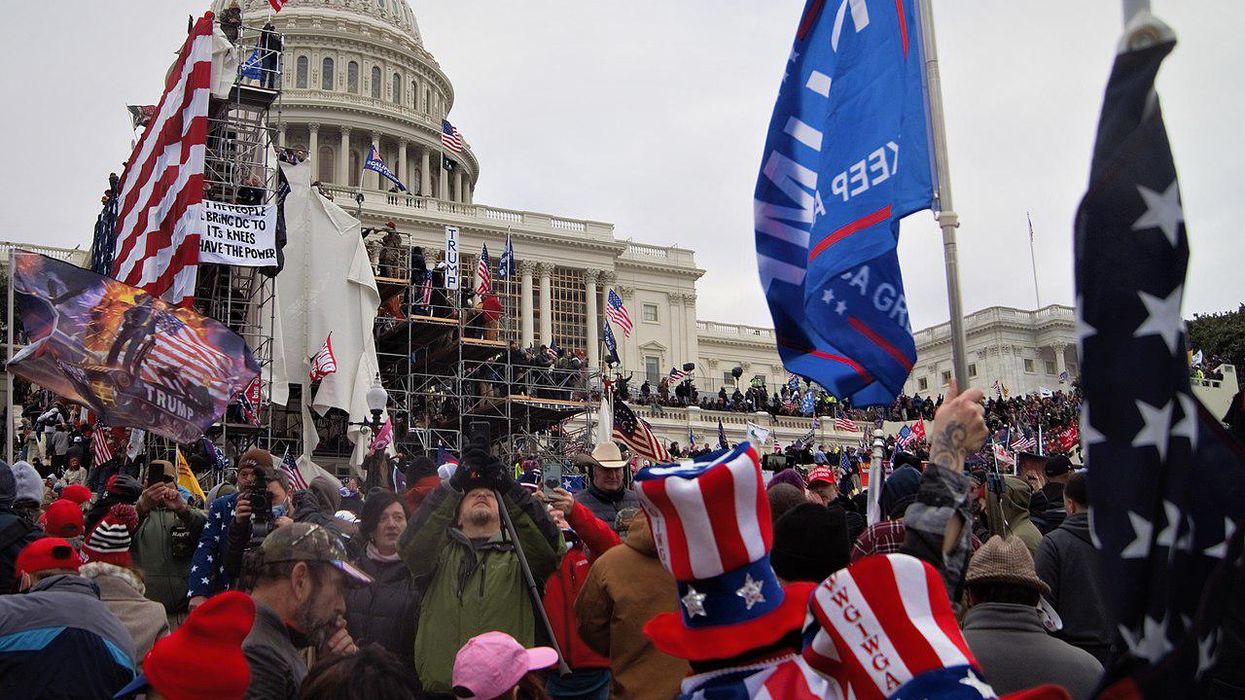
Donald Trump supporters outside the U.S. Capitol Building on January 6, 2021,
 Wikimedia Commons
Sarah K. Burris
January 04, 2026
ALTERNET

National Public Radio reported that an investigation uncovered President Donald Trump's efforts to eliminate all information and intelligence related to the Jan. 6 attack on the U.S. Capitol.

According to the audio report by Tom Dreisbach and Ayesha Rascoe, they have responded by creating a public archive of all videos, audio files, photos and other information available about the Jan. 6 attack, and they will make it searchable.

Dreisbach explained that the Trump administration is "actively trying to rewrite this history." He recalled that when it all unfolded a few years ago, the public, along with Republicans, agreed that Jan. 6 was illegal and reprehensible.

Even Sen. Ted Cruz (R-Texas) called it "an act of domestic terrorism."

Five years later, everyone involved received a blanket pardon, including "great patriots" who attacked police. In a statement played by the reporters, Trump claimed they were not violent.

"The Justice Department has deleted records of those cases. It has scrubbed references to Jan. 6 as a riot. They fired dozens of prosecutors who worked on those cases. They even hired a former Jan. 6 defendant at the Justice Department, a guy who called cops Nazis and loudly yelled that the rioters should kill the cops," said Dreisbach.

Once the details began to disappear, Chief Justice James Boasberg of the D.C. district court ordered the government to stop any and all removal of court records related to Jan. 6. It's unclear whether that order has been followed, however.

"So, with all those actions to rewrite this history, we thought it was really important to just ground people in the facts," he continued.

The 1,500 court cases included photos, videos and information that Dreisbach said most Americans haven't seen. So, they took the "massive trove of evidence" to catalogue and ensure it is publicly available.

The full archive can be found here.