Friday, February 13, 2026

Cyclone Gezani kills dozens, displaces thousands in Madagascar

At least 38 people have died in Madagascar after Cyclone Gezani tore through the coastal city of Toamasina with winds of up to 250 km/h. The country’s leader appealed for "international solidarity" in the face of the catastrophe.


Issued on: 12/02/2026 - RFI
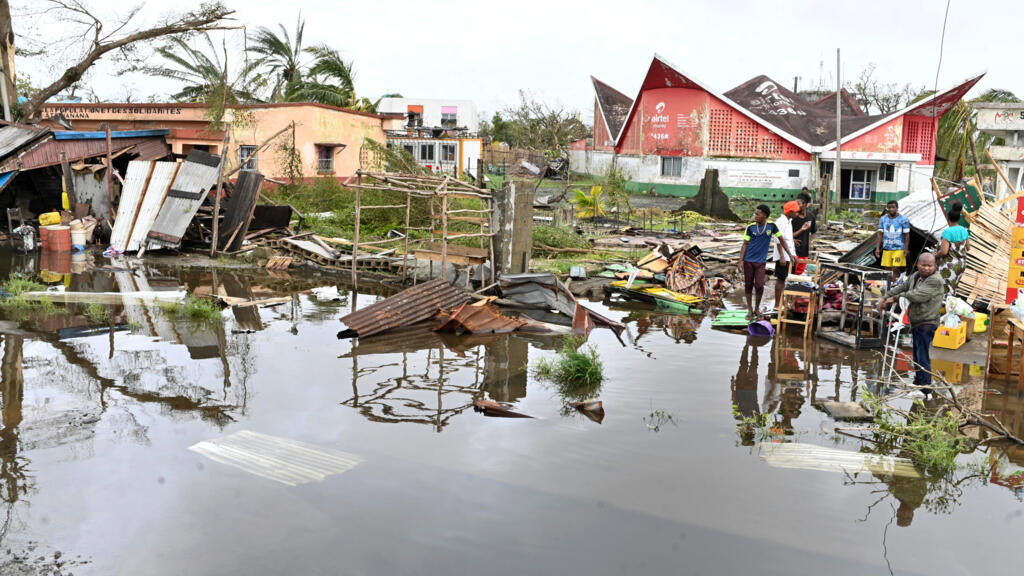
Residents assess the damage caused by Cyclone Gezina in Madagascar on 11 February 2026. © AP - Hery Nirina Rabary

The National Office for Risk and Disaster Management (BNGRC) confirmed on Thursday that at least 38 people were killed, six remain missing and at least 374 were injured after Cyclone Gezani made landfall late Tuesday.

The storm slammed directly into Toamasina, also known as Tamatave – Madagascar's second-largest city and home to nearly 400,000 people.

Its violent gusts and torrential rains ravaged “up to 75 percent” of the city and its surroundings, according to Madagascar’s new leader, Colonel Michael Randrianirina, who took power four months ago following a military takeover.

In a statement Thursday, he called for “international solidarity” to support urgent relief operations.

Aerial view of Toamasina, after Tropical Cyclone Gezani struck the eastern part of Madagascar on February 11, 2026. © BNGRC Madagascar


More than 18,000 homes were destroyed, while over 50,000 were damaged or flooded, the BNGRC said. At least 12,000 people have been displaced.

The storm also caused significant damage in the surrounding Atsinanana region, where post-disaster assessments are still under way.

Mozambique on alert

The CMRS cyclone forecaster on France's Indian Ocean island of Réunion said Toamasina had been “directly hit by the most intense part” of the cyclone. It described the landfall as likely one of the most intense recorded in the region – rivalling Cyclone Geralda, which left at least 200 people dead back in 1994.

Cyclone Gezani weakened after reached land, but continued crossing Madagascar from east to west as a tropical storm until Wednesday night.

Forecasters say it is expected to regain strength over the Mozambique Channel, potentially returning to “intense tropical cyclone” status, classified as stage four out of five. From Friday evening, it could strike southern Mozambique, a country already grappling with severe flooding since the beginning of the year.

Cyclone season in the south-west Indian Ocean typically runs from November to April and produces around a dozen storms each year.
2026 WINTER OLYMPICS

Guinea-Bissau makes Winter Olympics debut with teen skier Tang

Guinea-Bissau is making its first appearance at the Winter Olympics, with 19-year-old skier Winston Tang set to compete in the slalom at the Milano-Cortina Games in Italy, which run until 22 February.


Issued on: 13/02/2026 - RFI

Winston Tang, a 19-year-old skier representing Guinea-Bissau, will compete in the slalom. © Cortesia Winston Tang

For the West African country, it is the first time its winter sports federation has been represented at the Games.

Tang was born in Utah in the United States and began skiing at the age of two. He is following in the footsteps of his father, a former Olympic athlete, but says he is not focused on results.

“It’s just ski the best I can, try to make it to the second run and see how things go,” Tang explained.


African athletes have blazed a trail at Winter Olympics for over 60 years

Father and son on Olympic slopes

Tang’s father, Thomas Tang, competed for Chinese Taipei at the 1988 Winter Olympics in Calgary, Canada, and again in 1992 in Albertville, France, taking part in the giant slalom and super-G events.

Now secretary-general of the Guinea-Bissau Winter Sports Federation Tang senior says he feels enormous pride watching his son follow in his footsteps – or ski tracks.

“I’m so proud. People in Guinea-Bissau really support us,” he told RFI.

The federation’s ambition is to train other athletes and take them to the 2030 Winter Olympics, which will be held in the French Alps.

Thomas Tang (left), with his son Winston Tang, who is representing Guinea-Bissau at the Winter Olympics. © Cortesia Winston Tang

This story was adapted from the original version in Portuguese by Marco Martins
Senegal university suspends student associations following deadly clashes

Senegal’s largest university has suspended student associations after violent demonstrations over unpaid grants led to the death of a student. The victim’s family has called on the judiciary to clarify the circumstances of his death after an autopsy report circulating on social media showed multiple traumas.


Issued on: 13/02/2026 - RFI

Police vehicles in front of the UCAD campus in Dakar following the death of student Abdoulaye Ba. © Pauline Le Troquier / RFI

University gates and residences at the Cheikh Anta Diop University (UCAD) in the capital Dakar have remained closed since a second-year medical student was killed in unclear circumstances during a police intervention.

The student, Abdoulaye Ba, died on Monday following injuries sustained during a security intervention at the UCAD campus.

UCAD's academic council said late Thursday that it had been "deeply affected by this tragedy" and, for safety reasons, had decided to "suspend, on a precautionary basis and until further notice, the student associations".

Videos posted on social media showed scenes of chaos, with security forces entering university grounds and firing tear gas into buildings while students retaliated by throwing stones.


In one video, authenticated by France's AFP news agency, police are seen beating a screaming man with batons.

Senegal says student's death in clashes with police a 'tragedy'
Family calls for clarity

An autopsy report of the victim circulating in the media details multiple traumas, including haemorrhages in one lung and left kidney, bleeding in the brain caused by concussion and a ruptured spleen.

A source who witnessed the autopsy confirmed to RFI that Ba had suffered multiple haemorrhages.

It is still unclear what caused the student’s injuries.

On Thursday, in a brief statement to the press, the victim’s uncle Mamadou Dioulde Ba called on judicial authorities to “clarify the circumstances surrounding Abdoulaye Ba’s death”.

A number of social media posts relayed a photo of the young medical student in the lab.


Student becomes first death in growing Senegal election protests


Unpaid grants

The government has called Abdoulaye Ba’s death a “tragedy” and admitted to “police brutality”.

But Senegal’s Interior Minister Mouhamadou Bamba Cisse also defended the police intervention, accusing students of attempting to damage campus infrastructure.

A student association collective said it held Senegal’s president, prime minister and other government officials responsible for the deadly violence.

Senegalese students have been rallying over outstanding stipends for years, with demonstrations sometimes leading to clashes with police.

The country’s university academic calendar is often disrupted by student and faculty strikes. As a result, students can go months without receiving their stipends.

(with newswires)
Why France's agriculture law may not help the farmers it claims to defend

France’s parliament on Wednesday debated a petition against the Duplomb agriculture law, which would reauthorise the use of a pesticide banned in 2018. The issue has become a flashpoint between farming unions, scientists and environmental groups – with concerns for biodiversity and human health.


Issued on: 11/02/2026 - RFI

Farmers, scientists, beekeepers and citizens protest the Duplomb agricultural bill, which aims to ease access to pesticides. AFP - DIMITAR DILKOFF

By:Alison HirdFollow


The Loi Duplomb, named after conservative senator Laurent Duplomb who proposed it, claims to ease pressure on farmers by loosening rules on pesticide use, large-scale livestock farming and water storage projects.

Backed by the government and major farming unions, the law was passed on 8 July 2025.

It was immediately contested by some scientists, health experts and environmental groups because it reauthorised acetamiprid, part of the neonicotinoid group of pesticides banned in France in 2018 for harming bees and other pollinators.

Within days, a student-led petition denouncing the law as a “public health and environmental aberration” gathered more than 500,000 signatures. By the end of 2025, more than 2 million people had signed the petition – a record in France.

In August, opponents of the law brought it before France's constitutional council, which ruled against reintroducing the pesticide, arguing it flouted France’s environmental charter, which guarantees the “right to live in a balanced and healthy environment”.

However, all the other provisions in the law, such as easing authorisations for livestock farming and irrigation reservoirs, remained in place.

France's top constitutional court rejects return of bee-killing pesticide

Brain disorders

Senator Duplomb is continuing to push for a derogation on pesticides. In early February, he submitted a revised version of the censured article maintaining the reintroduction of acetamiprid, along with another insecticide, flupyradifurone, in a limited number of cases.

“No serious study has shown that acetamiprid is carcinogenic,” Duplomb told French public radio on Monday, defending the measure and underlining that France is the only country in the EU to have banned acetamiprid.

"We are banning molecules that are authorised in Europe whereas independent agencies have shown that [acetamiprid] was dangerous neither for people nor the environment. Today in France, through a particular kind of obscurantism, we would like to have people believe the opposite."

Chemist and toxicologist Jean-Marc Bonmatin said the lack of studies means there is no “formal proof” that acetamiprid causes cancer. However, “there are serious indications showing acetamiprid could be carcinogenic, notably for breast and testicular cancer because all neonicotinoids have been found to be endocrine disruptors,” he told RFI.

French health experts oppose bill that could reintroduce banned pesticides

There is no doubt, however, about the molecule’s impact on the brain.

“The main concern with neonicotinoids, and acetamiprid in particular, is the action of these neurotoxic molecules on the central nervous system”, Bonmatin said – adding that they affect neurodevelopment, notably in unborn babies and young children.

He pointed to “extremely important diseases” such as autistic spectrum disorders in children, and neurological disorders in the elderly.

“That’s why we scientists and doctors are taking action on this issue,” the chemist said.

In 2021, Bonmatin and colleagues at France’s Centre for scientific research (CNRS) published a list of the effects of neonicotinoids, including acetamiprid, on human health “so that doctors can recognise the symptoms of poisoning and the cases”.

While scientists often invoke the principle of precaution when studies are not clear, Bonmatin says that in this case the principle of prevention has to apply.

“We know very well what these pesticides will do to the population, to biodiversity, to the environment, so we have an obligation to protect people from future illnesses,” he said.

Even the European Food Safety Authority (EFSA) – often cited by supporters of acetamiprid – said in 2024 that there were "major uncertainties in the body of evidence for the developmental neurotoxicity (DNT) properties of acetamiprid".

It proposed reducing the acceptable daily intake by a factor of five.

French health watchdog warns of pesticide dangers to young children

Existing alternatives

Duplomb said the revised law would allow the use of the pesticide only where farmers have no alternative.

“We have focused on those sectors that INRAE considers to be in a complete dead end – where plant protection products are the only solution, such as hazelnuts, apples, cherries and sugar beet,” he said on Monday – referring to the National Research Institute for Agriculture, Food and the Environment.

The Loi Duplomb is backed by France’s largest farming union, the FNSEA, which is dominated by large cereal and sugar beet farmers and agribusinesses. It says sugar beet farmers in particular have no alternative to neonicotinoids when faced with the jaundice virus transmitted by aphids.

Bonmartin cites a 2021 report by Anses – France's food, environmental and occupational health and safety body – which specifically adressed the sugar beet issue and which found there were in fact around 20 alternatives.

“There are even varieties of sugar beet that resist the jaundice disease transmitted by flies,” he said. “So saying there is no alternative amounts to fake news to allow the reintroduction of neonicotinoids.”

“When the FNSEA says there is no alternative what they mean is that there is no alternative as easy as using pesticides.

"So the choice is either I take the easier solution through pesticides – the worst in terms of poisoning people – or I use alternatives and I preserve the environment, biodiversity and public health.”

France moves to ease pesticide ban to save sugar beet farmers

'Farmers are main victims'


The Loi Duplomb was presented as a way to “lift the constraints on the profession of agriculture” in response to farmers' protests in January 2024. One of their key demands was simpler rules and less paperwork.

Supporting the law, the FNSEA has denounced unfair competition linked to France’s ban on some pesticides and weedkillers allowed in other EU countries.

Other unions, including the Confédération paysanne, which represents smaller farmers and supports an agroecological transition, oppose the bill.

Eve Fouilleux, a researcher at the Centre for Agricultural Research for Development (Cirad), says farmers themselves are the main victims of pesticides, but they're not always aware of the danger.

She said the issue is not regulations but agricultural economics.

“The root of the problem is income – the price paid to farmers – the economic system is crushing them,” she told RFI. “When you spend €100 on food in the supermarket, only €6.90 goes to the farmer.

“It’s a system where farmers are being asked to produce more and more with very little added value. So for them, pesticides are a guarantee of being able to produce a few percent more yield. And what is tragic is that this few percent means a little more money for them, but it's a disaster for the groundwater, for water quality and for taxpayers' bills."

Fouilleux cited surveys showing farmers are “overwhelmingly in favour of the ecological transition in agriculture, but they’re asking for support”.

While the French government is spending a lot of money on the food system, 60 percent goes to manufacturers, supermarkets and commercial caterers, she explained.

Around 20 percent goes to farmers through subsidies from the EU’s Common Agricultural Policy (CAP), but these are paid per acre. “So the bigger you are, the more support you get.”

Fouilleux said the existing productivist system contributes to the economic marginalisation of farmers in the food system. “That’s the problem, it’s not about standards at all. It’s really a discursive strategy by the FNSEA union, which is in fact run by agri-food industrialists,” she said.

Economic interests

Duplomb himself is a large dairy farmer and a senior member of the FNSEA union. He is also a former agro-industry executive.

From 2014 to 2017 he was regional president of the dairy group Sodiaal – a major French cooperative that owns brands such as Yoplait, Candia and others – and has been a member of Candia’s supervisory board.

“There’s a conflict of interest. He defends bills that will benefit his farm,” said Guillaume Gontard, president of the Senate’s environmentalist group. “He’s a representative of agribusiness who lives off exports.”

The environmental NGO Terre de Liens has described the Duplomb law as “tailor-made for FNSEA and agro-industry”.

“Duplomb has very strong ties to the agrochemical industry,” Bonmatin said. “There’s a denial of scientific facts in favour of economic interests.”

"He's chosen private economic interest, he’s not defending the farming community at all. To do so, you just have to help it make the necessary transitions."

Dec 11, 2014 ... Our Synthetic Environment is a 1962 book by Murray Bookchin, published under the pseudonym "Lewis Herber".


few months between the New Yorker's serialization of Silent. Spring in June and its publication in book form that September,. Rachel Carson's alarm touched off ...


WORLD RADIO DAY

Sent off air by war, Gaza's local radio stations slowly return

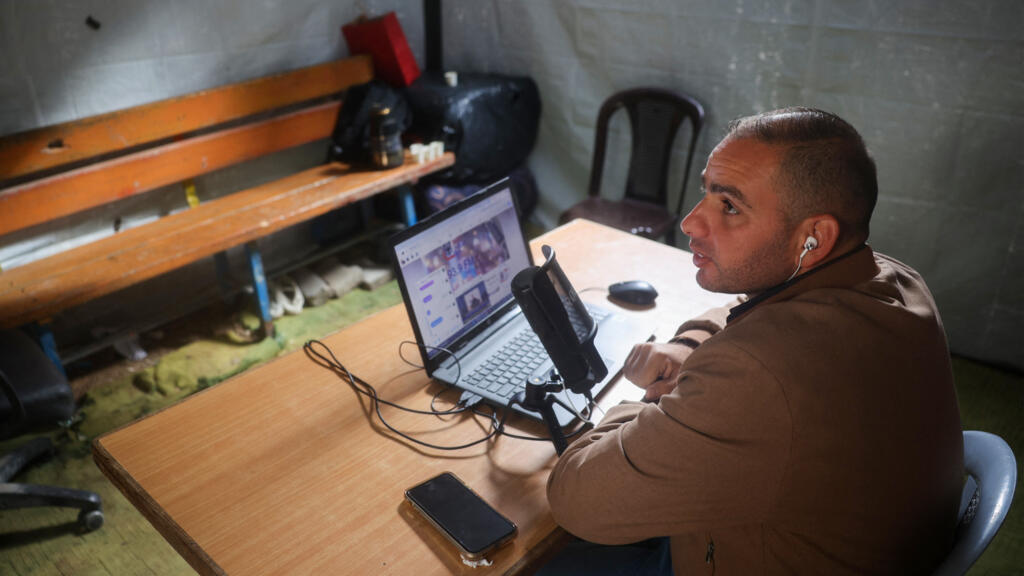
The first local radio stations in the Gaza Strip are resuming broadcasts after a nearly two-year hiatus due to the war between Hamas and Israel – though FM antennae remain scarce.


Issued on: 13/02/2026 - RFI


Abdullah al-Maghari hosts a radio programme from the Bureij camp for displaced Palestinians, located in the centre of the Gaza Strip, on 21 December 2024. © AFP/Eyad Baba

In a modest studio on the sixth floor of a building ravaged by war, Emad Nour's voice echoes.

The presenter, who works for Sawt Al Quds radio, tells listeners the good news: electricity is slowly coming back.

Gaza had around 20 local radio stations before Israel began its offensive in response to deadly attacks by Hamas in October 2023.

All ceased broadcasting as Israeli strikes intensified – cutting off a vital source of information about which areas had been hit, where aid was being distributed, or even health advice in a territory where people have limited access to media.

"In the aftermath of a devastating war, people living in difficult conditions told us they were sorry we weren't covering their struggles and suffering anymore," said Nour.

"They told us they loved us and needed our voice."

'Nowhere in Gaza is safe' says RFI correspondent amid call for global media access
From FM to internet

The station resumed broadcasting in January, starting with a tribute to colleagues killed, injured or imprisoned during the war.

With almost all FM antennae destroyed, its shows are broadcast online.

Listener Reema Salem said: "I recently saw videos of the Sawt Al Quds team on social media, and when I heard the sound of their programme, I was so moved."

Podcast: The power of radio during British-mandated Palestine

The radio station Voice of the People is also limited to broadcasting pre-recorded programmes online for now, said its journalist Ramzi Abdallah.

"We want to return to FM, but the transmitter isn't ready," he said. "Some equipment was lost in the war, mainly during Israeli raids."

With regular internet outages, Gazans' access to radio remains spotty. Only one station, Zaman FM, has so far returned to broadcasting over traditional FM.

This article has been adapted from the original version in French by Remi El Meghari in Gaza and Aabla Jounaïdi in Paris.

DEFENSE SPENDING CUTS AIDS FUNDS

France cuts funding for Global Fund to fight AIDS, TB and malaria by more than half

France cut its contribution to the Global Fund to Fight AIDS, Tuberculosis and Malaria by 58 percent on Thursday, confirming a major reduction in funding that health organisations warn will cost lives.


Issued on: 13/02/2026 - RFI

The Global Fund says it has saved nearly 70 million lives since its inception in 2002, funding HIV, tuberculosis and malaria programmes worldwide. © AFP - CRISTINA ALDEHUELA

By: Alara Koknar

After months of uncertainty, the government said its pledge for the 2026-2028 cycle will fall from €1.6 billion in the previous funding period to €660 million.

Since its creation in 2002, the Global Fund has helped save nearly 70 million lives worldwide.

Vincent Leclercq, executive director of Coalition Plus, an international network of organisations dedicated to the fight against AIDS, told RFI that this decrease in funding will have serious consequences.

“There is a direct impact between the budget they are able to raise and the number of lives they are able to save,” he said, pointing to interventions including antiretroviral treatments for HIV, malaria prevention nets, condoms and testing services.


The Global Fund dispensed antiretroviral treatments to 25.6 million people in 2024.

World AIDS Day highlights major innovations amid decline in global funding


NGOs warn that France’s reduced contribution will directly affect access to HIV testing and treatment in vulnerable communities. AFP - YASUYOSHI CHIBA

Rural populations at risk

“This decrease [in funding] will translate directly into disaster,” Leclercq warned, adding that the first people to suffer will be vulnerable and communities and those that are harder to reach.

“If budgets are cut, community-based workers won’t be able to provide testing in rural areas,” he said. “A decrease in testing will turn into an increase in infections.”

While private foundations may increase contributions, Leclercq calls the idea that they could offset such cuts “an illusion”.

After a lull during Covid, France sees rise in tuberculosis cases

France’s overall development aid contribution is set to fall by €800 million in the 2026 budget, down 18 percent from 2025 and 38 percent compared to 2024.

In a joint statement, several NGOs – including Coalition Plus – criticised what they called a historic reduction.

Camille Spire, president of the French non-profit AIDES, said the cut amounted to a “desertion” by France in the fight against these diseases, adding that previous funding reductions have already seen “devastating effects”.

Malaria fight under threat as US funding cuts raise fears in Africa

“We are revolted by France's abandonment of the sick, its international commitments and multilateral cooperation," she said.

The organisations also noted that the move comes despite a unanimous resolution in the French National Assembly on 3 February calling on the government to strengthen support for the global fight against HIV.

SPACE/COSMOS

“It turns out Friday the 13th is a very lucky day,”

France's Adenot and international crew take off for space station

NASA’s SpaceX Crew-12 mission launched to the International Space Station on Friday, sending four astronauts, including France’s Sophie Adenot, to replace a crew evacuated early because of a medical issue.


Issued on: 13/02/2026 - RFI


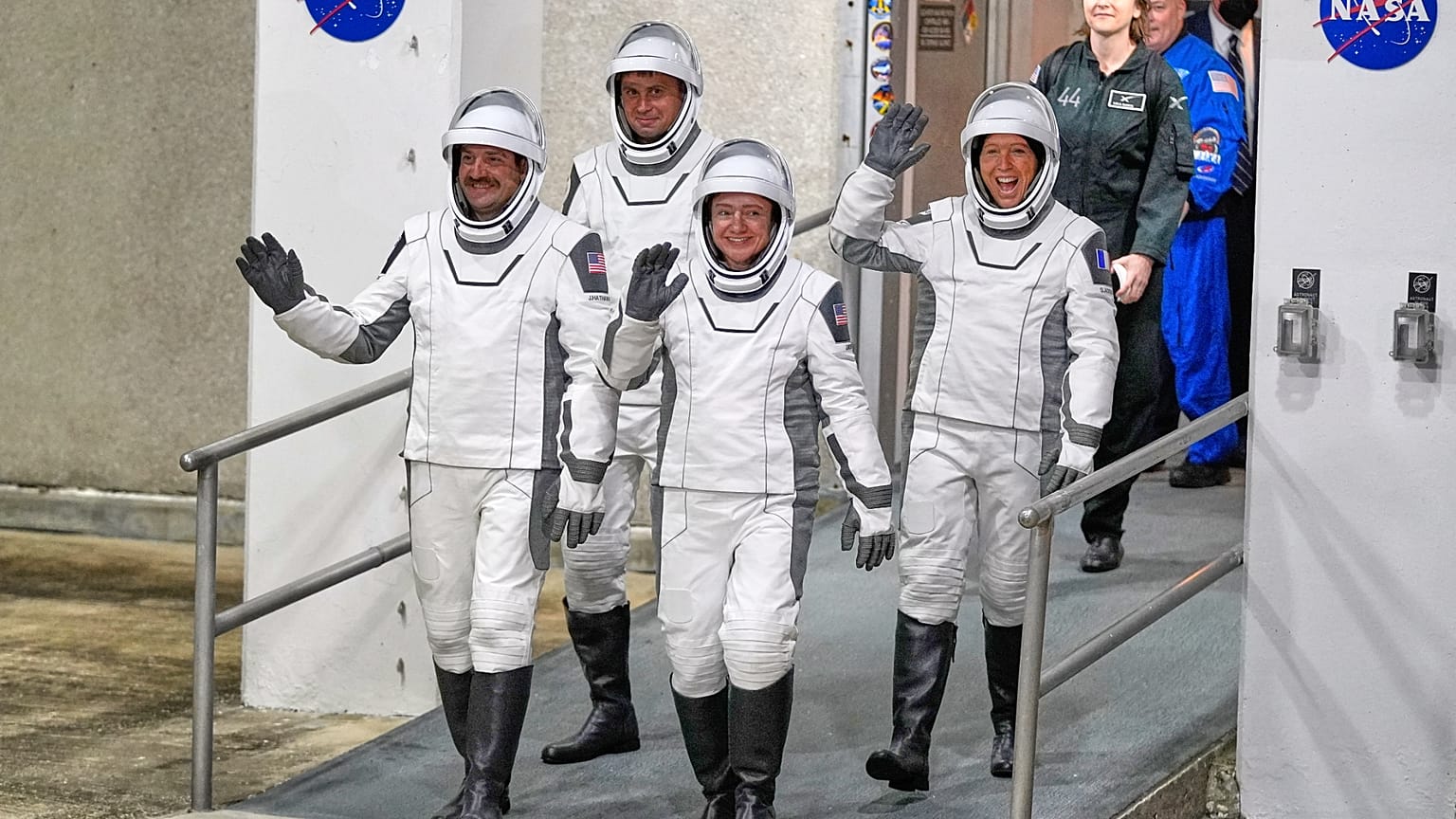
From left to right: Andrei Fedyaev, Jack Hathaway, Jessica Meir and Sophie Adenot, now bound for the International Space Station. © SpaceX via AP


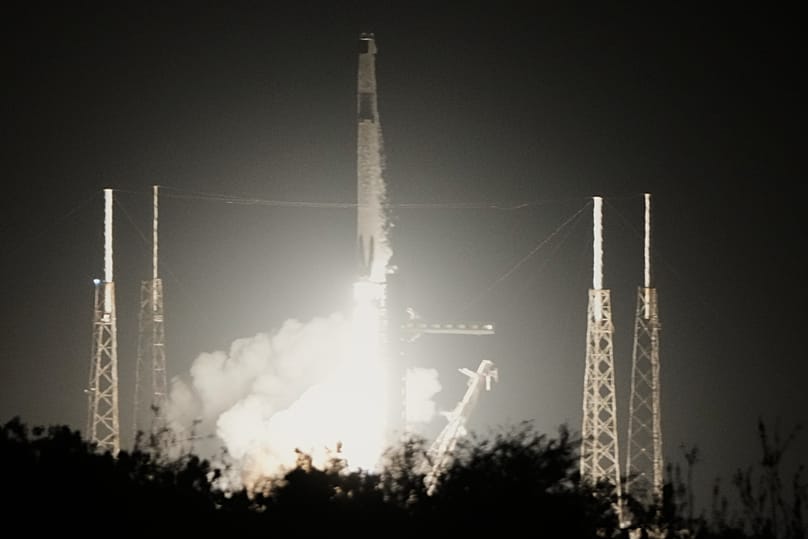
The US space agency NASA launched the Crew-12 mission aboard a SpaceX Falcon 9 rocket at 5:15am EST from Cape Canaveral Space Force Station in Florida.

The pre-dawn launch was delayed by two days because of adverse weather forecasts across the US East Coast, including high winds that could have complicated emergency manoeuvres.

The astronauts are expected to arrive at the orbiting ISS at about 3:15 pm on Saturday. They will spend nine months there.

Crew-12 is composed of Americans Jessica Meir, the mission commander, and Jack Hathaway, the pilot, along with French astronaut Sophie Adenot and Russian cosmonaut Andrey Fedyaev, a mission specialist.

They will replace Crew-11, which returned to Earth in January one month earlier than planned in the first medical evacuation in the space station’s history.

The ISS, a scientific laboratory orbiting 400 kilometres above Earth, has since been staffed by a skeleton crew of three.

NASA declined to disclose details about the health issue that cut the mission short.

All systems are go as France zeros in on space ambitions


'One day that will be me'

Once the astronauts arrive, they will be among the last crews to live aboard the football field-sized space station.

Continuously inhabited for the last quarter century, the ageing ISS is scheduled to be pushed into Earth’s orbit before crashing into an isolated area of the Pacific Ocean in 2030.

Adenot, an astronaut at the European Space Agency, will become the second French woman to fly to space, following in the footsteps of Claudie Haignere, who spent time on the Mir space station.

France's second woman in space prepares for launch after 30-year wait

When Adenot saw Haigneré’s mission launch, she was 14 years old.

“It was a revelation,” the helicopter pilot said during a recent briefing. “At that moment, I told myself: one day, that will be me.”

Adenot will carry out more than 200 scientific and medical experiments in microgravity while completing intensive training and maintenance work in space.

Among other research, she will test a system that uses artificial intelligence and augmented reality to allow astronauts to carry out their own medical ultrasounds.

(with newswires)

International astronauts launch to ISS after NASA's first medical evacuation

Crew 12 astronauts, from left, pilot Jack Hathaway, Russian cosmonaut Andrei Fedyaev, commander Jessica Meir and ESA astronaut Sophia Adenot, of France,
Copyright AP Photo/John Raoux

By Pascale Davies & AP
Published on 

“It turns out Friday the 13th is a very lucky day,” SpaceX Launch Control radioed once the astronauts reached orbit.

A fresh team of astronauts launched toward the International Space Station on Friday aboard a SpaceX rocket, set to take over for crew members who had been brought back to Earth in what marked NASA's first medical evacuation from orbit.

NASA requested the expedited launch to quickly fill the positions left vacant by the evacuated astronauts.

The incoming crew—comprising astronauts from the United States, France, and Russia—is scheduled for an eight- to nine-month stay that will extend through until autumn. They arrive on Saturday and will restore the space station to its complete crew complement.

Once the spacecraft reached orbit, SpaceX Launch Control jokingly noted, "It turns out Friday the 13th is a very lucky day." Mission commander Jessica Meir responded with enthusiasm: "That was quite a ride."


During the month-long crew shortage, NASA suspended spacewalks and postponed various tasks while awaiting the replacements. Americans Meir and Jack Hathaway, alongside France's Sophie Adenot and Russia's Andrei Fedyaev, will now join the skeleton crew of three astronauts—one American and two Russians—who maintained station operations in the interim.

NASA said it saw no need for additional pre-launch medical screenings or specialised diagnostic equipment, expressing confidence in existing protocols aboard the station. However, an onboard ultrasound machine, typically used for research purposes, was pressed into urgent service on January 7 to examine the unwell crew member.

NASA has declined to identify the astronaut or disclose details about their condition. All four returning crew members were hospitalised immediately upon their Pacific Ocean splashdown near San Diego.

A SpaceX Falcon 9 rocket with a crew of four aboard the Dragon space craft lifts off from pad 40 at the Cape Canaveral Space Force Station in Cape Canaveral, Fla., Feb 13 AP Photo/John Raoux

It marked the first instance in 65 years of human spaceflight that NASA terminated a mission early due to medical concerns.

Satisfied with medical procedures already in place, NASA ordered no extra checkups for the crew ahead of liftoff, and no new diagnostic equipment was packed.

An ultrasound machine already up there for research went into overdrive on Jan. 7 when used on the ailing crew member. NASA has not revealed the ill astronaut’s identity or health issue. All four returning astronauts went straight to the hospital after splashing down in the Pacific near San Diego.

With missions becoming longer, NASA is constantly looking at upgrades to the space station’s medical gear, said deputy programme manager Dina Contella.

“But there are a lot of things that are just not practical, and so that’s when you need to bring astronauts home from space,” she said earlier this week.

In preparation for moon and Mars trips, where health care will be even more challenging, the new arrivals will test a filter designed to turn drinking water into emergency IV fluid, try out an ultrasound system that relies on artificial intelligence and augmented reality instead of experts on the ground, and perform ultrasound scans on their jugular veins in a blood clot study.

They will also demonstrate their Moon-landing skills in a simulated test.

Adenot is only the second French woman to launch to space. She was 14 when Claudie Haignere flew to Russia’s space station Mir in 1996, inspiring her to become an astronaut. Haignere travelled to Cape Canaveral to cheer her on.

“I thought it would have been a quiet joy with pride for Sophie, but it was so hugely emotional to see her with a successful launch," Haignere said.

Hathaway, like Adenot, is new to space, while Meir and Fedyaev are making their second station trip. Just before liftoff, Fedyaev led the crew in a cry of “Poyekhali" — Russian for “Let's Go” — the word uttered at liftoff by the world's first person in space, the Soviet Union's Yuri Gagarin, in 1961.

On her first mission in 2019, Meir took part in the first all-female spacewalk. The other half of that spacewalk, Christina Koch, is among the four Artemis II astronauts waiting to fly around the moon as early as March. A ship-to-ship radio linkup is planned between the two crews.

ESA satellite finds 'inside-out' planetary system that challenges formation theories

Artist impression of the planetary system around the star LHS 1903
Copyright European Space Agency

By Roselyne Min with AFP
Published on 

A newly discovered planet orbiting a distant star may change scientists’ understanding of how planetary systems form.

Astronomers say they have discovered a distant planetary system with planets arranged in a surprising order, challenging long-standing ideas about how planets form.

In our Solar System, the four planets closest to the Sun are small and rocky, while the four farther away are large gas giants. Scientists have long believed this pattern — rocky planets near the star and gaseous planets farther out — was common across the universe.

However, a star called LHS 1903 discovered in the Milky Way's thick disc suggests otherwise.

In a collaborative effort involving researchers across Europe, astronomers analysing data from several telescopes had already identified three planets orbiting the red dwarf star, which is cooler and dimmer than our Sun.

The closest planet to the star was rocky, followed by two gas giants. That is the order scientists expect.

But digging into observations made by the European Space Agency (ESA)'s exoplanet-probing Cheops space telescope revealed a fourth planet farther from the star. Surprisingly, this outermost planet also appears to be rocky.

"That makes this an inside-out system, with a planet order of rocky-gaseous-gaseous-and then rocky again," Thomas Wilson, the lead author of the study and a planetary astrophysicist from the University of Warwick in the United Kingdom, said in a statement with ESA.

"Rocky planets don't usually form so far away from their home star," Wilson added.

One planet after another

Inner planets are expected to be small and rocky because intense radiation from the nearby star blasts most of the gas away from their rocky core.

But farther out in the cold reaches of the system, a thick atmosphere can form around cores, creating gas giants.

Trying to explain the unusual LHS 1903 system, researchers tested several possibilities before proposing a new idea: the planets may have formed one after another rather than all at once.

According to the currently most widely accepted theory, planets form simultaneously in a massive ring of gas and dust called a protoplanetary disc.

This involves tiny dust grains clumping together, then snowballing into cores that eventually evolve into mighty planets.

But in this system, scientists believe LHS 1903 may have formed after most of the gas had already disappeared.

"Yet here is a small, rocky world, defying expectations," Wilson said.

"It seems that we have found the first evidence for a planet which formed in what we call a gas-depleted environment," he added.

Since the 1990s, astronomers have discovered more than 6,000 planets outside our Solar System, called exoplanets, mostly by spotting slight changes in brightness as they cross in front of their star.

"Historically, our planet formation theories are based on what we see and know about our Solar System," said Isabel Rebollido, a planetary disc researcher at ESA.

"As we are seeing more and more different exoplanet systems, we are starting to revisit these theories."


Cheops Discovers Late Bloomer From Another Era


By 


Many Vile Earthlings Munch Jam Sandwiches Under Newspapers and My Very Educated Mother Just Served Us Nachos. What sounds like gibberish half-sentences are memory aids taught to children to help remember the order of the planets in our Solar System: Mercury, Venus, Earth, Mars, Jupiter, Saturn, Uranus and Neptune.

The eight familiar planets can be sorted into two different types: rocky and gaseous. The inner planets that are closest to the Sun – Mercury to Mars – are rocky, and the outer planets – Jupiter to Neptune – are gaseous.

This general pattern, that planetary systems form with rocky planets closer to their star, followed by gaseous planets as the outer bodies, has been commonly observed across the Universe. It is what our current planet formation theories predict and what observations have widely confirmed to be true.

That was until scientists took a closer look at the planetary system around a star called LHS 1903 with ESA’s CHaracterising ExOPlanet Satellite (Cheops). What they have just discovered might flip our understanding of how planets form upside down.

The four planets of LHS 1903

LHS 1903 is a small red M-dwarf star that is cooler and shines less brightly than our Sun. Thomas Wilson from the University of Warwick in the UK and his international team combined the efforts of various telescopes in space and on Earth to classify three planets that they had spotted orbiting LHS 1903. They were able to conclude that the innermost planet seemed to be rocky, and the two that followed it gaseous.

So far, so normal. It wasn’t until Thomas and his colleagues were analysing observations made by ESA’s Cheops, that they discovered something strange: the data showed a small fourth planet, furthest from LHS 1903. And upon closer inspection, the scientists were surprised to discover that this planet seems to be rocky!

“That makes this an inside-out system, with a planet order of rocky-gaseous-gaseous-and then rocky again. Rocky planets don’t usually form so far away from their home star,” says Thomas.

Current planet formation theories predict that the inner planets in a system are small and rocky, because close to the star the radiation is so powerful that it sweeps away most of the gas around the planets’ rocky core. Further away from the star, in the outer part of a planetary system, the conditions are cool enough for a thick atmosphere to gather into a gaseous planet.

ESA’s Cheops project scientist Maximilian Günther is enthusiastic: “Much about how planets form and evolve is still a mystery. Finding clues like this one for solving this puzzle is precisely what Cheops set out to do.”

Born to be weird?

Scientists are not quick to say that an established theory needs to be reconsidered, based on a single contradictory observation. So, Thomas and his colleagues set out to explore various explanations for why this strange rocky planet breaks the familiar pattern.

Was the planet, for example, at some point in its past hit by a giant asteroid, comet, or another big object, that blew away its atmosphere? Or had the planets around LHS 1903 swapped places at some point during their evolution? After testing these scenarios through simulations and calculations of the planets’ orbital times, the team of scientists ruled them out.

Instead, their investigation led them to a more intriguing explanation: the planets may have formed one after the other, instead of at the same time. According to our current understanding, planets form from discs of gas and dust (protoplanetary discs) by clumping into planetary embryos at roughly the same time. These clumps then evolve into planets of different sizes and compositions over millions of years.

In contrast, here Thomas and his team discovered a planetary system where the star might have given birth to its four planets one after the other, instead of bearing quadruplets at once. This idea – known as inside-out planet formation – was proposed by scientists as a theory about a decade ago, but until now, never has the evidence been so strong.

A late bloomer defying expectations

This conclusion comes with an additional catch: Much like how our younger siblings are growing up in a world that is different from the one of our childhoods, this small rocky planet seems to have evolved and formed in a very different environment than its older sibling-planets.

“By the time this outer planet formed, the system may have already run out of gas, which is considered vital for planet formation. Yet here is a small, rocky world, defying expectations. It seems that we have found first evidence for a planet which formed in what we call a gas-depleted environment”, says Thomas.

The small rocky world is either an odd outlier, or the first evidence for a trend we hadn’t known about yet. Either way, its discovery begs for an explanation that lies beyond our usual planet formation theories.

Our Solar System as a one-size-fits-all

“Historically, our planet formation theories are based on what we see and know about our Solar System,” Isabel Rebollido who is currently a Research Fellow at ESA points out. “As we are seeing more and more different exoplanet systems, we are starting to revisit these theories.”

As our instruments improve, we continue to discover more and more ‘weird’ planetary systems in the vastness of space. They force us to question our understanding and make us reconsider established theories of planet formation. Ultimately, these discoveries are helping us learn about how our Solar System fits into the big family of diverse planetary systems. They make us wonder how special the order of the planets is that we teach our children, and if maybe it is our home Solar System that is the weird one after all.