Sunday, May 02, 2021

THE OTHER GREEN CAPITALI$M 
Marijuana social equity: Seeds planted but will they grow?

By THOMAS PEIPERT and MICHAEL R. BLOOD
April 30, 2021

1 of 8

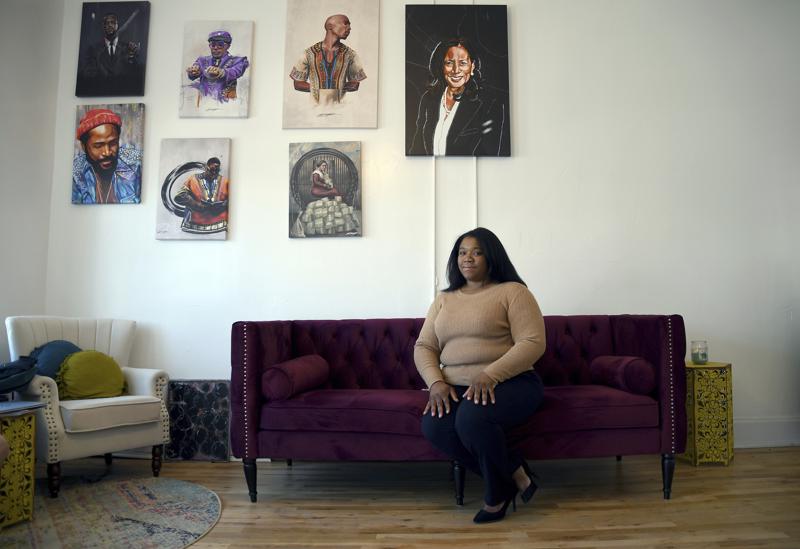
Sarah Woodson poses for a portrait in Denver on Saturday, April 3, 2021. Woodson, the executive director of the advocacy group The Color of Cannabis, runs a 10-week business course to help students navigate Colorado's social equity application process and to connect them with marijuana industry leaders. Colorado's social equity program is aimed at correcting past wrongs from the war on drugs, which disproportionately affected minorities. (AP Photo/Thomas Peipert)

DENVER (AP) — Terrence Hewing was working for a package delivery company in 2007 when police approached his cargo van in suburban Denver. He was early for a pickup, and someone out for a walk called authorities after seeing him napping in the driver’s seat.

Officers found about a pound of marijuana inside the vehicle. That led to a couple of days in jail, thousands of dollars in legal fees and a felony conviction for drug possession. Hewing lost his job and, because of his criminal record, for years struggled to find housing and a stable, well-paying career.

“I felt like I was in a certain box in society,” he said. “There’s people that don’t have felonies and people that do. It makes you almost feel kind of outcast.”

Hewing, 39, recently became one of only a few Black entrepreneurs to receive a business license in Colorado’s recreational marijuana industry. His goal is to run a company that delivers the very substance that stained his record.

His opportunity is the result of personal ambition paired with Colorado’s effort to right past wrongs from the war on drugs.

Hewing will enter the market as a so-called social equity operator, licensed under a program that provides reduced fees and mentoring to encourage the growth of new businesses, especially for Black people arrested or imprisoned for marijuana offenses.

Social equity has been a selling point for marijuana legalization in many states. New York, which last month broadly legalized cannabis use, has set a goal of getting 50% of licenses to minorities and other social equity applicants.

But so far the goals have far outstripped realities, partly due to legal entanglements as states look to broaden diversity in cannabis boardrooms, retail shops, production plants and greenhouses.

Disappointment with the slow rollout of equity programs has taken on a deeper resonance at a time when the nation is undergoing a racial reckoning, brought on by cases of police brutality and punctuated last year by the death of George Floyd in Minneapolis.

The limited statistics available indicate business owners and investors at the top of the booming industry remain overwhelmingly white.

In Nevada, about 30% of people in the state are Latino and 10% are Black. But the state’s first demographic survey of the cannabis industry released earlier this year showed only about 2% of board members identified as Black and just over 7% Latino.

States are making progress toward a more diverse marijuana industry but so far the push for social equity has been plagued with a lot of delays and litigation, said Karen O’Keefe, director of state policies at the Marijuana Policy Project.

In some cases, aspiring social equity licensees have been locked up again, this time in predatory contracts, with profits and control largely in the hands of investors. In others, they’ve been overmatched in a cutthroat market dominated by international companies valued at millions and sometimes billions of dollars.

And sometimes states themselves have been slow to establish and grow programs.

Voters in Washington and Colorado in 2012 made their states the first to legalize recreational marijuana. But only now are they moving toward greater social equity.

Colorado’s program, which took effect at the beginning of the year, is open to all races, but the state Marijuana Enforcement Division says on its website the goal is to increase diversity, especially among owners. It also acknowledges “the effects of decades of criminal enforcement of marijuana laws on communities of color.”

According to a 2020 study by the American Civil Liberties Union, Black people in the United States are nearly four times more likely than white people to be arrested for marijuana possession, despite comparable usage. The study analyzed marijuana possession arrests from 2010 to 2018.

The Colorado program is open to those who lived in the state for at least 15 years between 1980 and 2010 in an opportunity zone or an area disproportionately affected by drug laws, which is determined by education and poverty levels, unemployment rates and the number of people who receive public assistance. The program also is open to those with a household income below 50% of the state’s median and those who either were or have a close family member arrested or convicted of a marijuana offense.

One provision allows new license holders to partner with an existing marijuana business to learn from experienced professionals.

Coming seven years after sales of recreational marijuana were legalized, it’s been a long wait, said Sarah Woodson, Hewing’s wife and executive director of the advocacy group The Color of Cannabis.

“Once it becomes regulated, (they) literally should be the first people that have an opportunity to legitimize and capitalize from that business,” said Woodson, referring to people with marijuana convictions.

As many look for answers to increase minority participation in the business, a recurring question has emerged: Do equity programs do enough to help license holders who may have little, if any, business experience or access to capital needed to launch a successful company?

Los Angeles, the nation’s largest legal pot shop, opened for businesses in 2018. But more than three years later its social equity program remains a work in progress after getting tangled in a legal fight and later undergoing a major makeover, intended in part to shield inexperienced social equity licensees from shark investors.

The delays have left many potential operators and their financial backers in limbo, waiting for permission to open for business while start-up costs pile up.

“I’m paying rent on an empty building,” lamented Kika Keith, a leading Los Angeles activist and co-founder of Social Equity Owners and Workers Association. She’s seeking a social equity license to open a retail shop in the city’s historically Black neighborhood Crenshaw.

After two years of planning, an earlier partnership collapsed under delays and shifting regulations that prompted her initial investors to back out. By that time, the company had spent $350,000 on lease payments, lawyers and other costs. Keith, who is Black and grew up in South Los Angeles, has secured new financial backers but is still waiting for a license.

Keith likens her long fight to struggles of the past, like breaking down Jim Crow laws that enforced racial segregation in the South. “They continue to push us down deeper in the hole,” she said.

Cannabis business attorney Hilary Bricken said California’s market is treacherous even for experienced operators, with dense layers of constantly shifting regulation, heavy taxes and competition from the still-booming illicit industry. Pot remains illegal federally, which can make loans and other banking services hard to find.

Companies generally are out to make profits and build brands, not focus on a humanitarian mission, she said. Investors could be uneasy about entering a partnership in which they would have to surrender significant control to the equity operator, as under rules in Los Angeles.

In capitalism, “the dollar rules,” she said.

Hoping to address such concerns, Woodson’s group, anchored in the historically Black neighborhood of Five Points near downtown Denver, runs a 10-week business course to help students navigate the social equity application process and to connect them with industry leaders.

Michael Diaz-Rivera, 35, who identifies as white, Black and Puerto Rican, recently completed the program, which teaches about business and marketing, filing taxes, and licensing and management, among other topics.

An elementary school teacher with a felony conviction for marijuana possession, Diaz-Rivera sees his future in a pot delivery business, though he acknowledges he’s had trouble finding investment and with little business experience worries about falling into an unfair contract.

With social equity “I’ve noticed that a lot of established businesses aren’t as interested in that because they don’t get anything out of it,” he said.

As for Hewing, he is bullish about his prospects, despite the obstacles.

“We’re trying to get it to where we’re actually creating businesses and owners and generational wealth,” he said. “People can help their communities and restore the negative damage that was caused by the war on drugs.”

——

Blood reported from Los Angeles. He is a member of AP’s marijuana beat team. Follow him on Twitter at http://twitter.com/MichaelRBloodAP. Follow AP’s complete marijuana coverage: https://apnews.com/hub/marijuana.
Counting the costs of America’s 20-year war in Afghanistan

By ISABEL DEBRE
AP MAY 2,2021


1 of 5
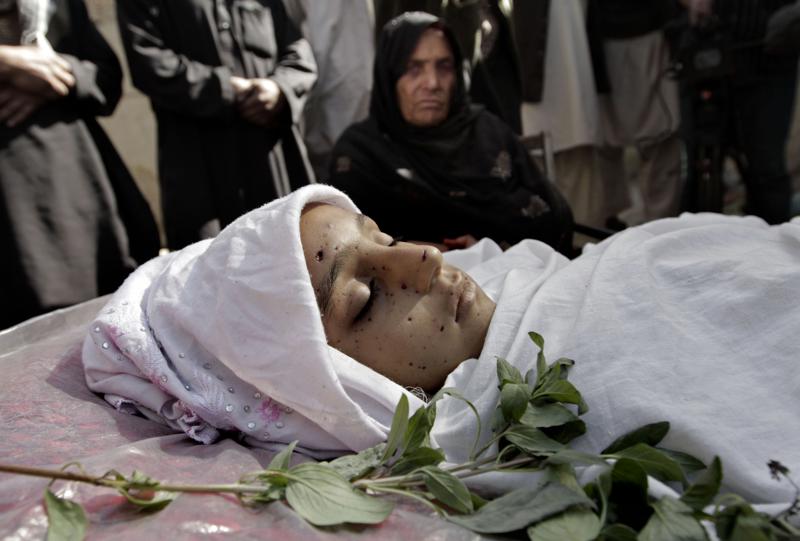
FILE - In this Oct. 27, 2013 file photo, relatives surround the body of a 10-year-old Afghan girl who was killed by a roadside bomb, apparently targeting a group of soldiers, during her funeral on the outskirts of Kabul, Afghanistan. America’s longest war, the two-decade-long conflict in Afghanistan that started in the wake of the Sept. 11 terrorist attacks, killed tens of thousands of people, dogged four U.S. presidents and ultimately proved unwinnable despite its staggering cost in blood and treasure. (AP Photo/Rahmat Gul, File)

DUBAI, United Arab Emirates (AP) — America’s longest war, the two-decade-long conflict in Afghanistan that started in the wake of the Sept. 11 terrorist attacks, killed tens of thousands of people, dogged four U.S. presidents and ultimately proved unwinnable despite its staggering cost in blood and treasure.

This final chapter, with President Joe Biden’s decision to pull all American troops from Afghanistan by the 20th anniversary of the terrorist attacks, has prompted a reckoning over the war’s lost lives and colossal expenditure.

Here’s a look at the spiraling cost of America’s campaign — the bloodshed, wasted funds and future consequences for the war-battered nation teetering on the brink of chaos.

THE COST IN LIVES


Afghans have paid the highest price. Since 2001, at least 47,245 civilians have been killed in the war as of mid-April, according to the Costs of War project at Brown University, which documents the hidden costs of the post-9/11 wars.

Gun and bomb attacks targeting civilians surged to previously unseen heights since the intra-Afghan peace negotiations opened in Qatar last fall, according to the U.N. Watchdogs say the conflict has killed a total of 72 journalists and 444 aid workers.

The Afghan government keeps the toll among its soldiers secret to avoid undermining morale, but Costs of War estimates the war has killed 66,000 to 69,000 Afghan troops.

The war has forced 2.7 million Afghans to flee abroad, mostly to Iran, Pakistan and Europe, the U.N. said. Another 4 million are displaced within the country, which has a total population of 36 million.

Meanwhile, 2,442 U.S. troops have been killed and 20,666 wounded in the war since 2001, according to the Defense Department. It’s estimated that over 3,800 U.S. private security contractors have been killed. The Pentagon does not track their deaths.

The conflict also has killed 1,144 personnel from the 40-nation NATO coalition that trained Afghan forces over the years, according to a tally kept by the website iCasualties. The remaining 7,000 allied troops also will withdraw by Biden’s 9/11 deadline.

FILE - This May 14, 2010 file photo, shows the Tarakhil power plant built with the help of the U.S. Agency for International Development, on the outskirts of Kabul, Afghanistan. Washington has poured over $143 billion into nation-building since 2002, according to the latest figures from the Special Inspector General for Afghanistan Reconstruction (SIGAR). Much of the billions lavished on huge infrastructure projects went to waste, the U.S. inspector general discovered. (AP Photo/Saurabh Das, File)


THE COST IN DOLLARS

The U.S. has spent a stunning total of $2.26 trillion on a dizzying array of expenses, according to the Costs of War project.

The Defense Department’s latest 2020 report said war-fighting costs totaled $815.7 billion over the years. That covers the operating costs of the U.S. military in Afghanistan, everything from fuel and food to Humvees, weapons and ammunition, from tanks and armored vehicles to aircraft carriers and airstrikes.

Although America first invaded to retaliate against al-Qaida and rout its hosts, the Taliban, the U.S. and NATO soon pivoted to a more open-ended mission: nation-building on a massive scale.

Washington has poured over $143 billion into that goal since 2002, according to the latest figures from the Special Inspector General for Afghanistan Reconstruction (SIGAR).

Of that, $88 billion went to training, equipping and funding Afghan military and police forces. Another $36 billion was spent on reconstruction projects, education and infrastructure like dams and highways, the SIGAR report said. Another $4.1 billion has gone to humanitarian aid for refugees and disasters. The campaign to deter Afghans from selling heroin around the world cost over $9 billion.

Unlike with other conflicts in American history, the U.S. borrowed heavily to fund the war in Afghanistan and has paid some $530 billion in interest. It has also paid $296 billion in medical and other care for veterans, according to Costs of War. It will continue to pay both those expenses for years to come.


FOLLOWING THE MONEY

Much of the billions lavished on huge infrastructure projects went to waste, the U.S. inspector general discovered. Canals, dams and highways fell into disrepair, as Afghanistan failed to absorb the flood of aid. Newly built hospitals and schools stood empty. Without proper oversight, the U.S. money bred corruption that undermined government legitimacy.

FILE - In this April 11, 2016 file photo, farmers harvest raw opium at a poppy field in the Zhari district of Kandahar province, Afghanistan. President Joe Biden's decision to end America's longest war has prompted a reckoning over the colossal cost of the two-decade-long conflict in Afghanistan. Despite the costly counternarcotics campaign, opium exports reached record heights. (AP Photos/Allauddin Khan, File)


Despite the costly counter narcotics campaign, opium exports reached record heights. Despite the billions in weapons and training to Afghan security forces, the Taliban increased the amount of territory they control. Despite vast spending on job creation and welfare, unemployment hovers around 25%. The poverty rate has fluctuated over the years, reaching 47% through 2020, according to the World Bank, compared to 36% when the fund first began calculating in 2007.

“We invested too much with too little to show for it,” said Michael Wahid Hanna, a senior fellow at the Washington-based Century Foundation.

THE COST OF LEAVING

Although few want to prolong the war interminably, many fear its final end may jeopardize Afghanistan’s modest gains in health, education and women’s rights, made in the early years as the U.S. expanded the economy and toppled the Taliban, which had imposed tough strictures on women.

Since 2001, life expectancy has increased to 64 years from 56, the World Bank says. Maternal mortality has more than halved. Opportunities for education have grown, with the literacy rate rising 8% to roughly 43%. Life in cities has improved, with 89% of residents having access to clean water, compared to 16% before the war.

Child marriage has declined by 17%, according to U.N. data. Girls’ enrollment in primary school has nearly doubled, and more women have entered college and served in Parliament. These figures still pale compared with global standards.

But more broadly, the failure of America’s ambitions to build a stable, democratic Afghanistan has left the country mired in uncertainty as U.S. forces leave. The nation’s history tells of civil war that follows foreign invasions and withdrawals.

“For better or worse, the U.S. has a serious stabilizing presence right now, and once that’s gone there’s going to be a power vacuum,” said Michael Callen, an Afghanistan economy expert at the London School of Economics. “In the 20 years’ war, there’s going to be a whole lot of scores that need to be settled.”

FASCISM; NO INDEPENDENT JUDICIARY*
El Salvador’s new assembly votes to oust high chamber judges


1 of 7
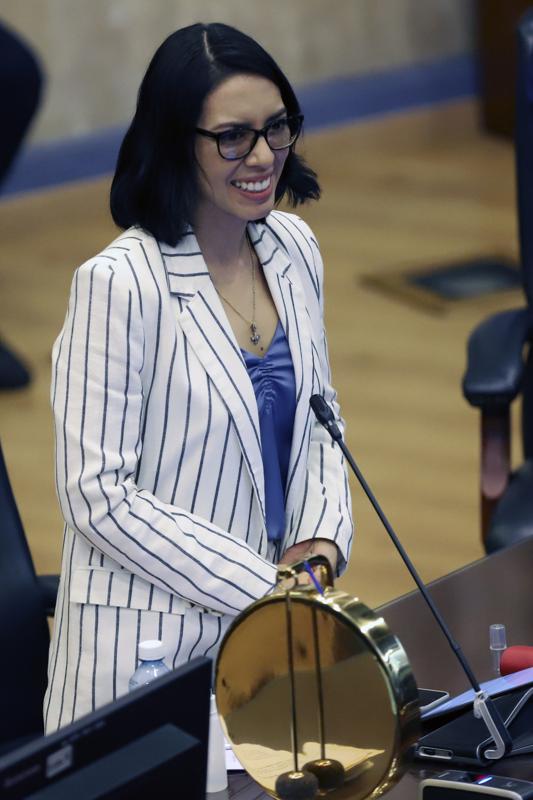
Suecy Callejas, Vice President of the Congress, center, smiles during the first session in San Salvador, El Salvador, Saturday, May 1, 2021. For the first time in three decades the traditional conservative and leftist parties have been sidelined by a resounding electoral defeat, clearing the way for President Nayib Bukele's party to help him advance his agenda. (AP Photo/Salvador Melendez)


EL SALVADOR, El Salvador (AP) — El Salvador’s new Legislative Assembly, controlled by President Nayib Bukele’s New Ideas party, held its first session Saturday with lawmakers voting to remove the magistrates of the constitutional chamber of the Supreme Court.

The assembly voted 64 to 19 with one abstention to oust the five magistrates on the chamber, which had angered Bukele by ruling against some of his tougher measures during the pandemic.

Ruling party lawmakers defended the decision, saying the court had put private interests above the health and welfare of the people, while the opposition called it a power grab by a populist president seeking total control.

“This is an outrage against the Republic and democracy,” the conservative opposition National Republican Alliance, or ARENA, said on its Twitter account.

ARENA party president Erick Salguero called the initiative a violation of the constitution and part of Bukele’s “search for complete power.”

Bukele defended the process, saying the Legislative Assembly’s ability to dismiss the court’s judges is “an INCONTROVERTIBLE power clearly expressed in article 186 of the Constitution of the Republic.”

El Salvador’s constitution states that the magistrates of the Supreme Court of Justice may be removed by the Legislative Assembly for specific causes established by law. Both the election and dismissal of its magistrates must have the support of two thirds of the lawmakers.


“We note with concern the proposal by some members of the National Assembly to remove five magistrates of El Salvador’s Constitutional Chamber,” tweeted Julie Chung, acting assistant secretary for the U.S. State Department’s Bureau of Western Hemisphere Affairs. “An independent judiciary is the foundation of any democracy; no democracy can live without it.”

José Miguel Vivanco, director of Human Rights Watch’s Americas division, wrote on Twitter that “Bukele is breaking with the rule of law and seeks to concentrate all power in his hands.”

The 39-year-old Bukele, a populist who has been criticized for having autocratic tendencies, is by far the most popular politician in Central America.

His New Ideas party swept Feb. 28 legislative elections by a landslide last month devastating the two traditional parties who had long ruled the Central American nation.      
* CARL SCMIDTT, NAZI JURIST, PROF U OF CHICAGO POST WAR 


AN INDICATION OF CIVILIZATION; SLAVERY*
Black Freedmen struggle for recognition as tribal citizens

By SEAN MURPHY
AP  MAY 2,2021

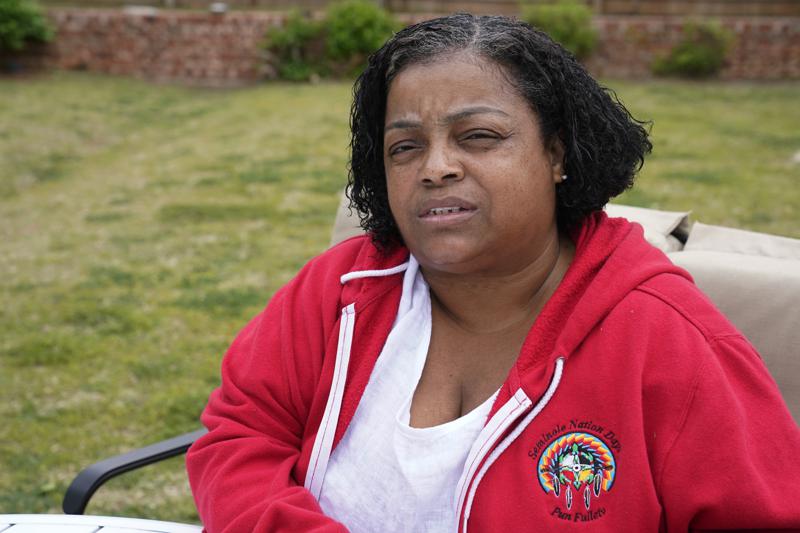
LeEtta Osborne-Sampson is pictured outside her home Monday, April 26, 2021, in Oklahoma City. Sampson-Osborn, a Seminole Freedman who has a tribal identification card and serves on the tribe's governing council, said when she went to the Indian Health Services clinic to get a vaccination in February, a worker at the clinic told her the Seminole Nation doesn't recognize Freedmen for health services. (AP Photo/Sue Ogrocki)

OKLAHOMA CITY (AP) — As the U.S. faces a reckoning over its history of racism, some Native American tribal nations that once owned slaves also are grappling with their own mistreatment of Black people.

When Native American tribes were forced from their ancestral homelands in the southeastern United States to what is now Oklahoma in the 1800s — known as the Trail of Tears — thousands of Black slaves owned by tribal members also were removed and forced to provide manual labor along the way. Once in Oklahoma, slaves often toiled on plantation-style farms or were servants in tribal members’ homes.

Nearly 200 years later, many of the thousands of descendants of those Black slaves, known as Freedmen, are still fighting to be recognized by the tribes that once owned their ancestors. The fight has continued since the killing of George Floyd last year by a Minneapolis police officer spurred a reexamination of the vestiges of slavery in the U.S.

CHEROKEE NATION FREEDMEN

The Cherokee, Chickasaw, Choctaw, Muscogee (Creek) and Seminole nations were referred to historically as the Five Civilized Tribes, or Five Tribes, by European settlers because they often assimilated into the settlers’ culture, adopting their style of dress and religion, and even owning slaves. Each tribe also has a unique history with Freedmen, whose rights were ultimately spelled out in separate treaties with the U.S.

Today, the Cherokee Nation is the only tribe that fully recognizes the Freedmen as full citizens, a decision that came in 2017 following years of legal wrangling.

“I think that we are a better tribe for having not only embraced the federal court decision but embraced the concept of equality,” said Cherokee Nation Chief Chuck Hoskin Jr., a longtime supporter of citizenship rights for the Freedmen.

The Cherokee Nation, among the largest Native American tribes, has about 5,800 Freedmen citizens who have traced an ancestor on the tribe’s original Freedmen rolls in the late 19th century.

When the federal government sought to break up tribal reservations into individual allotments after the Civil War, they created two separate tribal rolls — one for members with American Indian blood and one for Freedmen. In many cases, tribal citizens who appeared Black were placed on the Freedmen rolls, even if they had blood ties to the tribe.

Of the Five Tribes, only the Chickasaw Nation never agreed to adopt the Freedmen as citizens, according to the Oklahoma Historical Society.

SEMINOLE NATION CONTROVERSY

The Wewoka-based Seminole Nation in particular faces fierce criticism after several Black tribal citizens were denied COVID-19 vaccines at a federally operated American Indian health clinic.

LeEtta Osborne-Sampson, a Seminole Freedman who has a tribal identification card and serves on the tribe’s governing council, said she sought a vaccine in February at a clinic operated by the Indian Health Service, an agency within the U.S. Department of Health and Human Services. She said a worker told her the Seminole Nation doesn’t recognize Freedmen for health services. When she asked for additional explanation, the worker called over a tribal police officer, she said.

“So, I left,” said Osborne-Sampson. “Even the worst person would try to help when there’s a pandemic all over the world, but they don’t care about the Freedmen. I feel like they want us to die.”

Three other Seminole Freedmen shared similar experiences with The Associated Press about the same clinic.

The Seminole Nation says the decision about whether to provide vaccines to Seminole Freedmen rests with the IHS, not the tribe.

“To be clear, the Seminole Nation does not operate the Wewoka Indian Health Services clinic, has absolutely no policy oversight and was in no way involved with administering COVID-19 vaccines,” Seminole Nation Chief Greg Chilcoat said in a statement.

The agency said in a statement that it was reviewing eligibility of Seminole Freedmen and will be working with the tribe to determine what services IHS will provide.

FIGHTING FOR CITIZENSHIP

Seminole Freedmen say they are unable to receive services other tribal citizens get, including health care, tribal license plates and housing subsidies. The Seminole Freedmen have been fighting for years to be recognized as full tribal citizens in legal battles that underscore the systemic racism that Freedmen from all Oklahoma-based tribes say they have experienced from tribal governments and their members.

Many Seminole Freedmen are descendants of freed Black slaves who joined the Seminoles in Florida during their wars against the U.S. government.

“We fought in three wars with them to get where we’re at, and now they’ve turned against us,” said Anthony Conley, who also said he was denied a vaccine at the clinic.

Conley said he believes racism and an unwillingness of tribal citizens to share tribal funds is at the core of the tribe’s decision to exclude Freedmen from full citizenship, a claim that Chilcoat disputes.

TRIBAL SOVEREIGNTY

The Muscogee (Creek) and Choctaw nations have cited tribal sovereignty as reasons for their opposition to citizenship for Freedmen. When Democratic U.S. Rep. Maxine Waters of California last year attempted to force the tribes to reconcile the Freedmen issue by inserting language into a housing bill, Choctaw Nation Chief Gary Batton said the U.S. government is responsible for the Freedmen’s plight, not the Choctaw Nation.

“There is no more fundamental element of tribal self-governance than the authority of a Tribe like the Choctaw Nation to determine our own citizenship,” Batton wrote in a letter to House Speaker Nancy Pelosi.

Ultimately, it might be a decision for the federal courts to make. Osborne-Sampson said she and other Freedmen are consulting with an attorney on how to proceed.

* OSWALD SPENGLAR DECLINE OF THE WEST


MOVE OVER SPRUCE GOOSE
Gigantic Stratolaunch aircraft makes 2nd test flight

AP April 29, 2021


The Stratolaunch aircraft, a six-engine jet with the world's longest wingspan lands at Mojave Air and Space Port during craft's second flight, Thursday, April 29, 2021in Mojave, Calif. The gigantic aircraft has flew (FLOWN) for the second time in two years. (AP Photo/Matt Hartman)

MOJAVE, Calif. (AP) — The gigantic Stratolaunch aircraft flew Thursday for its second time, taking to the skies over the Southern California desert

The six-engine jet with the world’s longest wingspan took off from Mojave Air and Space Port two years after its maiden flight, following a change in ownership and purpose.

“We are airborne,” the Stratolaunch company tweeted at about 7:30 a.m.

The behemoth safely touched down on its 28 wheels about three hours later and Stratolaunch called the flight test a success.


Named Roc, the twin-fuselage aircraft has a wingspan of 385 feet (117 meters). It was developed by Microsoft co-founder Paul G. Allen, who died just months before it flew for the first time in April 2019.

Allen intended to use it as a carrier aircraft for space launches, carrying satellite-laden rockets beneath the center of the wing and releasing them at high altitude.

The new owners initially plan to use it as a carrier aircraft for launches of reusable hypersonic flight research vehicles.

Hypersonic describes flights at speeds of at least Mach 5, or five times the speed of sound.
Thousands in Brazil rally for Bolsonaro, ignoring virus

AFP Issued on: 01/05/2021 - 
A demonstrator holds a Brazilian flag during a protest in Brasilia in support of President Jair Bolsonaro, on May 1, 2021 Sergio Lima AF

Brasília (AFP)

Several thousand Brazilians marched Saturday in support of far-right president Jair Bolsonaro, ignoring a surging pandemic even as government opponents took their own protests online.

There were rallies in Brasilia, Sao Paulo and Rio de Janeiro, with many demonstrators wearing the yellow and green of the country's flag.

Brazil, with more than 403,000 Covid-19 deaths, is second only to the United States in that grim category, and Bolsonaro faces widespread criticism for not taking the pandemic more seriously.

Two weeks ago, the president said he was waiting for "a sign from the people" before "taking measures" to revoke restrictions imposed by mayors or governors to contain the spread of the virus.

More recently, he told a television interviewer that the army "could take to the street one day, to ensure respect for the Constitution (and for) freedom to come and go."

In Rio on Saturday, several hundred protesters seemed to respond to his call. Rallying along celebrated Copacabana beach, they waved banners demanding a "military intervention" to bolster Bolsonaro's powers.

A slogan widely seen at the various rallies was "Autoriso Bolsonaro" ("I authorize Bolsonaro") to send in the army.

In Brasilia, several thousand people assembled on the Esplanade of Ministries as Bolsonaro briefly passed overhead in a helicopter.

One of his sons, the deputy Eduardo Bolsonaro, waded into the crowd, his mask worn down around his chin, taking selfies with supporters, their faces also uncovered.

"It's a critical moment and Bolsonaro needs the people's support," Edvaldo de Paulo, a sixtyish demonstrator, told AFP in Brasilia.

"We have to clean house in Brasilia to let the president govern," said Elenir Ritonni, a 63-year-old retiree who joined several hundred demonstrators in Sao Paulo.

Few anti-Bolsonaro protests were planned for Saturday, but key opposition leaders, on the right and the left, were taking part in a trade union-sponsored event on social media critical of Bolsonaro.

Among them were former president Luiz Inacio Lula da Silva (2003-2010), who is expected to challenge Bolsonaro in next year's elections, and his center-right predecessor, Fernando Henrique Cardoso (1995-2002).

On Tuesday, a Senate commission of inquiry was established to examine the government's handling of the health crisis, with many experts saying it has been incompetent and irresponsible.
SpaceX returns 4 astronauts to Earth; rare night splashdown

By MARCIA DUNN
AP NEWS 59 minutes ago


1 of 9
In this image made from NASA TV video, the SpaceX Dragon capsule floats after landing in the Gulf of Mexico near the Florida Panhandle early Sunday, May 2, 2021. SpaceX returned four astronauts from the International Space Station on Sunday, making the first U.S. crew splashdown in darkness since the Apollo 8 moonshot. (NASA TV via AP)


CAPE CANAVERAL, Fla. (AP) — SpaceX safely returned four astronauts from the International Space Station on Sunday, making the first U.S. crew splashdown in darkness since the Apollo 8 moonshot.

The Dragon capsule parachuted into the Gulf of Mexico off the coast of Panama City, Florida, just before 3 a.m., ending the second astronaut flight for Elon Musk’s company.

It was an express trip home, lasting just 6 1/2 hours.

The astronauts, three American and one Japanese, flew back in the same capsule — named Resilience — in which they launched from NASA’s Kennedy Space Center in November.

“We welcome you back to planet Earth and thanks for flying SpaceX,” SpaceX’s Mission Control radioed moments after splashdown. “For those of you enrolled in our frequent flyer program, you’ve earned 68 million miles on this voyage.”

“We’ll take those miles,” said spacecraft commander Mike Hopkins. “Are they transferrable?” SpaceX replied that the astronauts would have to check with the company’s marketing department.

Within a half-hour of splashdown, the charred capsule — resembling a giant toasted marshmallow — had been hoisted onto the recovery ship.


In this image made from NASA TV video, the SpaceX Dragon capsule is retrieved from the Gulf of Mexico near the Florida Panhandle. (NASA TV via AP)

Hopkins was the first one out, doing a little dance as he emerged under the intense spotlights.

“It’s amazing what can be accomplished when people come together,” he told SpaceX flight controllers at company headquarters in Hawthorne, California. “Quite frankly, you all are changing the world. Congratulations. It’s great to be back.”


Commander Mike Hopkins egresses the SpaceX Dragon capsule. (NASA TV via AP)

The 167-day mission was the longest for a crew capsule launching from the U.S. The previous record of 84 days was set by NASA’s final Skylab station astronauts in 1974.

Saturday night’s undocking left seven people at the space station, four of whom arrived a week ago via SpaceX.

“Earthbound!” NASA astronaut Victor Glover, the capsule’s pilot, tweeted after departing the station. “One step closer to family and home!”

Hopkins and Glover — along with NASA’s Shannon Walker and Japan’s Soichi Noguchi — should have returned to Earth last Wednesday, but high offshore winds forced SpaceX to pass up a pair of daytime landing attempts. Managers switched to a rare splashdown in darkness, to take advantage of calm weather.

SpaceX had practiced for a nighttime return, just in case, and even recovered its most recent station cargo capsule from the Gulf of Mexico in darkness. Infrared cameras tracked the capsule as it re-entered the atmosphere; it resembled a bright star streaking through the night sky


From left to right, Michael Hopkins, Victor Glover, Shannon Walker and Soichi Noguchi. (NASA via AP)


All four main parachutes could be seen deploying just before splashdown, which was also visible in the infrared.

Apollo 8 — NASA’s first flight to the moon with astronauts — ended with a predawn splashdown in the Pacific near Hawaii on Dec. 27, 1968. Eight years later, a Soviet capsule with two cosmonauts ended up in a dark, partially frozen lake in Kazakhstan, blown off course in a blizzard.

That was it for nighttime crew splashdowns — until Sunday.

Despite the early hour, the Coast Guard was out in full force to enforce an 11-mile (18-kilometer) keep-out zone around the bobbing Dragon capsule. For SpaceX’s first crew return in August, pleasure boaters swarmed the capsule, a safety risk.


The SpaceX Dragon capsule parachutes into the Gulf of Mexico near the Florida Panhandle. (NASA TV via AP)

Once finished with their medical checks on the ship, the astronauts planned to hop on a helicopter for the short flight to shore, then catch a plane straight to Houston for a reunion with their families.

Their capsule, Resilience, will head back to Cape Canaveral for refurbishment for SpaceX’s first private crew mission in September. The space station docking mechanism will be removed, and a brand new domed window put in its place.

A tech billionaire has purchased the entire three-day flight, which will orbit 75 miles (120 kilometers) above the space station. He’ll fly with a pair of contest winners and a physician assistant from St. Jude Children’s Research Hospital, his designated charity for the mission.


Transportation Integration Office, and NASA astronaut representative Joe Acaba watch a dolphin swim next to a ship Saturday, May 1, 2021, as NASA and SpaceX teams prepared for the splashdown of the SpaceX capsule in the Gulf of Mexico off the coast of Panama City, Fla., Saturday, May 1, 2021. (Bill Ingalls/NASA via AP)


SpaceX’s next astronaut launch for NASA will follow in October.

NASA turned to private companies to service the space station, after the shuttle fleet retired in 2011. SpaceX began supply runs in 2012 and, last May, launched its first crew, ending NASA’s reliance on Russia for astronaut transport.

Boeing isn’t expected to launch astronauts until early next year.

___

The Associated Press Health and Science Department receives support from the Howard Hughes Medical Institute’s Department of Science Education. The AP is solely responsible for all content


SpaceX capsule departs station with 4 astronauts, heads home

By MARCIA DUNN
today


This image from video provided by NASA shows the SpaceX capsule as it departs the International Space Station, Saturday, May 1, 2021. A SpaceX capsule carrying four astronauts departed the International Space Station late Saturday, aiming for a rare nighttime splashdown to end the company’s second crew flight. (NASA via AP)


CAPE CANAVERAL, Fla. (AP) — A SpaceX capsule carrying four astronauts departed the International Space Station late Saturday, aiming for a rare nighttime splashdown to end the company’s second crew flight.

It would be the first U.S. splashdown in darkness since Apollo 8′s crew returned from the moon in 1968.

NASA’s Mike Hopkins, Victor Glover and Shannon Walker, and Japan’s Soichi Noguchi, headed home in the same Dragon capsule that delivered them to the space station last November. The ride back was expected to take just 6 1/2 hours.

“Thanks for your hospitality,” Hopkins radioed as the capsule undocked 260 miles (420 kilometers) above Mali.

SpaceX targeted a splashdown around 3 a.m. Sunday in the Gulf of Mexico off the coast of Panama City, Florida. Despite the early hour, the Coast Guard deployed extra patrols — and spotlights — to keep any night-owl sightseers away. The capsule of the first SpaceX crew was surrounded by pleasure boaters last summer, posing a safety risk.

Hopkins, the spacecraft commander, rocketed into orbit with his crew on Nov. 15 from NASA’s Kennedy Space Center. Their replacements arrived a week ago aboard their own Dragon capsule — the same one that launched SpaceX’s first crew last spring.

The four should have been back by now, but high offshore wind kept them at the space station a few extra days. SpaceX and NASA determined the best weather would be before dawn.

The delays allowed Glover to celebrate his 45th birthday in space Friday.

“Gratitude, wonder, connection. I’m full of and motivated by these feelings on my birthday, as my first mission to space comes to an end,” Glover tweeted.

Saturday night’s undocking left seven astronauts at the space station: three Americans, two Russians, one Japanese and one French.
___

The Associated Press Health and Science Department receives support from the Howard Hughes Medical Institute’s Department of Science Education. The AP is solely responsible for all content.
Japan, China face off over satirical painting criticizing Fukushima water release


Chinese, Japanese officials are exchanging accusations after Tokyo said it eventually will release treated radioactive water from the Fukushima Daiichi Nuclear Power Plant. File Photo by Keizo Mori/UPI | License Pho
to

April 30 (UPI) -- A senior Japanese official said a Chinese diplomat's satirical tweet about Tokyo's decision to release radioactive wastewater from the Fukushima Daiichi Nuclear Power Plant is offensive and spreads disinformation.

Japan's Minister of Reconstruction Katsuei Hirasawa said Friday at a press conference that China is "greatly distorting the facts" by constantly claiming the treated wastewater is harmful to people, NHK reported.

"It also looks like they are very much disparaging a famous painting," Hirasawa said.

On Monday, Chinese Foreign Ministry spokesman Zhao Lijian uploaded an image that parodied a 19th-century artwork, Great Wave Off Kanagawa, by Japanese master Katsushika Hokusai, Kyodo News reported Thursday.


RELATED SpaceX Crew-1 astronauts to return to Earth from ISS


The parody was the work of a Chinese illustrator, and included figures wearing orange protective gear and throwing a bucket of green liquid into the sea. A nuclear power plant replaces Mount Fuji. Containers labeled with the nuclear hazard symbol are seen in other boats in the background.

In his tweet, the Chinese diplomat said, "If Katsushika Hokusai, the original author is still alive today, he would also be very concerned about #JapanNuclearWater."

At a briefing Wednesday, Zhao said the image "reflects legitimate public opinion and justice."

RELATED USS Port Royal returns to Pearl Harbor after deployment

"It is the Japanese government that needs to revoke the wrong decision and apologize," he said.

The Japanese government is protesting the tweet from Zhao and asked it to be removed from his timeline. On Friday, Zhao had pinned the tweet to the top of his page.

Zhao is known for his controversial remarks. Last year, the Chinese diplomat claimed the novel coronavirus was introduced to Wuhan by the U.S. Army, without providing evidence.

RELATED China challenges claims of declining population as census release postponed

Zhao said in early April Japanese Finance Minister Taro Aso should "drink" the Fukushima wastewater after Aso said the water is safe for consumption.
(0) Leave a comment

upi.com/7094281

Why beef is off the menu for some climate-conscious foodies

Inayat Singh, Alice Hopton 
CBC MAY 2,2021

© Evan Mitsui Ikeila Wright readies takeout packages in her Toronto restaurant, One Love Vegetarian. She grew up eating beef, and says food is a personal choice, but hopes people will also make it 'a conscious choice.'

Growing up on a farm in southern Ontario, Toronto chef Ikeila Wright says she ate enough beef as a child to last her a lifetime.

Then, her parents grew crops and raised livestock. Now, she's the chef and owner at One Love Vegetarian, a Jamaican vegetarian restaurant in Toronto.

"What I eat, what I put on my plate, is personal. And I think for everyone it should be personal, but it also should be conscious," Wright said.

"We have to think about sustainability. We have to think about future generations, because history will find us accountable for the choices that we make now."

Wright chose to become vegetarian for health and environmental reasons. Her popular restaurant serves up hearty Jamaican dishes such as callaloo, a barbecue tofu stir fry, potato and chickpea rotis and their signature corn soup.

She's part of a growing number of people who are worried about the carbon footprint of meat — and beef in particular, which the UN's Food and Agriculture Organization estimates is responsible for 41 per cent of all livestock emissions, far more than other meats.

Last week, the major U.S. food magazine and website, Epicurious, took a public stand on the issue by announcing they were no longer publishing beef recipes, because of how carbon-intensive the protein is
.
© Lukas Gojda / Shutterstock Beef steaks on the grill. In 2019, beef was the type of red meat with the largest amount available for consumption per capita (18.2 kg/person), according to Statistics Canada.


Singling out beef

While meat products in general result in greater greenhouse gas emissions than plant-based sources of protein, Epicurious singled out beef arguing that one ingredient makes a difference.

In a post titled "The Planet on the Plate: Why Epicurious Left Beef Behind," the magazine's editors cited statistics from the World Resources Institute that beef requires 20 times more land and makes 20 times more greenhouse gases than common plant proteins, such as beans. It is also three times more carbon intensive than poultry and pork.

"It might not feel like much, but cutting out just a single ingredient — beef — can have an outsize impact on making a person's cooking more environmentally friendly," the editors wrote.

David Tamarkin, one of the co-authors of the post, is the former digital editor of Epicurious. In an interview with CBC Radio's As It Happens, he said that the magazine made the decision to stop posting new recipes with beef a year before the public announcement, in an effort to be "the most sustainable home cooking publication in the world."

"If you think about the point of a food publication like Epicurious, the whole point, its entire purpose, is to influence the way that people eat," Tamarkin said.

"There are millions and millions of people who go to Epicurious every month. If we were successful in replacing one beef meal with one vegetarian meal a month, that is a huge win. Because if everybody did that, that would make an enormous impact on the sustainability of our diets."

© Toby Melville/Reuters Beef production is being singled out as more carbon intensive than other meats or plant-based protein sources.


Greenhouse gas emissions from beef

The question for Canadians is how much beef do people need to cut down on to make an impact on greenhouse gas emissions?

Researcher Jim Dyer set out to answer this question in a report last year for Agriculture and Agri-Food Canada. The Cambridge, Ont.-based consultant has worked for the federal government in the past and studies the environmental impact of raising livestock.

The study, aimed at the livestock industry, modelled scenarios where Canadians tweaked their meat consumption without reducing their overall protein intake or cutting out any meat completely.

The modelling found that if red meat consumption dropped 25 per cent — in line with medical recommendations — and was one-quarter beef, three-quarters pork, Canada's total greenhouse gas emissions from the livestock sector dropped 10.7 per cent. (The study assumed that any drop in red-meat consumption was replaced with chicken.)

"Given the very high GHG emission intensity of beef, it should not be surprising that this analysis found that diversifying Canadian protein intake away from beef to be such an attractive option for lowering the GHG emission budget of the Canadian agriculture sector," the report said.

Other analyses, including the planetary health diet published in the Lancet in 2019, recommend cutting meat consumption significantly, down to just one serving of beef per week.

Dyer's paper did not model the impact of cutting out meat entirely from the Canadian diet and replacing it with plant-based proteins like pulses. But he says that shifting to vegan diets would have even greater impacts on carbon emissions.

"The first message was really quite simple, and that is: eat less beef. You still need your protein so find your protein from other ways," he said.

Grass vs. grain


Typically, grass-fed beef — where cattle graze in a pasture — has been analyzed as higher in emissions than feedlot beef, in part because of land use. But many studies, including Dyer's, don't account for the other environmental benefits of grass-fed beef, such as the carbon sequestration in the grass and soil.

That can mean the higher emissions from grassfed beef are offset by the carbon sequestered in the pasture, according to a 2018 study, although uncertainty remains about how much carbon is sequestered.

Dyer's recommendation is that people should eat less beef — and when they do, they should choose grass-fed beef.

That's important for Cedric MacLeod, a grass-fed beef producer in New Brunswick. MacLeod and his family operate Local Valley Farm, a farm where cattle roam free and feed on 40 hectares of strategically planted grass. The farm uses as little fertilizer as possible by planting specific types of grasses and using manure effectively, and runs on solar energy. MacLeod, a soil scientist by training, says principles of sustainability are top of mind.

© Supplied by Christopher Parent Cedric MacLeod raises grass-fed cattle at his farm in New Brunswick, where he follows sustainable practices to cut fertilizers and use renewable energy.

"We do everything we can certainly to minimize our emissions," MacLeod said.

"For me, managing a grass farm where I employ cattle to help me to manage said grass, so that it helps the soil which I own, which ultimately I'm hoping to pass on to the next generation, in much, much better shape than what I found it."

MacLeod says that people should be concerned about where and how their food is raised, and be willing to pay for it.

"The chicken growers play a role. The potato growers play a role. The corn and soybean guys play a role. The cattle sector plays an important role because we're managing the grassland," MacLeod said.

"And when you stitch all those landscape functions together and agriculture as a whole, we're all contributing to the sector's contribution to the fight against climate change."

WORD OF THE DAY
Tokyo 2020: 'Genocidaires do not deserve to be in the Olympics,' Myanmar swimmer Win Htet Oo

By John Sinnott, CNN 
MAY DAY 2021

A leading Myanmar swimmer has called for the country's Olympic committee to be expelled from the Olympic Movement, saying "genocidaires do not deserve to be in the Olympics."
© ASANKA BRENDON RATNAYAKE/AFP/AFP via Getty Images Win Htet Oo says he is sacrificing his dream of competing in the Tokyo Olympics to protest at the junta ruling his homeland.

In a Facebook post, swimmer Win Htet Oo said by rejecting the Myanmar Olympic Committee he had foregone any chance of competing at the Tokyo Olympic Games later this year.

Currently training in Melbourne, Win Htet Oo's Facebook profile says he's "a Myanmar swimmer dreaming about Tokyo 2020."

The swimmer has been a vocal critic of the Myanmar in recent weeks.

"I do not wish to participate in the Tokyo Games under the stewardship of a NOC [National Olympic Committee] that is tied to a regime that continues to inflict suffering on my people," said Win Htet Oo in another Facebook post on April 10.

The IOC did not immediately respond to CNN's request for comment, but the organization told AFP that "'to the best of our knowledge,'" Win Htet Oo had not been selected by the Myanmar team.

World Swimming Magazine describes Win Htet Oo as one of Myanmar's "top swimmers," who swam for his country at the 2013 and 2019 Southeast Asian Games

Win Htet Oo is ranked as 166th in the men's 50-meter freestyle rankings on the website of swimming's governing body (Fédération Internationale De Natation). But he is no longer listed as being part of the Myanmar national team.

The Myanmar Olympic Committee did not respond to CNN's request for comment.

READ: Protests and demonstrations banned at 2020 Tokyo Olympics

In February, Myanmar armed forces commander in chief Gen. Min Aung Hlaing seized power, overthrowing the democratically elected government of Aung San Suu Kyi and her National League for Democracy party and installing a military junta.

The following months have seen ongoing protests against his rule and the rise of a Civil Disobedience movement in which thousands of blue- and white-collar workers including doctors, teachers, civil servants and factory workers have gone on strike with the aim of disrupting the economy and unseating the general.

Security forces have brutally suppressed the protests with deadly and systematic crackdowns in which police and soldiers have shot people dead in the streets and arbitrarily detained perceived opponents.

More than 750 people have been killed by security forces since the coup, and more than 4,500 arrested, according to advocacy group Assistance Association of Political Prisoners.

On March 28, UN officials condemned "systematic" attacks on peaceful protesters and called on the international community to "protect the people of Myanmar from atrocity crimes."

"The shameful, cowardly, brutal actions of the military and police -- who have been filmed shooting at protesters as they flee, and who have not even spared young children -- must be halted immediately," said Alice Wairimu Nderitu, United Nations Special Adviser on the Prevention of Genocide, and Michelle Bachelet, the High Commissioner for Human Rights in a joint statement.

READ: Which nation is expected to top Olympic medal table?

A UN Fact-Finding Mission on Myanmar in 2018 called for Min Aung Hlaing to be investigated and prosecuted for genocide over his military's brutal crackdown on the Rohingya Muslim minority in Rakhine State in 2017.

In his latest Facebook post, Win Htet Oo said he'd been inspired "by the continued defiance to military rule in Myanmar by an intersectional movement that will never submit. Their bravery is undying."

"The National Unity Government is the only legitimate representative of the people of Myanmar and all international organisations and governments should recognise the NUG as Myanmar's government," added Win Htet Oo, who swam for New York University between 2012 and 2015
© Asanka Brendon Ratnayake/AFP/Getty Images Myanmar swimmer Win Htet Oo attends a training session at the Melbourne Aquatic Centre in Australia.

© ASANKA BRENDON RATNAYAKE/AFP/AFP via Getty Images Win Htet swam collegiately at New York University. This photo was taken on April 29, 2021 at the Melbourne Aquatic Centre.


MODI MASS MURDERER
Opinion: India's Covid crisis has revealed the real Narendra Modi

Opinion by Meenakshi Narula Ahamed 
CNN 1/5/2021

By 2014, when Narendra Modi became prime minister of the world's largest democracy, India had long shed her image being one of the poorest nations teeming with starving and sick people in constant need of foreign aid. Under a team of pro-western reformers, India underwent an economic transformation in the 90's and by the early 2000's was being hailed as an economic powerhouse and an attractive partner for the western alliance.
 Indian Prime Minister Narendra Modi gestures as he speaks in a rally during the ongoing Phase 4 of West Bengal's assembly election, at Kawakhali on the outskirts of Siliguri on April 10, 2021. 
(Photo by Diptendu DUTTA / AFP) (Photo by DIPTENDU DUTTA/AFP via Getty Images)

Today, the image of "India shining" — a publicity slogan the ruling Bharatiya Janata Party (BJP) tried so hard to promote in 2004 when it was first elected — is in tatters as news outlets around the world and social media carry images of Indians dying of Covid-19 in the streets as hospitals have run out of beds and oxygen and have had to turn people away. And then there are the gruesome images of mass cremations in parking lots and on sidewalks.

India's second wave of the pandemic has once again revived images of a country of disease and death. With its health care system collapsing under the strain, the government announced this week that is welcoming foreign assistance, after 15 years of rejecting foreign aid. Countries like Russia, the United States, the United Kingdom and others are sending supplies to India despite the country being a vaccine manufacturing hub

Many blame the Modi government.

In March 2020 when the news of a possible global pandemic made headlines, Modi acted swiftly and ordered a national lockdown and mandated masks and social distancing. As a consequence, the covid rates in India remained manageable until early in 2021. 

What went wrong?

While the prime minister can be congratulated for acting decisively during those first few weeks, his implementation was flawed and contingency planning for a future resurgence negligible. Several governments have made mistakes during the pandemic, but in India the mistakes proved to be disastrous due to the sheer scale of the population.

When Covid first hit, India faced a vacuum of leaders that previous governments had been able to rely on to provide the sort of contingency planning necessary to weather a crisis. Throughout his tenure as prime minister, Modi has consistently accused former public officials and previous administrations of being out of touch and corrupt. He has undermined the institutions of democracy by compromising the independence of the judiciary and has suppressed protests over the controversial 2019 Citizenship Amendment Act which fast-tracks citizenship to immigrants from neighboring countries — but not if they're Muslim.

The handful of US trained Indian American professors who returned to India to serve under Modi's government, like Viral Acharya and Raghuram Rajan, have left the administration.

Despite being one of the major vaccine manufacturers in the world, the government has failed to provide adequate funding to ramp up the needed supply of Covid-19 vaccines. Instead, 60 million vaccines manufactured in India were exported to other countries as part of a "vaccine diplomacy" initiative. Although the exports were stopped in March, it was insufficient to make up for the shortages. These measures have had consequences.

As of Saturday, only 1.9% of India's nearly 1.4 billion population had been fully vaccinated. By comparison 30.3% of the US population is fully vaccinated.

But lulled into complacency by the declining rates of infection last year, Modi acted as if the battle had been won and made a series of critical mistakes. Instead of focusing on getting the country vaccinated and making sure the health care system had adequate supplies, the prime minister turned his attention to winning state elections. Amid an election year, massive political rallies were allowed to take place without ensuring Covid protocols.

Modi's minister of home affairs, Amit Shah, who he relied on as his political strategist was on the campaign trail rather than fulfilling his duties handling the pandemic, as several news outlets in India reported. They pandered to their Hindu base and allowed the Kumbh Mela to take place, a Hindu festival where millions gathered to pray over two months defying social distancing as Covid cases spiked. Thousands contracted the virus as a result and the events were deemed super spreaders.

The prime minister's reputation as an efficient administrator when he was chief minister of the state of Gujarat convinced people he would bring the same skills to Delhi, but the pandemic has revealed his shortcomings in managing a vast and complex nation with its multicultural population. He also failed to protect the Muslim minority when his party blamed Muslims for spreading Covid in India last year.

Back then, the public was given just a few hours' notice before the first lockdown, creating weeks of domestic havoc and enormous hardship to the thousands of poor migrant workers in big cities. Many of them were unable to return home when public transportation shut down and no public assistance had been provided for them.

Modi promotes himself as a man of the people, but his policies, from demonetization in 2016 and the 2020 lockdown, have adversely affected the most vulnerable population, displaying a remarkable lack of empathy for the very people he claims to represent.

The prime minister indulges in dramatic but empty gestures such as ordering the population to light candles and bang on pots and pans at a selected hour across the country to boost morale to convey that he is in charge.

He dresses in elaborate headgear and coats with his name embroidered on them and surrounds himself by religiously motivated people like him, disregarding science and experts. His health minister appalled the scientific community by suggesting cow urine as a potential cure for Covid.

Modi's defiant march to reconstruct India into a Hindu nation, uprooting it from its secular constitution as conceived by the founders of modern India, has been a priority for him and his key advisers.

The extent of the damage to the basic institutions of government under Modi is becoming increasingly visible. With his authoritarian tendencies, he has become intolerant of dissent within the government. Ideas that run contrary to the party line are suppressed. Vigorous debate on policy issues is no longer permitted. The attempt to cripple India's democratic institutions is evident everywhere. The BJP has intimidated the domestic press and has tried to have Twitter and Facebook remove posts critical of the prime minister. Modi even slammed Australian newspapers for criticizing his handling of the Covid crisis.

In response to this growing humanitarian crisis, President Joe Biden pledged to the prime minister that the US would provide "a range of emergency assistance, including oxygen-related supplies, vaccine materials and therapeutics" to India. The first US shipment arrived in India Friday morning. Europe is also rushing to help with personal protective equipment, oxygen and ventilators.

Pleasing the US is one of Modi's core foreign policy values. He was a constructive partner to President Barack Obama on climate change and catered to President Donald Trump's ego by organizing a welcome ceremony that drew a massive crowd during his visit to the country in February 2020.

As defense cooperation between two countries continues to grow and their convergence of interests over an aggressive China find common ground, the partnership has enormous potential. The Biden administration is hoping that India will play a significant role in containing China in the Indo-Pacific as a member of the Quad group, comprising Australia, Japan, India and the US.

One of the key reasons why Presidents Bill Clinton and George W. Bush courted India and changed the relationship into the partnership it is today was their admiration for India's commitment to democracy.

During the many ups and downs in relations through the past 70 years between the two countries, it was the tie that bound them together. But as Modi becomes increasingly Trumpian, dividing the country, pursuing religious majoritarianism, suppressing dissent, and poorly handling the pandemic it could result in instability and make India not only a less reliable ally but a less desirable geopolitical partner.


NO GREENWASHING
Berkshire shareholders reject climate change, diversity proposals that Buffett opposed

© Reuters/JONATHAN BACHMAN FILE PHOTO: The Chevron Pascagoula Refinery is pictured as Tropical Storm Gordon approaches Pascagoula

(Reuters) - Berkshire Hathaway Inc shareholders on Saturday easily rejected proposals requiring the company run since 1965 by Warren Buffett to disclose more about its efforts to address climate change and promote diversity and inclusion in its workforce.


The rejections were not a surprise, given that Buffett controls nearly one-third of Berkshire's voting power and opposed both proposals.

But the climate change proposal won support from just over 25% of votes cast and the diversity proposal from 24%, suggesting greater discontent than Berkshire shareholders historically demonstrate.

The votes came as a growing number of major investors, including BlackRock Inc and the California Public Employees' Retirement System (CalPERS) pension plan, call for companies to promote adherence to good environmental, social and governance principles.


CalPERS, along with Federated Hermes and Caisse de Dépôt et Placement du Québec, had proposed requiring Berkshire to publish annual reports about its climate change efforts.

The nonprofit shareholder advocate As You Sow separately proposed annual reports on diversity, saying companies such as Berkshire benefit from a diverse workforce.

Buffett doesn't dispute that both issues are important, but opposed the proposals because of Berkshire's decentralized model, where its dozens of businesses run largely without his interference so long as they perform and are managed well.

"We do some other asinine things because we're required to do it, so we'll do whatever's required," Buffett said. "But to have the people at Business Wire, Dairy Queen ... make some common report, ... we don't do that stuff at Berkshire."The company has also said it is seeing "great results" from many subsidiaries addressing climate change on their own.

Berkshire shareholders also re-elected all 14 directors, despite calls from Institutional Shareholder Services and Neuberger Berman to withhold votes from members of Berkshire's governance, compensation and nominating committee. The vote totals were not immediately disclosed.

(Reporting by Jonathan Stempel in New York; Editing by Cynthia Osterman)


Indian Point nuclear plant near NYC shuts down last reactor


The cooling towers of Indian Point nuclear power plant sit along the Hudson River on Friday. Entergy Corporation's Indian Point will shut down today after nearly 60 years of nuclear power generation at the site in New York state. Photo by John Angelillo/UPI | License Photo

April 30 (UPI) -- The Indian Point Energy Center, the closest nuclear power plant to New York City, closed down its last reactor Friday.

Owned by Entergy Nuclear Northeast, it was the state's largest source of carbon-free energy, according to Gizmodo. Though its shuttering will lead to an increase in greenhouse gas emissions in the near term, critics of the plant said it was dangerous for the area

In 2015, a failure in an electrical transformer in Unit 3 led to a fire and an oil spill in the Hudson River. The next year, Sen. Bernie Sanders, I-Vt., called for the plant to be closed after it leaked water contaminated with radioactive tritium into the surrounding soil.

"I am very concerned that the Indian Power nuclear power reactor is more than ever before a catastrophe waiting to happen," Sanders said at the time. "In my view, we cannot sit idly by and hope that the unthinkable will never happen. We must take action to shut this plant down in a safe and responsible way.

RELATED Japan, China face off over satirical painting criticizing Fukushima water release

"It makes no sense to me to continue to operate a decaying nuclear reactor within 25 miles of New York City where nearly 10 million people live."

The Indian Point nuclear plant generated electricity for Westchester County and New York City since it first opened in 1962.


Residents of Buchanan, N.Y., where the plant is located, and longtime workers of the plant gathered Friday to mark its closure, the Rockland/Westchester Journal News reported.

RELATED Kids of those exposed to Chernobyl nuclear disaster show no genetic damage

WCBS-TV in New York City reported that, pending approval from the state, the nuclear plant will be transferred to Holtec International in New Jersey for decommissioning.
Humans significantly altered biodiversity on islands, study shows


By Zarrin Ahmed
APRIL 30, 2021 


A research team on Tenerife takes sediment cores containing pollen, which revealed the effects of more recent human colonization of the island. Photo by José María Fernández Palacios/University of Bayreuth

April 30 (UPI) -- An international team of researchers found that humans have significantly altered biodiversity on colonized islands in the past 1,500 years, according to a study published Friday in the journal Science.

By analyzing 27 fossil pollen sequences encompassing 5,000 years from islands across the world, scientists quantified the rates of change in vegetation composition before and after human arrival.

According to the analysis, there were faster rates of turnover on islands colonized in the past 1,500 years than for those colonized earlier.

Professor Dr. Manuel Steinbauer of the University of Bayreuth and Dr. Sandra Naogue of the University of Southampton extracted, dated and identified pollen from wind-pollinated plants deposited in the sediment of lakes and bogs.

RELATED Rainforests of Central Africa unequally vulnerable to climate change, development

The islands chosen for the study were never connected to the mainland, researchers said.

"For each of the 27 islands, our study shows how vegetation composition has changed over the last 5,000 years. Humans' colonization of the previously undisturbed islands falls within this period. We can therefore trace how natural systems change as a result of human arrival," said study co-author Steinbauer.

"This transformation from a natural to a human-dominated system can only be observed on islands. On continents, humans have been extensively changing ecological systems for a very long time. What a natural ecosystem would look like here, we can often no longer tell," Steinbauer said.

RELATED Climate change, biodiversity loss the top concerns in UNESCO survey

On 24 of the 27 islands studied, the arrival of humans marked a significant change in vegetation, especially on islands colonized in the past 1,500 years.

For those colonized earlier, the turnover was less pronounced.

The researchers attribute this difference with an increase in agricultural technology and its associated effects on biodiversity.
"The results of the study highlight the extensive changes we humans are causing in ecological systems. The change in pollen composition in our study mainly reflects human land use over millennia," Steinbauer said.

"With the beginning of the industrial age, human-induced transformation of ecological systems has accelerated even further. Adding to this, ecological systems are now additionally affected by human-induced climate change," he said.
Too few young men have received HPV vaccine, experts say


By Robert Preidt, HealthDay News
MAY 1, 2021 

The HPV vaccine isn't reaching enough young American men, researchers report.

The vaccine protects against reproductive warts as well as cancers caused by human papillomavirus, or HPV, the most common sexually transmitted infection in the United States.

Many young women get the HPV vaccine to help protect them against cervical cancer, but numbers are much lower among young men, the Michigan Medicine-University of Michigan researchers found.

The U.S. Food and Drug Administration approved the vaccine for women in 2006 and expanded it to men in 2009.

RELATED HPV vaccine has led to more than 80% drop in infections, CDC reports

When the HPV vaccine was first introduced, the main goal was to prevent cervical cancer.

But oropharyngeal cancer -- which occurs in the throat, tonsils and back of the tongue -- has now surpassed cervical cancer as the most common cancer caused by HPV. Men account for 80% of those diagnoses, the researchers noted.

Study author Dr. Michelle Chen, a clinical lecturer in the department of otolaryngology-head and neck surgery at Michigan Medicine, noted that "young adult men especially, who are less likely to have a primary care doctor, are often not getting health education about things like cancer prevention vaccines."

RELATED More parents reluctant to give cancer-fighting HPV vaccine to their kids

The analysis of data from the 2010-2018 National Health Interview Surveys revealed that only 16% of men aged 18-21 had received at least one dose of the HPV vaccine at any age, compared with 42% of women in the same age group.

Two doses of the vaccine at ages 11 or 12 are recommended by the Advisory Committee on Immunization Practices, but the vaccine still provides protection for people who get three doses by age 26.

But the study found that among people who were vaccinated after age 18, less than a third of men and about half of women received all three vaccine doses.

RELATED New technology could replace Pap smear in cervical cancer screening

"Eighteen- to 21-year-olds are at this age where they're making health care decisions on their own for the first time," Chen said in a university news release.

"I don't think that a lot of people, both providers and patients, are aware that this vaccine is actually a cancer-prevention vaccine for men as well as women," she added. "But HPV-associated oropharyngeal cancer can impact anyone -- and there's no good screening for it, which makes vaccination even more important."More information

The U.S. National Cancer Institute has more on HPV vaccines.

Copyright © 2021 HealthDay. All rights reserved.
Chlorine shortage hits ahead of summertime swimming


Sales person Terry Schroder checks the supply of chlorine tablets at R and S Pool Supply in Maryland Heights, Mo., on Friday. Photo by Bill Greenblatt/UPI | License Photo

May 1 (UPI) -- An increase in swimming pool use amid the pandemic and a major plant fire has led to a widespread chlorine shortage as people prepare U.S. pools for the summer, experts say.

The scarcity follows an unprecedented surge in demand last year as people turned to backyard swimming pools during the COVID-19 pandemic as they were forced to stay home, and a major fire at BioLab plant in Louisiana last August, which is one of the country's major suppliers of chlorine tablets, CNBC reported. The plant, near Lake Charles, La., is expected to resume operations by spring 2022.

The plant had been evacuated for Hurricane Laura, so employees were not harmed in the fire, BioLab's parent company, KIK Consumer Products, confirmed at the time.

"We started buying early, way early, and stockpiled as much as we could," Allan Curtis, whose maintenance business, Ask the Pool Guy, services 1,000 customers in Howell, Mich., told CNBC. "We won't last more than probably mid-May, or late May, and we'll be out of chlorine."
RELATED India reports record 401,000 COVID-19 cases in a single day


Jessica Storts, manager of Capitol Pools, told WRAL News that pool sales rose 500% from 2019 to 2020, and it's even busier this year, adding that the chlorine tablets are essential to sanitizing pools.

"You've got contact dermatitis, folliculitis, Legionnaires Disease," Storts added. "You've got pinkeye, sinus infections, ear infections. All of those are signs that the water chemistry is not right in the pool."

Chlorine prices are expected to rise 70% this summer, according to financial services company IHS Markit, and have already doubled over the past year in some parts of the country, CNBC reported.

RELATED British garden stores facing gnome shortage


Pool experts told CNBC the following advice: don't get into a pool unless it appears clean and clear; contact local pool professionals to discuss alternatives, such as saltwater pools; keep up with maintenance routines; shower before swimming; and don't allow pets in the pool.