Saturday, June 27, 2026

‘Good Riddance’: Keir Starmer Resigns as UK Prime Minister

“Getting rid of Keir Starmer is not enough. We need to get rid of the politics he represents: corporate greed, anti-migrant rhetoric, and endless war,” said former Labour leader Jeremy Corbyn.
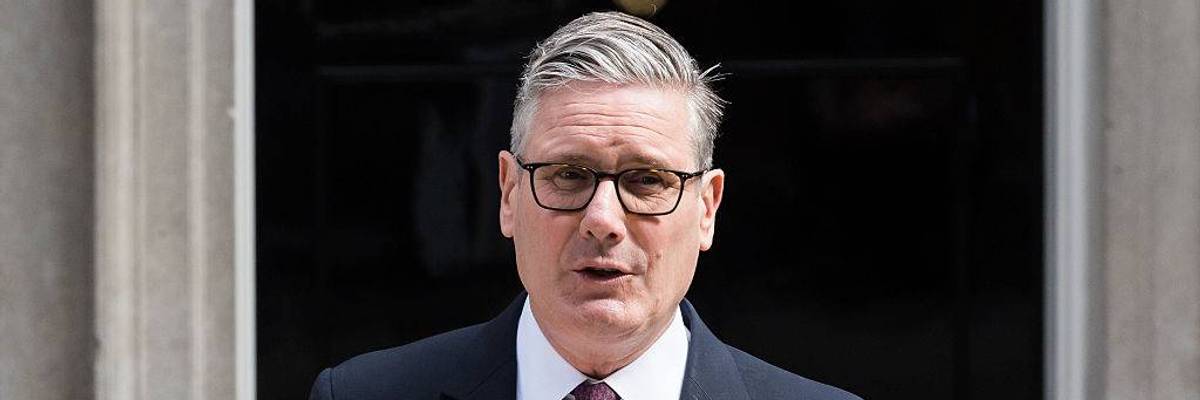


British Prime Minister Sir Keir Starmer gives a speech outside 10 Downing Street announcing his resignation in London, United Kingdom on June 22, 2026.
(Photo credit should read Wiktor Szymanowicz/Future Publishing via Getty Images)


Brad Reed
Jun 22, 2026
COMMON DREAMS

UK Prime Minister Keir Starmer announced his resignation on Monday, less than two years after his Labour party swept into power in a landslide election.

In his resignation speech, Starmer said that he was stepping down because members of his party did not feel he was the best choice to lead them into the next general election, with polls showing the far-right anti-immigration Reform party currently on track to receive the most votes.

Starmer also said that whomever is chosen as his successor “will inherit a Britain that is far stronger and fairer than the one I inherited two years ago, better prepared for the challenges ahead and better able to ensure the Labour party secures a second term in office.”

Starmer’s progressive critics disputed this characterization of his governance, which they said has done little more than legitimize the far right.

Specifically, critics pointed to the Labour government’s continued support of Israel in its genocidal assault on Gaza, its decision to proscribe Palestine Action as a terrorist group, and its efforts to court far-right voters by restricting immigration as some of its most destructive actions.

Former Labour leader Jeremy Corbyn said that Starmer had wasted the large majority that Labour had won and had done little if anything to improve the lives of the UK working class.

“Keir Starmer could have ended child poverty, homelessness and the grotesque levels of inequality in this country,” Corbyn wrote. “Instead, he abandoned those in need, destroyed our civil liberties, and facilitated genocide in Gaza. That is how this prime minister will be remembered—and that is the legacy of moral and political bankruptcy he leaves behind.”

Corbyn added that “getting rid of Keir Starmer is not enough,” as “we need to get rid of the politics he represents: corporate greed, anti-migrant rhetoric, and endless war.”

Member of Parliament Zarah Sultana, a former Labour MP who has since joined Corbyn’s Your party, noted after watching the prime minister’s speech that “the most emotion Keir Starmer has shown is over losing his job, not enabling the genocide of the Palestinian people.”

“Good riddance,” Sultana said. “His next stop should be The Hague.”

Zack Polanski, leader of the Green party, predicted that Starmer’s premiership would be remembered entirely negatively.

“Bills up. Wages too low,” Polanski wrote, summarizing life in the UK under Starmer’s leadership. “Record profits for oil and gas. Fifty richest families with more wealth than 50% of population. Shit in our rivers. Pensioners jailed for protesting. Migrants thrown under the bus. Supporting a genocide. That’s Starmer’s legacy.”

Journalist Owen Jones delivered a similarly scathing assessment.

“Keir Starmer lied through his teeth to become Labour leader,” Jones wrote. “He justified Israeli war crimes, arrested opponents of genocide, attacked pensioners, disabled people, and migrants, pocketed freebies, crushed dissent, and threw others under the bus to save himself. History damns him.”

Economist Yanis Varoufakis delivered a lengthy rundown of Starmer’s failures as prime minister, arguing he “was not merely a disappointment” but “a mendacious figure of ethical decrepitude, a man who won the Labour party leadership based on promises that he jettisoned five seconds after winning.”

“History will remember Mr. Starmer as a man without conviction,” Varoufakis wrote, “a prime minister who offers not a shred of honesty, but merely the cruel illusion of change. He is ethically decrepit because he had chosen, consciously, to abandon principle for power. And for that, history will indict him. Good riddance, I say.”

Starmer Leaves Behind ‘Legacy of Moral and Political Bankruptcy’

Ana Vračar |

British Prime Minister Keir Starmer resigned on Monday amid widespread discontent with his policies and mounting calls for him to step down.


Britain could have a new Prime Minister as early as mid-July after Keir Starmer announced his resignation on Monday, June 22. The announcement came amid widespread discontent with Starmer’s policies and mounting calls for him to step down. Newly elected parliamentarian Andy Burnham, former mayor of Greater Manchester, is widely expected to replace Starmer as both prime minister and Labour Party leader.

Left and progressive critics have denounced the Starmer administration for failing to address working-class concerns and endorsing Europe’s regional military buildup. Beyond economic policy, they have also emphasized Starmer’s support for Israel throughout the Gaza genocide – including his government’s refusal to implement an arms embargo on Israel and their crackdown on the Palestine solidarity movement and civil rights in general.

“Keir Starmer could have ended child poverty, homelessness and the grotesque levels of inequality in this country,” Your Party’s Jeremy Corbyn – whom Starmer helped oust from the Labour Party – wrote in reaction. “Instead, he abandoned those in need, destroyed our civil liberties and facilitated genocide in Gaza. That is how this Prime Minister will be remembered – and that is the legacy of moral and political bankruptcy he leaves behind.”

Corbyn’s party colleague Zarah Sultana highlighted Starmer’s involvement in several high-level scandals that have shaken the Labour Party recently, including the appointment of Peter Mandelson as ambassador to the United States despite his close association with convicted sex offender Jeffrey Epstein. “A man who gave the top diplomatic job to the ‘best pal’ of a convicted pedophile, said Israel has the right to cut off water and electricity to Gaza, rolled out the red carpet for Israeli war criminals, and kept the weapons flowing to the Israeli military as it committed genocide,” Sultana wrote of Starmer.

“Ultimately, Starmer will go down as one of the most unpopular Prime Ministers in British history,” the Peace & Justice Project echoed. “In less than two years, he has gone from a historic landslide to a Labour government on the brink of political extinction.”

Over the past two years, Starmer’s cabinet has also walked back many pledges from the 2024 campaign, cutting welfare, continuing the privatization of health services, and failing to take decisive action on the cost-of-living crisis. When progress was made – such as scrapping the two-child benefit cap – it only happened under intense pressure from both Labour members and the public.

In the context of economic policy, left-wing analysts point to Starmer’s continuation of austerity-driven policies previously advanced by Conservative governments. “Starmer and his Chancellor are playing the same tired austerity game while enabling and empowering the Finance Curse perpetuated by the City of London, throwing in for good measure cuts in international aid to fund a military spending trickle under the guise of a ‘Strategic Defense Review’,” wrote former Greek finance minister Yanis Varoufakis. “It is the same old doctrine: austerity for the masses, socialism for the financiers and the arms dealers.”

As a result, trade unions that have backed Labour for decades have recently expressed extreme discontent, signaling they might cut ties with the party and consider backing others as a more progressive alternative to the far-right Reform and other right-wing options.

Looking ahead, several trade union leaders emphasized that the new Prime Minister must honor promises to bring services like transport and water into public hands and oppose anti-migrant and racist rhetoric.

“The next Prime Minister has an opportunity to break with tinkering around the edges and deliver a complete transformation of this country, permanently shifting wealth and power to working class people,” stated Andrea Egan, head of the public services union UNISON. “Schools, hospitals, councils and transport – and the public service heroes working in them, keeping our country running – must be the fiscal priority, not the military and foreign wars.”

“Whoever replaces Keir Starmer needs to be clear that the status quo has to change,” said Fire Brigades Union leader Steve Wright. “The reason we find ourselves with yet another PM standing down is that, like May, Johnson, Truss and Sunak before him, Starmer failed to break with the perceived wisdom of attacking public services, failing to tackle wealth inequality, whilst letting privatized public utilities rip off the people of this country. A new Labour leader needs to learn that lesson and learn it fast.”

Courtesy: Breakthrough News


As Deadly Heatwave Scorches Europe, Fossil Fuel Giants ‘Have Blood on Their Hands’

“Stop fossil fuel giants from turning up the heat on our planet—and make them pay for the damage they are causing,” one campaigner told lawmakers.


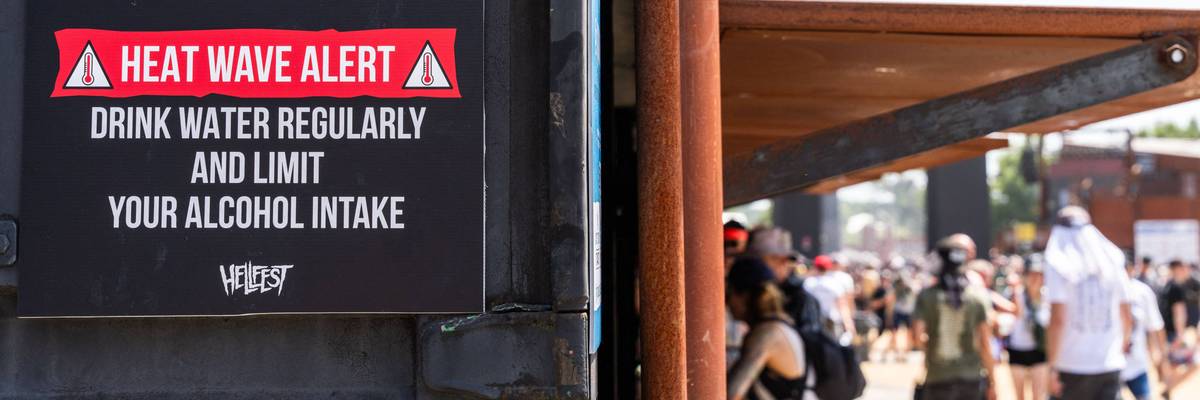
Heatwave alert posters at a festival site ask people to drink water regularly and limit their alcohol intake in Clisson, Loire-Atlantique, France on June 21, 2026.
(Photo by Jimmy Beunardeau/Hans Lucas/AFP via Getty Images)


Jake Johnson
Jun 23, 2026
COMMON DREAMS

Germany, Switzerland, France, Spain, Belgium, and other European countries were under red-alert warnings on Tuesday as an alarmingly early heatwave continued to scorch the continent, underscoring the threat posed by the fossil fuel-driven climate crisis.

Météo-France, the country’s official meteorological administration, said Tuesday that “further record-breaking temperatures are expected, including some that could surpass all previous records, regardless of the time of year,” as “sunshine continues to dominate across France, maintaining oppressive and exhausting heat throughout the country.” In recent days, France has recorded dozens of deaths linked to the extreme temperatures, including two were children who died in a hot car and 40 people who drowned seeking relief from the heat.

“Heat is hurting children across Europe,” Matilde Angeltveit, senior adviser and global climate advocacy lead at Save the Children, said Tuesday. “It affects their health and it is disrupting their education and the impact can sometimes be long term. This should be a joyous time as many children across Europe wrap up the school year, but for many it is not.”

Europe’s Copernicus Climate Change Service said that while the ongoing heatwave is “remarkable for occurring so early in the year, this event is consistent with Europe’s rapid warming and with the increasing frequency and intensity of heatwaves already observed in summer.”

“Europe is the fastest-warming continent, with temperatures rising by approximately 0.56°C per decade since the mid-1990s, more than double the global average,” Copernicus noted.


Reuters observed Tuesday that Europe “was the continent furthest above its historic temperature norm on Monday.”

“Heatwaves are no longer freak weather anomalies. They are now a recurring crisis inflicting suffering, claiming lives and fracturing our health systems and infrastructure,” said Hans Kluge, European regional director for the World Health Organization, which estimates that extreme heat has killed more than 200,000 people across Europe over the past four years.

Campaigners said the current heatwave marks the latest evidence of governments’ failure to rein in the fossil fuel industry, which has raked in massive profits this year thanks to the US-Israeli war on Iran.

“This isn’t a natural disaster,” said Aaron Regunberg, director of the Climate Accountability Project at the US-based advocacy group Public Citizen, which declared in response to the European heatwave that oil giants “have blood on their hands.”

“The fossil fuel industry’s pollution and decades of deception about the impact of burning fossil fuels has spurred this extreme heat, which has already killed multiple people,” said Regunberg. “Decades ago, scientists at Exxon were discussing with other oil companies research connecting climate change with ‘suffering and death due to thermal extremes.’ These companies knew of evidence that their conduct would cause these harms, and orchestrated campaigns of climate denial to undermine that evidence. They should be held accountable.”

Areeba Hamid, the co-executive director of Greenpeace UK, said political leaders “need to stop winging it on extreme weather and start treating it as the security and public health challenge it is.”

“When classrooms become ovens, care homes overheat, transport starts to buckle and workers are forced to toil in dangerous temperatures, it’s clear the country isn’t ready,” said Hamid. “Adaptation alone won’t be enough. Ministers must also stop fossil fuel giants from turning up the heat on our planet—and make them pay for the damage they are causing.”
UN Chief: Tax Big Oil’s Windfall Profits and Power AI Data Centers With Renewable Energy

“The companies driving climate chaos cannot continue profiting from the destruction while vulnerable countries struggle.”


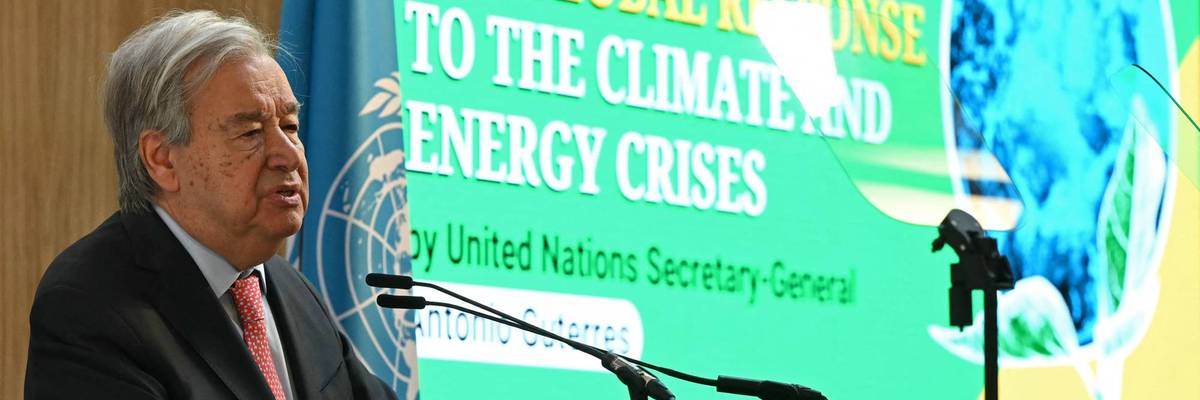
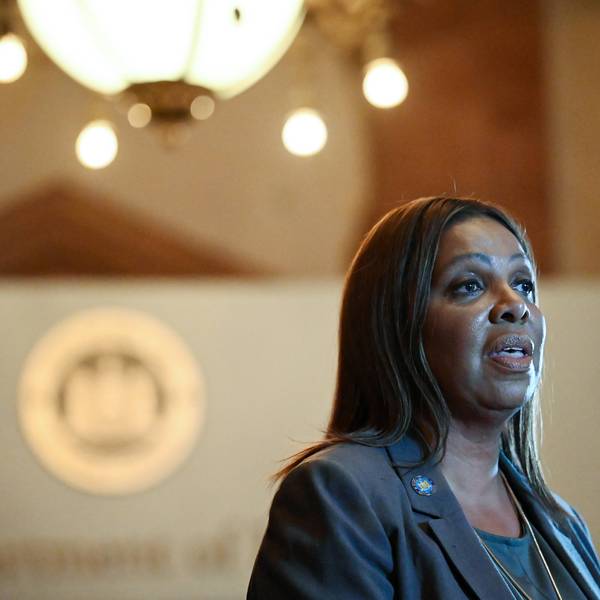
United Nations Secretary-General António Guterres delivers a speech during the Climate Innovation Forum, part of London Climate Action Week, at the Guildhall on June 23, 2026.
(Photo by Justin Tallis/AFP via Getty Images)

Jessica Corbett
Jun 24, 2026
COMMON DREAMS

As world leaders face mounting pressure to tax the windfall profits of fossil fuel giants that are wrecking the planet, United Nations António Guterres pushed for such policies in a pair of speeches at London Climate Action Week, arguing that “polluters must pay.”

Since assuming his post nearly a decade ago, the UN chief has repeatedly sounded the alarm about the fossil fuel-driven climate emergency and demanded that rich countries and companies responsible for the crisis contribute financially to adaptation and mitigation efforts, particularly in the Global South.

Just months away from the end of his term, Guterres on Tuesday highlighted the latest warnings from the World Meteorological Organization (WMO) and that “climate disasters are becoming more frequent, more destructive, and more costly.” He also flagged key tipping points—including melting ice sheets driving sea-level rise, shifts in conditions of the Amazon rainforest, and the weakening of major ocean circulation systems.

“Here in London—the city of Dickens—it is clear that our world is facing a Tale of Two Crises,” he said. “A climate crisis pushing us deeper toward higher temperatures and closer to catastrophic tipping points. And an energy crisis exposing the folly of a world hooked on hydrocarbons.”

“On the surface, these crises may seem separate. But they share the same destructive origin: fossil fuels,” he continued. “And they demand the same answer: a fast, fair transition to clean energy—and a surge in adaptation, resilience, and climate justice for those already facing climate harm.”


The UN leader stressed that “renewables are the cheapest, fastest, and most scalable source of new electricity in most of the world.”

“Since 2010, the cost of solar has plummeted by almost 90%, onshore wind by more than 70%, and battery storage by 95%,” he pointed out. “More than 90% of new renewable power added globally is already cheaper than the lowest-cost fossil fuel alternatives.”

While outlining several essential steps for ending fossil fuel dependence, Guterres issued various calls, such as urging “far greater urgency” to limit any overshoot of the Paris Agreement’s 1.5°C temperature goal for this century, and action in response to the exploding energy demands from artificial intelligence data centers.

Data centers have been met with fierce pushback from communities around the world concerned about water, land, and climate impacts. Guterres said that “by 2030, they could use more power than all but five countries—and enough water to meet the basic needs of all 1.3 billion residents of sub‑Saharan Africa for an entire year.”

He proposed the AI Environmental Transparency Initiative, “calling on every major AI company to measure and publicly disclose the full environmental impact of its systems—carbon, water, and land footprints—and to commit to power every data center with renewable energy by 2030.”

“No more hidden costs. No more shifting the burden onto those least able to bear it,” explained Guterres. “It is time to come clean. If AI is to help build a better future, it must be honest about what it costs us now.”

As data centers are sucking up massive amounts of power, he acknowledged that “families feeling the strain with higher bills, greater uncertainty, a sense that the system is not working for them—while fossil fuel giants continue to reap extraordinary profits.”

“The eight largest fossil fuel companies reported pocketing an extra $6.5 billion in the first quarter of this year alone—and that only includes one month of the Middle East crisis, as oil prices continued to climb and profits to rise,” Guterres said.

Without directly mentioning how the US-Israeli war on Iran—which Guterres has criticized—has driven up oil prices around the world, the UN leader said that “these are windfall gains born of pain—of instability, hardship and dependence. I urge governments to tax them.”

“Let me conclude where I began—with Dickens,” he said. “For the climate agenda, this is indeed the best of times and the worst of times. The worst—because climate impacts are intensifying, tipping points are looming, and the energy crisis has exposed the deep risks of dependence on fossil fuels.”

“But also the best—because the renewables revolution is well underway,” he added. “A revolution of clean power, electrification, falling costs, rising ambition—and vast opportunity.”

Following his special address on Tuesday, Guterres spoke Wednesday at the Climate & Development Financial Forum, where he emphasized that “the countries facing the greatest climate impacts are those who contributed least to causing them.”

In addition to arguing that the international community has to “recognize that climate risk is economic risk,” “global financial systems must recognize the value of resilience,” and “we need better preparation before disasters strike,” the UN chief spotlighted the necessity of closing “the finance gap” in terms of adaptation.

He called for developed countries to triple adaptation finance, replenish multilateral climate funds, and prioritize grant-based and predictable finance, and for multilateral development banks to “use their expanded lending capacity to aggressively scale up investment in resilience.”

He also reiterated his call for governments “to tax windfall profits from fossil fuel companies to help finance adaptation and climate related losses and damages,” declaring that “the companies driving climate chaos cannot continue profiting from the destruction while vulnerable countries struggle.”

As Trump Discovers Gas Price Gouging, Democrats Offer a Solution: Tax Big Oil

“Mr. President: I have a windfall excess profits bill you could support,” said one Democratic senator.


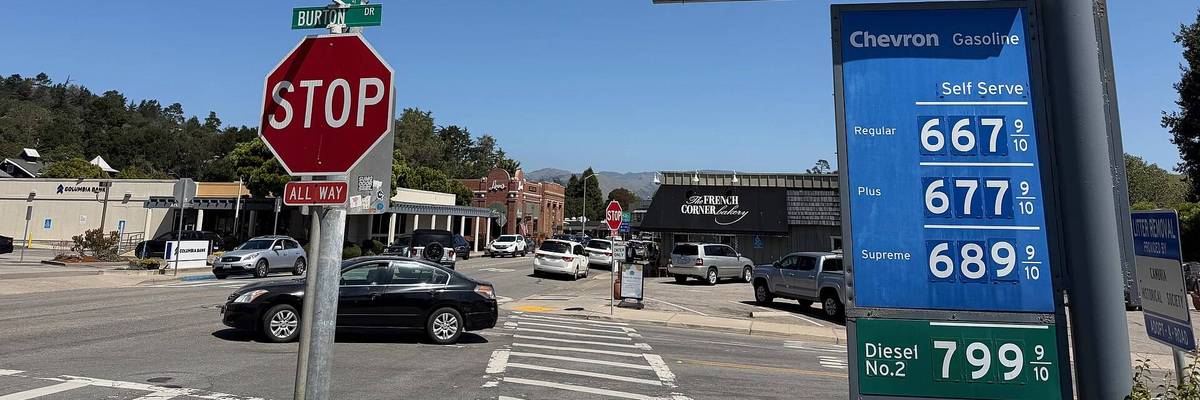
Gasoline prices starting at $6.67 per gallon and $7.99 per gallon of diesel are advertised at a Chevron station in Cambria, California on April 6, 2026 amid US President Donald Trump’s illegal war of choice on Iran.
(Photo: daveynin/flickr/cc)


Brett Wilkins
Jun 24, 2026
COMMON DREAMS

President Donald Trump said Tuesday that he has directed the US Department of Justice to investigate fossil fuel companies for not lowering gasoline prices as the cost of oil declines amid the prospect of an end to the Iran War.

“The big Oil Companies are not dropping their price at the pump commensurate with the sharply lower prices they are paying for Oil. Those prices are dropping like a rock! In other words, customers are being ‘gouged,’” Trump said on his Truth Social network.

“I have instructed the DOJ to immediately start looking into this,” he added. “Gasoline prices better start going down a lot faster than what I’m seeing!”

While benchmark West Texas Intermediate and Brent Crude oil prices have fallen to their lowest levels since Trump launched the illegal US-Israeli war of choice on Iran on February 28, the average price for a gallon of unleaded gasoline in the United States was $3.93 per gallon on Wednesday, around one-third higher than it was the day before the war started but down from a high of $4.52 a month ago, according to the American Automobile Association.

“The price of fuel is not only a national security issue, it impacts the wallet of every American,” an unnamed Trump administration official told ABC News on Wednesday following the president’s post. “We will always commit to ensuring affordability in this nation.”

Responding to Trump’s post, US Sen. Sheldon Whitehouse (D-RI) noted on social media that he has a solution for Big Oil price gouging.


In March, Whitehouse and Rep. Ro Khanna (D-Calif.) reintroduced the Big Oil Windfall Profits Tax Act “to curb profiteering by oil companies and provide Americans relief at the gas pump.”

The legislation—which only applies to large oil companies—would impose a per-barrel tax “equal to 50% of the difference between the current price per barrel of oil and the average price per barrel last year, when big oil companies were already earning large profits.”

Democrats in both chambers of Congress have also called for the prosecution of corporations that use the war as a pretext for price gouging.

Polling has shown that Americans largely support a tax on Big Oil windfall profits, which, according to The Guardian, amounted to $23 billion in the first month of the war alone—or $30 million per hour.


Trump has been a staunch supporter of fossil fuel companies. While running for reelection on a “drill, baby, drill” energy platform, he reportedly promised Big Oil executives that he would eviscerate climate regulations enacted by the Biden administration if they gave $1 billion to his campaign.

Fossil fuel interests spent nearly $450 million during the 2024 election cycle on campaign contributions, lobbying, and efforts supporting Republican causes and candidates, including Trump.

As pump prices soared and Americans suffered amid Trump’s war, the president—who promised gas under $2 a gallon and no new warssaid that “when oil prices go up, we make a lot of money.”

Last week, the Institute on Taxation and Economic Policy estimated that Americans have paid nearly $54 billion extra for gas and fuel—more than $400 per household—than they would have if the war never happened.

‘No Immunity for Big Oil’: Dem Leaders Urged to Block GOP Gift to Fossil Fuel Industry

“If we do not also protect Americans’ right to hold bad actors accountable in court, we will be handing Big Oil a get-out-of-jail-free card,” said a coalition of over 190 civil society groups.


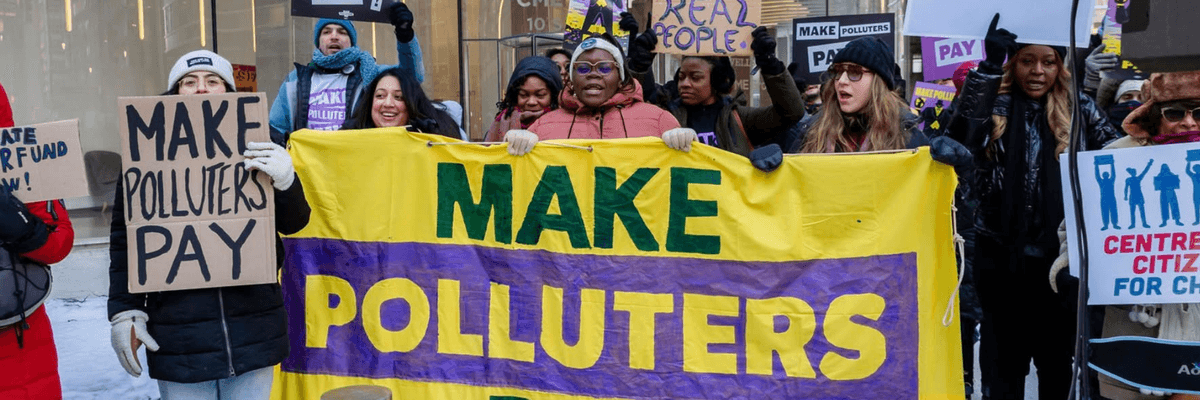
People rally outside BP’s offices in Chicago in January 2026 to demand fossil fuel polluters pay for the damages they cause.
(Photo by Vanessa Bly/Natural Resources Defense Council/Facebook)


Brett Wilkins
Jun 23, 2026
COMMON DREAMS


Nearly 200 civil society groups on Tuesday urged congressional Democrats to reject any legislation granting fossil fuel companies immunity from climate lawsuits, warning that such protections would block communities from pursuing accountability and compensation for climate-related damages.

“As communities across the country are taking Big Oil companies to court for lying to the public about the climate harms of their products, we are alarmed by reports that the fossil fuel industry is trying to secure a legal liability waiver that would block communities from attempts to hold them accountable,” the No Immunity for Big Oil coalition wrote in a letter to Senate Minority Leader Chuck Schumer (D-NY), House Minority Leader Hakeem Jeffries (D-NY), and Democratic lawmakers in both chambers.

“The American Petroleum Institute—the largest oil and gas trade association in the country and a defendant in several climate accountability lawsuits—has announced that stopping ‘abusive state climate lawsuits’ against fossil fuel companies is a top priority for the industry this year,” the letter continues.

“We’re urging you to protect our right to hold Big Oil accountable and reject any proposal that would shield fossil fuel companies from the legal and legislative efforts communities across the country are advancing to make polluters pay for the damage their climate lies and pollution [have] caused,” added the groups, which include the Sierra Club, Natural Resources Defense Council, Greenpeace USA, Union of Concerned Scientists, Center for Biological Diversity, and Amnesty International USA.

In April, Sen. Ted Cruz (R-Texas) and Rep. Harriet Hageman (R-Wyo.) introduced companion versions of the Stop Climate Shakedowns Act of 2026, which would “prohibit liability against those engaged in the mining, extraction, production, refinement, transportation, distribution, marketing, manufacture, or sale of energy for damages or injunctive or other relief from the use of their products, and for other purposes.”

Hageman’s office explained at the time that the legislation aims “to protect American energy from leftist legal crusades punishing lawful activity.”

At the state level, there has been a coordinated push by Republican-controlled legislatures to shield fossil fuel companies from climate-related lawsuits. Earlier this year, Utah became the first state to pass a law “all but shutting down communities’ ability to hold gas-emitting polluters responsible for harms caused by their bad actions,” according to law professor and critic Wes Henricksen.

Numerous Republican-controlled state legislatures are following suit, with similar legislation in various stages of advancement.

An investigation published in April by ProPublica’s Abrahm Lustgarten found that “most of these bills are part of a coordinated effort, orchestrated by a constellation of groups that share staff or have funding ties to the prominent conservative activist Leonard Leo, who is credited with placing conservative justices on the US Supreme Court.”

“These groups have drafted state legislation, planned its dissemination, and engaged a well-connected lobbying firm to get them signed into law,” Lustgarten wrote. “The effort is unfolding as courts are weighing more than 30 significant lawsuits by states, counties, and municipalities accusing fossil fuel companies of misrepresenting the risks their products posed to consumers and seeking to recoup the costs of disasters and other climate impacts like wildfire losses or coastal flooding that their products helped cause.”

“A goal of the legislation is to block these cases from going forward and prevent new ones from being filed,” he added.

Responding to an effort to establish a state program that could collect as much as $50 billion from fossil fuel companies responsible for climate-wrecking greenhouse gas emissions, New Jersey state Rep. Dawn Fantasia (R-24) asked Tuesday on social media, “Since when do we get to retroactively tax oil companies for decades of lawful, heavily-regulated activity?”

But that’s precisely what the 1998 Master Settlement Agreement did, forcing tobacco companies pay states more than $200 billion to compensate for past public health and medical costs caused by smoking-related harms. Like Big Tobacco before it, the fossil fuel industry has been accused of downplaying and obscuring evidence of climate and health harms from its products while working to stymie regulation and skirt legal and financial accountability.

Sixteen Republican state attorneys general are also pushing a liability shield for Big Oil modeled on the Protection of Lawful Commerce in Arms Act, legislation signed by former President George W. Bush that grants gun manufacturers and dealers legal immunity from civil litigation.

As the No Immunity for Big Oil letter notes:
The mounting threat of climate change is being felt first-hand by our communities as worsening floods, storms, and other extreme weather events leave destruction in their wake, saddling everyday Americans and local governments with skyrocketing costs to recover, respond, and adapt to the growing crisis. The record-breaking extreme weather events walloping our communities with increasing frequency and intensity are a result of fossil fuel pollution enabled for decades by Big Oil companies and their coordinated campaign of climate deception. Oil and gas companies have known for decades that their products posed “potentially catastrophic” risk to the climate—but instead of disclosing this knowledge, they chose to run a historic and ongoing campaign to deceive the public, protect their profits, and delay our transition to cleaner and cheaper energy.

“There are many ongoing fights to protect justice, democracy, and fundamental rights that demand your attention—and we thank you for fighting to keep our communities’ rights intact,” the letter concludes. “If we do not also protect Americans’ right to hold bad actors accountable in court, we will be handing Big Oil a get-out-of-jail-free card.”

The No Immunity for Big Oil coalition’s letter comes as 10 Democratic state governors are also calling on congressional leaders to “reject federal legislation that would grant sweeping legal protections to fossil fuel companies and limit the authority of states and local governments to enforce their own laws.”

“No industry should receive a blanket exemption from accountability under the law,” said Illinois Gov. JB Pritzker. “States have the right to protect their residents, enforce their laws, and seek justice when communities are harmed.”

“This proposal before Congress would undermine those principles and set a dangerous precedent by allowing one industry to avoid legal scrutiny,” Pritzker added, referring to the Stop Climate Shakedowns Act. “I urge Congress to reject this proposal and stand with states, taxpayers, and the rule of law—not special protections for powerful corporations.”

‘Good News for Clean Air’ as Court Rejects Trump EPA Bid to Ditch Coal Plant Soot Rule

“The court’s rejection of the Trump administration’s attempt to eliminate our national health standards for soot will mean healthier, longer lives for people across the country,” said one advocate.


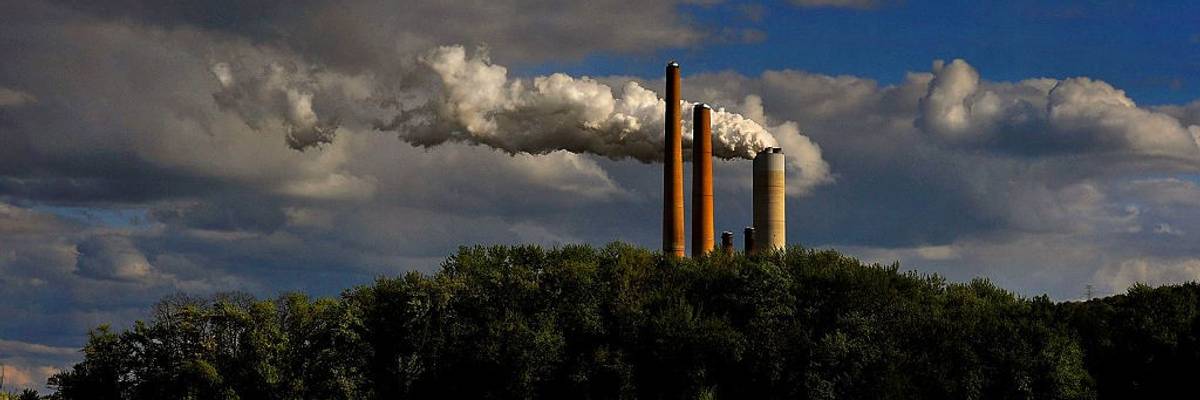
The Cardinal Power Station, a coal-fired energy plant in Brilliant, Ohio, is shown in this undated photo.
(Photo by Michael S. Williamson/The Washington Post via Getty Images)

Brett Wilkins
Jun 26, 2026
COMMON DREAMS

A federal appeals court on Friday rejected the US Environmental Protection Agency’s attempt to scrap a Biden-era rule tightening limits on harmful soot pollution spewed from coal-fired power plants and other sources.

In a unanimous ruling, a three-judge panel of the US Court of Appeals for the District of Columbia Circuit dealt a blow to President Donald Trump’s deregulatory agenda by leaving intact a national soot standard enacted in 2024 that lowers the amount of fine particulate matter from power plants, factories, and vehicles from 12 to 9 micrograms per cubic meter.


State AGs Sue Over Trump ‘Trying to Kill Clean Energy Projects and Destroy Good-Paying Jobs’

“Soot, made up of tiny toxic particles that lodge deep in the lungs, results in severe health harms, including premature death, and comes from sources like vehicle exhaust pipes, power plants, and factories,” the legal advocacy group Earthjustice explained.

The Environmental Protection Agency (EPA) under Administrator Lee Zeldin last year asked the appellate court to invalidate the soot rule, claiming that the Biden administration exceeded its authority and failed to take into account the economic cost of implementing the policy.

“Clean air is not a luxury. We are thrilled these vital air quality standards have been upheld by a federal court,” said Patrice Simms, vice president of Healthy Communities at Earthjustice. “The 2024 soot standard is a critical advancement for public health, projected to save thousands of lives every year. Lee Zeldin’s EPA must stop catering to polluters and must instead fulfill its mission to protect public health. The time for implementing the 2024 soot standard is now.”

Clean Air Task Force senior director of legal advocacy Shaun Goho also welcomed the ruling, saying: “Fine particulate matter standards provide critical public health protections. The court correctly rejected EPA’s about-face on the need for a stronger standard.”

Katie Huffing, executive director of the Alliance of Nurses for Healthy Environments, called Friday’s decision “a win for public health.”

“Every day in practice, nurses witness and treat conditions made worse by soot pollution,” she said. “From asthma exacerbations and chronic obstructive pulmonary disease to heart disease and preterm birth, nurses see the real-world health implications of toxic air pollution.”

“The science shows stronger limits to reduce dangerous soot pollution provide significant health benefits for Americans, especially for those most vulnerable and those exposed to higher levels of particulate matter pollution,” Huffing added. “We now urge EPA to fully implement the strengthened standard to ensure those health benefits are realized.”

Noha Haggag, senior attorney for the Environmental Defense Fund, said that “today’s federal court decision is good news for clean air in America and for the millions of people harmed by deadly soot.”

“Soot can cause asthma attacks, lung cancer, and premature deaths,” Haggag added. “The court’s rejection of the Trump administration’s attempt to eliminate our national health standards for soot will mean healthier, longer lives for people across the country.”


Good Climate Policy Is Also Affordability Policy

As the cost of clean energy keeps plummeting, it gets more and more obvious how much money we waste, and how much financial risk we incur, by staying with fossil fuel.


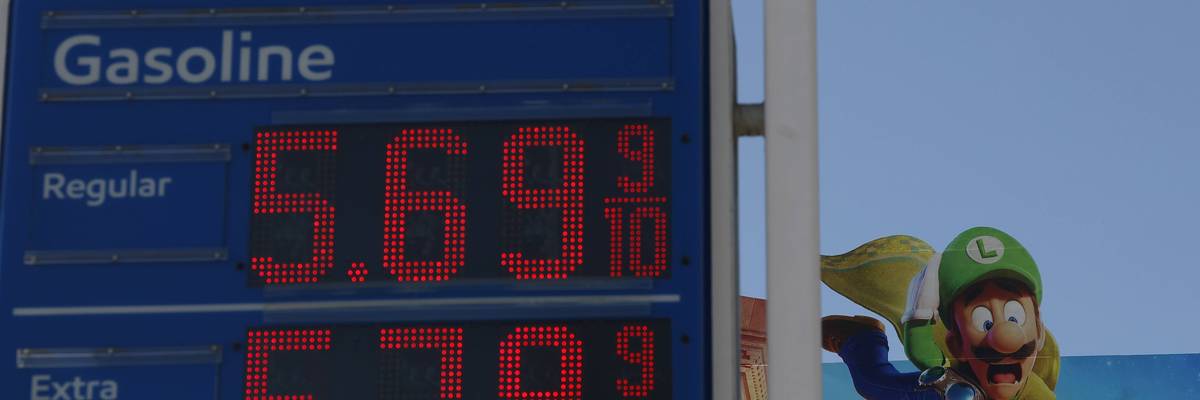
Gas prices over $5 a gallon are displayed at a Mobil station on March 11, 2026 in Los Angeles, California.
(Photo by Justin Sullivan/Getty Images)

Bill Mckibben
Jun 26, 2026
The Crucial Years


Beginning next week, Australians across a huge swath of the continent will begin getting three free hours of electricity every afternoon—to charge their cars, runs their dishwashers, fill up a storage battery to run the house at night. I’ve written about this before, so I won’t belabor it here, except to say that humans have spent the last 1.79 million years (according to new research last week) working hard for energy: spending time gathering firewood, spending time working to pay the power bill. Now, in one large part of the Earth, for one large part of the day, electricity will be too cheap to meter. You want some abundance? Here you go.

So it seems like a good time to dig in to the larger questions of energy, climate, pollution, and money—an interrelated set of issues, and one where the numbers are shifting quickly and dramatically almost every month. Here’s the bottom line, which I think is beginning to drive public policy almost every place except the US, where we have lots and lots of work to do: As the cost of clean energy keeps plummeting, it gets more and more obvious how much money we waste, and how much financial risk we incur, by staying with fossil fuel.

Let’s start first by talking about the climate crisis, and the ways it’s rapidly becoming an economic crisis. My old colleagues at 350.org have been publishing a series of quite brilliant reports on the subject in recent weeks. One, for instance, is on the insurance crisis, which is growing across the planet. This is from Risalat Khan and Kenny Stancil:
In the United States, homeowner insurance premiums increased by 29% from January 2021 to January 2026, and personal auto insurance rose nearly 25% over the same period. These mounting costs are among the biggest contributors to overall inflation.

France raised its mandatory natural catastrophe surcharge on property insurance from 12% to 20%, effective January 2025. In northern Australia, premiums climbed more than 130% in real terms between 2007 and 2022, a 6% growth year on year.

Across most low- and middle-income countries, insurance coverage is usually less than 10%, and sometimes far less, leaving uninsured communities and businesses to bear most of the risks and losses from climate disasters.

Somewhat karmically, a new report from risk analysts First Street finds that… data centers face much of this risk from extreme weather:
Approximately 54% of global data center capacity operates in markets facing elevated chronic heat or drought stress, while 79% is exposed to significant acute hazards such as flood, wind, or wildfire. For many markets, climate risk should now be considered part of the base case rather than a tail-risk scenario.\

But most of us only buy insurance once a year, and it’s such a depressing task that we try to forget about it immediately. Groceries are different, and as Nicole Pita points out, the link to climate change is pretty clear.

Droughts in the US Midwest and Canada destroyed harvests in 2022. Floods in India and South Asia pushed up rice prices in 2023 and 2025. The climate crisis is affecting crop production itself, making food harder to grow. The irony is that food systems produce one-third of global greenhouse gas emissions, making them both a victim and a driver of the crisis.

And it will get worse. Here’s a new report from the Autonomy Institute on what the climate crisis is doing to the cost of “Five a day” in the UK:
Heatwaves are projected to add around 11% to the price of the UK’s top 20 fruit and vegetables by 2035 and around 68% by 2050 under a high emissions scenario, on top of normal inflation. Imported tropical fruit such as melons, oranges, bananas, easy peelers, and grapes will rise 12% to 14% by 2035 and 80% to 93% by 2050 on these climate grounds alone.

• Compounded with estimated normal inflation, total average shelf prices of the overall basket of fruit and veg will reach upwards of 170% above today’s level by 2050.

• This means that climate-flation will be contributing 40% of total inflation across the basket of basic goods by 2035 and over 60% of it by 2050. Climate change will have gone from a junior contributor to the dominant driver of shelf-price inflation on fresh produce inside the working lifetime of someone in their 30s today.

(A note to the perplexed: “Easy peelers” turns out to be what Brits call mandarin oranges and clementines. I like it.)

Here’s how Emma Court and Kyle Kim summed it up in a comprehensive Bloomberg account:
Extreme weather also makes growing crops more expensive. For example, Del Monte Corp., which sold more than $4 billion of bananas, pineapples, avocados, and other food products last year, has been investing in measures to shield crops from rising temperatures and sun damage. This includes covering them with shade cloth and spraying them with a reflective layer of so-called plant sunscreen. The company is also paying more for cooling throughout its supply chain, including by requiring upgrades in fruit-processing plants in the Midwest that were originally designed for lower temperatures.

The effects of climate on pricing are difficult to capture, because they build gradually, says Hans Sauter, Del Monte’s chief sustainability officer. But lower yields, increasing disease threats, and higher costs can all contribute to more expensive produce. “This is part of our DNA. We have been dealing with climate events forever,” he says. “But these new circumstances are making it more expensive.”

Regions where temperatures are already warm will likely be the most exposed to climate inflation, in part because additional heat can more readily slash agricultural harvests. Among the worst-off are countries in Africa and South America, which also tend to have lower incomes, with less infrastructure, and fewer resources to guard against climate change.


But the fossil fuel that drives climate change raises costs in other ways too. The most obvious is their effect on public health. It’s hard, of course, to calculate this with precision, but the attempts leave us with staggering numbers: The Natural Resource Defense Council, five years ago, demonstrated that fossil fuel pollution was costing America $820 billion a year. (That’s nearly a Musk). The numbers elsewhere are much higher.

Sometimes, though, it’s easier to see them in reverse. A new study this month, described by Gary Fuller, finds that when London cut down sharply on urban air pollution with its congestion pricing zone, remarkable things followed:
Low emission and clean air zones attract controversy whenever they are proposed, but there is growing evidence that they work in improving air quality. The Bradford zone was followed by a reduction of about 25% in GP visits for heart and breathing problems and survey data shows that the central London zone was followed by a reduction in the likelihood of a person taking sick leave…

The researchers looked at emergency admissions to hospital, excluding cases such as accidents, burns, drug overdose, poisoning, or self-harm. For people living in the central London zone, admissions increased at 3% per year before the schemes started. After their launch this trend was altered, with a 3% reduction in annual trends for emergency admissions, including an 8% reduction for heart problems and a 6% reduction for breathing problems.


That adds up to real money. Not only that, but people can breathe, always a plus!

If you try to add all this up, you get some interesting numbers. As Kate Yoder reports:
“What’s striking is that already, households are bearing serious costs,” said Kimberly Clausing, a law professor at the University of California, Los Angeles. She co-authored a paper from earlier this year finding that families were paying between $400 and $900 more each year because of the effects of climate change, with the costs above $1,300 in the 10% hardest-hit counties, many of them found in Florida, Louisiana, Nebraska, Colorado, and California.


What’s more, people are figuring all this out:
Two-thirds of US voters agree that global warming is affecting the cost of living to some degree, according to new survey data from the Yale Program on Climate Change Communication, including most Democrats and moderate Republicans. Of those two-thirds, a majority of them said that climate change was driving up what they pay for groceries, utility bills, and home insurance.


And then there’s the sheer cost of energy itself—of the need to keep paying for coal and gas and oil while the far-cheaper sun and wind goes to waste. We’re stuck in a political moment when feckless Democratic politicians (paging Kathy Hochul) are making “affordability” their excuse for going along with Big Oil. But in fact one example after another is making it clear that, as Ray Wills writes, “what is making us poorer is not the move to clean energy—it is doing the transition slowly and badly. His examples are back in Australia:
The Australian Energy Market Commission’s latest Residential Electricity Price Trends work is blunt: Accelerating renewable generation, transmission, and battery storage is “essential” to keep electricity prices affordable over the next decade.

In scenarios where new wind, solar, and transmission arrive on schedule, household bills fall compared to today. When those projects are delayed, prices remain higher for longer because the system leans more heavily on expensive gas and unreliable old coal.

Independent modelling tells a similar story. Analysis for the Clean Energy Council shows that if Australia stalls the rollout of renewables, household bills in 2030 could be around 30% higher than on a timely transition path—roughly $449 a year extra for a typical household, and even more for small businesses.

Nexa Advisory’s work finds that transition delays that lock in more gas-fired generation could add about $115.7 billion to wholesale costs between now and 2050.


Individuals can and do figure out some of the ways to lower their own costs. Not surprisingly, the spike in gas prices for Americans during our farcical Iranian excursion convinced some to change their habits or their technology. Lydia DePillis looked at the numbers:
Americans are powerfully attached to their cars, and their spending at gasoline stations jumped 21% from February to May. But that ability to spend has limits. According to Dow Jones Energy, consumption was 6.1% lower in May from a year earlier. Some of that is a long-running trend owing to the increasing efficiency of passenger vehicles, said Denton Cinquegrana, the company’s chief oil analyst, and about half is probably a consumer response to higher prices.


But much of the real work needs to be done by governments: Nothing people can do by themselves will have much affect on the cost of food, healthcare, or energy. And when governments do their job well, the results can be amazing. I began with Australia and its free afternoon electricity; let’s close with Europe. As Jan Rosenow points out, the continent’s commitment to energy efficiency is paying off: It’s spending 29% less on energy than it would have if consumption had kept growing this century:
Importantly that is energy nobody had to generate, import, or pay for. It built up slowly, over 25 years, across 27 countries, in warmer buildings, more efficient factories, better appliances, the switch to LED lighting, and steadily more efficient transport. At any given price Europe now pays around a third less than it would have without those gains.

This shield holds whichever direction the next shock arrives from. If anything, the figure undersells the benefit, because it counts only the energy saved and not the power stations, pipelines, and grid connections nobody had to build. It is one of the most effective protection measures against future energy crisis: The energy not consumed cannot be withheld, weaponised, or made more expensive by a supplier you do not control.


As he points out, there’s vast room for expansion:
A heat pump in a well-insulated home on clean electricity cuts the energy the building needs, replaces the gas boiler, and runs on a grid that keeps getting cleaner. That single device also pulls the household out of the gas import chain for good, and as a side effect keeps it cooler through the sort of summer Europe now gets most years.


In the Netherlands, for instance, you can sign up for free clothes-washing, drying, and dishwashing between noon and 5:00 pm, part of a scheme from a company called CoolBlue.

People are quickly figuring all this out across much of the world. It remains for a savvy American politician to really lay out the case. But when she does the rewards will be high. “Free” would be a popular thing.


© 2022 Bill McKibben


Bill Mckibben
Bill McKibben is the Schumann Distinguished Scholar at Middlebury College and co-founder of 350.org and ThirdAct.org. His most recent book is "Falter: Has the Human Game Begun to Play Itself Out?." He also authored "The End of Nature," "Eaarth: Making a Life on a Tough New Planet," and "Deep Economy: The Wealth of Communities and the Durable Future."
Full Bio >
‘Setback for Alaska and Our Oceans’: GOP Governor Vetoes Ban on Single-Use Polystyrene Food Packaging in Alaska

“Products that we use for just a few minutes shouldn’t pollute our environment for hundreds of years,” said one critic.


Piece of polystyrene foam washed up on Shingle Beach, Shingle Street, Suffolk, England, UK.
(Photo by: Geography Photos/Universal Images Group via Getty Images)

Brad Reed
Jun 26, 2026
COMMON DREAMS

Critics are slamming Republican Alaska Gov. Mike Dunleavy for his Thursday veto of a bill that would have banned state agencies and restaurants from using single-use polystyrene foam food containers.

The legislation, which passed last month with bipartisan support and would have taken effect starting in January, was intended to stop the use of non-biodegradable polystyrene containers, whose usage has resulted in microplastics polluting Alaska’s waterways.

In justifying the veto, Dunleavy said that the bill would “create a short and unrealistic implementation timeline” and would “be especially difficult for businesses in rural Alaska, where shipping limitations, supply availability, and higher costs already make operations more expensive.”

In an interview with the Anchorage Daily News, Alaska House Speaker Bryce Edgmon (I-37) expressed frustration that Dunleavy has vetoed a number of measures this year that have had broad support, simply because they did not conform with his “far-right beliefs.”

“Every bill that he has vetoed thus far, in my view, served in a valid public purpose,” Edgmon explained. “It’s difficult to put so much work and so much public process and so much time and energy, and then, because they don’t meet the standards—whatever the standards are—they get canned.”

Environmental advocates criticized Dunleavy for the veto, with Christy Leavitt, senior campaign director at Oceana, calling it “a setback for Alaska and our oceans.”

“This veto undermines bipartisan action to reduce single-use plastic pollution at the source, and will only put Alaska’s communities, wildlife, and waters in further jeopardy,” said Leavitt. “We applaud the efforts of the state legislature and look forward to working with lawmakers to pass this important bill in the future to phase out plastic foam foodware.”

Dyani Lezama, state director at Alaska Environment, said she was “incredibly disappointed that the governor vetoed this opportunity to make Alaska’s environment safer and cleaner.”

“Polystyrene foam is bad for our health, produces a huge amount of litter, and is incredibly hard to clean up,” Lezama emphasized. “Products that we use for just a few minutes shouldn’t pollute our environment for hundreds of years.”

Had Dunleavy not vetoed the legislation, Alaska would have become the thirteenth state to ban polystyrene foam containers, following Maryland, Maine, Vermont, New York, New Jersey, Colorado, Virginia, Washington, Delaware, Oregon, Rhode Island, and California.
Republicans got outplayed by Sesame Street's Elmo — and critics won't let them forget it


"Sesame Street" characters in Langhorne, Pennsylvania, on May 7, 2017 (Ritu Manoj Jethani/Shutterstock.com)

June 21, 2026
ALTERNET

President Donald Trump and his supporters are trying to claim the “Sesame Street” puppet Elmo as one of their own — but online commenters are not allowing them to get away with it.

“The GOP has been faced with their anti-Elmo history after trying to welcome him into the MAGA fold,” reported The Daily Beast's Katie Francis on Sunday. The story began with Elmo declaring, regarding the ongoing World Cup soccer event, that “Elmo loves you, and Elmo loves you, and Elmo loves you, and Team USA, and everybody who’s playing." Yet Elmo then concluded, “Elmo just wants to set the record straight... GO TEAM USA!”

He also clarified, “Just to be clear, Elmo wants Team USA to win, okay? But Elmo loves everybody!”

Notably, the Muppet predicted that his preference for Team USA might be exploited when he asked viewers to not “make this a thing.” Yet despite this warning, House Republicans quickly posted the video with the comment that "Elmo is a certified PATRIOT!”

They then added, “Meanwhile, Democrats are rooting for foreigners...”

What the House Republicans neglected to acknowledge was that Trump and his supporters have fiercely criticized “Sesame Street” and the TV station PBS for its supposedly “woke” culture. Social media users on X quickly reminded them of these facts.

“You clowns literally defunded elmo,” one person posted.

“You a-----es voted to defund PBS and called Sesame Street woke,” another wrote. “You couldn’t be more hypocritical, loud, wrong, or clueless.”

Trump’s vendetta against “Sesame Street” may be personal as well as ideological. Last year The Daily Beast reported that after the president signed an executive order to immediately halt all federal funding to PBS, “almost immediately, people began to suspect that Trump’s vendetta against the network wasn’t because of its 'woke programming.' Instead, it’s all to do with a certain puppet show that has been trolling the man since the ’80s.”

Ronald Grump was a periodic but long-running spoof of the then-hotel magnate that began in the 1980s, as The Daily Beast reported. With song lyrics like “he’s got so much trash it spills out of his can,” locations like “Grump Tower” and occupations like “famous Grouch builder,” Ronald Grump was an undisputed antagonist who tried to do nefarious things like force Oscar the Grouch to give up his garbage can (where he lives) and pave over all of “Sesame Street” so he can turn it into “Grump World.”

After Trump became a reality TV star, the spoofing continued. In a later episode, “Sesame Street” mocked Trump’s NBC reality show “The Apprentice.”

Friday, June 26, 2026


EU Commission launches antitrust investigation into Sanofi

26.06.2026, dpa

Photo: Eric Piermont/AFP/dpa

The European Commission has launched an investigation into whether the pharmaceutical company Sanofi has breached European Union antitrust law by launching a campaign against a rival vaccine.

The probe's aim is to assess whether the French pharmaceutical company presented its own flu vaccine as superior to the competition, using false or misleading claims, and thereby exploiting its market power.

Sanofi denies the allegations.

According to the European Commission, Sanofi markets a boosted flu vaccine under the brand name "Efluelda," which was specifically developed to offer people over the age of 60 better protection against influenza.

The product competes with the boosted flu vaccine marketed by CSL Seqirus under the brand name "Fluad."

The commission has concerns that Sanofi ran a misleading communication campaign, aimed primarily at health care professionals in Germany and France, in which it claimed that the evidence base for Fluad was weaker than that for Efluelda.

This contradicted the findings of both the national vaccination committees in Germany and France and the European Centre for Disease Prevention and Control (ECDC).

A spokesman for Sanofi said that the company was convinced it had always acted in accordance with all applicable laws and regulations and would continue to do so.

The company takes the matter very seriously and is cooperating fully with the European Commission throughout the proceedings, he said.

The commission had raided the group’s premises in Germany and France last September in connection with the allegations.