Saturday, June 27, 2026

‘I Don’t Think It Was Us,’ Trump Says of Iran School Massacre as Cover-Up Fears Grow

“It’s been four months since the deadliest US airstrike against civilians in recent memory, yet we are no closer to getting answers,” said Amnesty International USA.



US President Donald Trump attend a meeting in the Oval Office of the White House on June 24, 2026 in Washington, DC.
(Photo by Andrew Harnik/Getty Images)

Jake Johnson
Jun 25, 2026
COMMON DREAMS

President Donald Trump said Wednesday that he doesn’t believe the US military was responsible for the missile strike that massacred more than 100 schoolchildren in Iran in late February, contradicting the Pentagon’s reported conclusions, the findings of outside analysts, and physical evidence from the scene.

“I don’t think it was us,” Trump told reporters gathered in the Oval Office. The president did not offer a shred of evidence to support his view and said he has not seen the Pentagon’s findings, which have reportedly been finalized amid mounting fears of a cover-up attempt.

“It’s horrible what happened, but there were missiles flying all over the place,” Trump claimed. The Pentagon’s preliminary findings indicate that the US struck the elementary school in Minab, Iran with a Tomahawk missile while attacking “an adjacent Iranian base of which the school building was formerly a part,” The New York Times reported in March.

Pentagon Secretary Pete Hegseth told reporters in the Oval Office on Wednesday that “we’ve taken the investigation very seriously” and that the findings would be released at the “appropriate time.”

Watch:


Trump’s latest remarks came days after he brushed aside persistent concerns about the deadly strike, saying the incident occurred “a long time ago” and that “nobody did that on purpose.”

“Mistakes are made,” added Trump, who initially tried to blame Iran for the Minab massacre. “War is nasty. But I know it’s under investigation.”

Amnesty International USA lamented in a statement Thursday that “it’s been four months since the deadliest US airstrike against civilians in recent memory, yet we are no closer to getting answers from US authorities about why this happened and who was responsible.”

“The Pentagon must urgently finish its investigation and publicly release the findings. The investigation must consider the military’s intelligence gathering and assessments, as well as targeting decisions, precautions taken, and its use of artificial intelligence. Where sufficient evidence exists, competent authorities must prosecute any person suspected of criminal responsibility,” said Amanda Klasing, the group’s national director for government relations and advocacy.

“Anything less,” she added, “would amount to a cover-up of a serious breach of international humanitarian law and a betrayal of the victims and survivors of this horrific attack.”

NBC News reported earlier this week that “there is growing concern in Congress and the Pentagon that the Trump administration will classify and shield” the results of its investigation from the public.

“Of course they are going to try to classify the report,” said Sen. Mark Kelly (D-Ariz.), who sits on committees with jurisdiction over the Pentagon.
Fox News turns on defense secretary as Trump biographer warns of plot for 2028 'auto-coup'


President Donald Trump, with Secretary of Defense Pete Hegseth at his side, looks on as he speaks to reporters aboard Air Force One on a flight from Dover, Delaware, to Miami, Florida, U.S., March 7, 2026. REUTERS/Kevin Lamarque

June 27, 2026
ALTERNET

A biographer of President Donald Trump is sounding the alarm about plans for a 2028 "auto-coup" being in progress, citing the widely criticized recent moves of his defense secretary, which have even caused his past colleagues at Fox News to turn against him.

On Friday, foreign policy reporter Laura Rozen took to X to react to a story from the U.S. military publication, Stars & Stripes, about the concern emerging in the Pentagon over Defense Secretary Pete Hegseth's leadership in light of the shocking early retirement of the well-regarded Gen. Christopher Donahue. Rozen noted that even Fox host Brian Kilmeade had spoken out in shock about the move. Hegseth famously worked as a co-host on Fox & Friends Weekend before his appointment by Trump.

"Huge loss for our country," Kilmeade wrote in a post cited by Rozen. "Like losing Tom Brady in prime of career."

"In January, Kilmeade visited USAREUR-AF (U.S. Army Europe and Africa) headquarters in Wiesbaden, where he did a segment on Donahue’s command and its efforts to develop new combat tactics that better use drones and artificial intelligence," Rozen wrote further in her post. "USAREUR-AF has been at the forefront of those efforts, with Donahue’s Eastern Flank Deterrence Line concept for NATO serving as a blueprint for how to manage networks, data and drones to get an edge. At one point during the visit, Kilmeade called President Donald Trump and introduced Donahue as his soldiers gathered around. ‘You’re doing a fantastic job. Your reputation is great,’ Trump said."

Difficulty responding to modern drone technologies and tactics has been cited as one of the U.S. military's major failings in the war with Iran, making Donahue's departure in this light all the more concerning.

In his own post to X, Seth Abramson, an attorney and outspoken critic of Trump, who has written several books about his life and career in politics, warned that something much darker was underway with Hegseth's recent trend of blocking promotions for certain military officers.

"Pete Hegseth is removing or blocking the promotions of all military officers who he has determined would not participate in an illegal pro-Trump self-coup (auto-coup) in 2028," Abramson argued. "You can believe me now or believe me in 2028. Either way, stop seeing what Hegseth is doing as random."

An "auto-coup" refers to a coup that is orchestrated by an existing official in order to stay in power against the will of outside forces, such as a president remaining in office despite losing reelection or being term-limited.


'Embarrassed to be an American': Larry David unleashes on Trump UFC 'travesty'


Larry David in Los Angeles, California, U.S., June 23, 2026. REUTERS/Arafat Barbakh

June 24, 2026
ALTERNET

Veteran television producer, writer and comedian Larry David, well-known for his work on the hit sitcom "Seinfeld" in the late 1980s and 1990s, has been a blistering critic of U.S. President Donald Trump. And now, he is speaking out against an event that Trump used to celebrate his 80th birthday on July 14: the widely publicized Ultimate Fighting Championship (UFC) event at the White House.

Variety asked David, now 78, to weigh in on the UFC gathering at 1600 Pennsylvania Avenue, and he didn't mince words.

David told Variety, "It was a travesty. What else can you say about it? It was embarrassing."


The former "Seinfeld" producer made it clear that he considered Trump's UFC event highly unpresidential.

"I was embarrassed to be an American," David bluntly told Variety during the interview.

David has a long resumé in U.S. television.

After working briefly on "Saturday Night Live" during the 1980s, the producer and writer went on to create the popular "Seinfeld" (starring Jerry Seinfeld) in 1989. And the show lasted almost a decade before concluding in 1998. David went on to star in another popular series, "Curb Your Enthusiasm," on HBO from 1999-2024.

David is a longtime supporter of liberal causes and the Democratic Party, vehemently criticizing Trump during the United States 2024 presidential election and continuing to criticize Trump after his return to the White House on January 20, 2025.

David was hardly alone in criticizing Trump's UFC event on July 14. Quite a few Democrats attacked it as unpresidential, and many Never Trump conservatives saw it as a metaphor for Trump's MAGA politics — which they view as style over substance and bad for the conservative movement.D avid has also been feuding with "Real Time" host Bill Maher, who is also a frequent critic of Trump.

After Maher had dinner with Trump inside the White House, David criticized the "Real Time" host for meeting with him. Maher countered, however, that he wasn't endorsing Trump's ideas — only trying to have some type of dialogue with a political figure he has major disagreements with.

Experts Fear Trump Has Turned Reflecting Pool Into a ‘Giant Duck Death Trap’

“Instead of letting this administration’s bizarre boondoggle keep killing innocent ducks, I hope the Fish and Wildlife Service steps in to do its job,” said one critic.


A duckling swims through algae in the Lincoln Memorial Reflecting Pool on June 18, 2026 in Washington, DC.
(Photo by Chip Somodevilla/Getty Images)


Brad Reed
Jun 24, 2026
COMMON DREAMS

President Donald Trump’s disastrous $14 million renovation of the Lincoln Memorial Reflecting Pool may be turning deadly for local wildlife.

Shortly after three ducks were discovered dead in or near the pool, The Washington Post spoke on Monday with animal experts who expressed concern that the waterfowl could have fallen ill due to either the assorted chemicals that have been dumped into the pool in recent weeks or the potentially toxic cyanobacteria that can be found in algae blooms.
RECOMMENDED...


‘Bad Day to Be a Duck’: Trump Reflecting Pool Disaster Continues With Hydrogen Peroxide Treatment


Trump’s Reflecting Pool Disaster Exposed as More Details Revealed on Firm That Won No-Bid Contract

A separate investigation published by the Post last week found that “algae levels spiked days after Trump’s renovation” of the pool was completed and reached their highest level in at least five years.

Additionally, multiple news outlets have documented blue material installed in the pool peeling off and floating to the surface of the water.

April Linton, president of City Wildlife, told the Post that she’s worried the ducks “could have had exposure to the Reflecting Pool,” which “could be something related to peeling paint or algae.”


The Center for Biological Diversity on Tuesday called on the US Fish and Wildlife Service to conduct an investigation to determine whether the president’s pricey pool renovation was responsible for the ducks’ passing.

The center also noted that, if someone is found to be responsible for the ducks’ deaths, they could be charged criminally under the Migratory Bird Treaty Act.

Tara Zuardo, senior campaigner at the Center for Biological Diversity, said that Trump’s pool renovations killing the ducks would match a pattern of actions that are “cruel, stupid, and selfish.”

“Wasting taxpayer money turning the reflecting pool into a giant duck death trap just in time for America’s 250th birthday party is as Trump as it gets,” Zuardo said. “Instead of letting this administration’s bizarre boondoggle keep killing innocent ducks, I hope the Fish and Wildlife Service steps in to do its job and protect America’s wildlife.”

Trump has tried to blame any problems with the pool renovations on left-wing saboteurs, whom he alleged sliced up the pool with “knives” in “the dark of night.”

But according to a Tuesday report in The New York Times, internal government documents show that National Park Service workers had discovered problems with the pool’s renovations just days after their completion and weeks before any supposed vandalism of the project had occurred.

Among other things, the Times reported, the workers observed “holes, cracks, and peeling caulking in parts of the pool, along with cuts in sections of the foam,” even as Trump was personally crowing about the quality of renovations.

“I’m very good at building things and constructing things,” Trump said on June 15, six days after issues with the Reflecting Pool were first documented by workers.

A video posted by meteorologist Chris Gloninger in a Wednesday social media post showed members of the National Guard, whom Trump deployed in Washington, DC against the wishes of local residents last year, patrolling the pool and asking visiting children to stop putting their hands into the pool waters.

“Not the troops’ fault... they follow orders,” Gloninger commented. “But what the fuck are we doing here?”
What Progressives Can Learn From Mexico About Avoiding a Right-Wing Backlash

Mexico’s continuity may reflect not only the material results achieved by the government, but also the broader narrative through which those results were understood.


Presidential candidate for the ruling Morena party, Claudia Sheinbaum (C) waves to supporters as she celebrates after getting the results of the 2024 Mexico’s presidential elections, at Zocalo square, in Mexico City, Mexico on June 03, 2024.
(Photo by Daniel Cardenas/Anadolu via Getty Images)

David Andersson
Jun 26, 2026
Common Dreams


The recent presidential election in Colombia highlighted a striking political paradox. New data from the country’s national statistics agency shows that the national poverty rate fell to 28% in 2025, the lowest level ever recorded. Nearly 1.8 million Colombians moved out of poverty in a single year, while extreme poverty and income inequality also declined. The figures represent a significant social achievement and continue a multi-year trend of improving living standards.

Yet, despite this advance, Colombians elected right-wing lawyer and businessman Abelardo De La Espriella, whose nationalist and law-and-order platform marks a sharp contrast with the policies of outgoing President Gustavo Petro. The outcome suggests that even significant social and economic progress does not necessarily translate into electoral support for the government that helped produce it.


‘Voters Are Seeing Through the Bullshit’: Progressives Take Down Corporate Dems Nationwide


Nor is Colombia unique. Across the region, electoral cycles have repeatedly shown that social progress does not necessarily produce lasting political loyalty. Similar patterns can be seen in Argentina, Chile, Ecuador, and elsewhere in South America, where periods of progressive governance have often been followed by the election of more conservative leaders or governments with markedly different priorities.

Former Ecuadorian president Rafael Correa offered one explanation for this phenomenon. He argued that when people escape poverty and enter the middle class, many become primarily concerned with preserving their newly acquired status. As a result, they may become less supportive of policies aimed at extending similar benefits to others. Whether or not one accepts this interpretation, it highlights an important political challenge: The very success of progressive social policies may alter the interests, expectations, and priorities of the people they benefit, making long-term political continuity more difficult to sustain.

The very success of progressive social policies may alter the interests, expectations, and priorities of the people they benefit, making long-term political continuity more difficult to sustain.

There is, however, one notable exception: Mexico.

Mexico presents an important counterexample. The presidency of Andrés Manuel López Obrador was followed by the election of Claudia Sheinbaum, who belongs to the same political movement and has pledged to continue much of the same agenda. Rather than producing a backlash, the governing project maintained broad popular support through a successful leadership transition.

Why Was Mexico different?

Part of the answer may lie not only in policy outcomes but also in political identity. While many progressive governments in South America have defined themselves primarily through ideological labels such as socialism or the left, Mexico’s governing movement increasingly describes itself through the concept of Mexican Humanism. Although its policies share many objectives with progressive governments elsewhere, the language is notably different. Mexican Humanism emphasizes dignity, community, solidarity, and national culture rather than ideological affiliation.

This distinction may matter. Political projects framed primarily in ideological terms can reinforce divisions between supporters and opponents. Projects rooted in shared cultural and ethical values may be better positioned to build identification across traditional political boundaries. From this perspective, Mexico’s continuity may reflect not only the material results achieved by the government, but also the broader narrative through which those results were understood.

The Colombian election therefore raises a broader question for Latin America. If poverty reduction, lower inequality, and improved social indicators are not enough to guarantee political continuity, what is missing? Is the decisive factor economic performance, security, media influence, political organization, or something deeper within a nation’s culture?

Mexico suggests that political durability may depend on more than effective governance alone. It may also require a shared sense of identity and purpose that transcends conventional ideological categories. The most interesting question may not be why some countries move from the left to the right, but why Mexico has not.

This article was first published on Pressenza.

Our work is licensed under Creative Commons (CC BY-NC-ND 3.0). Feel free to republish and share widely.


David Andersson
David Andersson is a writer and humanist based in New York City. He focuses on issues of global justice, collective consciousness, and nonviolent transformation. He co-directs Pressenza International Press Agency and is the author of The White-West: A Look in the Mirror, a collection of op-eds examining the dynamics of Western identity and its global impact. CounterPunch, Countercurrents, LA Progressive, and Dissident Voice have published his recent work. Many of his articles have been translated into more than five languages.
Full Bio >
Now More Than Ever, Philanthropy Must Back the Groups Fighting Corporate Power

Do not pull back because the political moment got harder; that is precisely when this work needs you most.


CURE, a grantee of the Climate and Clean Energy Equity Fund, calls on the Minnesota legislator to end the sales tax exemption for large data centers.
(Photo by Devon Young Cupery/ CURE MN/ Facebook)
Common Dreams

Amazon wanted to build 250 diesel generators in a working-class Minnesota community and skip an environmental review that would have scrutinized emissions and pollution. A local organization decided to fight anyway, banded together with others, and won.

That organization was CURE, a grantee of the Climate and Clean Energy Equity Fund, and last year’s fight was about more than a data center. It was about whether Amazon could run 250 diesel generators next to a retiring coal plant in Becker, Minnesota without answering for what it meant for the air and water in a community already in the middle of an energy transition.

Those generators would have produced 600 megawatts of backup power, without the environmental review that would have examined their emissions impact. The community had no interest in absorbing the pollution costs of Amazon’s AI ambitions.

I have spent 25 years in this work, first as an organizer and now as someone who helps fund it. What happened in Becker does not surprise me. CURE did not win because it got lucky. It won because someone had invested in that organization years before Amazon showed up, building the staff, the community relationships, and the knowledge of how a state utilities commission actually works. That is how organizing operates. The results are visible. The groundwork is not. And right now, that groundwork is being torn up on purpose. Philanthropy helped build it. Now it needs to decide whether it will defend it.

For many of the organizations we fund at the Climate and Clean Energy Equity Fund, ours is the first climate grant they have ever received. That is not a boast. It is an indictment of how philanthropy has allocated its resources.

I saw what patient investment makes possible in the early 2000s, when I was part of an immigrant women’s organization in San Francisco called Mujeres Unidas y Activas. We had four staff members and a big dream. Over the next decade MUA grew to 40 people and became one of the founding members of the National Domestic Workers Alliance, which we built alongside a dozen other domestic worker groups who came together in Atlanta and decided to act as one.

The alliance went on to help win legal protections for the nannies, housekeepers, and home aides that federal labor law had excluded since the New Deal. None of that came from a single breakthrough. It came from funders who stayed in it long enough to see something grow.

That infrastructure is being dismantled right now, and the attacks are not accidental. When voter registration drives signed up new voters by the thousands, lawmakers in several states moved to criminalize the groups behind them.

Nick Tilsen founded the NDN Collective to defend Indigenous rights and land sovereignty in the Dakotas, and that work made him a target. He faced aggravated assault charges and the prospect of more than 25 years in prison for monitoring a police encounter in Rapid City before a jury deadlocked and all charges were dropped earlier this year. The Southern Poverty Law Center, which has tracked hate groups for more than 50 years, was federally indicted on fraud charges in April. You do not need to ban organizing if you can make it too expensive and too frightening to sustain.

What disappears when this work gets defunded does not make the front page. A permit gets quietly approved. A workplace complaint never gets filed. A hearing happens and no one is there to speak. Black, Latinx, Indigenous, and working-class communities have always been powerful. What they have not always had is the sustained investment they deserve.

For many of the organizations we fund at the Climate and Clean Energy Equity Fund, ours is the first climate grant they have ever received. That is not a boast. It is an indictment of how philanthropy has allocated its resources, and it has to change. We call on donors to fund grassroots organizations now.

Fund them for years, not grant cycles. Do not pull back because the political moment got harder. That is precisely when this work needs you most.

Republicans hold complete control of state government in 23 states today, Democrats in 16. That map does not change through advertising. It changes through patient, ground-level organizing in the places the political class has written off, on a timeline of years, not election cycles. Cutting that work now is not fiscal discipline. It is a strategic concession.

Climate, democracy, and economic justice are not separate fights. They are the same fight, and the communities on the frontlines of all three have been saying so for years. “Affordability,” the latest political buzzword, is not new or distinct from these ongoing fights. In Becker, what was at stake was clean air, democratic accountability, and a community’s right to shape its own energy future. CURE understood that. The question is whether the people and institutions with the resources to back that kind of work will understand it too, and soon enough to matter.

I still think about those four staff members at MUA, and what became possible because someone believed in the work long before there were results to show for it. Frontline communities are not waiting to be rescued. They are building, organizing, and winning. The question is whether philanthropy will stop watching and start investing.


Our work is licensed under Creative Commons (CC BY-NC-ND 3.0). Feel free to republish and share widely.

Andrea Cristina Mercado
Andrea Cristina Mercado is president and CEO of the Climate Equity Action Fund and former Executive Director of Florida Rising, a grassroots membership-based organization.
Full Bio >
Chilean Judge Convicts US-Trained Pinochet Agents for 1976 Murder of Ronni Moffitt

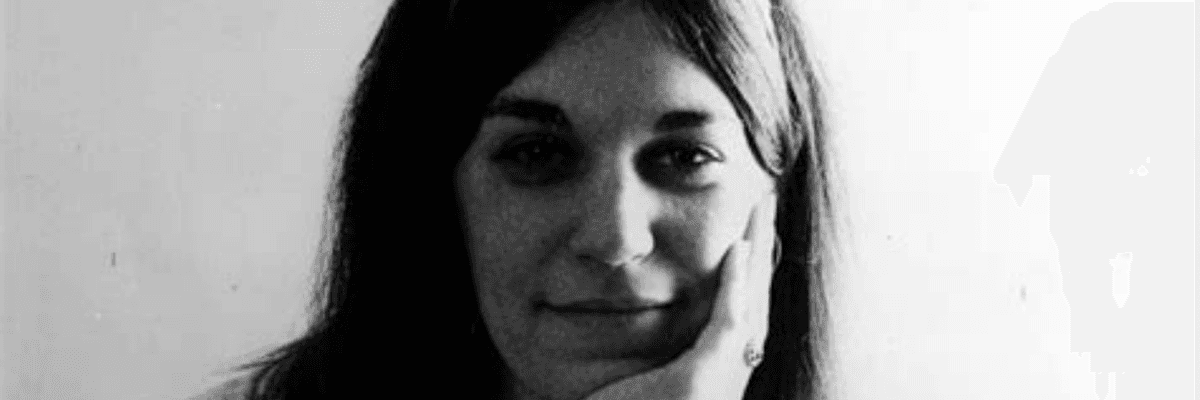
The 25-year-old American, her newlywed husband, and former Chilean diplomat Orlando Letelier were driving to work at the Institute for Policy Studies in Washington, DC when their car was bombed.


Ronni Moffitt was killed in a car bombing targeting her boss, former Chilean minister Orlando Letelier, on September 21, 1976 in Washington, DC. The attack was carried out in broad daylight by agents of Chile’s secret police during the US-backed dictatorship of Gen. Augusto Pinochet.

(Photo by Institute for Policy Studies)

Brett Wilkins
Jun 23, 2026
COMMON DREAMS

The Institute for Policy Studies on Monday welcomed a judge’s homicide convictions and prison sentences for three agents of former US-backed Chilean dictator Gen. Augusto Pinochet who murdered Ronni Karpen Moffitt, one of the progressive think tank’s employees, during a 1976 car bombing targeting her colleague, the exiled leftist diplomat Orlando Letelier.

Last Thursday, Chilean Judge Paola Plaza González sentenced three former agents of the Directorate of National Intelligence (DINA)—Pedro Octavio Espinoza Bravo, José Octavio Zara Holger, and Raúl Eduardo Iturriaga Neumann—to 15 years’ imprisonment each for the qualified homicide of Moffitt, who was 25 at the time she was killed with her Institute for Policy Studies colleague Letelier.

There is no legal status of murder in Chile, where homicides are divided into two categories, simple and qualified (aggravated).

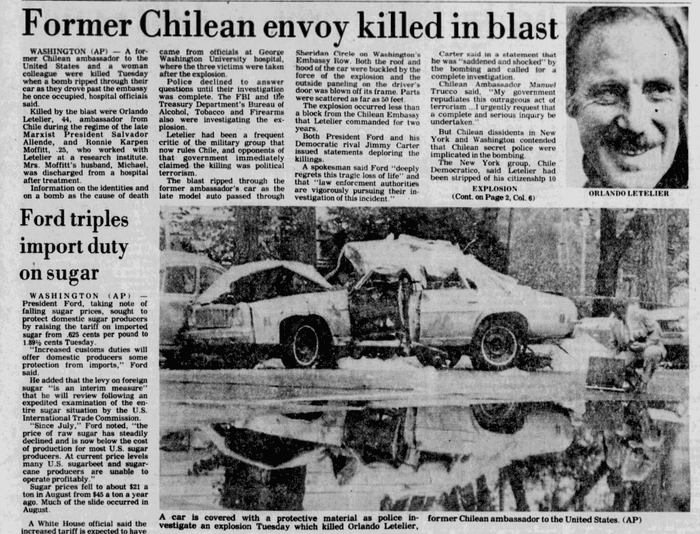
On the morning of September 21, 1976, Moffit, Letelier, and Michael Moffitt—Ronni’s husband of four months, who also worked at IPS—were on their way to work when the Chevy Malibu in which they were traveling was blown up in Sheridan Circle on Washington, DC’s Embassy Row.

Michael, who was sitting in the back seat, survived the blast and watched as Ronni staggered from the mangled car, mortally wounded in the neck, drowning in her own blood. Letelier, whose legs were blown off and torso mangled, died before an ambulance arrived.

It was the first and last time a foreign diplomat was assassinated on US soil.


Associated Press coverage of the Letelier-Moffitt assassination, as published in the Fargo-Moorehead Forum on Sept. 22, 1976.

“For a half century, IPS has turned this heinous act of international terrorism into a force for justice and for lifting up new human rights champions in the United States and Latin America,” IPS executive director Tope Folarin said in response to the sentences. “We are thrilled to see this huge step towards accountability for the murder of Ronni Karpen Moffitt, a young American woman whose work to improve lives in her community and her world was cut tragically short.”

Moffitt’s niece, Rebecca Karpen, said that “the recent sentencing of three of the men responsible for my aunt’s murder comes 50 years after their crime was committed—17 years after the death of my grandfather, Murray Karpen, who dedicated his life to fighting for justice for his daughter, and four years after the death of her brother, my father Harry, who carried her picture in his wallet for decades after his big sister was murdered.”

“It is often said that justice delayed is justice denied,” Karpen added. “So many of my family members who loved Ronni never lived to see this measure of justice applied, and that is a tragedy.”

“So many of my family members who loved Ronni never lived to see this measure of justice applied, and that is a tragedy.”

Plaza noted that the attack was planned under the direction of then-DINA Director Gen. Manuel Contreras Sepulveda and his deputy, Pedro Octavio Espinoza Bravo, as part of “a series of attacks outside the national territory against the lives of Chilean citizens” during Operation Condor.

The secret, US-backed effort, which ran from 1975-83, saw right-wing military dictatorships in Chile, Argentina, Uruguay, Bolivia, Paraguay, Brazil, Peru, and Ecuador collaborate on an international campaign of terror in which an estimated 60,000 leftists were killed, while tens of thousands of others were arrested and tortured.

Letelier was targeted because he was once a Chilean foreign minister under former socialist President Salvador Allende and had become a prominent critic of the Pinochet dictatorship while living in exile after the US-backed 1973 coup that overthrew the democratically elected reformist government and brought Pinochet to power.

Other prominent leftists forced into exile during Pinochet’s reign of terror—including former Army commander Gen. Carlos Prats and his wife Sofia Cuthbert—were assassinated during Operation Condor. In fact, Contreras and the three men convicted last week were also found guilty in 2010 of killing the couple in a 1974 car bombing in Buenos Aires.

Officials in the administration of US President Gerald Ford, including Secretary of State Henry Kissinger, knew Pinochet’s government and other Condor partners were planning to murder their political opponents abroad. The State Department drafted warnings regarding the impending assassinations but withdrew them shortly before the Letelier-Moffitt killings.

In her sentencing order last week, Plaza affirmed the role of DINA Capt. Armando Fernández Larios in obtaining passports for members of the hit squad, as well as for Michael Townley, a US citizen and DINA operative who built the remote-control bomb and placed it under Letelier’s driver’s seat.

However, last week’s convictions and sentences were solely for Espinoza, Zara, and Iturriaga—and exclusively for Moffitt’s murder.

In 1993, Contreras and Espinoza were convicted in Chile for ordering and implementing Letelier’s assassination. Contreras was sentenced to seven years in prison, where he died in 2015 while serving hundreds of years of cumulative sentences for Pinochet-era crimes. Espinoza was sentenced to six years behind bars.

Townley, Fernández, and five right-wing Cuban exile militants were separately convicted in the United States in connection with Letelier’s assassination. Townley served just over five years before being placed in witness protection due to his cooperation with investigators. Fernández was released after seven months, due to a plea bargain. Two of the Cubans served eight years; the convictions of their three co-defendants were overturned on appeal.

All three men convicted and sentenced last week for Moffitt’s murder attended the US Army School of the Americas (SOA), then located in Panama. So did Contreras and Fernández.

SOA is sometimes called the School of Assassins and the School of Coups due to its notorious graduates and their crimes, including the drug trafficking Panamanian president Manuel Noriega, Bolivian despot Hugo Banzer, Haitian death squad commander Raoul Cedras, and Argentine “Dirty War” dictator Leopoldo Galtieri

At least hundreds of war criminals from throughout the hemisphere have been trained at the SOA, whose graduates planned, ordered, committed, or covered up some of the most notorious atrocities of the era, including the Guatemalan genocide; El Mozote massacre; assassination of Archbishop Óscar Romero; Jesuit massacre; and kidnapping, rape, and murder of four US churchwomen.

Juan Pablo Letelier, the son of Orlando Letelier and a former Chilean senator, called last week’s sentences “an act of justice.”

“Truth has prevailed,” Letelier asserted. “Many years have gone by in this effort for truth and justice. Yet, with perseverance and with conviction, we’ve reached the point where, in a Chilean court, this act of terrorism in which an American citizen was assassinated by Chile’s secret police in 1976 has finally had a case, an investigation, and a sentencing of the three main people responsible.”

“We hope that US government authorities will now consider that what has been done in Chile should also be done in the US regarding the investigation and the sanctioning of those responsible for this terrorist act,” he added. “There are persons who are responsible for Ronni Karpen Moffitt’s death 50 years ago who are still in liberty on US soil, and there are pending Chilean requests for their extradition with which the US government has not complied.”

Chile is seeking the extradition of Fernández, who was arrested by US Immigration and Customs Enforcement agents in Florida last year but has not been handed over to Chilean authorities to stand trial.

“Justice is slow,” Letelier recently wrote. “There are many families in Chile who were victims... and they want justice... Armando Fernández Larios should never have been free in the United States.”
‘Unconscionable’: Outrage as GOP Farm Bill Omits Plan to Delay Looming Food Aid Disaster

“The harm unfolding across the country is already far greater than many anticipated,” warned one expert.


Volunteers help distribute food with the Atlanta Community Food Bank on March 27, 2026 in Atlanta, Georgia.
(Photo by Megan Varner/Getty Images)


Jake Johnson
Jun 24, 2026
COMMON DREAMS

Senate Republicans unveiled annual farm legislation this week that would do nothing to address the worsening nationwide hunger crisis spurred by President Donald Trump and the GOP’s unprecedented assault on federal food aid.

The draft bill introduced Tuesday by Sen. John Boozman (R-Ark.), the chairman of the Senate Agriculture Committee, omits a Democratic proposal to delay a provision of the 2025 Republican budget law that will require states to pay a share of Supplemental Nutrition Assistance Program (SNAP) benefits for the first time in the program’s history, while also increasing states’ share of administrative costs. State leaders have warned of massive budgetary impacts that could result in even deeper cuts to food aid—and potentially force states to withdraw from the SNAP program entirely.

Ty Jones Cox, vice president for food assistance at the Center on Budget and Policy Priorities (CBPP), said it was “unconscionable” for Republicans to do nothing in the face of large-scale loss of food aid—including among children—and a looming budgetary disaster for states across the country.

“The harm unfolding across the country is already far greater than many anticipated, with more than 4 million people losing SNAP through March,” Cox said in a statement Tuesday. “Even more people will lose the vital food assistance they need to afford groceries unless Congress immediately delays HR 1’s unprecedented shift of significant new SNAP costs to states.”

Without congressional action, the SNAP cost-shifting provision of the Republican budget law will take effect on October 1, 2027. Survey data released this month shows that nearly 30% of US state governments believe they could be forced to narrow SNAP eligibility to cope with the new costs, which are expected to average $218 million per state. Eleven percent of states “identified withdrawing from SNAP as a potential risk,” according to the poll conducted by the American Public Human Services Association.


Crystal FitzSimons, president of the Food Research & Action Center, said Tuesday that the Republican farm bill “ignores the needs of tens of millions of people, including families with children, older adults, people with disabilities, and veterans, who are finding it increasingly difficult to put food on the table.”

“By shifting program costs to states, expanding time limits, and putting a cap on future benefit adjustments, HR 1 has undermined SNAP, the stability of families, communities, and local economies, and weakened state budgets,” FitzSimons warned. “The SNAP benefit cost shift to states and increase in states’ administrative costs will force states to make impossible choices: reduce education funding, delay infrastructure investments, cut public health programs, constrain Medicaid spending, raise taxes, or reduce access to SNAP itself.”

Senate Republicans unveiled their farm legislation amid a growing hunger and affordability crisis that experts say is directly attributable to Trump-GOP policies, from blanket tariffs to the war on Iran to SNAP cuts that the new bill—like the House version—does nothing to reverse.

Survey data released Tuesday by the No Kid Hungry campaign found that 55% of low-income families with children have had to cut back on groceries recently to make ends meet. The poll also found that 90% of families surveyed reported that they “would have to cut back significantly on food” if they lost SNAP benefits.

“Rising prices are making it harder for families to afford basic necessities,” George Kelemen, senior vice president of the No Kid Hungry campaign, said in a statement. “That’s why SNAP’s grocery benefit, which helps feed about 40 million Americans including nearly 16 million children, is a vital support for helping them put food on the table.”

“This SNAP crisis is too dangerous to ignore,” Kelemen added. “Reasonable steps must be included in this farm bill to delay the cost-sharing until states have the time they need to implement all the complex changes handed to them.”

Over 800,000 Kids Thrown Off SNAP Since Passage of GOP’s Big Ugly Bill: Analysis

“Millions losing SNAP, including children, is an emergency that Congress needs to fix now, before more people are hurt.”


Customers shop at Handy Market on May 14, 2026 in Burbank, California.
(Photo by Justin Sullivan/Getty Images)


Brad Reed
Jun 23, 2026
COMMON DREAMS

An analysis updated Monday by the Center on Budget and Policy Priorities estimates that millions of people, including more than 800,000 children, have lost Supplemental Nutrition Assistance Program benefits since Republicans’ 2025 One Big Beautiful Bill Act took effect.


In total, CBPP estimates that “SNAP participation nationwide fell by more than 4 million people (10%) between the law’s July 2025 enactment and March 2026,” with declines “especially pronounced” in Arizona, which has seen enrollment fall by more than 50%.

CBPP finds that, in 13 states with available data, 808,000 children have stopped receiving SNAP assistance since July, which it notes “accounts for nearly half of the 1.7-million-person decline among people of all ages in those states.”

The number of people losing access to SNAP is projected to grow in the coming months given that the budget law’s biggest changes to the program won’t take effect until next year, writes CBPP.

“Starting in 2027, most states will have to pay between 5 and 15% of SNAP benefit costs, totaling hundreds of millions of dollars a year in many states,” explains CBPP. “And the amount a state will have to pay will be based on current error rates, factoring in errors that states are making today.”

These drastic funding changes “may incentivize states to take drastic measures to reduce their payment error rates quickly and cut program costs, even if it means delaying or improperly denying benefits to eligible people,” the center adds.

Katie Bergh, senior policy analyst at CBPP, commented that the latest data shows that the changes made in the GOP budget law appear “to be driving far greater harm than many anticipated,” as “states have raced to minimize their exposure to these massive new costs.”

“Many people who remain eligible for SNAP on paper—including kids—are losing the benefits they need,” Bergh emphasized. “Millions losing SNAP, including children, is an emergency that Congress needs to fix now, before more people are hurt.”

Tahra Hoops, director of economic analysis at Chamber of Progress, described the GOP’s SNAP cuts as “disastrous,” with “kids losing much needed food assistance thanks to policies that are cruel and ineffective.”

Hoops also provided historical context to the rapid drop in SNAP enrollment.

“The last time SNAP participation fell this sharply, this fast was after the 1996 welfare reform law,” Hoops explained. “That cut took 2.2 million people off food assistance over 8 months. We are already seeing almost twice the damage and the unemployment rate has remained flat.”

Policy analyst Michael Linden described the impact of the GOP’s budget law on the SNAP program as “the Memorial Reflecting Pool of keeping kids from going hungry,” a reference to President Donald Trump’s calamitous attempted renovation of the iconic pool located near the Lincoln Memorial in Washington, DC.

Trump's Big Beautiful Bill is leaving low-income Americans starving: 'I weigh 102 pounds'

Alexander Willis
June 27, 2026 
RAW STORY


Frank Pacheco hands slices of clementine oranges to sisters Mikreyliz Diaz, 5, and Ysmaelin Urbina, 7, while loading food into their car outside the Denver Inner City Ministry food pantry, weeks into the continuing U.S. government shutdown, in Denver, Colorado, U.S. November 1, 2025. REUTERS/Mark Makela

Nearly one year after the passage of President Donald Trump’s One Big Beautiful Bill Act (OBBBA), close to 5 million fewer Americans received federal food assistance in March when compared with the previous year, leaving an untold number of people scrambling, The Hill reported Saturday.

Sheila Boyd, an 81-year-old New York resident, was among those who did not get booted off the Supplemental Nutrition Assistance Program (SNAP) but did have her benefits significantly reduced under the OBBBA’s stricter work requirements and fewer exceptions. She previously received $298 a month, she told Nexstar’s WPIX, but abruptly had her benefits slashed to $24 a month.

“I can’t buy nutritious food. Who lives on $24 a month?” Boyd told Nexstar’s WPIX. “I need more money to eat.”

Boyd said that she often skips meals and largely relies on donations to eat. She added that she had lost weight since her federal food assistance was gutted.

“I weigh 102 pounds. I’m trying to sell things… like jewelry. My whole lifestyle is different now,” Boyd said. “I spend most of my day trying to find a way to get money to sell things. You know you work hard all your life… it’s a slap in the face. I think it’s unforgivable.”

Tax cut extensions enjoyed primarily by the wealthy were the chief achievement of the OBBBA, funded largely by significant cuts to social safety net programs like SNAP and Medicaid. The cuts are projected to boot as many as 22.3 million Americans off of SNAP over a decade, and “at least” 10.5 million off of Medicaid by 2034.

More Than 5 Million People Have Lost Health Coverage Under Trump-GOP Law

According to a new report, the crisis is “only going to get worse.”


US President Donald Trump bangs a gavel after signing the One Big Beautiful Bill Act at the White House in Washington, DC, on July 4, 2025.
(Photo by Brendan Smialowski/Pool/AFP)

Stephen Prager
Jun 23, 2026
COMMON DREAMS

Not even a year after President Donald Trump signed the largest healthcare cuts in US history into law, around five million Americans have lost insurance coverage, according to a report out Monday from Protect Our Care, which predicted that the crisis was “only going to get worse.”

The massive budget and tax legislation passed by Republicans last July, known as the One Big Beautiful Bill Act, slashed nearly $1 trillion from Medicaid and the Children’s Health Insurance Program (CHIP) over the next decade while introducing tax breaks that are expected to hand an additional $1 trillion to the richest 1% of Americans.

“Five million and counting. That’s the human toll of the spiraling Republican healthcare affordability crisis,” said Protect Our Care president Brad Woodhouse. “Just one year after Trump and congressional Republicans made the largest cuts to healthcare in history to fund tax breaks for billionaires and big corporations on Wall Street, millions have lost the care they depended on to stay alive and healthy.”

Citing the most recent data from the Centers for Medicare and Medicaid Services (CMS) and state agencies, the report found that the number of Americans enrolled in Medicaid and CHIP had fallen to just 76.9 million, down from 80.8 million a year before—a decline of more than 3.8 million people.

Another 1.2 million are also estimated to have lost coverage due to the massive spike in premiums after Republicans voted not to renew tax credits for consumers under the Affordable Care Act (ACA) that lowered costs for Americans who purchased coverage through ACA marketplaces.

During open enrollment in 2025, 24.3 million Americans selected insurance plans through the ACA. This year, as the average premium was projected to more than double on average, the number of Americans enrolled through the ACA fell to just 23.1 million—a drop of nearly 1.2 million.

The millions of other families still enrolled in insurance through the ACA exchanges saw an average increase of $780, and according to KFF, it’s only been that low because many families have opted to switch to cheaper, less comprehensive plans.

The loss of insurance coverage “is only a small piece of the puzzle,” Woodhouse said.

“Millions more are making impossible choices every day to keep their coverage, including skipping rent or cutting back on groceries so they can see a doctor,” he said. “Their pain and suffering are incalculable.”

The report said the coverage losses over the first year are “just the beginning” and that “millions more will lose coverage once deeper cuts go into effect.”

The full slate of changes to Medicaid from the GOP bill has not yet been enacted. Next year, many adult recipients will be required to submit proof that they are doing at least 80 hours of work or other qualifying activity each month in order to maintain benefits, which the nonpartisan Congressional Budget Office (CBO) estimated could increase the uninsured population by 5.3 million by 2034.

Another paperwork hurdle, the requirement that certain Medicaid expansion enrollees prove their eligibility every six months, is expected to result in another 700,000 people becoming uninsured by 2034.

In total, CBO analyses estimate that over the next decade, roughly 15 million Americans would lose their insurance coverage as a result of the legislation.

“These are our neighbors, our friends, our loved ones. These are small business owners and farmers. These are seniors. Veterans. Moms,” Woodhouse said. “These are millions of working people now scrambling to find insulin pumps, taking thousands out of retirement just to see a doctor for that cough that’s not getting better, or, worse, not getting care at all.”

With healthcare costs now a top concern among voters—66% of whom said they were worried about affording it, according to a KFF poll in January—cuts to healthcare spending appear to be a glaring liability for Republicans entering the midterm elections.

Another KFF poll from April found that 37% of voters said they trusted Democrats to address healthcare costs, while just 26% said they trusted Republicans. Meanwhile, 67% of voters said they disapproved of the Trump administration’s handling of healthcare costs.

“Every single day, the affordability crisis mounts, and more Americans will find themselves joining the five million struggling to keep up with skyrocketing healthcare costs,” Woodhouse said. “The American people won’t forget this betrayal in November.”

Democrats have seized on Monday’s report as part of their election pitch, including Rep. Greg Landsman, who faces a competitive reelection fight in Ohio’s 1st Congressional District.

He wrote on social media Tuesday that Republicans “cut healthcare by nearly a trillion to pay for tax cuts for the super wealthy... five million people no longer have healthcare.”

“The healthcare crisis in America is dominating the lives of millions, and will soon dominate all of our lives,” he said. “We need a new Congress to restore people’s healthcare and to end this crisis. There is no other way.”


While Kicking Millions Off Healthcare, GOP Holds ‘Sham Hearing’ on Medicaid Fraud

“If Republicans are really interested in looking into waste, fraud, and abuse, they should look no further than the actions of Trump and his administration.”


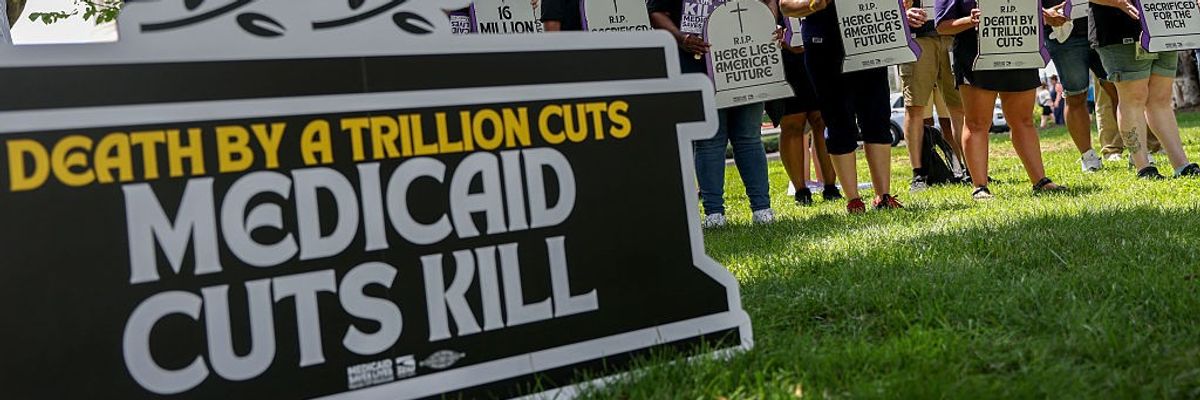
Workers protest Republican Medicaid cuts near the US Capitol building on June 23, 2025 in Washington, DC.
(Photo by Joe Raedle/Getty Images)

Jake Johnson
Jun 25, 2026
COMMON DREAMS

Congressional Democrats and healthcare justice advocates on Thursday accused Republicans of trying to divert attention away from their destructive cuts to Medicaid—and the resulting large-scale loss of insurance coverage—by convening a hearing on purportedly “rampant” fraud in the program that provides care to tens of millions of low-income Americans.

Rep. Frank Pallone Jr. (D-NJ), the top Democrat on the House Energy and Commerce Committee, noted in his scathing opening remarks at the hearing that Republicans have “repeatedly insisted” they are only interested in fighting fraud and abuse of taxpayer dollars, even as their unprecedented Medicaid cuts strip healthcare from millions of people across the US, including many children.

“You cannot cut healthcare by $1 trillion and not impact millions of people’s healthcare,” said Pallone, pointing to a report published earlier this week estimating that more than 5 million Americans have lost health insurance since President Donald Trump signed the GOP’s massive budget package into law last summer.

“If Republicans are really interested in looking into waste, fraud, and abuse, they should look no further than the actions of Trump and his administration,” Pallone continued, pointing to the illegal and costly war of choice in Iran as just one example. “Playing politics with Americans’ healthcare is cruel and dangerous. Unfortunately, that is what we are repeatedly seeing from Republicans here in Washington.”

The advocacy group Protect Our Care decried the GOP’s “sham hearing” and said Republicans are “pointing fingers at everyone but themselves.”

“Let’s be clear about who the real fraudsters are: not the senior rationing insulin, not the mom skipping the emergency room, and not the family choosing between groceries and seeing a doctor,” said Brad Woodhouse, the group’s president. “It’s Republicans ripping away healthcare from millions with one hand and signing tax breaks to billionaires and big corporations with the other.”

“They’ve decided that if they simply say they’re eliminating fraud in Medicaid, then they can get away with eliminating Medicaid. They are wrong.”

Thursday’s hearing featured testimony from the state Medicaid directors of California, Minnesota, New York, and Ohio, each of whom said they are committed to fighting fraud in their systems. Experts say most Medicaid fraud is committed by providers, not ordinary patients bilking the program.

In recent months, the Trump administration has launched investigations into the Medicaid programs of several states, including California, Minnesota, and New York—probes that officials in those Democratic-controlled states say are politically motivated and based on exaggerated claims of fraud.

In April, the Centers for Medicare & Medicaid Services—led by Mehmet Oz—admitted that it grossly overstated the number of New Yorkers who received personal care services under the state’s Medicaid program last year.

“Oz claimed that New York’s Medicaid program last year provided some 5 million people with personal care services, which assist people in need with basic activities like bathing, grooming, and meal preparation. That would add up to nearly three-fourths of the state’s 6.8 million Medicaid enrollees,” The Associated Press reported. “The real number of New Yorkers who used those services last year was about 450,000, or between 6% and 7% of total enrollees, CMS spokesman Chris Krepich told the AP.”

Republicans have repeatedly cited “waste, fraud, and abuse” as reasons to target and slash federal Medicaid spending. But according to one analysis, just seven of the 24 Medicaid provisions in the 2025 Republican budget law specifically target waste, fraud, and abuse in the program. Overall, the GOP law will cut federal Medicaid spending by roughly $900 billion over the next decade.

In the coming months, Republicans are expected to pursue another budget reconciliation package that they say would crack down on “fraud” in Medicaid—a seeming admission that the 2025 budget law didn’t accomplish the GOP’s stated objective.

“As Republicans try to figure out a way to pay for President Trump’s reckless war of choice with Iran through another partisan reconciliation bill, they are reportedly considering even more cuts to Medicaid,” Pallone said Thursday. “More than 70 million Americans who are disabled or chronically ill, elderly, or children rely on Medicaid for their healthcare.”

“The Trump administration and Republicans in Congress continue to find ways to endanger or take away that care,” Pallone added. “They’ve decided that if they simply say they’re eliminating fraud in Medicaid, then they can get away with eliminating Medicaid. They are wrong.”

Alan Greenspan, Longtime Fed Chair and Ayn Rand Disciple, Meets Ultimate ‘Invisible Hand’

“For decades, he preached that the self-interest of the predator was the invisible hand of the common good,” Yanis Varoufakis said after the man who led the US central bank under four presidents died aged 100.


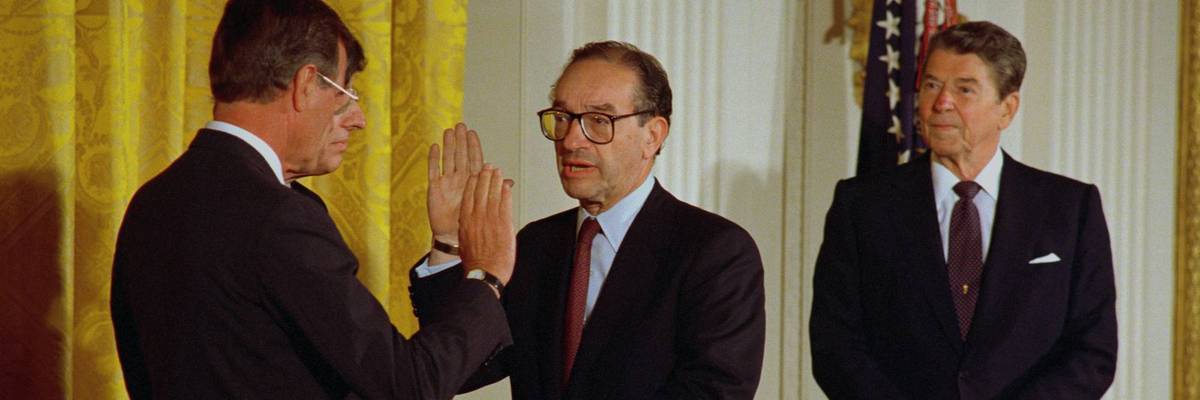
Then-US Vice President George H.W. Bush (left) administers the oath to Federal Reserve Chair Alan Greenspan as President Ronald Reagan looks on, in the White House in Washington, DC on August 11, 1987.
(Photo by Getty Images)

Brett Wilkins
Jun 22, 2026
COMMON DREAM


Alan Greenspan, whose policies during nearly 20 years as US Federal Reserve chair fueled soaring economic inequality and helped create the conditions for multiple economic crashes, died Monday at age 100 after a long battle with Parkinson’s disease.

While many corporate media outlets published hagiographic obituaries lionizing the “Maestro” who presided over nearly two decades of low inflation, rising stock prices, and American economic confidence, critics focused on Greenspan’s role in promoting dangerous deregulation and “easy money” policies that inflated financial bubbles, with sometimes disastrous results.

Robert Reich—who served as US labor secretary under President Bill Clinton during all of Greenspan’s tenure—called him “in many ways the most powerful person in America” during that era.

“If any single person was responsible for the financial crisis of 2008, it was Greenspan.”

“He maintained an iron grip over the Fed, and almost single-handedly decided on interest rates,” Reich wrote. “He essentially fired George H. W. Bush by raising interest rates so high (ostensibly to ward off the inflation then threatening the economy) that the economy took a dive, and voters blamed Bush. This was enough to convince my boss, Bill Clinton, to do exactly what Greenspan wanted—which was to reduce the federal budget deficit and thereby destroy much of the agenda Clinton ran on (and I helped create).”

“I don’t want to speak ill of anyone who has passed. Greenspan was an extremely charming, intelligent, and thoughtful man,” Reich added. “But the truth must be told: If any single person was responsible for the financial crisis of 2008, it was Greenspan. That crisis—the worst collapse since 1929, which led to the worst recession in decades, in which millions of Americans lost their jobs, savings, and even their homes—resulted from the deregulation of Wall Street that Greenspan advocated.”

Former Greek Finance Minister Yanis Varoufakis wrote on X: “His epitaph? A singular, glorious confession, ‘I found a flaw in my model of the world.’ A flaw, he said, as though it were a leaky pipe, not a total collapse of the intellectual architecture that anointed him Oracle. For decades, he preached that the self-interest of the predator was the invisible hand of the common good.

“Then, in 2008, the beast devoured the table, and to his credit, he blinked, admitting that his entire worldview—the one that central bankers canonized and the world swallowed—was a fairy tale for rentiers,” Varoufakis added. “He did not, of course, admit to culpability. That would require a moral compass, a device notably absent from his Ayn Randian toolbelt. No, he merely noted the flaw, as a meteorologist might note a gust of wind, and returned to his well-earned silence.”


Born 10 miles from Wall Street in Manhattan’s Washington Heights during one of the most infamous economic bubbles of all time, Greenspan was a protégé of libertarian writer and philosopher Ayn Rand and was influenced by the Atlas Shrugged author’s moral defense of capitalism, her fierce advocacy of deregulation, and her insidious insistence that self-interest was socially beneficial.

Their relationship cooled as Greenspan embraced more mainstream economic policies despised by Rand and gradually became a leading steward of the very sort of state-shepherded system she deeply distrusted.

After heading President Gerald Ford’s Council of Economic Advisers, Greenspan was appointed chair of the Fed by President Ronald Reagan in 1987. He would remain in the post well into George W. Bush’s second term.

Greenspan generally favored low interest rates, especially after crises like the 1987 stock market crash, the 1998 Long-Term Capital Management crisis, and the 2001 recession. His fame grew after he suggested that the economy might be experiencing a tech-driven “productivity miracle,” language that many investors took as validation that traditional valuation limits were obsolete.

Critics would later call it a “productivity mirage.”


Staunch devotion to low interest rates by Greenspan’s Fed boosted stock prices and real estate values under “easy money” policies. Many investors came to believe that the Fed would intervene aggressively whenever markets fell sharply—the so-called “Greenspan Put.”

However, since ownership of financial assets (and the firms that sell and promote them) is concentrated among the wealthy, it was the rich who benefited most from Greenspan’s polices. When bubbles burst, as they did after the dot-com boom that ended in early 2000 and during the 2008 global financial crisis, the rich bounced back thanks to their diversified portfolios and bailouts, while middle- and lower-income households were wiped out through asset devaluation, foreclosures, and job losses.

“It is no exaggeration to say the global financial crisis of 2008 had an enormous and lasting impact on American life and the way ordinary people view elites,” New York Times global economic correspondent Peter S. Goodman said on social media. “It is also no exaggeration to say that Alan Greenspan has as much responsibility for the crisis as an individual can.”

“For those not old enough to remember, it is difficult to state his aura during his time of greatest influence,” Goodman continued. “When he told Americans that they should buy houses and use variable-rate mortgages to do it, they listened. Much is made of his econ jargon-laden vernacular that went over the heads of nearly all listeners.”

“That was central to the mystique,” he added. “When he went to the Hill and spoke to Congress, most people had no idea what he was talking about but assumed that smarter kids did. And so his quasi-religious faith in the efficiency of markets as the ultimate insurance against risk went unchallenged and became dogma, and the risks kept building."