Friday, October 02, 2026


Unamuno and H. G. Wells went to the cinema together: unpublished letter confirms it 90 years on

Detail of Miguel de Unamuno's letter confirming his meeting with the writer H.G. Wells
Copyright Cortesía: Universidad de Salamanca

By Christina Thykjaer
Published on

Written in 1936 and found in the archive of Salamanca’s Casa-Museo Unamuno, the document confirms the Spanish writer dined with the author of 'The War of the Worlds' before going to the cinema together in London.

An unpublished letter by Miguel de Unamuno has, 90 years on, confirmed a remarkable meeting in London between the Spanish writer and H. G. Wells, author of science-fiction classics such as 'The War of the Worlds' and 'The Time Machine'.

The document has been found in the archive of the Unamuno House-Museum at the University of Salamanca. It is a letter sent by Unamuno to his children on 2 March 1936 from London, in which he explains that he had dinner with Wells and that the two of them went to the cinema afterwards.

The two writers attended a screening of "Things to Come" ("La vida futura") at the Leicester Square Theatre, a film whose script had been written by Wells himself and which was inspired by his book "The Shape of Things to Come".

Unamuno recorded that evening in a few lines addressed to his children: "Wells took me to see his film", he wrote before leaving London to travel to Paris.

A meeting of which only clues existed

Until now there was no direct testimony from Unamuno to confirm the encounter. Researchers had two clues to work with: a poem by the Spanish writer containing references linked to the film’s themes, and a report published by the correspondent of the newspaper "El Sol".

In 2025, however, a new piece emerged that allowed the story to be reconstructed in more detail: a handwritten invitation from H. G. Wells himself to Unamuno. The British author suggested having dinner at his home on 28 February 1936 and then going to see "Things to Come". Unamuno was in the United Kingdom at the time to receive an honorary doctorate from the University of Oxford.

The letter now discovered confirms that the invitation did not remain merely a proposal and that the two intellectuals did indeed spend the evening together.

The original document will be on display from this Tuesday, 29 September to 30 October in Bilbao, Unamuno’s home city, as part of the exhibition "Let them invent it. Miguel de Unamuno and science". The show explores the writer’s relationship with science and with some of the leading intellectual figures of his time, among them Albert Einstein, Marie Skłodowska-Curie, Santiago Ramón y Cajal and H. G. Wells himself.

 

'A powerful buffer': How solar saved the EU €37.4 billion since the war on Iran began


By Liam Gilliver
Published on

Europe's solar boom is cushioning households from the crippling costs of gas, as the war on Iran continues to highlight the dangers of fossil fuel reliance.

Europe is cushioning itself from the volatile cost of fossil fuel imports thanks to a surge in solar power.

Gas prices remain sky-high seven months into the war on Iran – mainly due to the effective blockade of the Strait of Hormuz, a vital shipping route that usually carries around one-fifth of the world's global liquefied natural gas (LNG) supplies.

While POTUS Donald Trump assures the conflict will end "very soon", disruptions to the supply chain have left the EU grappling with yet another energy price crisis.

The benchmark Dutch TTF natural gas price traded at around €31.96 MWh on 27 February, the day before the war broke out. On 30 September, it traded at €72.35MWh, a 126.5 per cent increase.

However, new analysis by SolarPower Europe reveals that harnessing sunlight for power has saved Europe €37.4 billion by lowering demand for gas imports.

Solar is the 'route to long-term energy security'

"Every megawatt-hour generated by solar power reduces our dependence on imported fossil fuels and makes Europe safer," says Walburga Hemetsberger, CEO of SolarPower Europe.

"This news follows solar becoming EU’s largest single source of electricity in June, supplying 25 per cent of the bloc's power. It's a demonstration of the returns on Europe's investment in abundant, homegrown renewable energy resources. We can go further and faster."

Hemetsberger adds that electrification, more renewable generation and non-fossil flexibility solutions such as battery storage can help shield Europe from the risks of future fossil fuel price shocks, becoming the "route to long-term energy security".

How renewables are shielding Europe from rising gas prices

Several European nations have already demonstrated the benefits of revolutionising their energy systems by focusing on green technology prior to the war on Iran.

Since 2019, Spain has doubled its wind and solar capacity, adding more than 40GW to its energy mix. To put that into perspective, a power plant with a capacity of 1 GW could power approximately 876,000 households for one year, if they consume the average of 10,000 kWh of electricity per year.

“Spain’s wind and solar growth has reduced the influence of expensive fossil generators on the electricity price by 75 per cent since 2019,” energy think tank Ember said in a report published last year.

“This decline in the hours where the electricity price was tied to gas power cost was faster than in other gas-reliant countries, such as Italy and Germany.”

In European power markets, the most expensive generator operating to meet demand, which is typically fossil fuels, sets the hourly wholesale electricity price. However, as generation from lower-cost technologies like wind and solar grows, it displaces gas and coal, meaning fossil fuels determine the price less often.

Record wind has also helped the UK break a new renewable record, despite "fantasy" claims that the country needs to drill the North Sea for oil.

On 26 March, British wind energy generation hit a new high of 23,880 megawatts, enough power to cover 23 million homes.

“Wind provided more than half of Britain’s electricity during this record period, and it’s highly significant that earlier in the day low-cost wind and solar squeezed expensive gas off our energy system – with gas falling to its lowest level of generation for nearly two years, providing just 2.3 per cent of our electricity,” says RenewableUK’s Tara Singh.

“That’s what the energy transition looks like in practice, and it shows why we need to continue to build out an ambitious pipeline of new clean energy projects now and in the years ahead.”

Are renewables slipping in the EU?

Despite the boom in solar, the EU is struggling to reduce its reliance on gas.

Recent data from Eurostat found that more than half (54.1 per cent) of electricity generated in the EU came from renewable energy sources during the second quarter (Q2) of 2026. This marks a slight decrease compared to the same period last year (54.3 per cent).

Total EU electricity generation increased by 3.2 per cent year-on-year in Q2, but during that same period gas-fired generation increased by 3.9 per cent while renewable generation only grew by 2.8 per cent.

This is despite solar witnessing significant growth, making up 41.6 per cent of renewable electricity generation – compared to 37 per cent last year.

Jonathan Bruegel, a power sector analyst at the Institute for Energy Economics and Financial Analysis (IEEFA), tells Euronews Earth that the dip highlights the “case for a diversified mix” of hydro, wind and solar power.

“Gas held at 13.3 per cent, even with renewables above 50 per cent,” he adds. “This means that weak hydro and wind generation still bring gas back in, underlining again the need for more solar – which is a more stable intermittent technology than hydro and wind – storage, and flexibility.”


Palermo, first coffee grown and harvested in Italy: warmer climate is changing farming

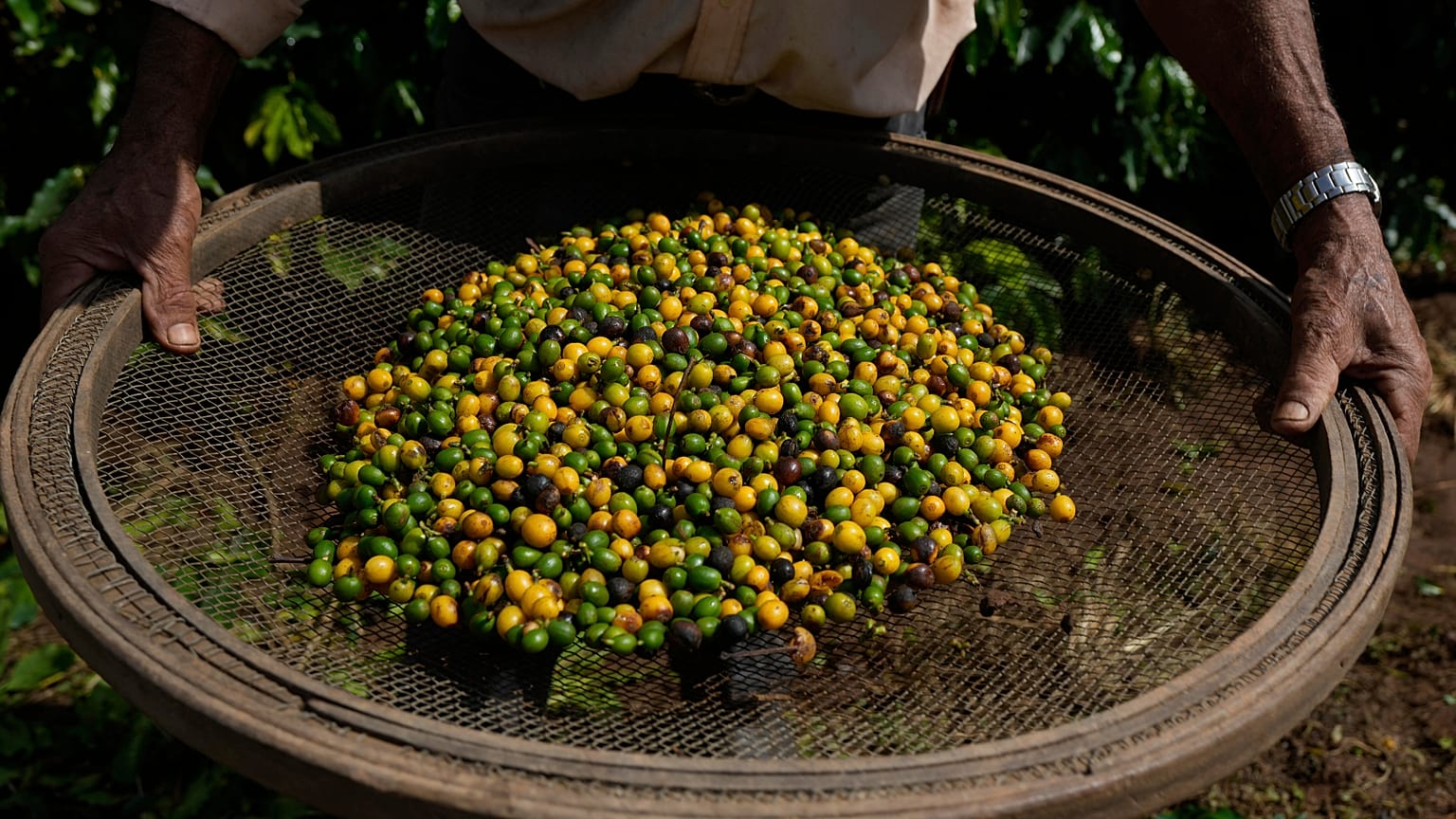
The coffee cherries from a 2025 harvest in Brazil
Copyright AP Photo/Andre Penner

By Gabriele Barbati
Published on

Rising temperatures now allow coffee to be grown in Italy. In Sicily, the Morettino family has completed its first harvest, showing how climate change is reshaping crops worldwide.

A plantation on the outskirts of Palermo has for the first time produced Arabica coffee beans grown and harvested entirely in Italy. The result, achieved on the Morettino family estate, has been made possible by climate change, which has effectively brought tropical temperatures to southern Italy.

While global warming had already enabled southern England to produce champagne-style sparkling wine, pushing the traditional growing areas of France and northern Italy further north, the jump made by coffee from equatorial zones to the Mediterranean is clearly even greater.

As the daily newspaper La Stampa reported on Thursday (source in Italian), the Sicilian plantation in the San Lorenzo ai Colli area, a few hundred metres above sea level, is currently producing around 100 kilograms of drupes (the fruit of the coffee plant, also known as cherries), which yield just over 15 kilograms of roasted beans.

The project, which involves the University and the Botanical Garden of Palermo (source in Italian) in studying how tropical crops adapt to the new Mediterranean climate, is still far from large-scale commercial production in terms of volume, but it already has considerable scientific and symbolic value.

Typical coffee makers used in Italy, on display at a 2013 exhibition in Milan by historic manufacturer Bialetti
Typical coffee makers used in Italy, on display at a 2013 exhibition in Milan by historic manufacturer Bialetti (AP Photo/Luca Bruno)

Where coffee is grown: the world’s main producing countries

Traditionally, coffee is grown in the planet’s tropical and equatorial regions, where high temperatures, humidity and steady rainfall favour its growth.

For this reason, the world’s main producers and exporters are largely concentrated in Latin America, Africa and Asia, with the Arabica variety, which delivers higher quality, grown at higher altitudes than Robusta.

The leading producer countries include Brazil, Colombia, Peru and Costa Rica in Latin America; Ethiopia, Uganda, Kenya and Tanzania in Africa; and Vietnam and Indonesia in Asia.

According to the promoters of the initiative, the coffee produced in Palermo develops distinctive aromatic notes reminiscent of raisins, a feature that sets it apart from beans grown in traditional coffee-growing regions.

Before the Morettino family’s venture, a local farm had already grown coffee entirely in greenhouses (source in Italian) in Terrasini, also in the Palermo area.

Similar experiments have been attempted in various forms elsewhere in southern Europe.

In Spain, particularly in the province of Granada, experimental projects have been launched to test the resilience of the plants, with results quite different from those in Gran Canaria where, thanks to its more southerly latitude, coffee has been grown since the 19th century, taking advantage of the fertility and humidity of volcanic soils.

On the Azores islands in Portugal, where numerous private plantations have been reported that benefit from the mild climate, the archipelago marks one of the northernmost points where coffee is grown.

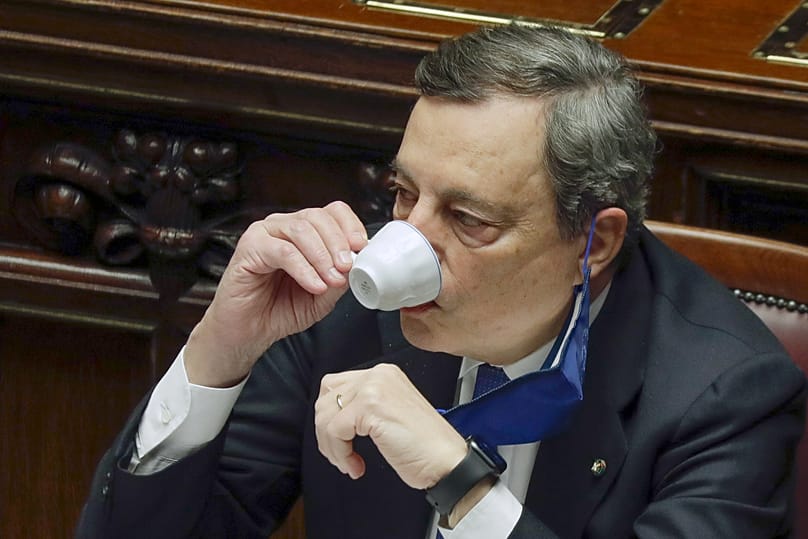
Former Italian prime minister and ECB president Mario Draghi sips an espresso during a break in proceedings in the Chamber of Deputies (18 February 2021)
Former Italian prime minister and ECB president Mario Draghi sips an espresso during a break in proceedings in the Chamber of Deputies (18 February 2021) (AP Photo/Andrew Medichini)

How coffee consumption in Italy has changed

The growing interest in niche products such as the Sicilian coffee comes in a context in which Italy is the EU’s leading producer of roasted coffee, with over 400 tonnes produced in 2025.

The national coffee industry, although it relies on importing raw material from other producer countries (that is, unroasted beans, or "green coffee"), includes around a thousand roasters and generates an annual turnover of 5.9 billion euros.

The prospect of local cultivation, made possible by global warming, which is unfortunately also bringing more natural disasters, is in step with Italian consumption patterns, which remain robust and are growing, according to several studies published on 1 October to mark International Coffee Day.

According to a survey by AstraRicerche in partnership with the Segafredo brand, 82.6% of Italians consider the quality of the raw material decisive, while 71.8% pay attention to aromatic characteristics and 51.5% want to know the product’s origin and its journey along the supply chain.

Another survey, carried out by the Italian Coffee Committee of Unione Italiana Food and by Altroconsumo on more than 1,200 consumers, shows that three out of four Italians drink coffee regularly and almost one in two see it as one of the symbols of the country’s culture and lifestyle, on a par with pasta.

Among those who drink espresso, 83% have it every day, at home and at the bar, either with a moka pot or with modern capsule machines, which are now neck and neck in people’s habits.

Any commercial prospects must of course be weighed against environmental sustainability when growing coffee outside its traditional areas of origin.

Processing the beans after harvest can require between 50 and 200 litres of water for every kilogram of green coffee and produces wastewater which, if not properly treated, can affect local ecosystems.

And if, instead of the tropical rains that have always sustained coffee plantations, growing moves to areas where seasonal drought is becoming endemic, it becomes essential to match the agricultural challenge of coffee with a technological one, cutting the amount of water needed to grow and process the crop.


‘Thrilling’: Dutch cattle farmers switch to rice as solution to warmer climate and sinking peatlands

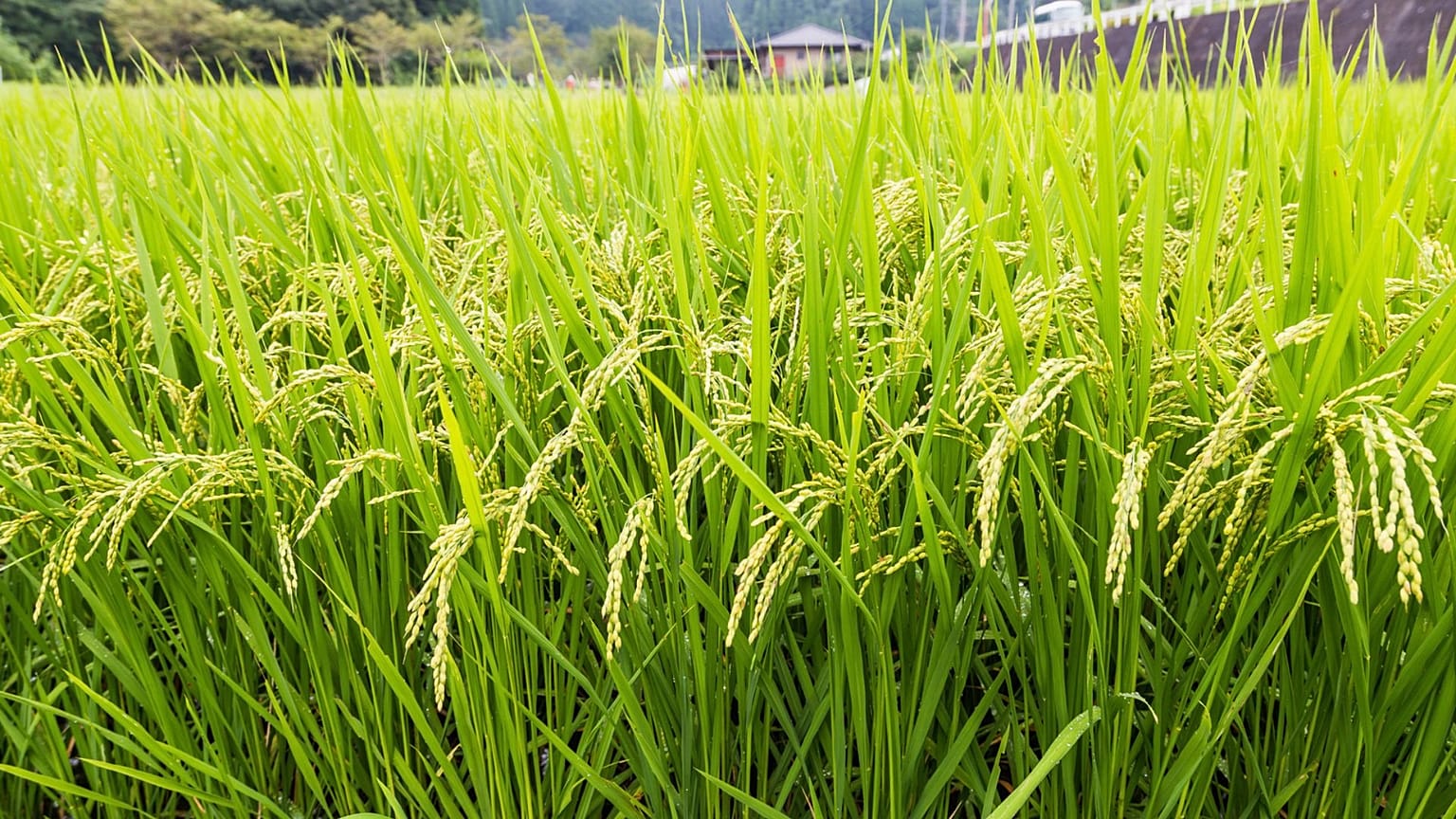
Rice grains from northern Japan seems the best adapted to Dutch conditions.
Copyright Canva

By Angela Symons with AFP
Published on

Dutch cattle farming dries out peatland and releases CO2. Is switching to Japanese rice-growing a solution?

The warming climate is allowing Dutch farmers to grow a grain never before harvested in the Netherlands: rice.

For centuries, cows were the country's agricultural staple. But now farmers are experimenting with produce previously unthinkable in such a wet, temperate country.

And researchers behind the scheme hope rice cultivation could help address one of the country's most pressing environmental challenges: peat soils that are sinking as they dry out, pushing parts of the low-lying Netherlands ever lower.

"It's extraordinary," says Philippe Terheggen, chairman of the Land van Ons association that has provided the fields for the rice harvest.

"We would never have thought maybe 20 years ago that we would be able to grow rice in the Netherlands," says the 68-year-old.

"But it's also scary because it tells you what is possible... now the climate has changed," he says.

For now, the project is a pilot scheme, consisting of just 0.6 hectares, with organisers hoping to produce around three tonnes of short-grain rice suitable for sushi or risotto.

The team is working with around 30 different rice cultivars from as far afield as Russia, China, Japan and Uzbekistan, to see which grows best in the Dutch climate.

'I just want to show that things can be changed for the benefit of the future'

In a soggy field between Amsterdam and The Hague, farmer Sander Roeleveld ploughs his rice crops with a combine harvester, backdropped by windmills and canals.

Roeleveld, who describes himself as a "pioneer", says he wants to show other farmers that rice could grow in boggy Dutch soil.

"My goal is to show that more things are possible on wetland than just grass," the 53-year-old says.

"Of course, when you have had cows for 600 years, it's really hard to imagine that you want to do something else than having milk from your cow," he laughs.

"I just want to show that things can be changed for the benefit of the future."

How rice farming could cure dried out peatlands

But the project is about much more than crop diversification. Researchers believe it could help tackle one of the Netherlands' most persistent environmental problems.

Roughly one-tenth of the country is peatland, which farmers drain for grass to feed their cattle.

As the peat dries out, it releases millions of tonnes of carbon dioxide while causing the land to subside by up to several centimetres a year in the worst-affected areas.

According to Wageningen University, greenhouse gas emissions from Dutch peat soils account for around two to three per cent of the country's total emissions.

The only way to resolve this vicious cycle is to keep the fields wet – but then farmers would have nothing to grow there... until now.

"Basically it started with just a crazy idea," explains Julian Helfenstein, a researcher from Wageningen University and Research, who is piloting the project along with colleagues from nearby Leiden University.

It is a rare combination of both adapting to climate change and mitigating its effects, says the 36-year-old.

"Rice is an opportunity for this part of the world to adapt to climate change, so to grow something that previously wasn't possible," he says.

"But also to mitigate climate change because it stops this peat from degrading and emitting all the CO2 because you can keep it wet."

The peat issue affects not just the Netherlands, but much of northern Europe, including Germany, Belgium, even the Baltic states, he says.

Helfenstein and his team are closely monitoring the CO2 and methane emissions from cultivating rice compared to maintaining grassland – to ensure the cure is not worse than the illness.

"So far the results are promising," he says.

"As an environmental scientist, you're always pointing to the problems. And it can be a bit depressing, like, 'Oh, here's more climate change, here's more pollution'," says Helfenstein.

"And then here's an opportunity for science to work also towards a solution. So I find that thrilling."

'Chewy, but great': Dutch rice could be used to make sushi and sake

Local restaurants have already voiced an interest in offering premium Dutch-sourced rice, says Guusje van der Vossen from the Wij Land association which helps farmers transition to more sustainable production.

She says the rice being harvested now was a grain from northern Japan, which seems the best adapted to Dutch conditions.

The 27-year-old is one of the few people ever to have eaten Dutch-grown rice – from an experimental batch grown last year.

"It tasted delicious, to be honest," she laughs, saying the aim was to make sushi with it – and maybe sake.

"It was a bit chewy, but also great."

G7 agrees 100 million-barrel emergency oil release amid US pressure BULLYING over diesel

President Donald Trump meets with French President Emmanuel Macron during a bilateral meeting on the sidelines of the G7 summit, Monday, June , in Evian-les-Bains, France.
Copyright AP Photo / Julia Demaree


By Marta Pacheco
Published on

The G7, led by France, announced the release of 100 million barrels of diesel and crude oil after Trump threatened a ban of diesel exports.

G7 countries have agreed to release up to 100 million barrels of oil from strategic reserves over four months in a coordinated effort to bring down soaring energy prices, with a particular focus on diesel.

The release will be coordinated by the International Energy Agency (IEA), with a substantial amount of diesel to be made available within the first 20 days, according to a G7 statement.

French President Emmanuel Macron, who currently holds the G7 presidency, said the countries had agreed to act together to ease pressure on energy prices.

"We will implement our commitments with a coordinated release through the IEA of 100 million barrels to begin immediately over four months," the statement said.

The move comes after growing pressure from Washington for countries to release strategic reserves as diesel prices rise and supplies tighten.

Earlier on Friday, the European Commission pushed back against what it described as US "threats" to force European countries to act.

But an overnight call between Macron and US President Donald Trump appears to have helped push Paris towards action, amid concerns over the impact of a possible US diesel export ban.

The G7 package also includes measures to increase refinery output and a pledge not to restrict trade in energy and oil products between partner countries.

The 100 million barrels would amount to roughly 830,000 barrels a day if released evenly over four months.

But the impact will depend on how quickly countries release their stocks and how much of the oil can ultimately be turned into diesel.

Strategic crude releases do not immediately translate into extra diesel supplies. Refineries must first process the crude, with capacity, logistics and the type of crude available all affecting how much fuel reaches consumers.

The release could provide some relief ahead of winter, when demand for diesel and other refined products typically increases.

India’s Kerala Is Emerging As A Global Tourism Destination – OpEd


Traditional houseboats in Kerala, India. Photo Credit: Mohit Khare, Pexels

September 28, 2026
By Nikola Mikovic


Key Takeaways:

Kerala still leans on domestic visitors (25 million-plus in 2025 vs. ~822,000 foreign arrivals, up more than 11% year on year) and wants longer, higher-spend international trips from the UK, Europe, the U.S., Australia, and newer East and Southeast Asian markets.

Tourism Minister P.C. Vishnunadh, speaking around Kochi’s Sept. 24–27 Kerala Travel Mart, frames the pitch as experience, community value, and sustainability—beaches, backwaters, Western Ghats, culture, food, Ayurveda—not just postcard marketing.

Four international airports (Cochin solar-powered since 2015) need more long-haul flights; India-wide, WTTC put foreign spending at about 14% of tourism spend in 2025, so Kerala’s test is converting mart interest into seats, nights, and jobs.


For centuries, the southwestern Indian state of Kerala has maintained commercial, cultural and social links with countries across the Arabian Sea and the wider Indian Ocean. Today, those connections are taking on a new dimension as Kerala seeks to attract more international visitors and establish itself as a globally recognized tourism destination.

The state, however, remains heavily dependent on domestic tourism. In 2025, Kerala recorded more than 25 million domestic arrivals, compared with about 822,000 foreign tourist visits. Yet foreign arrivals grew by more than 11 percent from the previous year, suggesting that international tourism is becoming an increasingly important part of the state’s plans.

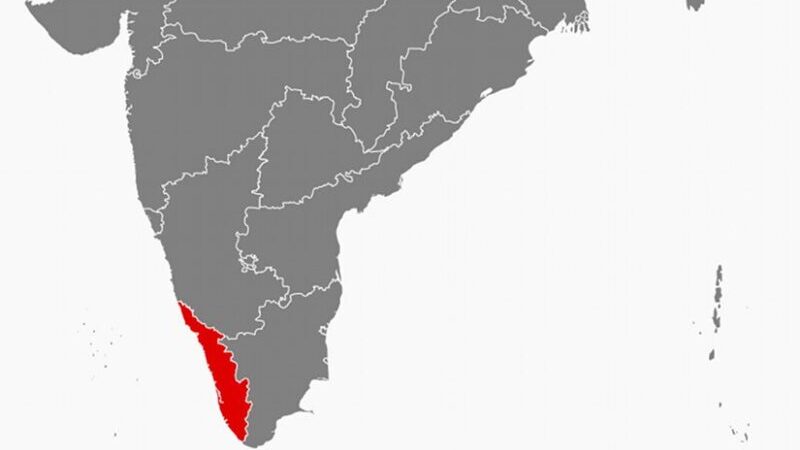
Location of Kerala in India. Source: Wikipedia Commons.


Kerala’s tourism authorities are therefore actively seeking to diversify the state’s international visitor base, with the UK, Europe, the United States and Australia remaining important markets while new opportunities are being explored in East and Southeast Asia.

“Our priorities are to increase international arrivals, improve the quality and length of stay, increase tourist spending, diversify tourism products and destinations, and create greater opportunities for employment, investment and local economic participation,” P.C. Vishnunadh, the minister for culture, cinema and tourism in the government of Kerala told this author in an interview.

As he emphasized, the larger shift is from marketing Kerala simply as a place to visit to positioning the southwest Indian state as a destination to experience, connect with and return to.


“We want Kerala to be recognized globally for the quality of its experiences, the value it creates for visitors and local communities, and its responsible and sustainable model of tourism,” Vishnunadh stressed.

Kerala once sent spices across the Arabian Sea and received merchants, ideas and cultures in return. Its people later travelled in large numbers to the Gulf and other parts of the world in search of work and opportunity. Now the state is trying to encourage the world to come to Kerala to experience its beaches, backwaters, mountains, culture, cuisine, as well as Ayurveda, India’s traditional system of medicine and wellness.

From September 24-27, the state’s commercial capital, Kochi, attracted hundreds of international and Indian tourism professionals to the Kerala Travel Mart, India’s largest business-to-business tourism event. It was an opportunity to showcase Kerala’s tourism offerings to international travel buyers, and also to demonstrate the state’s broader ambitions to strengthen its presence in global tourism markets.

As Kerala’s monsoon season draws to a close, international visitors are expected to arrive in greater numbers, staying in luxurious resorts, heritage properties and boutique hotels. From the beaches along its 590-kilometre coastline to the mountains and forests of the Western Ghats, Kerala offers a striking diversity of landscapes, experiences and cultural traditions.

But a diverse tourism offering is only part of the equation. For Kerala to attract more international visitors, good air connectivity will be equally important, particularly as the state seeks to expand its presence in distant markets such as Europe and North America.

“We are keen to work closely with airlines, airport authorities and the Union Government to strengthen international air connectivity from Kerala. We are also exploring opportunities for more direct and convenient connections to key European destinations, as our larger objective is to make Kerala more accessible to long-haul markets, particularly Europe, North America and other high-value international tourism markets,” Vishnunadh said.


Kerala has four operational international airports, with Cochin International Airport becoming the world’s first fully solar-powered airport in 2015. But its appeal extends beyond its infrastructure and natural attractions.

The state has long occupied an unusual position within India. It has built a reputation for relatively strong social indicators, high literacy and comparatively developed public services, while also maintaining a cultural landscape shaped by Hindu, Muslim and Christian traditions and centuries of interaction with foreign traders and communities.

“We want to build a high-value, sustainable and globally competitive tourism economy,” Vishnunadh stressed.

But this is not an ambition unique to Kerala. India more broadly is seeking to expand its international tourism sector and attract more visitors from abroad. Presently, international visitors remain a relatively small part of the country’s overall tourism expenditure. The World Travel & Tourism Council (WTTC) estimates that international visitor spending accounted for only about 14 percent of India’s total tourism spending in 2025. There is therefore significant scope for India to attract more foreign travelers and increase their contribution to the tourism economy.

Kerala is hoping to capture part of that opportunity, but the next challenge will be turning interest into actual growth. That means bringing in more airlines, reaching new markets and convincing international travelers to stay longer and spend more in Kerala, widely known as “God’s Own Country.”

For a state whose history has long been shaped by its connections with the outside world, attracting more of the world to Kerala could be the next chapter in that story.


About Nikola Mikovic
Nikola Mikovic is a freelance journalist based in Serbia, reporting on geopolitics, energy, economics, tourism, and regional developments across Eurasia. His work has been featured in leading international outlets, including the South China Morning Post, CGTN, The Times of Central Asia, the Lowy Institute, Diplomatic Courier, and Byline Times, among others.
Measles Vaccine Push Urged In Americas After World Cup – Analysis


Measles cases in the Americas have almost tripled already in 2026 compared to the number recorded for the whole of 2025, as vaccine coverage declines. 
Copyright: Enlace Latino

September 28, 2026

By Rodrigo de Oliveira Andrade

Key Takeaways:

PAHO says the Americas logged more than 51,000 confirmed measles cases from January–August 2026—nearly triple all of 2025 (15,152)—the most in 22 years after the region lost measles-free status; Guatemala, Mexico, the U.S., and Peru account for 95%.

Experts (Daniel Salas, Bianca Cata Preta) tie the surge to coverage below the 95% two-dose MMR herd-immunity target (region ~85%) plus World Cup travel in Mexico, the U.S., and Canada; about 73% of cases were in unvaccinated people.

PAHO calls the risk “very high” and wants faster vaccination, surveillance, and outbreak response; Brazil’s 15 early-2026 cases were imported and contained, which specialists cite as the model if neighbors stay hot.


Countries in Latin America are being urged to strengthen vaccination and surveillance to fight measles as the region records the highest number of cases in more than two decades.

Low levels of vaccination coupled with travel during the FIFA World Cup have fuelled the resurgence of the highly contagious disease, which spreads easily through the air and mostly affects children, disease experts say.

Measles is preventable through vaccination but immunisation coverage for the disease in the Americas is below the level needed to protect the population.


So far in 2026 the Americas have recorded the highest number of confirmed measles cases in the last 22 years, according to the Pan American Health Organization (PAHO), the regional office of the World Health Organization.

Between January and August, more than 51,000 cases of the disease were reported, almost triple the number recorded during all of 2025, when 15,152 confirmed cases were reported and the region lost its measles-free status.

In an August advisory, PAHO urged countries in the region to strengthen vaccination, epidemiological surveillance and rapid response to measles outbreaks because the public health risk associated with the disease was “very high”.

Daniel Salas, executive manager of the special programme for comprehensive immunisation at PAHO, told SciDev.Net: “Measles leaves no room for complacency. Each outbreak highlights immunity gaps that must be addressed urgently.”
World Cup fever

Case numbers are particularly high in Guatemala, Mexico, the United States, and Peru, which together, account for 95 per cent of all cases registered in the Americas so far this year, according to PAHO.


The US has reported 39 new outbreaks so far this year and 3,471 confirmed cases up to mid-September, the US Centers for Disease Control and Prevention (CDC) said in an update last week (18 September).

Public health experts say the resurgence of the disease is being driven largely by declining vaccination rates, compounded by the high volume of people traveling across the region for the June-July World Cup, held in Mexico, the US, and Canada.

Bianca de Oliveira Cata Preta, a professor in the department of public health at the Federal University of Paraná, Brazil, told SciDev.Net: “The combination of these factors is what seems to have favoured the spread of the virus, giving rise to the scenario we have now.”

Measles is the most contagious disease affecting humans. It is estimated that one infected person can infect 12 to 18 other people,

“The high mobility associated with international travel and mass events are factors that can favour the spread of the virus within and between countries,” Cata Preta added.

PAHO says it is closely monitoring the situation in all countries with sustained measles transmission, supporting affected countries to strengthen surveillance, detect and respond quickly to cases, and close gaps in vaccine coverage.
Low vaccination cover

Of the measles cases registered in the Americas this year, almost three quarters (73 per cent) were people not vaccinated against the measles virus, according to the PAHO report. For most of the remaining cases, information on vaccination status was unknown or unavailable.


The report says most countries and territories in the Americas still have suboptimal vaccination coverage of below 95 per cent, which is needed to protect the population against measles. Only 85 per cent of the regional population have received the two required doses of the MMR (measles, mumps and rubella) vaccine.

There are several possible reasons to explain the drop in measles vaccination coverage, from difficulty of access to a growing rejection of vaccinations and lack of awareness of the risks associated with the disease, believes Cata Preta.

“It is important to understand the reasons behind the low vaccination rates in each country in order to then think about strategies to combat the low coverage,” she said.

Measles is transmitted through the air or by respiratory droplets when an infected person breathes, coughs, or sneezes. It can cause high fever, cough, runny nose, conjunctivitis, and a rash. In some cases, it can also lead to complications such as pneumonia, encephalitis, blindness, and can be fatal.
Herd immunity

Renato Kfouri, vice president of the Brazilian Society of Vaccination and a paediatric infectious disease specialist, told SciDev.Net: “Vaccination is the most effective way to prevent the disease and stop its spread.

“International health authorities recommend that at least 95 per cent of the population be vaccinated to prevent transmission.”

This is the percentage required to achieve so-called “herd immunity”, when a large percentage of the population becomes immune, making it difficult for a disease to spread.

Kfouri believes the case of Brazil illustrates the importance of maintaining high vaccination coverage rates. The country registered 15 cases of measles in the first 28 weeks of 2026, all of them imported.

This is to be expected, according to Kfouri. But he added: “People travel and can return to the country infected, but the important thing is that these cases, even if they generated secondary cases, were controlled before they could cause outbreaks of the disease.”

Maintaining high vaccination coverage and active surveillance for the early recognition of imported cases is essential, stresses Kfouri, especially when the epidemiological situation in neighbouring countries deteriorates.This article was produced by SciDev.Net’s Latin America and Caribbean edition and edited for clarity.


Rodrigo de Oliveira Andrade writes for SciDev.Net.

Could Moon Dust Provide Propellant For Future Spacecraft?


September 28, 2026

By Eurasia Review

Key Takeaways:

ESA-funded MAGPIE (Surrey Space Centre and Eos Space Technology, Sept. 2026–May 2027, £112,795 via OSIP) will test whether magnesium from lunar dust could fuel electric thrusters instead of Earth-launched xenon or krypton.

Hall-effect engines usually struggle with metal propellant (condensation, unstable plasma, channel wear); the team will melt/extract Mg from different regoliths, design a feed system, and measure performance and impurity tolerance.

Leads Sungwoo Lim and Szymon Dworski say the goal is a first extraction-to-thruster dataset for cislunar logistics—not a flight-ready engine yet.


Could magnesium found in Moon dust help future spacecraft travel further into deep space? A new European Space Agency (ESA)-funded project led by the University of Surrey aims to find out.

Researchers at the prestigious Surrey Space Centre are working with UK propulsion company Eos Space Technology Ltd to investigate whether the metal magnesium can be extracted from lunar regolith (the loose rock and dust covering the Moon) and used as a solid propellant for electric propulsion.

Electric propulsion systems can use gases such as xenon and krypton, but they would need to be transported from Earth. Producing propellant from materials already available on the Moon could reduce this reliance and potentially support future deep space exploration and cislunar commercial activity.


However, using metals such as magnesium in conventional Hall-effect thrusters (a type of electric propulsion system that uses electrically charged particles to generate thrust) presents several challenges, including condensation, unstable plasma and erosion of the channel through which the plasma travels.

The nine-month MAGPIE project (MAGnesium Propulsion from In-Situ Extraction on the Moon) aims to tackle these barriers by testing a novel Hall thruster design and assessing, from extraction through to propulsion, whether lunar-sourced magnesium could become a viable propellant for future spacecraft.

Dr Sungwoo Lim, Principal Investigator of MAGPIE, and Senior Lecturer in Space Applications, Exploration and Instrumentation at the Surrey Space Centre, University of Surrey, said:

“The exciting question behind MAGPIE is whether spacecraft could one day use a resource that is already available on the Moon instead of having to carry all of their propellant from Earth.

“We are proposing to melt the regolith and dust to see if it is possible to extract usable magnesium on the Moon’s surface. Using the specialist facilities here at Surrey Space Centre, we will confirm the effect of changes on how thrusters perform and will develop a way of feeding in magnesium.”


The research team will assess how much magnesium could be obtained from different types of lunar regolith, test ways of extracting it and develop a system for feeding the metal into an electric thruster. They will then test how the thruster performs with different propellants and how tolerant it is to impurities in the magnesium.

Dr Szymon Dworski, CEO and Co-Founder at Eos Space, said: “We will provide the first dataset grounded in actual experimentation which links lunar extraction pathways to a functional thruster architecture. We hope to define the feasibility envelope for metallic-propellant electric propulsion, which will enable future lunar mobility and orbital logistics concepts that do not rely on propellants that are launched from Earth.”

Running from September 2026 to May 2027, the MAGPIE project is backed by £112,795 in funding through the European Space Agency’s Open Space Innovation Platform (OSIP), which supports novel ideas for new space technologies and applications.
Environmental Threats Loom Large In The Himalayan Region – Analysis


September 28, 2026

By P. K. Balachandran

Key Takeaways:

After an Aug. 26 glacial-melt flood on the Tibet–Nepal border that Nepal’s PM Balendra Shah called a “Himalayan tsunami” (article: 1,400+ dead, ~10% of GDP), he told the 81st UNGA Nepal emits under 0.1% of GHGs yet needs grant-based Loss and Damage access, not more loans.

Kathmandu proposed a Nepal–India–China “Himalayan Climate Resilience Mechanism” (satellite data, glacial-lake watch, early warning) and, with Bhutan, Maldives, New Zealand, Samoa, Tajikistan and others, a “Sagarmatha to the Sea” mountain–island coalition; ESCAP and Nepal plan a Bangkok follow-up.

India is separately warning about China’s Medog/Yarlung Zangbo mega-dam (~60 GW, ~$127bn) near the Brahmaputra bend; analyst Brahma Chellaney cites Chinese geological caveats on faults and silt, while Delhi so far uses diplomacy, satellites, and downstream preparedness.


After devastating floods and landslides caused by glacial melt on the Nepal-Tibet border, Nepal has proposed a global disaster-preparedness scheme at the 81st UN General Assembly session in New York. At the same time, India has raised concerns about the possible disastrous consequences of China’s Medog dam project near the Tibet-India border.

The glacial melting on the Tibet-Nepal border on August 26 caused a flash flood that killed more than 1400 people, rendered thousands homeless and caused destruction of 10% of Nepal’s GDP. India fears that the Medog dam project in Tibet, located in the geologically weak Himalayas, could cause havoc downstream in Assam. India has been raising its concerns with China diplomatically, but with little or no effect.

While most of the 191 countries at the 81st. UN General Assembly focused on geopolitical and economic issues, Nepal highlighted the serious threat posed by environmental changes brought about mainly by industrialised and industrialising nations.


Nepalese Prime Minister Balendra Shah used his address on Friday to warn that the Bhotekoshi-Trishuli floods were only a glimpse of the growing climate risks facing the Himalayas. He described the flood as a “Himalayan Tsunami”. Shah linked the floods, avalanches and landslides in Nepal to glacial melting and unstable mountain slopes.

Shah asserted that Nepal was not responsible for the glacial melting in the Himalayas, which is caused by greenhouse gas emissions from advanced countries (in this case China and India, according to the Nepalese).

Nepal, Shah said, contributes less than 0.1% of global greenhouse-gas emissions, and yet its glaciers are retreating, slopes are becoming less stable, and rivers more unpredictable. Every major disaster risks wiping out years of development. He called for greater international support for recovery and reconstruction, arguing that vulnerable countries should not have to take on more debt to repair climate-related damage.
Mere Disaster-Relief Won’t Do

“When a climate-driven disaster destroys the infrastructure of a poor country, the answer cannot simply be another mega loan or a patchwork of small grants,” Shah said. “We need adequate grant-based support from the world.”


He argued that existing climate-finance mechanisms, including the Loss and Damage Fund and the Global Environment Facility, were inadequate and needed simpler, faster access to funding.
Himalayan Climate Resilience Mechanism

Shah proposed a “Himalayan Climate Resilience Mechanism,” led by Nepal, India and China, to strengthen the region’s ability to anticipate and respond to climate-related disasters. The mechanism would share satellite data and expertise, monitor dangerous glacial lakes, build stronger joint early-warning systems and coordinate cross-border disaster response.

“The Himalayas should become a laboratory of international cooperation,” he said. The Hindu Kush Himalaya is home to nearly two billion people; its mountains supply water, ecosystems, agriculture and livelihoods far beyond Nepal.

Shah urged countries to uphold the principle of common but differentiated responsibilities under the UN climate framework, arguing that those with greater historical emissions and greater capacity should do more.
From Disaster Response to Disaster Preparedness

The Nepalese leader called for a shift from “disaster response” to “disaster preparedness”, noting that climate change is making old risk assumptions unreliable.
“Our baselines are no longer relevant,” he said. “We must move from ad hoc responses to a culture of preparedness.”

He urged greater investment in resilient infrastructure, insurance, innovation and early-warning systems, as well as efforts to reduce fossil-fuel dependence.

Coalition of Mountain and Island Nations

Taking another important step on Saturday, the Nepalese Foreign Minister Shisir Khanal convened representatives from Bhutan, the Maldives, New Zealand, Samoa, Tajikistan and other countries, along with senior UN officials, for a high-level meeting titled “Sagarmatha to the Sea: A Call to Action for a Climate-Resilient Future.”

“Sagarmatha” is the Nepali name for Mount Everest, the highest peak in the Himalayas. The meeting linked the highest peaks with low-lying island nations already threatened by rising seas and coastal erosion.

Minister Khanal called for stronger early-warning systems, climate-resilient infrastructure, scientific cooperation and greater access to climate finance and technology for developing countries. He urged more attention to mountain regions in global climate negotiations and demanded that the “Fund for Responding to Loss and Damage” to be adequately financed and more easily accessible.

The wider Himalayan region contains more than 63,000 glaciers and holds the largest concentration of snow and ice outside the polar regions. But Nepal has lost close to a third of its ice in recent decades.

In 2024, worldwide glaciers lost 450 billion tonnes of ice—enough to raise global sea levels by around 1.2 millimetres in a single year, said UNGA President, Dr. Khalilur Rahman.

“What happens in the mountains does not stay there; its consequences travel downstream, across borders, and ultimately to our coasts,” added Maldives Foreign Minister Iruthisham Adam. For the Maldives this means rising seas and coastal erosion; for Samoa it means saltwater intrusion into freshwater supplies and growing threats to infrastructure. Tajikistan reported that around 1,300 of its glaciers have disappeared over the past 50 years.

Globally, the world’s 19 assessed glacier regions lost more than 6,500 gigatonnes of ice between 2000 and 2023.

The UN Economic and Social Commission for Asia and the Pacific and Nepal will convene another regional meeting in Bangkok to advance cooperation on early-warning systems, data sharing and coordinated climate adaptation.

The Hindu Kush-Himalayan region feeds 10 major river systems that support up to two billion people. Changes to a glacier or watershed can travel hundreds or thousands of kilometres downstream. The Himalayas remain unstable and highly vulnerable to climate change and human interventions.
Threat Posed by China’s Mega Dam

Meanwhile, concerns were expressed in India over reports that China is determined to proceed with the Medog mega dam on the lower reaches of the Yarlung Zangbo (which becomes Brahmaputra in India) in a seismically active region of Tibet near the Indian border.

The Medog project is meant to generate 60,000 megawatts—nearly three times the capacity of the existing Three Gorges Dam. It is estimated to cost about US$127 billion. The project was approved in China’s 2021 Five-Year Plan.


Indian analyst Brahma Chellaney, who has written extensively on the subject, has noted that Chinese scientists themselves have warned of serious risks from the colossal dam rising just a few miles from India’s border. The project could reshape the course of the Yarlung Tsangpo.

Perennial flows carry nutrient-rich Himalayan silt. Trapping this sediment would starve downstream floodplains in India and Bangladesh of vital nutrients, while releasing sediment-stripped water would erode riverbeds regardless of season, he points out.

Rather than a single dam with a reservoir, the Medog project is a vast tunnel-linked hydropower and water-diversion complex. It reportedly dams the Yarlung Tsangpo (Brahmaputra) at more than one point around the Great Bend, where the river makes a dramatic U-turn around Namcha Barwa peak before entering India.

Chellaney has urged India to highlight Chinese scientific evidence that the dam is being built atop an active fault system with fragile geological conditions—a Himalayan “collision zone” that has produced some of Asia’s most destructive earthquakes, including the 1950 Assam-Tibet quake that temporarily cut off India’s Northeast and altered the Brahmaputra’s course.

Chinese geologists have concluded that an active Paizhen geological fault runs directly beneath the planned reservoir and key infrastructure of the Medog project. Repeated tectonic activity has fractured the surrounding bedrock. The rock and soil around the reservoir zone have a “loose structure and weak cohesion,” making them highly susceptible to landslides once the enormous reservoir is filled. Even moderate seismic activity could easily trigger widespread slope failures, mass landslides and rock collapses into the river channel.

Chellaney points out that China has a history of dismissing internal scientific warnings about dams. The 1975 Banqiao Dam collapse occurred despite prior warnings. Chinese authorities, he says, reject binding water-sharing treaties, assert absolute territorial sovereignty over upstream rivers and resist transparency on projects that can significantly affect transboundary flows.

Without legal mechanisms to halt construction, India has so far concentrated on satellite monitoring, downstream infrastructure and disaster preparedness while raising concerns through confidential diplomatic channels. Chellaney argues that time is ripe for a firmer public stance.


About P. K. Balachandran
P. K. Balachandran is a senior Indian journalist working in Sri Lanka for local and international media and has been writing on South Asian issues for the past 21 years.
View all posts by P. K. Balachandran →