A case involving the sexual abuse of a kindergarten child in Uzbekistan’s eastern province of Namangan has sparked such outrage that it is leading to a rapid change in legislation.
Once the matter caught the attention of the president’s two daughters, it was clear that harsher punishment would soon be in store for paedophiles. Within days of media reporting of the case, Uzbekistan’s lower house of parliament approved sentences of 25 years ranging up to life imprisonment for convicted paedophiles. But some top officials wanted more and made calls for the reinstatement of the death penalty. And this wasn’t the first occasion in recent times that the prospect of a return to capital punishment had received a prominent and firm mention in Central Asia.
The crime
Uzbek media outlet Daryo reported on the stark incident on September 22. The 52-year-old head of the kindergarten administration was detained for repeatedly raping a five-year-old girl.
The girl’s family reportedly lived in the same neighbourhood as the alleged assailant. On September 27, the president’s eldest daughter Saida Mirziyoyeva posted about the “monstrous crime” on Telegram, saying she was furious and writing that the perpetrator should face the death penalty.
Capital punishment was abolished in Uzbekistan in 2008.
On September 28, Alisher Qodirov, the deputy speaker of the Oliy Majlis, the lower house of parliament, and also the leader of Uzbekistan’s Milli Tiklanish (National Revival) political party, joined Saida Mirziyoyeva in calling for paedophiles to be executed.
Saida’s younger sister Shahnoza holds a slightly different opinion on the proper punishment for paedophiles. Shahnoza Mirziyoyeva is the first deputy director of the National Agency for Social Protection. The same day Saida was posting about the death penalty, Shahnoza commented about assistance for the victim and her family.

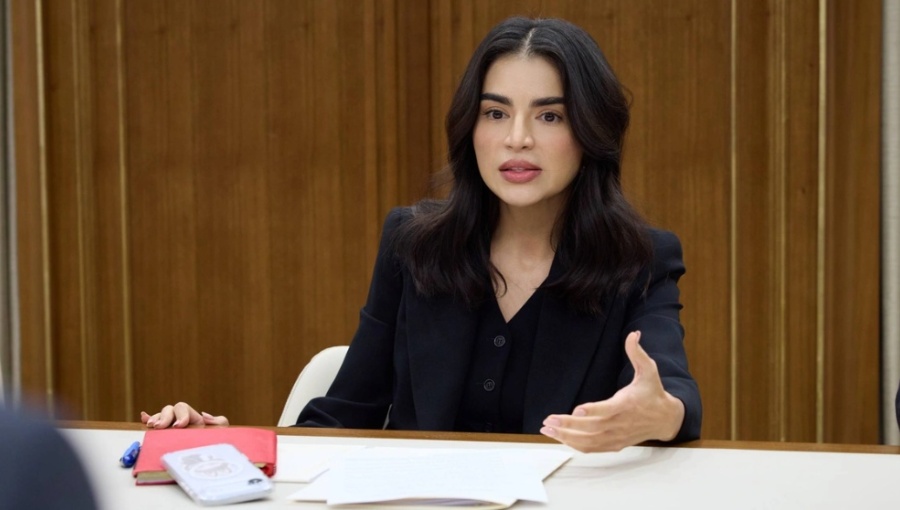
As first deputy director of the National Agency for Social Protection, Shahnoza Mirziyoyeva has worked on legislation that will toughen punishment for paedophiles, including with life imprisonment sentences (Credit: Uzbekistan's National Agency for Social Protection).
Shahnoza said “specialists and psychologists were already working with the girl and her mother” and her agency would help move the family to another city.
She also said that her agency and other government bodies had already spent several months preparing new legislation that would toughen punishment for paedophiles, including with life imprisonment.
The proposals also included providing victims with legal assistance and protection through investigations and court proceedings.
On September 29, the Oliy Majlis passed the bill toughening penalties for all forms of violence against people under 14 years of age, including the possibility of life imprisonment.
The Oliy Majlis then passed the bill in the second reading and rather than have a third and final reading, sent it to the Senate for approval.
On October 2, the Senate voted through the bill, which now only needs the president’s signature to become law.
The death penalty
All the Central Asian countries have abolished the death penalty in post-Soviet times, but that could change.
Mirziyoyeva and Qodirov are not the only people to call for the reinstatement of capital punishment.
Violence against women and children has been a big problem in Kyrgyzstan also. When a 41-year-old man was apprehended in late September 2025 for raping and killing a 17-year-old girl, Kyrgyz President Sadyr Japarov called for bringing back the death penalty for crimes against women and children.
Kyrgyzstan put a moratorium on use of the death penalty in 1998 and in 2007 it was formally abolished and replaced with life imprisonment.
Some in Kyrgyzstan support reinstating capital punishment and the presidential administration submitted a draft law for public discussion in mid-October.
Japarov also said the country would conduct a referendum on the use of the death penalty.
Kyrgyzstan’s Constitutional Court finally stymied momentum, blocking the initiative in December, but if another gruesome attack on a woman or child occurs, calls for the death penalty will probably return.
When they became independent, all five of the Central Asian states still had the death penalty on the books.
An article in Kyrgyzstan’s Vecherny Bishkek newspaper published in early March 1997 said that in 1996 there were 41 executions in Kyrgyzstan, 42 in Kazakhstan and an estimated 400 in Turkmenistan.
The report noted that Uzbekistan did not publish figures on executions but used the death penalty for "crimes against peace and security,” while Tajikistan, where a civil war was still raging at the time, officially executed 20 people, but the newspaper saw this figure as dubious.
Growing anger
It is not surprising that capital punishment has entered the conversation in Central Asia on what tougher measures could be used to fight sexual violence against children.
Many of the cases reported by media are saddening, outrageous and infuriating.
Saida Mirziyoyeva’s reaction to this latest despicable crime was to be expected.
In 2022, two men in western Uzbekistan’s Khorezm Province were found guilty of repeatedly raping three girls between the ages of 15 and 17 in the care of a foster home.
The woman in charge of the foster home had been forcing the girls into prostitution. She was sentenced to five and a half years in prison.
The two men, one the head of the local department of justice, the other the head of the local department for emergencies, were convicted but received only 18 months of parole.
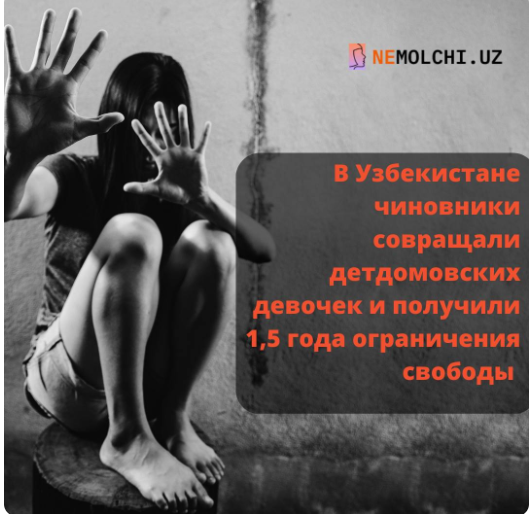
Uzbek organisation Nemolchi.uz was created in 2017 to draw attention to violence against women and girls and change public attitudes towards the issue (Credit: Nemolchi.cz).
Uzbekistan’s Nemolchi (“Don’t be silent”) organisation, which combats gender-based violence (GBV), released a report on March 31, 2023, that detailed the crimes and court proceedings in the case.
Saida Mirziyoyeva took note of the report and called for the “acceleration of the adoption of a law on combatting domestic violence.”
Mirziyoyeva, who was head of the presidential administration’s Communications and Information Policy Department at the time, worked with Nemolchi and other organisations to push through new legislation on gender-based violence.
The two men involved in the rapes of the girls from the foster home were retried in autumn 2023 and sentenced to three years in prison.
Now, Mirziyoyeva is the head of the presidential administration. She is the most powerful person in Uzbekistan after her father Shavkat Mirziyoyev, but she seems to have deferred to cooler heads advocating life imprisonment rather than capital punishment for the sexual abuse of minors.
But if a similar heinous crime happens again, the president’s eldest daughter might insist on bringing back the death penalty, much as Kyrgyzstan’s President Japarov is likely to do if there is another horrific murder of a young woman.
The death penalty has not been used in Central Asia in the 21st century, but its use might not be far off.


No comments:
Post a Comment