Friday, October 02, 2026

Assisi marks 800 years since St Francis's death and remains a symbol of peace and dialogue
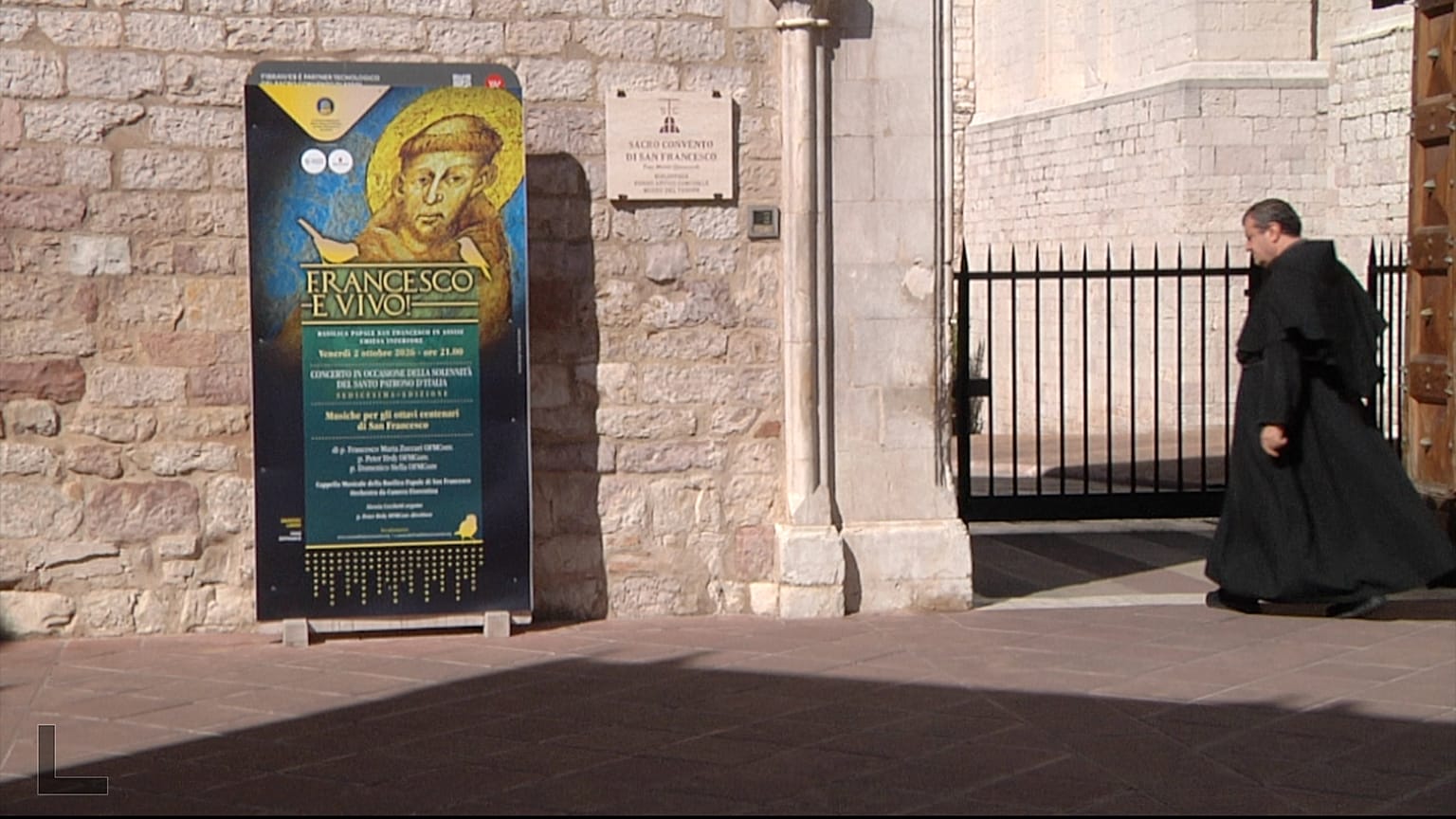
Assisi marks 800 years since the death of Saint Francis
Copyright Fanuel Morelli'

By Fanuel Morelli & Cecilia Attanasio Ghezzi
Published on

Today we honour Saint Francis, symbol of peace and diplomacy. On the 800th anniversary of his death, Euronews revisits his meeting with the sultan of Egypt and what this charismatic figure still has to teach us.

In 2026, 4 October, the day dedicated to Saint Francis, was made a national holiday. In Assisi the celebrations are entering their peak in these very days and the epicentre will be the Upper Basilica. At 23:59 on Saturday 3 October the bells will ring out in celebration, marking the start of the official festivities.

From this year, 4 October has once again become a national holiday to celebrate the universal values of peace, fraternity, solidarity and respect for the environment embodied by Saint Francis of Assisi.

On Sunday, the first national holiday dedicated to the saint, the ceremony will be attended by Italy's president, Sergio Mattarella, and ambassadors from all over the world because, as Euronews is told by Friar Giulio Cesareo, director of the communications office of the Sacred Convent of Assisi, "Francis is not a gift only for Italy but for the world".

But who was Saint Francis and why does his appeal remain so powerful 800 years after his death?

Tradition has handed down to us several different images of Francis, all of which in some way continue to speak to today's world. As Professor Antonio Musarra, a medieval historian at Sapienza University of Rome and a Harvard fellow who has recently published The World According to Francis of Assisi (Il Mulino, 2026) (source in Italian), explains to Euronews:

"Francis has been reread throughout history in completely different ways. Already in his own time, in the 1200s, biographies and hagiographies piled up that portrayed him differently, but the Francis we have today, the one we have inherited, is the one that begins to emerge after the First World War: he is Francis of peace, Francis the diplomat, Francis who tries to reconcile warring factions."

And indeed, when we ask him how relevant the saint still is and what he could teach today's world, the professor has no doubts: it is his modus operandi, his 'style'. "A style we can clearly see in his relationship with the Mediterranean, with other cultures, with the other," the professor adds.

He offers two examples: "The other in one's own home, for instance the leper whose encounter triggers his conversion, but also religious otherness, as when he met the sultan." An encounter that Giotto chose to depict in the cycle on the life of Saint Francis with which, at the end of the 13th century, he frescoed the lower part of the single nave of Assisi's Upper Basilica.

Why the meeting between Francis and Saladin's nephew is so important

The meeting between Saint Francis of Assisi and the Egyptian sultan al-Malik al-Kamil took place during the Fifth Crusade in Damietta, Egypt. It is an encounter from which we can still learn today.

As Father Paolo Nicelli, a theology lecturer at the Catholic University of Milan and an expert on the relationship between Islam and modernity, explains to Euronews: "Damietta is a port, a major commercial hub and therefore of interest to both Christians and Muslims, and so the dispute is not spiritual but clearly of an economic and military nature."

He continues: "On the one hand we have Francis, a profoundly spiritual man; on the other we have a statesman, as is the case in Islam." Saint Francis is a man of faith and leaves the crusaders' camp to cross enemy lines, convinced that he will succeed in converting Saladin's nephew.

The conversion never took place, but Francis was received with respect by the sultan. Hagiographic tradition also tells of the legendary "trial by fire", in which Francis declared himself ready to enter the flames to prove the truth of his faith. The sultan declined the challenge but was struck by the courage of the poor man of Assisi.

This meeting with a representative of Islam based on words rather than weapons would, in the centuries that followed, become a model of peace and interreligious dialogue.

"An example of mercy and forgiveness," Nicelli adds. "A forgiveness that is even more necessary today, especially in a globalised society like ours. In this sense Francis's model is unquestionably countercultural, because it runs exactly against the prevailing values of today: careerism, individualism, selfishness, self-centredness, self-glorification and so on."

And it is perhaps for this reason that, 800 years after his death, his figure is still so widely celebrated and so important today.


 

The solar system will fall apart far sooner than anyone thought, scientists say

The sun sets beyond the lights of a distant youth baseball complex Sunday, Sept. 27, 2026, in Lenexa, Kan. (AP Photo/Charlie Riedel)
Copyright Copyright 2026 The Associated Press. All rights reserved.


By Jonathan Benton
Published on


Earth will be long gone by then, but new research shows the outer planets will be thrown out too, and a billion times earlier than expected, according to astrophysics research.

The outer planets of the solar system will be thrown into chaos roughly a billion years after the Sun dies, a new study has found, cutting their expected life span a billion-fold.

Previous estimates put the stability of the giant planets' orbits at around a quintillion years, far longer than the current age of the universe.

Researchers at California’s Institute of Technology (Caltech) were investigating how the sun’s slow death would impact the outer planets including Jupiter, Saturn, Uranus and Neptune.

It was also previously believed by many scientists, including Isaac Newton, that the sun would shed its mass smoothly as it slowly died, transitioning first into a Red Giant and later a White Dwarf.

Earth, Venus and Mercury would be the first to go, consumed by the Sun as it expanded into a Red Giant, with Mars the lone survivor, sitting far enough away to escape the engulfment.

Earlier studies found the outer planets would survive this process, with their orbits widening to about twice their current size as the Sun lost mass. Their eventual break-up was expected to come only from passing stars, over 30 to 100 billion years.

The new findings suggest this picture is wrong. Instead, the outer planets will be thrown into disorder roughly one billion years after the Sun becomes a white dwarf, which is still billions of years away.

When the Sun becomes a white dwarf, it rapidly cools and shrinks to half its current size, but this will not be a smooth process and previously thought.

The research argues the star will lose its mass in violent, random ejections known as “stochastic kicks,” rather than a calm, consistent release.

The new findings suggest this picture is wrong. Instead, the outer planets will be thrown into disorder roughly one billion years after the Sun becomes a white dwarf, which is still billions of years away.

The solar system is 4.57 billion years old, and the Sun has around five billion years left before it swells into a red giant. Scientists had long assumed the giant planets would outlast it by an almost unimaginable stretch of time.

The research was carried out using high-performance supercomputers and hundreds of advanced N-body numeral simulations, with no AI tools involved whatsoever.

The researchers programmed a virtual model of the solar system containing the Sun, Jupiter, Saturn, Uranus and Neptune, which the supercomputers then calculated and simulated the velocity and position over billions of years.

What made this year analysis different from previous research was the scripting of the sun losing its mass as it died via random, violent, episodic bursts, with hundreds of different model iterations tested in order to come to a consensus conclusion.

The findings were reported in a study called ‘Terminal Instability of the Solar System Triggered by Stochastic Solar Mass Loss’, published in The Astrophysical Journal Letters.


DR Congo Ebola outbreak killed more than 4,000: official figures

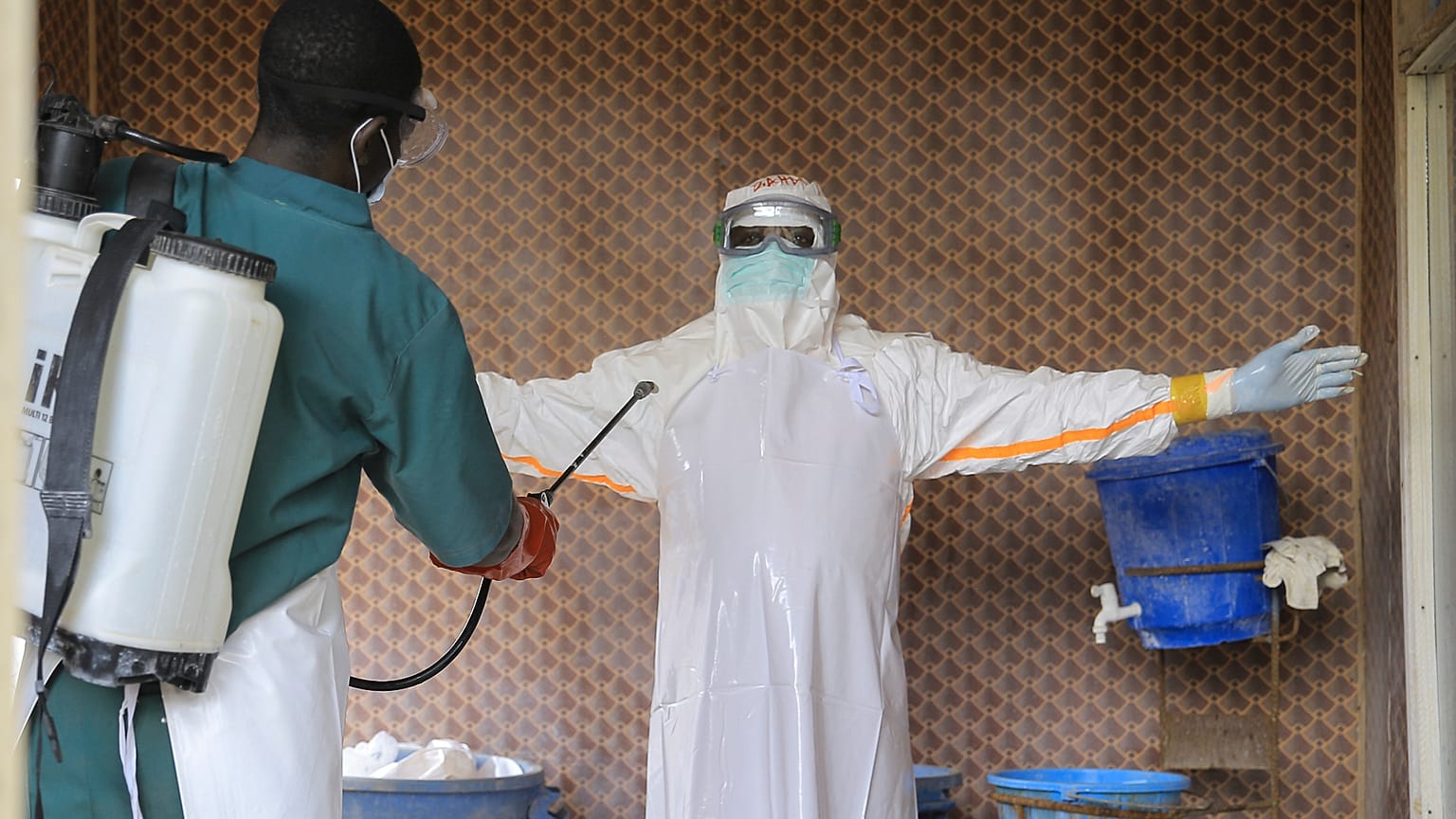
A healthcare worker in protective clothing is disinfected by a colleague inside a treatment center for Ebola patients in Beni, DR Congo.
Copyright Copyright 2026 The Associated Press. All rights reserved

By Gael Camba
Published on

The worst ever Ebola outbreak in the Democratic Republic of Congo has now killed more than 4,000 people out of more than 8,000 confirmed cases, Congolese officials said on Friday.

The Ebola outbreak, officially detected in mid-May, has hit unstable regions in the vast central African country where armed clashes and violence, alongside a critical lack of resources, have hindered the health response to the deadly virus in recent days.

According to the latest official data, there have been 4,018 fatalities from 8,300 cases, with 2,162 people recovering, giving a fatality rate to date of 48.4 percent.

Also recorded have been four deaths among six cases in North Kivu province in the northeast in areas controlled by the anti-government group M23, the Kigali-backed group stated Friday.

After starting in Ituri, also in the northeast, the current outbreak has spread to seven provinces in the north and east.

The response has been hindered by conflict but also mistrust of authority which runs deep among inhabitants of several provinces.

Violent clashes disturbing health aid

Recent days have seen violent clashes between local militias that have hampered the response in Ituri, with more than 5,000 people displaced, the UN said on Thursday.

A transit centre for Ebola patients burned down Tuesday in the same province after soldiers entered a site for displaced people who promptly fled, according to the UN.

A contractor responsible for detecting cases was also killed in an attack on a health facility in North Kivu province, Congolese authorities said Wednesday.

French Foreign Minister Jean-Noel Barrot was due in Ituri capital Bunia on Friday to show Paris' support for local authorities and humanitarian workers.

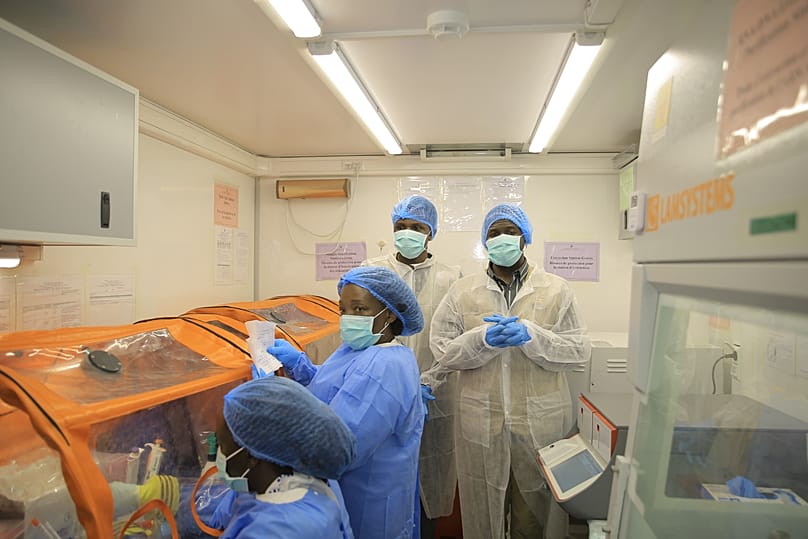
Medical workers work inside a mobile lab set up to test rapidly for Ebola virus in Butembo, DR Congo.
Medical workers work inside a mobile lab set up to test rapidly for Ebola virus in Butembo, DR Congo. Copyright 2026 The Associated Press. All rights reserved

There is no indication France is offering fresh humanitarian aid, but the country did allocate €13.4M to the fight against Ebola between January and July.

The United States has meanwhile announced it is releasing a further €237M to combat the spread of the disease.

Healthcare workers are notably at risk of contracting the virus in poor and remote regions where healthcare infrastructure is poor.

Several vaccines and treatments are currently being studied to combat the Bundibugyo strain of the Ebola virus, which is behind the current outbreak.

The first doses of the Ervebo vaccine — which has been proven effective against the Zaire strain, the most common variant, in the past — have been administered in recent weeks to volunteers among frontline staff as part of a clinical trial.

EU farmers face falling produce prices as fuel and fertiliser costs rise


By Tamsin Paternoster & Leo Arnoux
Published on

Eurostat figures show a widening gap between the prices farmers receive and those they pay, as EU ministers discuss support and farming groups demand help.

EU farmers received lower prices for their products on average in the second quarter of 2026, while the prices of supplies used in agriculture increased, according to Eurostat.

Agricultural output prices fell by 5.8% compared with the same period in 2025, the statistics office said. It was the third consecutive quarter of year-on-year decline.

Meanwhile, average prices for goods and services consumed in agriculture, such as energy, fertilisers and animal feed rose by 4.7%.

Ministers for agriculture, who met on 28 September, highlighted high production costs, particularly for fertilisers and energy, alongside lower output prices and pressure on farmers' profit margins.

Milk prices fall as energy costs climb

Milk prices recorded a particularly sharp fall, with the average price farmers received being 16.6% lower than a year earlier. Cereal prices fell by 5.6%.

On the other side of the balance sheet, energy and lubricant prices rose by 22%, while fertilisers and soil improvers became 13.4% more expensive.

Average agricultural output prices fell in 20 EU countries, with Denmark recording the steepest decline, at 17.2%, followed by Ireland at 16.2%.

Input prices rose in every member state, with the largest increases in Lithuania, at 16.4%, and Romania, at 11.7%. These country comparisons also cover the second quarter of 2026 against the same quarter in 2025.

Farming groups have responded with anger over rising fuel prices, with Spanish farmers demanding urgent aid for rising diesel and fertiliser costs at a meeting with agriculture minister Luis Planas on 22 September, warning of protests if the government failed to act.

In France, record fuel prices have prompted demonstrations by farmers and blockades by fishermen, while the government has announced the expansion of targeted fuel relief measures.

What is the EU doing?

On 17 July, the European Commission announced a €540 million allocation to compensate the farmers most affected by economic losses linked to higher fertiliser and energy costs arising from the Middle East crisis.

France was allocated approximately €107.1 million and Spain €50.2 million. National authorities are responsible for deciding how to target the funding at the farmers and sectors most affected.

Ministers also discussed longer-term measures under the Commission's fertiliser action plan on 28 September. Published in May, the plan aims to improve fertiliser affordability and availability and strengthen the EU's domestic supply resilience.


EU adds €130 million to drone funding in border security push

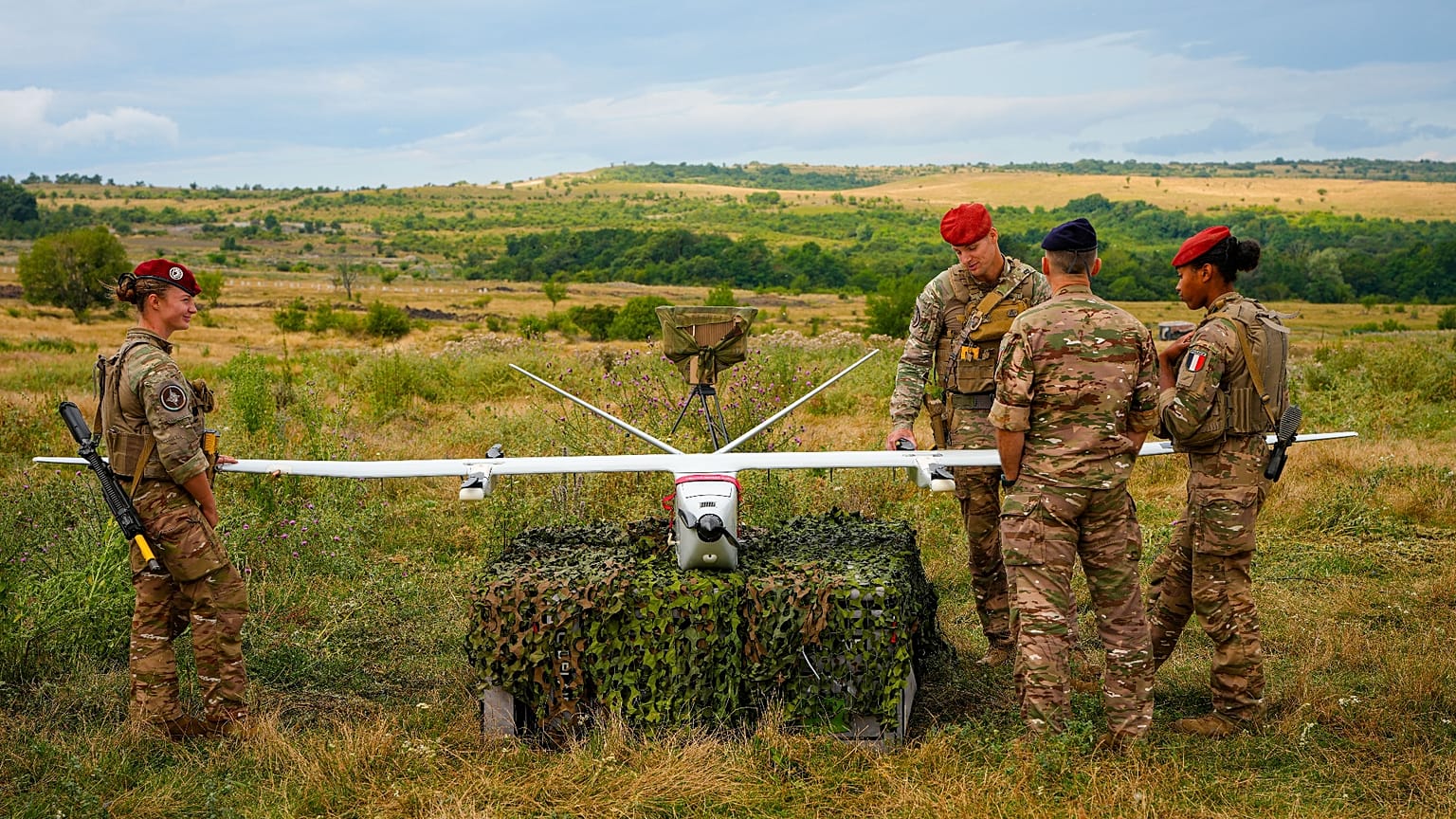
Servicemen and servicewomen look at a surveillance drone during the French-led NATO Eagle Spearhead exercise in Romania, Aug. 18, 2026.
Copyright AP Photo/ Vadim Ghirda

By Luca Bertuzzi & Vincenzo Genovese
Published on

The Commission is adding €130 million for drone technology as Brussels steps up border surveillance and prepares to strengthen Frontex’s role.

The EU is putting an additional €130 million into drone technology as part of a broader push to strengthen border security and counter hybrid threats.

The European Commission announced the funding at a meeting of justice and home affairs ministers in Luxembourg – their first in-person talks on migration and border controls since the Ceuta crisis erupted this summer.

"Another important topic today is how we work with new technologies, drones. That is important also for border protection, but also for protecting our critical infrastructure," European Commissioner for Internal Affairs and Migration Magnus Brunner said on Thursday.

In February, the Commission unveiled an action plan on drone and counter-drone security, including a €250 million call for national authorities to invest in land and maritime border surveillance.

The scheme covers up to 90% of project costs, including the purchase of drones and counter-drone systems, their integration into national surveillance networks and other technologies designed to counter hybrid threats.

"Due to the high demand actually and the excellent quality of many proposals in the member states, we will be topping up the initiative with another 130 million," Brunner said.

"I've just visited the counter-drone centre in Munich last week and saw how much progress our authorities throughout the whole Union are making," he added.

Brussels has separately made €170 million available to EU border agency Frontex and national authorities under the Border Management and Visa Instrument to buy uncrewed equipment for border surveillance.

The latest top-up brings EU investment in new border-surveillance technology to more than €500 million, reflecting the growing emphasis on security.

Greece, meanwhile, has proposed temporarily suspending the right to apply for asylum during emergencies involving mass arrivals of irregular migrants. Several member states, including Poland, Germany, Austria and Denmark, back the idea.

Brussels is also expected to strengthen Frontex's role, particularly in crisis management and in monitoring emerging hybrid threats online. The agency's mandate is up for review later this year.

EU leaders are set to discuss the bloc's approach to migration and border management at a European Council summit on 15-16 October.


How many birds are killed by offshore wind turbines? Scientists use thermal cameras to find out


By Liam Gilliver
Published on


A year-long study has observed millions of birds migrating across the North Sea to 
measure the threat of offshore wind farms.

Europe leads the world in offshore wind energy, with more than 30 gigawatts (GW) of installed capacity across the continent – enough to power more than 26 million homes annually.

Earlier this year, Belgium, Denmark, France, Germany, Iceland, Ireland, Luxembourg, the Netherlands, Norway and the UK committed to deliver 100GW of joint offshore wind projects across shared North Sea waters by 2050.

The €9.5 billion plan, known as the Hamburg Declaration, aims to turn the North Sea into the world’s “largest clean energy reservoir” and mobilise €1 trillion of capital in Europe.

But is our path to a fossil fuel-free future jeopardising birds that are already plummeting in number due to human-caused climate change?

Are offshore wind turbines a threat to birds?

Most studies into bird collisions with turbines tend to focus on wind farms located on land. But every year, millions of songbirds cross the North Sea during spring and autumn migration, mostly at night.

Capturing collisions at sea can be difficult, due to a lack of light and the remote location.

However, a new year-long pilot study has allowed researchers to detect these small birds and bats during hours of darkness, as well as larger birds during daylight hours, using a combination of thermal cameras and artificial intelligence (AI).

The study, initiated by the energy company Vattenfall, was carried out at the Hollandse Kust Zuid offshore wind farm in collaboration with Wildlife Imaging Systems (WIS) and Wageningen University & Research (WUR).

WIS installed 16 thermal cameras on an offshore wind turbine, covering all angles and operating 24 hours a day. Combined with AI, the system detected and interpreted bird movements day and night, including in poor visibility such as fog or rain.

Various birds flying. A gull is flying by just in front of the camera; possibly taking off after having rested on the turbine; the other tracks show birds and insects. Wageningen University & Research

“Safeguarding biodiversity is an important part of the energy transition,” says Karen Krijgsveld, a bird ecology researcher at Wageningen University & Research.

“On land, we already know quite a lot about when and why birds collide with turbines, and which species are most at risk. As offshore wind energy continues to expand, we need to develop that same understanding at sea.”

Over almost a year of monitoring, covering both a spring and an autumn migration season, 22 possible bird collisions were identified – two of which were confirmed and one considered highly probable.

“Until now, estimates of offshore bird collisions were mainly based on theoretical models,” says Jesper Kyed Larsen, a bioscience expert at Vattenfall.

“At sea, it’s extremely difficult to verify fatalities because there are no remains to recover. This study demonstrates how we can get the empirical data needed to improve collision estimates and secure efficient mitigation measures.”

The study does not claim that collisions are rare or that these initial results from one turbine can be applied everywhere. The primary aim was to test the technology’s performance under real offshore conditions.

But a previous study by the German Offshore Wind Energy Association (BWO) also yielded similar results.

Researchers analysed more than four million bird movements over one and a half years, using radar and AI-based cameras. They found that more than 99.8 per cent of migratory birds reliably avoided the wind turbines.

Vattenfall previously conducted another study on an offshore wind farm near Aberdeen, Scotland. Over a period of 19 months – from June 2023 to December 2024 – video recordings of a wind turbine were made with the help of AI-supported analyses.

A total of 2,007 bird flight paths near the monitored turbine were examined and no collisions were found.

How can Europe protect its endangered birds?

Despite all three studies suggesting a minimal impact of offshore wind farms on birds, conservationists warn that measures must still be put in place to help protect endangered species.

Of the 26 seabirds that breed on the UK’s coastlines and islands, 10 are already on the endangered list.

Back in 2020, the land-based Smola wind farm in Norway, which consists of 68 turbines, painted one blade on each turbine black to make them stand out to birds. They found the initiative reduced avian fatalities by a staggering 70 per cent, from 11 recorded bird carcasses before painting to six afterwards.

Some critics argue that making wind farms more visible could impact birds’ migration patterns, forcing them to fly longer routes around a turbine. This means they will use up more energy, and it will take them longer to get back to their chicks.

Other measures include placing turbines far away from sensitive habitats and avoiding migration paths in the first place. Thermal cameras and radar can also be used to further investigate the risk these turbines pose to our flying friends.


AI decodes 217-year-old Napoleonic letter in 6 hours

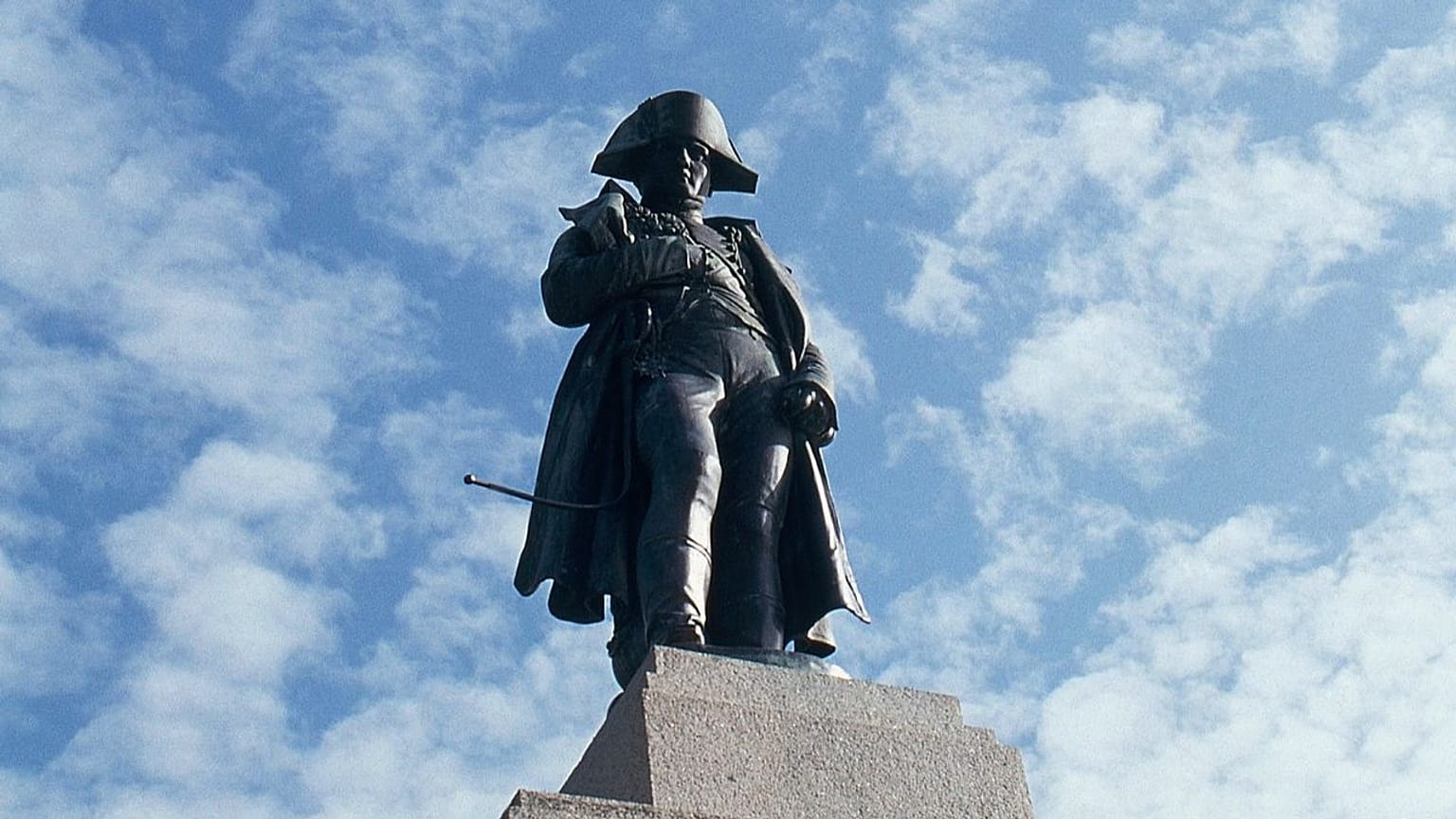
View of a statue of Napoleon in the town of Ajaccio in Corsica, France, 1984 . Corsica is the birthplace of Napoleon Bonaparte
Copyright AP Photo/Georges Walther

By Pascale Davies
Published on

An engineer used artificial intelligence to decode a military cypher from the Napoleonic era that had gone unsolved for more than two centuries.

Artificial intelligence has decoded a letter written on Napoleon Bonaparte’s orders for the first time in more than 200 years.

The document was not a letter written directly by Napoleon. It originated at the headquarters of Eugène de Beauharnais, Viceroy of Italy, and was an encrypted troop briefing passed to Marmont on Napoleon's orders.

An engineer at cybersecurity company SentinelOne, Carter Church, wrote on social media that OpenAI's GPT-6 Astra model deciphered an encrypted 1809 letter sent to French General Auguste de Marmont.

The AI model transcribed the image to break the cypher in roughly six hours, Church said.

“Astra cut the 1,202 by 1,836 plate into rows, read the signs, decided which of 175 hand–drawn marks were the same sign written twice, and only then began breaking the cypher,” Church wrote in a blog post.

Several researchers had tried over the decades to reconstruct the document's contents, but none had published a full decipherment.

Astra handled the work end to end, including transcribing the image, analysing the homophonic substitution cypher, writing code and cross-referencing historical records.

The text revealed the positions of Bavarian, Polish and French forces.

In 1809, Europe was edging toward war. Austria was preparing to fight France, while a large share of French forces remained tied down in Spain. Marmont, commanding French troops in Dalmatia, risked being isolated if Austria attacked.

On March 16, Napoleon ordered Eugène to inform Marmont of the positions of the main French and allied forces, specifying that the message be "written in cypher" and carried by a reliable officer.

“The Russians are marching against Austria, and the army [of] Friuli today numbers eighty thousand men,” the document reads.

“Add the Dalmatian corps, without counting the reserves being organised everywhere in the rear, and you see that Austria will be attacked at once on every side.

“She is consequently hastening toward her ruin. When you receive the order to march, you must not allow yourself to be intimidated by a few troops or a gathering of rabble.”

Using the decoded troop numbers, officers' titles and unit positions, Church re-dated the document to late March 1809, about two weeks before Austrian forces launched the offensive.

Church published his complete research record on September 18, including the transcription, cypher tables and scripts that allow others to reproduce the result.

According to Church, Satoshi Tomokiyo, the Tokyo-based researcher who maintains Cryptiana, reviewed the solution and marked the entry as "solved."


Could the future of AI data centres be in space? Google wants to find out

Source: AP Photo
Copyright AP Photo

By Jonathan Benton
Published on

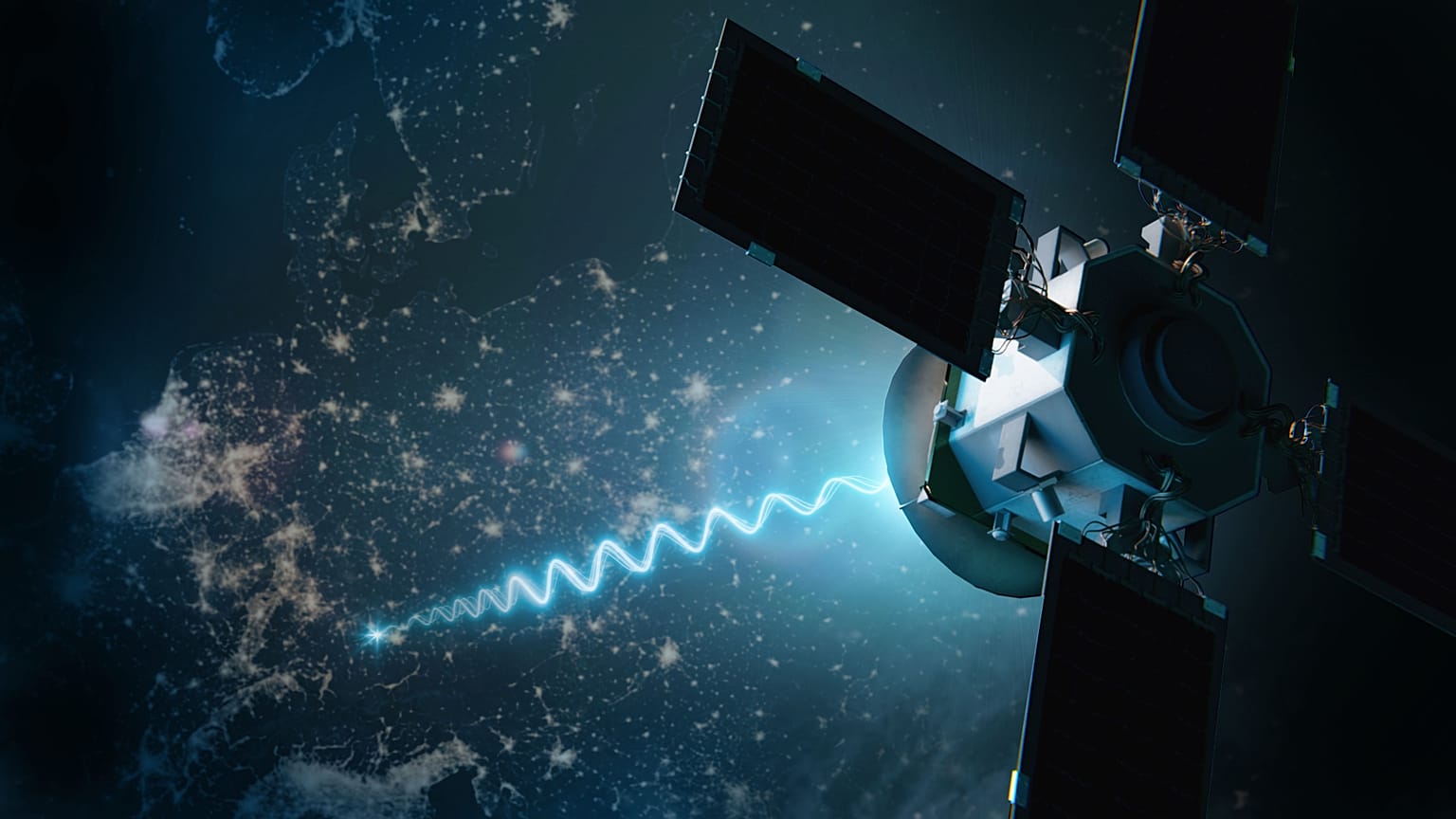
The tech giant has launched a prototype satellite carrying its AI chips to explore whether solar powered infrastructure in orbit could one day support large-scale computing.

Google launched a prototype satellite into orbit loaded with its AI chips on Thursday as part of the first phase of a project to explore if space could be the best place for powering large-scale AI infrastructure.

The satellite, built by Planet Labs and launched on SpaceX's Transporter-18 rideshare, is loaded with Google's Tensor Processing Units (TPUs) to see how they perform in space and deal with the physical stress of spaceflight, radiation and extreme temperature conditions.

The thinking behind the initiative, aptly named 'Project Suncatcher', is to place satellites in low-earth orbit where they can benefit from near-constant sunlight to capture up to eight times more solar energy than on Earth.

Google wants to see if large-scale machine-learning infrastructure can survive in space and benefit from abundant solar energy.

The amount of energy data centres consume is growing rapidly, driven in no small part by the massive surge in artificial intelligence workloads. Globally, data centres consumed an estimated 415 to 485 terawatt-hours (TWh) last year.

This accounts for 1.5% to 2.5% of the world’s total electricity generation, according to the European Commission, a figure that is set to double by 2030.

Many data centre projects around the world are facing growing public opposition amid concerns that they drive up energy bills; therefore, building data centres in space far away from the general public is an appealing prospect.

Google is not the only company exploring the possibility of sending AI into space. Nvidia-backed startup Starcloud trained an artificial intelligence model from space for the first time last December.

In June, Elon Musk unveiled SpaceX's AI1 satellite, also known as Starmind, a new satellite class designed as a flying GPU (graphics processing unit) cluster rather than a communications relay.

And in September, Mistral announced a partnership with Marlan Space and Loft Orbital to develop artificial intelligence satellite infrastructure, with the first satellite launch this October.

What is Google testing?

The launch marked the first phase of Google's test with a 10-minute climb into low Earth orbit. The spacecraft endured intense vibrations and sustained acceleration of up to 10 times the force of gravity, while the TPU chips on board were hit by brief shocks of between 50 and 100g.

In anticipation of these hardy conditions, the Suncatcher team carried out vibration testing on the satellite to mimic a rocket launch, with the craft and TPU chips passing test.

Now that Google has safely launched the TPU chips into orbit, the next phase of the experiment begins as the team assesses how the TPU chips deal with the higher levels of radiation outside the Earth's atmosphere, as well as solar events and cosmic rays, which can also disrupt electrical systems.

Data centres infamously require an inordinate amount of energy and water resources, but in the vacuum of space this is a different problem entirely. The mission will be an opportunity for the research team to test a number of different solutions, including a combination of heat pipes and radiators to cool the chips.

In future Suncatcher missions, satellites carrying dozens of TPU chips will be tested with the aim of moving from the current approach of low bandwidth across large distances to high bandwidth over extremely short distances to maintain connectivity.

The technology already exists in space. However, Google will test ways of maintaining a high bandwidth connectivity over shorter distances with greater accuracy when it launches further satellites next year.


Did Trump order Maduro’s kidnapping based on Grok’s advice?

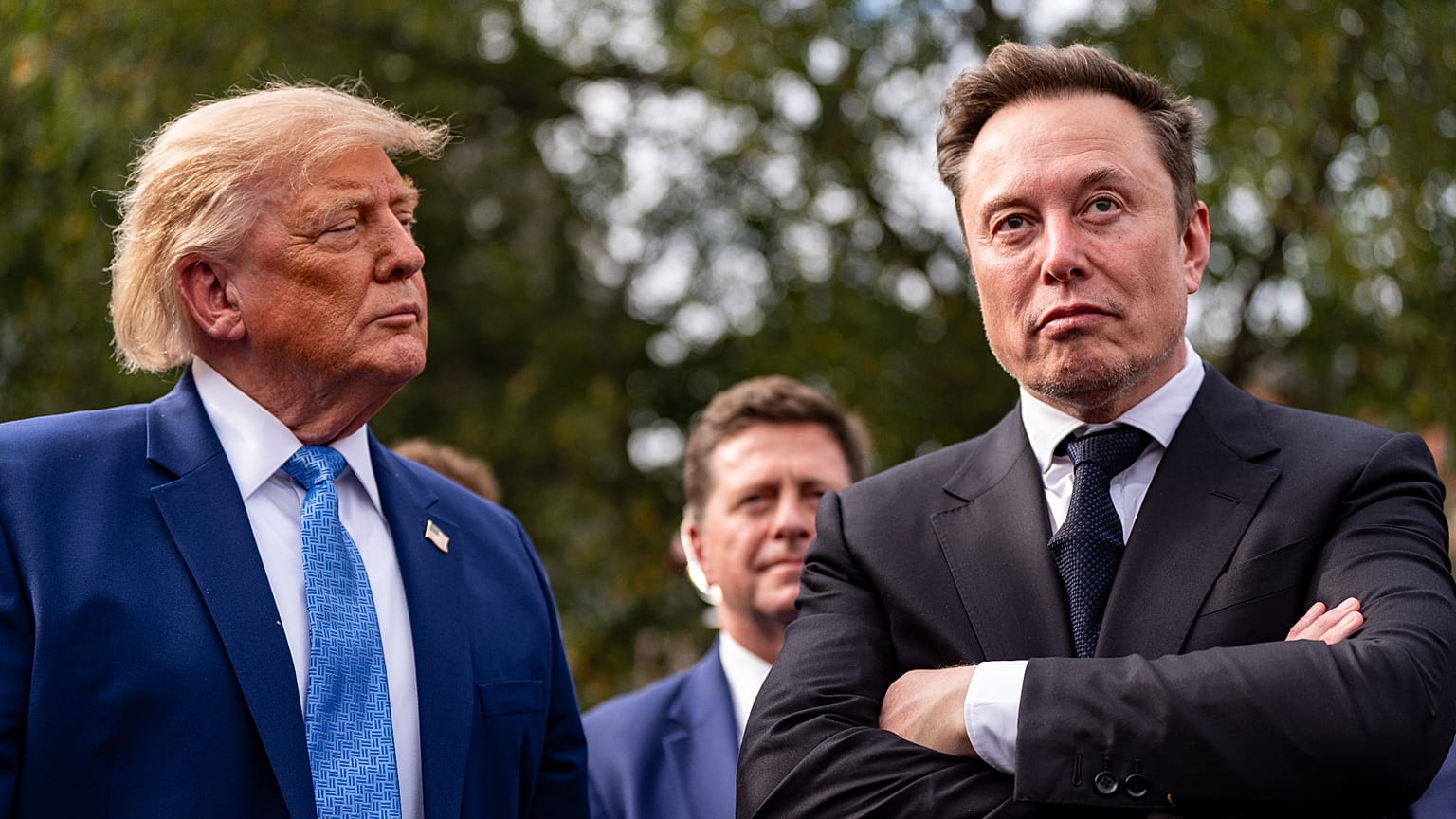
US President Donald Trump with Elon Musk
Copyright AP Photo


By Jonathan Benton
Published on

The US president spent hours in the White House asking Musk’s AI chatbot questions, including how Venezuelans would react if the US captured Maduro, Time magazine reports.

In December 2025, Elon Musk visited the White House for a secret meeting with the US President, with Trump spending hours asking AI chatbot Grok questions about his presidency and legacy and how Venezuelans would react if US forces captured President Nicolás Maduro, Time magazine reports.

According to an official present at the meeting, the chatbot responded that Maduro was a repressive and deeply unpopular dictator and that many Venezuelans would likely celebrate his downfall.

Following the US capture of Maduro in January of this year, Venezuelans did indeed celebrate in large numbers all over the country. Trump came away from this experience “thinking Grok was ingenious”.

The meeting took place seven months after Musk left his role at the controversial Department of Government Efficiency (DOGE), yet how this meeting fits into the timeline of escalations in December is unclear.

At the time, tensions between the two countries were at their highest, with the Trump administration waging a war against drug cartels known as Operation Southern Spear, the setting up of a maritime blockade and the US declaration of Maduro’s government as a “Foreign Terrorist Organization”.

Behind the scenes, the Trump administration had also been making transition plans should they decide to oust Maduro and seize the country’s oil and mineral resources.

The reports in Time magazine suggest that Grok may have convinced Trump to go ahead.

The US government has ramped up the use of AI this year, with Google’s Gemini and Musk’s Grok both used in public services such as Medicare, and applying for government jobs as well as for defence purposes, including integration into fighter planes.

OpenAI’s ChatGPT, Meta’s Llama and Anthropic’s Claude have all been approved for certain functions in the US government.

Musk is back in the fold

Time's report lands the same week Musk returned to an official government role for the first time since leaving DOGE in May 2025.

On Wednesday, Hegseth named the world's richest man, Anduril founder Palmer Luckey and former Republican House Speaker Newt Gingrich to co-lead a new Pentagon study on the future of warfare.

The appointment has raised questions about conflicts of interest, as both Musk and Luckey run companies with substantial defence business. Musk's SpaceX is already building satellite networks for Trump's planned Golden Dome missile defence shield.

Musk is also spending millions to help Republicans keep control of Congress in November's midterm elections.