Thursday, September 10, 2026

From Plastic Waste To Urban Decline In Myanmar – Analysis


Credit: The Sabai

September 10, 2026

 Shwetaungthagathu Reform Initiative Centre

By Khant Eaint Hmoo


Key Takeaways

Plastic waste in Myanmar is now more than an environmental issue. It also points to deeper problems of urban governance, waste disposal and the safeguarding of public health.

Littering has become a common habit, environmental awareness is still low and civic responsibility is often weak or ignored, which continues to result in improper disposal of waste.

Cities struggle to effectively manage their waste due to poor municipal infrastructure, limited investment and weak enforcement of waste management regulations. This often results in garbage piling up on the streets, blocking drains and polluting rivers and waterways.

This results in blocked drainage, recurrent flooding of urban areas, increased mosquito breeding and a greater risk of disease outbreaks, all of which diminish the quality of life and resilience of urban communities of Myanmar.

Disposable waste is material or an item that is discarded after use and is no longer wanted or usable. The national waste generation rate in Myanmar is reported to be about 0.56 kg per person per day (World Bank). Plastic waste is the most visible and most harmful waste type as it easily gets into drains, rivers, and open spaces. Most of the plastic waste is polluting water, soil, and the environment. Thus, waste management systems and the reduction of urban living space in Myanmar are interrelated to social, economic, and institutional welfare.

Why do plastic waste and urban decline matter?

Plastic waste matters because it links everyday disposal habits to broader urban failure. The waste sector in Myanmar continues to be hindered by low collection coverage, inadequate disposal systems, and institutional challenges. At the same time, blocked drains and poor solid-waste management worsen flooding in cities and make the public more vulnerable to health problems.

This is also important because it points to a deeper social problem, where a lack of environmental awareness, normalised careless disposal and limited civic responsibility allow waste to keep reappearing on streets, drains and open spaces. This trend is reinforced in Myanmar by the demand for public education and increased cooperation between individuals and municipal authorities.

Rooted Mindset on waste management in Myanmar


Cultural Stigma and Misconceptions

In the Myanmar context, poor waste disposal practices are not merely a matter of convenience, but are deeply intertwined with social status and cultural misconceptions. On one hand, a persistent social stigma causes individuals to feel ashamed to collect public litter, as handling trash is culturally stigmatized. On the other hand, affluent societal groups often operate under the misconception that wealth absolves them from micro-level environmental responsibility, operating under the assumption that someone else can always be paid to clean up after them. Together, these social-psychological norms perpetuate a cycle where littering is normalized and personal accountability is discarded. To foster genuine community participation, public messaging has begun directly confronting these cultural attitudes, rallying around slogans like “Picking up litter is not shameful; littering is shameful” to redefine public responsibility across all socioeconomic classes.

Low environmental awareness & Weak policy enforcement

Low environmental awareness remains a central obstacle to effective waste management in Myanmar, because many residents still do not fully connect improper disposal with drainage blockage, pollution, and disease. At the same time, weak policy enforcement allows poor practices to continue, since environmental authorities face limited resources, weak institutional capacity, and waste management is often treated as a lower priority than other development needs.

Public-awareness campaigns and local cleanup efforts show that education is still necessary, but lasting improvement requires stronger regulations, better implementation, and sustainable community cooperation. Despite the National Plastic Management Action Plan (2026-2035), municipal authorities are non-elected officials who answer exclusively to higher government hierarchies rather than to the public they serve. The removal of elected municipal councilors following the 2021 military coup further dismantled local democratic accountability, leaving residents with no formal channels to influence municipal decisions or demand better public services. Also, Myanmar’s Urban Waste Management System lacks financial incentives for technology development, such as limited funding and no subsidies for developing waste management technologies.

Environmental Degradation and Daily Economic Struggles

In Myanmar, environmental degradation is deeply linked to everyday economic hardship, and for many households and local authorities, immediate survival is a greater concern than the long-term health of the environment.. A fundamental social value in Myanmar society is summarized by the saying “Only when the stomach is full can one keep the moral precepts”. Pollution, waste accumulation and ecological decline have been driven by economic pressure, over-exploitation of natural resources and densely populated urban areas, with further pressure exerted by conflict and instability.


Poor municipal services worsen the problem, as weak collection systems, inadequate drainage maintenance, and limited sanitation capacity allow waste to remain in streets and back lanes. To shift away from open dumping and transition to a sustainable circular economy, the government established the National Plastic Management Action Plan and the National Waste Management Strategy and Master Plan. However, Municipal systems are not capable of fully responding, which leads to sanitation burdens falling on residents and worsening living conditions.

Urban Environmental Shift under the NLD Government (2016–2021)

In the National League for Democracy (NLD)’s electoral victory in 2015, urban environmental stewardship became a visible symbol of public service and civic responsibility. One symbolic event occurred in December 2015, when Daw Aung San Suu Kyi participated in a public garbage-collecting activity in Kawhmu Township, together with residents. From the movement, similar clean-up campaigns and the alley gardens projects were expanded across different townships in Yangon, involving local communities, youth groups, and civil society organizations like Doh Eain.

Crucially, this civic momentum was underpinned by institutional reforms in local governance. While Myanmar’s municipal governance was historically illustrated by the restricted 2014 Yangon municipal election where voting was limited to one ballot per household, the NLD administration enacted the 2018 Yangon City Development Law. This led to the landmark March 2019 YCDC elections, the first held under universal suffrage. These activities reflected a progressive environmental movement by promoting public awareness about waste disposal, urban hygiene, and shared responsibility for public spaces. However, this progress was abruptly halted by the 2021 military coup, which stripped local councils of their democratic mandate and reinstated top-down military administration.

U-turn in Post-Coup

The 2021 military coup made a significant U-turn in Myanmar’s urban environmental progress, reversing earlier movements toward cleaner public spaces and community-based urban management. In Yangon, the rapid increase ofinternally displaced people (IDPs) has placed additional pressure on urban areas as people move to cities and surrounding townships for safety, housing, and economic opportunities. Local media have reported that overcrowded urban spaces, limited infrastructure, and insufficient public green areas have intensified sanitation challenges.

Furthermore, the structural firing of elected local officials, paired with broader post-coup instability, paralyzed urban planning and environmental enforcement across major cities like Yangon and Mandalay. Without elected councilors to advocate for local needs or facilitate community participation, state-civic cooperation collapsed. Conflict, economic hardship, and declining institutional coordination limited effective infrastructure development and long-term city management. Studies on post-coup Myanmar emphasize widespread governance disruption, insecurity, and reduced public confidence, which affected many aspects of daily urban life.

Consequences


Drainage Blockage and Mosquito Breeding


The decline of urban environmental management has created contingent challenges affecting public health, sanitation, and the quality of living spaces. One major consequence is drainage blockage and increased mosquito breeding. Although municipal authorities in cities such as Yangon and Mandalay continue to carry out waste collection and drain-cleaning activities, these efforts are often constrained by limited resources, rapid urbanization, and the increasing volume of plastic waste. The accumulation of plastic waste and unmanaged garbage hasclogged drainage systems, creating stagnant water areas that provide suitable breeding environments for mosquitoes. This situation has increased the risk of mosquito-borne diseases, particularly during the rainy season.

Spread of Disease


The public-health impact extends beyond flooding and mosquito breeding. Studies on waste disposal in Myanmar show that poor sanitation practices are associated with higher diarrheal risk, while recent reporting on dengue and malaria confirms that mosquito-borne disease remains a major concern in the country. In 2025, Myanmar reportedly recorded 5,066 dengue cases and 26 deaths by July 19, underscoring the seriousness of the threat

Impact on Clean Living Spaces

The decline in urban cleanliness has damaged green living spaces and community well-being. Public areas that were previously maintained through community participation have become more vulnerable to neglect, reducing residents’ sense of safety, comfort, and civic responsibility. The combination of weak governance, poor waste management, and declining urban services has transformed environmental issues into broader social and public health challenges.


Conclusion


The combination of weak waste management, blocked drainage, and declining urban governance has transformed environmental problems into broader public health and social challenges, making urban areas less safe, less healthy, and less sustainable.

Implications and RecommendationsEncourage youth groups, schools, and communities to lead clean-up campaigns, recycling activities, and environmental education to build long-term civic responsibility.

Provide accessible public bins for convenience, waste-separation points, regular collection services, and recycling facilities so citizens can easily follow waste-management rules.

Re-Install municipal Elections to encourage civil society participation with municipal accountability

Expand Reduce, Reuse, and Recycle programs by involving both formal businesses and informal waste workers in the recycling system.

Execute a functional Waste Management System by Municipal Authorities to maintain clean and accessible public spaces.


About the author: 

Khant Eaint Hmoo is a Research Assistant at the Sustainability Lab of the Shwetaungthagathu Reform Initiative Centre (SRIc) and a Bachelor of Economics (Hons) student from Albukhary International University, Malaysia.


Source: This article was published by The Sabai

About Shwetaungthagathu Reform Initiative Centre
The Shwetaungthagathu Reform Initiative Centre (SRIc) is a hybrid think tank (non-partisan) and consultancy firm that advances sustainable governance, policy innovation, and sustainability literacy in Myanmar. Through its Sustainability Lab, SRIc conducts in-depth public policy research and analysis to promote sustainable development and guide Myanmar toward a more resilient, equitable, and environmentally conscious future. SRIc provides strategic policy advocacy, CSR consultation, and the development of sustainability roadmaps grounded in Environmental, Social, and Governance (ESG) principles. These services support public institutions and private sector actors in aligning their operations with the Sustainable Development Goals. By integrating rigorous research with actionable consultancy, SRIc supports responsible business practices, fosters innovative CSR strategies, and designs impactful sustainability pathways. SRIc contributes to local transformation & global sustainability efforts through this dual approach.
View all posts by Shwetaungthagathu Reform Initiative Centre →
GENDER APARTHEID

Plight Of Afghans Going ‘From Bad To Worse’


A family collects water from a river in a village in Kunar province, Afghanistan.
 Photo Credit: UNICEF/Muzamel Azizi

UN Human Rights Chief Volker Türk says life in Afghanistan has worsened since the Taliban returned in 2021, with poverty rising and daily rights abuses while global attention fades.

Restrictions hit education, work, movement, and public life; the UN cites arrests over dress, beards, and music, plus media crackdowns, punishment of former opponents and minorities, and at least 449 corporal punishments in the first half of the year.

Women face what Türk called “gender apartheid,” including more than two million barred from secondary and higher education and exclusion from UN premises; more than 400,000 Afghans have been forcibly returned as humanitarian need remains huge and aid shrinks.


Since the Taliban returned to power in 2021, the plight of Afghans has only deteriorated, with millions impoverished while authorities violate basic human rights daily.

“Today, the plight of many in Afghanistan is going from bad to worse,” stressed the UN Human Rights Chief Volker Türk.

“Yet, it seems the world has forgotten and abandoned the people of Afghanistan to a plight deepening by the day,” he told journalists in Geneva. “The silence is deafening.”

Scaling up the oppression

Mr. Türk deplored the ongoing restrictions cutting severely into education, employment, freedom of movement, and access to public life.

Notably, both women and men are being arrested by the Taliban’s Office for the Propagation of Virtue and Prevention of Vice, primarily for alleged violations of strict dress codes, beard length, and the playing of, or listening to, music.

Human rights violations against former adversaries of the Taliban during the long war that followed the allied invasion of 2001 in response to the 9/11 attacks on the US and restrictions against religious minorities – including Shi’a and Ismaili communities – continue to be documented.

Censorship of the media, temporary closures of media outlets and arrests of journalists also continue.

At least 449 men and women were subjected to corporal punishment by the de facto authorities in the first half of the year, according to the UN.

‘Gender apartheid’

Women, in particular, are facing the brunt of the Taliban rule.

Since 2021, over two million Afghan girls and women have been denied access to secondary and higher education.

Fresh decrees issued by the de facto authorities this year also make it more difficult for a woman to separate from a spouse and implicitly authorise child marriage and violence against women and children.

Women are also being excluded from politics. Mr. Türk condemned the “absolute absence of women in any public decision-making fora.”

A year ago, Taliban leaders restricted Afghan women – including UN staff, contractors and visitors – from entering the United Nations’ own premises across the country.

“Such restrictions imposed on women and girls – which amount to gender apartheid – have no place in any society,” the OHCHR chief underscored.
Forced return

At the same time, Afghans who had fled to neighbouring countries are facing growing hostility from their hosts abroad while forced returns continue.

According to the UN refugee agency (UNHCR) more than 400,000 Afghans have been forcibly returned, mainly from Iran and Pakistan, but also from Türkiye, Tajikistan, and EU Member States.

“Many are forced to enter a country where they have never even stepped foot, and where they will face deep poverty, and inadequate food, clean water, and access to healthcare, education and employment,” Mr. Türk said.


He pointed to the estimated 21.9 million people, or about 45 per cent of the population, who require humanitarian aid, while foreign aid inflows are “[trickling] dry”.

“I implore all States to reconsider their actions, and to put the lives of the suffering population first,” he stressed.

HIP CAPITALI$M

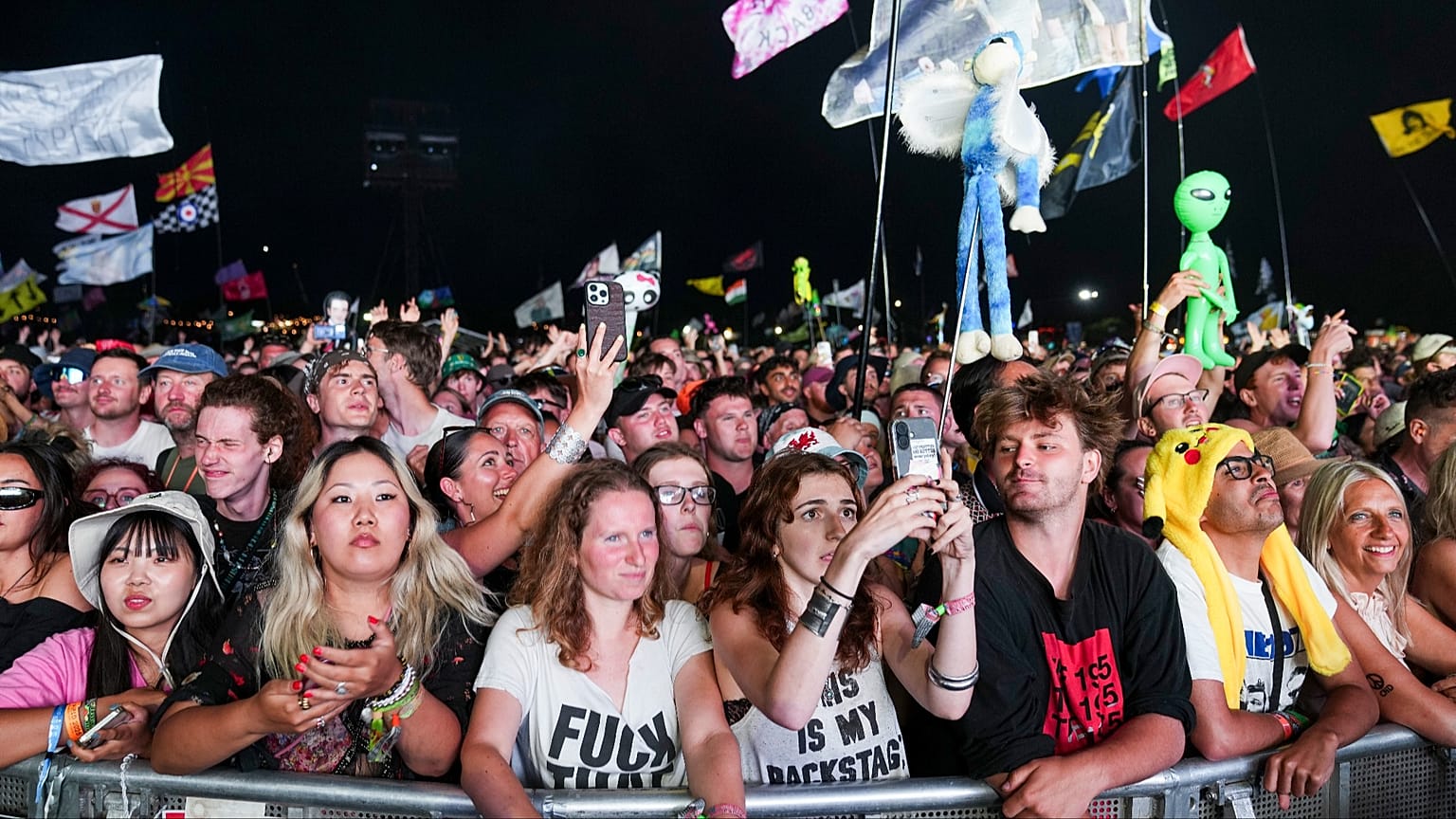
'A scam': Glastonbury fans furious over music festival's historically high ticket prices for 2027

'A scam': Glastonbury fans furious over music festival's historically high ticket prices for 2027 - Pictured: Glasto 2025
Copyright AP Photo

By David Mouriquand
Published on

Many music fans are criticising the 2027 festival price hike as “not fair” and "a scam". Would you pay around €480 for Glasto?

After a fallow year in 2026, the UK's Glastonbury Festival has confirmed that tickets for next year's edition will go on sale next month.

Having previously argued that Worthy Farm's finest is overrated, a nightmare to get tickets for and ultimately has everything to envy some of mainland Europe's finest music festivals, here's another push factor that confirms our stance: ticket pricing.

Tickets for the 2027 edition, which will take place from 23 to 27 June, will cost £408 including a £5 booking fee per ticket.

That's approx. €480 in total – an increase of nearly £30 (€34) from 2025 and, according to reports from BBC News, part of a steady rise since 2010, when tickets cost £286 (€330).

Granted, this price hike pattern can be seen across the industry - and especially in post-Brexit UK. But Glasto was already the UK's most expensive music festival, and next year's prices are the highest they've ever been.

Fans aren't happy and understably so, considering the cost-of-living crisis, the fact that the 2027 edition's headliners have yet to be announced (even if rumours suggest The Rolling Stones, Fontaines D.C. and Stevie Wonder could be in mix), and that Glasto often resumes itself to: Booking difficulties + mud + awful facilities + bottlenecked stages + overinflated prices for food and drinks + vibes ruined by crowds which are far less friendly compared to certain European audiences.

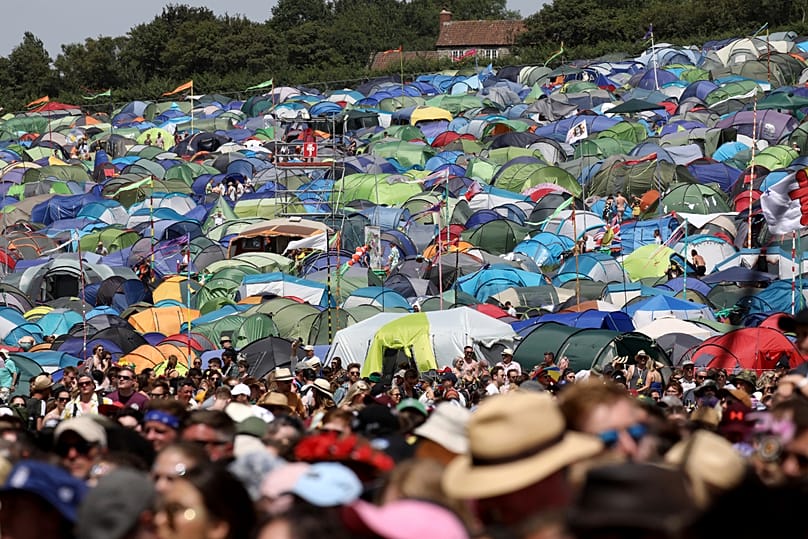
Revellers surrounding the Pyramid Stage at the Glastonbury Festival - 2019
Revellers surrounding the Pyramid Stage at the Glastonbury Festival - 2019 AP Photo

Unpopular opinion for many, but complaints are mounting - with some calling the 2027 price tag "unreasonable", "insane" and "a scam", while many feel like they're being priced out.

One fan wrote: “The last time I went was 2009. It was £165. It felt affordable, worth every penny. With inflation, sure, it should be £300 now. I get it, it’s a charity event. But £400?? That doesn’t feel right or fair.”

Someone else shared: "In 2000 it was £87. That’s an extra £321 in 27 years. The money went up but the music went down. Even accounting for inflation, that should be about £160 today. You pay more money to listen to shit music. How is this fair?"

Another wrote: "Everything in the UK is getting more expensive & lower quality How are people accepting this? Nothing in this country makes sense anymore."

Check out more reactions below:

Some fans have defended the price hike, sharing how it is actually a “bargain” compared to current concert prices.

“It’s £80-£100 for a big venue gig now. I think £408 is fair for five days of massive acts,” one person wrote on X. Another agreed: “£400 for a glasto ticket still seems like a good deal if you look at my concert spend this year."

“£400 for the whole 5 days and the acts you can see and everything else that’s in the fields is an absolute bargain,” another added.

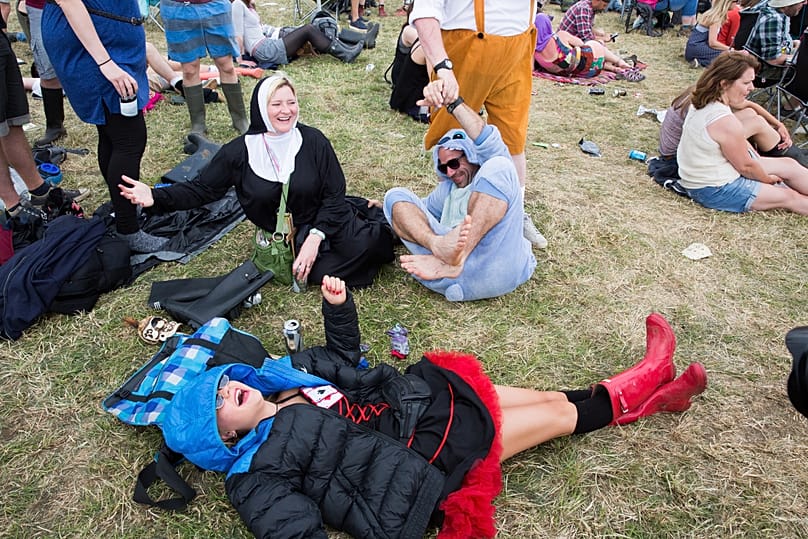
Richer festival goers at Glastonbury Music Festival 2015
Richer festival goers at Glastonbury Music Festival 2015 AP Photo

In 2023, Glasto head Emily Eavis acknowledged it was a "challenging time" for festival organisers. "We have tried very hard to minimise the increase in price on the ticket but we're facing enormous rises in the costs of running this vast show, whilst still recovering from the huge financial impact of two years without a festival because of Covid."

Fair points, but considering four-day passes to this year's Rock en Seine cost €235, Belgium’s Rock Werchter (arguably mainland Europe’s answer to Glastonbury) set music lovers back €315, and one of our favourite EU festivals, the Netherlands’ Best Kept Secret, only cost €299 (including campsite access), we know which tickets we’ll be looking to book next year.

Roman revelation: Biggest ancient monumental wall mosaic unveiled after 2,000 years

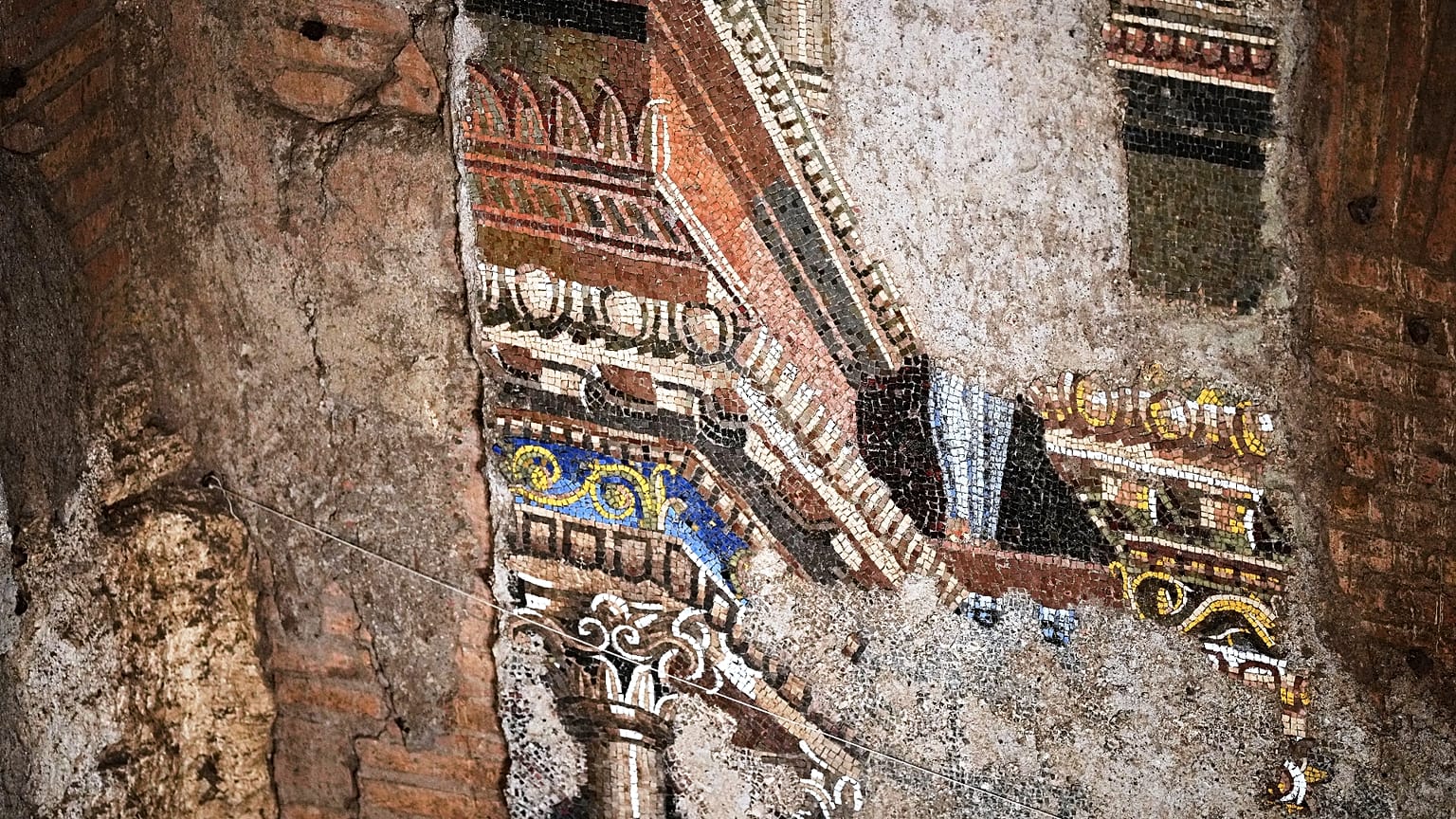
A restored 15-metre section of the ancient mosaic from the "La Città Dipinta" site, discovered in the late 1990s
Copyright AP Photo

By Ilaria Cicinelli & Tokunbo Salako
Published on

Trajan’s Baths in Oppian Hill will host a new museum where visitors to Rome can admire the Great Mosaic and the Painted City, two massive ancient artworks buried near the Colosseum that are estimated to date from the 1st century.

In a city filled with ancient treasures and relics, some are calling it the Italian capital's biggest and best kept secret. Now, the public can finally see what's thought to be the largest ever fresco and mosaic complex of ancient Rome.

Authorities have unveiled a first century A.D. depiction of a maritime city in what became the largest bath complex in the world - the Trajan Baths, the site of a new museum inaugurated on Wednesday.

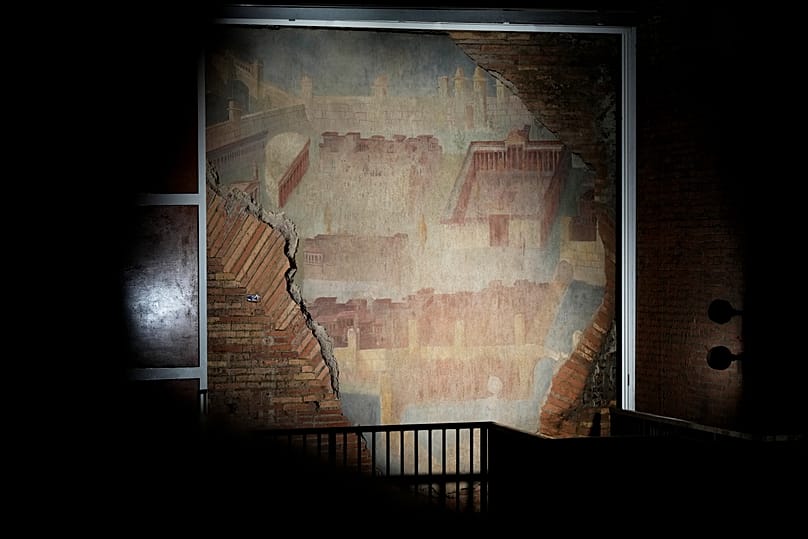
The “Painted City” fresco and “Great Mosaic” were discovered in an underground gallery during excavations in the 1990s of the Baths of Trajan on the Oppian Hill near the Colosseum.

After being hidden underground for centuries, its blues and terracotta colors are still clear but faded.

The fresco
The fresco AP Photo

Massive monuments

Speaking at the unveiling ceremony Rome's mayor, Roberto Gualtieri, said: “They are truly unique in the world, both from the point of view of artistic beauty and the historic and documental importance.”

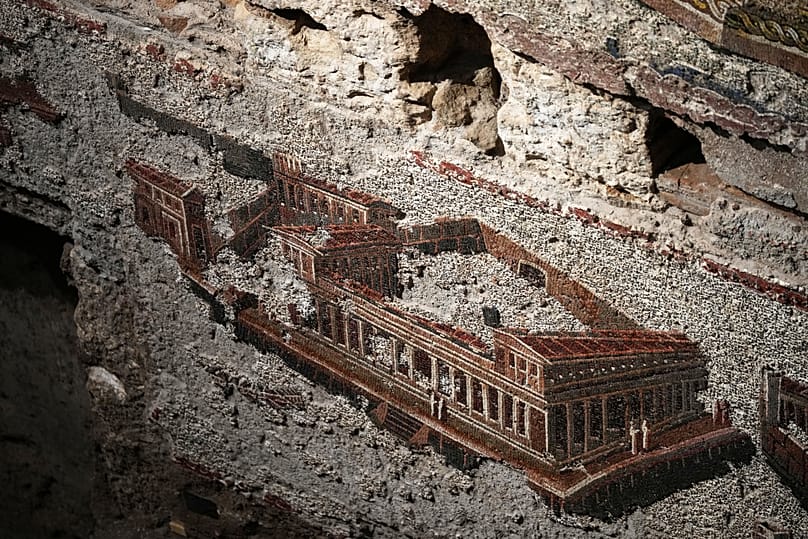
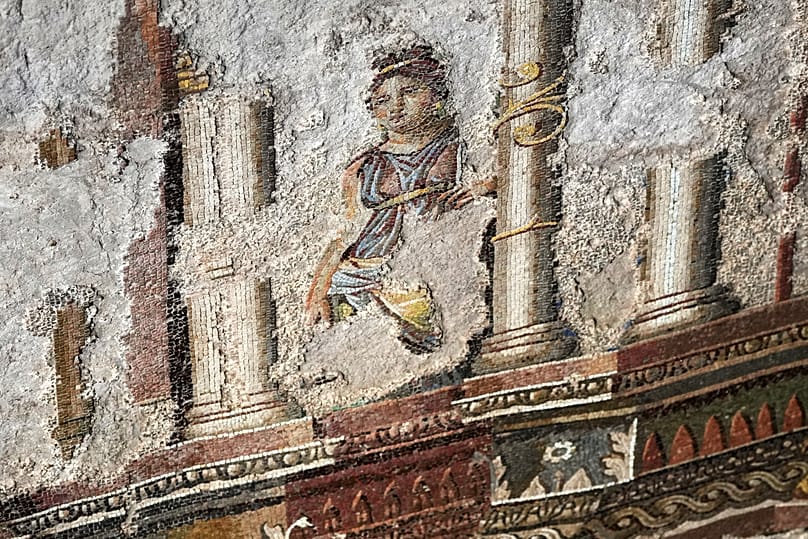
The mosaic, for its part, measures some 15 meters high and features intricately decorated columns and architectural elements and figures over four different levels. The top levels are up-close images with people that are almost like theatrical scenes, while at the bottom are views of the port city’s layout from above.

A section of the mosaic
A section of the mosaic AP Photo
A section of the restored 15-metre ancient wall mosaic from "The Painted City" site found in the late 1990s
A section of the restored 15-metre ancient wall mosaic from "The Painted City" site found in the late 1990s AP Photo/Andrew Medichini

The Baths of Trajan, which were dedicated by Emperor Trajan in 109 A.D., extended over six hectares and were at the time the largest bath complex in the world. They incorporated an earlier baths complex, the Domus Aurea, and were designed on a different trajectory to take better advantage of the water temperatures to optimize the thermal experience for users.

The Painted City and the Great Mosaic

Trajan's Baths were designed by Apollodorus of Damascus at the request of Emperor Trajan. Inaugurated on 22 June AD 109, they covered around 60,000 square metres and included bathing facilities, porticoes and spaces for physical and cultural activities and leisure time. The construction also incorporated older structures, including part of the Domus Aurea, which make it possible to trace the complex archaeological stratification.

The Painted City is a ten-square-metre fresco belonging to a building that predates Trajan's Baths, dating from the first century AD, depicting a city seen from above.

In the monumental wall mosaic "The Muse and the Philosopher", located in a large hall overlooking a nymphaeum, a Roman harbour is depicted in detail. It is not known whether it is real or imaginary, although some scholars have suggested it could be the final resting place of emperor Claudius.

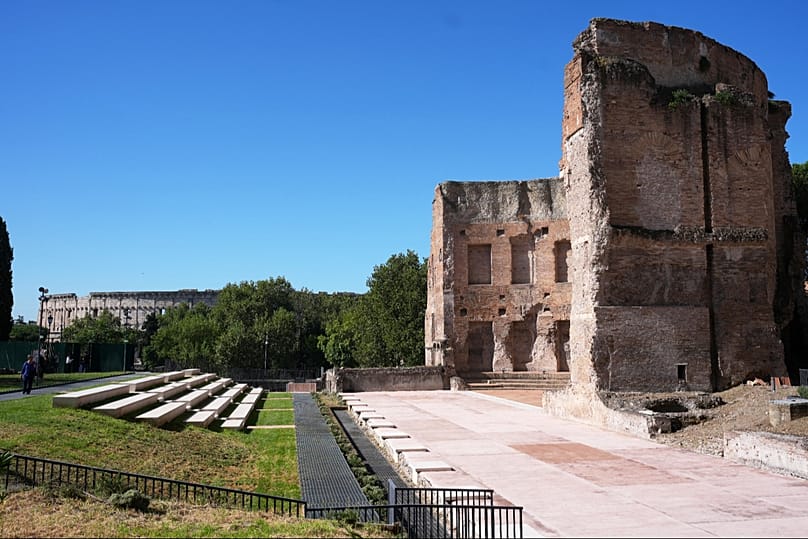
The Baths of Trajan in front of the Colosseum sits above the underground foundations where the restored "Painted City" fresco and Great Mosaic were found in the 1990s.
The Baths of Trajan in front of the Colosseum sits above the underground foundations where the restored "Painted City" fresco and Great Mosaic were found in the 1990s. AP Photo/Andrew Medichini

Already partially visible after restoration, the exposed section allows visitors to admire "the philosopher and other figures of extraordinary artistic quality", as Gualtieri put it.

However, finds made beneath the decoration have made it possible to reconstruct an original space that was much taller, with walls that must have risen to around 12 metres.

During the restoration, panoramic rest areas and new pedestrian routes were also created within the complex, along with a new tiered seating system designed to host concerts, conferences and events.

Restricted visits to preserve the artistic heritage

To assess the impact of visitor numbers on the conservation of the works, the first visits will be organised on an experimental basis for small groups at weekends only, with free guided tours by reservation, starting on 12 and 13 September.

From 2 October the site will be open to visitors from Friday to Sunday. There will be six time slots a day, with a maximum of 15 people at a time.

CCS

Delay tactic or genuine solution? Carbon capture under fire again as EU invests in ‘unproven’ technology

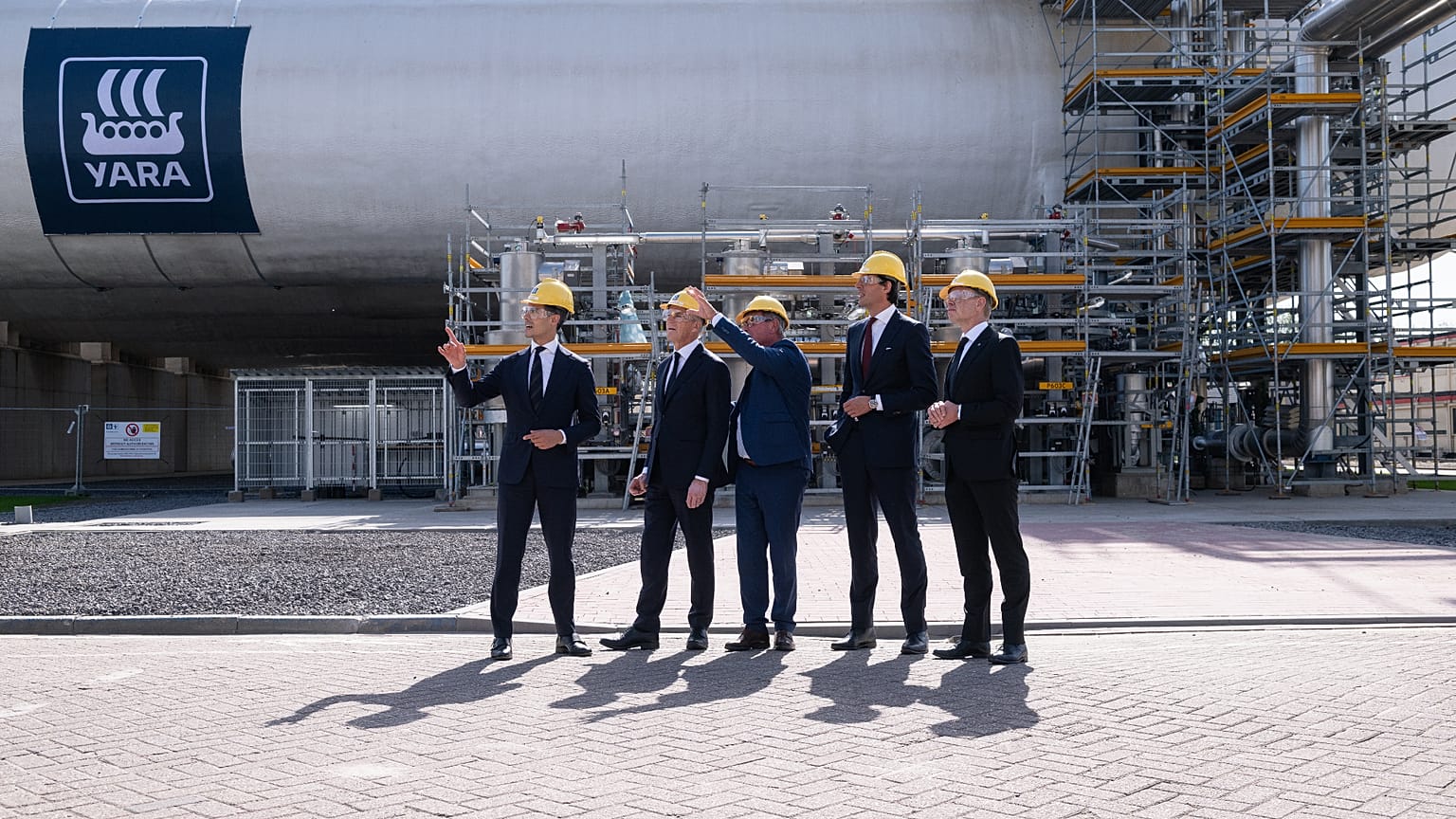
Wopke Hoekstra, European Commissioner for Climate, Net Zero and Clean Growth, second right, visits Yara Sluiskil, 7 September 2026
Copyright European Union, 2026, licensed under CC BY 4.0


By Ruth Wright with AFP
Published on

Carbon capture and storage has been found to be “technically uncertain and very high cost”.

CO2 emitted by a fertiliser factory in the Netherlands will be stored underneath the seabed in Norway, in what the owners are calling the “largest commercial carbon capture and storage (CCS) project in Europe”.

At an opening ceremony this week, the ammonia and fertiliser plant announced that it will capture 800,000 tonnes of CO2 a year then liquefy it to be sent by ship to Norway.

Having funded the project, the European Commission was keen to promote its investment – with the Commissioner for Climate, Net Zero and Clean Growth attending the inauguration alongside the Prime Ministers of both countries.

While the Commission says the Sluiskil plant, run by Norwegian chemical company Yara, is a “strategic investment”, opponents say it is “risking billions in taxpayers’ money to fund a dangerous distraction that delays climate action”.

As one of the most divisive topics in climate action, we look into the facts about carbon capture and how the EU came to be funding this experimental technology.

What is carbon capture and storage?

Carbon capture and storage (CCS) refers to technologies designed to prevent CO2 from entering the atmosphere in the first place and/or to remove it after it has been emitted.

As is done at the Sluiskil plant, most projects use a liquid to chemically remove the CO2 emitted from the production process, where it is then compressed into a liquid-like state and transported typically through a pipeline to a storage site. At that point, it’s either stored deep underground or is transformed into things like building materials or synthetic fuel. In the case of the latter, this technology is referred to as CCUS, where the ‘U’ stands for utilisation.

As of February 2026, there were 75 operational CCS projects around the world, according to climate change publication Carbon Brief. Almost all of them are at fossil-fuel extraction and processing sites, according to the IEA’s database. Together, these projects capture 62.5 million tonnes of CO2 (MtCO2) each year. This is equivalent to 0.2 per cent of total global emissions in 2025.

While Yara’s chief executive, Svein Tore Holsether, said in a statement, “The carbon capture facility in Sluiskil proves that large-scale industrial decarbonisation is possible today”, the cumulative emissions saved are a very, very tiny drop in the ocean.

US non-profit the Institute for Energy Economics and Financial Analysis (IEEFA) has conducted in-depth research into CCS. Their Energy Finance Analyst, Andrew Reid, says: “Despite the political and financial support that has been pointed to CCS over the past three to four years, it remains technically uncertain, very high cost, and reliant upon huge subsidies to move from feasibility to construction and operation.”

CCS: To help the fossil fuel industry to extract and sell more oil and gas

To understand its uses, it’s important to understand where carbon technology originates from. According to Carbon Brief, it “was originally rolled out at US and Canadian oil wells in the early 1970s as a way to achieve “enhanced oil recovery”. This involves injecting captured CO2 into depleted wells – a process that stores the gas, but also helps to extract more oil.” This is by far the most significant use for carbon capture worldwide, with three-quarters of it used for this purpose.

This means that “the majority of CO2 that is both captured and used today helps the fossil-fuel industry to extract and sell more oil and gas,” according to Carbon Brief.

How did the EU end up funding carbon capture and storage?

One of the arguments against CCS, which campaigners have been making for years, is that it is a way for polluters to keep polluting, rather than emitting less of the gases which are heating up the planet at alarming rates.

“All capture and storage projects suffer from the same problem: they distract attention and resources from cutting emissions at source and give polluting industries like fertiliser production a pass to keep on polluting,” says Rachel Kennerley, Senior International Carbon Capture Campaigner at the Center for International Environmental Law (CIEL).

Belén Balanyá, researcher and campaigner at Corporate Europe Observatory (CEO), has been tracking the lobbying efforts of the fossil fuel industry for 25 years. She has recently focussed on lobbying by the CCS industry. The outcomes of annual COP climate talks are known to be influenced by lobbyists representing industry. Balanyá found that around 500 CCS lobbyists were at COP29 in 2024. A year earlier, at COP28, CCS proponents (largely tied to fossil fuel industries) scored a significant win with the endorsement of “abatement and removal technologies” in the agreement.

Referring to fossil fuel industries, Balanyá says, “You look at what’s on the agenda and it’s always escape hatches to stay in business,” she tells Euronews Green. “It’s where they move when they’ve been forced to – when there’s more knowledge and more acceptance about climate change and their role and that they have to decarbonise.”

CCS being endorsed in a COP agreement may have contributed to its legitimacy in political circles within the EU. The CCUS Forum (now the Industrial Carbon Management (ICM) Forum), set up by the European Commission in 2021, is an annual event with working groups that feed directly into EU policymaking. CEO found that every group has been co-chaired by the fossil fuel industry or associated organisations.

A newly released report from the UN Environment Programme (UNEP) details the risks of overshooting 1.5°C of warming and how we can limit them. It assessed what it called Carbon Dioxide Removal and found that many issues remain with the technology, such as whether it can scale sustainably (due to costs, land and energy use), whether it would actually keep CO2 out of the atmosphere permanently and who’s responsible for regulation and leaks.

CCS: Good or bad?

Wherever commentators stand on CCS, there is some agreement that for some industries, the technology can be useful. Yara’s project targets emissions from ammonia production which “provides a relatively concentrated CO2 stream, making this one of the more straightforward industrial applications of carbon capture rather than an example of the very hardest emissions to abate,” according to Domien Vangenechten, Programme Lead in Clean Economy at E3G.

“The lesson should therefore not be that Europe needs CCS everywhere, but that we should pragmatically deploy it where it can cut substantial emissions today.”