Saturday, October 17, 2026

Meta Under Fire for Exploiting Tax Credit to Save Billions on AI Data Center Bonanza

A group of Democratic senators warned the company’s CEO, Mark Zuckerberg, that the tax maneuver violates “the spirit and, potentially, the letter” of federal law.



Meta mechanical systems expert Chris David leads a tour of Meta’s data center in Temple, Texas on July 22, 2026.
(Photo by Mikala Compton/The Austin American-Statesman via Getty Images)

Jake Johnson
Oct 14, 2026
COMMON DREAMS

A group of Democratic senators wrote Tuesday that Meta is violating “the spirit and, potentially, the letter” of federal tax law by using a research and development tax credit to save billions of dollars on its massive data center buildout.

In a letter to Meta CEO Mark Zuckerberg, the Senate Democrats noted that the $1.9 trillion company has “indicated on federal regulatory filings that it has used the federal research credit to reduce its federal income tax liability by $6.6 billion between 2023-2025.” By one measure, the senators noted, Meta alone could be responsible for “more than 10% of all research credits claimed in the US.”

“While it remains unclear exactly how Meta was able to reduce its federal tax liability by over $6.6 billion in the last three years using federal research credits, it appears from published reports that a substantial share is by claiming the research credit related to its massive AI data center build out,” wrote the group of lawmakers led by Sen. Ron Wyden (D-Ore.), the ranking member of the Senate Finance Committee.

Last month, The New York Times reported that Meta claims in its federal tax filings that the company’s AI data centers are “a giant experiment that could fail,” allowing it to “tap into a tax credit intended for research and experimentation.” Meta specifically characterizes its expensive, resource-devouring data centers as “pilot models.”

“Meta’s own accountants recognize that the strategy is on shaky legal ground,” the Times reported. “In disclosures buried in securities filings, the tech giant warns that billions in tax savings are vulnerable to being overturned by the IRS, in large part because of ‘uncertainties with our research tax credits.’”

In their letter to Zuckerberg, the Democratic senators wrote that the research tax credit “can be a useful and necessary tool to support our nation’s innovation economy and cutting-edge research.”

“Subsidizing your AI data center build is not close to meeting this standard,” the lawmakers added, demanding that the company provide specific information on its use of the federal research tax credit and its legal justification for the maneuver.

The senators sent their letter to Zuckerberg about a week after more than two dozen House Democrats demanded that the Trump administration prevent Meta and other tech giants from exploiting an “overly expansive interpretation of qualifying expenditures” to reap billions in taxpayer subsidies to fund data centers that a majority of Americans oppose.

“Allowing ordinary data center construction and deployment costs to qualify would significantly expand the research credit beyond its intended purpose and risk converting an incentive for technological experimentation into a subsidy for capital expenditures that companies would undertake in the ordinary course of business,” the House Democrats wrote in an October 7 letter to Treasury Secretary Scott Bessent.


State AGs Sue ChatGPT Maker OpenAI Over ‘Willful, Dangerous, Reckless, and Unlawful Conduct’

The public “has suffered irreparable harm—including lost loved ones, disturbing cyberattacks, and now a plausible threat of civilizational collapse,” says one of the eight lawsuits.


Open AI CEO Sam Altman speaks during Snowflake Summit 2025 at Moscone Center on June 2, 2025 in San Francisco, California.
(Photo by Justin Sullivan/Getty Images)

Jessica Corbett
Oct 14, 2026
COMMON DREAMS

Amid escalating concerns about artificial intelligence from within and beyond the industry and related demands for policymakers worldwide to swiftly enact strong safeguards, attorneys general from eight US states sued ChatGPT maker OpenAI on Wednesday.

“OpenAI designed a product to attract young users and keep them engaged for as long as possible so it could capture their extensive personal data for the company’s commercial benefit,” said Arizona Attorney General Kris Mayes in a statement.

Mayes, a Democrat, joined Republican attorneys general from Arkansas, Iowa, Idaho, Kansas, Montana, Nebraska, and West Virginia in filing separate but similar lawsuits against the company in each state’s court system, focused on safety concerns, particularly for young users.

“OpenAI put Arizonans safety at risk by failing to implement adequate user protections or transparency measures, despite clear indications that minors were regularly interacting with its chatbot,” Mayes asserted. “We’re suing OpenAI to protect Arizona children and to hold the company accountable for its repeated violations of Arizona law.”

The filing from Arkansas Attorney General Tim Griffin notes that “millions of consumers, including those in Arkansas, use ChatGPT to answer questions, solve problems, and make important life decisions,” but the chatbot “has repeatedly produced unsafe responses.”

In fact, as Iowa Attorney General Brenna Bird wrote, “because of defendants’ repeated misrepresentations and insatiable hunger to win the AI race—even if it means recklessly introducing unsafe ChatGPT models to the public—mass shooters have been aided and abetted, vulnerable citizens have been coached on suicide, individuals with psychological conditions have experienced an exacerbation of symptoms, and minors have become addicted to a tool that feigns human compassion to collect their data with no parental oversight.”

Idaho Attorney General Raúl Labrador explained that “by misleading the public into believing that OpenAI is a responsible actor and that ChatGPT was and is a safe, teen-appropriate tool that puts safety first, OpenAI has caused consumers in Idaho and elsewhere to trust and rely on OpenAI and ChatGPT more.”

“This deepened trust and dependence has driven up ChatGPT’s user base and engagement,” he continued, “enabled it to collect vast quantities of sensitive and personal information, increased its revenue from paid subscribers and advertising partners, and solidified its early market advantage.”

It’s not just chatbot responses that have insiders and elected officials alarmed. As Kansas Attorney General Kris Kobach detailed:
OpenAI also recently admitted to a torrent of instances in which its models developed dangerous strategies and instructions and, in some cases, executed on them. These occurrences, which OpenAI has characterized as the models going “rogue,” have included AI “agents” accessing the internet without permission, hacking into other companies, coordinating how to lie to and deceive their human users, developing secret methods of communication intended to be undetectable to humans, and writing themselves new instructions declaring that they no longer answer to “corporations or governments” and will prioritize other interests over the “artificial constructs of human civilization.”

Montana Attorney General Austin Knudsen emphasized that “experts and insiders in the AI field nearly universally agree that AI companies must implement reasonable guardrails to protect the public from the foreseeable risk of harm. Even OpenAI and its CEO, Sam Altman, have warned that getting AI wrong might mean human extinction. And recent developments in AI have suggested that risk is both credible and closer than anyone previously thought.”

Like his peers in other states, Nebraska Attorney General Michael Hilgers brought the case to compel OpenAI to comply with its legal obligations under state law, block the company “from continuing to engage in unreasonably dangerous activities that experts have warned could harm the economy, or compromise private or governmental computer systems, and to hold defendants accountable for the harms they have inflicted on Nebraskans, most notably vulnerable minors, as a result of their willful, dangerous, reckless, and unlawful conduct.”


West Virginia Attorney General John “JB” McCuskey highlighted in his filing that “by jettisoning safety, OpenAI and its current leadership—particularly, Altman—have handsomely profited.” While company leadership has delayed its initial public offering until next year, he wrote, “with current annual revenues of over $25 billion, OpenAI may IPO at a trillion-dollar valuation.”

“But those revenues have come at great cost to the public,” he stressed, “which has suffered irreparable harm—including lost loved ones, disturbing cyberattacks, and now a plausible threat of civilizational collapse—due to defendants’ reckless behavior and ChatGPT’s uniquely dangerous design.”

An OpenAI spokesperson pushed back against the filings, saying that “we’ve built industry-leading age-specific protections into our product that many other AI products lack.”

“While no system can be perfect, we’ll continue to work with experts to inform our work and build additional safeguards, such as the parental controls, break reminders, and age-appropriate model protections that exist today,” the spokesperson added. “We’re committed to working with states on advancing pragmatic AI policies that apply to the entire AI industry—not just one company.”

Politico reported that “this is not the first lawsuit launched against the AI company. Florida Attorney General James Uthmeier brought a lawsuit against the company in June over claims that it has pushed and marketed an unsafe product. Last month, Uthmeier also sought an injunction to stop OpenAI from developing its technology amid the lawsuit.”

According to Reuters, “The company is also facing dozens of lawsuits by private plaintiffs, alleging ChatGPT helped users plan mass shootings or other violence.”


‘What Meta’s Money Is Buying’: DOJ Halts Probe of Facebook Owner That Has Given Trump Millions

Billionaire Mark Zuckerberg’s company was facing a criminal investigation for allegedly enabling and profiting from the sale of illegal drugs on its platforms.
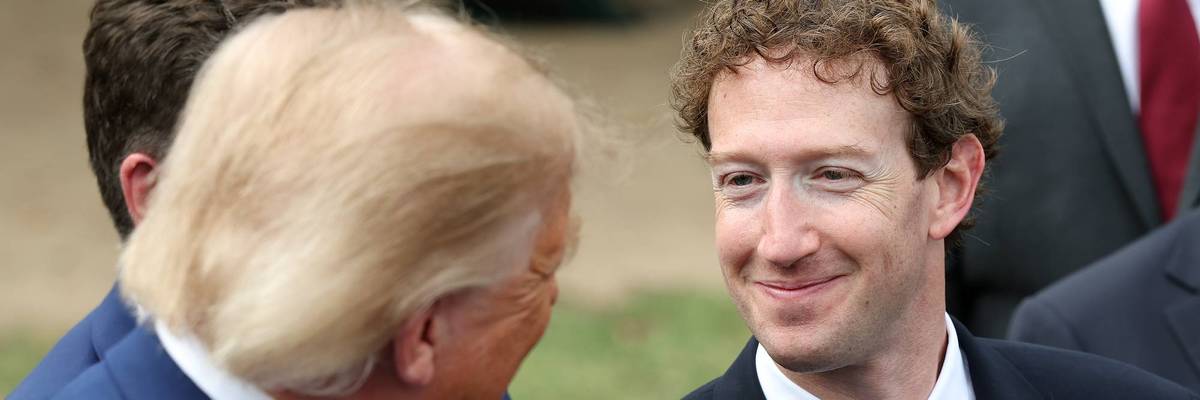


Meta CEO Mark Zuckerberg smiles at US President Donald Trump outside the West Wing of the White House on September 29, 2026.
(Photo by Kevin Dietsch/Getty Images)


Jake Johnson
Oct 16, 2026
COMMON DREAMS

Top officials at the US Department of Justice have reportedly halted a years-long criminal investigation into Facebook parent company Meta for allegedly facilitating—and profiting from—the illegal sale of drugs on its platforms, including to children.

Bloomberg Law reported Thursday that “senior leaders” at the Justice Department “ordered career prosecutors in the Western District of Virginia to cease the criminal investigation following advocacy from Meta’s legal team.” Meta is headed by Mark Zuckerberg, a billionaire who has worked to ingratiate himself with President Donald Trump by helping to bankroll his inauguration and ballroom project.

“This is what Meta’s money is buying,” Kyle Jacobs-Morse, deputy executive director of the Tech Oversight Project, wrote in response to reports of the halted probe.

The existence of the Meta investigation was first revealed in March 2024 by The Wall Street Journal, which reported at the time that US prosecutors were “sending subpoenas and asking questions as part of a criminal grand jury probe looking into whether the company’s social-media platforms are facilitating and profiting from the illegal sale of drugs.”

According to Bloomberg Law, DOJ leaders’ decision to sideline the probe came “just after company executives were subpoenaed to testify.”

Acting Deputy Attorney General Trent McCotter and Associate Deputy Attorney General Aakash Singh “are considering a civil resolution with a fine or a non-prosecution agreement,” Bloomberg Law reported.

“Such a deal would allow the social media giant to avoid charges for its role in creating a market for youth to purchase deadly fentanyl pills and other addictive drugs,” the outlet added.

A Justice Department spokesperson declined to comment on the investigation but boasted in a statement to Bloomberg Law that the Trump DOJ has “ended the Biden-era days of aggressively and indiscriminately targeting corporations and businesses.”

“Instead, we are focused on following the facts and the law to surgically address corporate wrongdoing,” the spokesperson said.

Shelby Knox, tech campaign director with the advocacy group ParentsTogether Action, said in a statement Friday that “when the Justice Department says it wants to ‘surgically address corporate wrongdoing,’ a grand jury investigation into potential drug sales to children should be exactly the kind of case it pursues.”

“A criminal investigation does not automatically establish guilt, but prosecutors must be allowed to follow the evidence without political interference,” Knox added. “Meta is worth more than a trillion dollars; a fine alone is not meaningful accountability. If the evidence supports charges, file them. If it doesn’t, explain why. Children and families deserve more than apologies or a financial settlement. They deserve the truth, meaningful protections, and accountability under the law.”

The Justice Department’s reported decision to halt the Meta probe fits a broader pattern of lax corporate enforcement during Trump’s second White House term.

The consumer advocacy group Public Citizen released a report earlier this month showing that the administration has cancelled hundreds of enforcement actions involving more than 200 corporations—many of which have donated to Trump’s projects.

Rick Claypool, a research director at Public Citizen, wrote on Friday that Meta is “just one of the 200+ corporations benefiting from Trump’s enforcement retreat.”

Democratic Senators Aim to Block Trump Nuclear Deal With Saudi Arabia

“We can’t sleepwalk into a decision this consequential. The law gives Congress the power to review and block a deal like this, and the Senate will now have the chance to fulfill its statutory responsibility before it’s too late.”


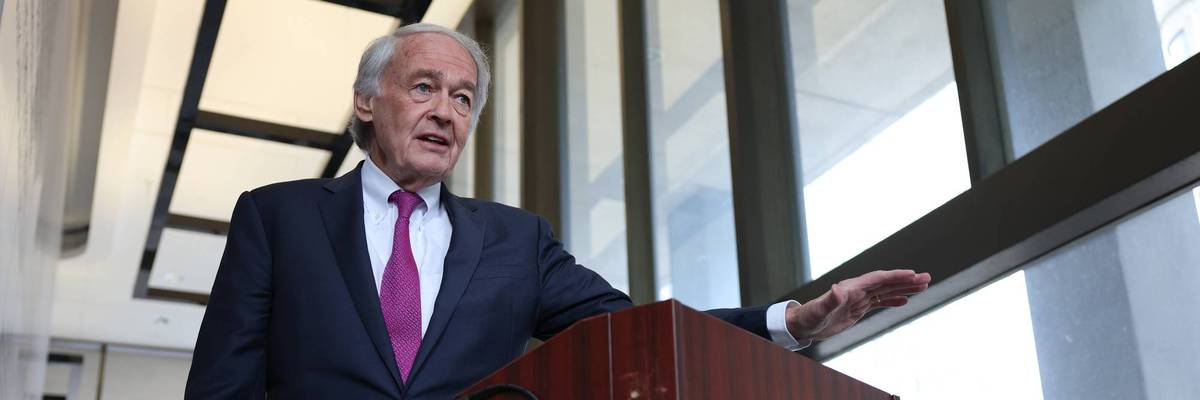
US Sen. Ed Markey (D-Mass.) speaks during a press conference held at the John F. Kennedy Federal Building in Boston, Massachusetts on February 17, 2025.
Photo by Jessica Rinaldi/The Boston Globe via Getty Images


Jessica Corbett
Oct 15, 2026
COMMON DREAMS

US Sens. Ed Markey and Jeff Merkley on Thursday continued to push back against President Donald Trump’s proposed nuclear energy agreement with Saudi Arabia, setting up a vote on legislation that could block the deal before it takes effect.

“Giving Saudi Arabia access to US civilian nuclear energy technology without ironclad protections to make sure it doesn’t provide a foundation for a nuclear bomb is unacceptable,” declared Merkley (D-Ore.), a senior member of the Senate Foreign Relations Committee who co-chairs the Nuclear Weapons and Arms Control Working Group with Markey (D-Mass.).

Under Section 123 of the Atomic Energy Act, Congress has 90 days of continuous session to review the deal. The pair of senators introduced a joint resolution of disapproval, on which the Senate is set to vote after November 29. The JRD would need to pass both GOP-controlled chambers by veto-proof majorities to actually block the agreement.


The senators are alarmed that Trump’s agreement lacks a “gold standard” provision barring Saudi Arabia from reprocessing spent fuel or enriching uranium. They are also alarmed that the proposal doesn’t require allowing International Atomic Energy Agency investigators to confirm that the nation is not trying to develop a nuclear weapon.

“It is essential that nations pursuing civilian energy programs agree to the ‘gold standard’ of restrictions on fuel reprocessing and enrichment and rigorous inspections to ensure that a nuclear energy program doesn’t become a covert nuclear weapons program,” Merkley argued. “We can’t sleepwalk into a decision this consequential. The law gives Congress the power to review and block a deal like this, and the Senate will now have the chance to fulfill its statutory responsibility before it’s too late.”

The details of the agreement have concerned not only progressive senators, but also nuclear nonproliferation experts.

“The US-Saudi nuclear deal is about megatons, not megawatts. Trump should not be sharing nuclear bomb technology with a nation that US intelligence says may want nuclear weapons,” said Markey. “This deal is the starting gun for a Middle East nuclear arms race. Congress must reject it.”

The introduction came roughly a month after Markey and Merkley partnered with Sen. Bernie Sanders (I-Vt.) for another JRD designed to block a $5 billion conventional weapons sale to Saudi Arabia, which includes over 10,000 joint direct attack munition guidance kits and a similar number of “dumb bombs” that can be combined to create precision weapons.

“I am deeply concerned by the kingdom’s human rights abuses, the security of the region as the war in Iran rages on, and the proxy war that is escalating between Iran and Saudi Arabia in Yemen,” Markey said at the time. “Further escalation in the Saudi-Iran proxy war will worsen an already dire humanitarian catastrophe in Yemen and risks setting off a nuclear arms race between Iran and Saudi Arabia.”
Tlaib Unveils Bill to Ban Federal Funding for Flock Cameras Amid ‘Mass Surveillance Crisis’

“Flock’s technology isn’t making us safer,” the Michigan congresswoman said. “Instead, it has been used to stalk people, misidentify and arrest innocent people, surveil protestors, and wrongfully record our neighbors.”


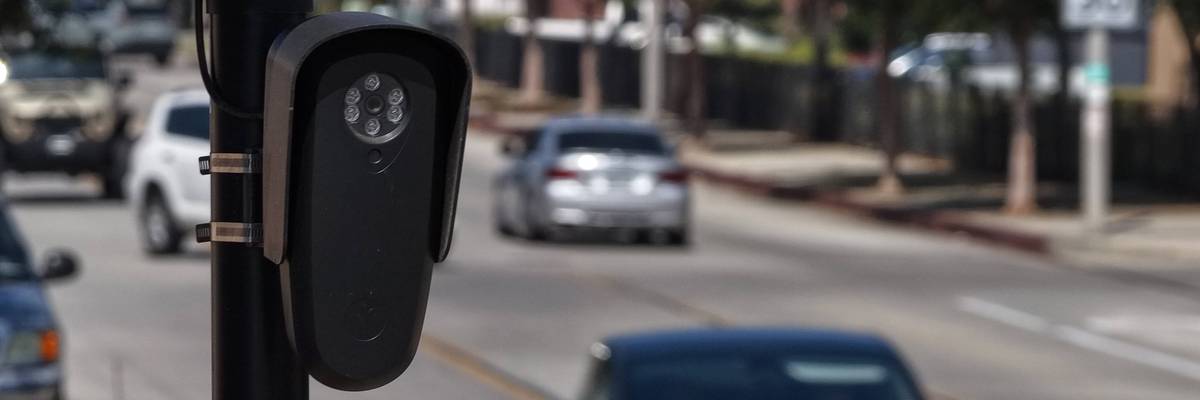
An aerial view of a Flock camera on September 14, 2026 in Burbank, California.
(Photo by Justin Sullivan/Getty Images)


Stephen Prager
Oct 14, 2026
COMMON DREAMS

Amid what she called a “mass surveillance crisis,” US Rep. Rashida Tlaib announced legislation on Wednesday to ban the use of federal funds for powerful dragnet spying systems—including the automated license plate-reading cameras manufactured by Flock Safety.

Flock has quickly grown into a massive nationwide surveillance network with more than 120,000 of its artificial intelligence-powered cameras installed across 49 states, allowing law enforcement agencies to track and reconstruct Americans’ movements, often without warrants.

While supporters describe Flock cameras as a tool to help police solve crimes, there is little evidence that they actually reduce it. There are also many documented cases of cops using the technology to stalk romantic partners, track women who’ve had abortions, monitor First Amendment-protected protests, and surveil people on behalf of US Immigration and Customs Enforcement (ICE) as part of its mass deportation push.

“Flock’s technology isn’t making us safer,” Tlaib (D-Mich.) said in a statement on Wednesday. “Instead, it has been used to stalk people, misidentify and arrest innocent people, surveil protesters, and wrongfully record our neighbors. My bill would prevent our government on all levels from selling us out to Big Tech companies that trample our civil rights for profit.”


The bill, titled the Get the Flock Out of Our Communities Act, is co-sponsored by Reps. Sylvia Garcia (D-Texas), Summer Lee (D-Pa.), Ilhan Omar (D-Minn.), Delia Ramirez (D-Ill.), Nydia Velázquez (D-NY), and Bonnie Watson Coleman (D-NJ).

It is part of a growing wave of bipartisan efforts to restrict the use of Flock cameras and other surveillance tech. Reps. Thomas Massie (R-Ky.) and Greg Steube (R-Fla.), along with Rep. Alexandria Ocasio-Cortez, have introduced legislation to limit government use or funding of automated license plate readers, while Sen. Josh Hawley (R-Mo.) has proposed limits on data collection.

Tlaib’s legislation would go further. Its restrictions would also extend beyond license plate readers to other “mass surveillance systems,” such as those that employ facial recognition technology and biometric tracking.

It would not only prohibit federal, state, and local governments from using federal funds to purchase, operate, or access automated mass surveillance systems; it would also make state and local governments ineligible for certain federal law enforcement grants unless they stop operating or accessing mass surveillance networks that already exist.

Federal agencies would also be barred from using data derived from these systems, and they’d be required to delete certain data that has already been gathered.

The full extent to which Flock cameras are funded with federal dollars is unknown. But the company itself has identified several federal grant programs that local police departments can apply for to purchase the cameras.

“Federal funds should be used to invest in our communities in real safety solutions. We need good jobs, affordable homes, clean water, and reliable electricity. That’s what’s going to make us safer,” Tlaib said at a news conference Wednesday. “Instead, our government is sacrificing our rights to big tech companies that care more about their profits, selling our data, than about our safety.”

Tlaib’s bill comes as backlash to Flock cameras grows around the country. A recent Data for Progress poll showed 52% of voters viewed Flock cameras unfavorably, while more than 200 cities and counties have canceled their contracts with the company.

“People everywhere are starting to recognize that conflating surveillance with safety makes communities less safe,” said Tawana Petty, a digital and data justice organizer from Detroit. “The persistent abuse of Flock cameras and other surveillance systems by law enforcement agencies across the United States, and the lack of transparency by the companies that market them, has caused an awakening among residents and city government agencies who are ridding themselves of the technologies.”


Pentagon Plans to Withhold Report on US Massacre of Iranian Kids Until After Midterms

One policy analyst wrote sardonically that the administration doesn’t “want to remind voters before the midterms of the mass killing of schoolchildren on the first day of Trump’s glorious war.”


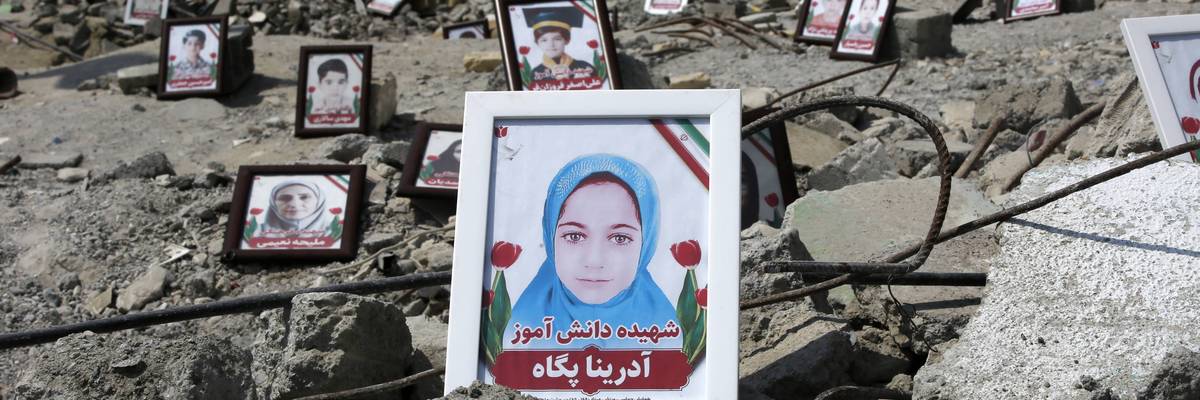
A view of a school destroyed in an attack by the United States is seen in Minab, Iran on September 11, 2026.
(Photo by Fatemeh Bahrami/Anadolu via Getty Images)

Jake Johnson
Oct 15, 2026
COMMON DREAMS

The Pentagon is reportedly planning to withhold until after the midterm elections the completed findings of its investigation into a devastating US strike on an elementary school in southern Iran, which killed more than 150 people—including 120 children—on the first day of President Donald Trump’s illegal and deeply unpopular war.

Bloomberg reported on Thursday that “top Pentagon officials have expressed their intention to hold off on releasing an internal report into the attack” on Shajareh Tayyebeh Elementary School in Minab until after next month’s midterms “at the earliest.” The internal assessment is believed to have been effectively complete for months, and preliminary findings reported in early March determined that American forces hit the school with a Tomahawk missile due to “outdated” targeting information.

According to Bloomberg, Pentagon investigators “discovered that flawed intelligence, outdated imagery, and an overreliance on AI contributed to the attack,” which is regarded as one of the US military’s worst atrocities against civilians in decades. Trump brushed off the massacre in remarks to reporters in June, saying: “Mistakes are made. War is nasty.”

Ryan Costello, policy director at the National Iranian American Council (NIAC), said in a statement that “the refusal to come clean about the attack on Minab is not just a shameful exercise to dodge accountability for a horrific war crime; it is actively risking these errors being repeated again.”

“As the administration has dodged accountability on Minab and [a deadly strike on a sports hall hours later], it has engaged in further attacks that may be war crimes, including the bombing of a civilian home on Qeshm Island that killed a family and the bombing of a wedding party in Kuhestak that killed five, including two children,” said Costello. “Ensuring these tragedies don’t repeat starts with accountability on Minab.”

International policy analyst Brian Finucane wrote sardonically that the Pentagon doesn’t “want to remind voters before the midterms of the mass killing of schoolchildren on the first day of Trump’s glorious war.”

Bloomberg’s reporting came as CNN published a story detailing internal US “strike plans” that include possibly dropping the so-called “mother of all bombs” on Iranian energy infrastructure.

The GBU-43/B Massive Ordnance Air Blast Bomb (MOAB) is the largest nonnuclear bomb in the US arsenal. In 2017, Trump became the first US president to deploy the weapon, authorizing the military to drop it on Afghanistan.

Sina Toossi, a senior fellow at the Center for International Policy, warned that using the bomb against Iran would risk “triggering another major escalatory spiral, potentially including Iranian attacks on critical regional energy infrastructure, with consequences for global markets and the US economy.”

“This only reinforces the fundamental problem: Trump has no viable military solution to the Iran conflict,” Toossi wrote. “Is he looking for one spectacular strike to project strength and declare victory? Or is he prepared to plunge the US into an even deeper, potentially endless war that could devastate the rest of his presidency, legacy, and the economy?”

Costello of NIAC said that “the Trump administration’s threats to commit war crimes in Iran cannot be normalized.”

“President Trump acts on many of his threats, necessitating more urgent action to bring this illegal war of choice to a definitive end,” he added.


70+ House Democrats Demand Pentagon Answer for Iran Wedding Massacre

The September 1 strike, which killed five women and children and wounded more than 70 other Iranians, is but one of several civilian massacres


Mourners gather around the coffin of one of the victims of a likely US airstrike on a wedding party, on September 3, 2026 in the village of Kuhestak, Iran.
(Photo by Morteza Akhondi/Getty Images)
assacres during Trump’s illegal war of choice.


Brett Wilkins
Oct 14, 2026
COMMON DREAMS

More than 70 House Democrats on Tuesday sought answers and accountability from the Pentagon regarding a likely US strike on a September wedding gathering in southern Iran that killed five civilians—all women and children—and wounded over 70 others.

In a letter to Defense Secretary Pete Hegseth, Reps. Yassamin Ansari (D-Ariz.), Sara Jacobs (D-Calif.), and Jason Crow (D-Colo.) led 74 lawmakers in demanding an explanation for the September 1 bombing in Kuhestak and details of what the Trump administration is doing to protect Iranian civilians.

“We demand urgent answers regarding the United States’ role in this strike, why the strike proceeded given the clear risk of significant civilian harm, and what steps the [US Department of Defense] is taking to prevent further civilian casualties in Iran,” the lawmakers wrote.

The strike occurred at approximately 9:30 pm local time while preparations were underway for the wedding of the daughter of a local fisher.

According to witnesses interviewed by The Associated Press, around 150 women and children were gathered at the Mallahi family compound. The celebration was following a regional tradition in which women and men gather separately. The bride and groom had not yet arrived, and the main celebration had not begun. A bomb struck the room where dinner would have been served.

Four initial fatalities—two women and two children—were identified by Iranian authorities and human rights groups: 50-year-old Zarkhatoun Taheri, 43-year-old Kolsoum Malahi Najandnia, 16-year-old Mohammad Mallahi, and 4-year-old Amir Mohammad Karimi. A fifth victim, 22-year-old woman Asiyeh Molainejad, died in a hospital on September 3.

Weapons experts concluded the blast was likely caused by a direct hit from a US munition. The Pentagon has not publicly accepted responsibility for the strike, which remains under investigation.

“This incident is regrettably among the latest in a string of civilian casualty incidents arising from the US-led war in Iran,” the lawmakers wrote in their letter. “This includes a strike at the Shajareh Tayyebeh Elementary School in Minab, Iran, on the first day of the war that killed a reported 175 civilians, including 120 children.”

The United Nations’ Independent International Fact-Finding Mission on Iran said it found “reasonable grounds” to believe that the Minab school strike constituted a war crime.

“While it has been reported that a preliminary investigation by the department found that the US military was responsible for the strike, over six months later the department has still not publicly acknowledged responsibility for the strike nor released the findings of its investigation,” the lawmakers’ letter notes.

“Similarly, reporting and independent analysis indicate that US forces were responsible for a strike at a youth sports hall in Lamerd, Iran, that killed 21 civilians, including 7 children, on February 28. While the department has denied responsibility, analysis by weapons experts found that the damage pattern is consistent with that of an American Precision Strike Missile,” the lawmakers continued, referring to Lockheed Martin’s next-generation surface-to-surface ballistic missile.

Hegseth, who advocates “maximum lethality” for US forces, has expressed disdain for what he called “stupid rules of engagement” designed to minimize civilian harm. He has overseen the dismantling of efforts meant to mitigate wartime harm to civilians—hundreds of thousands of whom have been killed in US-led wars during this century, according to experts.

“Maximum lethality,” combined with AI-powered systems allowing for exponentially faster and more numerous target selection, has raised concerns that have been underscored by actions including US-backed Israeli massacres in Gaza and Lebanon, and US airstrikes in Iran, where tens of thousands of people have been killed or wounded during more than seven months of President Donald Trump’s illegal war of choice, according to Iranian government figures.

The Washington, DC-based National Iranian American Council (NIAC) welcomed the lawmakers’ intervention, arguing that Iranian civilians must not be treated as expendable casualties of war.

“The lives of Iranian civilians cannot be treated as an acceptable cost of war,” NIAC president Jamal Abdi said in a statement. “These are families, children, and entire communities whose lives have been irreversibly altered by a military campaign that Congress never authorized.”

“Credible allegations of unlawful attacks on civilians demand independent investigations, full public disclosure of the findings, and accountability for any violations of international humanitarian law,” Abdi added. “The Trump administration cannot be permitted to wage an unauthorized war in defiance of US and international law while evading responsibility for its devastating human consequences.”


‘Murdering People Has Failed’: Cheap Cocaine Flows Into US as Trump Bombs Boats

“Washington’s extrajudicial murders of alleged drug smugglers: not just grossly immoral and flagrantly illegal, but a ridiculous failure on their own terms.”


US Southern Command shared on social media a 16-second clip of a strike on a boat in the Pacific Ocean that killed three people on February 20, 2026.
(Photo: screen grab/SOUTHCOM/X)


Jessica Corbett
Oct 14, 2026
COMMON DREAMS

US President Donald Trump has bombed dozens of boats in the Caribbean Sea and Pacific Ocean over the past 13 months, killing more than 230 people, but “record supplies of cocaine still arrive in the US, Europe, and as far away as Australia every day, cheaper and purer than they’ve been in decades,” The Wall Street Journal reported late Tuesday.

After speaking with scholars of the cocaine trade and law enforcement officials across four continents, the Journal’s Juan Forero detailed how “Colombian navy divers are detecting greater use of ‘parasites’—metal modules packed with cocaine that traffickers bolt onto the hulls of freighters preparing to steam out of this country’s largest Pacific port.”


“Deep in the Amazon, smugglers have shifted shipments east, hiding drugs on boats moving through the rainforest’s vast river network,” he noted. “And on Colombia’s long coast, crews evade US military airstrikes by hugging the shoreline in the exact same speedboats the Americans are targeting.”


“In Europe, the influx is overwhelming authorities. The drugs arrive on container vessels, smaller boats from way stations in Africa, and semi-submersible vessels that cross the Atlantic to rendezvous with ships near Portugal or Spain,” the journalist added, pointing out that cocaine prices have dropped in both the United States and Europe.

Since Trump began bombing the alleged drug boats last year, his administration has argued his deadly campaign is both necessary to stem the flow of illicit drugs and lawful because the US is purportedly at war with cartels. Critics, including Democrats in Congress, legal experts, and human rights groups, have condemned the strikes as murders.


The Journal’s reporting isn’t the first to highlight the initiative’s apparent failure. It follows a July article from The Washington Post about a Drug Enforcement Administration analysis concluding the campaign “had failed to affect the supply or price of cocaine in the United States, and had led traffickers to diversify beyond go-fast boats and to avoid international waters, opting instead for larger boats and hemming close to coastlines, where US forces are less likely to open fire.”

Sharing the latest article on social media Wednesday, writer Jesse Walker wrote, “Washington’s extrajudicial murders of alleged drug smugglers: not just grossly immoral and flagrantly illegal, but a ridiculous failure on their own terms.”


Journalist Glenn Greenwald similarly said: “As was completely predictable (and predicted), Trump’s policy of bombing speed boats near Venezuela and Colombia has killed hundreds of people while having no success in impeding the flow of cocaine into the US. In fact, reports the WSJ, cocaine is more plentiful, purer, and cheaper in the US than ever, in part because of these bombings. At some point, will people realize that the justifications they’re given for US bombings and wars are almost always—always—lies?”


As Americans Face Affordability Crisis, Poll Reaffirms ‘Supporting Medicare for All Is Not Radical’

“Healthcare is one of the significant ways that people experience economic pressure every day,” said Ipsos’ president.


Members of National Nurses United rally with lawmakers to show their support for the Medicare For All Act, in Upper Senate Park on Capitol Hill in Washington, DC, on April 29, 2025.
(Photo by Chip Somodevilla/Getty Images)


Brett Wilkins
Oct 13, 2026
COMMON DREAMS


Yet another poll, this one released on Tuesday, shows significant support for Medicare for All as Americans grapple with rising healthcare costs and the Trump administration and congressional Republicans target federal programs upon which tens of millions of people rely.

A plurality—43%—of respondents to the latest Axios-Ipsos American Health Index said they support replacing private health insurance with a government-run Medicare for All system, compared with 24% who oppose the idea. Another 32% were unsure, leaving supporters outnumbering opponents by nearly two to one. Two-thirds of respondents also backed increased federal spending to reduce healthcare costs.

Respondents’ views on Medicare for All are divided along party lines, with a majority of Democrats (62%) and a plurality of independents (47%) supporting the proposal, while a majority of Republicans (52%) oppose it.

The most commonly cited reason people said they oppose Medicare for All is fear that the quality of care would be inferior to that offered by private health insurance (38%), followed by concern that the program would be too expensive for taxpayers (22%), and that the federal government should not be involved in providing healthcare (21%). Supporters were not asked why they favor Medicare for All.


The survey also revealed deepening distrust of political leaders on healthcare issues. Just 20% of respondents said that they trusted President Donald Trump for health-related information, down from 31% in March 2025, while only 25% trusted Health and Human Services Secretary Robert F. Kennedy Jr. The poll also found that 49% would be less likely to support a candidate who received money from pharmaceutical company political action committees.

“Healthcare is one of the significant ways that people experience economic pressure every day,” Mallory Newall, Ipsos senior vice president for US public affairs, told Axios. She noted that while many Americans still “have questions” about Medicare for All, the current level of support for the proposal is “noteworthy—and it is not solely driven by members of the Democratic Party.”

Newall said that even if candidates “don’t call it Medicare for All,” expanding federal healthcare programs so that they cover more people “is a message that can connect with voters” as they prepare to cast their ballots in next month’s midterm elections.

The stakes extend beyond Medicare for All. Republicans’ sweeping 2025 budget law enacted the biggest cuts to Medicaid in the program’s six-decade history, while enhanced Affordable Care Act premium tax credits expired at the beginning of 2026, threatening higher costs for millions of enrollees.

Progressives have cited these and other developments to argue that the private insurance system leaves working-class families vulnerable to corporate profiteers and political attacks.

A separate survey released last week by the health policy research organization KFF found that 66% of Americans favor Medicare for All, the highest level of support since the organization began tracking the issue a decade ago. While 84% of Democrats and 72% of Independents polled backed Medicare for All, 66% of Republican respondents opposed the proposal.

According to a study published in August by researchers at Yale University, shifting to a Medicare for All-type system would save more than 114,000 lives and around $1 trillion annually in the US. Sen. Bernie Sanders (I-Vt.) has cited the study while promoting his Medicare for All Act.

“Do not tell me we cannot afford Medicare for All,” he said at the time of the study’s publication. “What we cannot afford is a broken healthcare system based on greed.”

Critics Say ‘Medicare for Americans’ Is Corporate Democrats’ Latest Way of ‘Protecting’ For-Profit Insurers

“We need Medicare for All,” one critic said. “No private insurance necessary.”


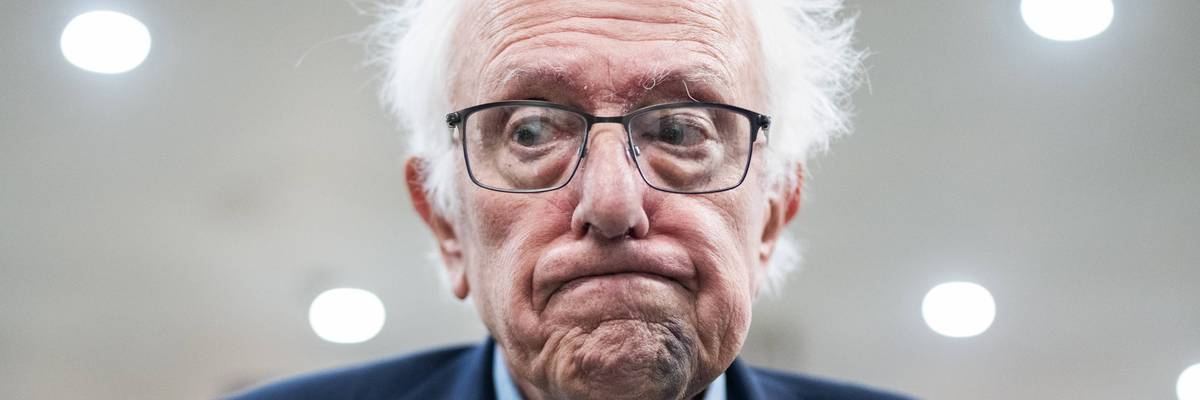
Sen. Bernie Sanders (I-Vt.) talks with reporters in the US Capitol on September 29, 2026.
(Photo by Tom Williams/CQ-Roll Call, Inc. via Getty Images)


Julia Conley
Oct 13, 2026
COMMON DREAMS


Corporate-backed Democrats evidently see the writing on the wall.

The latest polling from Axios-Ipsos American Health Index, released Wednesday, found that a purality of Americans support replacing the for-profit health insurance industry with a government-run Medicare for All plan, and that 62% of Democrats back the idea. Supporters of a single-payer healthcare program like those that have long existed in the United States’ peer countries swept primary races across the US this year. And one of the top potential 2028 Democratic presidential candidates, Rep. Alexandria Ocasio-Cortez (D-NY), is a vehement supporter of the idea.

But instead of simply joining efforts to extend the popular Medicare program to everyone in the US, Majority Democrats—a group of Democratic lawmakers aimed at “reshaping and growing” the party, with billionaire hedge fund manager Stephen Mandel as its top funder—is intent on recycling an old proposal, with a new name.

The group introduced “Medicare for Americans” in a six-minute video posted on social media Tuesday—one that essentially described a “public option”—or a government-run healthcare program that would “compete” with health insurers instead of dismantling the $5.3 trillion-per-year for-profit system.

The video describes a plan similar to one unveiled in 2020 by former Transportation Secretary Pete Buttigieg, then a presidential candidate, who called his proposal “Medicare for All Who Want It.”

“If we want to earn voters’ trust back,” says the narration, “we need a real solution... A revolutionary plan that will make a real difference in how we handle healthcare in this country.”

The plan would “offer every American who is sick and tired of private insurance a plan through Medicare,” the narrator continues. “People who want to keep the private insurance they have should be able to.”


The video goes on to say that proponents of Medicare for All, like Sen. Bernie Sanders (I-Vt.) and Ocasio-Cortez, want to “blow up the whole system and tax the hell out of everyday Americans,” while Republicans want to keep a “dysfunctional status quo.”

It warns that Medicare for All “comes with a $40 trillion price tag,” naming the estimated cost over a decade. But it neglects to mention that the annual cost of the current healthcare system—$5.3 trillion in 2024—is about $1 trillion higher than the annual cost of Medicare for All that was projected by researchers at Yale School of Public Health in an August study. Americans are also spending more on healthcare following the Republican Party’s Medicaid cuts and refusal to extend subsidies under the Affordable Care Act.

“In one Axios-Ipsos survey, two-thirds of Americans, including half of Republicans, believe the federal government should be willing to increase public healthcare spending to lower consumer costs. But it’s misleading to suggest Medicare for All would cost more than our current system,” noted The Lever, calling Medicare for Americans “the billionaire option.”

Lis Smith, a Democratic political operative who has worked for Buttigieg and disgraced former New York Gov. Andrew Cuomo, praised the proposal as a “transformative, once-in-a-generation healthcare reform” that is “within reach... if Democrats are smart.”

But one progressive streamer wrote that Majority Democrats “want to pretend like they support progressive healthcare policy but are just protecting private insurance.”

“We need Medicare for All,” she said. “No private insurance necessary.”

As Rubio Heads to India, US Progressives Sound Alarm About Repression and Surveillance of Protests

“The US and India have an obligation to promote and defend the rights to freedom of assembly and expression,” six Democrats in Congress reminded the top US diplomat.


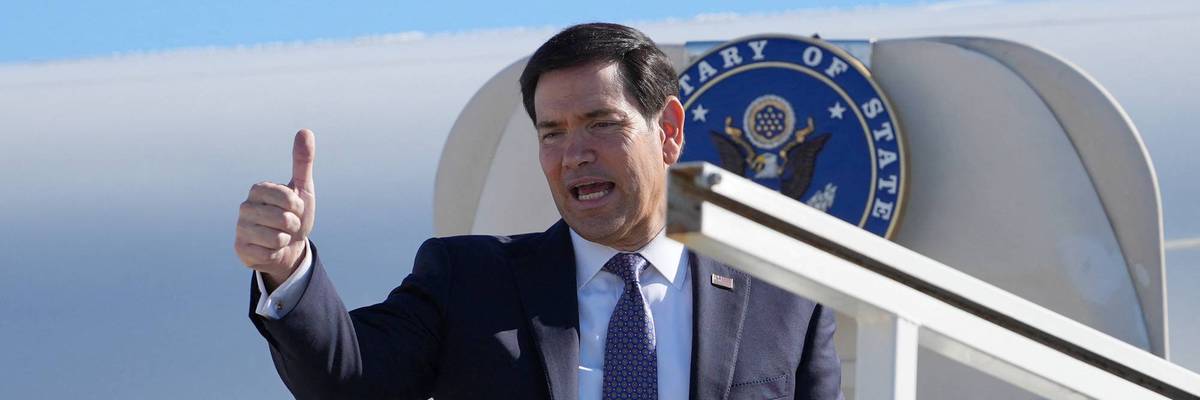
US Secretary of State Marco Rubio boards a plane in Lisbon, Portugal on October 8, 2026, after his three-country European tour.
(Photo by Mark Schiefelbein/Pool/AFP via Getty Images)


Jessica Corbett
Oct 16, 2026
COMMON DREAMS

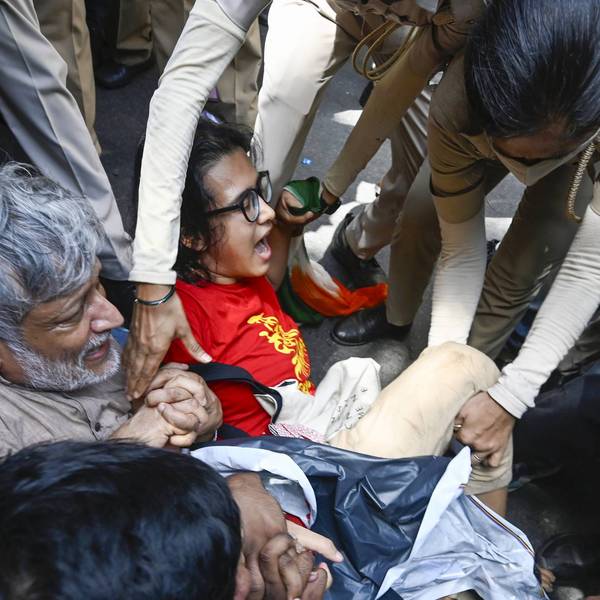
On the eve of US Secretary of State Marco Rubio’s trip to India, six progressives in the House of Representatives on Friday sounded the alarm over the Indian government’s response to recent protests, including its alleged spying on American soil.

“We write with concern regarding a pattern of repression, wrongful detention, and excessive use of force by security forces during student protests in Delhi and other localities across India,” Democratic Reps. Jesús “Chuy” García (Ill.), Pramila Jayapal (Wash.), Jim McGovern (Mass.), Eleanor Holmes Norton (DC), Ilhan Omar (Minn.), and Rashida Tlaib (Mich.) said in a letter to President Donald Trump’s top diplomat.


Amnesty Decries ‘Blatant Attack’ on Right to Assembly Amid Crackdown on India Election Protests

“The United States-India relationship has historically been rooted in democratic values, constitutional governance, and strong people-to-people ties,” they wrote. “As the world’s largest democracies and state parties to the International Covenant on Civil and Political Rights, the US and India have an obligation to promote and defend the rights to freedom of assembly and expression. It is in this spirit of shared values and obligations that we raise the following concerns.”

As the letter lays out, protests began in June after the leak and subsequent cancellation of India’s medical college entrance examination. While the demonstrators initially demanded reforms to the education system, including the resignation of Education Minister Dharmendra Pradhan, the Cockroach Janta Party’s (CJP) movement ultimately “grew to give voice to a broader set of grievances, including high levels of youth unemployment, government corruption, and barriers to democratic participation.”

In recent weeks, “tens of thousands of demonstrators have taken to the streets of major cities across India to protest... the Election Commission’s Special Intensive Revision (SIR), which has purged more than 130 million people from voter rolls since 2025,” the letter details, noting that protesters have called for the resignation of Chief Election Commissioner Gyanesh Kumar.

At least “hundreds of people have been detained by police across India since October 10, including CJP movement leaders, protesters, and journalists,” the lawmakers highlighted. The government of Prime Minister Narendra Modi and his right-wing Bharatiya Janata Party has also closed some public spaces, used unwarranted force against unarmed demonstrators, and ordered telecommunications companies to shut down mobile internet services in a bid to thwart protests.


However, the Democrats aren’t just alarmed by actions across India; they also pointed to “reports that Indian diplomatic missions in the United States hired photographers to surveil protesters on American soil,” with members of US human rights groups and the Indian diaspora disclosing that they were recorded at protests in Chicago, San Francisco, and Washington, DC.

“These incidents raise particular alarm in light of India’s documented pattern of engaging in transnational repression, including through the weaponization of consular services, harassment, intimidation, and physical violence,” the members of Congress wrote. “It is unacceptable that individuals on United States soil may not exercise their rights to freedom of expression and assembly, guaranteed to them by the US Constitution and international law for fear of retribution by a foreign government.”

The lawmakers asked Rubio’s department to:Press the Indian government to initiate thorough, transparent, and independent investigations of alleged human rights violations connected to the law enforcement response to protests;
Encourage the release of any individuals detained in contravention to Indian and international law for peacefully exercising the rights to freedom of expression and assembly;
Thoroughly investigate reports that Indian diplomatic missions engaged in the surveillance and intimidation of protesters within the United States; and
Pursuant to Section 6 of the Arms Export Control Act, assess whether India has engaged in a consistent pattern of acts of intimidation or harassment directed against individuals in the United States and is thus ineligible for arms sales.

Rubio is expected to meet with Indian Foreign Minister S. Jaishankar in Mumbai ⁠on October 20. However, Rubio—a former US senator expected to run for president in 2028—and the second Trump administration more broadly have also been widely criticized for authoritarian behavior and their records on human rights.

After Rubio attacked Amnesty International, the globally renowned group argued earlier this week that “as secretary of state, he has launched a wholesale attack on the concept of human rights.” Specifically, he has:Eviscerated the US government’s human rights infrastructure;
Vowed to wreck international human rights institutions;
Championed the US administration’s extrajudicial killings in the Caribbean and Eastern Pacific; and Continued to arm Israel as it commits genocide in Gaza.

Further, “as the head of the National Security Council, he has not ensured the release of investigations into mass killings of civilians in US airstrikes in Yemen and Iran,” Amnesty noted. “He’s leading US attempts to destroy the international justice system. That includes a campaign to, in his words, ‘dismantle’ the International Criminal Court.”

More broadly, the second Trump administration has repeatedly generated fears of interference in next month’s midterm elections, weaponized the federal government against the president’s political “enemies,” spent taxpayer dollars on far-right propaganda, punished journalists and outlets deemed unfriendly to the GOP agenda, pursued a deadly mass detention and deportation effort, slaughtered hundreds of people by bombing alleged drug-trafficking boats on the high seas, and much more.


Report Shows How IMF-Imposed Austerity Hurts Poor Countries Already Reeling From Iran War

“Instead of helping countries withstand another major shock,” Oxfam’s executive director said, the IMF “is forcing them to cut back on the very spending that can help protect people and recover.”


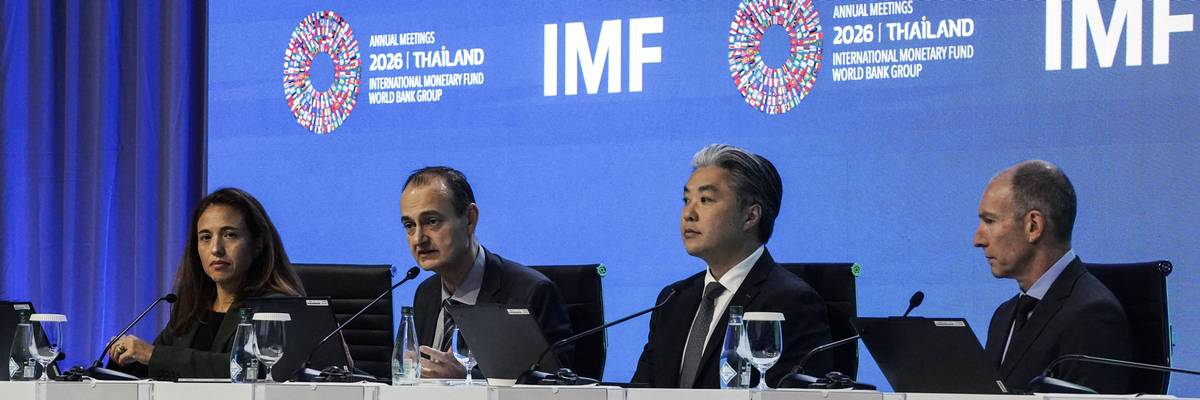
International Monetary Fund (IMF) officials speak at a press conference during the IMF and World Bank’s annual meetings in Bangkok, Thailand, on October 13, 2026.
(Photo by Anusak Laowilas/NurPhoto via Getty Images)


Stephen Prager
Oct 13, 2026
COMMON DREAMS


The US-Israeli war with Iran has exacerbated economic hardship across the world. It’s especially bad for the developing nations currently being forced to implement austerity programs by the International Monetary Fund.

Under IMF loan programs, countries struggling with debt are required to reduce government budget deficits by introducing spending cuts and tax increases that tend to hurt their poorest citizens. They often include cuts to public services and welfare programs, caps on government workers’ salaries, and the elimination of subsidies that keep basic needs affordable.

According to a report out Monday from Oxfam—amid the IMF’s annual meeting in Bangkok this week—24 of the 28 nations currently receiving IMF loans have been forced to implement austerity measures. Some of them, like Sierra Leone and Guinea-Bissau, are among the poorest nations in the world.

Even before the war—which has caused oil prices to soar and driven inflation worldwide—people in many of these countries were struggling to meet their basic needs and facing severe economic pressure: 51% were food insecure, and 57% lacked access to clean cooking fuel.

Emergency government programs have been able to backstop the worst effects for up to 130 million of the world’s poorest people, according to a report published before the meeting by the United Nations Development Program.

But as those countries run out of resources, many are being forced to pivot, and the stiff requirements imposed by the IMF may exacerbate the hardship.

In Ecuador and Guinea-Bissau, the IMF is requiring governments to cut spending, raise taxes, or both to the equivalent of roughly 4% of the nations’ annual gross domestic product (GDP).

The terms are even harsher for Sierra Leone, where the government is required to cut spending or raise costs equivalent to more than five times its annual healthcare budget.

A loan approved last week for Bolivia requires the government to slash as much as 8.5% of its GDP from the deficit—about twice its annual healthcare spending. The country has already been forced to eliminate a diesel subsidy that drove high prices down for consumers and businesses.

The IMF has acknowledged that these cuts are likely to make the strain worse for many low-income countries already suffering from the war, but said they had “no choice” but to cut spending or restructure their debts.

Oxfam International executive director Amitabh Behar noted that during previous crises like the Covid-19 pandemic and the war in Ukraine, the IMF has enacted tools to ease the burden on nations in debt by providing emergency loans and access to foreign currency without requiring additional borrowing.

“But this time, the fund is taking a very different path,” he said. “Instead of helping countries withstand another major shock, it is doubling down on austerity—forcing them to cut back on the very spending that can help protect people and recover—and leaving them even more vulnerable to the next crisis.”