Trump Gives Putin an ‘Economic Lifeline,’ Waives Sanctions on Russia
“These waivers have nothing to do with our national security, and everything to do with sucking up to Vladimir Putin,” said US Sen. Richard Blumenthal.
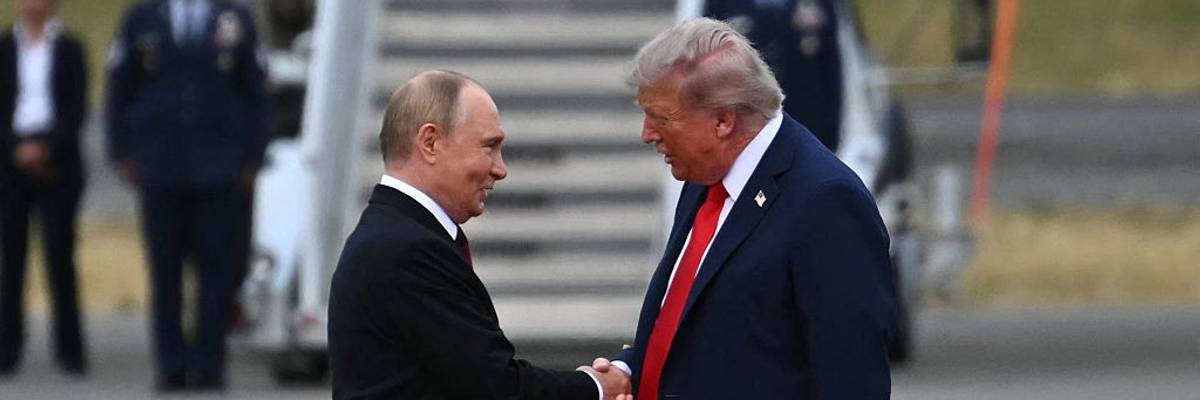
US President Donald Trump greets Russian President Vladimir Putin on the tarmac in Anchorage, Alaska, on August 15, 2025.
(Photo: Andrew Caballero-Reynolds/AFP via Getty Images)
Brad Reed
Oct 17, 2026
COMMON DREAMS
President Donald Trump on Friday signed an executive order that waived new sanctions on Russia that were set to take effect thanks to bipartisan legislation signed into law by the president last month.
Trump justified the decision by claiming the sanctions waiver “is in the national interests of the United States,” without offering further details. The president said he submitted a report to Congress elaborating on his reasons for waiving the sanctions.
A Friday report in The New York Times described the waiver as “another economic lifeline to Russian President Vladimir V. Putin,” as the sanctions had been designed “to target Russian officials, oligarchs, and financial institutions” and “squeeze the financial lifelines sustaining Russia’s war against Ukraine.”
Ukrainian President Volodymyr Zelenskyy condemned the sanctions waiver, and urged US lawmakers and voters to speak out against the US president’s actions.
“It is important that everyone in America... sees what is really happening,” Zelenskyy wrote in a Saturday social media post. “At a time when the Russians have carried out such a massive attack on our energy sector, a decision was unfortunately made in America to completely disregard the [sanctions law], which was supposed to impose truly effective pressure on Russia to bring this war to an end.”
Zelenskyy emphasized that the sanctions package could still do a lot of good, but “it needs to actually work, and every voice in support of it matters.”
Trump in recent weeks has been pressuring Ukraine to stop its attacks on Russian energy infrastructure in a bid to lower global prices of gas and diesel, both of which have skyrocketed in recent months because of the president’s illegal war with Iran.
In addition to pressuring Ukraine, Trump also struck a deal with Russia to import diesel into the US, drawing a bipartisan rebuke from lawmakers who accused the president of funding Putin’s war machine.
Rep. Don Beyer (D-Va.) ripped Trump’s decision to waive the Russia sanctions in a Friday social media post.
“Trump’s latest surrender to Putin again betrays our Ukrainian partners,” Beyer wrote, “and defies clear congressional intent of legislation designed to punish Russia for its illegal war of aggression.”
Beyer also pointed to flaws in the sanctions bill that he said gave Trump too much discretionary power to not only waive sanctions on Russia, but to impose further tariffs on US allies.
“Congress must fix this flawed law,” he said, “to stop Trump from capitulating to Putin and ensure that it truly supports Ukraine.”
Sen. Thom Tillis (R-NC) on Saturday slammed Trump’s sanctions waiver as “beyond irresponsible.”
“What part of enforcing a law passed 86-11 by the Senate does the President and his advisors not understand?” Tillis asked. “It’s unconscionable that this administration is capitulating to a Russian dictator who illegally invaded Ukraine and butchers innocent civilians every single day.”
Sen. Richard Blumenthal (D-Conn.), who co-authored the sanctions law with the late Sen. Lindsey Graham (R-SC), said Trump has shown “that he stands on the side of a bloodthirsty thug and the enablers of Russia’s war machine and against the majority of Americans, their representatives in both houses of Congress, and our European allies.”
“These waivers have nothing to do with our national security, and everything to do with sucking up to Vladimir Putin,” Blumenthal added. “I hope my Republican colleagues will join me in condemning this craven, cowardly action.”
Throttling of Ukraine’s Starlink Access Heightens Concerns Over Government Reliance on Elon Musk
“If Musk is going to... assist Putin’s invasion of Ukraine, Ukraine’s allies should sanction Starlink, X, and Tesla,” said one expert.
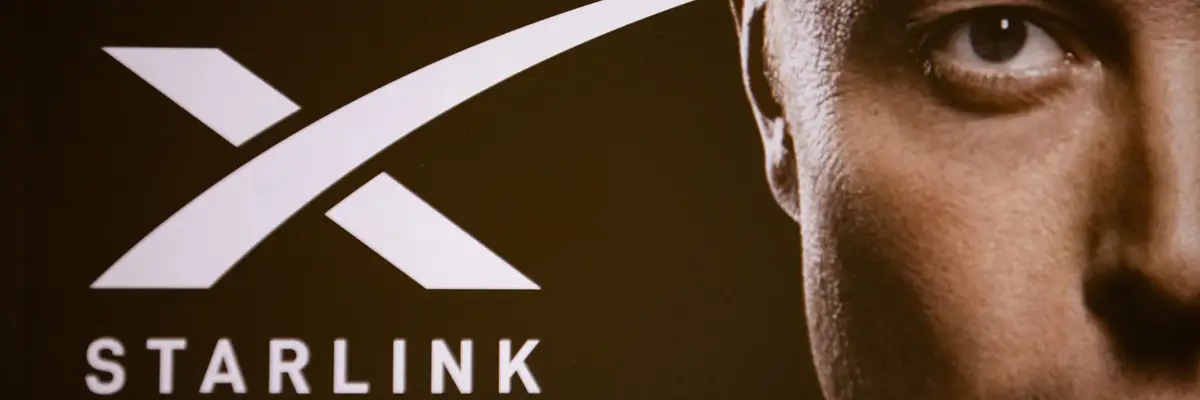
A double exposure photograph shows a portrait of Elon Musk and the Starlink company logo on March 1, 2025.
(Photo: Vincent Feuray/Hans Lucas/AFP via Getty Images)
Brad Reed
Oct 14, 2026
COMMON DREAMS
The Ukrainian government on Tuesday night said that its access to the SpaceX-owned Starlink satellite internet service was throttled, prompting critics to question the wisdom of depending on any company owned by far-right billionaire Elon Musk.
According to a Wednesday report in The New York Times, Ukrainian officials suspect that orders to restrict their access to Starlink “had come from Washington,” as President Donald Trump has been pressuring the country to stop attacking Russian energy infrastructure ahead of the 2026 midterm elections.
Musk, who was Trump’s single biggest donor in the 2024 presidential campaign, has spent at least $276 million since July to help Republicans maintain their congressional majorities.
In a Wednesday social media post, Ukrainian military expert Serhiy Beskrestnov revealed that Ukrainian military forces “have not received any warnings about this restriction” to Starlink, which he said “has led to the failure of several missions.”
“Obviously, this action cannot be a coincidence,” Beskrestnov added, “and is related to the current political situation.”
As noted by the Kyiv Independent on Wednesday, Ukraine depends on Starlink for “several military applications including operating its mid-strike campaign in Russian-occupied Ukraine, as well as interceptor drones that defend against Russia’s new jet-powered attack drones.”
The sudden restrictions on Starlink drew the ire of Polish Foreign Affairs Minister Radosław Sikorski, who directly called out Musk in a social media post.
“Hey, Elon Musk, big man, are you playing politics with your products again?” Sikorski asked. “As your European customers, we are watching you.”
Ian Bond, deputy director of the Center for European Reform think tank, wrote that the sudden Starlink restrictions “should set off a siren in every defense ministry in Europe.”
“There needs to be much more urgency about developing autonomous capabilities,” Bond added, “not subject to US caprices, for early warning of attacks, countering ballistic missiles, communicating with forces or controlling offensive weapons.”
Gideon Rachman, chief foreign affairs commentator for the Financial Times, expressed a similar view, arguing that “the Starlink restriction over Ukraine is a perfect illustration of the danger of relying on US technology.”
Steve Peers, professor of EU law and human rights law at Royal Holloway, University of London, argued that democratic nations must start viewing Musk and his companies as geopolitical adversaries.
“If Musk is going to (in effect) assist Putin’s invasion of Ukraine,” wrote Peers, “Ukraine’s allies should sanction Starlink, X, and Tesla.”
Nicholas Grossman, professor of international relations at the University of Illinois, pointed out that he has been calling for governments to end their dependence on Musk and his companies for the last three years.
“The problem is too much power, especially for an enemy of democracy,” Grossman wrote.
Grossman also took a shot at former President Joe Biden’s administration for not taking Musk’s threat to democracy seriously, as it continued to award SpaceX lucrative contracts even as its owner used his vast fortune to power Trump’s 2024 comeback.
“Big mistake,” he wrote.
“If Musk is going to... assist Putin’s invasion of Ukraine, Ukraine’s allies should sanction Starlink, X, and Tesla,” said one expert.
A double exposure photograph shows a portrait of Elon Musk and the Starlink company logo on March 1, 2025.
(Photo: Vincent Feuray/Hans Lucas/AFP via Getty Images)
Brad Reed
Oct 14, 2026
COMMON DREAMS
The Ukrainian government on Tuesday night said that its access to the SpaceX-owned Starlink satellite internet service was throttled, prompting critics to question the wisdom of depending on any company owned by far-right billionaire Elon Musk.
According to a Wednesday report in The New York Times, Ukrainian officials suspect that orders to restrict their access to Starlink “had come from Washington,” as President Donald Trump has been pressuring the country to stop attacking Russian energy infrastructure ahead of the 2026 midterm elections.
Musk, who was Trump’s single biggest donor in the 2024 presidential campaign, has spent at least $276 million since July to help Republicans maintain their congressional majorities.
In a Wednesday social media post, Ukrainian military expert Serhiy Beskrestnov revealed that Ukrainian military forces “have not received any warnings about this restriction” to Starlink, which he said “has led to the failure of several missions.”
“Obviously, this action cannot be a coincidence,” Beskrestnov added, “and is related to the current political situation.”
As noted by the Kyiv Independent on Wednesday, Ukraine depends on Starlink for “several military applications including operating its mid-strike campaign in Russian-occupied Ukraine, as well as interceptor drones that defend against Russia’s new jet-powered attack drones.”
The sudden restrictions on Starlink drew the ire of Polish Foreign Affairs Minister Radosław Sikorski, who directly called out Musk in a social media post.
“Hey, Elon Musk, big man, are you playing politics with your products again?” Sikorski asked. “As your European customers, we are watching you.”
Ian Bond, deputy director of the Center for European Reform think tank, wrote that the sudden Starlink restrictions “should set off a siren in every defense ministry in Europe.”
“There needs to be much more urgency about developing autonomous capabilities,” Bond added, “not subject to US caprices, for early warning of attacks, countering ballistic missiles, communicating with forces or controlling offensive weapons.”
Gideon Rachman, chief foreign affairs commentator for the Financial Times, expressed a similar view, arguing that “the Starlink restriction over Ukraine is a perfect illustration of the danger of relying on US technology.”
Steve Peers, professor of EU law and human rights law at Royal Holloway, University of London, argued that democratic nations must start viewing Musk and his companies as geopolitical adversaries.
“If Musk is going to (in effect) assist Putin’s invasion of Ukraine,” wrote Peers, “Ukraine’s allies should sanction Starlink, X, and Tesla.”
Nicholas Grossman, professor of international relations at the University of Illinois, pointed out that he has been calling for governments to end their dependence on Musk and his companies for the last three years.
“The problem is too much power, especially for an enemy of democracy,” Grossman wrote.
Grossman also took a shot at former President Joe Biden’s administration for not taking Musk’s threat to democracy seriously, as it continued to award SpaceX lucrative contracts even as its owner used his vast fortune to power Trump’s 2024 comeback.
“Big mistake,” he wrote.


No comments:
Post a Comment