Violent protests in Albania enter fifth day
Anti-government protests in Albania entered a fifth day on October 17, with clashes between demonstrators and police escalating in the capital Tirana as students joined calls for Prime Minister Edi Rama to resign.
The latest unrest follows months of protests by an anti-government movement known as the "Flamingo Revolution", whose members have gathered in central Tirana holding images of the pink bird and demanding Rama's resignation.
Those demonstrations initially focused on a proposed luxury tourism development on Albania's Adriatic coast linked to Jared Kushner, the son-in-law of U.S. President Donald Trump. Protesters warned that the project could threaten flamingo habitats on an island near the southern coastal city of Vlora.
The campaign has also drawn on wider public discontent over alleged corruption involving senior officials. One deputy prime minister has left the country, while another has been ordered to step down amid investigations.
The student demonstrations that began this week have brought a new generation of protesters into the streets, widening the movement beyond its original environmental concerns. Secondary-school pupils have also joined the rallies.
Masked protesters threw stones, petrol bombs, flares and fireworks at police near the prime minister's office and along Durrës Street, prompting officers to respond with tear gas, water cannon, rubber bullets and baton charges, according to local media reports. Special police forces surrounded the government headquarters as unrest continued despite repeated appeals for calm.
State Police Director General Skender Hita said 167 people had been arrested and another 388 prosecuted in connection with violence and damage to public and private property during five days of demonstrations, a police statement posted on Facebook said. A total of 132 police officers had been injured, some of whom remained in hospital.
The protests, which began as a student-led campaign over education costs and the rising cost of living, have developed into a broader challenge to Rama's government, fuelled by public anger over corruption allegations against senior officials.
The demonstrations have spread beyond Tirana to other major cities, including Durrës, Shkodër, Lezhë, Vlora, Gjirokastër and Korçë, in some of the country's most serious episodes of street violence in decades.
At least 21 people, including eight police officers, 10 protesters and three bystanders, received medical treatment at Tirana's University Trauma Hospital, according to local media reports. A 21-year-old protester injured in front of the Education Ministry was under observation but was not at risk of paralysis or in need of surgery, the reports said.
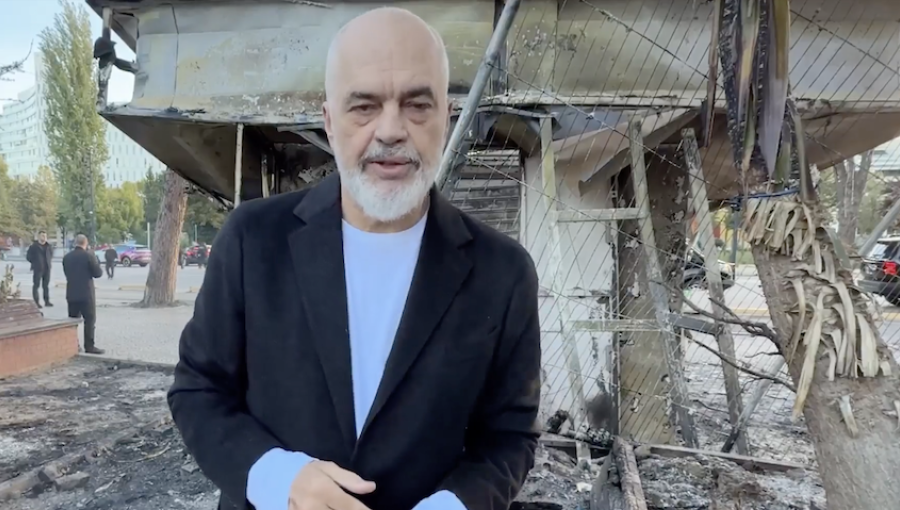
The unrest has also damaged government buildings and private businesses. A floor of the Education Ministry was set on fire during earlier clashes, while other public institutions were targeted.
Rama visited damaged premises in Tirana on October 17, saying businesses affected by the violence would receive assistance if they submitted claims through the government's e-Albania online services platform.
He said he supported the right of students and other citizens to demonstrate but warned that masked individuals attacking businesses and destroying property would face legal consequences.
The State Police said seven officers had been suspended and disciplinary investigations launched over alleged excessive use of force, breaches of proportionality and the treatment of a protester.
"No police officer has ever been ordered, at no time and under any circumstance, to act in violation of standard work procedures," Hita said at a news conference, adding that any abuse of authority would be dealt with under the law.
The police chief also warned of calls on social media, particularly newly created Telegram groups, urging attacks on officers and the use of incendiary or explosive materials. He called on demonstrators to distance themselves from those seeking to provoke violence.
Rama, who is serving his fourth term, has rejected demands to resign and accused the opposition of exploiting the unrest. On October 16, he blamed what he called a campaign of destruction on forces seeking to obstruct Albania's progress.
He also questioned whether the timing of the violence was connected to Albania's progress towards joining the European Union, an ambition that has become a central plank of his government's policy.
The opposition Democratic Party, led by former prime minister and president Sali Berisha, has long sought to force Rama from office. But the current demonstrations have drawn a broader range of participants, and the Flamingo movement has sought to distance itself from established political parties.
.jpg)
Anti-government protests in Albania entered a fifth day on October 17, with clashes between demonstrators and police escalating in the capital Tirana as students joined calls for Prime Minister Edi Rama to resign.
The latest unrest follows months of protests by an anti-government movement known as the "Flamingo Revolution", whose members have gathered in central Tirana holding images of the pink bird and demanding Rama's resignation.
Those demonstrations initially focused on a proposed luxury tourism development on Albania's Adriatic coast linked to Jared Kushner, the son-in-law of U.S. President Donald Trump. Protesters warned that the project could threaten flamingo habitats on an island near the southern coastal city of Vlora.
The campaign has also drawn on wider public discontent over alleged corruption involving senior officials. One deputy prime minister has left the country, while another has been ordered to step down amid investigations.
The student demonstrations that began this week have brought a new generation of protesters into the streets, widening the movement beyond its original environmental concerns. Secondary-school pupils have also joined the rallies.
Masked protesters threw stones, petrol bombs, flares and fireworks at police near the prime minister's office and along Durrës Street, prompting officers to respond with tear gas, water cannon, rubber bullets and baton charges, according to local media reports. Special police forces surrounded the government headquarters as unrest continued despite repeated appeals for calm.
State Police Director General Skender Hita said 167 people had been arrested and another 388 prosecuted in connection with violence and damage to public and private property during five days of demonstrations, a police statement posted on Facebook said. A total of 132 police officers had been injured, some of whom remained in hospital.
The protests, which began as a student-led campaign over education costs and the rising cost of living, have developed into a broader challenge to Rama's government, fuelled by public anger over corruption allegations against senior officials.
The demonstrations have spread beyond Tirana to other major cities, including Durrës, Shkodër, Lezhë, Vlora, Gjirokastër and Korçë, in some of the country's most serious episodes of street violence in decades.
At least 21 people, including eight police officers, 10 protesters and three bystanders, received medical treatment at Tirana's University Trauma Hospital, according to local media reports. A 21-year-old protester injured in front of the Education Ministry was under observation but was not at risk of paralysis or in need of surgery, the reports said.
The unrest has also damaged government buildings and private businesses. A floor of the Education Ministry was set on fire during earlier clashes, while other public institutions were targeted.
Rama visited damaged premises in Tirana on October 17, saying businesses affected by the violence would receive assistance if they submitted claims through the government's e-Albania online services platform.
He said he supported the right of students and other citizens to demonstrate but warned that masked individuals attacking businesses and destroying property would face legal consequences.
The State Police said seven officers had been suspended and disciplinary investigations launched over alleged excessive use of force, breaches of proportionality and the treatment of a protester.
"No police officer has ever been ordered, at no time and under any circumstance, to act in violation of standard work procedures," Hita said at a news conference, adding that any abuse of authority would be dealt with under the law.
The police chief also warned of calls on social media, particularly newly created Telegram groups, urging attacks on officers and the use of incendiary or explosive materials. He called on demonstrators to distance themselves from those seeking to provoke violence.
Rama, who is serving his fourth term, has rejected demands to resign and accused the opposition of exploiting the unrest. On October 16, he blamed what he called a campaign of destruction on forces seeking to obstruct Albania's progress.
He also questioned whether the timing of the violence was connected to Albania's progress towards joining the European Union, an ambition that has become a central plank of his government's policy.
The opposition Democratic Party, led by former prime minister and president Sali Berisha, has long sought to force Rama from office. But the current demonstrations have drawn a broader range of participants, and the Flamingo movement has sought to distance itself from established political parties.
.jpg)

No comments:
Post a Comment