Saturday, October 17, 2026

Violent protests in Albania enter fifth day

Violent protests in Albania enter fifth day
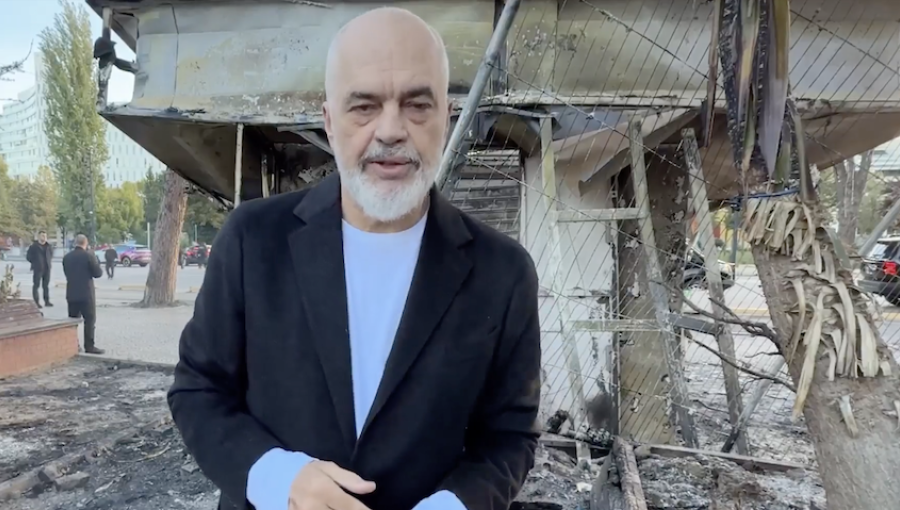
Albanian Prime Minister Edi Rama outside one of the buildings torched in violent anti-government protests. / Edi Rama via FacebookFacebook
By IntelliNews October 17, 2026

Anti-government protests in Albania entered a fifth day on October 17, with clashes between demonstrators and police escalating in the capital Tirana as students joined calls for Prime Minister Edi Rama to resign.

The latest unrest follows months of protests by an anti-government movement known as the "Flamingo Revolution", whose members have gathered in central Tirana holding images of the pink bird and demanding Rama's resignation.

Those demonstrations initially focused on a proposed luxury tourism development on Albania's Adriatic coast linked to Jared Kushner, the son-in-law of U.S. President Donald Trump. Protesters warned that the project could threaten flamingo habitats on an island near the southern coastal city of Vlora.

The campaign has also drawn on wider public discontent over alleged corruption involving senior officials. One deputy prime minister has left the country, while another has been ordered to step down amid investigations.

The student demonstrations that began this week have brought a new generation of protesters into the streets, widening the movement beyond its original environmental concerns. Secondary-school pupils have also joined the rallies.

Masked protesters threw stones, petrol bombs, flares and fireworks at police near the prime minister's office and along Durrës Street, prompting officers to respond with tear gas, water cannon, rubber bullets and baton charges, according to local media reports. Special police forces surrounded the government headquarters as unrest continued despite repeated appeals for calm.

State Police Director General Skender Hita said 167 people had been arrested and another 388 prosecuted in connection with violence and damage to public and private property during five days of demonstrations, a police statement posted on Facebook said. A total of 132 police officers had been injured, some of whom remained in hospital.

The protests, which began as a student-led campaign over education costs and the rising cost of living, have developed into a broader challenge to Rama's government, fuelled by public anger over corruption allegations against senior officials.

The demonstrations have spread beyond Tirana to other major cities, including Durrës, Shkodër, Lezhë, Vlora, Gjirokastër and Korçë, in some of the country's most serious episodes of street violence in decades.

At least 21 people, including eight police officers, 10 protesters and three bystanders, received medical treatment at Tirana's University Trauma Hospital, according to local media reports. A 21-year-old protester injured in front of the Education Ministry was under observation but was not at risk of paralysis or in need of surgery, the reports said.

The unrest has also damaged government buildings and private businesses. A floor of the Education Ministry was set on fire during earlier clashes, while other public institutions were targeted.

Rama visited damaged premises in Tirana on October 17, saying businesses affected by the violence would receive assistance if they submitted claims through the government's e-Albania online services platform.

He said he supported the right of students and other citizens to demonstrate but warned that masked individuals attacking businesses and destroying property would face legal consequences.

The State Police said seven officers had been suspended and disciplinary investigations launched over alleged excessive use of force, breaches of proportionality and the treatment of a protester.

"No police officer has ever been ordered, at no time and under any circumstance, to act in violation of standard work procedures," Hita said at a news conference, adding that any abuse of authority would be dealt with under the law.

The police chief also warned of calls on social media, particularly newly created Telegram groups, urging attacks on officers and the use of incendiary or explosive materials. He called on demonstrators to distance themselves from those seeking to provoke violence.

Rama, who is serving his fourth term, has rejected demands to resign and accused the opposition of exploiting the unrest. On October 16, he blamed what he called a campaign of destruction on forces seeking to obstruct Albania's progress.

He also questioned whether the timing of the violence was connected to Albania's progress towards joining the European Union, an ambition that has become a central plank of his government's policy.

The opposition Democratic Party, led by former prime minister and president Sali Berisha, has long sought to force Rama from office. But the current demonstrations have drawn a broader range of participants, and the Flamingo movement has sought to distance itself from established political parties.


Retired general tears Trump apart for forcing 'Holy War' on the military


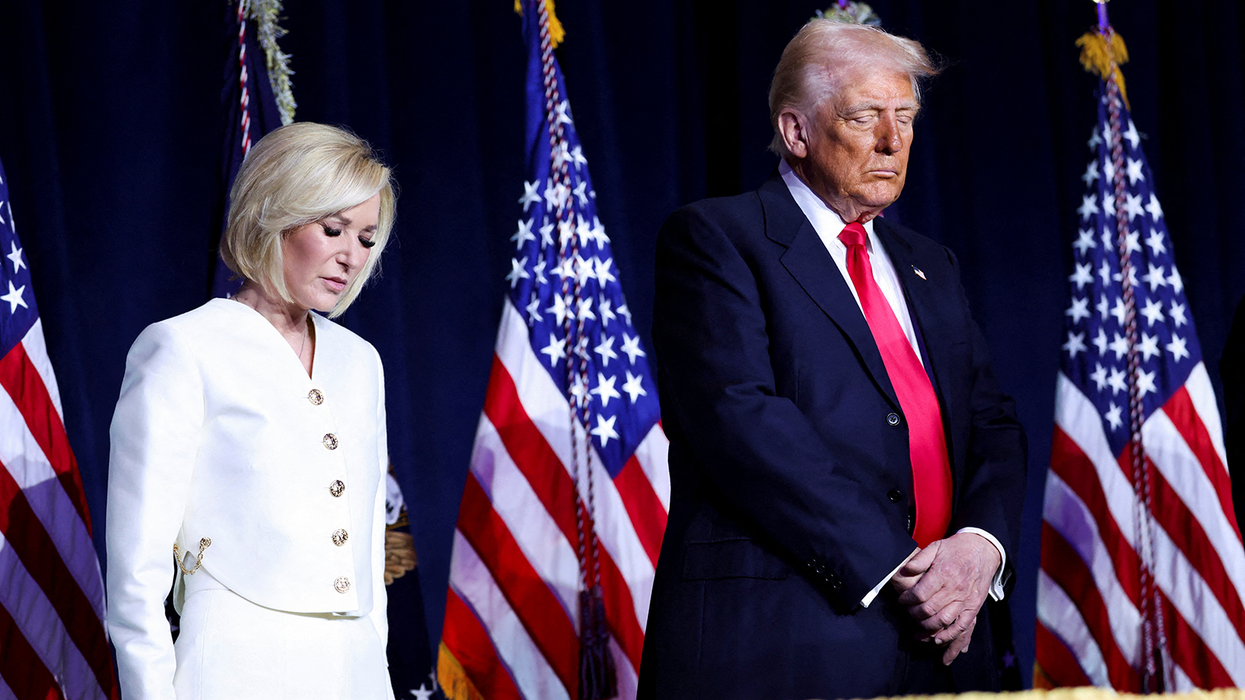
U.S. President Donald Trump and Pastor Paula White attend the annual National Prayer Breakfast at Hilton hotel in Washington, U.S., February 6, 2025. REUTERS/Kevin Lamarque

Sarah K. Burris
October 14, 2026
ALTERNET

While Republicans are trying to ban "Sharia Law," President Donald Trump's administration is trying to bring its own version of it to force on the U.S. military.

Sharia is Islamic religious law derived from the Quran and the teachings of the Prophet Muhammad. It guides Muslims’ personal conduct, worship and ethics and, in very few countries, it can control aspects of civil or criminal law. Retired Gen. Mark Hertling can't help but think that Secretary of Defense Pete Hegseth is bringing his own brand of Christianity and forcing it down the throats of every soldier for what he believes is some kind of holy war.

On MS NOW, the conversation turned to Hegseth's recent announcement that he's creating a new Pentagon office to “elevate spiritual readiness." Hegseth has a "menu of options" listing out various religions that military members must identify as.


In a memo in May, Military.com reported that 180 faiths were cut from the list of "recognized religions" in the military. Things like Humanism, Deists, Spiritualists and Unitarian Universalists were cut. While there were once 211 acceptable religions to identify as, there are now 31.

“The Department of War protects the constitutional right of every service member and civilian employee to practice their faith without coercion or discrimination,” Pentagon press secretary Kingsley Wilson told MS NOW. “Despite the Left’s efforts to remove our Christian heritage from our great nation, Secretary Hegseth is among those who embrace it.”


Hertling said the whole thing made him confused.

"I've commanded soldiers of every religious background, including those with no religious beliefs at all. And one of the most important things a leader has responsibilities to do was to make sure every single soldier, sailor, airman, marine feels respected and valued as members of the team," said Hertling.

"Faith is important to soldiers, and so is if they don't have any faith at all. And it's particularly true in combat," the retired general explained. "The military has always protected their right to practice the faith of their choosing. But there's a profound difference between religious freedom and religious favoritism. And that's what the secretary of defense seems to be doing right now. He has a way of worshiping, and god bless him for it. You know, I'm a Christian, and I don't know of anyone who's trying to get Christianity out of the military."


He said that every member of the U.S. armed forces deserves to practice whatever faith they want.

"And I think that we're seeing a real lien by the secretary of defense, one individuals who is trying to persuade people to do a certain kind of faith, which he agrees with. And that's really unfortunate," Hertling continued.

Host and reporter Ayman Mohyeldin sees it as an extension of the Trump administration's agenda to invoke Christian nationalism into government strategy and philosophy.


"They have invoked this kind of white nationalist imagery in the way they recruited people to the Department of Homeland Security," he recalled. "They've tried to characterize and evoke this imagery with the immigration operations that they're using here domestically. We've all seen the pictures of the president with the prayer services and the various evangelical pastors with their hands on him. He's tried to anoint himself as a messenger of God, acting on behalf of Christianity in this country, which I think is very dangerous to the larger issue."

Hertling added that the whole thing plays right into the hands of Islamic extremists who believe they are in a holy war against the Christian West. When Trump and Hegseth try to craft the military into some kind of soldier for Jesus it is quickly used by the extremists to recruit into terrorist groups.

"And it also makes the job of our allies in the region who are predominantly Muslim that much harder," he added.

Just Defeating Trump ‘Ain’t Good Enough,’ Says Sanders, ‘We Have to Go Further’

“We have to take Trump on, but we have to do more... You have to implement an agenda that works for the working class of this country.”


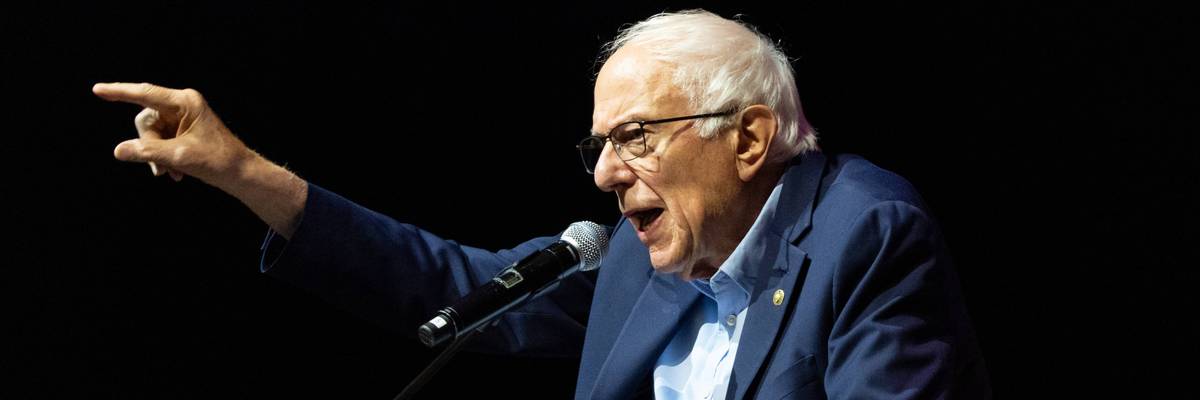
Sen. Bernie Sanders (I-Vt.) speaks at the “Ballots Over Billionaires” rally on October 5, 2026 in Los Angeles, California.
(Jason Armond / Los Angeles Times via Getty Images)


Brad Reed
Oct 16, 2026
COMMON DREAMS

While polls show Democrats are well positioned to make big gains in next month’s midterm elections thanks to President Donald Trump’s historic unpopularity, Sen. Bernie Sanders is warning the party that opposition to the president alone isn’t enough to guarantee long-term political success.

MS NOW on Friday showed a preview clip of a longer interview with Sanders (I-Vt.) that is scheduled to air on Saturday where he outlines what he’d like to see the party do if it retakes Congress next month.

Sanders—who caucuses with Democrats and twice sought the party’s presidential nomination—said it was essential for Democrats to win both the US House of Representatives and the Senate to put a check on Trump, whom he described as “the most dangerous president in the history of the United States.”

But Sanders said merely denouncing Trump, however correct, “ain’t good enough.”

“We have to take Trump on,” Sanders said. “But we have to do more... You have to implement an agenda that works for the working class of this country.”


The interview with Sanders, conducted by MS NOW senior contributing editor Michele Norris, is part of an hourlong special scheduled to air on the cable news network at 8:00 pm Eastern time on Saturday.

The focus of the special will be on the 85-year-old Sanders’ political career and his influence on a younger generation of politicians, two of whom—Rep. Alexandria Ocasio-Cortez (D-NY) and New York City Mayor Zohran Mamdani—will also be interviewed.

Previewing the special, Norris argued that the focus on Sanders is timely because he is “at the heart” of the upcoming 2026 midterm elections.

“He has inspired, endorsed, and supported a roster of progressive, left-leaning candidates who surprised the Democratic establishment in the primary and now face the biggest test yet this November,” said Norris. “The stakes are enormous for him, for the Democratic Party, and for the country.”

No Kings—and No Oligarchs

Even if the Democrats secure a victory in the midterm elections, would-be king Donald’s ultra-rich supporters will continue to find ways to protect their privileged status in society.


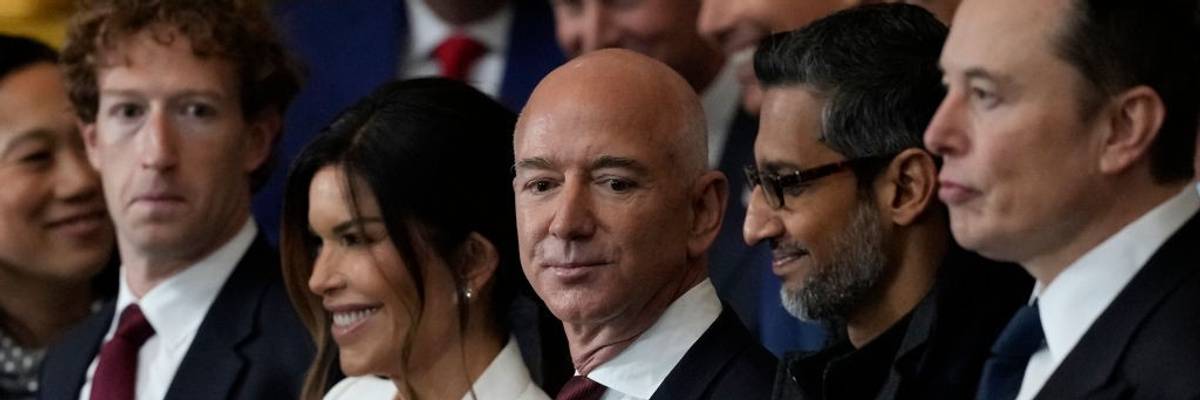
Guests including Mark Zuckerberg, Lauren Sanchez, Jeff Bezos, Sundar Pichai, and Elon Musk attend the Inauguration of Donald J. Trump in the US Capitol Rotunda on January 20, 2025 in Washington, DC.
(Photo by Julia Demaree Nikhinson - Pool/Getty Images)

Jeff Peck
Oct 17, 2026
Common Dreams

Two opposing views from America’s Founding Fathers are particularly relevant to the upcoming No Kings rallies:

“Of more worth is one honest man to society and in the sight of God, than all the crowned ruffians that ever lived.”—Thomas Paine

“There never was, nor ever will be a civilized Society without an Aristocracy.”—Gouverneur Morris


I once played the historic figure of Gouverneur Morris in Paul Foster’s stage play, Tom Paine, about the life of Thomas Paine who, in 1776, wrote a pamphlet called “Common Sense,” which guided and gave form to the American Revolution. Much has been written about how that work has direct relevance to today’s No Kings rallies, making a compelling case for the preservation of a republic and representative democracy over authoritarianism. However, thinking back to Foster’s play, I’m reminded that it’s important to also remember Morris because, as a bitter critic of Paine, he represents a viewpoint diametrically opposed to Paine’s egalitarianism, as represented in the role of oligarchs in society, or the “gentry,” as he called them. Their loyalty and support underpins the power of a king. And 250 years later, this is just as true for today’s oligarchs and their would-be king, Donald J. Trump.

Simply have a look at any image of the 2025 presidential inauguration. The platform behind Trump is crowded with the richest people in the country, among them, Elon Musk, Mark Zuckerberg, Jeff Bezos, Tim Cook, Sam Altman, Sundar Pichai, and Rupert Murdoch.

Attending the No Kings rallies to express loudly and clearly the views of the 99% is a step in the right direction.

These people are enablers of Donald Trump, but at the same time, as Paine points out, the relationship between oligarchs and an authoritarian ruler is an uneasy one: “The rich are in general slaves to fear, and submit to courtly power with the trembling duplicity of a spaniel.” How else to describe the obsequious fawning over Donald Trump by those same people on the platform?

A wealthy landholder and capitalist, Gouverneur Morris was a member the “1%” of his day. And when resentment against King George III was brewing in the colonies in the 1770s, he and his fellow landowners worried that any change to the status quo could threaten their power and privilege. Suppressing discontent, however, he realized, would not be easy. Referring to popular leaders in the colonies, in a 1774 letter to John Penn, Morris wrote: “These sheep, simple as they are, cannot be gulled as heretofore. In short, there is no ruling them; and now, to leave the metaphor, the heads of the mobility [mob] grow dangerous to the gentry, and how to keep them down is the question.”

Today’s oligarchs have a simple answer: Spend a billion dollars to elect right-wing candidates in this year’s midterm elections. The degree to which that will work any better than Morris’ efforts in the 1770s remains to be seen.

After armed conflict broke out between colonists and British troops in Lexington and Concord in April 1775, most wealthy landholders did not openly side with the king. However, many argued for negotiations to end the hostilities and reconciliation with the Crown. Thomas Paine thought this was madness. Once blood has been shed, he said, reconciliation was impossible: “As well can the lover forgive the ravisher of his mistress, as the continent forgive the murders of Britain.” Indeed, in the end, a peaceful settlement between king and colonists was not to be.

Today, with two years of increasing violence, both rhetorical and physical, on the part of the second Trump administration, that same line has undeniably been crossed.

If in the elections on November 3, Democrats win control of Congress, there will no doubt be calls for toning down the rhetoric, more cooperation across the aisle, and a working relationship between Trump and a Democratic Congress. But, as with Paine’s argument, that may very well not be possible.

At the end of the War of Independence, when the new country’s constitution was being considered, America’s wealthy managed to guarantee their continued privileged position in society. Paine had argued: “The true and only true basis of representative government is equality of rights. Every man has a right to one vote… The rich have no more right to exclude the poor from the right of voting, or of electing and being elected, than the poor have to exclude the rich.” However, at the Constitutional Convention of 1787, Morris made the case that only those who owned property should have the right to vote. “Children do not vote,” he said, “Why? Because they want prudence; because they have no will of their own. The ignorant and the dependent can be as little trusted with the public interest.” James Madison, Alexander Hamilton, and John Adams agreed, and although the Constitution left the right to vote in the hands of the individual states, in most cases that meant that only white male voters with property could vote.

Although they will still seek to benefit from their proximity to power in the wake of a Democratic victory in the midterms, like Morris and his fellow gentry, Trump’s ultra-rich supporters will continue to find ways to protect their privileged status in society. With virtually unlimited resources, both financial and technical (including advanced AI models), along with increasing control of the media, the oligarchs will do their best to influence policy, legislation, regulation, and public opinion. This will make them difficult to keep in check. But attending the No Kings rallies to express loudly and clearly the views of the 99% is a step in the right direction.

Before the war, judges in the colonies were appointed and paid by the Crown. This made them natural allies of the king and the wealthy in society. Morris believed that “the principle purpose of the state was protecting private property” and a strong executive and the courts were the instruments to ensure that. In today’s America, this alliance is again in force on the Supreme Court. Trump has nominated 3 of its 9 judges, and 3 others were nominated by Republican presidents, giving the conservatives a supermajority. For this reason, the court has ruled in Trump’s favor in many cases, notably rolling back voting rights and loosening campaign financing laws, both of which entrench the power of the wealthy over the poor. But the court has also afforded Trump king-like immunity from prosecution for all “official acts.”

Thomas Paine had a response to that: “When it is laid down as a maxim, that a King can do no wrong, it places him in a state of similar security with that of idiots and persons insane, and responsibility is out of the question with respect to himself.” I leave it to you to decide if that description applies to our would-be king.


Our work is licensed under Creative Commons (CC BY-NC-ND 3.0). Feel free to republish and share widely.


Jeff Peck
Dr. Jeff Peck is a film and television writer and producer and has taught film history at universities in America and Australia.
Full Bio >


Follow the Money: How Billionaire Wealth Became Political Power

Wealth creates political power; political power produces tax and economic policies favorable to wealth; those policies concentrate still more wealth; and some of that wealth is reinvested in politics to keep the cycle going.


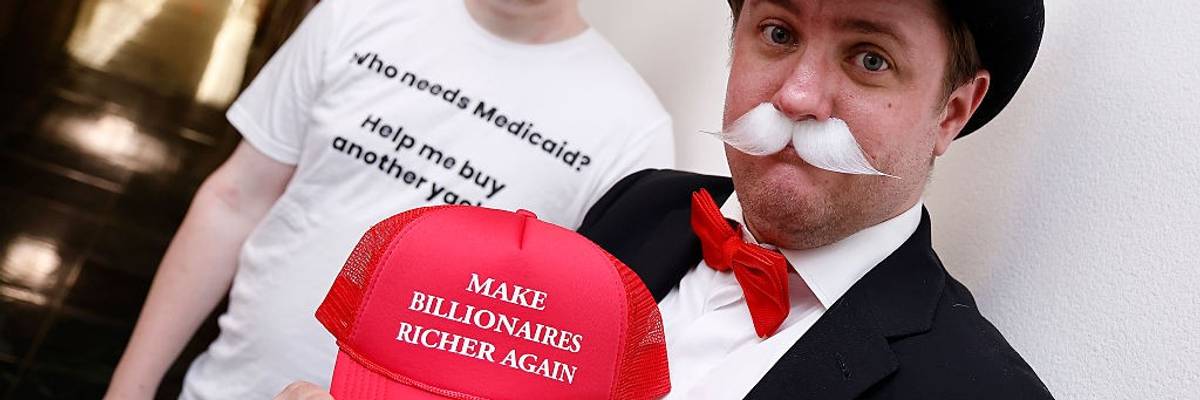
Advocates pose as Monopoly men and wealthy DOGE supporters while protesting tax breaks for billionaires and the Republican tax plan, inside and outside the Ways & Means Full Committee Markup to advance the legislation in the Longworth House Office Building on May 13, 2025 in Washington, DC.
(Photo by Paul Morigi/Getty Images for Stop Billionaires Tax Cuts Campaign)


Zack Kaldveer
Oct 16, 2026
Common Dreams


In 1971, corporate lawyer Lewis Powell wrote a confidential memo to the US Chamber of Commerce warning that American business was under attack. Among his complaints were politicians and activists who portrayed tax breaks as benefiting “only the rich” and who dared to set the “rich” against the “poor,” and “business against the people.”

Powell’s solution was not subtle. Corporate America needed political power, and that power “must be assiduously cultivated” and, when necessary, “used aggressively and with determination.” Business should organize, influence the media and universities, build political power, and exploit what Powell called the “vast opportunity” presented by the courts.


Heist: Who Stole the American Dream? traces much of what happened next. Powell joined the Supreme Court and later wrote the majority opinion in First National Bank of Boston v. Bellotti, expanding constitutional protection for corporate spending on ballot measures. Decades later, Citizens United would further expand corporate political spending rights. Meanwhile, Ronald Reagan ushered in enormous tax cuts, deregulation, attacks on organized labor, and an economic philosophy that promised prosperity would trickle down (it never did!).

That brings us to a question I think every politician promising a better future should have to answer: Tell me what you want to do—and tell me who you’re willing to tax to pay for it.

More than half a century after the Powell Memo, we’ve got the receipts.

According to a new Americans for Tax Fairness analysis, America’s 977 billionaires now control a record $9.24 trillion. In just one year, their wealth increased by $2.2 trillion, or 32%, while the overall economy grew by about 6%. The richest 16 Americans alone possess nearly $4 trillion, more wealth than all US billionaires combined had less than six years ago.

But those gains look even more extraordinary when we look at what is happening to everyone else. The bottom half of American households collectively owns just over 2% of the nation’s wealth. Nearly 48 million Americans live in households struggling with food insecurity. And the divide between workers and those at the top of corporate America has exploded: CEOs at the country’s 350 largest firms made 325 times as much as the typical worker in 2025, up from 21 times as much in 1965. Since 1978, CEO compensation has risen 1,316%, while typical worker compensation increased just 28%.

Yet as wealth becomes increasingly concentrated at the top, Washington is moving in precisely the opposite direction for millions of working families: massive tax cuts disproportionately benefiting the wealthy alongside deep cuts to Medicaid, food assistance, and other programs people depend on.

That brings us to a question I think every politician promising a better future should have to answer: Tell me what you want to do—and tell me who you’re willing to tax to pay for it. Want universal healthcare? Affordable housing? Better schools? Modern infrastructure? A serious response to climate change? A stronger safety net? Great. How are you going to pay for it?

After decades in which an extraordinary share of America’s wealth has accumulated at the very top, pretending we can adequately fund those priorities without asking substantially more from those who have accumulated that wealth is not a serious answer.

California’s Proposition 40 puts that question directly before voters.

The measure would impose a one-time 5% tax on billionaire wealth, primarily to help protect healthcare from massive federal cuts. In a letter endorsing the measure, six Nobel Prize-winning economists note that California’s roughly 250 billionaires now possess $2.3 trillion, up from about $700 billion a decade ago. From 2019 through 2025 alone, those billionaires gained $1.4 trillion in wealth, while the state income taxes they paid during that period amounted to just 1.6% of those gains.

The good news is that none of this is inevitable. These rules were created through political choices, and they can be changed through political choices and organized action.

How have some of California’s wealthiest people responded to being asked for a small portion of those enormous gains? By spending an extraordinary amount of money to stop it.

As of October 10, billionaire-backed opposition efforts have reportedly raised approximately $300 million to fight Prop 40, vastly outspending its supporters. The opposition includes Building a Better California, which is also backing Props 41 and 42, competing measures that could potentially block the billionaire tax even if voters approve it.

Think about that for a moment. A small number of extraordinarily wealthy people can spend a quarter-billion dollars influencing an election over whether extraordinarily wealthy people should pay more in taxes.

And California is only one battlefield. American billionaires had already contributed more than $433 million to the 2026 midterms by early this year. Nearly 80% went to Republican candidates and conservative organizations.

This is the feedback loop Powell envisioned, taken to an extreme he might not have imagined: Wealth creates political power; political power produces tax and economic policies favorable to wealth; those policies concentrate still more wealth; and some of that wealth is reinvested in politics to keep the cycle going.

That is why this debate is about more than tax rates. It is about democracy.

It is also why Prop 40 matters beyond California. As the six Nobel economists wrote, passage could help “kickstart a movement” to tax extreme wealth elsewhere. They concluded that this vote could ultimately be remembered as a turning point in the struggle between democracy and oligarchy.

The good news is that none of this is inevitable. These rules were created through political choices, and they can be changed through political choices and organized action.

Vote. Demand that candidates tell us not only what they want to accomplish, but who they are willing to tax to pay for it. Join the No Kings mobilization on October 17. And watch and share Heist: Who Stole the American Dream? to understand how we got here.

Then let’s stop the heist.


Our work is licensed under Creative Commons (CC BY-NC-ND 3.0). Feel free to republish and share widely.


Zack Kaldveer
Zack Kaldveer is a communications strategist and public policy advocate with nearly three decades of experience advancing evidence-based solutions in pursuit of justice. His work has spanned labor, environmental, economic, health, consumer rights, and corporate accountability. He leads communications for the Healthy Work Campaign and Prevention Policy Group at the Public Health Institute and serves as a Pacifica National Board director.
Full Bio >
‘Power Lies at the Hands of the People’: Thousands of No Kings Events Rally Voters for 2026 Midterms

“Voting early is the first step in how we protect those rights. A vote cast today can’t be lost to a long line or a closed polling place.”


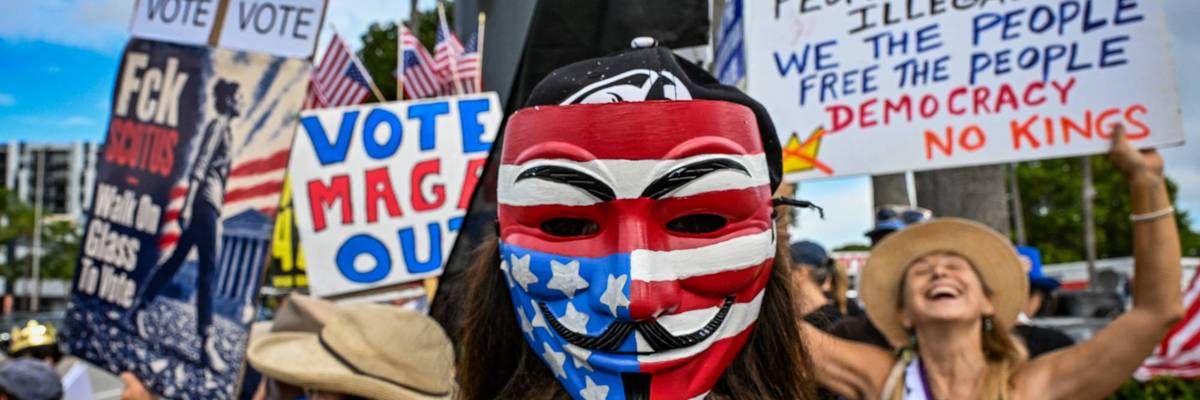
People take part in a “No Kings: Vote Early” demonstration in Wilton Manors, Florida, on October 17, 2026.
Photo by Giorgio VIERA/AFP via Getty Images


Brad Reed
Oct 17, 2026
COMMON DREAMS

More than 3,000 No Kings rallies held in all 50 US states on Saturday sought to rally voters to the polls ahead of the 2026 midterm elections.

While past No Kings demonstrations have focused on protesting the policies of President Donald Trump and the Republican Party, Saturday’s demonstrations were geared toward helping Americans ensure that their vote is counted in next month’s elections.

On the No Kings website, organizers described the events as “a day of nonpartisan voter participation, being in community with each other, and making sure every eligible voter has a plan, knows their options, and is ready to make their voice count.”

Speaking at a No Kings event in Atlanta, Georgia, Indivisible co-founder Leah Greenberg emphasized how important early voting will be to stopping any attempted meddling by the Trump administration in the elections.

“In America, power lies at the hands of the people, and we express our power at the ballot box,” said Greenberg. “Nobody knows better than the folks here that that right was never given by the powerful, it was demanded by generations of dedicated, brilliant, fearless organizers who put their lives and their freedom on the line to demand that this nation live up to its promises.”


Greenberg outlined how Trump has tried to attack the voting process throughout his second term, including his unprecedented mid-decade redistricting campaign and his attempts to restrict the right to vote by mail.

“They want chaos, fear, and confusion at the polls,” said Greenberg. “Voting early is the first step in how we protect those rights. A vote cast today can’t be lost to a long line or a closed polling place.”

In a Thursday interview with journalist Steven Beschloss, Indivisible co-founder Ezra Levin said he hoped the No Kings rallies would drive “the biggest turnout in midterms in American history,” which he said was important “because we have an authoritarian” in Trump “who will take advantage of any uncertainty.”

Minnesota Democratic US Senate candidate Peggy Flanagan, whose state came under siege last winter from federal immigration agents, expressed support for the No Kings rallies in a Saturday social media post.

“This year, Minnesotans showed the world that we don’t do kings,” Flanagan wrote. “Today, we’re doing it again. No matter where you are, make your voice heard.”

The demonstrations also earned a thumbs up from Rep. Delia Ramirez (D-Ill.).

“No kings. No authoritarians. No warmongers. No despots,” Ramirez wrote. “All across the country, Americans are taking to the streets and organizing to defend our neighbors and our democracy! Remember that you have rights.”

Attendance estimates for Saturday’s No Kings protests were not available as of this writing, though past rallies have drawn as many as 8 million people nationwide.

Former GOP stars back No Kings record early-vote bid as Trump’s polling slide deepens


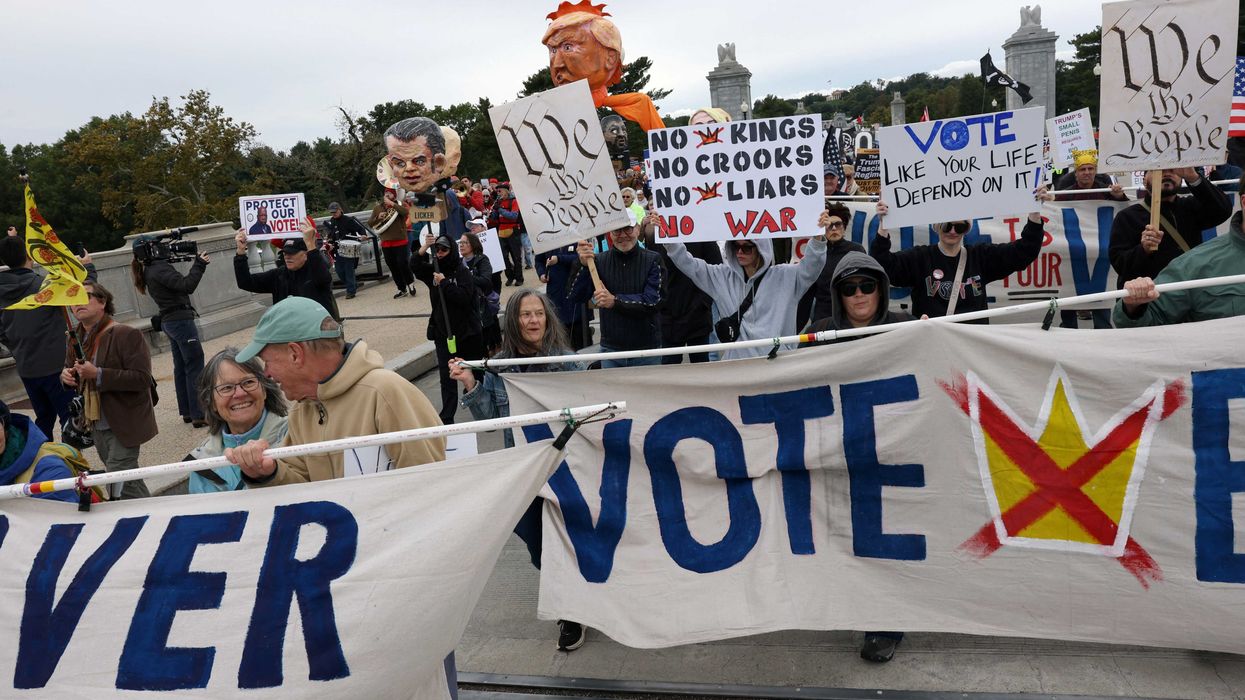
People take part in a "No Kings" protest as part of a nationwide day of action aimed at encouraging early voting ahead of the midterm elections in Washington, DC, US, October 17, 2026. REUTERS/Leah Millis
Oct 17, 2026
RAW STORY


Some of the right's best-known critics of President Donald Trump are throwing their weight behind a nationwide push that organizers hope will shatter early-voting records.

Former Rep. Adam Kinzinger (R-IL) and Never-Trump conservative Bill Kristol cheered on Saturday's No Kings "Vote Early" events, as the anti-Trump coalition traded its mass street protests for a drive to bank ballots ahead of the November 3 midterms.

More than 3,000 marches, cookouts, block parties and other gatherings were planned nationwide, according to reporting by NPR, with volunteers helping people confirm their registration, map out when and how they'll vote and learn their rights at the polls.

"The first three No Kings were designed to send a message," Indivisible co-founder Ezra Levin told NPR. "We're done sending a message."

Levin said the coalition wants to help drive the biggest midterm early vote in American history. Organizers are also recruiting poll watchers, a move Levin tied to fears that federal immigration agents could appear at polling places and to Trump's efforts to restrict mail-in voting.

Outside Mar-a-Lago, a protester who gave her name as Rebecca told MS NOW she hopes so many people vote that the election becomes "too big to rig" for Trump and Republicans.

Kristol drew a sharp contrast between the rallies and the president's own weekend.


"A tale of two Americas," Kristol posted on X on Saturday. "Millions of Americans gather at local No Kings events to defend democracy. Trump speaks to a few thousand die-hards in KY, then holds court at a 'Candlelight Dinner' at Mar-a-Lago with MAGA fat cats seeking favor and favors from the wannabe king."

In a piece for The Bulwark, Kristol argued that the movement got ahead of the public's turn against Trump. "Before it was fashionable, No Kings was there," he wrote.

He noted that Trump held 44 percent approval against 52 percent disapproval in the New York Times polling average when the first No Kings protest took place in June 2025. Trump now sits at 37 percent approval and 60 percent disapproval. Kristol said he would attend Saturday and "tip my Bulwark baseball cap to No Kings."


Kinzinger, meanwhile, took aim at "a man in a gold-plated palace" without naming him and argued that the political ground is shifting.

"Americans are waking up and the ground under this election is moving. Everyone can feel it," Kinzinger said in a video posted on Saturday to his Substack. "But hope isn't victory. Nothing is won until the last vote is counted."


Fury as Meta accused of kneecapping nationwide No Kings rallies: 'We demand answers'

Oct 17, 2026
RAW STORY


Outrage erupted Saturday after Mark Zuckerberg’s Meta appeared to take down a social media account run by No Kings organizers — just as more than 3,000 No Kings marches got underway nationwide.

“Meta pulled down the main No Kings Instagram accounts. We demand answers for why this happened during our National Day of Action,” wrote Norm Eisen, attorney and former U.S. ambassador to the Czech Republic under the Obama administration. “Meanwhile, millions are mobilizing — they cannot silence us.”

Millions of Americans joined thousands of No Kings marches across the nation Saturday ahead of the midterms, with the demonstrations focusing more on “early voting and turnout rather than protesting like the previous three No Kings events,” USA Today reported.

ALSO READ:'Should be arrested': ​Capitol Hill demand targets Musk as misinformation floods midterms

But at approximately 1:30 p.m. ET, the main Instagram account for the No Kings coalition was taken down without warning or explanation, according to political scientist and Democratic strategist Rachel Bitecofer.

“The admins have lost access to the account. We are unable to login. This happened at the peak of our national day of action,” Bitecofer wrote.

According to Eisen, the No Kings Instagram account has since been restored, but its administrators remain “locked out and cannot post.”
“Meta must restore full access immediately,” Eisen demanded.

Zuckerberg has worked to win President Donald Trump’s favor since the 2024 election. He attended Trump’s inauguration, made multiple trips to Mar-a-Lago, scrapped Meta’s third-party fact-checking program and agreed to pay $25 million to settle Trump’s lawsuit over his post-Jan. 6 suspension, ABC News reported.

“Why did [Meta] suspend the official No Kings account on today’s day of mass action?” asked Democratic strategist Grant Stern. “The account is back but still locked. This is wrong.”


Fox News panel smears 'ugly' protesters as 'demented elderly people' with no friends

By: Alexander Willis
Oct 17, 2026
RAW STORY

A Fox News panel dedicated several minutes Saturday to attacking the millions of Americans participating in the nationwide No Kings protests as “demented elderly people” with no friends or relationship with their children or grandchildren.

Millions of Americans marched Saturday at more than 3,000 demonstrations organized by the No Kings coalition, with the fourth such protest having a greater focus on early voting and voter turnout just ahead of the midterms. For the panel of Fox News’ “The Big Weekend Show,” however, the millions of Americans participating were simply agitated “baby boomers” with nothing better to do on a Saturday.

“Does that really get out the vote when you just see a bunch of geriatric grandparents out there with signs about how much they hate Donald Trump?” asked Fox News’ Tomi Lahren.

Miranda Devine, a columnist for the conservative New York Post, argued that the protests were a “very ugly look” and ultimately would not bolster Democrats in the midterms.

“All you have is really baby boomers who are reliving their misspent youth as hippies and protesters, and they have nothing better to do, clearly,” Devine said.

“And maybe they don’t have any relationships with their grandchildren or their children, or maybe they never had children. They just seem like demented elderly people who are very angry, and the one thing that really drives them is their complete and utter hatred for Donald Trump.”

Lahren concurred with Devine’s assessment — that the protests ultimately wouldn’t help Democrats at the ballot box — and also speculated that those protesting were short on friends.

“I know that this gets some people out — the people who have not a lot of friends and they need something to do on a Saturday,” Lahren said.


Deja vu: New Siberian lab leak leaves Trump officials scrambling


(REUTERS)

October 13, 2026
ALTERNET


Let’s accept that very little information has been revealed about at least one death, and perhaps two, of workers at a Russian plague lab in Siberia that killed within 24 hours of exposure. The death or deaths have been reportedly linked to some form of pneumonic plague.

Isn’t the next logical question what is being done to quarantine the reported disease and to revisit U.S. preparations for what seems like inevitable travel-borne communicable illness.

Amid all the fuss still being stirred over responses to Covid, including the endless campaign of Republican senators and Donald Trump to find some reason to prosecute virologist Anthony Fauci for his role in directing Covid response, one might think there would be just a tad more concern about the appearance of a “plague.”


Apart from all else, this apparently involved a lab leak of the sort critics repeatedly suggested caused the escape of the Covid menace, late recognition of a public contagion, and all sorts of presidential dismissals by Donald Trump about the seriousness of a pandemic that ended shutting the country. In this case, there are undisputed reports that Health Secretary Robert F. Kennedy Jr. approved funding for research in the very lab about diseases among foxes, the parallel to Fauci’s investment in trying to understand species-crossing contagion.

All that has been disclosed formally so far is that a 28-year-old woman working at a Russian plague lab was exposed to “some sort of plague” and died within 48 hours. Maybe there was a second death. Russian authorities are reportedly monitoring and quarantining the people with whom the woman came into contact. Her death has been reportedly linked to some form of the pneumonic plague.


U.S. Response

Trump last week asserted that U.S. officials did not believe that a Russian lab worker’s reported death was linked to a bioweapon or biological weapons research. “We’re going to find out soon enough, but we don’t think so,” Trump told reporters, adding that he was planning a call soon with Russian leader Vladimir Putin over the matter.

Trump said that Russian officials had reassured their U.S. counterparts that the situation was being contained. The president acknowledged some similarities to how Chinese officials in early 2020 initially claimed they had contained the covid-19 virus before it caused a global pandemic.
World Health Organization officials — Trump has cut ties between the U.S. and WHO — said they still do not know what pathogen caused the first worker’s fatal illness, which pathogens Russian laboratories tested for or why authorities placed roughly 200 contacts under quarantine or medical observation. Without those answers, officials said, they cannot fully assess the public health risk.


The Centers for Disease Control and Prevention (CDC) said it has established measures to “identify and assess” any travelers from the Russian region where a possible plague case was reported, again counting on halting travelers who rarely come directly from Siberia to the U.S., but rather go to international stops in between, including Istanbul. The CDC said only 200 travelers from the region arrive in the U.S. each year.

The White House has shut down its pandemic response units, fearing association with Covid shutdowns as politically toxic.
One Russian news report said that the technician “allegedly broke a test tube containing the pneumonic plague pathogen” on Sept. 25, that she soon fell ill and died in a local hospital. Pneumonic plague is almost always fatal when untreated, but many patients recover with a prompt course of antibiotics. The incubation period for this type of plague is up to six or seven days. And, we know that Kennedy has canceled much of the CDC’s ability to track communicable disease and to issue warnings.

The Kennedy Research


According to an investigation by animal testing watchdog White Coat Waste, which claims it was the first to raise questions about Covid escaping the Chinese lab thought to be a possible origin for Covid, Kennedy has overseen nearly $800,000 in federal funding for a research project involving a Russian laboratory with ties to the Siberian facility at the center of a suspected plague outbreak.

It’s of interest by itself, of course, but more directly because it so parallels the exact arguments that selected Republican senators and the administration have pursued against Fauci.

The National Institutes of Health awarded $779,689 to the University of Illinois Urbana-Champaign in 2025 and 2026 for research conducted in partnership with Russia’s state-run Institute of Cytology and Genetics.

Federal records obtained by the group and reported on Wednesday show that the project received $389,943 in July 2025 and another $389,746 in September 2026. The NIH-funded research was to examines the genetic underpinnings of social behavior using foxes raised at a Siberian breeding facility. According to documents, Russian researchers euthanize the animals and transport biological samples to the United States for analysis.


In 2022, Joe Biden’s administration ordered a winddown federally supported scientific partnerships with Russian government institutions following Moscow’s invasion of Ukraine.

Nervous yet?

##


Terry H. Schwadron retired as a senior editor at The New York Times, Deputy Managing Editor at The Los Angeles Times and leadership jobs at The Providence (RI) Journal-Bulletin. He was part of a Pulitzer Gold Medal team in Los Angeles, and his team part of several Pulitzers in New York.


Something Else to Worry About: Biological Weapons


Recent reports that a young woman working in a Russian biolab became ill and died echo Annie Jacobsen’s new book, Biological War: A Scenario. How concerned should we be?


A person wears a white bio hazard suit and blue gloves.
(Photo by Jan Kopřiva on Unsplash)

Connie Peck
Oct 17, 2026
Common Dreams

A few months ago, I ordered a pre-publication copy of Annie Jacobsen’s new non-fiction book, Biological War: A Scenario, which followed on from her excellent book, Nuclear War: A Scenario—not because I enjoy reading about existential risks, but because I’m an information seeker and feel that it’s important to stay informed. But when it arrived a few weeks later, in spite of having written an opinion piece about her nuclear book, entitled, “Why We Avoid Thinking About Nuclear War—and Why We Shouldn’t,“ after seeing the frightening cover illustration of men in hazmat suits, I stashed it on the bookshelf of my study rather than reading it—for the same reasons I discussed in my earlier piece: I didn’t want to know!

But after the recent reports of a biolab accident in Russia, I retrieved it from the bookshelf and read it in two days.

The “scenario“ in the book is that of a ”biological weapons lab accident,“ where a scientist working to modify pneumonic plague into a deadly biological weapon experiences remorse and tries to destroy it. But the small fire he lights causes an explosion that propels the Yersinia pestis bacteria (which causes the plague) into the atmosphere. In the process, he becomes infected with his weaponized pneumonic plague, although he doesn’t yet know it.

Although most of us cannot directly influence negotiations about strengthening the BWC, there are things that we can do to support such efforts and to lessen the increasingly grave dangers that confront us.

The next morning, he goes to an Orthodox church to confess where, by coughing in the midst of confession, he infects the priest, as well as the next person in line—a pre-med foreign exchange student, who is back in this small Russian town visiting family—before returning to the US shortly thereafter, where he is studying and doing volunteer work with homeless people. The student subsequently infects scores on Skid Row, who, in turn, infect the first responders who come to help them and, ultimately, the whole city of Los Angeles.

Following his confession, the scientist goes into the woods to shoot himself but collapses from the symptoms of plague. He is found by men on an international hunting trip, who administer mouth-to-mouth resuscitation and carry him back to their hunting lodge, where he is collected by officials. After dining together, using the same sauna and steam bath, and driving to the airport in the same van, seven of the hunters board flights to six of the world’s seven continents, while another goes off on a sea cruise—spreading pneumonic plague on their flights and sea voyage—and ultimately around the world.

In the real-world scenario, reported on October 2, Darya Shipilova, a 28-year old laboratory technician working in an “Anti-Plague Institute” in Irkutsk, Siberia died, according to Russian officials, of “a pneumonia of unknown etiology.“ A Russian news agency reported that she had broken a test tube containing live bacteria of the pneumonic plague pathogen, leading to widespread speculation that she had, indeed, died of pneumonic plague.

These concerns were reinforced by reports that Russian health authorities imposed sweeping quarantine restrictions on the lab where she worked, the hospital where she died, and other nearby hospitals. Neighbors also reported that workers in protective suits and gas masks repeatedly disinfected the building where she lived, telling residents that it was “for cockroaches,” although the building has no cockroaches. More recently, Russia’s health agency asserted that the plague was not detected in follow-up tests of “thousands of people in the region.”

The overall opacity (a familiar playbook for crises in Russia) of Russian public health officials in responding to urgent requests for more information from the World Health Organization, the US, and other governments led to considerable disquiet around the world.

When asked if her death was related to a bioweapon, President Donald Trump responded, not very reassuringly, “We don’t think so.” He also acknowledged the similarities in how Chinese officials handled Covid-19 before it became a global pandemic: “China didn’t say much, and Russia is not saying much either.”
The Biological Weapons Convention Was Supposed to Prevent This, Then Came the Secret Soviet Biological Weapons Program

The 1925 Geneva Protocol banned the use of biological weapons, but not their development or possession. Although ratified by a number of countries in the 1920s and 30s, it wasn’t ratified by the US until 1975.

After 27 years of a US biological weapons program, President Richard Nixon unexpectedly announced on November 25, 1969 that the US would unilaterally end its offensive biological weapons program, stating, “The United States shall renounce the use of lethal biological agents and weapons, and all other methods of biological warfare… [and] confine its biological research to defensive measures such as immunization and safety measures.” Over the next years, US biological weapons stocks were destroyed with the process completed in May 1972.

Subsequently, the United Nations Conference on Disarmament negotiated “The Biological Weapons Convention” (BWC), the first multilateral treaty to ban an entire class of weapons of mass destruction. It was opened for signature on April 10, 1972 and signed by the US, Great Britain, and the Soviet Union the same day. It entered into force on March 26, 1975. Currently, it has 189 State Parties and four Signatory States, with only four States outside the Convention.

Because it was the first of its kind, however, the BWC lacked the important monitoring and verification procedures that were later included in the Chemical Weapons Convention. There are no mandatory verified declarations of biological facilities or activities; no inspections or site visits to verify compliance; no international organization to oversee implementation; and no penalties for non-compliance, although complaints can be made to the UN Security Council (which are subject to veto by any of the five Permanent Members). Only four staff are involved in its tiny Implementation Support Unit, compared with over 500 for the Chemical Weapons Convention.

In spite of the Soviet Union becoming a signatory to the BWC in 1972, the USSR continued to covertly develop and produce offensive biological weapons in what became the world’s largest and most sophisticated biological weapons program, with 40-50 biological research facilities scattered around the country, employing 65,000 people. The aim was to create “exotic biological weapons using techniques made possible by recombinant DNA.” Recombinant DNA, also called genetic engineering, involves joining the DNA from two entirely different species to make new pathogens.

Not detecting this vast biological weapons program was one of the biggest intelligence failures of the Cold War as it was totally unknown in the West until 1989, when a Soviet scientist, Vladimir Pasechnik, defected, shocking the British Intelligence Services and the CIA with details of the massive program and its deadly stockpiles. They learned that the Soviets had “genetically engineered a strain of Yersinia pestis to resist antibiotics” and had also stockpiled vast volumes of other deadly pathogens in the labs’ freezers, such as smallpox, anthrax, ebola, Marburg virus disease, and many others—all weaponized to kill populations in the most diabolical manner.

The terrifying extent of this biowarfare program was later confirmed by other defecting Soviet scientists, especially after the collapse of the Soviet Union in 1991. In January 1992, Boris Yeltsin admitted that he knew about the program and pledged to close down the institutes, retire their directors, and ask for international inspections. But the two generals he appointed to carry out this mission resisted his orders. In 1992, a Trilateral Agreement was signed by Russia with the United States and the United Kingdom “promising to end biological weapons programs and convert facilities to benevolent purposes, but compliance with the agreement—and the fate of the former Soviet bio-agents and facilities—is still mostly undocumented.”

The State Department’s 2025 compliance report states: “The United States assesses that Russia maintains an offensive biological warfare program and is in violation of its obligations under Article I and II of the BWC… Key military biological facilities associated with the Soviet offensive program remain, inaccessible and not transparent, nearly 30 years after Yeltsin’s decree.”


Jacobsen’s Book Is Based on the Secret Soviet Biological Weapons Program


The latter part of Jacobsen’s book deals with the breakdown of law and order, as mass death and panic take hold and cause chaos. Ultimately, the president deploys the Insurrection Act, whereby military forces attempt to establish martial law for the first time in American history. Just as they are about to release the strategic national stockpiles of medicine, scientists at the US Army Medical Research Institute of Infectious Disease receive their first bacterial specimens (from the infected hunter who landed in Dallas and died in a local hospital). Microbiologists in biocontainment suits examine the specimens, and plague cultures are grown and used to test for antibiotic resistance in small animals. Simultaneously, microbiologists extract DNA from the specimen and feed it into a high-speed sequencing machine to get a genetic fingerprint of the pathogen.

What they discover is appalling—the organism has been bioengineered and “looks alarmingly like a 21st century version of something Russian scientists worked on during the Soviet-era secret biological weapons programs.” It is a combination of two pathogens, one concealed within another, referred to as a “bobby-trap bio-weapon,“ whereby, after a person becomes infected with pneumonic plague and takes antibiotics as soon as possible under the assumption they will be cured, the antibiotics trigger the chimera weapon’s bobby-trap mechanism—in this fictional case, the Venezuelan equine encephalitis gene which has been covertly spliced into the Yersinia pestis genome to cause acute neurological symptoms and death. As a result, there is no cure.

As Annie Jacobsen declares:
The book is not meant to create unnecessary fear. It is meant to make clear what is now possible, and what is at stake. The tools to engineer life are advancing faster than the rules that govern them. This gap is where existential danger lives. The point is not panic; the point is pressure. To demand guardrails, oversight, and accountability before the science outruns our ability to control it. Before we set something irreversible in motion.

Although the real-life situation in Siberia will hopefully not turn out to be the same as in Annie Jacobsen’s book, it should cause us to take notice.
Attempts to Improve the Biological Weapons Convention

Serious attempts have been made in the past to strengthen the BWC but without success. An Ad Hoc Group labored from 1995 to 2001 to create a protocol where states would submit declarations of treaty-relevant facilities and activities to an international body that would conduct routine on-site visits, as well as challenge inspections of suspect facilities and activities. But the draft was rejected by the US under President George W. Bush, who argued that it could harm US national security. Nothing more happened for many years.

Another attempt is currently underway, although progress is slow. A Biological and Toxin Weapons Convention Working Group was established at the 2022 BWC Review Conference and has been working steadily over the last four years to come up with the text of draft recommendations before the 2027 BWC Review Conference. At their August meeting this year, 90.6% of the text had been agreed, although fundamental disagreements over verification frameworks, transfer controls, and funding remain—and tensions are high.

The chair of the Working Group has highlighted the urgency, arguing that the sudden convergence of artificial intelligence and biology is “creating new security challenges,” warning that a gap “may emerge between these rapidly advancing capabilities and our collective ability to understand their governance and prevent their misuse.”
What We Can Do

Although most of us cannot directly influence negotiations about strengthening the BWC, there are things that we can do to support such efforts and to lessen the increasingly grave dangers that confront us.

We can be sure to vote in the upcoming midterms for Democratic candidates, who have been more likely to support regulatory controls in Congress, as well as multilaterally. We can support these candidates with financial contributions and by working on their campaigns to ensure that they get elected, since time is short. Once elected, we can strive to persuade them to urgently implement appropriate policies.

After all, who wants human extinction? Presumably, none of us—no matter how jaded we may have become.

We can educate ourselves about the threats by reading widely, including Jacobsen’s excellent books, as well as opinion pieces on the subject, such as ones I’ve written on AI and nuclear weapons. We can do online research to identify, join, financially support, and work with others in public advocacy organizations against threats that are of particular concern to us. We can attend protest rallies and discuss our concerns with friends, encouraging them to also become active, so that we can develop a large public constituency to combat these extreme dangers.

Just a couple of days ago, on October 11, The Lancet Commission on 21st Century Global Threats to Health highlighted 17 major threats to human health over the next 75 years, asserting that, “Malicious use of AI, including bioweapons, and nuclear conflict with nuclear famine [caused by nuclear winter] carry risks of extinction in the next 75 years.” There are so many existential dangers to confront that it can sometimes feel overwhelming and lead us to a state of helplessness when what we need, instead, is a pro-active approach that will foster resourcefulness.

By facing up to our natural tendency to avoid frightening information and by confronting our fears head-on, we can gain a true sense of self-efficacy and social responsibility. In this way, we can save those we love; ensure that future generations thrive; preserve the rich cultural heritage we have created; protect the magnificent array of other species on Earth; and safeguard our beautiful, one-of-a-kind planet—from all of these truly insane and, frankly, evil machinations—often designed by normal people, who have been seduced by competitive processes; rationales that “everyone is doing it”; lucrative remuneration; lapse of conscience; and bad ideas into creating conditions for the most dystopian futures imaginable.

As Gareth Evans, former Australian foreign minister, former president and CEO of the International Crisis Group, and co-chair of the Commission on Nuclear Proliferation and Disarmament has recently commented with regard to the nuclear threat, “It is up to those of us who passionately believe in both the possibility and necessity of a nuclear weapon free world, however disappointed and frustrated we may be right now, to get out there and continue to campaign our hearts out for it.” I suggest that we extend his call to action to all the existential threats we face. After all, who wants human extinction? Presumably, none of us—no matter how jaded we may have become. We must assume responsibility for the continuation of our kind and choose human survival.


Our work is licensed under Creative Commons (CC BY-NC-ND 3.0). Feel free to republish and share widely.

Connie Peck
Dr. Connie Peck is the founder of the United Nations Institute for Training and Research Programme in Peacemaking and Conflict Prevention—the first training program in negotiation and mediation for senior UN staff and diplomats (now in its 33rd year). She is the author of a number of books and numerous articles and book chapters on conflict resolution and the nuclear threat.

Full Bio >