White House Walks Back U.S.-Built LNG Carrier Ambitions
The USTR now says that it won't suspend LNG export licenses if U.S.-built LNGCs aren't available
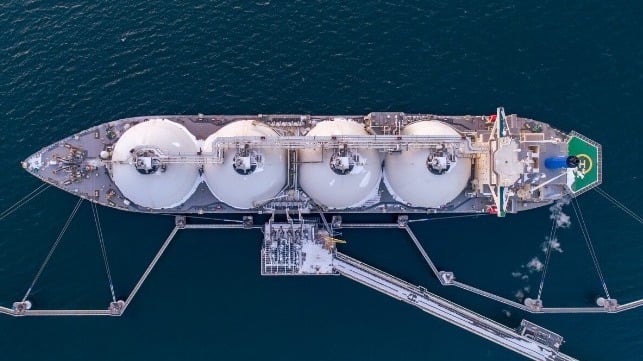
The Office of the U.S. Trade Representative has decided to further tweak its proposed port fee structure for Chinese-built vessels, rolling back a proposed deadline for U.S.-built LNG carrier capacity and a fee that would hit all PCTCs in the Maritime Security Program.
USTR's original proposal was released in April, and its headline provisions were focused on fees on Chinese-built container ships. Less noticed, further down the list, it also proposed steep new fees on all foreign-built vehicle carriers (PCTCs) and laid out an ambitious LNG carrier construction and utilization requirement for American LNG exporters.
On Friday, the office proposed modifications to its PCTC fee plans. Instead of charging $150 per car equivalent unit, based on lane-meters of capacity, it will now charge based on each PCTC's net tonnage. This will make the fee easier to administer and will help close off a potential avenue for fee evasion, the office said. Like lane-meters, net tonnage is a measurement of the vessel rather than the cargo, so even empty PCTCs arriving in ballast will still be charged - a point that foreign critics have emphasized previously.
USTR also proposed "targeted coverage" for imposing the fee on the foreign-built PCTCs that are flagged into the United States registry for the Maritime Security Program. The agency noted that the MSP "reduces dependence on China," a core objective of the new port fees.
The office also rolled back the enforcement of its ambitious timetable for imposing a U.S.-built LNG carrier requirement on the U.S. LNG export industry. In the original proposal, USTR called for the LNG industry to begin shipping one percent of all of its exports aboard U.S.-built LNGCs by 2029. If LNG exporters did not meet this timeline, USTR proposed to begin suspending export licenses.
The challenge for this requirement is that this vessel class does not currently exist: the last LNGC delivered by an American yard entered service in 1980 and was scrapped in 2021. The shipyard that built that final hull closed in 1986.
Given the challenges of scaling a domestic LNG carrier construction program within four years - an uncertain prospect with real technical risks - LNG exporters informed USTR that they do not favor having their licenses suspended if the ships aren't ready by 2029. USTR agreed, and it now plans to remove the license-suspension clause from the proposed regulation in order "to allay concerns about the provision’s impact on the U.S. LNG sector."
Homeland Security Dept. Cancels Order for Incomplete USCG Cutter
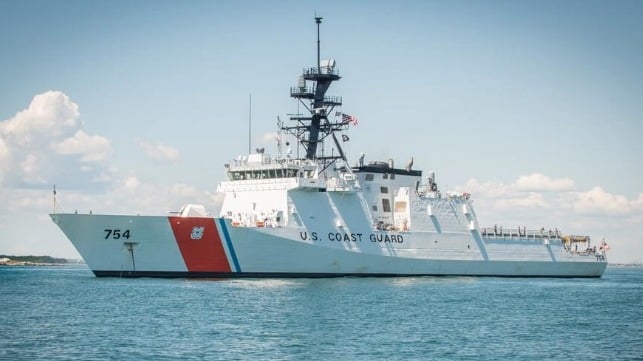
The Department of Homeland Security is reporting that it canceled the order for the eleventh Legend-class national security cutter which was to be named USCG Friedman. Production for the vessel began in 2021 at HII’s Ingalls Shipbuilding in Pascagoula, Mississippi, but the project has been dogged by concerns.
Ingalls had a sole source contract as the only builder for the class which began delivering in 2008 and was designed to replace 12 aging 378-foot Hamilton-class high-endurance cutters that have been in service for 40 years. At 418 feet long, the Legend-class NSC has a maximum speed of 28 knots and a range of 12,000 nautical miles. The tenth ship, USCG Calhoun was delivered in October 2023.
Work had begun for number 11 in May 2021. HII reported that the start of fabrication signified the first 100 tons of steel had been cut. USCG said the vessel was due for delivery in 2024 and plans called for it to be homeported in Charleston, South Carolina with four other Legend-class cutters.
“Huntington Ingalls owed us this cutter over a year ago,” said Homeland Security Secretary Kristi Noem. “This project was over time and over budget. Now the money can be redirected to ensuring the Coast Guard remains the finest, most-capable maritime service in the world.”
According to the announcement for Homeland Security, canceling the contract with HII will save the U.S. over $260 million. They have also agreed that the Coast Guard will receive $135 million in parts that will be used to retrofit, upgrade, and maintain the Coast Guard’s existing fleet of 10 Legend-class cutters.
Congress has been highly critical of the USCG’s problems with its shipbuilding projects both for the cutters and the Polar Security Icebreakers. USCG had reported to Congress that there were issues with the project saying that construction of the 11th ship had been halted since at least November 2024 with the ship 15 percent complete. It blamed “material conformance concerns,” and said that the Coast Guard and the shipbuilder were working to resolve the issue.
The Coast Guard has also planned a 12th vessel in the Legand-class. Congress was yet to appropriate funds for the vessel but some long-lead elements were reportedly being ordered.
Homeland Security highlights canceling the project will save money that can be used as part of the recently announced Force Design 2028 project to overhaul USCG operations and command structure. However, it did not address how the USCG will allocate resources for the two planned vessels which were scheduled as replacements for the older class which is now entirely decommissioned. The USCG had deferred the decommissioning of the last two Hamilton-class cutters, John Midget and Douglas Munro, to 2020 and 2021 while the rest of the class was replaced with the new cutters by 2018.

No comments:
Post a Comment