Trump responds with threat of tariffs hike to BRICS’ Rio challenge

BRICS nations now represent more than half the world’s population and 40 percent of its economic output.

Leaders and representatives from Brazil, China, Russia, India, Indonesia, South Africa, Egypt, Ethiopia, the UAE and Iran pose for a group photo during the BRICS Summit in Rio de Janeiro, Brazil, on July 6, 2025. REUTERS
RIO DE JANEIRO
Leaders of the BRICS group of developing nations on Sunday condemned attacks on Gaza and Iran, called for reforms of global institutions and presented the bloc as a haven for multilateral diplomacy amid violent conflicts and trade wars.
With forums such as the G7 and G20 groups of major economies hamstrung by divisions and the disruptive “America First” approach of US President Donald Trump, expansion of the BRICS has opened new space for diplomatic coordination and mounted a serious challenge to US political and economic supremacy.
In response to the challenge, Trump said the US will impose an additional ten percent tariff on any countries aligning themselves with the “Anti-American policies” of the BRICS group.
In opening remarks to the BRICS summit in Rio de Janeiro, Brazil’s President Luiz Inacio Lula da Silva drew a parallel with the Cold War’s Non-Aligned Movement, a group of developing nations that resisted joining either side of a polarised global order.
“BRICS is the heir to the Non-Aligned Movement,” Lula told leaders. “With multilateralism under attack, our autonomy is in check once again.”
In a joint statement released on Sunday afternoon, the BRICS group warned the rise in tariffs threatened global trade, continuing its veiled criticism of Trump’s tariff policies.
Hours later, Trump warned he would punish countries seeking to join with the grouping.
“Any Country aligning themselves with the Anti-American policies of BRICS, will be charged an ADDITIONAL 10% Tariff. There will be no exceptions to this policy. Thank you for your attention to this matter!” Trump said in a post on Truth Social.
Trump did not clarify or expand on the “Anti-American policies” reference in his post.
Trump’s administration is seeking to finalise dozens of trade deals with a wide range of countries before his July 9 deadline for the imposition of significant “retaliatory tariffs”. India’s foreign ministry did not immediately respond to a request for comment.
BRICS nations now represent more than half the world’s population and 40 percent of its economic output, Lula noted in remarks on Saturday to business leaders, warning of rising protectionism.
The original BRICS group gathered leaders from Brazil, Russia, India and China at its first summit in 2009. The bloc later added South Africa and last year included Egypt, Ethiopia, Indonesia, Iran, Saudi Arabia and the United Arab Emirates as members. This is the first summit of leaders to include Indonesia.
More than 30 nations have expressed interest in participating in the BRICS, either as full members or partners.
Expansion of the bloc has added diplomatic weight to the gathering, which aspires to speak for developing nations across the Global South, strengthening calls for reforming global institutions such as the United Nations Security Council and the International Monetary Fund.
“If international governance does not reflect the new multi-polar reality of the 21st century, it is up to BRICS to help bring it up to date,” Lula said in his remarks, which highlighted the failure of US-led wars in the Middle East.
Urging the BRICS to take the lead on reforms, Lula reflected on the G20 summit hosted in the same locale last November: “In a short period of time, the international scene has deteriorated to the point that some of the initiatives we approved then would no longer be possible now.”
Stealing some thunder from this year’s summit, Chinese President Xi Jinping chose to send his premier in his place. Russian President Vladimir Putin is attending online due to an arrest warrant from the International Criminal Court related to his war in Ukraine.
However, there are questions about the shared goals of an increasingly heterogeneous BRICS group, which has grown to include regional rivals along with major emerging economies.
In the joint statement, the leaders called attacks against Iran’s “civilian infrastructure and peaceful nuclear facilities” a “violation of international law.”
The group expressed “grave concern” for the Palestinian people over Israeli attacks on Gaza, and condemned what the joint statement called a “terrorist attack” in India-administered Kashmir.
The group voiced its support for Ethiopia and Iran to join the World Trade Organisation, while calling to urgently restore its ability to resolve trade disputes.
The leaders’ joint statement backed plans to pilot a BRICS Multilateral Guarantees initiative within the group’s New Development Bank to lower financing costs and boost investment in member states, as first reported by Reuters last week.
In a separate statement following a discussion of artificial intelligence, the leaders called for protections against unauthorised use of AI to avoid excessive data collection and allow mechanisms for fair payment.
Brazil, which also hosts the United Nations climate summit in November, has seized on both gatherings to highlight how seriously developing nations are tackling climate change, while Trump has slammed the brakes on US climate initiatives.
China and the UAE signalled in meetings with Brazilian Finance Minister Fernando Haddad in Rio that they plan to invest in a proposed Tropical Forests Forever Facility, according to two sources with knowledge of the discussions about funding conservation of endangered forests around the world.
Suggested By Editor
China speaks with Saudi Arabia, South Africa about response to US tariffs

China Reacts to Trump's New BRICS Tariff Threat
Published Jul 07, 2025
Trump said in a July 6 post on Truth Social that the additional levy would hit any country "aligning themselves with the Anti-American policies of BRICS," an economic group of developing countries. He said there would be no exceptions.
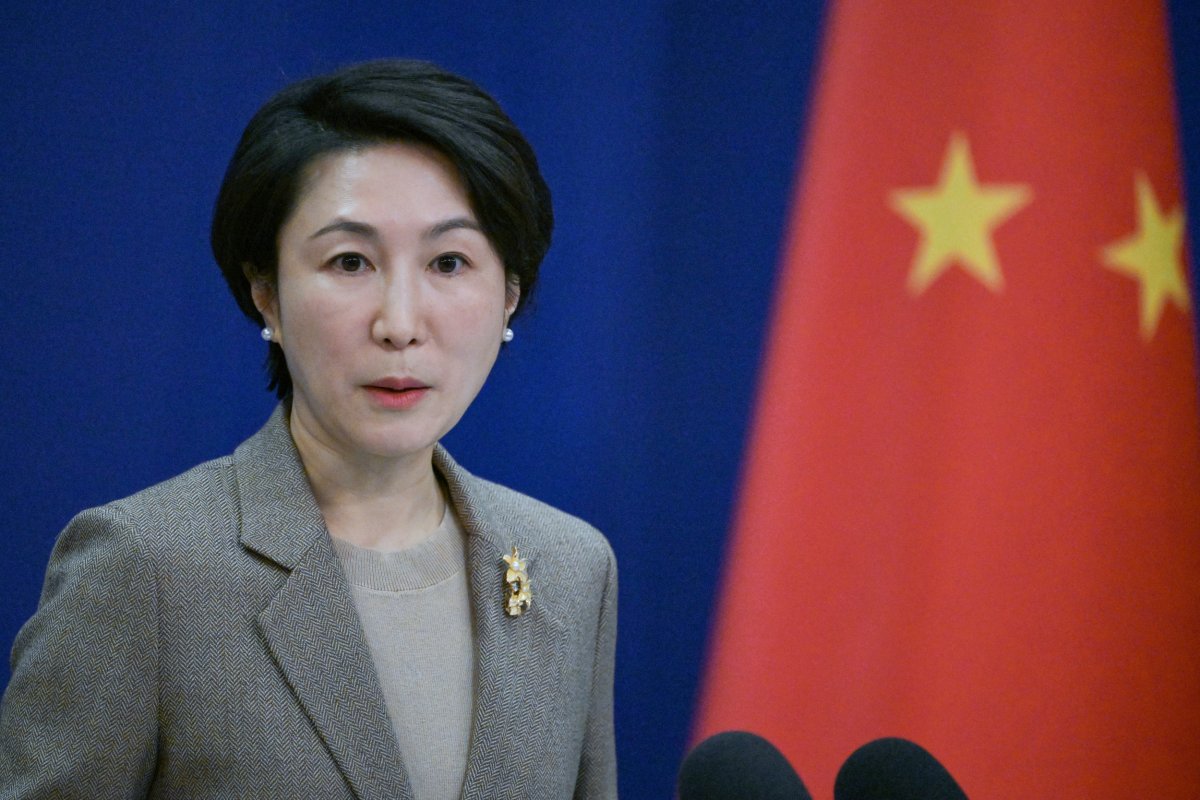
"BRICS is an important platform for cooperation among emerging markets in developing countries," said Mao Ning, a spokeswoman for the Chinese Foreign Ministry, at her press briefing on July 7.
"It advocates openness, inclusiveness, and willing cooperation. It is not a bloc for confrontation, nor does it target any country.
"On the U.S. tariff hikes, China has made its position clear more than once. Trade wars and tariff wars have no winners, and protectionism leads nowhere."
Trump Sending Tariff Letters
Trump has also said he would begin sending out tariff letters or announcing trade deals on July 7, as his 90-day pause on his reciprocal tariffs nears its conclusion.
The U.S. president is using tariffs to force better market access for American firms or to protect them from what he says is unfair global competition stemming from imbalanced trading relationships. He wants to revive and restore the domestic manufacturing sector.
The reimposition of Trump's higher tariffs, and also retaliatory measures from U.S. trading partners who did not reach a deal in time, threatens to pull global trade back to where it was in April, with widespread disruption, market volatility and looming economic pain.
China and the U.S. recently came to an agreement on trade that saw Washington loosen some of its restrictions and Beijing accelerate rare earth exports. The deal will keep tariffs at their reduced levels from the sky-high rates of the recent trade war between the two.
BRICS is formed of 11 countries: Brazil, Russia, India, China, South Africa, Saudi Arabia, Egypt, United Arab Emirates, Ethiopia, Indonesia and Iran.
The group held its 17th BRICS summit in Brazil over the weekend. At the summit, the BRICS bloc condemned the increase in tariffs and attacks on Iran but refrained from naming Trump.
The group's declaration, which also took aim at Israel's military actions in the Middle East, also spared Russia from criticism, and mentioned war-torn Ukraine just once.
Xi, Putin Absent
The two-day summit was marked by the absences of two of its most powerful members.
Chinese President Xi Jinping did not attend a BRICS summit for the first time since he became his country's leader in 2012.
President Vladimir Putin, who spoke via videoconference, continues to mostly avoid traveling abroad due to an international arrest warrant issued after Russia invaded Ukraine.
In an indirect swipe at the U.S, the group's declaration raised "serious concerns" about the rise of tariffs, which it said were "inconsistent with WTO (World Trade Organization) rules."
The BRICS added that those restrictions "threaten to reduce global trade, disrupt global supply chains, and introduce uncertainty."
This article includes reporting by The Associated Press.
Beijing's statement came after Trump warned of tariffs against countries adopting what he called "anti-American" BRICS policies.
PTI
Updated on: 7 July 2025
\

BRICS Summit Photo: PTI
China on Monday said BRICS is not a bloc for confrontation and does not target any third country, as it reacted guardedly to US President Donald Trump’s threat to impose additional 10 per cent tariffs on countries aligning with what he called the 'anti-American policies" of the grouping.
BRICS is an important platform for cooperation among emerging markets and developing countries, Chinese Foreign Ministry spokesperson Mao Ning told a media briefing here.
Mao said BRICS advocates openness, inclusiveness and win-win cooperation.
“It is not a bloc for confrontation nor does it target any country," she said.
Mao was responding to a question on Trump’s threat to impose additional 10 per cent tariffs on countries aligning themselves with the anti-American policies of the grouping of the emerging economies.
Referring to Trump’s tariff hike threats, she said China has made its position clear.
“Trade and tariffs have no winners and protectionism leaves nowhere," she said.
Trump said on Monday that “any Country aligning themselves with the Anti-American policies of BRICS, will be charged an ADDITIONAL 10 per cent Tariff”.
“There will be no exceptions to this policy. Thank you for your attention to this matter,” Trump said in a post on Truth Social.
His comments came after the BRICS bloc condemned the increase of tariffs without naming Trump. Leaders of the BRICS are meeting in Brazil for the 17th BRICS Summit on July 6-7.
Rio Declaration: BRICS Calls For More Equitable Global Order
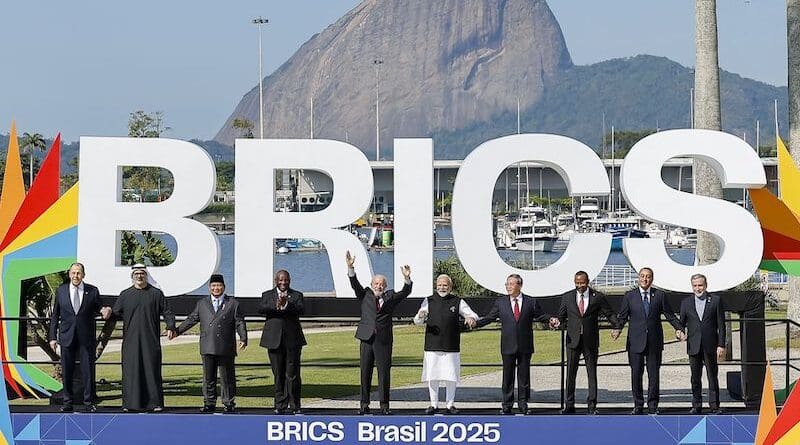
Family photo at BRICS Summit in Rio de Janeiro, Brazil. Photo Credit: Ricardo Stuckert, PR, ABr
By ABr
By Mariana Tokarnia
Meeting in Rio de Janeiro, the BRICS countries released the Final Declaration of the 17th Summit this Sunday (Jul. 6), highlighting the “importance of the Global South as an engine of positive change, especially in the face of significant international challenges.” These include worsening geopolitical tensions, economic slowdown, rapid technological transformation, protectionist measures, and migration challenges.

“We believe the BRICS countries continue to play a central role in expressing the concerns and priorities of the Global South, as well as in promoting a more just, sustainable, inclusive, representative, and stable international order based on international law,” the document states.
The countries also advocate for peace in response to global conflicts and wars, emphasize the need to deepen economic cooperation among BRICS members, unite in the face of the climate crisis, and promote human, social, and cultural development.
BRICS is a bloc that brings together representatives from 11 permanent member countries: Brazil, Russia, India, China, South Africa, Iran, Saudi Arabia, Egypt, Ethiopia, the United Arab Emirates, and Indonesia. Several partner countries also participate, including Belarus, Bolivia, Kazakhstan, Thailand, Cuba, Uganda, Malaysia, Nigeria, Vietnam, and Uzbekistan.
Wars
Regarding international conflicts, the countries express concern “about ongoing conflicts” and the rise in global military spending:
“We express concern about ongoing conflicts in various parts of the world and the current state of polarization and fragmentation of the international order.”
The countries condemn the military attacks against Iran, a member of the bloc, and call for a ceasefire in the Gaza Strip.
“We condemn the military attacks against the Islamic Republic of Iran since June 13, 2025, which constitute a violation of international law and the United Nations Charter, and express deep concern over the subsequent escalation of the security situation in the Middle East,” the text reads.
Regarding the war in Gaza, the Final Declaration calls on “the parties to engage in good faith in new negotiations with a view to achieving an immediate, permanent, and unconditional ceasefire; the complete withdrawal of Israeli forces from the Gaza Strip and all other parts of the Occupied Palestinian Territory; the release of all hostages and detainees held in violation of international law; and sustained, unimpeded access for the delivery of humanitarian aid.”
On the war between Ukraine and Russia—a founding BRICS member—the statement says the countries “hope that current efforts will lead to a sustainable peace agreement.”
“We note with appreciation the relevant proposals for mediation and good offices, including the creation of the African Peace Initiative and the Group of Friends for Peace, which aim at the peaceful resolution of the conflict through dialogue and diplomacy,” the statement reads.
Cooperation among countries
The final text, titled Rio de Janeiro Declaration: Strengthening Global South Cooperation for More Inclusive and Sustainable Governance, contains 126 points divided into five topics:
- Strengthening Multilateralism and Reforming Global Governance
- Promoting International Peace, Security, and Stability
- Deepening International Cooperation in Economics, Trade, and Finance
- Combating Climate Change and Promoting Sustainable, Fair, and Inclusive Development
- Boosting Partnerships for the Promotion of Human, Social, and Cultural Development.
With regard to financial cooperation, the document states that the countries will jointly seek to promote a fairer, more inclusive, stable, and efficient international tax system:
“We reiterate our commitment to fiscal transparency and to promoting global dialogue on effective and fair taxation, enhancing progressivity, and contributing to efforts to reduce inequality. Our goal is to deepen global coordination among tax authorities, improve domestic revenue mobilization, ensure a fair allocation of taxing rights, and combat tax evasion and illicit financial flows related to taxation.”
Climate and artificial intelligence
Also prioritized at the meeting, climate change and artificial intelligence (AI) are included in the final document. Regarding AI, the countries recognize that the technology presents an opportunity to boost development but emphasize that “global governance of AI must mitigate potential risks and address the needs of all countries, including those in the Global South.”
“A collective global effort is needed to establish AI governance that upholds our shared values, addresses risks, builds trust, and ensures broad and inclusive international collaboration and access—in accordance with sovereign laws and including capacity building for developing countries, with the United Nations at its center,” says an excerpt from the document.
On climate change, the countries reaffirm their commitment to and recognition of global agreements such as the Paris Agreement—an international treaty adopted in 2015 at COP21 aimed at combating climate change by reducing greenhouse gas emissions—and the United Nations Framework Convention on Climate Change (UNFCCC), whose main goal is to stabilize greenhouse gas concentrations in the atmosphere.
In addition, the countries express their full support for Brazil’s presidency of the 2025 United Nations Climate Change Conference (COP30).
Approved documents
Besides the traditional leaders’ declaration, three other documents were approved: the BRICS Leaders’ Framework Statement on Climate Finance, the BRICS Leaders’ Statement on Global Governance of Artificial Intelligence, and the BRICS Partnership for the Elimination of Socially Determined Diseases.
India makes major gains as BRICS 2025 joint statement takes on the West
In a sweeping joint declaration (more than 16,000 words), BRICS calls for UN reform, questions dollar dominance, condemns cross-border terrorism, and pushes for a more equitable global order
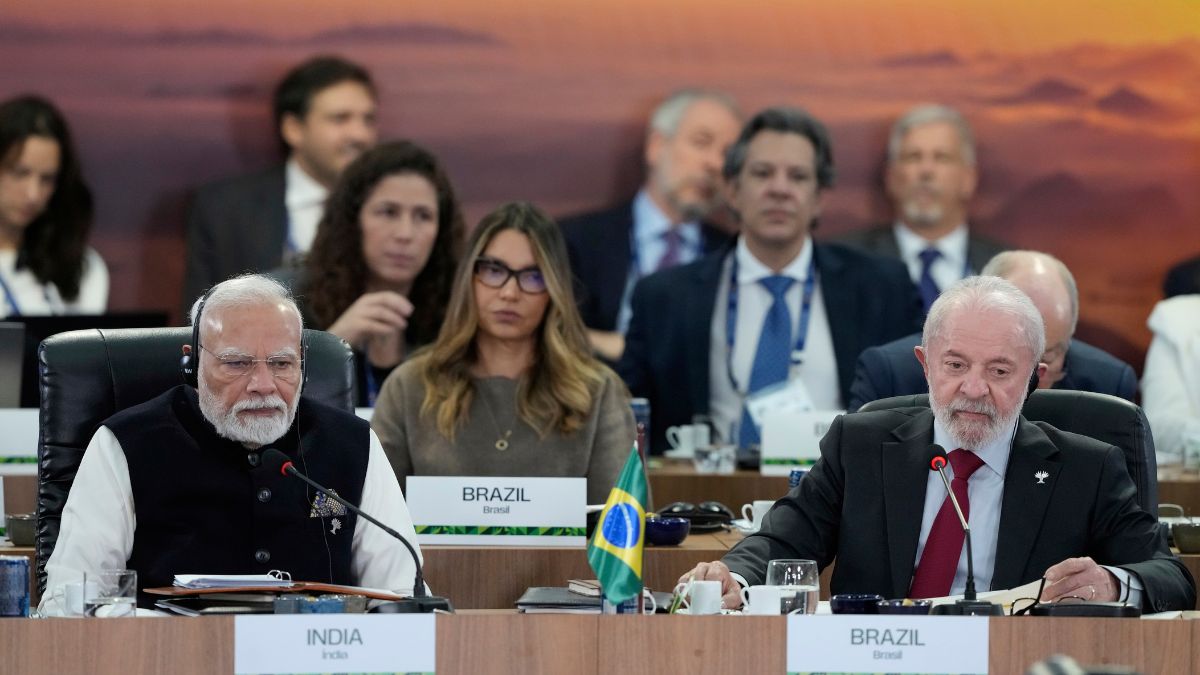
In a landmark joint declaration (more than 16,000 words) at the BRICS Summit in Rio de Janeiro, the bloc on Sunday laid out a very comprehensive roadmap of its geopolitical role that had two key features.
The first is a challenge to western hegemony to make international trade, governance, and financing much more transparent, so as to avoid unilateral transgressions like economic sanctions. The second is a focus on on how the Global South can cooperate at the political and economic levels.
In doing so, the BRICS in its declaration, has questioned the governance structure of the Bretton Woods Institutions (BWI)—the World Bank and the International Monetary Fund (IMF)—that actually paved the way for the dollarisation of the global economy.
In effect, without mentioning the attempt at ‘de-dollarisation’, the BRICS declaration makes a compelling case for the same.
At the same time, while underlining the centrality of the UN, BRICS sought a “comprehensive reform of the United Nations, including its Security Council”, to make it more representative and reflective of the contemporary realities. The statement included a support for India’s and Brazil’s aspirations “to play a greater role in the United Nations, including its Security Council”.
It also voiced strong support for multilateral institutions like WHO and WTO.
These are significant positions given the fact that US President Donald Trump is looking at drastically cutting aid for the UN (with 22 per cent funding, the US is the biggest contributor to the UN) after having withdrawn from the WHO.
The BRICS nations' intent is clear—it would operate as a big pressure group with a view to democratise international financial and political institutions to reflect contemporary realities, while also seeking a ‘restructure’ and representation for all.
On the face of it, India would go back very happy.
Firstly, India continues to be at the BRICS high table, despite having variances with the other members on the issue of the Russia-Ukraine and the Iran-Israel conflict.
| BRICS condemns Pahalgam terror attack, US-Israel strikes on Iran's nuclear infrastructure: 'Reject double standards in countering terrorism'
Secondly, the Pahalgam terror attack of April 22, 2025 was condemned in no uncertain terms. The declaration said: “We reaffirm our commitment to combating terrorism in all its forms and manifestations, including the cross-border movement of terrorists, terrorism financing, and safe havens.”
Third, in the backdrop of India’s ongoing negotiations with the US, the BRICS position on the US threat to impose big tariff and non tariff restrictions would definitely not harm India. The joint statement had mentioned: “We voice serious concerns about the rise of unilateral tariff and non-tariff measures which distort trade and are inconsistent with WTO rules.”
Fourth, the demand for equitable representation in multilateral bodies—including the UN Security Council—would obviously help India’s long-standing demand for a Security Council permanent membership.
Ramaphosa Calls For Urgent Reform Of International Governance Structures
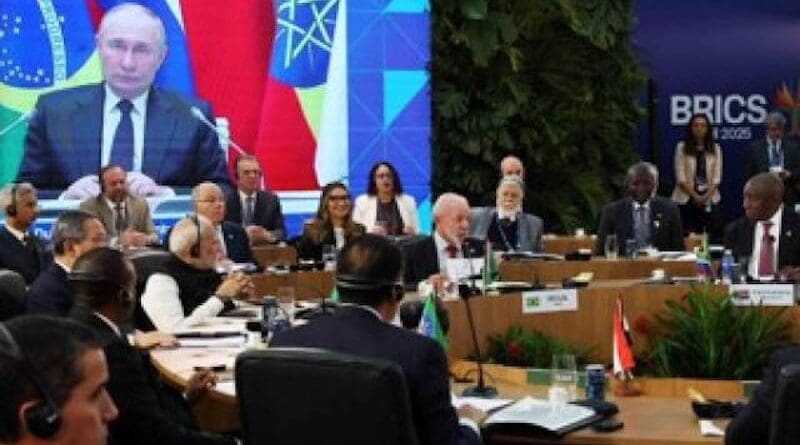
17th BRICS Summit in Rio de Janeiro, Brazil. Photo Credit: SA News
By ABr
President Cyril Ramaphosa has called for enhanced global cooperation and urgent reform of international governance structures amid the “dramatic reshaping of global dynamics-politically, economically, technologically, and environmentally”.
Speaking during the opening of the 17th BRICS Summit, currently underway in Rio de Janeiro, Brazil, President Ramaphosa underscored the critical need for multilateral collaboration to address escalating global tensions and institutional inefficiencies.
“With this change comes both opportunity and uncertainty. As conflicts persist, as new threats emerge and as old institutions falter, the pursuit of global peace and security has never been more urgent or more complex,” the President said.
President Ramaphosa participated in the first session of the BRICS Summit, where he delivered an intervention under the theme: “Peace & Security, Reform of Global Governance”.
The President underscored the need to reform the United Nations Security Council to become more democratic, regionally representative, and more accountable.
He noted that the United Nations, in particular the Security Council which is the preeminent instrument for the maintenance of international peace and security, has too often failed to meet the challenges of today.
“In responding to these challenges – ranging from humanitarian crises to open acts of aggression – the Security Council has become too rigid, too narrow and too disconnected from today’s multipolar realities.
“Reform is a necessity. The Security Council must be made more democratic, more regionally representative and more accountable,” the President said.
Strengthening regional peace mechanisms
To further enable sustainable peace, the President emphasised the need for strong regional peace mechanisms.
“We must give them the resources and authority they need to lead efforts in dialogue, mediation and de-escalation. Localised responses, grounded in cultural and geopolitical understanding, are the frontline of peacebuilding.
“The linkages between peace, security and development require a more comprehensive approach to conflict prevention and peacebuilding; an approach that addresses the underlying causes of conflict,” he said.
Highlighting the role of BRICS in this evolving landscape, President Ramaphosa said BRICS is increasingly shaping global debates on development, multipolar governance and security matters.
With a broad geographical footprint and growing influence, BRICS is uniquely positioned to advocate for reform in global governance structures.
He called on BRICS to strengthen its voice in calling for a global framework that is inclusive, representative and anchored in the principles of sovereignty, equality and peaceful coexistence.
“BRICS must continue to strengthen its cooperation on key security issues, including counterterrorism, cyber security and transnational crime,” the President said.
Global digital governance framework
President Ramaphosa commended BRICS’ focus on a global digital governance framework that is inclusive, transparent and rooted in the principles of the United Nations.
He reaffirmed South Africa’s commitment to the full implementation of the BRICS Counter Terrorism Strategy.
The country remains steadfast in its support for the United Nations’ central role in global counter terrorism efforts.
Call for diplomatic efforts to de-escalate tensions
President Ramaphosa raised South Africa’s concerns at the deteriorating peace and security situation in the Middle East.
The President condemned the recent attacks by Israel and the United States on the Islamic Republic of Iran, warning that the attacks raise serious concerns of international law, including the principles of sovereignty, territorial integrity and the protection of civilians.
He said South Africa understands the power of peaceful resolution through dialogue, given the country’s own experience.
“We must continue to advocate for the urgent intensification of diplomatic efforts to de-escalate tensions and ensure sustainable and lasting peace. We remain deeply concerned by the heavy human toll of conflicts in Russia and Ukraine, the eastern Democratic Republic of Congo, Sudan and Gaza, among others.
“We must find just and lasting solutions to these devasting conflicts. Achieving and maintaining peace and security requires the collective will of the community of nations,” President Ramaphosa said.
Summit deliberations
During the BRICS Summit session, Heads of State and Government are expected to deliberate on issues pertaining to global governance reform, peace and security, the ongoing humanitarian impact of Israeli military action in Gaza and in conflicts in Sudan, Ukraine, Iran, and advocating for the sustainable resolution of conflicts through diplomacy, inclusive dialogue and a commitment to the United Nations Charter.
The summit will also look into synergies between BRICS, COP30 and G20 outcomes, including in global governance of artificial intelligence and prioritising climate finance that is just, accessible and transformational.

ABr
Agência Brasil (ABr) is the national public news agency, run by the Brazilian government. It is a part of the public media corporation Empresa Brasil de Comunicação (EBC), created in 2007 to unite two government media enterprises Radiobrás and TVE (Televisão Educativa).
Copyright Eraldo Peres/Copyright 2025 The AP. All rights reserved
By Euronews with AP
Published on 07/07/2025 -
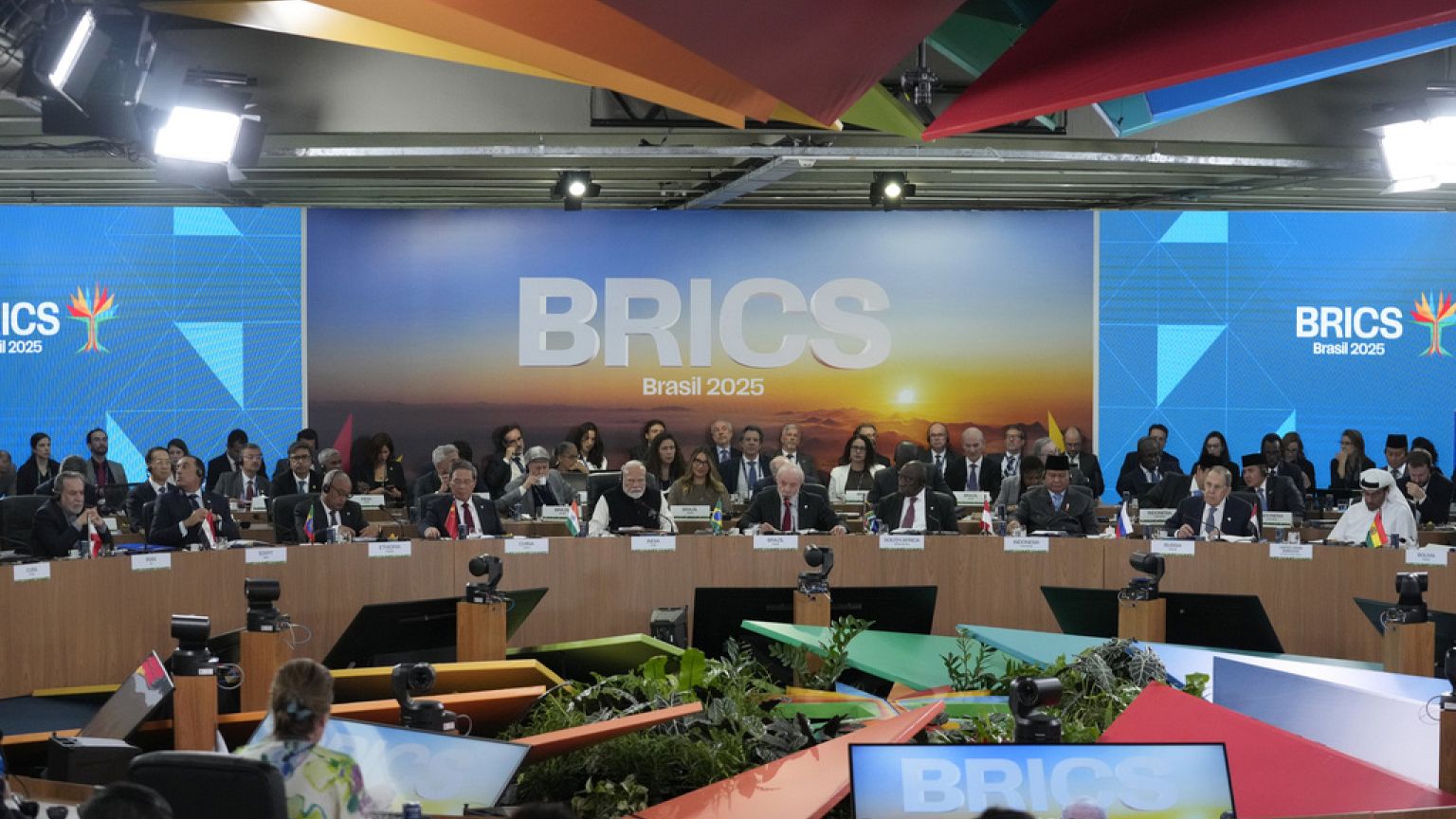
BRICS leaders set to discuss key global political issues, but questions over the bloc’s cohesion arose as Chinese President Xi Jinping and Russian President Vladimir Putin opted to skip the summit.
The BRICS bloc of developing economies at their summit in Brazil on Sunday condemned the increase of tariffs and attacks on Iran, but refrained from naming US President Donald Trump.
The group’s declaration, which also took aim at Israeli military actions in the Middle East, spared its founding member Russia from criticism and mentioned war-torn Ukraine only once.
The bloc issued a declaration in which they raised “serious concerns” about the rise of tariffs which it said were “inconsistent with WTO (World Trade Organisation) rules.” In an indirect swipe at the US, they said those restrictions ”threaten to reduce global trade, disrupt global supply chains and introduce uncertainty.”
Lula also criticised NATO’s decision to hike defence spending up to 5% of member states’ GDP. He said it was “always easier to invest in war than peace.”
The declaration also criticised the attacks on Iran without mentioning the US or Israel, the two nations who conducted them.
BRICS leaders expressed “grave concern” for the humanitarian situation in Gaza, called for the release of all hostages, a return to the negotiating table and reaffirmed their commitment to the two-state solution.
The group’s 31-page declaration mentions Ukraine just once, while condemning “in the strongest terms” recent Ukrainian attacks on Russia.
Missing bloc leaders
Despite Brazilian President Luiz Inácio Lula da Silva’s push to spotlight issues such as artificial intelligence and climate change at the summit, it has been marked by the absence of several key leaders.
This includes two of its most powerful members: Chinese President Xi Jinping and Russian President Vladimir Putin. Putin continues to avoid foreign travel after an international arrest warrant was issued following Russia’s full-scale invasion of Ukraine.
Iranian President Masoud Pezeshkian and Egypt’s Abdel Fattah al-Sisi are also not attending the summit in Rio de Janeiro.
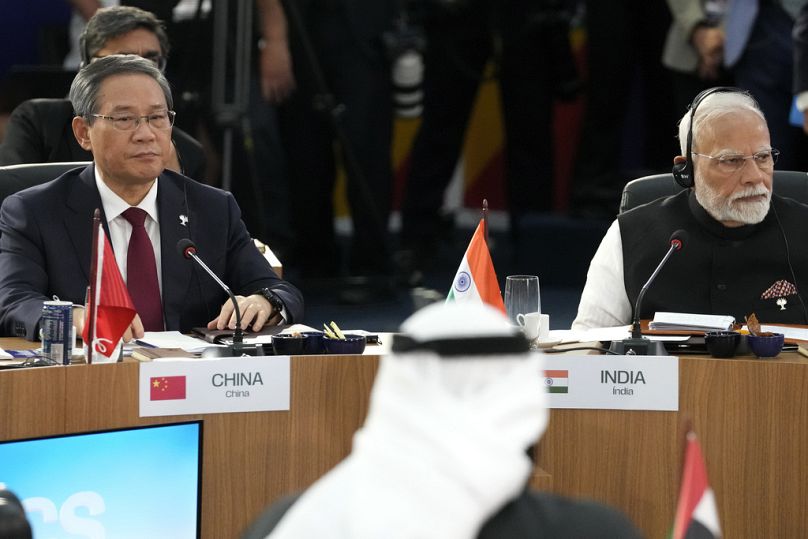
The bloc doubled in size last year and analysts say the consequent lack of cohesion may challenge its ability become another pillar in world affairs. They also see the summit’s moderate agenda as an attempt by member countries to stay off of Trump’s radar.
Founded by Brazil, Russia, India, China and South Africa, the BRICS bloc last year added Indonesia, Iran, Egypt, Ethiopia and the United Arab Emirates. It also created a new category of “strategic partners,” which includes Belarus, Cuba and Vietnam.
BRICS group slams tariffs and Iran conflict
at summit in Brazil
Copyright Eraldo Peres/Copyright 2025 The AP. All rights reserved
By Euronews with AP
Published on 07/07/2025
The BRICS group of nations condemned the increase in tariffs and the recent Iran conflict, but refrained from pointing a finger at US President Donald Trump at their summit in Brazil on Sunday
The group’s declaration, which also took aim at Israeli military actions in the Middle East, spared its founding member Russia from criticism and mentioned Ukraine — against which Moscow continues to wage its all-out war since early 2022 — only once.
The bloc issued a declaration in which they raised “serious concerns” about the rise of tariffs, saying they were “inconsistent with WTO (World Trade Organisation) rules.”
In an indirect swipe at the US, they said those restrictions ”threaten to reduce global trade, disrupt global supply chains and introduce uncertainty.”
Brazilian President Lula also criticised NATO’s decision to hike defence spending up to 5% of member states’ GDP. He said it was “always easier to invest in war than peace.”
The declaration also criticised the strikes on Iran's nuclear facilities without mentioning the US or Israel, the two nations that conducted them.
BRICS leaders expressed “grave concern” for the humanitarian situation in Gaza, called for the release of all hostages held by Hamas, a return to the negotiating table and reaffirmed their commitment to the two-state solution.
The group’s 31-page declaration mentions Ukraine just once, while condemning “in the strongest terms” recent Ukrainian attacks on Russia.
Missing bloc leaders
Despite Lula's push to spotlight issues such as artificial intelligence and climate change at the summit, it has been marked by the absence of several key leaders.
This includes two of its most powerful members: Chinese President Xi Jinping and Russian President Vladimir Putin. Putin continues to avoid foreign travel after an international arrest warrant was issued following Russia’s full-scale invasion of Ukraine.
Iranian President Masoud Pezeshkian and Egypt’s Abdel Fattah al-Sisi are also not attending the summit in Rio de Janeiro.
Founded by Brazil, Russia, India, China and South Africa, the BRICS bloc last year added Indonesia, Iran, Egypt, Ethiopia and the United Arab Emirates as full members. It also created a new category of “strategic partners,” which includes Belarus, Cuba and Vietnam.
BRICS leaders meeting in Rio de Janeiro from Sunday are expected to decry US President Donald Trump's "indiscriminate" trade tariffs, saying they are illegal and risk hurting the global economy.
Issued on: 06/07/2025 - RFI
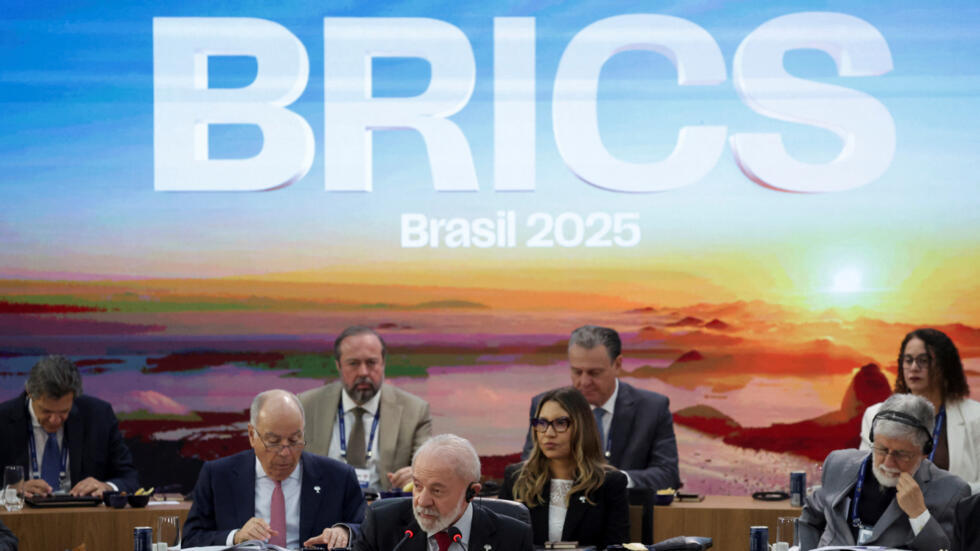
Brazil's President Luiz Inacio Lula da Silva speaks, during the opening meeting of BRICS Summit, at the Museum of Modern Art (MAM) in Rio de Janeiro, Brazil, on 6 July 2025. REUTERS - Ricardo Moraes
Emerging nations, which represent about half the world's population and 40 percent of global economic output, are set to unite over "serious concerns" about US import tariffs, according to a draft summit statement obtained by AFP.
Since coming to office in January, Trump has threatened allies and rivals alike with a slew of punitive duties. His latest salvo comes in the form of letters informing trading partners of new tariff rates that will soon enter into force.
The draft summit declaration does not mention the United States or its president by name. But it is a clear political shot directed at Washington from 11 emerging nations, including Brazil, Russia, India, China and South Africa.
"We voice serious concerns about the rise of unilateral tariff and non-tariff measures which distort trade and are inconsistent with WTO (World Trade Organization) rules," the draft text says.
It warns that such measures "threaten to further reduce global trade" and are "affecting the prospects for global economic development."
Xi no show
Conceived two decades ago as a forum for fast-growing economies, the BRICS have come to be seen as a Chinese-driven counterbalance to Western power.
But the two-day summit's political punch will be depleted by the absence of China's Xi Jinping, who is skipping the annual meeting for the first time in his 12 years as president.
"I expect there will be speculation about the reasons for Xi's absence," said Ryan Hass, a former China director at the US National Security Council who is now with the Brookings Institution think tank.
"The simplest explanation may hold the most explanatory power. Xi recently hosted Lula in Beijing," said Hass.
The Chinese leader will not be the only notable absentee. War crime-indicted Russian President Vladimir Putin is also opting to stay away, but will participate via video link, according to the Kremlin.
Hass said Putin's non-attendance and the fact that Indian Prime Minister Narendra Modi will be a guest of honour in Brazil could also be factors in Xi's absence.
"Xi does not want to appear upstaged by Modi," who will receive a state lunch, he said. "I expect Xi's decision to delegate attendance to Premier Li (Qiang) rests amidst these factors."
Still, the Xi no-show is a blow to host President Luiz Inacio Lula da Silva, who wants Brazil to play a bigger role on the world stage.
In the year to November 2025, Brazil will have hosted a G20 summit, a BRICS summit, and COP30 international climate talks, all before heading into fiercely contested presidential elections next year, in which he is expected to run.
Conflict resolution
Iran's President Masoud Pezeshkian, whose nation is still reeling from a 12-day conflict with Israel, is also skipping the meeting.
A source familiar with the negotiations said the BRICS countries were divided over how to respond to the wars in Gaza and between Iran and Israel.
Iranian negotiators were pushing for a tougher collective stance that goes beyond referencing the need for the creation of a Palestinian state and for disputes to be resolved peacefully.
But one diplomatic source said the text would give the "same message" that BRICS delivered in June when Iran was being bombed by Israel and the United States, expressing "concern."
Finally, Brazil's president insisted the world must act to stop what he described as an Israeli "genocide" in Gaza.
"We cannot remain indifferent to the genocide carried out by Israel in Gaza, the indiscriminate killing of innocent civilians and the use of hunger as a weapon of war," he told leaders from China, India, and other nations.
His comments came as Gaza truce talks between Israel and Hamas resumed in Doha, and as pressure mounted to end the 22-month war, which began with Hamas's 7 October 2023 attacks.
Artificial intelligence and health will also be on the agenda at the summit.
Original members of the bloc Brazil, Russia, India, and China have been joined by South Africa and, more recently, by Saudi Arabia, Iran, the United Arab Emirates, Egypt, Ethiopia and Indonesia.
(with newswires)

No comments:
Post a Comment