THE CATHOLIC ALTERNATIVE TO ABORTION
International experts join mass grave excavation at former mother and baby home in IrelandIt is hoped that excavation work will lead to the identification of the remains of 796 children who are believed to have died at St Mary's home between 1925 and 1961.
Monday 7 July 2025
A long-awaited forensic excavation at a former 'mother and baby home' in Tuam in Ireland has begun.
International experts have joined Irish specialists at a mass grave where almost 800 babies and young children are thought to be buried.
A team from Colombia, Spain, the UK, Canada and the US has linked up with staff from the Office of the Director of Authorised Intervention (ODAIT) before excavation work begins at the site of a former home for unmarried mothers in Tuam, Co Galway, Ireland.
It is hoped the process will lead to the identification of the remains of 796 children who are believed to have died at St Mary's home between 1925 and 1961.
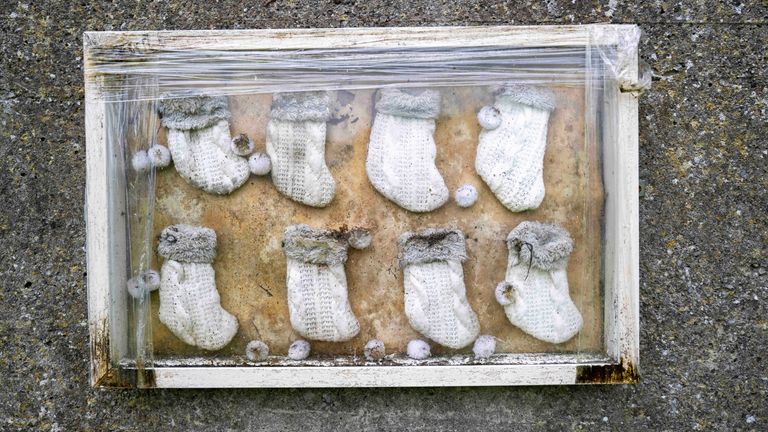
Image:A memorial left at the site of the former mother and baby institution in Tuam. Pic: PA
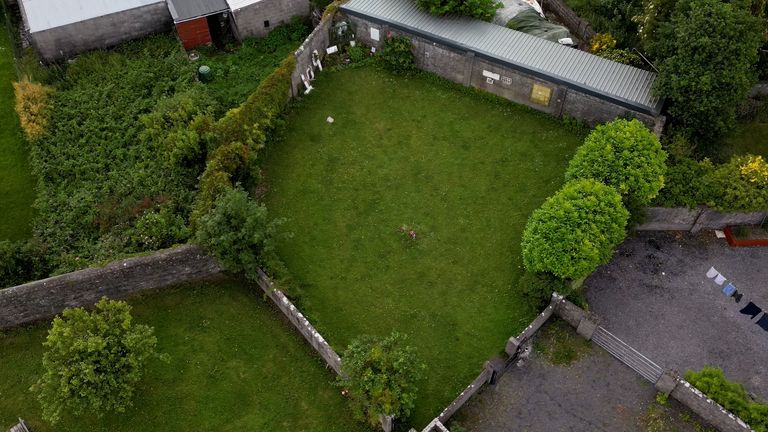
Image:A view of the site in Tuam
The work follows research by local historian Catherine Corless which uncovered the deaths of the children at the home, which was run by Catholic nuns.
Ms Corless found in 2014 that the youngsters were buried in a sewage system.
The work follows research by local historian Catherine Corless which uncovered the deaths of the children at the home, which was run by Catholic nuns.
Ms Corless found in 2014 that the youngsters were buried in a sewage system.
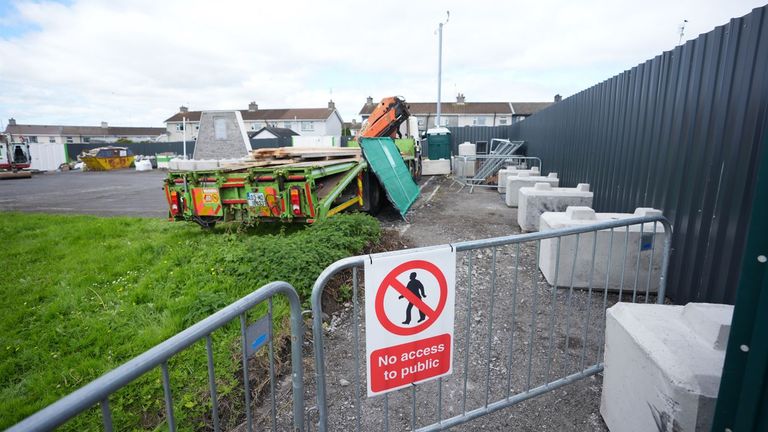
Image:The site ahead of excavation work. Pic: PA
Mother and baby homes were institutions where young pregnant women were sent, often under pressure from local clergy. There, they would give birth and eventually be separated from their children, who were offered up for adoption, sometimes in the US.
Irish society in the mid-20th century was deeply intertwined with the teachings of the Catholic Church, and pregnancies out of wedlock were seen as scandalous.
The Irish government made a formal state apology in 2021 after an inquiry found an "appalling level of infant mortality" in Ireland's mother and baby homes, concluding that around 9,000 children had died in the 18 institutions investigated.
Mother and baby homes were institutions where young pregnant women were sent, often under pressure from local clergy. There, they would give birth and eventually be separated from their children, who were offered up for adoption, sometimes in the US.
Irish society in the mid-20th century was deeply intertwined with the teachings of the Catholic Church, and pregnancies out of wedlock were seen as scandalous.
The Irish government made a formal state apology in 2021 after an inquiry found an "appalling level of infant mortality" in Ireland's mother and baby homes, concluding that around 9,000 children had died in the 18 institutions investigated.
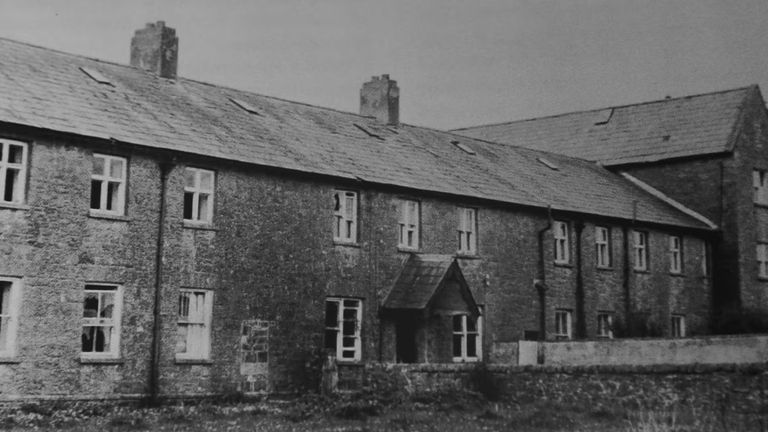
Image:The former building in Tuam - now demolished. Pic: PA
The Bon Secours Sisters, which ran the home in Tuam, also offered a "profound apology" after acknowledging the order had "failed to protect the inherent dignity" of women and children there.
The work at the burial site, which is being undertaken by the ODAIT, will involve exhumation, analysis, identification if possible, and re-interment of the remains at the site.
The excavation is expected to begin next week and is anticipated to last two years.
Read more:
The Bon Secours Sisters, which ran the home in Tuam, also offered a "profound apology" after acknowledging the order had "failed to protect the inherent dignity" of women and children there.
The work at the burial site, which is being undertaken by the ODAIT, will involve exhumation, analysis, identification if possible, and re-interment of the remains at the site.
The excavation is expected to begin next week and is anticipated to last two years.
Read more:
Archbishop 'embarrassed' over role of church in mother and baby homes scandal
ODAIT leader Daniel McSweeney said on Monday: "We have reached an important new stage of this unique and incredibly complex excavation.
"It's three weeks since we took control of the site and significant progress has been made since then.
"We have recruited essential expert staff to the team, preparation work at the site is ongoing to safeguard the integrity of the site and the sensitive nature of the work."
IRELAND
What happened at the Tuam mother and baby home - and why is the site now only being excavated?
An estimated 796 babies and children are believed to have been buried at the site of the St Mary's home in Tuam, County Galway, between 1925 and 1961. Exhumation of the bodies has finally begun.
Monday 7 July 2025 16:10, UK
What happened at the Tuam mother and baby home - and why is the site now only being excavated?
An estimated 796 babies and children are believed to have been buried at the site of the St Mary's home in Tuam, County Galway, between 1925 and 1961. Exhumation of the bodies has finally begun.
Monday 7 July 2025 16:10, UK
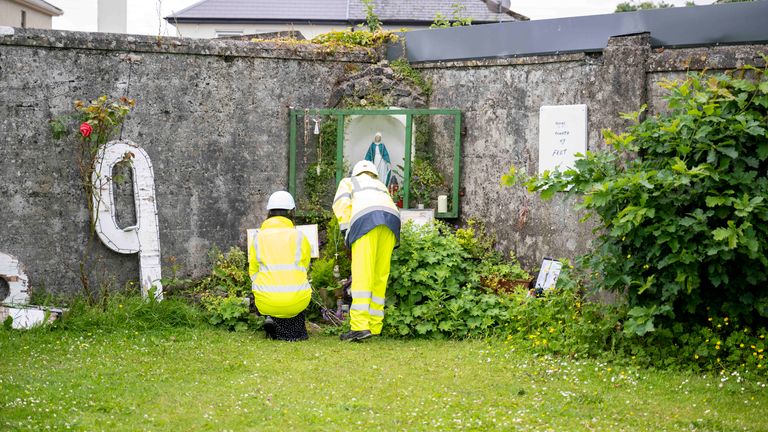
Excavations workers at the site in June. Pic: PA
A long-awaited excavation at a former mother and baby home in Ireland hopes to identify the remains of infants who died there.
An estimated 796 babies and children are thought to have been buried in a former sewage tank at the St Mary's home in Tuam, County Galway, between 1925 and its closure in 1961.
Sponsored link
The home was one of a number of Catholic-run institutions around Ireland that housed roughly 35,000 single women over several decades who were dealing with the "shame" of having a baby out of wedlock.
Here is everything you need to know about the excavation and how it got to this stage.
How did we get here?
Irish society in the mid-20th century was deeply intertwined with the teachings of the Catholic Church, and pregnancies out of wedlock were seen as scandalous.
A long-awaited excavation at a former mother and baby home in Ireland hopes to identify the remains of infants who died there.
An estimated 796 babies and children are thought to have been buried in a former sewage tank at the St Mary's home in Tuam, County Galway, between 1925 and its closure in 1961.
Sponsored link
The home was one of a number of Catholic-run institutions around Ireland that housed roughly 35,000 single women over several decades who were dealing with the "shame" of having a baby out of wedlock.
Here is everything you need to know about the excavation and how it got to this stage.
How did we get here?
Irish society in the mid-20th century was deeply intertwined with the teachings of the Catholic Church, and pregnancies out of wedlock were seen as scandalous.
The former building at Tuam - now demolished. Pic: PA
Mother and baby homes were institutions where young pregnant women were sent, often under pressure from local clergy. At the homes they would give birth and eventually be separated from their children, who were offered up for adoption, sometimes in the US.
They differed from Magdalene Laundries, where single mothers and teenage girls were placed to work. Women in the laundries faced gruelling work conditions and abuse at the hands of the religious congregations that ran them.
In 2015 the Irish government launched the Commission of Investigation into Mother and Baby Homes, aiming to provide a full account of what happened to vulnerable women and children in the homes from 1922 to 1998.
Mother and baby homes were institutions where young pregnant women were sent, often under pressure from local clergy. At the homes they would give birth and eventually be separated from their children, who were offered up for adoption, sometimes in the US.
They differed from Magdalene Laundries, where single mothers and teenage girls were placed to work. Women in the laundries faced gruelling work conditions and abuse at the hands of the religious congregations that ran them.
In 2015 the Irish government launched the Commission of Investigation into Mother and Baby Homes, aiming to provide a full account of what happened to vulnerable women and children in the homes from 1922 to 1998.
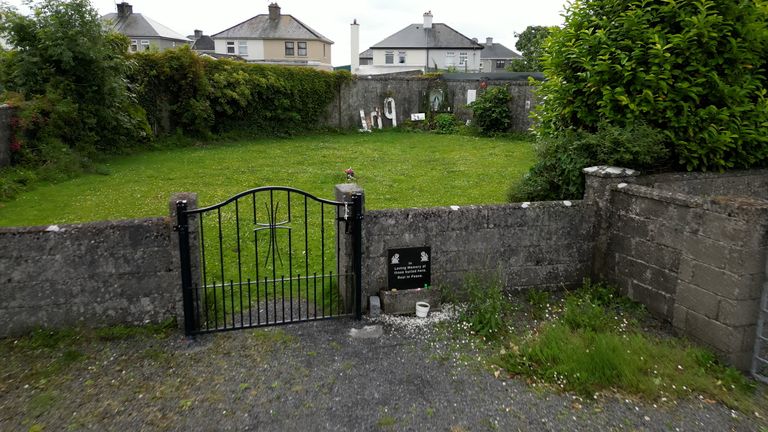
The site in Tuam now
What followed was a five-year investigation by a judicial commission that found a total of 9,000 babies died across 18 mother and baby homes.
The investigation was prompted after local historian Catherine Corless discovered the existence of a mass children's grave at the site of St Mary's home in Tuam, which, a decade later, is finally being excavated.
What followed was a five-year investigation by a judicial commission that found a total of 9,000 babies died across 18 mother and baby homes.
The investigation was prompted after local historian Catherine Corless discovered the existence of a mass children's grave at the site of St Mary's home in Tuam, which, a decade later, is finally being excavated.
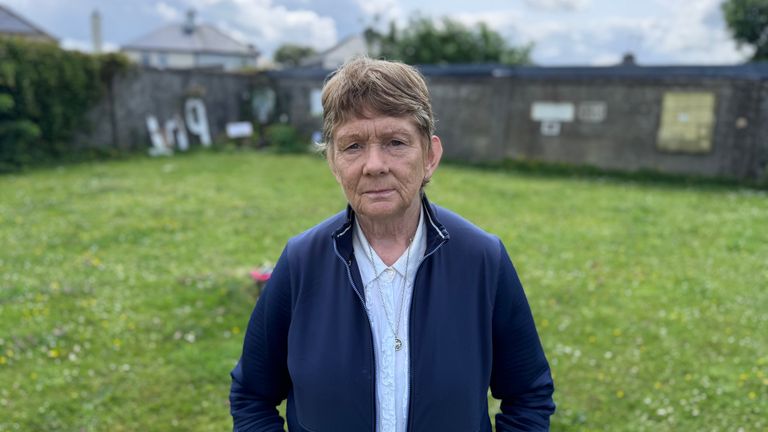
Local historian Catherine Corless, whose research exposed the story, at the suspected mass grave site
What happened in Tuam?
The St Mary's home in Tuam was run by the Bon Secours Sisters, a religious order of Catholic nuns.
Death records for the St Mary's home list children as dying from malnutrition, as well as diseases such as measles and tuberculosis - which were rife at the time.
The home closed in 1961, and was later demolished. In 1975 two 12-year-old boys discovered the septic tank, which was full of human bones.
At the time, locals believed the remains were from the Irish famine of the 1840s.
What happened in Tuam?
The St Mary's home in Tuam was run by the Bon Secours Sisters, a religious order of Catholic nuns.
Death records for the St Mary's home list children as dying from malnutrition, as well as diseases such as measles and tuberculosis - which were rife at the time.
The home closed in 1961, and was later demolished. In 1975 two 12-year-old boys discovered the septic tank, which was full of human bones.
At the time, locals believed the remains were from the Irish famine of the 1840s.
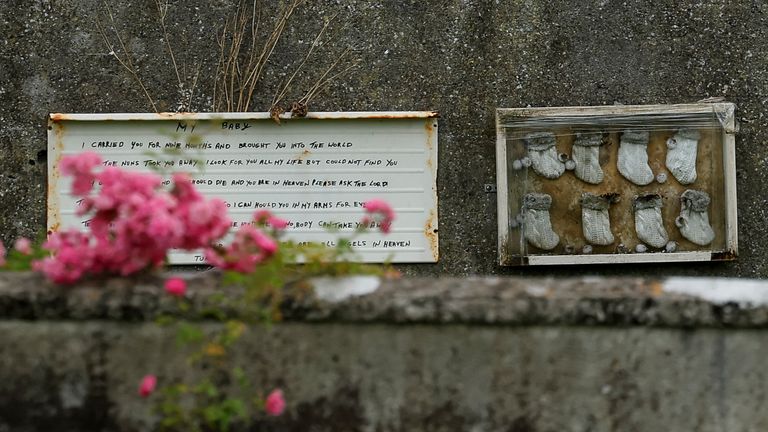
A memorial left at the site of the former mother and baby house. Pic: Reuters
It was historian Ms Corless who made the grim discovery that nearly 800 children were put into the mass grave after scouring through death records.
The claim was first published in 2014 and was found to be accurate in 2017 when the site was excavated for the first time.
Speaking to Sky News' Ireland correspondent Stephen Murphy in June, Ms Corless said a baby would die at St Mary's home, on average, every fortnight.
She said once they had died, they would be placed in one of multiple chambers that were built inside the underground septic tank.
"The chambers were built inside the tank, they are little openings in concrete and go down 9ft. The babies had to be placed one on top of the other, there is no way to actually get down into the chambers," Ms Corless said.
It was historian Ms Corless who made the grim discovery that nearly 800 children were put into the mass grave after scouring through death records.
The claim was first published in 2014 and was found to be accurate in 2017 when the site was excavated for the first time.
Speaking to Sky News' Ireland correspondent Stephen Murphy in June, Ms Corless said a baby would die at St Mary's home, on average, every fortnight.
She said once they had died, they would be placed in one of multiple chambers that were built inside the underground septic tank.
"The chambers were built inside the tank, they are little openings in concrete and go down 9ft. The babies had to be placed one on top of the other, there is no way to actually get down into the chambers," Ms Corless said.
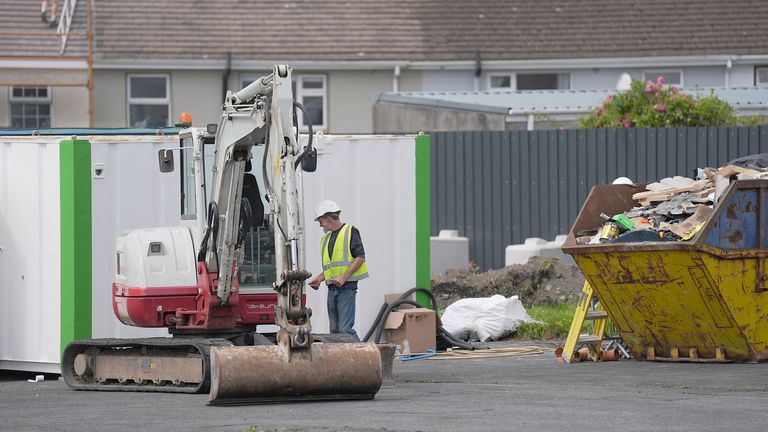
The site of the former mother and baby institution in Tuam, Co Galway. Pic: PA
Why is the area only being excavated now?
In the aftermath of the government investigation into mother and baby homes and the discovery in Tuam, the Irish government announced in 2018 that the bodies of the 796 infants would be excavated.
At the time, Irish premier Leo Varadkar said the government had to pass legislation to give it the power to do the excavations. He said the excavations were expected to be carried out in the second half of 2019.
Why is the area only being excavated now?
In the aftermath of the government investigation into mother and baby homes and the discovery in Tuam, the Irish government announced in 2018 that the bodies of the 796 infants would be excavated.
At the time, Irish premier Leo Varadkar said the government had to pass legislation to give it the power to do the excavations. He said the excavations were expected to be carried out in the second half of 2019.
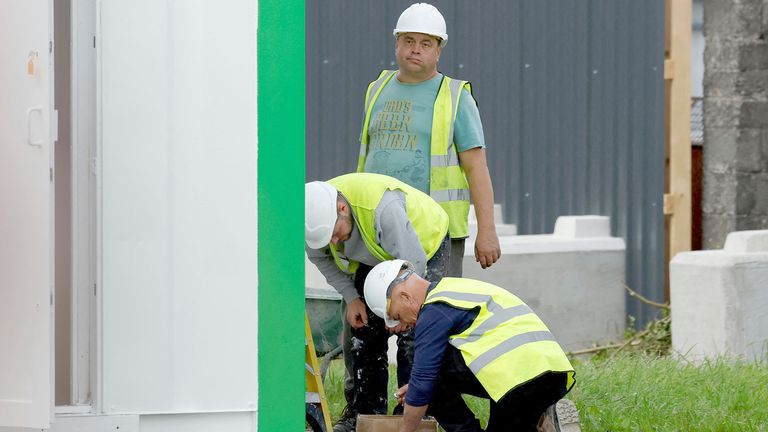
Excavation workers on site of the excavation at St Mary's home. Pic: PA
Reuters
In 2019, a bill was drafted that would allow for the excavation and exhumation of the site, but the COVID-19 pandemic meant its consideration was delayed.
It wasn't until 2022 when the Institutional Burials Act was passed, which aimed to restore dignity in death and, where possible, identify those buried at the site of St Mary's.
The following year, the Office of the Director of Authorised Intervention (ODAIT), the agency that would oversee the excavation, was set up with Daniel MacSweeny appointed as its lead.
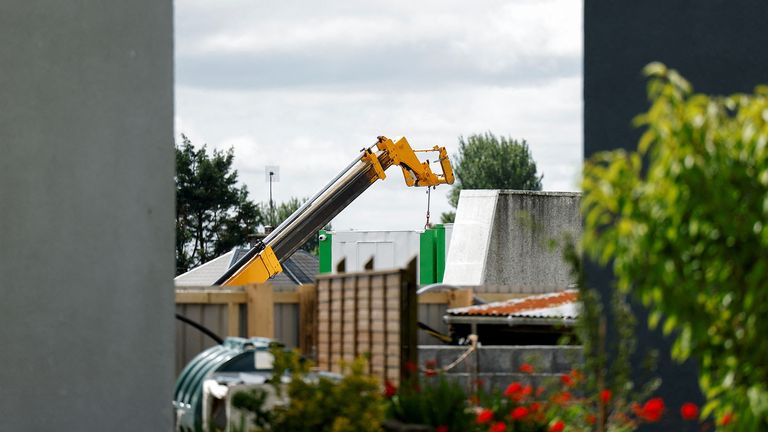
On 16 June 2025, pre-excavation work got underway at Tuam. This included securing the site with a 2.4 metre-high perimeter.
What will the excavation involve?
Excavation will finally start next week and is expected to last for two years.
Experts from the ODIAT will be joined by personnel from Colombia, Spain, the UK, Canada and the US for the process.
The excavation is set to involve the exhumation, analysis, identification if possible, and re-interment - the burying of human remains in a new location after being exhumed - of the remains.
In 2019, a bill was drafted that would allow for the excavation and exhumation of the site, but the COVID-19 pandemic meant its consideration was delayed.
It wasn't until 2022 when the Institutional Burials Act was passed, which aimed to restore dignity in death and, where possible, identify those buried at the site of St Mary's.
The following year, the Office of the Director of Authorised Intervention (ODAIT), the agency that would oversee the excavation, was set up with Daniel MacSweeny appointed as its lead.
On 16 June 2025, pre-excavation work got underway at Tuam. This included securing the site with a 2.4 metre-high perimeter.
What will the excavation involve?
Excavation will finally start next week and is expected to last for two years.
Experts from the ODIAT will be joined by personnel from Colombia, Spain, the UK, Canada and the US for the process.
The excavation is set to involve the exhumation, analysis, identification if possible, and re-interment - the burying of human remains in a new location after being exhumed - of the remains.
Reuters
Mr MacSweeney said the Bon Secours Sisters had provided ODAIT with access to its archive material and it is hoped that this will also help the identification process.
The team will also attempt to establish cause of death where possible.
The site is secured by a 2.4 metre-high perimeter and will be monitored 24 hours a day.
Ireland correspondent Stephen Murphy said the excavation will be a "painstaking forensic process" but will aim to give many relatives long-awaited closure.
He says: "This dig may offer physical remains for reburial to many of those families. But a more fundamental question will most likely never be answered: how could a Christian institution treat women at their most vulnerable with such cold inhumanity, and simply dump their dead children into a pit in the dank earth?"
Mr MacSweeney said the Bon Secours Sisters had provided ODAIT with access to its archive material and it is hoped that this will also help the identification process.
The team will also attempt to establish cause of death where possible.
The site is secured by a 2.4 metre-high perimeter and will be monitored 24 hours a day.
Ireland correspondent Stephen Murphy said the excavation will be a "painstaking forensic process" but will aim to give many relatives long-awaited closure.
He says: "This dig may offer physical remains for reburial to many of those families. But a more fundamental question will most likely never be answered: how could a Christian institution treat women at their most vulnerable with such cold inhumanity, and simply dump their dead children into a pit in the dank earth?"

No comments:
Post a Comment