Copper price soars to record as Trump announces 50% tariff
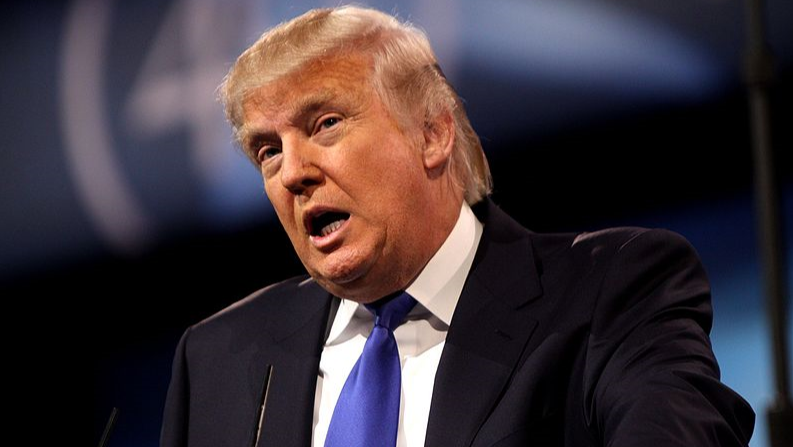
Copper prices jumped by double digits on Tuesday after US President Donald Trump announced plans to implement a 50% tariff on the industrial metal.

“I believe the tariff on copper we’re going to make it 50%,” Trump said when asked by a reporter what the rate on those products would be.
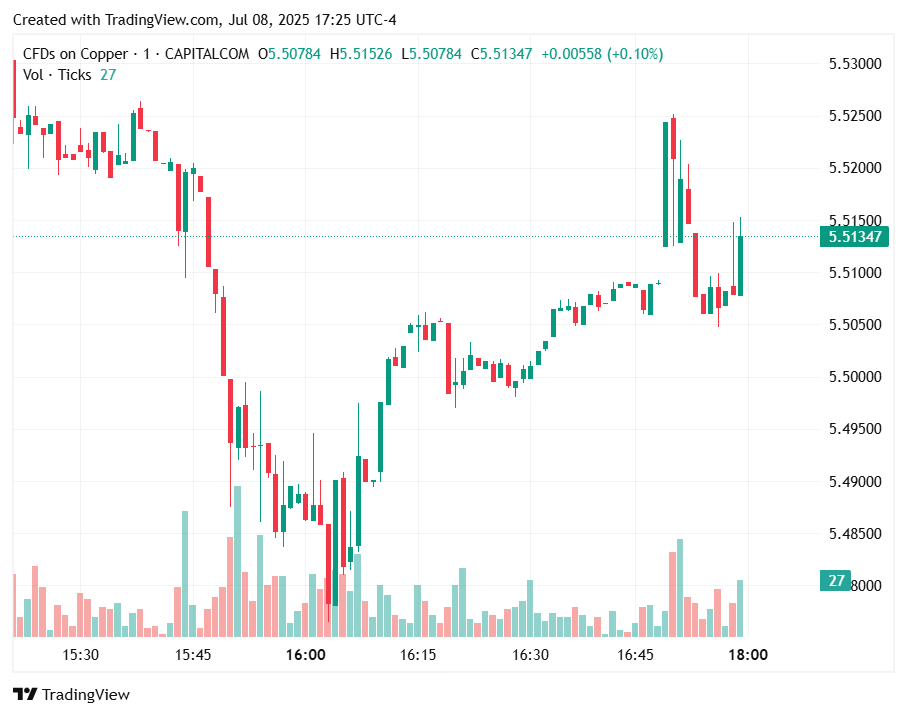
In New York, the most-traded copper futures soared to a record $5.9535/lb. following Trump’s announcement, for an intraday gain of nearly 17%. By 2 p.m., the contracts had settled to around $5.5495/lb.
The copper levy is part of a set of looming sectoral tariffs the US President has planned on select industries. Other sectors that may be impacted include drugs and semiconductors.
In late February, Trump directed the Commerce Secretary to open an investigation into foreign copper imports under Section 232 of the Trade Expansion act.
Third of chip production could face copper supply disruptions by 2035, PwC report says

Some 32% of global semiconductor production could face climate change related copper supply disruptions by 2035, quadrupling from today’s levels, advisory firm PricewaterhouseCoopers (PwC) said in a report for business leaders on Tuesday.
Chile, the world’s largest copper producer, already grapples with water shortages that are slowing down production. By 2035, most of the 17 countries supplying the chip industry will be at risk of drought, PwC said.
The last global chip shortage, fueled by a pandemic-driven demand spike that coincided with factory shutdowns, crippled the automotive industry and halted production lines across other chip-dependent sectors.
“It cost the US economy a full percentage point in GDP growth and Germany 2.4%,” PwC project lead Glenn Burm said in the report, citing the US Department of Commerce.
Copper miners from China, Australia, Peru, Brazil, the US, Democratic Republic of Congo, Mexico, Zambia and Mongolia will also be affected, sparing none of the world’s chipmaking regions from risk, PwC said.
Copper is used to make the billions of tiny wires inside every chip’s circuit. Even if alternatives are being researched, there is currently no match for its price and performance.
The risk will only increase over time if innovation on materials does not adapt to climate change, and a more secure water supply is not developed in the affected countries, PwC said.
“Around half of every country’s copper supply is at risk by 2050 – no matter how fast the world reduces carbon emissions,” the report says.
PwC estimates that 25% of Chile’s copper production is at risk of disruptions today, rising to 75% within a decade and to between 90% and 100% by 2050.
(By Nathan Vifflin; Editing by Milla Nissi-Prussak)
Chile’s biggest copper windfall in years signals higher output
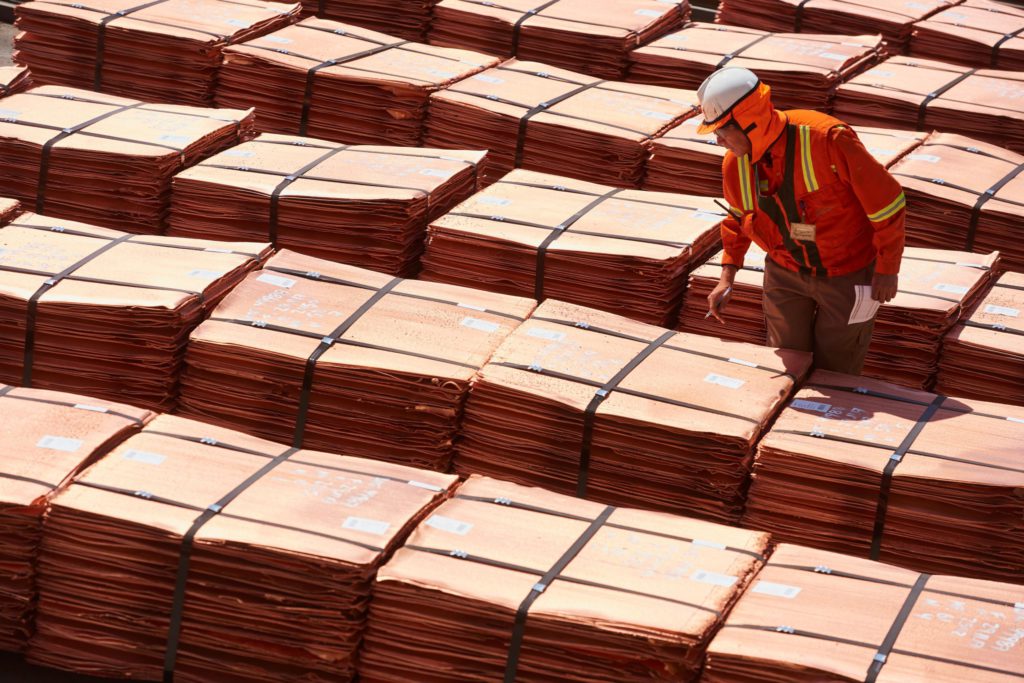
Chilean copper mines had their best month of export revenue in more than three years in June, with the increase in value outstripping price gains in a sign of rising production.
The country that accounts for about a quarter of the world’s mined copper shipped $4.7 billion worth of the metal last month, the biggest haul since December of 2021, according to data released by the Chilean central bank on Monday. That’s 17% more than the same month last year, signaling that at least part of the increase was the result of higher volume given prices rose 11% on average over the same period. Chile is yet to report June production.
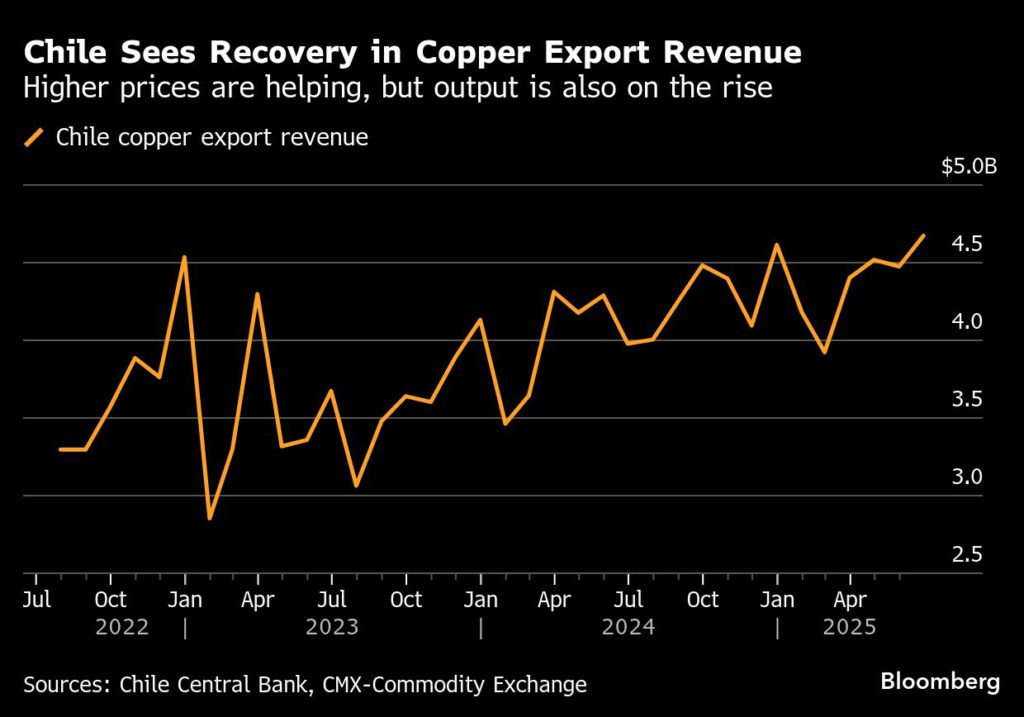
In May, Chile had its best month of copper output this year, delivering some relief to a tight global market, as mines recover from operational setbacks and declining ore quality that had sent production to 20-year lows.
(By James Attwood)
Copper Prices Skyrocket 17% After Trump Announces 50% Tariff

Copper futures soared as much as 17% on Tuesday, their largest intraday gain in at least three decades, after former President Donald Trump announced a 50% import tariff on the industrial metal. Speaking at a Cabinet meeting, Trump confirmed plans to impose new duties on copper, part of a broader tariff push targeting metals, semiconductors, and pharmaceuticals.
“We’re going to make it 50%,” Trump said when asked about the copper rate. The announcement immediately jolted markets, highlighting how sensitive the global copper supply chain is to U.S. trade policy.
Commerce Secretary Howard Lutnick later told CNBC that the Commerce Department had completed its Section 232 investigation into copper, and that the new tariff could be implemented as soon as late July or August 1. “We’ve studied the market, the president now has the ability to set the tariff,” Lutnick said.
The proposed tariff threatens to reshape a vital industrial supply chain at a time when global copper demand is expected to surge, driven by the clean energy transition. The U.S. consumed around 1.6 million tons of refined copper in 2024, relying on imports for 36% of its total needs. Chile remains the top supplier, followed by Canada and Mexico.
The U.S. produced roughly 850,000 tons of primary copper last year, but domestic production alone isn’t enough to meet demand for electric vehicles, grid expansion, and renewable infrastructure.
Trump’s copper move mirrors his first-term actions on steel and aluminum, which shook global trade. Copper, until now, had been spared.
In the same meeting, Trump hinted at a potential 200% tariff on foreign-made pharmaceuticals, though with a grace period of up to 18 months for companies to relocate production to the U.S.
Still, it was copper that sent shockwaves through markets. With the U.S. gearing up for an electrified future and global demand intensifying, a 50% copper tariff could have massive consequences — not just for prices, but for the energy transition itself.
By Tom Kool for Oilprice.com

No comments:
Post a Comment