Codelco gets regulatory approval to reopen part of El Teniente copper mine
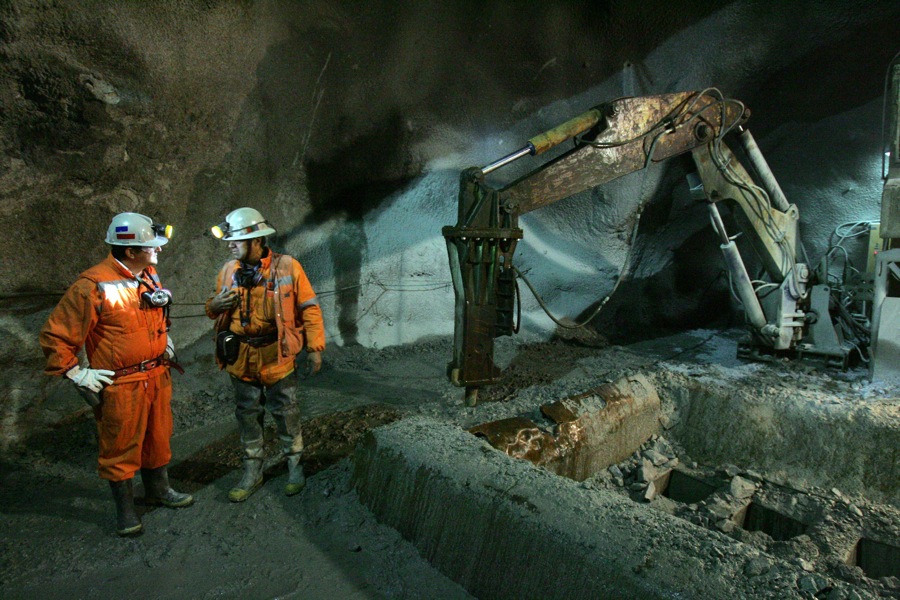
Copper giant Codelco has received approval from Chile’s mining regulator to reopen a part of its flagship El Teniente mine, after more than a week of suspended operations following a deadly collapse that killed six workers, it said on Friday.

Chile’s labor inspection office needs to sign off on the plan before El Teniente can resume mining activity, Codelco said in a statement. It did not say when it expects final approval or when operations may restart.
The state-run company aims to restart in a number of sectors of the mine, excluding those affected by the July 31 accident, pending further analysis.
A major tremor that day caused tunnels to collapse around the new Andesita section of the vast mine, which contains the world’s largest underground copper deposit.
The mining regulator said the approved areas show no damage or imminent risk, and instructed Codelco to monitor seismic activity and comply with operational guidelines.
“Sernageomin emphasized that the restart of operations must be carried out under strict safety standards, prioritizing the protection of worker lives,” Codelco said.
The labor inspection office did not immediately reply to a request for comment.
Earlier, Codelco said it had suspended contracts with third-party workers at El Teniente through at least August 13.
Aquiles Cubillos, the prosecutor for the O’Higgins region where El Teniente is located, has said the collapse damaged about 3,700 meters (3.7 km) of passageways, far more than 700 meters initially estimated by the company.
He has not specified the severity of the damage, but said it affected two or three areas of Andesita, and five or six areas of the Recursos Norte unit.
El Teniente, which is more than a century old, spans more than 4,500 km (2,800 miles) of tunnels and underground galleries – nearly the distance between Chile and New York – deep within the Andes mountains.
On Friday, Cubillos’ team inspected four damaged levels of the mine, excluding those where the injuries and deaths occurred, and met with Codelco technical experts. Investigators are documenting the damage with photographs to later reconstruct a full map of the affected areas.
(By Daina Beth Solomon and Fabian Cambero; Editing by Daniel Wallis, Diane Craft and Himani Sarkar)
A mile underground, America’s largest untapped copper mine inches toward reality
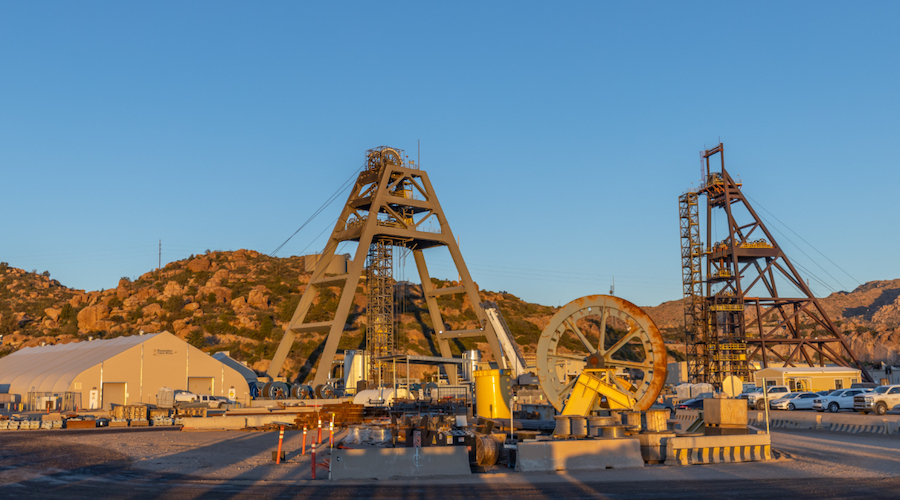
Reaching the site of the biggest undeveloped US copper deposit requires a 15-minute drop by steel cage into the sweltering bowels of the Arizona desert. There, more than a mile beneath the surface, the temperature can reach 175F (79C), so massive cooling units run constantly, churning out mist that condenses and drips from the ceiling, calcifying the pipes lining the tunnel walls.
It’s called Resolution Copper, and it holds enough of the critical metal to supply a quarter of US demand for years. Yet two decades and over $2 billion later, not a single ounce of copper has been mined. While engineers have thoroughly mapped the ore body and workers have built one of the deepest shafts in the US, the deposit owned by Rio Tinto Group and BHP Group has been stalled by permitting hurdles as well as tribal and environmental opposition.
The mine is among projects that could benefit from the White House’s efforts to revive America’s copper industry. While President Donald Trump’s July 30 decision to exempt refined copper imports from tariffs — at least for now — came as a blow to domestic producers including Rio Tinto, his administration’s moves to expedite permitting for the project an hour east of Phoenix are a boon after years of regulatory gridlock. The miner has been clear that eliminating red tape is more important to Resolution than any tariff.
Even with the president’s support, however, building a mega-mine in America remains difficult. It takes 29 years on average between discovery and commercial mine production in the US, the longest timeline of any country except Zambia, according to S&P Global. In addition to outstanding permits, Resolution faces legal challenges.
“We’re at a point where mining companies are very hesitant to mine in the US because of the long permitting and litigation times,” said Gracelin Baskaran, director of the critical minerals security program at the Center for Strategic and International Studies. “Seeing a project like Resolution enter production would be an important signal to the mining sector.”
For the companies, the potential payoff is big. Resolution holds an estimated 28 million metric tons of copper in reserve and resource, equivalent to about $270 billion in today’s prices. It would expand Rio and BHP’s presence in the global copper market, adding another massive asset to a combined portfolio that spans the Americas, Asia and Australia.
Most easy-to-reach copper deposits, including one located above Resolution, were depleted during the 20th century. Now, miners must dig much deeper, into earth so hot it would have been impossible for workers to survive a century ago. AJ Quiroz, a third generation miner who’s worked at Resolution since 2008, recalls the job’s “horrible” conditions in the early years, before the cooling system was expanded. Back then, workers could only stay underground for about an hour at a time, dragging out the work of drilling for core samples and setting off explosives.
It’s a far cry from the job his grandfather performed when he worked the historic Magma mine — which connects to Resolution — in the 1960s. In those days, the state’s economy was built on the “Five Cs”: cattle, cotton, citrus, climate and copper. Mining was dangerous but straightforward: Workers dug ore by pickaxe in caverns cleared by dynamite. They endured long shifts with limited safety gear and frequent accidents.
Magma produced copper for 86 years before ceasing operations in 1996, in part due to ballooning costs and falling copper prices. Mines across Arizona were similarly abandoned as production from China, Chile and African countries took over the global market.
Today, Quiroz and his colleagues are focused on preparing a mining method called block-caving, which involves carving a network of tunnels below the ore body and detonating explosives to fracture the ore. The ore would then collapse and fall downward for collection. The method demands massive upfront investment and years of prep before a single ton of copper can be hauled to the surface.
Before that production can begin, the companies need to resolve a variety of legal and permitting issues.
The project is still awaiting state air and groundwater permits, and approval of its mine reclamation plan. And while the Trump administration estimates the project will receive all of its federal permits by February 2026 – more than a decade into the process – at least one of those permits has been challenged in court.
Resolution’s footprint, which includes about 2,400 acres of public land given to the companies by Congress, encroaches on a sacred patch of land called Oak Flat, which the nearby San Carlos Apache Tribe has used for centuries for religious ceremonies. The tribe, whose reservation is roughly 70 miles away, uses the site for coming-of-age rites, prayer circles, fasting and healing rituals. Scattered beyond it are burial sites, petroglyphs and ancient cultural artifacts.
While Rio Tinto and BHP say they’re working to minimize the impact to Oak Flat — even forgoing portions of copper-bearing ore within the deposit “to minimize subsidence impacts” — the US Forest Service has estimated that 41 years of mining would create a surface crater 1.8 miles in diameter and as much as 1,115 feet deep. The tribe petitioned the Supreme Court last year to block the transfer of land to the companies, arguing in a filing that the crater would end “sacred Apache rituals forever.”
The Supreme Court decided in May not to hear the Apache petition, dealing a significant victory to Rio and BHP. Still, other efforts by the tribe and an environmental group to block the land transfer are moving through the courts. Besides the project’s implications for Apache rituals and religious ceremonies, the Arizona Mining Reform Coalition argues the mine will consume massive amounts of water during a severe drought, and destroy the recreational value of the area.
“Bottom line — the project is not worth the risk any way you look at it,” said Roger Featherstone, director emeritus of the coalition.
If the group’s challenge is unsuccessful, the companies could obtain the land as early as mid-August.
The next steps: digging more tunnels to reach the ore body; ventilating and draining those areas; and installing more cooling, electrical and communications systems so detonation and extraction can begin. Rio Tinto and BHP have projected production will start no sooner than the 2030s, at which point, they’ll face another challenge: the high cost of processing in the US.
The US has few processing facilities, so much of the metal produced domestically gets shipped to countries including China for refining. A tariff on refined copper imports could have bolstered the domestic industry, making Rio Tinto’s Utah smelter more profitable. Trump’s decision to instead exempt the metal from levies means copper refining in the US will remain more expensive than shipping it abroad. That, in turn, would raise Resolution’s costs and weigh on its competitiveness with rival operations around the world even as CRU Group estimates the industry needs to spend $130 billion over the next decade to address a projected annual supply shortfall of 7.5 million tons.
Still, the biggest US manufacturing group is throwing its weight behind Resolution. In a July 31 letter to US regulators, the National Association of Manufacturers said the project would help strengthen the US industrial base and reduce the need to export raw materials for processing overseas.
(By Jacob Lorinc and James Attwood)

No comments:
Post a Comment