ICYMI
NASA Wants To Put a Nuclear Reactor on the Moon

NASA is accelerating plans to set up a nuclear reactor to the Moon by the end of the decade, to power bases there and help America be the first nation to have an energy base powered by 24/7 nuclear power on the Moon and win the “second space race” with Russia and China.
Back in 2020, NASA was planning to build a base and a nuclear power plant on the Moon by 2026 and invited proposals from companies ready to take on the challenge.
The timeline has long lapsed, but NASA isn’t giving up, all the more so that Russia and China have announced on several occasions intentions to put up nuclear reactors on the Moon, too.
Last year, the head of Russia’s space agency Roscosmos said that Russia is considering a nuclear power plant installation on the moon starting between 2033 and 2035.
Russia—along with China—is considering the idea of placing a nuclear power plant on the moon over the next decade or so, and the two countries have been working together on a lunar program for nuclear space energy.
“Today we are seriously considering a project—somewhere at the turn of 2033-2035—to deliver and install a power unit on the lunar surface together with our Chinese colleagues,” Yuri Borisov, head of Roscosmos, said in March 2024.
Now NASA wants to beat the Russia-China venture and have a nuclear reactor on the Moon by 2030.
U.S. Transportation Secretary Sean Duffy, who is also the interim NASA administrator, announced this week accelerated plans to have nuclear energy power future bases on the Moon, POLITICO reported first earlier this week.
“We’re in a race to the moon, in a race with China to the moon,” Duffy said during a news conference this week.
“And to have a base on the moon, we need energy.”
It remains to be seen how soon and how feasible such an effort would be, and who will win the space race for setting up 24/7 energy to power future bases on the Moon, and, at some point in the more distant future, on Mars.
By Michael Kern for Oilprice.com
Q&A: Working towards a closed nuclear fuel cycle
_96167_68292.jpg)
How would you define a closed fuel cycle?
A closed fuel cycle refers to a system in which fuel discharged from a nuclear reactor is reprocessed, and the recovered nuclear materials are reused to create new fuel. In modern light-water reactors, the fuel is not burned out completely. In fact, up to 97% of its weight is unburned uranium and plutonium. Both of these elements can be reused to make new fuel. So, a closed fuel cycle is, in many ways, the only practical solution when we consider the efficient use of natural resources and the minimisation of waste. However, due to the characteristics of light-water reactors' neutron spectra, conventional light-water reactors can only support a single plutonium recycle and two or three uranium recycles.
What can be done to address this?
A promising solution is "partitioning and transmutation". This is a technical process which involves the separation of used nuclear fuel into different components, allowing for the optimal use of each. The process considers specific technologies that can improve the current practices of waste management.
How does this differ from the current used nuclear fuel reprocessing methods?
In France, and in other countries that employ similar methods, only uranium and plutonium are recovered from used nuclear fuel during reprocessing. The remaining materials are treated as waste. The recovered uranium and plutonium are then reused as fuel in light-water reactors, while the rest is vitrified and sent for final disposal. With this method, uranium can be reused only two or three times, as the accumulation of 'even isotopes' significantly reduces fuel efficiency. Plutonium is typically used only once due to similar constraints.
And how does partitioning and transmutation improve on this?
In the case of partitioning and transmutation, when the uranium and plutonium are separated, a critical fraction, known as "minor actinides", is also extracted. These are the most long-lived and hazardous components of spent nuclear fuel. The minor actinides are then sent for transmutation, a process that involves bombarding them with accelerated particles (either in a fast neutron reactor or a proton accelerator) to convert them into less hazardous elements. Fast-breeder reactors are particularly promising here because they can operate using fuel made from plutonium extracted from used nuclear fuel, allowing for multiple recycles. As a result, the volume and long-term hazard of the waste destined for final disposal is significantly reduced, while plutonium is consumed much more efficiently.
Transmutation requires fast reactors?
Yes, fast reactors and advanced radiochemistry are key to this process. Alongside this, we also need the appropriate infrastructure, such as transport containers, radiochemical plants, fuel fabrication plants, and so on. And, of course, an integrator, who would be able to operate everything in a coherent cycle.
And who can deliver such an infrastructure?
There are several possibilities. As a representative of TENEX, I can confidently say that Russian companies, under the Rosatom umbrella, are already developing such systems. Most of the infrastructure, including fast reactors, radiochemical plants, and fabrication facilities, is located in Russia. If the fuel cycle management is outsourced to us it is making it easier for international customers to operate their light-water reactors without needing to develop these facilities themselves in their countries.
TENEX is known as a supplier of enriched uranium - why expand into the used nuclear fuel management segment?
This is a market-driven solution. Natural uranium supplies are finite and a valuable resource, and the price can be quite volatile. Given that 96% of spent nuclear fuel is uranium and about 1% is plutonium, we already have the technology to extract and use both. Also, we have the expertise to efficiently manage radioactive waste. This positions us to offer a new approach to the nuclear fuel cycle, or rather, a new type of nuclear fuel cycle offering. Essentially, we’re talking about a complete system that includes fast reactors, containers, radiochemistry, and fuel fabrication from regenerated nuclear materials.
Can this be compared with nuclear fuel 'leasing'?
Legally, it would not be classified as leasing. But in essence, it functions similarly. We would supply fresh fuel to the reactor, collect spent nuclear fuel for reprocessing, and then may return fresh fuel made from regenerated materials.
What technical challenges remain?
Of course, there are still challenges, but they are related to improving existing technologies and scaling the infrastructure.
What are the next steps for advancing this system?
We are committed to tuning our fuel cycle optimisation solution to an off-the-shelf, yet fully completed offering. This means developing a set of standards for not just fresh fuel and used fuel, but also for the radioactive waste produced from reprocessing spent fuel and the transmutation of minor actinides. We have already developed reliable packaging and reference samples for this waste, and we have conceptualised facilities for its final isolation. However, since the disposal of radioactive waste is the responsibility of national operators, a significant amount of work remains to integrate these technical solutions into national laws and regulations. This is critical work, because if successful, nuclear energy clearly demonstrates a fully comprehensive and sustainable solution for every stage of the nuclear fuel cycle, from mining and enrichment to recycling and final waste disposal.
How many countries are considering adopting your solutions?
I would say our global reach is substantial. It may be too soon to claim global adoption, but interest in our solutions continues to grow, and so does the number of potential customers of what we call the "Sustainable Nuclear Fuel Cycle", which is a name suggested by our customers.
In terms of innovation would you say it enhances the sustainability of nuclear energy?
Absolutely. A prime example may be the fast neutron reactors mentioned above. These are, essentially, Generation IV reactors, the most advanced reactors currently available. The same applies to our radiochemical processes, fabrication techniques, and containers. We use the best available technology at every stage.
Finally, what is your estimate for the future of the closed fuel cycle in the next 50 to 100 years?
In the very long term, there is no alternative to a closed fuel cycle. Without it, we’ll eventually run out of natural resources, and the waste burden will become unsustainable. Unfortunately, the processes in the fuel cycle take decades to unfold, so it’s unlikely that the closed fuel cycle will be fully adopted globally within 50 years. But in 100 years, I am confident it will be implemented universally.
Uranium producers share market confidence in half-year roundups
Cameco, Kazatomprom and Orano have all confirmed their production outlook for the remainder of 2025 in recent first-half results announcements.
_13220.jpg)
On 1 August, French fuel company Orano said its revenue, EBITDA (standing for earnings before interest, taxation, depreciation and amortisation - a measure of profitability), and operating income were all up compared to the first half of 2024, when operating income had been affected by the situation in Niger. Orano's loss of operational control over its Niger mining subsidiaries - Somaïr, Cominak and Imouraren - led to the deconsolidation of these entities at the end of 2024.
Nicolas Maes, Chief Executive Officer, said sustained market prices and increased production volumes had helped the group to achieve solid and improving half-year results across all indicators. "This industrial and financial performance, Orano’s primary strategic priority, allows us to confidently progress in the implementation of our major investment projects, to renew our resources in Mining, to increase our production capacities in the Front End, to extend and renew our Back End treatment and recycling facilities, and to accelerate our development in nuclear medicine," he said.
The company confirmed an end-of-year revenue target "in the region of" EUR5 billion (USD5.8 billion) with a "positive net cash flow whilst ensuring the ramp-up of the investment programme."
Cameco sees 'constructive' outlook
Cameco reported its consolidated financial and operating results for the second quarter on 31 July, with President and CEO Tim Gitzel saying "solid" financial performance across its uranium, fuel services, and Westinghouse segments demonstrated the resilience of its strategy and a "constructive outlook" for nuclear power, "significantly improving" Cameco's overall expectations for the year.
"Despite the uncertainty-driven volatility throughout the capital markets during the first half of the year, the need for clean electrons has remained on the critical path to addressing global energy security, national security, and climate security concerns," Gitzel said.
It continues to expect to produce 18 million pounds U3O8 (6,924 tU) (on a 100% basis) at each of the McArthur River/Key Lake and Cigar Lake operations in 2025, with an average realised price for uranium of around USD87.00 per pound (previously USD84.00 per pound) due to the higher uranium spot price. It also expects it share of earnings from its equity investment in Westinghouse to be higher than previously expected, thanks to Westinghouse’s participation in the Dukovany construction project in the Czech Republic.
The company expects shipments of its remaining share of 2024 production from its Inkai joint venture with Kazatomprom - some 900,000 pounds U3O8 - and the majority of its 3.7 million pounds purchase allocation from the Kazakh joint venture's 2025 production to begin in the second half of the year.
Kazatomprom remains on track
On 1 August, Kazatomprom reported that its production for the first half of 2025 was 12,242 tU on a 100% basis (6,431 tU attributable). These were up year-on-year, although sales volumes and average realised prices showed a slight decrease. However, the company noted that sales volumes can vary substantially each quarter, and also reflect the variable timing of customer delivery requests. A 24% decline in the uranium spot price in the reporting period had a "limited" effect on realised prices.
"In the uranium market, the trends in quarterly metrics and interim results are rarely representative of annual expectations," the company said, adding that it was leaving all guidance metrics for 2025 unchanged, except for the Kazatomprom sales volume range. This is reduced by 500 tonnes, to 13,500-14,500 tU, as a result of a shift in 2025 delivery schedules "where a contract delivery has been re-scheduled to a later period as per the customer's request."
US uranium industry growth continues
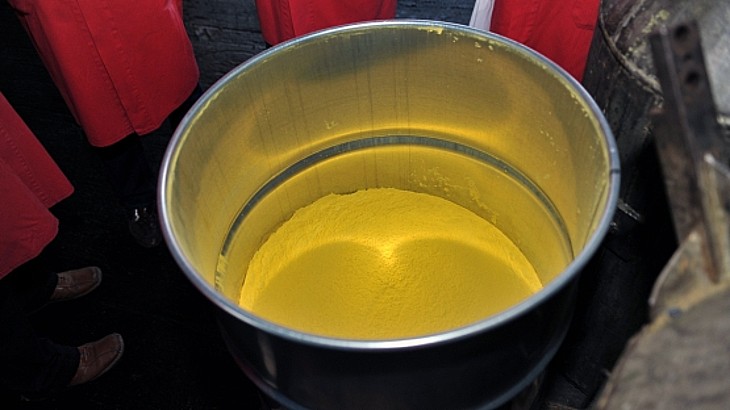
2024 production of 677,000 pounds U3O8 (260 tU) was a "significant increase" from 2023 production of 50,000 pounds U3O8, according to the Energy Information Administration's Domestic Uranium Production Report, published on 5 August.
Exploration drilling during 2024 of 1,324 holes with total footage of 613,000 feet (186,842 metres), was up considerably from the 877 holes totalling 512,000 feet drilled in 2023. Development drilling - 2,462 holes with total footage of 1,260,000 feet was also up from 1,053 holes and 556,000 feet in 2023. Exploration and development drilling activities in 2023 were at the highest levels since 2013, both for number of holes drilled and for total footage drilled, the EIA said.
At the end of 2024, the Shootaring Canyon Uranium Mill in Utah and the Sweetwater Processing Plant, in Wyoming, were on standby, while the White Mesa Mill in Utah began processing using an alternative feed. In Wyoming, the Sheep Mountain heap leach facility reached a partial permitting and licensed stage. In-situ recovery (ISR) facilities at the Alta Mesa Project, Rosita Project, Lost Creek Project, the Smith Ranch-Highland Operation, Ross Central Processing Project, and Willow Creek Project were all operating at year-end, with a combined capacity of 14.1 million pounds U3O8 per year: up significantly from the an industry-wide ISR capacity of 7.5 million pounds in 2023.
Total employment in the U.S. uranium production industry was 506 full-time person-years in 2024, up from 340 full-time person-years in 2023 and the highest employment total since 2016.
Total expenditure for land, exploration, drilling, production, and reclamation of USD160 million in 2024, up from USD107.4 million in 2023, was the highest since 2016.
The Energy Information Administration is a statistical and analytical agency within the US Department of Energy.
Sweetwater fast-tracked
Uranium Energy Corp's (UEC) Sweetwater ISR project is the latest to be designated as a "transparency project" by the US Federal Permitting Improvement Steering Council (the “Steering Council”) as part of the implementation of a presidential Executive Order on Immediate Measures to Increase American Mineral Production, issued in March.
The Executive Order directed federal agencies to fast-track permitting for certain infrastructure and critical mineral projects selected by the Steering Council. Sweetwater has been selected for fast-tracking and added to the FAST-41 transparency dashboard, the company said. FAST-41 is a federal infrastructure permitting initiative established under Title 41 of the Fixing America's Surface Transportation Act.
UEC President and CEO Amir Adnani said Sweetwater's selection "reinforces its national importance as a key project to achieve the United States' goals of establishing reliable infrastructure, supporting nuclear fuel independence."
UEC acquired Sweetwater from Rio Tinto in 2024. It is to be UEC's third "hub-and-spoke" production platform, Adnani said. "On completing this tack-on permitting initiative, Sweetwater will be the largest dual-feed uranium facility in the United States, licensed to process both conventional ore and ISR resin," he added.
The Sweetwater Complex features the Sweetwater Processing Plant, a fully licensed and permitted 3,000 tonne per day conventional uranium mill. With an existing licensed capacity of 4.1 million pounds of U3O8 per year, UEC said completion of the ISR permitting initiative will see it become the largest licensed uranium production facility in the USA with dual-feed capability.
Construction permit granted for new Chinese plant
_65473.jpg)
"We believe that the submitted application documents comply with relevant national laws and nuclear safety regulations, and that the design principles and nuclear safety-related activities of units 1 and 2 of the Zhejiang Jinqimen Nuclear Power Plant meet the requirements of China's nuclear safety regulations," the NNSA said.
The construction of two 1200 MWe Hualong One reactors as Phase I of the Jinqimen plant was approved by China's State Council at a meeting on 29 December 2023. A ground-breaking ceremony was held in February 2024 to mark the start of work on the units.
China National Nuclear Corporation subsidiary CNNC Zhejiang Energy Co Ltd will be responsible for project investment, construction and operations management of the new plant, which will eventually house six Hualong One units.
"Our inspection team conducted an on-site inspection of the nuclear island preparations for unit 1 of the Zhejiang Jinqimen Nuclear Power Plant," NNSA told CNNC Zhejiang Energy. "We concluded that all on-site preparations are in place for the pouring of the first concrete for the nuclear island foundation. Your company may proceed with the pouring of the first concrete for unit 1's nuclear island foundation."
Once all six units have been completed, the total installed capacity of the Jinqimen plant will be about 7.2 GWe, and the annual grid-connected electricity will be some 55 TWh, which according to CNNC is equivalent to reducing carbon dioxide emissions by about 50 million tonnes.
UAE collaboration delivers first low-carbon aluminium
Emirates Global Aluminium and the Emirates Nuclear Energy Company have delivered the UAE's first low-carbon aluminium produced using electricity generated by the Barakah nuclear power plant.
_17361.jpg)
The low-carbon aluminium is being marketed under the product brand MinimAL. The first customer for the Emirati product is Egyptian company CANEX Aluminum, who will use it to produce advanced products for infrastructure, solar energy, transportation, and architectural applications.
Emirates Global Aluminium (EGA) said the new product positions the UAE as a reliable supplier of low-carbon industrial materials to global markets and expands EGA's low-carbon metal portfolio. Generating the electricity required for aluminium smelting and production accounts for around 60% of the global aluminium industry's greenhouse gas emissions, it added.
"Global demand for low carbon aluminium is expected to triple by 2040, and EGA aims to play an important role in this growth," EGA CEO Abdulnasser Bin Kalban said. "MinimAL is our latest low-carbon product, made possible through the UAE's investment in nuclear power generation. We are glad to be working with ENEC to supply more low carbon aluminium to the world."
ENEC Managing Director and CEO Mohamed Al Hammadi said: "This milestone shows how nuclear energy is boosting national energy security and enabling the UAE's industrial decarbonisation in parallel, reliably powering energy-intensive sectors like aluminium production with clean electricity 24/7. Through the abundant electricity generated at Barakah, we have unlocked the significant, proven and long-term benefits of nuclear energy to power the UAE's low-carbon economy for decades to come."
Managing Director of CANEX Aluminum Mutassem Daaboul said the Egyptian company's partnership with EGA reflects a shared commitment to responsible innovation. "Our upcycling model already transforms waste into value-added products. Now, with MinimAL, we are taking another step forward by reducing embedded emissions at the very beginning of our process," he said.
Since the fourth unit at Barakah entered commercial operation last year, the nuclear power plant, which is in the Al Dhafra region of Abu Dhabi, generates enough power to meet 25% of the UAE's electricity demand. It has rapidly decarbonised the UAE's grid: carbon-free electricity from Barakah avoids 22.4 million tonnes of carbon emissions each year, which ENEC says is equivalent to removing 4.8 million cars from the road.
Clean electricity from Barakah is certified through the UAE's Clean Energy Certification programme using International REC Standard protocols to ensure traceability and credibility. The power is supplied through Emirates Water and Electricity Company via the national grid.
EGA was the first company globally to produce aluminium using solar power, marketed as CelestiAL.It also produces recycled aluminium, marketed under the product brand RevivAL, at its plants in the USA and Germany, and is currently building the UAE's largest aluminium recycling plant at Al Taweelah, which is expected to start production in the first half of 2026.
India sets out two-pronged strategy for nuclear expansion
_26518.jpg)
Minister of State Jitendra Singh set out plans for the deployment of large and small Indian-designed reactors in a 6 August written reply to the Lok Sabha, the lower house of the Indian parliament. He provided a similar answer to the upper house, the Rajya Sabha, on 24 July.
Minister of Finance Nirmala Sitharaman announced the Nuclear Energy Mission for Viksit Bharat as part of her budget speech in February (Viksit Bharat is the government's strategy to make India into a completely developed nation by 2047). The mission is a significant contributor to plans for India to reach net zero carbon emissions by 2070, Singh said.
The main features of the Nuclear Energy Mission are "to augment power production from nuclear energy with least carbon emission and to cater the base load requirement which is currently supported by fossil fuel base power plants," Singh said. "Nuclear Energy Mission envisages deployment of large as well as small nuclear power plants in green fields, in brown fields, as captive plants and for off-grid applications in remote locations. This initiative aims for an active partnership with private sector, R&D of small modular reactors (SMRs) and enabling measures for new advanced technologies."
Singh outlined the three types of SMR that are being designed and developed by India's Bhabha Atomic Research Centre for demonstration: the 200 MWe Bharat Small Modular Reactor (sometimes referred to as BSMR-200); a 55 MWe small modular reactor (SMR); and a 5 MWt high temperature gas cooled reactor for hydrogen production by coupling with suitable thermochemical process for hydrogen production.
In-principle approval has been obtained for construction of the three demonstration reactors, which are likely to be constructed in 60 to 72 months after receipt of administrative sanction of projects, Singh said: "Lead units of BSMR & SMR are planned to be installed at DAE sites in collaboration with NPCIL. These plants are designed & developed considering deployment as captive power plant, for repurposing of retiring fossil fuel-based plants and for hydrogen production to support transport sector with prime objective of decarbonization by increasing the penetration of nuclear energy in industrial & transport sector."
India currently has 24 operating reactors with a total capacity of 8,780 MWe, and 18 reactors, with a total capacity of 13,600 MWe (including the 500 MW Prototype Fast Breeder Reactor, the PFBR) are at various stages of implementation, Singh said. "On their progressive completion, the installed nuclear power capacity will reach 22,380 MW from 8,780 MW at present. The target of 100 GW is planned to be achieved by deploying reactors based on existing and new advanced technologies under development," he added.
Gorakhpur update
In a separate written answer, Singh said that two of those new units, Gorakhpur 1 and 2, for which the government accorded administrative approval and financial sanction in 2014 - are expected to be completed "by 2031-32".
Excavations began at the site in Haryana, in 2018, but Singh told the Lok Sabha that remediation of localised weak zones in soil strata discovered during "confirmatory geo technical investigations" had delayed the start of nuclear island construction. Earlier this year, Minister of Power Manohar Lal Khattar said that first concrete for Gorakhpur 1 is expected to be poured in October.
The procurement of long lead-time equipment has begun, and some major equipment has already been received on site, Singh said.
The Indian government describes Gorakhpur units 1 and 2 as "under construction", although the International Atomic Energy Agency's PRIS database does not consider a reactor to be under construction until the first major placing of concrete for the base mat of the reactor building is made.
Site surveys begin for first Kazakh nuclear power plant
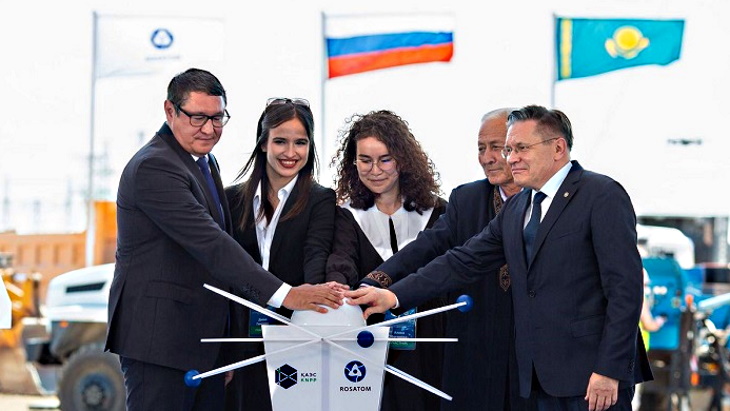
The event was attended by of the Russian State Corporation Rosatom Director General Alexey Likhachev, Chairman of the Agency of the Republic of Kazakhstan for Atomic Energy Almasadam Satkaliyev, and Akim of Almaty Region Marat Sultangaziyev.
During the ceremony, specialists from Rosatom's Engineering Division started drilling the first exploratory borehole and soil sampling. These studies will assess seismic stability, hydrogeological features, and other parameters of the area, which are essential for the safety and reliability of the future plant. A total of at least 50 boreholes, each between 30 and 120 metres deep, will be drilled during this stage. A final decision on the nuclear power plant's exact location will be made based on the survey results.
"The surveys ensure the project complies with both international and national standards, minimises environmental and technological risks, and creates a foundation for efficient design of the future nuclear power plant," Rosatom said.
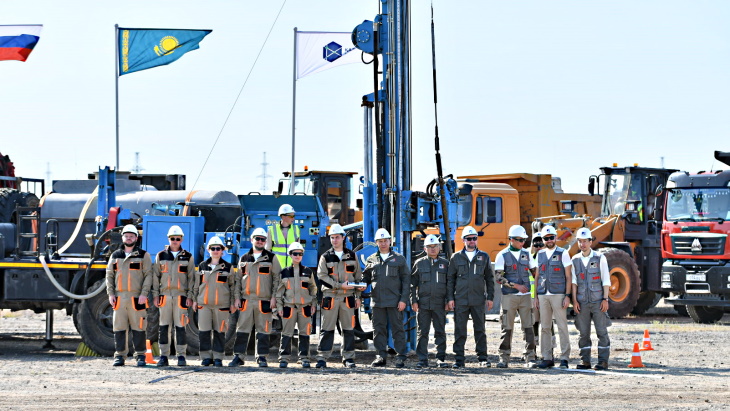
(Image: Rosatom)
The engineering surveys are scheduled to take 18 months, Asset Makhkambetov, deputy chairman of the Kazakh Atomic Energy Agency said, according to a Kazinform News Agency report. He said that three potential areas will be selected as part of exploratory studies, at each of which complex engineering surveys will be carried out.
"The launch of engineering surveys in Ulken marks the beginning of the journey toward the first high-capacity nuclear power plant in Kazakhstan's modern history," Likhachev said. "At this stage, we are focusing on a thorough study of the site to be fully confident in its suitability for a future nuclear plant. Rosatom is ready to apply all its accumulated experience to implement this strategically important project for Kazakhstan's development."
"Today is only the first step, but it determines Kazakhstan's path toward establishing a new high-tech sector in the national economy," Satkaliyev said. "We are confident that the nuclear power plant will provide a powerful boost to the region's development - from the creation of modern infrastructure to new schools, kindergartens, and social facilities. This project is Kazakhstan's strategic choice and a driver of long-term regional and national economic growth."
In June, Rosatom was selected as the leader of an international consortium to build Kazakhstan's first planned nuclear power plant, with China being lined up to build a second one. The Atomic Energy Agency of Kazakhstan had earlier held negotiations with leading global manufacturers and had drawn up a shortlist of potential suppliers: Rosatom with its VVER-1200 reactors, China National Nuclear Corporation (CNNC) with its HPR-1000, France's EDF with its EPR1200 and Korea Hydro & Nuclear Power with its APR-1000/APR-1400.
On 31 July, First Deputy Prime Minister Roman Sklyar announced that CNNC will build Kazakhstan's second and third nuclear power plants, Kazinform News Agency reported. He noted the locations for those plants will be announced later this year.
Background
Kazakhstan is the world's leading producer of uranium. Although it does not currently use nuclear energy, it is not without nuclear experience: it has three operating research reactors, and a Russian-designed BN-350 sodium-cooled fast reactor operated near Aktau for 26 years, until 1999.
Kazakhstan has been preparing for a possible nuclear power programme to reduce its reliance on fossil fuels, diversify its energy mix and reduce CO2 emissions for some time. Kazakhstan Nuclear Power Plant (KNPP), a subsidiary of Kazakhstan's Samruk-Kazyna National Welfare Fund JSC, was set up in 2014. As well as being designated as the owner/operator of a future plant, KNPP has been tasked with pre-project work including a feasibility study to justify the need for nuclear power - carried out in 2018 - and locating a site.
In a referendum last year more than 70% of the 7.8 million people who voted answered 'yes' to the question: "Do you agree with the construction of a nuclear power plant in Kazakhstan?"
As well as the proposed first nuclear power plant, there are also options for using small modular reactors to replace retiring coal plants in the years to come. The government's target is for nuclear to produce a 5% share of the national generation mix by 2035.
Slovakia looking at US tech for new nuclear capacity
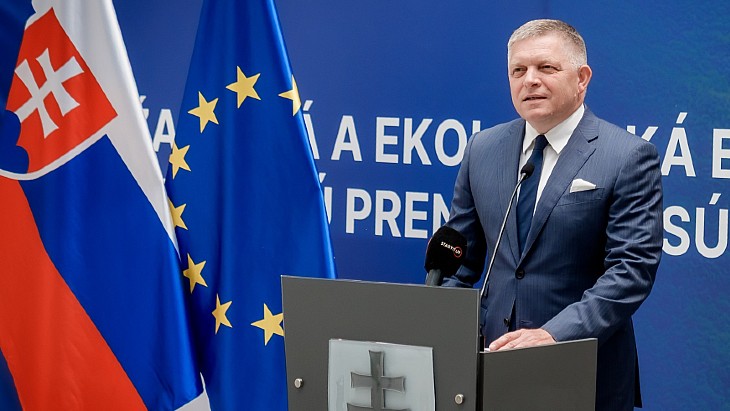
Slovenské elektrárne and Synthos Green Energy have signed a memorandum of understanding to explore the possible deployment of GE Vernova Hitachi's BWRX-300 small modular reactors - and Prime Minister Robert Fico has suggested a 1250 GW Westinghouse unit is planned for the Bohunice site.
The memorandum of understanding "aims to combine the strengths of both companies and analyse the possibilities of investment, licensing and joint development of SMR projects in Slovakia, the Czech Republic and other European countries. The memorandum also creates space for the development of regional supply chains and strengthening energy security".
Branislav Strýček, Chairman and CEO of Slovenske elektrárne, said: "We see small modular reactors as a promising option for future stable, safe and emission-free electricity production. The partnership with Synthos Green Energy will allow us to analyse the state-of-the-art SMR BWRX-300 technology in detail and to assess its potential for Slovakia in a qualified manner. In addition, we want to utilise our many years of know-how from the construction and operation of nuclear power plants to support the development of SMR in our region."
Poland's Synthos Green Energy is project developer for BWRX-300 small modular reactors (SMRs) in the region and last week also signed a letter of intent with Hungary's Hunatom in relation to the potential project development for up to 10 GE Vernova Hitachi BWRX-300 SMRs.
The BWRX-300 is a 300 MWe water-cooled, natural circulation SMR with passive safety systems that leverages the design and licensing basis of GE Vernova Hitachi Nuclear Energy's 1500 MW ESBWR boiling water reactor.
Westinghouse
The Slovak Government officially approved plans in May 2024 for a 1.2 GWe unit near the existing Bohunice nuclear power plant, with South Korea, the USA and France at the time seen as potential partners.
In a video message on social media Prime Minister Robert Fico said on Sunday: "Another important piece of news, dear friends, is that the European Commission has positively assessed the content of the draft agreement between the governments of the Slovak Republic and the USA on cooperation in the field of nuclear energy. Such inter-state agreements with a country that is not a member of the European Union and on the topic of cooperation in nuclear energy must, according to the internal rules of the European Union, undergo assessment at the level of the European Commission."
He said the US government had already approved the proposal and said the agreement was a basic prerequisite for the conclusion of another intergovernmental agreement on the construction of a new Westinghouse unit in Bohunice with an output of 1250 MW which, he said, "will be wholly owned by the Slovak Republic".
Slovakia currently has five nuclear reactors - three at Mochovce and two at Bohunice - generating half of its electricity, and it has one more at Mochovce under construction. Both plants are operated by Slovenske Elektrarne.

No comments:
Post a Comment