Key phase completed of impact assessment for Ontario Bruce C project
The planning phase of the federal integrated Impact Assessment process for Bruce Power’s planned Bruce C project has been completed, with the next phase to be the development of the Impact Statement.
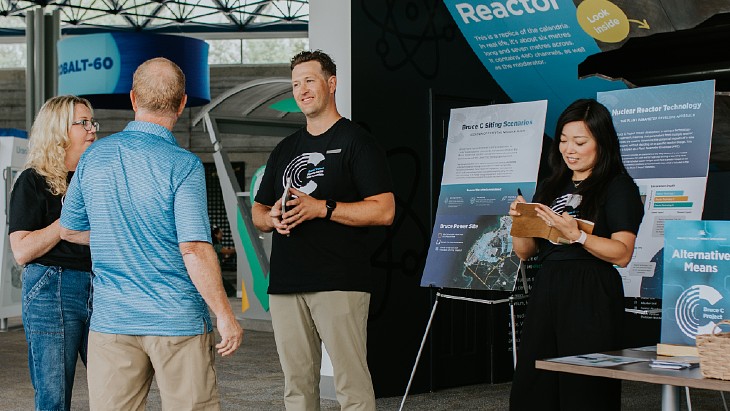
There are five stages to the Impact Assessment process. The planning phase "defines the scope of the project and provides opportunities for Indigenous people and the public to identify area of interests for the project and contribute to planning the assessment".
It also involved establishing a baseline of existing socio-economic, health and environmental data.
The next stage was started on 19 August when the Impact Assessment Agency of Canada, in collaboration with the Canadian Nuclear Safety Commission, issued the formal Notice of Commencement of Impact Assessment under the country’s Impact Assessment Act.
In the Impact Statement phase, Bruce Power said it will: document existing conditions; include Indigenous knowledge and community knowledge where provided; assess potential positive and negative effects of the project; identify ways to mitigate possible negative effects and enhance the beneficial effects of the proposed project; understand cumulative impacts through Cumulative Effects Assessment; and continue to engage with Indigenous Nations and Communities, municipalities and the public.
It added that it would "leverage the requirements identified in the Tailored Impact Statement Guidelines and conduct the assessment to evaluate the potential environmental, health, social, and economic effects of the Bruce C Project, as well as impact to Indigenous rights".
The federal government announced CAD50 million (USD36 million) of funding in February last year to support pre-development work to study the feasibility of building 4800 MWe of new generating capacity at the Bruce site in Ontario.
The multi-year federal impact assessment process including Indigenous and public engagement, environmental and socioeconomic studies, and permitting activities provides a planning tool to evaluate the potential for the Bruce C project. Although no decision has yet been made to advance a new build, it is seen as an important step to support future electricity planning and allow faster execution should a decision to proceed be made.
Weina Chong, Bruce Power Director of Regulatory Affairs, Bruce C, said: "The Bruce C Project represents a generational opportunity to support Ontario's clean energy future. By leveraging the existing Bruce Power site, we aim to provide a high-value option for expanding nuclear capacity in a way that is safe, sustainable, and aligned with Ontario's Integrated Energy plan, Energy for Generations."
Bruce Power previously applied for a licence to prepare for construction of up to four new reactors - totalling up to 4000 MWe - in 2007, but withdrew its application in 2009 as the company focused on the refurbishment of the existing eight Bruce A and B units. Those refurbishment projects are generating 22,000 direct and indirect jobs, and CAD3-4 billion in GDP in Ontario and CAD8-11 billion in Canada.
With nuclear currently responsible for 50% of Ontario's total generation and hydro contributing 24%, Ontario already has one of the cleanest grids in the world and the Energy for Generations plan published in June sees nuclear power - including required new capacity - "continuing to serve as the backbone of the province's electricity system providing the 24/7 baseload power the province's economy requires" as demand continues to rise.
Lianjiang unit 1 auxiliary building topped off
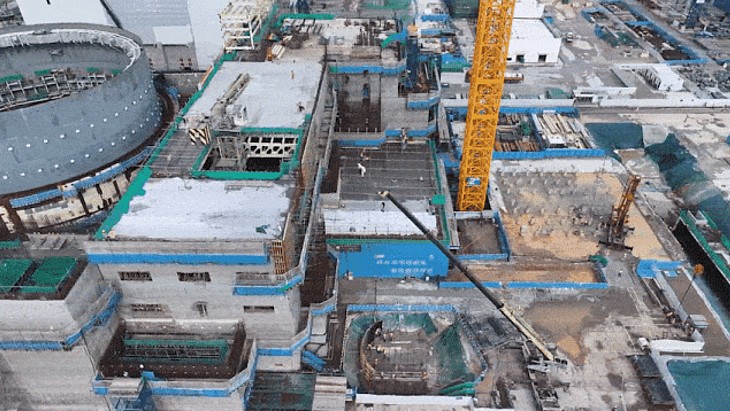
The construction of the first two 1250 MWe CAP1000 reactors - the Chinese version of the Westinghouse AP1000 - at the Lianjiang site was approved by China's State Council in September 2022. Excavation works for the units began in the same month, with the pouring of first concrete for the foundation of unit 1 starting in September 2023 and that of unit 2 in April last year. Unit 1's reactor vessel was installed in February and the unit is expected to be completed and put into operation in 2028.
Shanghai Nuclear Engineering Design and Research Institute - a subsidiary of State Power Investment Corp (SPIC) - said it established a dedicated topping out team for the ancillary building, “fully leveraging the advantages of integrated construction and installation to ensure the smooth topping-out of the main structure of the powerhouse. This provided important practical experience for the subsequent construction of nuclear power units and laid a solid foundation for the safe and high-quality construction of the Lianjiang nuclear power project”.
Once all six CAP1000 units planned at the site are completed, the annual power generation will be about 70.2 TWh, which will reduce standard coal consumption by more than 20 million tonnes, and reduce carbon dioxide emissions by more than 52 million tonnes, sulphur dioxide by about 171,000 tonnes and nitrogen oxides by about 149,000 tonnes.
Kazatomprom to lower uranium production in 2026
The national atomic company of Kazakhstan has announced plans for a roughly 10% cut in its uranium production in 2026, saying it does not view the current supply-demand balance and existing uncovered demand as sufficient to incentivise a return to its 100% levels at this time.
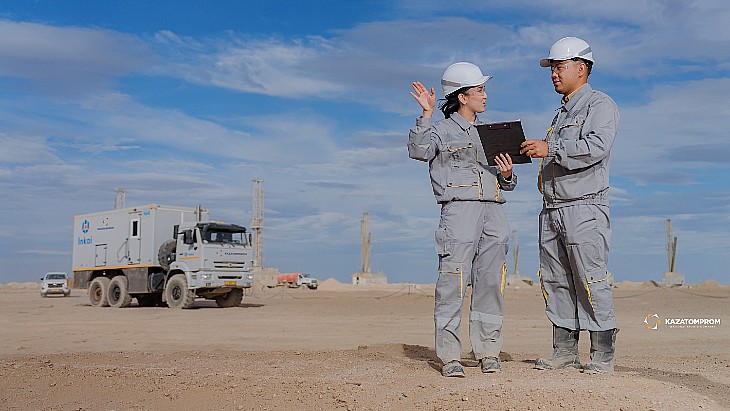
"As the world's largest producer and seller of natural uranium, Kazatomprom fully recognises the critical role the Company has in supporting the global energy transition. We remain committed to delivering long-term value to all stakeholders," Kazatomprom CEO Meirzhan Yussupov said, as the company announced its consolidated financial results for the first half of 2025.
"Kazatomprom is currently undertaking a large-scale exploration in Kazakhstan, which is a top priority for replenishing its resource base and maintaining its leading position as a global nuclear fuel supplier.
“Despite the volatility in the spot uranium market and the broader capital markets, some of which may be due to uncertainty brought by the tariff wars, uranium long-term price has remained stable at 80 US dollars per pound proving that fundamentals remain strong. However, the Company does not view the current market developments to be sufficient to return to the Company’s initial 100% levels at this time, which are now being decreased by roughly 8 million pounds, cutting about 5% of the world’s primary supply."
Kazatomprom's nominal production level (on a 100% basis) is expected to fall from 32,777 tU (around 85 million pounds U3O8) as laid out under previous Subsoil Use Agreements, to 29,697 tU. Most of the 3,000 tU reduction is attributable to production adjustments at JV Budenovskoye, the company said. Subsoil use contracts are agreements with the Kazakh government covering the production of uranium by in-situ leach methods.
The company said it "expects to exercise its downflex opportunity within the acceptable 20% deviation under the updated 2026 Subsoil Use production levels". Actual 2026 production guidance has still to be finalised, and will be provided within the 2026 operational guidance disclosure, it added.
In previous years, uncertainties in sulphuric acid supply - a key reagent in the in-situ leach process used to mine uranium in Kazakhstan - has impacted production plans, but Kazatomprom said sulphuric acid supplies for 2026 are estimated to be stable. (In-situ leach mining is also referred to as in-situ recovery).
A "robust inventory position and a disciplined sales strategy" mean that all delivery obligations will be met in full while retaining flexibility to respond quickly to market developments, the company said. It also said that Kazakhstan's plans to build nuclear power plants, which could create a substantial domestic demand in the future, were worth highlighting.
"With each plant requiring around 400 tonnes (1.04 Mlbs) of uranium annually, over the entire operational lifetime [of three plants], this may translate to a cumulative demand of 72 thousand tonnes (187.2 Mlbs). A portion of the Company’s production could be therefore allocated to national needs over time," it said.
Kazatomprom's production for the first six months of 2025 was 12,242 tU (on a 100% basis), a 13% year-on-year increase. Its whole-year production guidance for 2025 remains unchanged, at 25,000-26,500 tU (100% basis).
Final assembly under way for Akkuyu 4’s reactor vessel
Fabrication of the control assembly for the reactor vessel has begun for the fourth unit at the Akkuyu nuclear power plant in Turkey. Rosatom said it will be the 250th nuclear reactor manufactured in Russia.
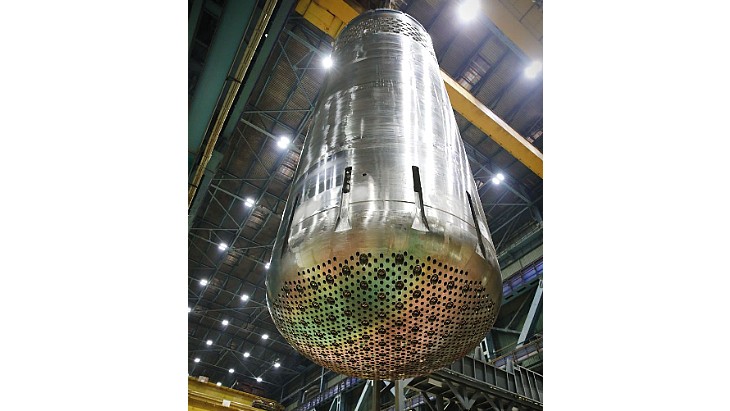
Maxim Zhidkov, the head of the Atommash plant, said engineers will "ensure that every component and element of the reactor is precisely positioned to a thousandth of a millimetre. This work verifies the reactor's operational readiness for at least six decades. It also streamlines installation at the NPP site. A successful test build stands as a testament to the excellence of Russian design and production standards".
The Atommash plant is also currently working on the reactor vessel for the second unit at the El Dabaa nuclear power plant in Egypt as well as 17 steam generators for nuclear power plants in Russia, Turkey, Egypt and India.
Igor Kotov, head of Rosatom's Mechanical Engineering division, said: "Our products have powered hundreds of nuclear plants in Russia and around the globe, bringing warmth and illumination to millions. They have also driven the creation of nuclear icebreakers ... no less ambitious projects lie ahead. Among them are the launch of the world's first IV Generation energy complex in Seversk ... and the development of a line of floating nuclear power plants."
Background
Akkuyu, in the southern Mersin province, is Turkey's first nuclear power plant. Rosatom is building four VVER-1200 reactors, under a so-called BOO (build-own-operate) model. According to the terms of the 2010 Intergovernmental Agreement between the Russian Federation and the Republic of Turkey, the commissioning of the first power unit of the nuclear power plant must take place within seven years from receipt of all permits for the construction of the unit.
The licence for the construction of the first unit was issued in 2018, with construction work beginning that year. Nuclear fuel was delivered to the site in April 2023. Turkey's Nuclear Regulatory Agency issued permission for the first unit to be commissioned in December 2023, and in February 2024 it was announced that the reactor compartment had been prepared for controlled assembly of the reactor - and the generator stator had also been installed in its pre-design position.
The aim is for unit 1 to begin supplying Turkey's energy system in the next year. When the 4800 MWe plant is completed, it is expected to meet about 10% of Turkey's electricity needs, with the aim that all four units will be operational by the end of 2028. First concrete for unit 4 was poured in August 2023.
Vattenfall to select between BWRX-300 and Rolls-Royce SMR
Sweden's Vattenfall says it has decided to choose small modular reactors for new nuclear capacity, with a shortlist of two: GE Vernova Hitachi's BWRX-300 and the Rolls-Royce SMR.
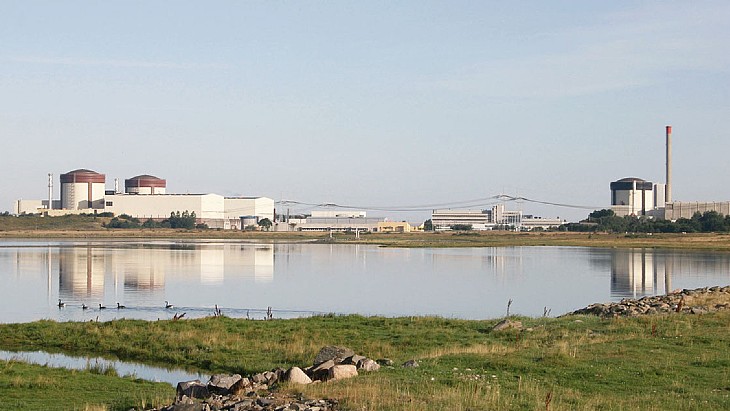
The aim is to have new nuclear capacity up and running on the Värö Peninsula, where the Ringhals nuclear power plant is located, in the early 2030s. Vattenfall says the project will be for 1.5 GW capacity - so either five BWRX-300s or three of the 500 MW Rolls-Royce SMRs.
Over the past year the two companies' small modular reactors have been assessed, as well as an alternative option of larger-scale nuclear power units from either - according to reports in June 2024 - Westinghouse, EDF or Korea Hydro & Nuclear Power (who were reported to have withdrawn in December).
Desirée Comstedt, Vice President and Head of New Nuclear at Vattenfall, said: "We have conducted a very thorough evaluation of the suppliers and reactors. It is very gratifying that we now can, after a process that began with 75 potential suppliers, go from four to two. Building a series of smaller units brings clear cost advantages; they require less space, need significantly fewer personnel, and leads to more manageable logistics. This also increases the ability during the construction phase to find, house, and transport staff, reducing the risk of increased costs."
The company said that both shortlisted SMRs have "proven technology and simplified designs that have integrated learnings from previous nuclear projects worldwide". And they both use fuel for which Vattenall has established supply chains.
Vattenfall says an application to the government for state risk-sharing is to be submitted and a final supplier selected. It said it was "already looking at the next step to build an additional 1000 MW where Ringhals 1 and 2 are currently located. Final investment decisions will be made later in the process".
The evaluation looked at technology, site and logistics and commercial aspects. Vattenfall said that the SMR designs were simplified and incorporated learnings from previous nuclear power projects around the world. It also said that none of the four reactors evaluated had been built in Europe yet and "would therefore need to be adapted to Swedish conditions to varying degrees" and would involve learning costs so it was "positive that an SMR entails a lower investment cost" and building a fleet allowed lessons to be learned from each one's construction.
"The evaluation also showed that the selected suppliers offer a relatively lower cost of electricity," Vattenfall said.
It also noted that the development of both the selected technologies was progressing in projects elsewhere, with Ontario Power Generation having taken a Final Investment Decision to build the first of a fleet of BWRX-300s, and the Czech Republic and the UK both choosing Rolls-Royce SMR for their SMR projects.
Preparations will continue for submitting permitting applications and during the autumn Vattenfall said it would continue to develop collaboration with member companies of Industrikraft, a consortium of 17 Swedish industrial companies. Several have shown an interest in making a joint investment with Vattenfall, the company said.
Sweden's six nuclear power reactors provide about 40% of its electricity. In 1980, the government decided to phase out nuclear power, but in June 2010 parliament voted to repeal this policy. The country's 1997 energy policy allowed ten reactors to operate longer than envisaged by the 1980 phase-out policy, but also resulted in the premature closure of the two-unit Barsebäck plant. In 2015, decisions were made to close four older reactors by 2020.
The change of policy to allow new nuclear capacity followed the arrival of a centre-right coalition government in 2022.
BWXT launches advanced nuclear fuel subsidiary
BWXT Advanced Fuels, LLC will be dedicated to the commercialisation of advanced nuclear fuel, such as TRISO, and will pursue partnerships to deliver commercial nuclear fuel for advanced nuclear reactors.
_29812.jpg)
"BWXT Advanced Fuels focuses on ensuring the availability of BWXT-manufactured nuclear fuel on a commercial scale by leveraging its more than 20 years of experience manufacturing TRISO fuel at its Lynchburg facility," BWX Technologies (BWXT) said.
TRISO - short for tri-structural isotropic - fuel comprises spherical kernels of enriched uranium fuel surrounded by layers of carbon and silicon carbide, giving a containment for fission products which is stable up to very high temperatures, and is the preferred fuel in several advanced reactor designs currently under development.
"Given the significant investments, expertise and ready-to-manufacture capabilities in advanced nuclear fuels, BWXT is leaning in to lead fuel supply for multiple advanced reactor developers," Joe Miller, BWXT president for Government Operations, said.
The company has recently completed the designing and manufacturing of TRISO fuel for the US Department of Defense Strategic Capabilities Office's Pele programme to develop, prototype and demonstrate transportable 1.5 MW gas-cooled reactors.
BWXT Advanced Fuels is led by Senior Director Josh Parker, who said the new company is already working to deliver the fuel for the first advanced reactors "as well as optimising the TRISO manufacturing process for the future to ensure that we can successfully drive down costs to meet the demand of industry and energy end-users".
BWXT said it is manufacturing TRISO on a commercial scale "and will be prepared ahead of the ramp in new product deliveries to meet customer demand". The company's TRISO optimisation programme is located at the BWXT Innovation Campus in Lynchburg, Virginia, and It is exploring opportunities to expand its TRISO production capability through the establishment of a new greenfield fabrication facility to meet the demand of the growing advanced reactor market.
Podcast Interviews: Amentum's Andy White, plus GLE's Nima Ashkeboussi
Topics covered by White, senior vice president of Energy and Environment International at Amentum, include:
* The change of attitudes which means that the future decommissioning process is included in the planning stages for new nuclear (and how that should reduce the number of 'surprises' when decommissioning plants)
* The company's work on new nuclear in the UK at Hinkley Point C and Sizewell C and SMRs and operations in Poland, France, the Czech Republic as well as Norway and the Netherlands
* The benefits of bringing in technology, skills and people from other sectors (and countries) to help with what looks like being a forthcoming rapid expansion of new nuclear.
* Plus Amentum's nuclear fusion work, including at ITER, and the general outlook for nuclear, and how financing and regulation can help industry meet the demand for new capacity
Also in this episode: Claire Maden's conversation with Nima Ashkeboussi, vice president government relations and communications at Global Laser Enrichment (GLE), earlier this year at the World Nuclear Fuel Cycle conference in Canada.
In it he talks about the company's laser enrichment technology, explaining how it works and the big plans the company has - including 30-years' worth of work relating to the US Department of Energy's 200,000+ tonnes of depleted uranium. GLE's plan is to re-enrich this, so cleaning up a stranded asset and in the process providing a new source of fresh fuel.
GLE began a large-scale enrichment demonstration programme in May, and the US Nuclear Regulatory Commission accepted for review the company's licensing application for a new facility to be built at Paducah, Kentucky earlier this month.
You can listen and subscribe on all major podcast platforms:
World Nuclear News podcast homepage
Apple
Spotify
Amazon Music
Episode credit: Presenter Alex Hunt. Co-produced and mixed by Pixelkisser Production
Cover Picture: Courtesy of Amentum

No comments:
Post a Comment