If it goes bust, "the odds are high that the US economy will be plunged into a recession," warned the famed economist.
By Lee Moran
Aug 25, 2025
HUFFPOST
Famed economist Paul Krugman argued it’s “likely” the United States “would be heading into a recession” right now were it not for the massive financial investment that is currently being made in the development of artificial intelligence.
“Stagflation is very much on people’s minds again, for good reason,” the 2008 winner of the Nobel Memorial Prize in Economic Sciences wrote in his Substack newsletter published Sunday.
Krugman has previously warned of the devastating effect that President Donald Trump’s tariffs and anti-immigrant crackdowns could have on the U.S. economy.
And now, he said, they are combining and “creating a significant inflationary shock” and “imposing a significant drag on economic growth.”
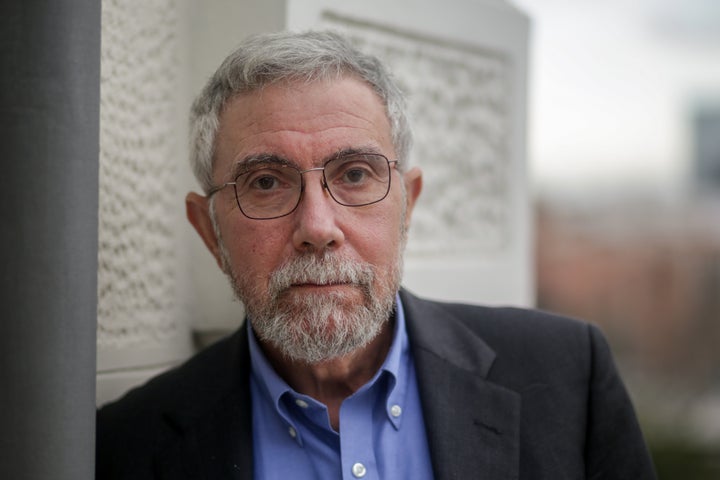
Paul Krugman, the 2008 winner of the Nobel Memorial Prize in Economic Sciences, warned of the potential of a recession in the U.S.
Europa Press News via Getty Images
If “the AI boom goes bust,” he cautioned, “the odds are high that the US economy will be plunged into a recession.”
Last week, Krugman warned how the Trump administration is about to “ICE the economy” with its deportation program, predicting how certain industries that rely on undocumented workers ― like agriculture and meatpacking ― will be decimated by the policy and ultimately lead to further inflation.
Read Krugman’s full analysis.
'American mediocrity': US economy no longer 'envy of the world' — thanks to Trump
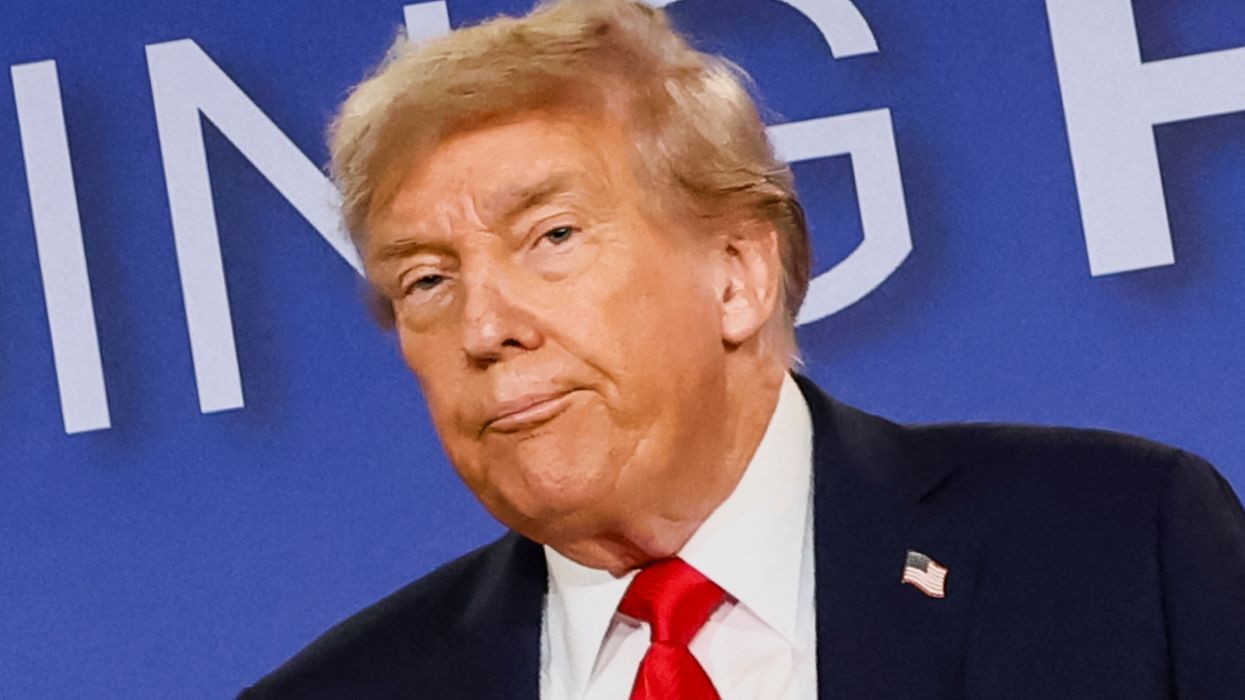
U.S. President Donald Trump looks on during a press conference with Russian President Vladimir Putin following their meeting to negotiate an end to the war in Ukraine, at Joint Base Elmendorf-Richardson, in Anch
Market and economics writer Jonathan Levin says the Trump economy is not in flames, but it is limping along when it should be doing much better.
“A lazy interpretation is that critics were simply wrong about the Trump agenda, and that his unorthodox style of governing has somehow been vindicated. But just because calamity has been avoided doesn't mean praise is warranted,” said Levin.
“The reality is that America's economy is … expanding just enough to keep the recession fears at bay yet far from its performance the last couple of years when it was widely regarded as ‘the envy of the world,’” said Levin. “Consider it a downshift from ‘American exceptionalism’ to ‘American mediocrity.’”
Levin points out that the benchmark S&P 500 Index is up 9.6 percent for the year on a total return basis, which looks like a fine performance — but the MSCI World Index Excluding the United States has surged 23.4 percent thanks to global financial, industrial and communication services companies.
“At this pace, American stocks would deliver their worst relative performance since 1993,” Levin said.
Personal consumption expenditures “have been essentially treading water this year, and growth in payrolls has basically stalled,” he adds, and while tariff rates might not ultimately end up as high as Trump threatened on "Liberation Day" in April, they’re “still poised to land at the highest in a century.” This is thwarting corporate planning, with a record 40 percent of chief financial officers in one survey saying trade and tariff policy is their biggest concern.
“With employers seemingly paralyzed, it's no wonder that consumer confidence is depressed,” said Levin.
It’s clear why the International Monetary Fund now expects the U.S. economy to grow around 1.9 percent this year, he said, even as the global economy was expected to expand about 3 percent.
“Despite extraordinary structural advantages and exciting technological advances, the U.S. economy and financial markets are mostly just muddling through 2025,” said Levin. “Be careful not to confuse that with vindication for bad policies.”
Read the report at this Kansas City Star link.
U.S. President Donald Trump looks on during a press conference with Russian President Vladimir Putin following their meeting to negotiate an end to the war in Ukraine, at Joint Base Elmendorf-Richardson, in Anch
August 23, 2025
COMMON DREAMS
Market and economics writer Jonathan Levin says the Trump economy is not in flames, but it is limping along when it should be doing much better.
“A lazy interpretation is that critics were simply wrong about the Trump agenda, and that his unorthodox style of governing has somehow been vindicated. But just because calamity has been avoided doesn't mean praise is warranted,” said Levin.
“The reality is that America's economy is … expanding just enough to keep the recession fears at bay yet far from its performance the last couple of years when it was widely regarded as ‘the envy of the world,’” said Levin. “Consider it a downshift from ‘American exceptionalism’ to ‘American mediocrity.’”
Levin points out that the benchmark S&P 500 Index is up 9.6 percent for the year on a total return basis, which looks like a fine performance — but the MSCI World Index Excluding the United States has surged 23.4 percent thanks to global financial, industrial and communication services companies.
“At this pace, American stocks would deliver their worst relative performance since 1993,” Levin said.
Personal consumption expenditures “have been essentially treading water this year, and growth in payrolls has basically stalled,” he adds, and while tariff rates might not ultimately end up as high as Trump threatened on "Liberation Day" in April, they’re “still poised to land at the highest in a century.” This is thwarting corporate planning, with a record 40 percent of chief financial officers in one survey saying trade and tariff policy is their biggest concern.
“With employers seemingly paralyzed, it's no wonder that consumer confidence is depressed,” said Levin.
It’s clear why the International Monetary Fund now expects the U.S. economy to grow around 1.9 percent this year, he said, even as the global economy was expected to expand about 3 percent.
“Despite extraordinary structural advantages and exciting technological advances, the U.S. economy and financial markets are mostly just muddling through 2025,” said Levin. “Be careful not to confuse that with vindication for bad policies.”
Read the report at this Kansas City Star link.
Sex Workers Already Predicted There's A Recession Coming — Here's How They Know


Jamie Davis Smith
Sun 24 August 2025
While some people anxiously watch the stock market for signs of a recession, others look for more subtle cues that the economy is in trouble.
One of them is Catherine De Noire, a manager of a legal brothel, a Ph.D. candidate in organizational psychology and an influencer. When business at her brothel unexpectedly dips, De Noire takes it as a sign that the economy is in trouble.
Although De Noire is based in Europe, she believes that economic upheaval in the United States “triggers huge uncertainty” across the pond because of America’s global influence. De Noire first noticed a decline in business right after Donald Trump was elected in November 2024, as Americans and the rest of the world anticipated upheaval.
Strippers in the U.S. are also feeling the pinch. Dancer and influencer Vulgar Vanity said that when she first started dancing in 2022, she could earn six figures just by dancing during a handful of big events in Austin, such as the Formula 1 Grand Prix and South by Southwest music festival. This year is different.
“I didn’t even bother working South by Southwest because the first Friday night I attempted to work, I walked into a completely empty club and didn’t make any money at all,” she said.
Vanity also says that many of her regular customers aren’t tipping at all or tipping less than half of what they used to. She is quick to point out that she is just one dancer and “obviously not an economist,” but she notes that other dancers and tipped workers are also hurting. Her theory is that her customers are no longer tipping as generously because of rising costs and economic uncertainty. Vanity is worried that this means we are on the verge of a recession or full-blown depression.

The Brothel Index
According to De Noire, business at her brothel usually picks up in the spring once people give up on their New Year’s resolutions and recover from holiday spending. But this year, business is down. She attributes the “huge dip” in earnings at her brothel to customers feeling insecure about the economy.
“There are significantly fewer clients coming in, and the sex workers are reporting noticeably lower earnings,” she said. Although De Noire emphasizes that the top sex workers at her brothel are still earning more compared to the general population, she said some of the highest earners at her brothel are earning about half of what they did during the same time last year.
“We’re seeing clients come in less often, try to negotiate lower prices or stop visiting altogether. We’re also hearing from our workers that more clients are going for the cheapest possible service,” she said.
According to De Noire, this suggests that people are saving money or reallocating their spending toward things they see as more essential, likely because they’re preparing for challenging times ahead.
Legal brothels in the U.S. are seeing a similar trend, according to Andrew Lokenauth, a data analyst and founder of BeFluentInFinance.com. He explains that revenue at legal brothels in Nevada is down roughly 20% since last quarter. “My research shows this correlates strongly with discretionary spending trends,” indicating a recession is likely.
The Stripper Index
Strippers are often the first ones to notice a downturn in the economy.Dancers are “obviously not a priority or household necessity” and “are the first to feel it because we’re the first ones tossed aside,” Vanity said.
“The ‘stripper index’ is one of those odd but oddly effective indicators” of economic health, said David Kindness, a certified public accountant and finance expert. It tracks how much strippers are earning and how often customers are going to strip clubs, he explained.
“When tips slow down and foot traffic thins out, it often means people are holding onto their extra cash,” Kindness explained. According to Lokenauth, Vanity isn’t the only dancer feeling the squeeze, and that’s not a good sign. “Strip club revenue in Vegas is down about 12%,” which could indicate we are headed for a recession, Lokenauth said.
The Beer Index
What type of beer people drink is a “pretty good indicator” of whether a recession is on the horizon, said Jack Buffington, an assistant professor of supply chain management at the Daniels College of Business at the University of Denver.
“Beer is a discretionary spend and a social spend,” so people cut back on how much they spend on beer when they are worried about the economy, he explained. Since it’s much less expensive to pick up a six-pack than to go out for draft beers, how much money people are spending on draft beer, and pricey craft beers in particular, is a harbinger of a recession.
“Craft beer sales are way down,” potentially indicating a recession is likely, Buffington said.

The Men’s Underwear Index
In 2008, former Federal Reserve Chairman Alan Greenspan observed that declining sales of men’s underwear likely meant we were headed for a recession. “There’s a concerning trend. Sales dropped roughly 6% over these past months,” Lokenauth says. “Guys only skip replacing underwear when they’re worried about money,” so we may be in trouble, he says.

The Hemline Index
Hemlines “rise with optimism, fall with doubt,” Shahnazari said. “Although absurd, this psychological anomaly quantifies consumer confidence and social mood,” he explained. Historically, shorter hemlines meant economic optimism, and longer hemlines signaled economic trouble. For example, the happy-go-lucky flappers in the Roaring Twenties wore short dresses, but hemlines got longer during the Great Depression in the 1930s.
Currently, the Hemline Index is sending mixed signals because recent designer collections are featuring both long and short hems, Lokenauth said. Thanks to fast fashion, hemlines aren’t as clear an indicator as they once were, he explains. However, given the accuracy of the Hemline Index in the past, he thinks it’s worth keeping an eye on the runways next season.
The Brunette Index
If you notice fewer blond hairdos, it could be a sign a recession is looming. “Stylists are often the first to notice economic shifts, and lately, many have mentioned clients asking for easier and cheaper options,” Kindness said.
Clients may shift from high-maintenance hairstyles to lower-maintenance natural looks as a way to save money, Kindness explained. There are signs spending at salons is down. If you see formerly blond “recession brunettes” out and about, it might be a sign a recession is coming, he said.
Sun 24 August 2025
HUFFPOST
While some people anxiously watch the stock market for signs of a recession, others look for more subtle cues that the economy is in trouble.
One of them is Catherine De Noire, a manager of a legal brothel, a Ph.D. candidate in organizational psychology and an influencer. When business at her brothel unexpectedly dips, De Noire takes it as a sign that the economy is in trouble.
Although De Noire is based in Europe, she believes that economic upheaval in the United States “triggers huge uncertainty” across the pond because of America’s global influence. De Noire first noticed a decline in business right after Donald Trump was elected in November 2024, as Americans and the rest of the world anticipated upheaval.
Strippers in the U.S. are also feeling the pinch. Dancer and influencer Vulgar Vanity said that when she first started dancing in 2022, she could earn six figures just by dancing during a handful of big events in Austin, such as the Formula 1 Grand Prix and South by Southwest music festival. This year is different.
“I didn’t even bother working South by Southwest because the first Friday night I attempted to work, I walked into a completely empty club and didn’t make any money at all,” she said.
Vanity also says that many of her regular customers aren’t tipping at all or tipping less than half of what they used to. She is quick to point out that she is just one dancer and “obviously not an economist,” but she notes that other dancers and tipped workers are also hurting. Her theory is that her customers are no longer tipping as generously because of rising costs and economic uncertainty. Vanity is worried that this means we are on the verge of a recession or full-blown depression.
The theory behind the "lipstick index" is that when money is tight, consumers substitute costly purchases with cheap luxuries like lipstick. PeopleImages via Getty Images
Are these astute women onto something? Indicators like a decline in business at brothels, lower tips for strippers and other nontraditional measures of economic health “have a measure of validity but may be more coincident indicators than leading ones,” said Marta Norton, a chief investment strategist at Empower. While Norton finds this type of anecdotal evidence interesting, she says she looks at more traditional sources of data, especially corporate earnings and the stock market, to predict if a recession is in our future. By those traditional measures, “We may be slowing, but we aren’t facing a looming recession. Yet,” she said. De Noire believes that the tariffs Trump announced on what he called “Liberation Day” will “definitely contribute to a further decline and recession.”
Nevertheless, the past has shown that nontraditional measures can tell us a lot about the economy’s health. Here are some of the anecdotal indicators of the economy about whether a recession is likely.
Are these astute women onto something? Indicators like a decline in business at brothels, lower tips for strippers and other nontraditional measures of economic health “have a measure of validity but may be more coincident indicators than leading ones,” said Marta Norton, a chief investment strategist at Empower. While Norton finds this type of anecdotal evidence interesting, she says she looks at more traditional sources of data, especially corporate earnings and the stock market, to predict if a recession is in our future. By those traditional measures, “We may be slowing, but we aren’t facing a looming recession. Yet,” she said. De Noire believes that the tariffs Trump announced on what he called “Liberation Day” will “definitely contribute to a further decline and recession.”
Nevertheless, the past has shown that nontraditional measures can tell us a lot about the economy’s health. Here are some of the anecdotal indicators of the economy about whether a recession is likely.
The Brothel Index
According to De Noire, business at her brothel usually picks up in the spring once people give up on their New Year’s resolutions and recover from holiday spending. But this year, business is down. She attributes the “huge dip” in earnings at her brothel to customers feeling insecure about the economy.
“There are significantly fewer clients coming in, and the sex workers are reporting noticeably lower earnings,” she said. Although De Noire emphasizes that the top sex workers at her brothel are still earning more compared to the general population, she said some of the highest earners at her brothel are earning about half of what they did during the same time last year.
“We’re seeing clients come in less often, try to negotiate lower prices or stop visiting altogether. We’re also hearing from our workers that more clients are going for the cheapest possible service,” she said.
According to De Noire, this suggests that people are saving money or reallocating their spending toward things they see as more essential, likely because they’re preparing for challenging times ahead.
Legal brothels in the U.S. are seeing a similar trend, according to Andrew Lokenauth, a data analyst and founder of BeFluentInFinance.com. He explains that revenue at legal brothels in Nevada is down roughly 20% since last quarter. “My research shows this correlates strongly with discretionary spending trends,” indicating a recession is likely.
The Stripper Index
Strippers are often the first ones to notice a downturn in the economy.Dancers are “obviously not a priority or household necessity” and “are the first to feel it because we’re the first ones tossed aside,” Vanity said.
“The ‘stripper index’ is one of those odd but oddly effective indicators” of economic health, said David Kindness, a certified public accountant and finance expert. It tracks how much strippers are earning and how often customers are going to strip clubs, he explained.
“When tips slow down and foot traffic thins out, it often means people are holding onto their extra cash,” Kindness explained. According to Lokenauth, Vanity isn’t the only dancer feeling the squeeze, and that’s not a good sign. “Strip club revenue in Vegas is down about 12%,” which could indicate we are headed for a recession, Lokenauth said.
The Beer Index
What type of beer people drink is a “pretty good indicator” of whether a recession is on the horizon, said Jack Buffington, an assistant professor of supply chain management at the Daniels College of Business at the University of Denver.
“Beer is a discretionary spend and a social spend,” so people cut back on how much they spend on beer when they are worried about the economy, he explained. Since it’s much less expensive to pick up a six-pack than to go out for draft beers, how much money people are spending on draft beer, and pricey craft beers in particular, is a harbinger of a recession.
“Craft beer sales are way down,” potentially indicating a recession is likely, Buffington said.
Since it’s much less expensive to pick up a six-pack than to go out for draft beers, how much money people are spending on draft beer is a harbinger of a recession. Kevin Trimmer via Getty Images
The Men’s Underwear Index
In 2008, former Federal Reserve Chairman Alan Greenspan observed that declining sales of men’s underwear likely meant we were headed for a recession. “There’s a concerning trend. Sales dropped roughly 6% over these past months,” Lokenauth says. “Guys only skip replacing underwear when they’re worried about money,” so we may be in trouble, he says.

The Lipstick Index
The “lipstick index” “illustrates a seemingly contradictory consumer pattern during economic recessions,” explains Kevin Shahnazari, a data analyst and co-founder of FinlyWealth.
The Lipstick Index doesn’t just apply to lipstick. The theory behind the Lipstick Index is that when money is tight, consumers substitute costly purchases with cheap luxuries like lipstick.
“In the 2008 recession, cosmetics sales increased, showing that even in tough times, individuals crave tiny comfort purchases that give psychological boosts without a hefty financial outlay,” Shahnazari explained.
For example, someone might skip a costly facial but buy a $10 lipstick. Or they might skip an expensive dinner out but still buy a $6 latte or a box of expensive chocolates.
Today, cosmetics sales are strong. “MAC and Sephora sales are up about 15%, not a great sign for the broader economy,” Lokenauth said.Moreover, there “is a quiet trend towards lower-cost, no-frills beauty,” and cosmetic sales in drugstores have risen over the past few months, Shahnazari said. This could be a sign we are headed for a recession.
The Online Dating Index
How people date can also indicate whether or not we are headed for a recession. Paid subscriptions for online dating services have fallen, even though the total number of users has risen, Shahnazari said. “Free and lower-tier use of dating apps has risen by about 12%, indicating social and financial stress,” he explained.
Related: Hair Stylists Are Bracing For A Recession — And Noticing A Hot New Trend With Clients
Additionally,increased use of online dating apps can be a sign that people are looking for “cheaper entertainment and companionship instead of expensive nights out,” Lokenauth said. “I’ve tracked this metric for years, and it’s scarily accurate,” he added.
The “lipstick index” “illustrates a seemingly contradictory consumer pattern during economic recessions,” explains Kevin Shahnazari, a data analyst and co-founder of FinlyWealth.
The Lipstick Index doesn’t just apply to lipstick. The theory behind the Lipstick Index is that when money is tight, consumers substitute costly purchases with cheap luxuries like lipstick.
“In the 2008 recession, cosmetics sales increased, showing that even in tough times, individuals crave tiny comfort purchases that give psychological boosts without a hefty financial outlay,” Shahnazari explained.
For example, someone might skip a costly facial but buy a $10 lipstick. Or they might skip an expensive dinner out but still buy a $6 latte or a box of expensive chocolates.
Today, cosmetics sales are strong. “MAC and Sephora sales are up about 15%, not a great sign for the broader economy,” Lokenauth said.Moreover, there “is a quiet trend towards lower-cost, no-frills beauty,” and cosmetic sales in drugstores have risen over the past few months, Shahnazari said. This could be a sign we are headed for a recession.
The Online Dating Index
How people date can also indicate whether or not we are headed for a recession. Paid subscriptions for online dating services have fallen, even though the total number of users has risen, Shahnazari said. “Free and lower-tier use of dating apps has risen by about 12%, indicating social and financial stress,” he explained.
Related: Hair Stylists Are Bracing For A Recession — And Noticing A Hot New Trend With Clients
Additionally,increased use of online dating apps can be a sign that people are looking for “cheaper entertainment and companionship instead of expensive nights out,” Lokenauth said. “I’ve tracked this metric for years, and it’s scarily accurate,” he added.
The Hemline Index
Hemlines “rise with optimism, fall with doubt,” Shahnazari said. “Although absurd, this psychological anomaly quantifies consumer confidence and social mood,” he explained. Historically, shorter hemlines meant economic optimism, and longer hemlines signaled economic trouble. For example, the happy-go-lucky flappers in the Roaring Twenties wore short dresses, but hemlines got longer during the Great Depression in the 1930s.
Currently, the Hemline Index is sending mixed signals because recent designer collections are featuring both long and short hems, Lokenauth said. Thanks to fast fashion, hemlines aren’t as clear an indicator as they once were, he explains. However, given the accuracy of the Hemline Index in the past, he thinks it’s worth keeping an eye on the runways next season.
The Brunette Index
If you notice fewer blond hairdos, it could be a sign a recession is looming. “Stylists are often the first to notice economic shifts, and lately, many have mentioned clients asking for easier and cheaper options,” Kindness said.
Clients may shift from high-maintenance hairstyles to lower-maintenance natural looks as a way to save money, Kindness explained. There are signs spending at salons is down. If you see formerly blond “recession brunettes” out and about, it might be a sign a recession is coming, he said.

No comments:
Post a Comment