NEW ZEALAND
Port of Tauranga Slams Latest Delay in Approving Expansion
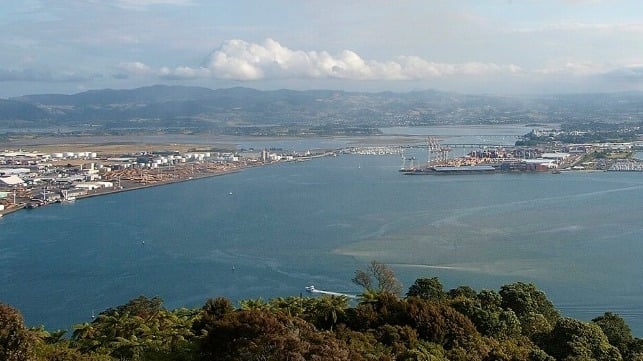
New Zealand’s biggest port, Tauranga, has slammed further delays in the long-delayed review of large-scale improvements to its harbor, which it says would pump millions of dollars into the country’s economy.
The project has been in the consenting system for more than six years. Tauranga’s application for its greenlighting under the Fast-track Approvals Act was halted by a judicial review due to a "legislative drafting error" that left the words “Mount Maunganui wharves” out of the project description.
A fast-track panel, which was intended to commence sittings on September 1 to review the project and potentially approve it, has indefinitely been put on hold by the High Court.
Port of Tauranga has described the decision as both “ludicrous” and “frustrating”, and it says the delays in approving the project are reaching crisis point. The port is being forced to turn away shipping services due to a lack of berth capacity, and New Zealand is facing the risk of being bypassed by international services, the port warns.
Last month, for instance, the port was forced to decline a proposed new service to the Americas that would have saved New Zealand importers and exporters millions per year in freight costs. A report by the NZ Institute of Economic Research has also estimated that, without the container berth extension, the country will miss out on NZ$485 million to NZ$749 million of annual gross domestic product by 2032.
“It is very frustrating that in the midst of significant interest from international container lines, we are unable to support new trade opportunities because we don’t have the berth space,” said Julia Hoare, Port of Tauranga Chair. “We have also lost the flexibility to readily manage congestion when ships turn up off-schedule. When arrivals bunch up, we’re forced to further delay ships at anchor and productivity decreases."
Currently, the port has a dedicated container terminal at Sulphur Point, with bulk cargo wharves at Mount Maunganui, both of which are connected by the Tauranga Harbor Bridge. The Sulphur Point container berths are operating at almost full capacity due to demand and the growing global trend that is seeing the building of larger ships.
The new project aims to convert existing cargo storage land into usable berths on both sides of the harbor, growing the port's capacity. The first stage of Sulphur Point extension will add 285 meters of berth to the south of the existing wharves and will allow the port to expand capacity from the current 1.2 million TEU to 2 million TEU annually. This will enable the terminal to accommodate three or four ships at once, instead of the current two.
The Mount Maunganui expansion involves a berth extension of 315 meters (plus mooring dolphins), a development that is aimed at relieving capacity pressure and allowing for the future replacement of the oldest, original part of the port, midway along the Mount wharves.
Despite the controversies facing the Stella Passage project, Tauranga has had stellar performance over the past financial year. New Zealand’s busiest port posted a seven percent increase in total trade to 25.3 million tonnes with container volumes increasing by 5.3 percent to 1.2 million TEUs. During the year, the port saw its profits hit NZ$126 million, a 23% increase year over year.
German Seaports Eye Defense Funding to Build Infrastructure
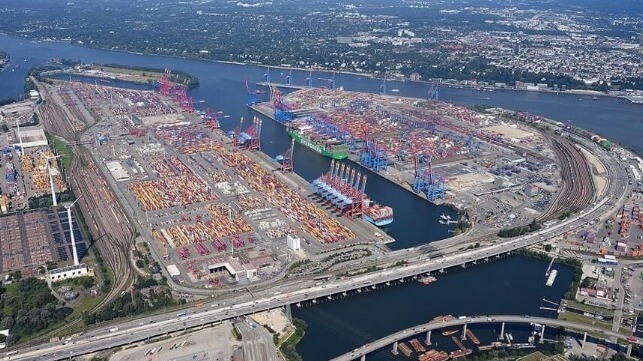
As Europe ramps up funding for its defense, German ports want to see some of the new resources used to strengthen transport infrastructure against potential military attacks. In a recent letter to the German Defense Minister Boris Pistorius, the Central Association of German Seaport Operators (ZDS) emphasized that ports form the first line of attack in a war scenario. In addition, ports are critical in military deployment. In an emergency, materials and soldiers of the German military and NATO partners would have to be moved through seaports.
ZDS estimates that an initial $3.5 billion is needed to ready German ports for wartime emergencies. “We must prepare for this, even if we hope that it never comes to a real emergency. History has taught us this,” said ZDS. The funding should be part of the defense budget and utilized to secure vulnerable port areas and associated infrastructure. These include quay walls, cyber systems and railway facilities. ZDS recommended a dual-use approach for the funding, catering for both civilian and military needs.
Germany’s defense budget is poised to more than double until 2029, from about $72 billion in 2025 to more than $177 billion in the next four years. Part of the funds are earmarked for expanding transport infrastructure, especially roads and railways that are already considered as militarily relevant. With the ZDS proposal, the funding would also be extended to ports. Some of Germany’s most important seaports by cargo throughput include Hamburg, Bremerhaven, Wilhelmshaven and Rostock.
Since Russia invaded Ukraine in 2022, Germany has responded by strengthening the capabilities of its military. This has meant defense preparations for potential Russian aggression. This week, German media carried reports that the federal government is finalizing a military railway system to support NATO’s eastern flank. The exercise includes mapping critical infrastructure sites that would be prioritized in case of an attack.
Separately, ZDS has also been highlighting the aging port infrastructure in Germany. New climate regulations and shifts in global trade are putting pressure on the shipping industry to transform. Unfortunately, the financing availed to ports in Germany has been criticized as insufficient for any meaningful development, and ZDS says that the needs come to about $17 billion. Currently, the federal government pays the states around $45 million annually for seaports. However, there have been some milestones, with the federal government last month announcing $467 million in funding to ports. The investment will go into modernization and building infrastructure for green shipping.
Top image: Carsten Steger / CC BY SA 4.0


No comments:
Post a Comment