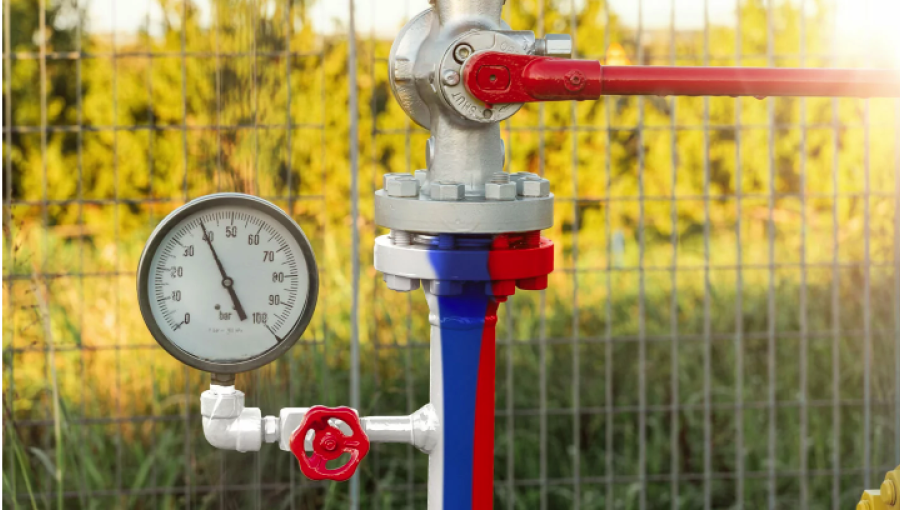
Russia remained the fourth-largest supplier of natural gas to the EU in 2025, exporting nearly 38bn cubic metres despite ongoing efforts by the bloc to reduce energy reliance on Moscow following its full-scale invasion of Ukraine, according to data published by the Brussels-based think tank Bruegel.
The figures show that Russian companies exported approximately 37.99bn cubic metres of natural gas to EU countries last year. While this marks a steep decline from pre-war levels — when Russia supplied over 40% of the EU’s gas — it still placed the country just behind Norway (97.1bn cubic metres), the US (82.9bn cubic metres), and Algeria (38.6bn cubic metres) in total annual deliveries.
Overall, the EU imported 313.6bn cubic metres of gas in 2025, a 5.3% increase compared to 2024, driven largely by higher demand during an unusually cold winter across northern and central Europe. According to Bruegel, the increase in gas consumption — coupled with stable LNG imports — helped offset lower domestic production and modest declines in renewable output during the cold season.
On January 8, Russian state-owned energy group Gazprom reported record withdrawals from European underground gas storage facilities, as low temperatures swept across the continent. Data from Gas Infrastructure Europe (GIE) confirmed that January 5 and 6 saw the highest gas withdrawal levels ever recorded for that period. Similar records were observed over the holiday period on December 24, 25, 26, and 31.
"Europe is experiencing peak demand levels due to extreme cold," Gazprom said in a statement. By January 6, gas reserves in EU storage facilities had fallen below 60%, according to GIE figures.
Despite the withdrawals, as IntelliNews Lambda reported, Europe's underground gas storage facilities remain unusually full for this point in the heating season, with inventories at 85.1% on January 7, according to aggregated data from GIE. Increased drawdowns have been offset by robust gas imports and decreased industrial demand due to Europe’s deindustrialisation .
Despite sanctions, import bans, and a concerted diversification strategy led by Brussels, pipeline gas from Russia continues to reach Europe through transit routes via Turkey and Ukraine, and LNG from Russian ports such as Yamal.
An analysis published on January 8 by environmental NGO Urgewald, based on figures from commodities analytics firm Kpler, shows that 15mn tonnes of LNG from the Yamal terminal deep in Russia’s Arctic regions reached EU ports in 2025 – three quarters (75.4%) more than was exported the previous year and three quarters (76.1%) of Yamal’s total global exports. The trade was worth an estimated €7.2bn ($8.4bn) to the Kremlin.
The persistence of Russian supply reflects both contractual obligations and the continued price competitiveness of some Russian gas, particularly in southeastern European markets.
The European Commission intends to ban imports of Russian gas by January 1, 2027 under the REPowerEU strategy. However, analysts note that the sharp rise in demand during winter months continues to expose the bloc’s vulnerability to supply shocks.
“Europe has made significant progress in diversifying away from Russian gas, but the data shows the transition is not yet complete,” said Bruegel. “Physical supply constraints and market realities still leave room for Russian volumes.”

No comments:
Post a Comment