HYDRO POWER VS DROUGHT
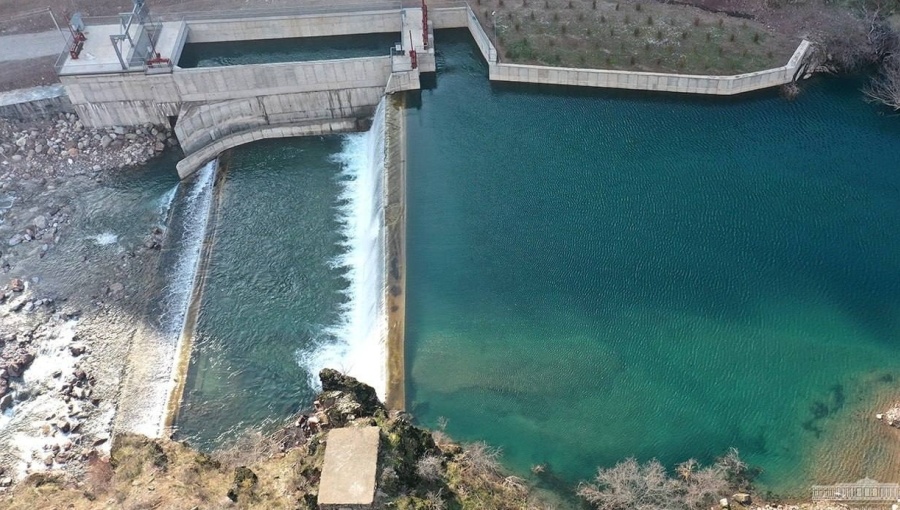
An acute water shortage in Uzbekistan seems to have a silver lining. The brewing crisis is forcing officials to speedily embrace solar and wind power and rethink the country’s hydropower strategy to make it more water-efficient.
Uzhydroenergo, a state-run electricity entity, reported on January 5 that hydropower production plummeted by 20% in 2025 to 6.5bn kilowatt hours (kWh). By comparison, Uzbekistan generated 8.1 kWh from hydropower in 2024.
Officials attributed the drop in production to a burgeoning water deficit. Energy Minister Zhurabek Mirzamakhmudov stated that inflow from transboundary rivers, combined with the volumes contained in reservoirs during 2025, was roughly 35% lower than the long-term average value, according to a report distributed by UPL news agency. Low water levels on rivers limited the ability of large hydro plants to generate electricity, Mirzamakhmudov added.
According to an Uzhydroenergo statement, the company made the best of a difficult situation by achieving significant efficiencies in operations.
“The company's internal statistics point to a paradoxical situation: against a backdrop of an overall 33 percent decrease in resources during 2025, the introduction of new management approaches and modernisation efforts temporarily resulted in periods of increased efficiency,” Uzhydroenergo said.
The share of hydropower as part of overall electricity production in Uzbekistan has nosedived in recent years. It dropped from 10% in 2024 to 7.3% last year. Earlier, in the 2000s, hydropower accounted for as much as 19% of overall annual electricity generation.
While the country grapples with water woes, total electricity production generated by renewable resources rose by 29% in 2025 over the previous year, thanks to the rapid expansion of solar and wind power capacity, according to the Ministry of Energy. Solar and wind were responsible for generating about 10.5 kWh of electricity in 2025, equivalent to a more than two-fold increase compared to the previous year’s total.
Electricity generation from all sources increased by 6% in 2025 over the previous year’s totals, according to Energy Ministry data.
To make more efficient use of dwindling water resources, Mirzamakhmudov indicated that the government is exploring a strategic shift away from reliance on large-scale hydropower plants. Instead, officials are mulling the deployment of micro hydroelectric generators across the more than 149,669 kilometres (93,000 miles) of canals and irrigation systems in the country. Such a strategy could expand electricity supplies in rural areas without reducing water supplies needed for agricultural production. Micro generators can cost as little as a couple of hundred dollars each.
This article first appeared on Eurasianet here.

No comments:
Post a Comment