
Venezuela frees several high-profile opposition figures and activists
Venezuela released a "significant number" of high-profile opposition figures, activists and journalists in a gesture to seek peace, just days after the capture of Nicolás Maduro.
Venezuela released several imprisoned high-profile opposition figures on Thursday in what Caracas described as a gesture to "seek peace" less than a week after US forces captured Nicolás Maduro in a military operation in Caracas.
In the interview on Fox News on Thursday night, US President Donald Trump praised the government of acting President Delcy Rodríguez, saying: "They've been great ... Everything we've wanted, they've given us."
Jorge Rodríguez, brother of the acting president and head of Venezuela's National Assembly, said they would free a "significant number" of people.
"Consider this a gesture by the (Venezuelan) government, which is broadly intended to seek peace," Jorge Rodríguez announced.
The US government and Venezuela's opposition have long demanded the widespread release of imprisoned politicians, critics and members of civil society, including foreign citizens.
Who was released on Thursday?
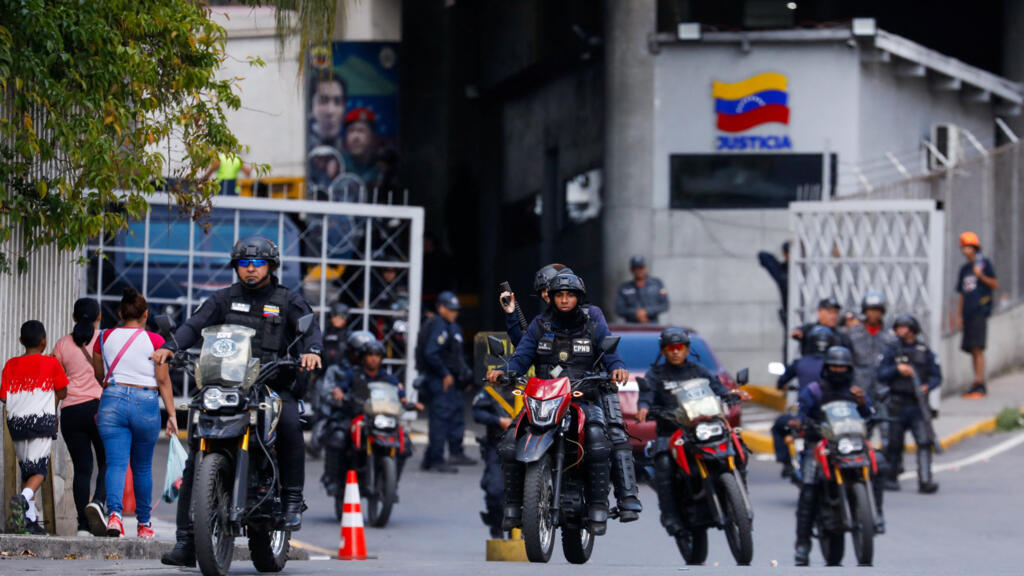
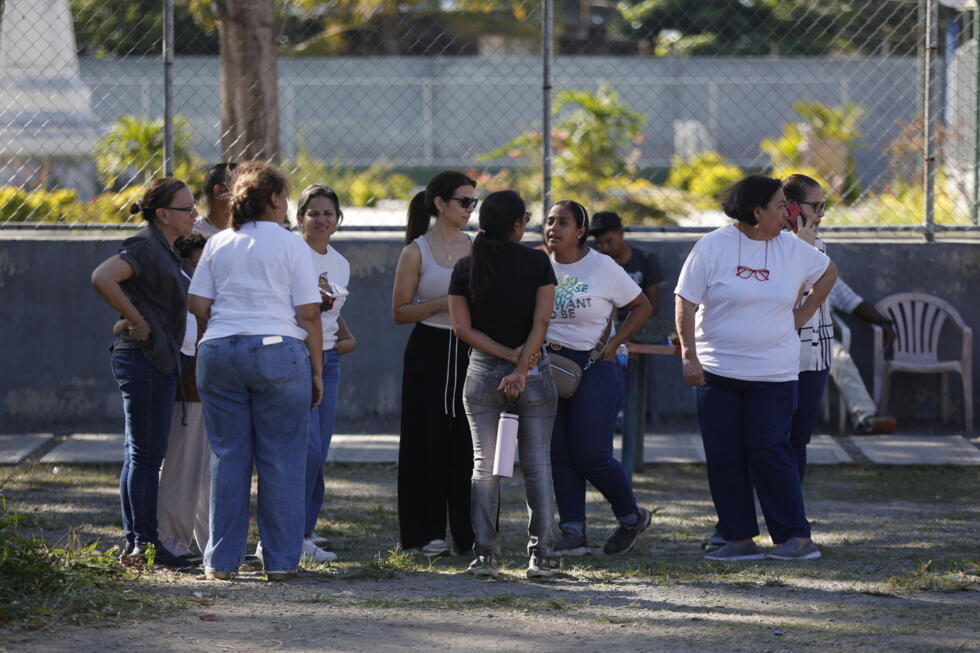
As the news of the release broke on Thursday, families of detainees rushed to prisons across the country, seeking information on their loved ones.
Among those released was Biagio Pilieri, an opposition leader who was part of Nobel Peace Prize winner María Corina Machado's 2024 presidential campaign.
Also freed was Enrique Márquez, a former electoral authority and candidate in the 2024 presidential election.
Videos posted by journalists on social media show Márquez and Pilieri embracing people on the streets outside the prison.
Five Spanish citizens, including the prominent Venezuelan-Spanish lawyer and human rights activist Rocío San Miguel, were also released in the afternoon.
Further reports on Thursday night claimed more detainees were freed.
Venezuela's government has typically released political prisoners at times of tension to signal openness to dialogue. However, Caracas insists it does not hold prisoners for political reasons.
As of late Thursday night, it was still unclear how many people had been released or whether more would walk free.
Trump cancels ‘second wave of attacks’
against Venezuela after prisoner release
President Donald Trump on Friday said he cancelled a previously expected second wave of attacks on Venezuela after the country's transitional authorities cooperated with the US following the capture over the weekend of Nicolas Maduro and released large numbers of political prisoners.
Issued on: 09/01/2026
By: FRANCE 24
01:52
US President Donald Trump said Friday he called off a second wave of attacks on Venezuela after securing cooperation with the new leadership, which began releasing prisoners nearly a week after Washington forcibly removed the leftist president.
The United States was quickly forging ahead on Venezuela with Trump meeting oil executives, whom he says he wants to enrich, and US diplomats visiting Caracas to look at reopening the embassy shuttered for years.
Trump suggested he may use force again to get his way in Venezuela, which has the world's largest proven oil reserves.
"Venezuela is releasing large numbers of political prisoners as a sign of 'Seeking Peace,'" Trump wrote on his Truth Social platform.
"Because of this cooperation, I have cancelled the previously expected second Wave of Attacks," he said.
The United States on Friday also announced that it had seized another tanker near Venezuela as it enforces an oil blockade as Washington ensures it holds undisputed power over the country's key export.
Trump said that oil companies promised to invest $100 billion in Venezuela, whose oil infrastructure is creaky after years of mismanagement and sanctions.
Prisoners' release
Venezuela began releasing prisoners on Thursday in the first such gesture since US forces removed and detained president Nicolas Maduro in a deadly January 3 raid, with his deputy Delcy Rodriguez taking over.
Former Venezuelan opposition candidate Enrique Marquez -- who opposed Maduro in the contested 2024 presidential election -- was among those released Thursday.
Interim leader Rodriguez's brother, parliament speaker Jorge Rodriguez, said "a large number of Venezuelan and foreign nationals" were being immediately freed for the sake of "peaceful coexistence."
Venezuelan rights NGO Foro Penal earlier estimated that more than 800 political prisoners were in the country's jails.
The White House quickly took credit for winning the prisoners' freedom.
Trump had earlier played down democracy as a motivating factor for the attack, despite years of the United States saying that Maduro was illegitimate elections were filled with fraud.
But Trump said he would meet next week with Venezuelan opposition leader Maria Corina Machado, whom he earlier brushed aside as a "very nice woman" who lacked the "respect" to lead Venezuela.
"I understand she's coming in next week sometime, and I look forward to saying hello to her," Trump told Fox News host Sean Hannity in an interview.
Trump had earlier voiced jealousy that Machado won the latest Nobel Peace Prize and he has indicated she might give him her award when they meet.
US diplomats visit
Senior US diplomats visited Caracas on Friday to look at reopening the embassy which was shuttered in March 2019, shortly after the United States and many of its allies declared Maduro to be illegitimate.
John McNamara, the top US diplomat in neighboring Colombia, and other personnel "traveled to Caracas to conduct an initial assessment for a potential phased resumption of operations," a US official said on customary condition of anonymity.
Maduro was seized in a special forces raid accompanied by airstrikes, operations that left 100 people dead, according to Caracas.
US forces took Maduro and his wife Cilia Flores to New York to face trial on drugs charges.
Trump said the United States would "run" the Caribbean country for a transitional period and tap into its oil reserves for years.
Delcy Rodriguez insisted Thursday her country was "not subordinate or subjugated."
"Nobody surrendered. There was fighting for the homeland" when the US forces attacked, she said during a ceremony for the Venezuelans killed.
Trump announced a plan earlier this week for the United States to sell between 30 million and 50 million barrels of Venezuelan crude, with Caracas then using the money to buy US-made products.
On the streets of Caracas, opinions were mixed.
"I feel we'll have more opportunities if the oil is in the hands of the United States than in the hands of the government," said Jose Antonio Blanco, 26.
(FRANCE 24 with AFP)

No comments:
Post a Comment