Video: Taiwan Rescues Crew from Tug Sent to Rescue Grounded Bulker
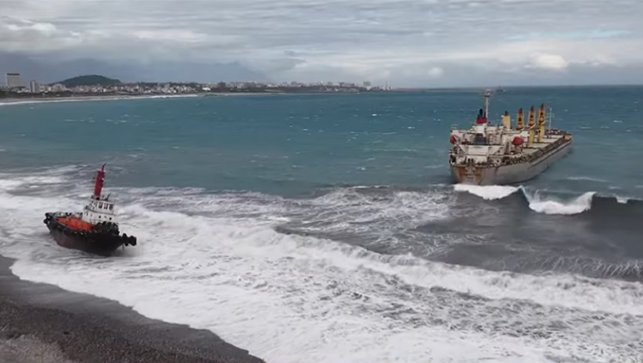
It became a compound series of problems as a bulker grounded as it was preparing to arrive at a port in Taiwan, and then the tug sent to rescue the grounded vessel also experienced problems requiring its own rescue. Bad weather forced Taiwan’s Air Service Corps into action after a crewmember was injured aboard the tug and required hospitalization.
The bulker CSE Prosperity Express (28,350 dwt) was arriving at Taiwan’s Hualien port on the eastern shore of the island on the morning of January 1 after a trip from Thailand. According to the reports, the ship was holding near the entrance to the port, waiting for a pilot, and being buffeted by strong northeasterly monsoon winds when it lost power and was driven toward shore.
The vessel, built in 2006 and operated by China Steel, is 169 meters (554 feet) and registered in Panama. It has a crew of 17 aboard, 12 from Taiwan and five from the Philippines. Unable to maneuver, it called for aid, and the Hualien Port Authority dispatched a tug.
Taiwangang 13205, with a crew of five aboard, was working to aid the bulker when it became entangled in the ship’s lines. Disabled, it was driven onto the shoreline.
The Coast Guard and local rescue services were dispatched, but due to the weather and high surf, they determined it was impossible to reach the tug to assist the crew. That’s when the Air Service Corps was called out, and they sent a helicopter, which did an aerial survey. The helicopter airlifted the five crewmembers from the grounded tug and transferred them to waiting ambulances. One crewmember had suffered a severe head laceration and was losing consciousness.
The Taiwan authorities report the bulker and its crew are in no immediate danger. They have dispatched a larger tug from the Keelung Port, which was expected to reach the bulker later in the evening.
NTSB: Towing Vessel Hit USCG Dock After Captain Fell Asleep at the Helm
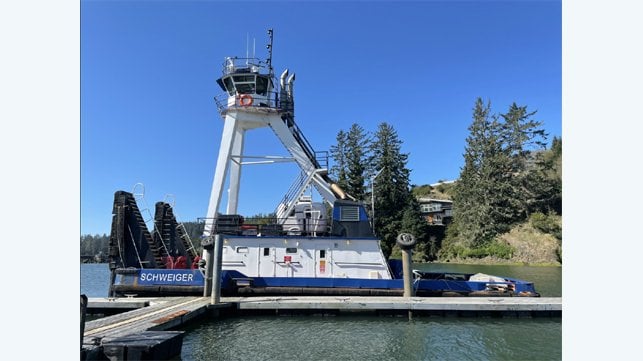
An investigation by the National Transportation Safety Board found that a towing vessel operating on the Columbia River in Washington State veered from the channel and hit a U.S. Coast Guard dock after the captain in charge of the vessel fell asleep. They note that the individual, the night before self self-medicated with ivermectin, a prescription medication normally used to treat parasitic infections, and was later diagnosed with an acute COVID-19 coronavirus infection.
The towing vessel Schweiger was underway on the Columbia River with the master and deckhand aboard. They had been moving a barge and returned to port midday on September 11, 2024. The 60-foot vessel built in 1979 was primarily used to push barges for marine construction projects in the Pacific Northwest.
The vessel was underway returning to the Port of Ilwaco when, at around 12:35 p.m., it veered to port and exited the marked channel. About a minute later, it struck a USCG dock’s wave barrier at a speed of 7 knots and kept going. It broke through the barrier and struck a floating dock and its associated piling, as well as the fuel and electrical systems of the U.S. Coast Guard Station Cape Disappointment near the mouth of the Columbia River.
The towing vessel was not damaged, and luckily, it avoided two 47-foot USCG lifeboats and a smaller patrol boat that were moored on the dock. However, it caused an estimated $750,000 of infrastructure damage.
The master who was driving the towing vessel admitted to investigators that he fell asleep while at the helm. The deckhand was in the galley at the time, and both were just over six hours into their shift. The captain stated that the impact woke him, and he was able to maneuver the vessel away.
Test results showed that he was negative for alcohol and other drugs, but he told the investigators he had not felt well the night before. He took “several 2-milligram tablets of ivermectin provided by a friend,” and felt alright in the morning. Later the same day after the allision, the captain checked into an urgent care facility because he was experiencing flu-like symptoms. He was diagnosed with COVID-19 coronavirus and a partial collapse of the airspaces of the lung.
“Given his illness and the prescribed and unprescribed medication he took, it cannot be ruled out that he may have suffered a sudden medical incapacitation, which resulted in him becoming incapacitated prior to the contact,” writes the NTSB. It, however, also warns against taking unprescribed medications, which a mariner might not be familiar with or aware of the potential adverse side effects that could impact the ability to perform assigned duties.

No comments:
Post a Comment