George Will slams Trump for ignoring 'financial crisis' threat
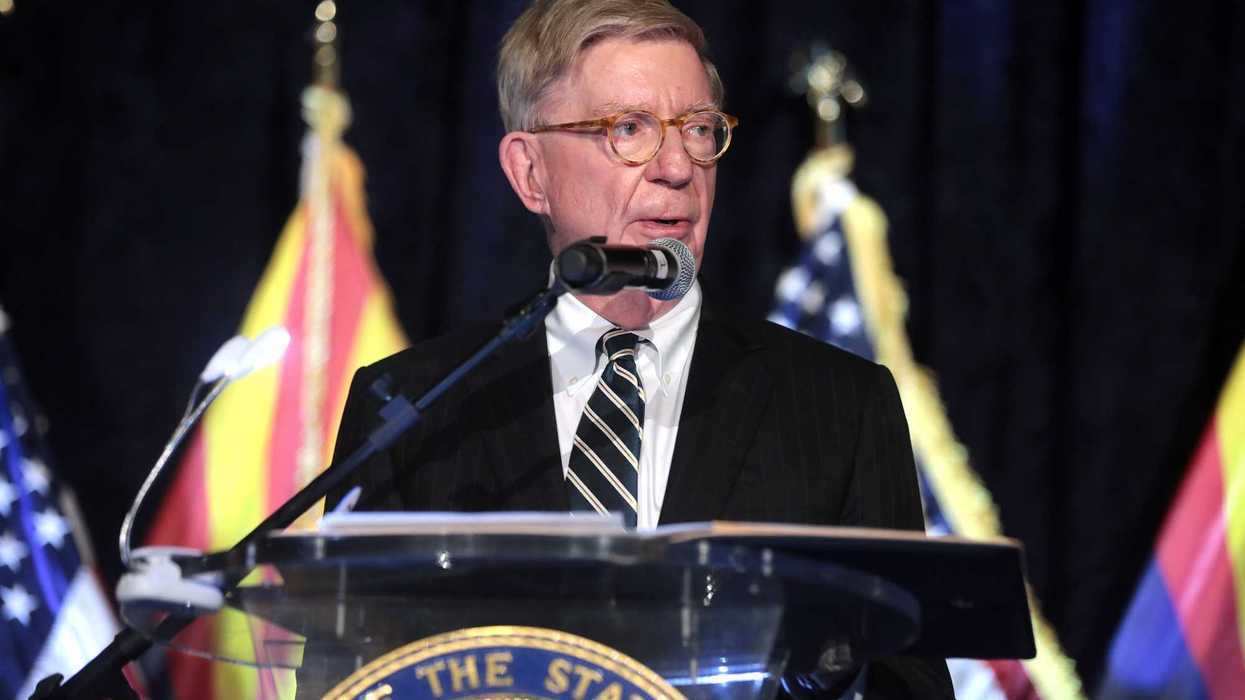
Conservative Washington Post columnist George Will in Scottsdale, Arizona
When President Donald Trump signed the Big, Beautiful Bill Act of 2025 into law, his MAGA loyalists praised it as a recipe for major economic growth. But Trump's critics saw the spending package as the worst of both worlds: a bill that would weaken the United States' social safety net while causing the already-huge federal deficit to increase.
The U.S., many of them argued, could not afford $75 billion in new funding for U.S. Immigration and Customs Enforcement (ICE) along with $64 billion in new funding for U.S. Customs and Border Protection (CBP). Between ICE and CBP, the Big, Beautiful Bill set aside $139 billion in new funding.
Never Trump conservative George Will, in his February 4 column for the Washington Post, emphasizes that the United States' national debt has reached an historic high and warns that "spiraling debt" could "provoke a financial crisis."
"As the national debt is a few months from reaching $39 trillion, and perhaps $40 trillion by the end of this year," the 84-year-old Will laments, "it is puzzling how unperturbed the political class is…. A bipartisan congressional consensus, more alarming than partisan rancor, is: There are no long-term fiscal gains without intense short-term political pains. So, because today's congressional careers do not yet seem likely to coincide with coming dire consequences, let them come."
Will continues, "In 2016, a budget expert was allotted 20 minutes to brief Donald Trump on those possible consequences. After five minutes, Trump said, 'Yeah, but I'll be gone.' He was perfectly in sync with the political mainstream he professes to supplant."
But ignoring the United States' federal debt, Will stresses, will not make it go away.
The conservative columnist lists "six possible crisis scenarios": (1) "Upwardly spiraling debt could provoke a financial crisis," (2) "An Everest of debt is an incentive for an inflation crisis to reduce the value of existing debt by paying lenders with debased dollars," (3) "An austerity crisis would occur with a large and abrupt combination of tax increases and spending reductions," (4) "A currency crisis would result from a depreciating dollar incentivizing foreign governments and private investors to diversify away from U.S. debt," (5) "A default crisis, although unlikely, would have the merit of bluntness," and (6) "The most probable, and most ominous, outcome would be a gradual crisis."
"In 2021, debt service consumed less than 10 percent of federal revenue," Will explains. "In 2025: 18 percent. By being gradual, a protracted crisis would mean a demoralized nation slowly accommodating perpetual economic sluggishness, waning investments in research and development, social stagnation, diminished contribution from the entrepreneurial energies of talented immigrants, and waning U.S. geopolitical influence."
Conservative Washington Post columnist George Will in Scottsdale, Arizona
February 04, 2026
ALTERNET
When President Donald Trump signed the Big, Beautiful Bill Act of 2025 into law, his MAGA loyalists praised it as a recipe for major economic growth. But Trump's critics saw the spending package as the worst of both worlds: a bill that would weaken the United States' social safety net while causing the already-huge federal deficit to increase.
The U.S., many of them argued, could not afford $75 billion in new funding for U.S. Immigration and Customs Enforcement (ICE) along with $64 billion in new funding for U.S. Customs and Border Protection (CBP). Between ICE and CBP, the Big, Beautiful Bill set aside $139 billion in new funding.
Never Trump conservative George Will, in his February 4 column for the Washington Post, emphasizes that the United States' national debt has reached an historic high and warns that "spiraling debt" could "provoke a financial crisis."
"As the national debt is a few months from reaching $39 trillion, and perhaps $40 trillion by the end of this year," the 84-year-old Will laments, "it is puzzling how unperturbed the political class is…. A bipartisan congressional consensus, more alarming than partisan rancor, is: There are no long-term fiscal gains without intense short-term political pains. So, because today's congressional careers do not yet seem likely to coincide with coming dire consequences, let them come."
Will continues, "In 2016, a budget expert was allotted 20 minutes to brief Donald Trump on those possible consequences. After five minutes, Trump said, 'Yeah, but I'll be gone.' He was perfectly in sync with the political mainstream he professes to supplant."
But ignoring the United States' federal debt, Will stresses, will not make it go away.
The conservative columnist lists "six possible crisis scenarios": (1) "Upwardly spiraling debt could provoke a financial crisis," (2) "An Everest of debt is an incentive for an inflation crisis to reduce the value of existing debt by paying lenders with debased dollars," (3) "An austerity crisis would occur with a large and abrupt combination of tax increases and spending reductions," (4) "A currency crisis would result from a depreciating dollar incentivizing foreign governments and private investors to diversify away from U.S. debt," (5) "A default crisis, although unlikely, would have the merit of bluntness," and (6) "The most probable, and most ominous, outcome would be a gradual crisis."
"In 2021, debt service consumed less than 10 percent of federal revenue," Will explains. "In 2025: 18 percent. By being gradual, a protracted crisis would mean a demoralized nation slowly accommodating perpetual economic sluggishness, waning investments in research and development, social stagnation, diminished contribution from the entrepreneurial energies of talented immigrants, and waning U.S. geopolitical influence."
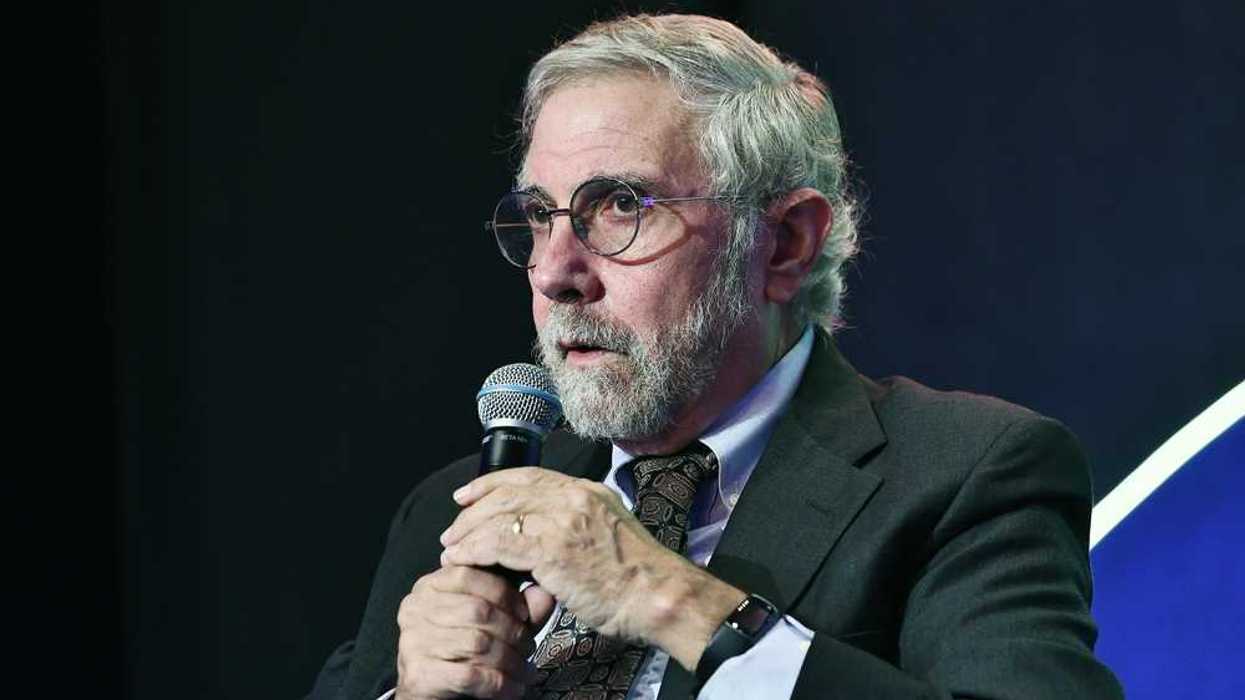
Economist Paul Krugman at the Windsor Hotel in Rio de Janeiro, Brazil
(A.PAES/Shutterstock.com)
When President Donald Trump was weighing his options for a U.S. Federal Reserve nominee to replace the current chairman, Jerome Powell — whose term ends in May — his search was described as a "tale of two Kevins": National Economic Policy (NEC) Director Kevin Hassett, and financier/attorney Kevin Warsh (who served on the Fed's Board of Governors under former Presidents George W. Bush and Barack Obama).
Trump announced his decision early Friday morning, January 30, nominating Warsh rather than Hassett.
Liberal economist Paul Krugman analyzes Trump's Warsh pick in a January 30 column posted on Substack, and he isn't enthusiastic. The former New York Times columnist views Warsh as a "political" partisan who won't serve the Fed well.
"The Fed is a republic, not a dictatorship; key decisions are made by a committee in which the chairperson has only one vote," Krugman explains. "Fed chairs can only drive policy through persuasion — and Warsh lacks the intellectual and moral credibility to be effective on that score. But God help us if we enter a crisis that requires decisive Fed leadership, the kind Fed Chair Ben Bernanke showed during the financial crisis, or Jay Powell is now showing against Trump's attacks."
Krugman adds, "Absent a crisis, my prediction is that the majority of Warsh's colleagues will largely ignore him, albeit without expressing their contempt openly…. While I don't think Warsh will do too much damage to monetary policy, he, along with his fellow Trumper Michelle Bowman, the vice chair for financial supervision, may well eviscerate the Fed's role as a financial regulator."
The Nobel laureate economist disagrees with reporters who are describing Warsh as a "monetary hawk."
"That's a category error," Krugman writes. "Warsh is a political animal. He calls for tight money and opposes any attempt to boost the economy when Democrats hold the White House. Like all Trumpers, he has been all for lower interest rates since November 2024. Depressingly, some Democratic-leaning economists are stepping up to reassure us about Warsh's qualifications. This is reminiscent of the way many economists rallied around the selection of Kevin Hassett as chair of the Council of Economic Advisers in 2017, although he was an obviously ludicrous hack."
Krugman describes Warsh as a "Republican loyalist" who "always wants to slam the economic brakes when Democrats are in power and step on the gas when Republicans rule."
February 02, 2026
ALTERNET
On Friday, January 30, President Donald Trump announced his nominee to replace U.S. Federal Reserve Chairman Jerome Powell: Kevin Warsh, who served on the Fed's Board of Directors under two former presidents: Republican George W. Bush and Democrat Barack Obama. Powell's term as Fed chair ends in May.
Some economists, MS NOW host and former Washington Post columnist Catherine Rampell noted in a February 1 op-ed for the New York Times, "breathed a sigh of relief" — as Warsh "seemed pretty normal" compared to "some of the overtly partisan, sycophantic candidates for the gig."
Although Rampell described Warsh as a "dramatically better option than some of the alternatives Mr. Trump was considering," she warned, "They should not be so sanguine. Mr. Warsh's record suggests that he may soon become one of the worst economic forecasters ever appointed to the chairmanship. Plus, he may be much more partisan than his boosters hope."
Liberal economist Paul Krugman shares Rampell's concerns in a February 2 column posted on Substack, although he says she is expressing them "more politely" than him.
Krugman describes Warsh as a "political weathervane," arguing that "he's for tight money when Democrats are in power, but all for running the printing presses hot when a Republican is in the White House."
"Warsh was very hawkish in the years following the 2008 financial crisis," Krugman argues. "But he turned abruptly dovish after Donald Trump won in 2024…. Why was Warsh so opposed to easy money after the 2008 financial crisis? Initially, he argued against low interest rates and quantitative easing because, he warned, they would lead to excessive inflation. He was, however, completely wrong, and it would have been a disaster if the Fed had followed his advice."
Although Krugman acknowledges that Trump could have made a worse pick for Fed chair than Warsh, he is far from enthusiastic about him.
"Given this history, why have so many established economists rushed to say nice things about Warsh?," Krugman writes. "Well, I'm an economist too, and we're supposed to think about incentives. Imagine yourself as a policy-oriented economist who tries to have contact with and influence over policymakers. Do you want to risk making a bitter enemy out of the next chair of the Federal Reserve? I'm personally wondering how I'll be greeted at some of the conferences I'm supposed to attend over the next few months."
Krugman adds, "Still, readers deserve to be told the truth. Warsh might surprise us all by showing unexpected integrity, but don't count on it. He may be better than the alternatives, but that's a very low bar, which mainly tells us how sorry a state economic policymaking — actually, policymaking of any kind — has reached in the age of Trump."
Trump's Fed chair nominee is a 'political animal' and a 'hack': Nobel economist
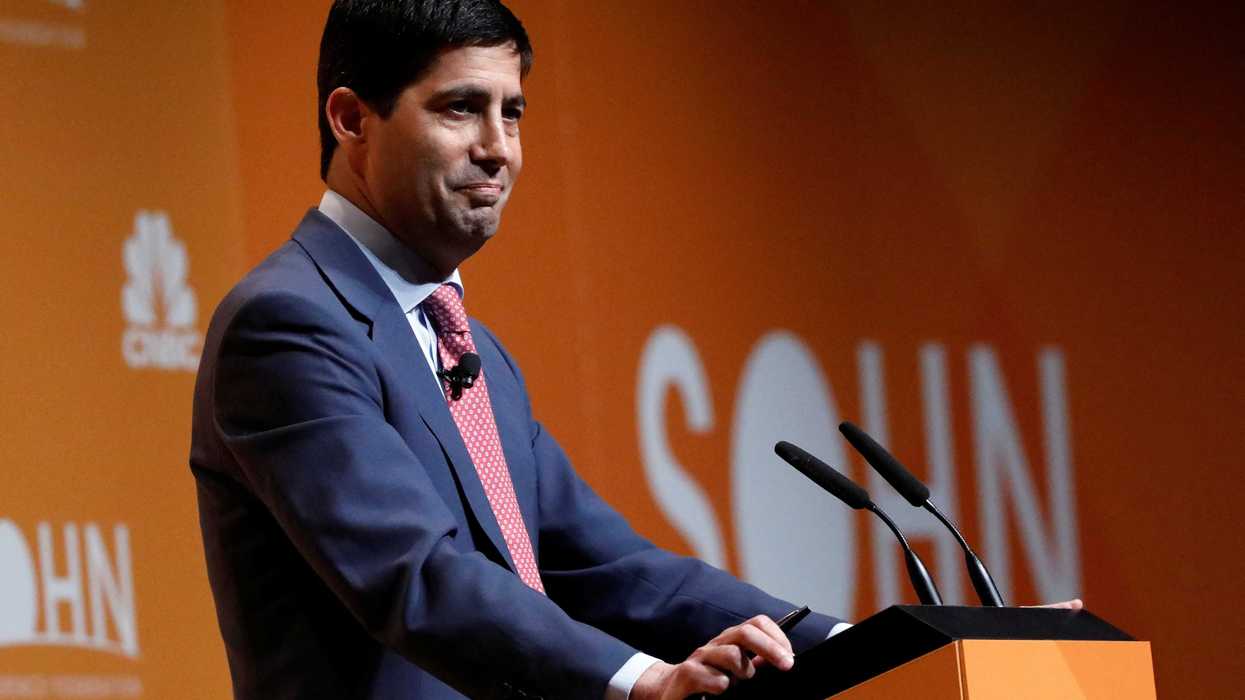
Kevin Warsh, Fellow in Economics at the Hoover Institution and lecturer at the Stanford Graduate School of Business, reacts during the Sohn Investment Conference in New York City, U.S., May 8, 2017. REUTERS/Brendan Mcdermid
On Friday, January 30, President Donald Trump announced his nominee to replace U.S. Federal Reserve Chairman Jerome Powell: Kevin Warsh, who served on the Fed's Board of Directors under two former presidents: Republican George W. Bush and Democrat Barack Obama. Powell's term as Fed chair ends in May.
Some economists, MS NOW host and former Washington Post columnist Catherine Rampell noted in a February 1 op-ed for the New York Times, "breathed a sigh of relief" — as Warsh "seemed pretty normal" compared to "some of the overtly partisan, sycophantic candidates for the gig."
Although Rampell described Warsh as a "dramatically better option than some of the alternatives Mr. Trump was considering," she warned, "They should not be so sanguine. Mr. Warsh's record suggests that he may soon become one of the worst economic forecasters ever appointed to the chairmanship. Plus, he may be much more partisan than his boosters hope."
Liberal economist Paul Krugman shares Rampell's concerns in a February 2 column posted on Substack, although he says she is expressing them "more politely" than him.
Krugman describes Warsh as a "political weathervane," arguing that "he's for tight money when Democrats are in power, but all for running the printing presses hot when a Republican is in the White House."
"Warsh was very hawkish in the years following the 2008 financial crisis," Krugman argues. "But he turned abruptly dovish after Donald Trump won in 2024…. Why was Warsh so opposed to easy money after the 2008 financial crisis? Initially, he argued against low interest rates and quantitative easing because, he warned, they would lead to excessive inflation. He was, however, completely wrong, and it would have been a disaster if the Fed had followed his advice."
Although Krugman acknowledges that Trump could have made a worse pick for Fed chair than Warsh, he is far from enthusiastic about him.
"Given this history, why have so many established economists rushed to say nice things about Warsh?," Krugman writes. "Well, I'm an economist too, and we're supposed to think about incentives. Imagine yourself as a policy-oriented economist who tries to have contact with and influence over policymakers. Do you want to risk making a bitter enemy out of the next chair of the Federal Reserve? I'm personally wondering how I'll be greeted at some of the conferences I'm supposed to attend over the next few months."
Krugman adds, "Still, readers deserve to be told the truth. Warsh might surprise us all by showing unexpected integrity, but don't count on it. He may be better than the alternatives, but that's a very low bar, which mainly tells us how sorry a state economic policymaking — actually, policymaking of any kind — has reached in the age of Trump."
Trump's Fed chair nominee is a 'political animal' and a 'hack': Nobel economist
Kevin Warsh, Fellow in Economics at the Hoover Institution and lecturer at the Stanford Graduate School of Business, reacts during the Sohn Investment Conference in New York City, U.S., May 8, 2017. REUTERS/Brendan Mcdermid
January 30, 2026
ALTERNET
When President Donald Trump was weighing his options for a U.S. Federal Reserve nominee to replace the current chairman, Jerome Powell — whose term ends in May — his search was described as a "tale of two Kevins": National Economic Policy (NEC) Director Kevin Hassett, and financier/attorney Kevin Warsh (who served on the Fed's Board of Governors under former Presidents George W. Bush and Barack Obama).
Trump announced his decision early Friday morning, January 30, nominating Warsh rather than Hassett.
Liberal economist Paul Krugman analyzes Trump's Warsh pick in a January 30 column posted on Substack, and he isn't enthusiastic. The former New York Times columnist views Warsh as a "political" partisan who won't serve the Fed well.
"The Fed is a republic, not a dictatorship; key decisions are made by a committee in which the chairperson has only one vote," Krugman explains. "Fed chairs can only drive policy through persuasion — and Warsh lacks the intellectual and moral credibility to be effective on that score. But God help us if we enter a crisis that requires decisive Fed leadership, the kind Fed Chair Ben Bernanke showed during the financial crisis, or Jay Powell is now showing against Trump's attacks."
Krugman adds, "Absent a crisis, my prediction is that the majority of Warsh's colleagues will largely ignore him, albeit without expressing their contempt openly…. While I don't think Warsh will do too much damage to monetary policy, he, along with his fellow Trumper Michelle Bowman, the vice chair for financial supervision, may well eviscerate the Fed's role as a financial regulator."
The Nobel laureate economist disagrees with reporters who are describing Warsh as a "monetary hawk."
"That's a category error," Krugman writes. "Warsh is a political animal. He calls for tight money and opposes any attempt to boost the economy when Democrats hold the White House. Like all Trumpers, he has been all for lower interest rates since November 2024. Depressingly, some Democratic-leaning economists are stepping up to reassure us about Warsh's qualifications. This is reminiscent of the way many economists rallied around the selection of Kevin Hassett as chair of the Council of Economic Advisers in 2017, although he was an obviously ludicrous hack."
Krugman describes Warsh as a "Republican loyalist" who "always wants to slam the economic brakes when Democrats are in power and step on the gas when Republicans rule."

No comments:
Post a Comment