GREY LADY DOWN!
The Washington Post Cuts Signal an Industry Being Murdered by Its Billionaire Owners
The Post layoffs are not just about one newspaper—they are about whether journalism will continue to serve the public, or retreat further into a corporate shell.
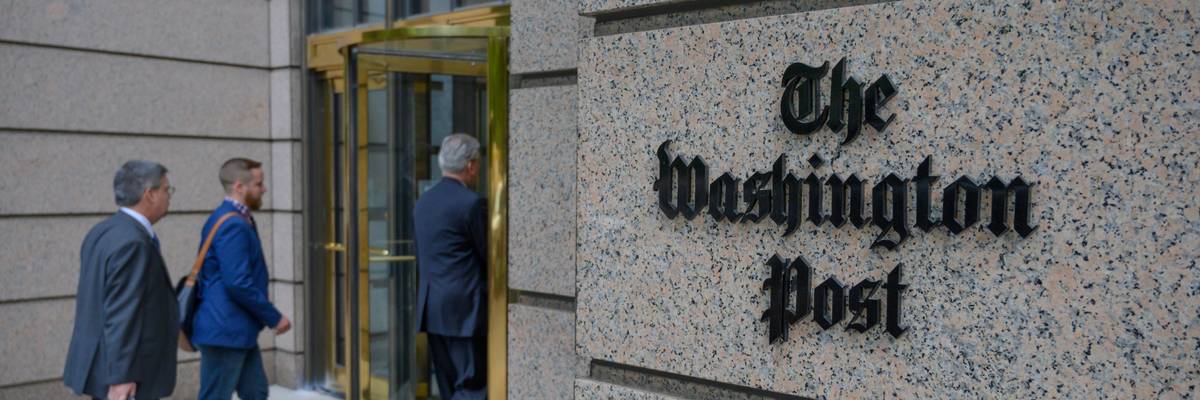
The building of the Washington Post newspaper headquarters is seen on K Street in Washington DC on May 16, 2019.
(Photo by Eric Baradat/ AFP via Getty Images)
Nick Fulton
Feb 05, 2026
The Post layoffs are not just about one newspaper—they are about whether journalism will continue to serve the public, or retreat further into a corporate shell.
The building of the Washington Post newspaper headquarters is seen on K Street in Washington DC on May 16, 2019.
(Photo by Eric Baradat/ AFP via Getty Images)
Nick Fulton
Feb 05, 2026
Common Dreams
On Wednesday, the Washington Post laid off roughly a third of its staff. For one of the most powerful and historically significant newspapers in the United States to make this decision is a warning to the entire journalism industry. At a moment of political instability, rising authoritarianism, and widespread distrust in institutions, corporate media is choosing contraction over responsibility.
Under the ownership of Jeff Bezos and his puppet publisher Will Lewis, the Post has joined a growing list of outlets responding to financial pressure by hollowing out their newsrooms. These layoffs arrive amid record-breaking, industry-wide cuts that have devastated local and national media alike. Across the country, journalists are losing jobs not because their work lacks value, but because truth telling has become inconvenient for corporate owners.
This erosion of journalism is not inevitable. It is the result of deliberate choices. Bezos, whose net worth hovers around $250 billion, has the resources to preserve jobs and protect institutional integrity. The decision not to do so makes clear that political influence matters more than the labor that sustains public accountability.
In 2019, Palestinian poet Marwan Makhoul wrote, “In order for me to write poetry that isn’t political, I must listen to the birds, and in order to hear the birds, the warplanes must be silent.” Journalism, like poetry, cannot be separated from the conditions under which it is produced. Reporters cannot meaningfully tell stories of joy, culture, or community while working under constant threat of layoffs, censorship, and corporate interference. The warplanes are not silent.
The future of journalism depends on resisting this erosion. It requires sustained investment in independent and nonprofit outlets, stronger labor protections for journalists, and a collective refusal to accept mass layoffs as the cost of doing business.
As newsrooms shrink, reporters are expected to do the impossible: Cover every breaking story, every election, every conflict, every scandal. What disappears in the process are the beats deemed expendable. Coverage of racial justice, gender equity, LGBTQIA+ communities, labor organizing, and social movements is often the first to be cut. These stories are not eliminated because they lack importance, but because they challenge power and unsettle funders.
The result is a media landscape increasingly shaped by what is safest for advertisers and political elites. More coverage of markets and institutions, fewer stories about Black culture. More horse-race politics, less reporting on trans survival or grassroots organizing. Corporate media follows the wind while ignoring the warplanes overhead.
This narrowing of journalism’s mission weakens democracy itself. A press that cannot afford to tell uncomfortable truths cannot fulfill its role as a public good. When newsrooms prioritize access over accountability and profitability over people, the public loses both information and trust.
Still, journalism is not finished. Independent and nonprofit newsrooms continue to do the work that corporate outlets are abandoning, producing community-rooted reporting that centers justice, accountability, and lived experience. But these outlets operate under immense financial strain, even as corporate media continues to set the terms of what is considered legitimate or newsworthy.
The future of journalism depends on resisting this erosion. It requires sustained investment in independent and nonprofit outlets, stronger labor protections for journalists, and a collective refusal to accept mass layoffs as the cost of doing business. It also requires reporters—especially students, freelancers, and those pushed out of traditional newsrooms—to keep telling the stories that power would prefer remain untold.
On Wednesday, the Washington Post laid off roughly a third of its staff. For one of the most powerful and historically significant newspapers in the United States to make this decision is a warning to the entire journalism industry. At a moment of political instability, rising authoritarianism, and widespread distrust in institutions, corporate media is choosing contraction over responsibility.
Under the ownership of Jeff Bezos and his puppet publisher Will Lewis, the Post has joined a growing list of outlets responding to financial pressure by hollowing out their newsrooms. These layoffs arrive amid record-breaking, industry-wide cuts that have devastated local and national media alike. Across the country, journalists are losing jobs not because their work lacks value, but because truth telling has become inconvenient for corporate owners.
This erosion of journalism is not inevitable. It is the result of deliberate choices. Bezos, whose net worth hovers around $250 billion, has the resources to preserve jobs and protect institutional integrity. The decision not to do so makes clear that political influence matters more than the labor that sustains public accountability.
In 2019, Palestinian poet Marwan Makhoul wrote, “In order for me to write poetry that isn’t political, I must listen to the birds, and in order to hear the birds, the warplanes must be silent.” Journalism, like poetry, cannot be separated from the conditions under which it is produced. Reporters cannot meaningfully tell stories of joy, culture, or community while working under constant threat of layoffs, censorship, and corporate interference. The warplanes are not silent.
The future of journalism depends on resisting this erosion. It requires sustained investment in independent and nonprofit outlets, stronger labor protections for journalists, and a collective refusal to accept mass layoffs as the cost of doing business.
As newsrooms shrink, reporters are expected to do the impossible: Cover every breaking story, every election, every conflict, every scandal. What disappears in the process are the beats deemed expendable. Coverage of racial justice, gender equity, LGBTQIA+ communities, labor organizing, and social movements is often the first to be cut. These stories are not eliminated because they lack importance, but because they challenge power and unsettle funders.
The result is a media landscape increasingly shaped by what is safest for advertisers and political elites. More coverage of markets and institutions, fewer stories about Black culture. More horse-race politics, less reporting on trans survival or grassroots organizing. Corporate media follows the wind while ignoring the warplanes overhead.
This narrowing of journalism’s mission weakens democracy itself. A press that cannot afford to tell uncomfortable truths cannot fulfill its role as a public good. When newsrooms prioritize access over accountability and profitability over people, the public loses both information and trust.
Still, journalism is not finished. Independent and nonprofit newsrooms continue to do the work that corporate outlets are abandoning, producing community-rooted reporting that centers justice, accountability, and lived experience. But these outlets operate under immense financial strain, even as corporate media continues to set the terms of what is considered legitimate or newsworthy.
The future of journalism depends on resisting this erosion. It requires sustained investment in independent and nonprofit outlets, stronger labor protections for journalists, and a collective refusal to accept mass layoffs as the cost of doing business. It also requires reporters—especially students, freelancers, and those pushed out of traditional newsrooms—to keep telling the stories that power would prefer remain untold.
The Washington Post layoffs are not just about one newspaper. They are about whether journalism will continue to serve the public, or retreat further into a corporate shell. The industry can cover tragedy while preserving joy. It can hold power accountable while documenting resistance, survival, and hope. We should not accept anything less.
Our work is licensed under Creative Commons (CC BY-NC-ND 3.0). Feel free to republish and share widely.
Nick Fulton
Nick Fulton is a Queer political media strategist and freelance journalist based in Washington, D.C.
Full Bio >
Our work is licensed under Creative Commons (CC BY-NC-ND 3.0). Feel free to republish and share widely.
Nick Fulton
Nick Fulton is a Queer political media strategist and freelance journalist based in Washington, D.C.
Full Bio >
“Oligarchs are not the benevolent saviors media have long depicted them to be.”
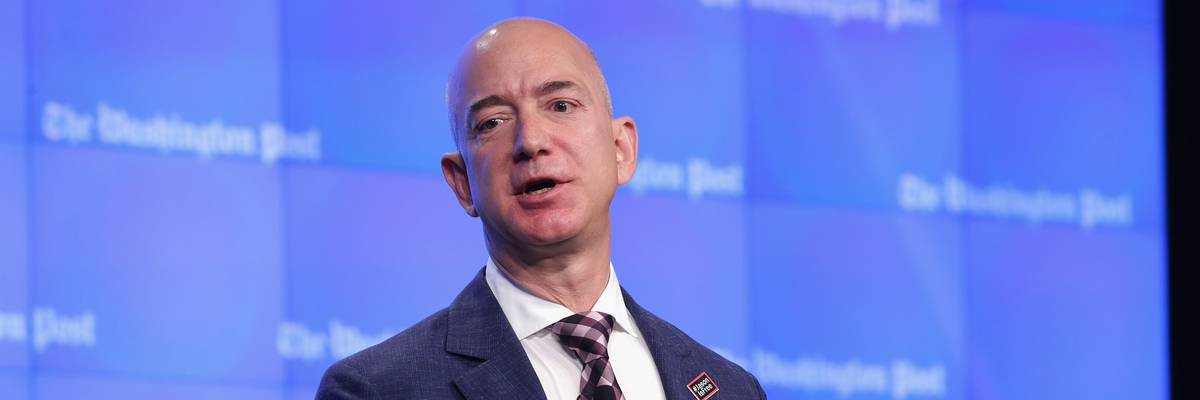
Amazon founder and Washington Post owner Jeff Bezos delivers remarks during the opening ceremony of the media company’s new location January 28, 2016 in Washington, DC.
(Photo by Chip Somodevilla/Getty Images)
Brad Reed
Feb 04, 2026
COMMON DREAMS
The Washington Post announced massive cuts to its newsroom staff on Wednesday, unleashing a wave of disgust directed toward its owner, billionaire Amazon founder Jeff Bezos.
As reported by Semafor reporter Maxwell Tani, Washington Post executive editor Matt Murray told staffers at the paper that it would be closing its sports department “in its current form,” and would also be “killing its book section, suspending its Post Reports podcast, restructuring its metro section, and shrinking its international footprint.”
Seeking Pentagon Contracts, Bezos Rolls Out Red Carpet After Dropping $40 Million on ‘Melania’
Analysis Reveals Wall Street Titans Behind Big Oil Profiteering Push in Venezuela
With hundreds of journalists expected to lose their jobs, Murray told Post employees that the cuts were needed to help the paper “become more essential to people’s lives” in “what is becoming a more crowded, competitive and complicated media landscape, and after some years when, candidly, the Post has had struggles to do that.”
Many critics, however, scoffed at claims that cuts at the paper were needed to make it profitable, suggesting the real motivation came from Bezos’ desire to take an ax to the US free press.
Brian Phillips, senior writer at The Ringer, rejected the notion that one of the richest men in the world couldn’t afford to keep what was once a revered newspaper fully staffed.
“Bezos isn’t destroying the Washington Post because it isn’t profitable,” he wrote in a social media post. “He’s destroying the Washington Post because he’s calculated that a robust free press threatens the ability of his class to warp society around their interests.”
Phillips also implored other journalists to not report on the Post layoffs as “a straightforward business story,” but rather “a story about coercive social transformation being imposed by people so rich they’ve ceased to see the rest of us as legitimate stakeholders in our own lives.”
David Sirota, founder of The Lever, said the layoffs should end journalists’ fantasies that billionaire owners will rescue journalism in an era of mass consolidation by corporate conglomerates, slashed newsroom budgets, and wave after wave of layoffs.
“The media world’s stunned/shocked reaction to the awful WaPo layoffs shows that even now, so many in journalism still can’t believe billionaires aren’t going to rescue them,” he wrote. “This is a wake-up call: Oligarchs are not the benevolent saviors media have long depicted them to be.”
Adam Serwer of the Atlantic also raised concerns about the power of wealthy oligarchs to buy and destroy historic media institutions.
“I personally do not think some rich man should be able to buy an institution like this like a toy and then break it when he doesn’t want to play with it anymore,” he wrote. “Bezos fucked the paper and instead of fixing it he’s destroying it despite the fact that he could spend the money to make things right without even noticing its absence.”
Jonathan Cohn, political director for Progressive Mass, noted that the Post isn’t the only media organization that’s being gutted by a billionaire owner, referencing billionaire Larry Ellison, a major donor to President Donald Trump, who recently acquired CBS News alongside other media properties.
“What we are seeing with WaPo and with CBS News is that the mega-rich see real financial value for themselves in destroying journalism,” he wrote. “Let that sink in.”
Sen. Bernie Sanders (I-Vt.), in a post written before the Post layoffs were announced, drew attention to billionaire control over not just traditional media, but social media as well.
“When we talk about authoritarianism, it’s not just Donald Trump,” wrote Sanders. “[Elon] Musk owns X. Bezos owns Twitch. [Mark] Zuckerberg owns Instagram and Facebook. Larry Ellison controls TikTok. Billionaires increasingly control what we see, hear and read.”

No comments:
Post a Comment